Results for “designation”
Type a name: scientific, common, or one a species used to go by. Or narrow the catalogue with the filters.
Filters
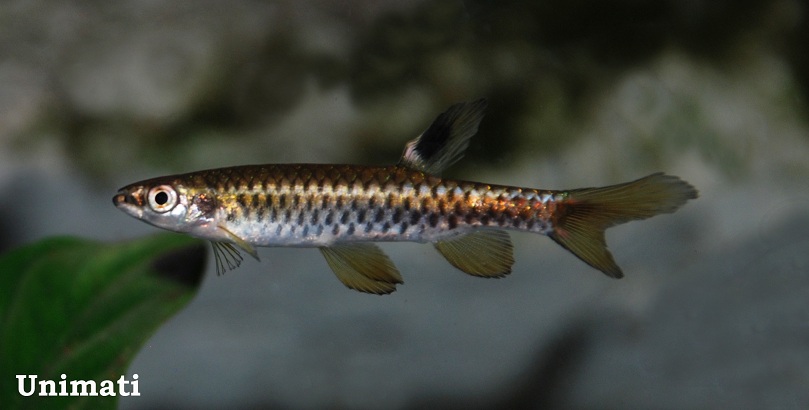
Copella eigenmanni
Regan, 1912
Max length45mm SL1.8in SLTank80 × 30cm31 × 12inTemp20–28°C68–82°FpH4.0–7.0This species does appear in the aquarium trade from time-to-time, often among shipments of other wild-caught fishes from the Orinoco basin. Populations from Colombia were formerly referred to as C. metae until Zarske (2011) synonymised the two when designating a lectoty...
Exodon paradoxusBucktooth Tetra
authority not recorded
Max length150mm SL6in SLTank120 × 45cm48 × 18inTemp23–28°C73–82°FpH5.5–7.5The genus Exodon is currently monotypic, with this single species having uniquely designed teeth. These allow it to rip the scales from other species. It's an ideal choice for those wishing to keep a large shoal of a predatory species without possessing the massive amount of tank space needed for a shoal of piranha or similar. A tank full of these makes for a very colourful and active display....
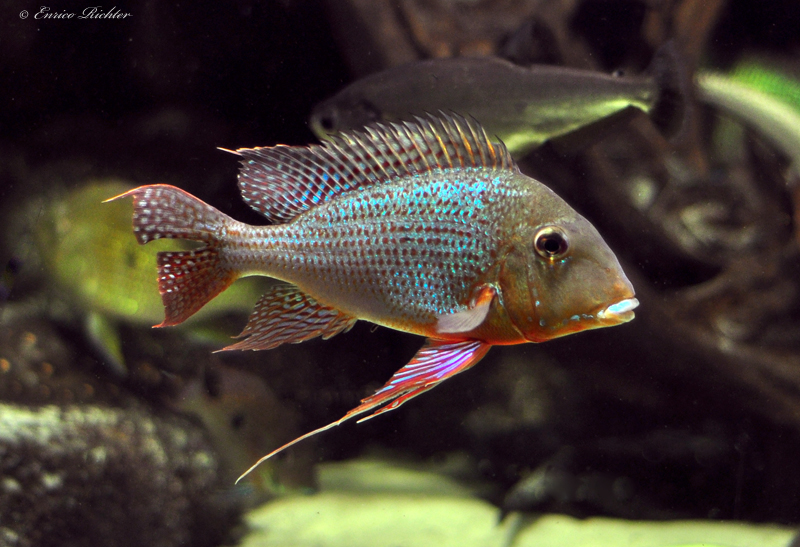
Geophagus altifrons
Heckel, 1840
Max length225mm SL9in SLTank180 × 60cm72 × 24inTemp26–32°C79–90°FpH4.8–6.6Despite its designation as type species this is among the most frequently-misidentified members of the genus. This is in part because its natural distribution was earlier considered even more extensive than the still-substantial range recognised today, with populations from the Río Orinoco, Guianas and rio Tocantins now recognised as species in their own right.
Hydrocynus goliathGiant Tigerfish
authority not recorded
Max length2100mm SL83in SLTanknot recordedTemp24–28°C75–82°FpH6.5–7.5A voracious piscivore this species is perfectly designed for its lifestyle. It is very streamlined and muscular and has one of the most amazing sets of teeth of any freshwater fish. These are dagger-shaped and interlock, meaning the fish can rip chunks out of its prey. The teeth are visible even when the animal's mouth is closed, which makes for a fearsome sight. It is one of the world's most infamous game fish and specimens weighing over 100 pounds have been recorded. We cannot st...
Hydrocynus vittatusAfrican Tiger Fish
authority not recorded
Max length1050mm SL41in SLTank300 × 90cm118 × 36inTemp24–28°C75–82°FpH6.5–8.0A voracious piscivore that hunts in large shoals in the wild, this species is perfectly designed for its lifestyle. It is very streamlined and muscular and has one of the most amazing sets of teeth of any freshwater fish. These are dagger-shaped and interlock, meaning the fish can rip chunks out of its prey. The teeth are visible even when the animal's mouth is closed, which makes for a fearsome sight. It is a popular game fish in its native range, with the largest specimen caught weighi...
Labeotropheus fuelleborniFuelleborn's Cichlid
authority not recorded
Max length175mm SL7in SLTank90 × 45cm36 × 18inTemp24–28°C75–82°FpH7.6–8.8This species has the characteristic overhanging snout possessed by all three members of the genus. It has chisel-shaped teeth which are designed for grazing algae off rocks. These physical adaptations allow it to graze algae from rocks situated in very shallow water which other species cannot reach. The position of the mouth allows the fish to remain parallel to the rock surfaces, thus enabling it to cope with the turbulence in these areas. L. fuelleborni exists in many different colour forms in...
Labeotropheus trewavasaeTrewavas' Cichlid
authority not recorded
Max length113mm SL4in SLTank90 × 45cm36 × 18inTemp24–28°C75–82°FpH7.6–8.8This species has the characteristic overhanging snout possessed by all three members of the genus. It also has chisel-shaped teeth which are designed for scraping algae off rocks. These physical adaptations give it a competitive advantage, as they allow it to graze from rocks situated in very shallow water which other species cannot reach. The position of the mouth allows the fish to remain parallel to the rock surfaces, thus enabling it to cope with the turbulence in these areas. L. trewava...
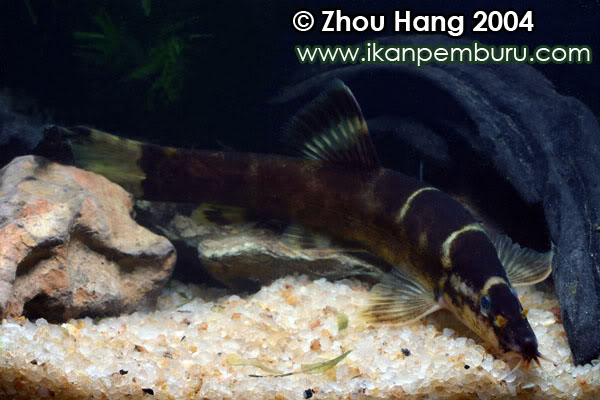
Leptobotia rubrilabris
Dabry de Thiersant, 1872
Max length150mm SL6in SLTank120 × 45cm48 × 18inTemp15.5–21°C60–70°FpH6.5–7.5Should be kept in a set-up designed to resemble a flowing stream with a substrate of variably-sized rocks, gravel and some water-worn boulders. This can be further furnished with driftwood roots and branches arranged to form some shaded spots while lengths of PVC piping or similar can be used to provide additional cover. Although most plant species will fail to thrive in such surroundings hardy genera such as Microsorum, Bolbitis or Anubias spp. can be grown attached to the décor and bright lighting will promote the growth of aufwuchs.
Melanochromis chipokae
authority not recorded
Max length120mm SL5in SLTank120 × 45cm48 × 18inTemp24–28°C75–82°FpH7.6–8.8This species belongs to the group of Melanochromis often called "Pike Auratus". These species predate on the fry of other species, although M. chipokae will also eat crustaceans and algae. Female and juvenile male M. chipokae are easily confused with M. auratus. However, it can be distinguished by its noticeably more pointed mouth, denoting the predatory nature of this species (auratus has a rounded mouth which is designed for feeding on algae). The striped patterning in the also exten...
Melanotaenia lacustrisLake Kutubu Rainbowfish
authority not recorded
Max length120mm SL5in SLTank120 × 30cm48 × 12inTemp20–25°C68–77°FpH7.0–9.0Unfortunately the prisitine environment form where this fish comes is being threatened by overfishing (much of it for the aquarium trade) and industry, with an oil development being built at one end of the lake during the 1990s. M. lacustris has therefore been given "vulnerable" status on the IUCN red list. The lake was designated a Wetland of International Importance in 1998, as both it and the Kikori Basin where it lies contain some of the earth's greatest biodiversity in terms ...
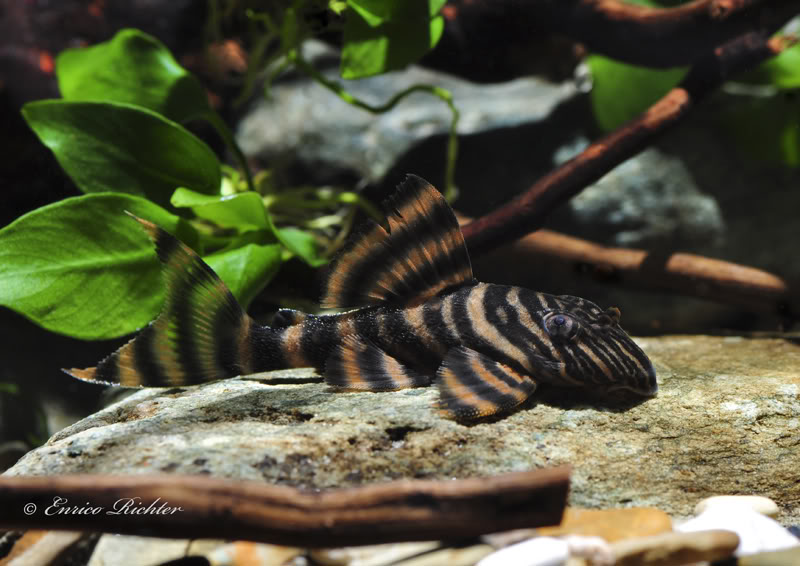
Panaqolus sp.L403
authority not recorded
Max length120mm SL5in SLTank120 × 30cm48 × 12inTemp24–30°C75–86°FpH6.0–7.0Not difficult to maintain under the correct conditions; we strongly recommend keeping it in a tank designed to simulate a flowing stream with a substrate of variably-sized rocks, sand, fine gravel, and some water-worn boulders. This can be further furnished with driftwood branches, terracotta pipes, plant pots, etc., arranged to form a network of nooks, crannies, and shaded spots, thus providing broken lines of sight.
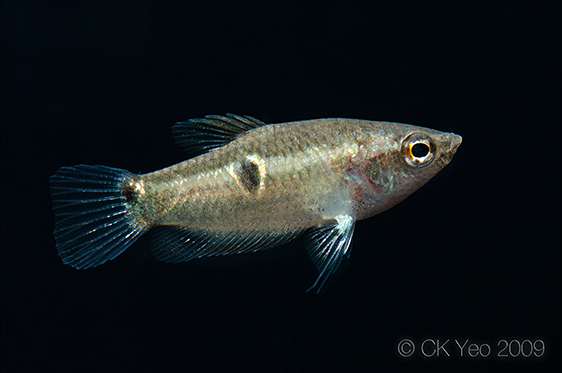
Parasphaerichthys ocellatusEyespot Gourami
Prashad & Mukerji, 1929
Max length32mm SL1.3in SLTank45 × 30cm18 × 12inTemp15–25°C59–77°FpH6.5–7.5To date the species is known mostly from the upper Ayeyarwady River basin in northern Myanmar where it's been collected close to the city of Myitkyina in Kachin State as well as around nearby Lake Indawgyi, the largest inland lake in Southeast Asia and home to ten globally threatened bird species. The lake and surrounding area were designated a protected zone by the Ministry of Ecotourism in 1999 and now form the Indawgyi Lake Wildlife Sanc...
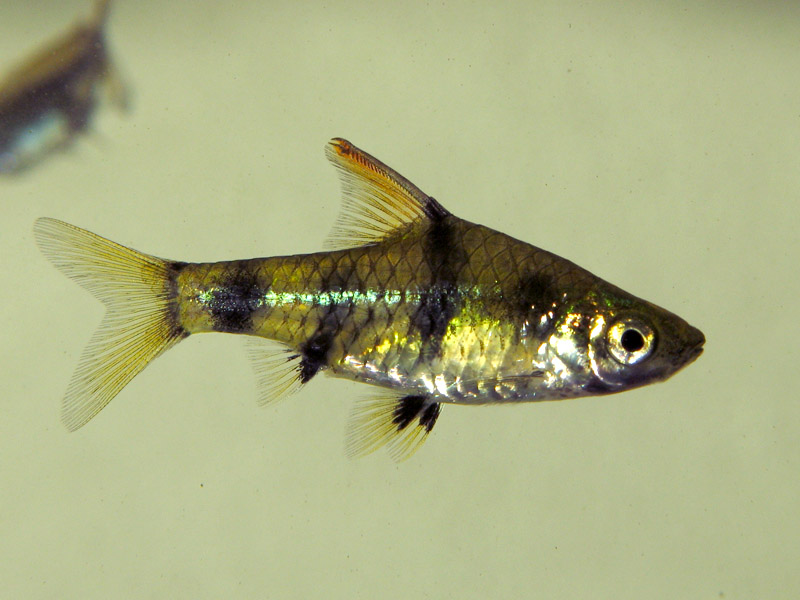
Pethia canius
Hamilton, 1822
Max length30mm SL1.2in SLTank60 × 30cm24 × 12inTemp18–24°C64–75°FpH6.0–7.0This species' identity was settled and a neotype designated by Knight (2013), with its validity having been discussed since the late 19th century. P. canius and the closely-related P. gelius were both described by Hamilton (1822) and share the type locality of 'northeastern Bengal'. Although Hamilton did not provide drawings M'Clelland (1839) included colour illustrations depicting two quite different-looking species.
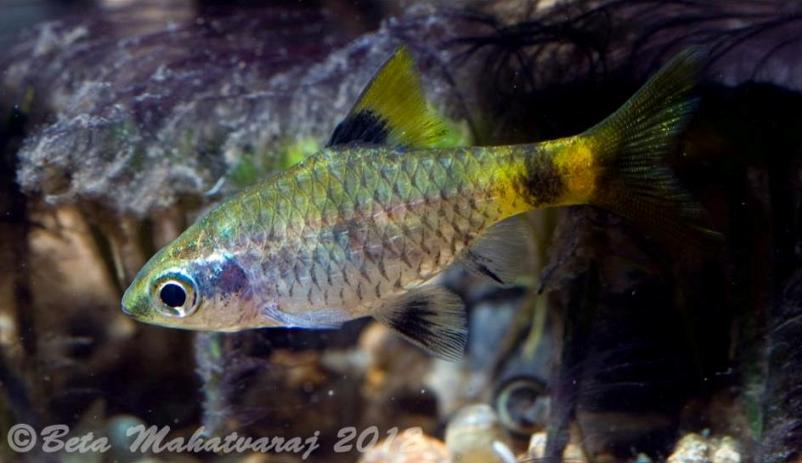
Pethia geliusGolden Dwarf Barb
Hamilton, 1822
Max length40mm SL1.6in SLTank60 × 30cm24 × 12inTemp18–24°C64–75°FpH6.0–7.0This species' identity was settled and a neotype designated by Knight (2013) who also revalidated the congener P. canius (Hamilton, 1822) and described the closely-related P. aurea. These three had previously been considered to represent geographic forms of P. gelius, albeit on a tentative basis, with the validity of P. canius having been discussed since the late 19th century.
Placidochromis milomoSuper VC 10 Hap
authority not recorded
Max length250mm SL10in SLTank120 × 45cm48 × 18inTemp24–28°C75–82°FpH7.6–8.8Wild caught specimens of this fish possess a truly amazing set of lips! They are massively enlarged and designed for scraping algae and invertebrates from rock surfaces. In nature, these actually develop in direct proportion to the amount of turbidity in a given locality. Fish inhabiting more turbulent waters have larger lips, as the algae in these areas is anchored to the rocks more firmly. In the aquarium, the lips usually recede or, in tank bred fish, do not develop at all, as they are not re...
Platystacus cotylephorusBanded Banjo Catfish
authority not recorded
Max length320mm SL13in SLTank120 × 30cm48 × 12inTemp22–25°C72–77°FpH6.0–8.2Not a particularly good catfish for the general community tank, as it's a largely inactive, secretive species that will only emerge and become active under cover of darkness. It is, nonetheless, an interesting aquarium subject for the enthusiast, exhibiting an incredible degree of camouflage. It's designed to resemble a dead leaf, and usually will not even swim to escape a net. When released into the aquarium will simply drift in the current until it hits the bottom. All members of the...
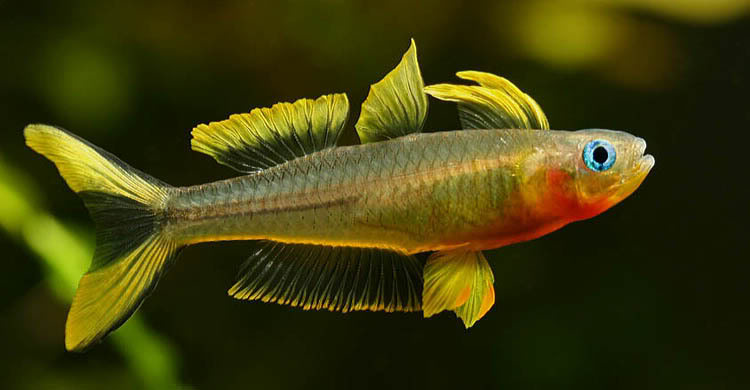
Pseudomugil furcatusForktail Blue-eye
Nichols, 1955
Max length60mm SL2.4in SLTank60 × 30cm24 × 12inTemp24–28°C75–82°FpH7.0–8.0This species is also traded as 'forktail rainbowfish' or 'yellow forktail', and it's also undergone several changes in scientific name since description. Pseudomugil furcatus is the original designation, but Allen (1980) created the genus Popondetta for it on the basis of morphological characters including number of anal-fin rays (16-20 in P. furcatus, 8-12 in other Pseudomugil spp.), absence of anterior...
Pseudotropheus flavus
authority not recorded
Max length90mm SL3.5in SLTank90 × 45cm36 × 18inTemp24–28°C75–82°FpH7.6–8.8Although it is a good choice for the general mbuna community, as mentioned above P. flavus should not be kept together with any member of the P. elongatus complex. Not only will these species interbreed, producing undesirable hybrid offspring, but males of these species will clash very heavily. As with other members of the genus it possesses flat, bicuspid teeth which are designed for scraping algae and other organisms from the surface of rocks....
Pseudotropheus lombardoiKennyi
authority not recorded
Max length150mm SL6in SLTank120 × 45cm48 × 18inTemp24–28°C75–82°FpH7.6–8.8A popular mbuna that has been in the hobby for many years. There is ongoing debate as to the true genus of this species, it having been variously grouped in both Maylandia and Metriaclima, as well as the currently valid Pseudotropheus. It is unlikely it will remain in Pseudotropheus, however, and many sources already consider it a member of Metriaclima. As with other members of the genus, it possesses flat, bicuspid teeth which are designed for scraping algae and other organisms from the surface...
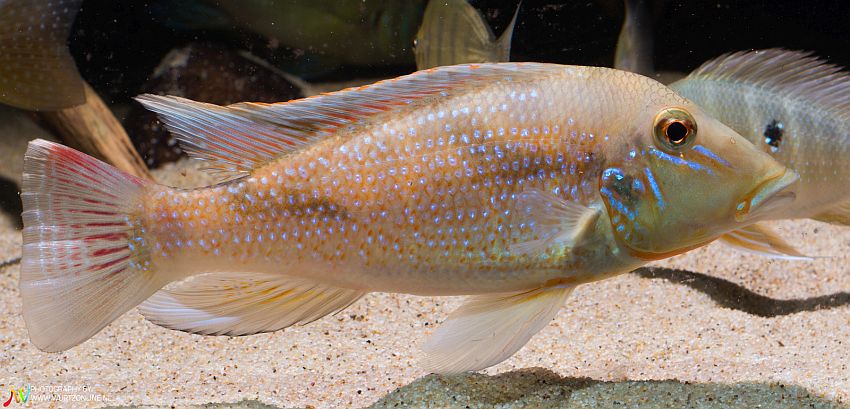
Retroculus lapidifer
Castelnau, 1855
Max length200mm SL8in SLTank210 × 60cm84 × 24inTemp26–32°C79–90°FpH6.0–8.0Retroculus spp. are unsuitable for the standard community aquarium, and should be maintained in a set-up designed to resemble a flowing river. The substrate should be composed of soft sand mixed with small pebbles if the aim is to breed the fish (see 'Reproduction'). Rocks, boulders, roots, branches, and aquatic plants can also be added, although the la...