Results for “ecology”
Type a name: scientific, common, or one a species used to go by. Or narrow the catalogue with the filters.
Filters
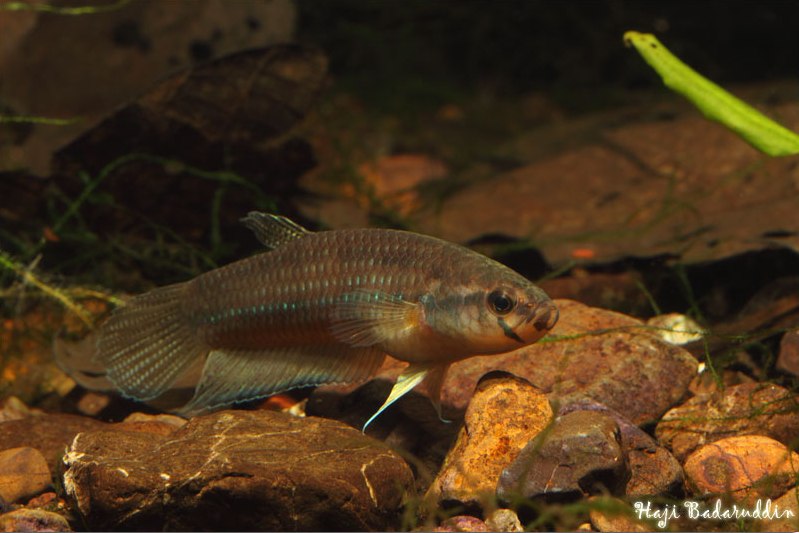
Betta antoni
Tan & Ng, 2006
Max length50mm SL2.0in SLTank60 × 30cm24 × 12inTemp22–27°C72–81°FpH5.5–7.0The genus Betta is the most speciose within the family Osphronemidae with almost 70 recognised members and looks set to grow further with new ones continuing to be described on a regular basis since the turn of the century. Member species have successfully adapted to inhabit a variety of ecological niches from stagnant ditches to flowing hill streams including some extreme environments such as highly acidic peat swamp forests.
Callochromis macropsBig-eyed Mouthbrooder
authority not recorded
Max length135mm SL5in SLTank120 × 45cm48 × 18inTemp24–27°C75–81°FpH7.8–9.5Members of the genus Callochromis feed in a similar way to the South American "eartheaters" such as Geophagus species. They extract invertebrates and other items hidden in the substrate by taking in mouthfulls of sand and sifting it through the gills. The common term "sand sifters" is applied to these and other Tanganyikan species that inhabit a similar ecological niche, such as Enantiopus and Xenotilapia spp. Several geographical colour forms of this species exist. These ...
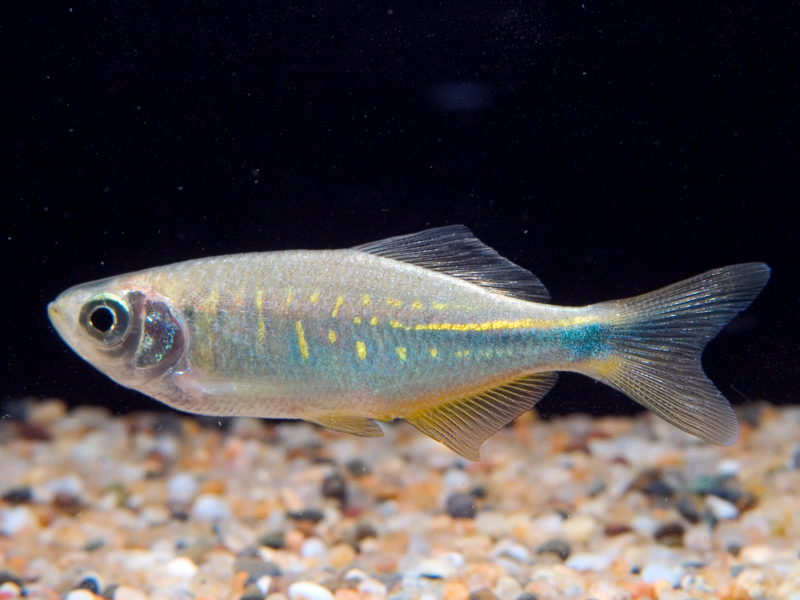
Devario devarioBengal Danio
Hamilton, 1822
Max length80mm SL3.1in SLTank120 × 45cm48 × 18inTemp15–26°C59–79°FpH6.0–8.0Ecological studies have revealed this species to be more of a generalist than its chiefly insectivorous congeners. Aquatic and terrestrial insects form a significant proportion of the diet, but substantial amounts of filamentous algae and diatoms are consumed with water mites, fish scales, isopods, nematodes and detritus also taken occasionally. In the aquarium it's largely unfu...
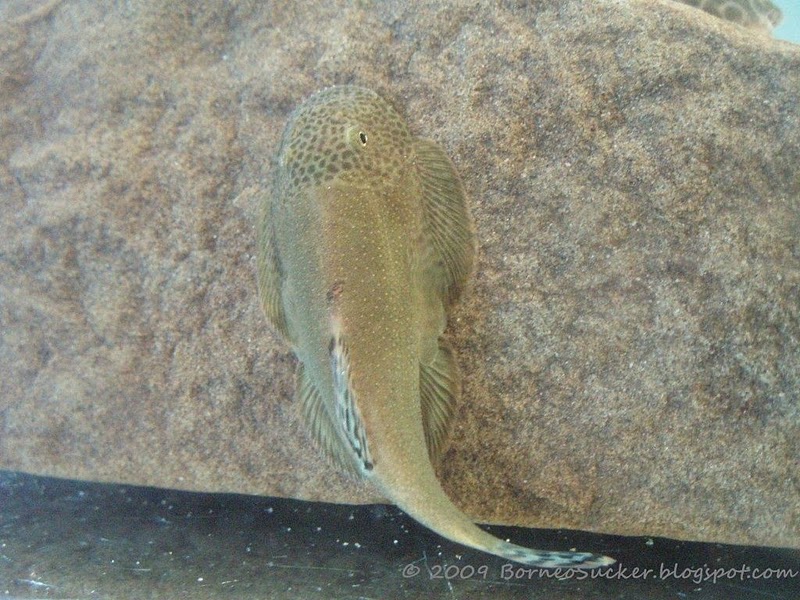
Gastromyzon aeroides
Tan & Sulaiman, 2006
Max length46mm SL1.8in SLTank60 × 30cm24 × 12inTemp20–24°C68–75°FpH6.0–7.5Field observations have revealed that individuals almost always position themselves facing into the flow, either along the sides, behind or under rocks, their specialised morphology (see 'Notes') allowing them to feed and maintain position without being swept away. Not many fishes have been able to successfully colonise this narrow ecological niche, but syntopic species in nature include Gastromyzon extrorsus (Petagas River), G. introrsus, G. lepidogaster (Pad...
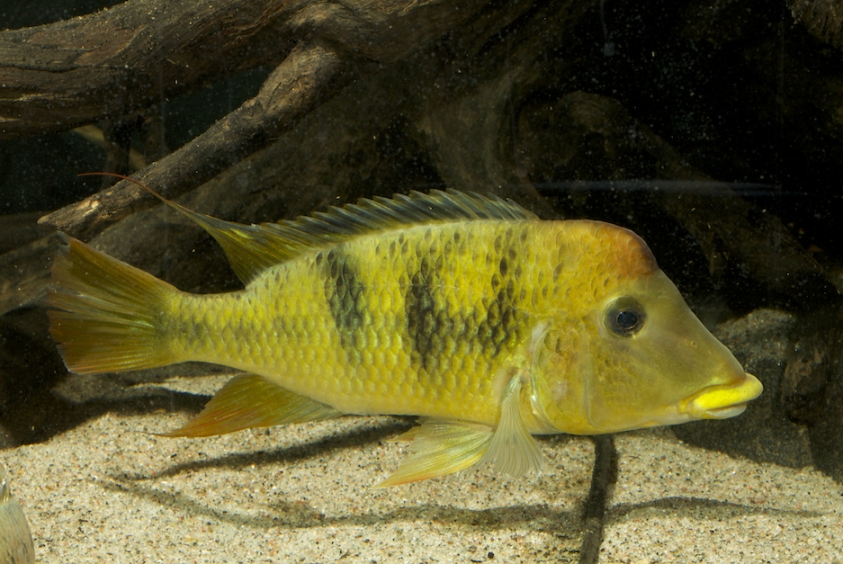
'Geophagus' pellegriniYellowhump Eartheater
Regan, 1912
Max length155mm SL6in SLTank120 × 45cm48 × 18inTemp25–30°C77–86°FpH5.0–6.0This species appears to be a relative ecological generalist. During a sampling trip in 1989 it was collected various habitat-types including a narrow (maximum width 3 m) stream containing shallow (maximum depth 1 m), transparent, moderate to fast-flowing water and substrate comprising gravel, mud, clay and organic debris including submerged logs. Aquatic plants consisted of water lilies and marginal vegetation was dense, comprising various trees, shrubs, grasses and ferns.
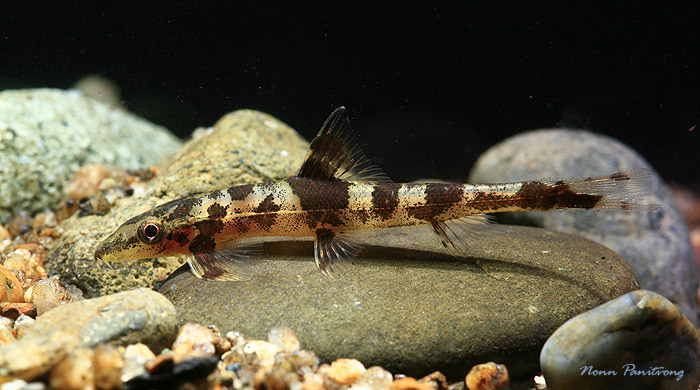
Homaloptera ogilviei
Alfred, 1967
Max length50mm SL2.0in SLTank60 × 30cm24 × 12inTemp20–25.5°C68–78°FpH6.0–7.5The reason that the paired fins are orientated vertically, as opposed to horizontally in other members of the genus, is unclear but Roberts (1989) suggest it may be an adaptation to this species' ecology, in that it displays a preference for submerged vegetation or woody structures as opposed to rocky environments. They're certainly adapted for a rea...
Nannocharax brevisAfrican Darter Characin
authority not recorded
Max length45mm SL1.8in SLTank45 × 30cm18 × 12inTemp23–27°C73–81°FpH6.0–7.5There are currently 25 described species in the genus Nannocharax, these forming a monophyletic group with members of the very similar Hemigrammocharax. None can be described as particularly common in the hobby but N. brevis and N. fasciatus are the most often seen. They are notoriously tricky to identify though, and it's quite possible that more than two species are being sold under these names. In nature these fish occupy a similar ecological niche to the South American darter characi...
Semaprochilodus insignisFlagtail Prochilodus
authority not recorded
Max length350mm SL14in SLTank150 × 60cm60 × 24inTemp23–29°C73–84°FpH5.5–7.2Semaprochilodus are one of the most common and widespread shoaling fish found in South America. Over a dozen species have been described but most are never imported. They are used as food fish in their native countries. It makes a stunning addition to a community of larger fish. Along with some congeners, S. insignis is commonly known as the Jaraqui in Brazil. It is an interesting species both ecologically and biologically. In nature it migrates over large distances in huge shoals according ...
Semaprochilodus taeniurusFlagtail Characin
authority not recorded
Max length300mm SL12in SLTank150 × 60cm60 × 24inTemp23–29°C73–84°FpH5.5–7.5Semaprochilodus are one of the most common and widespread shoaling fish found in South America. Over a dozen species have been described but most are never imported. They are used as food fish in their native countries. It makes a stunning addition to a community of larger fish. S. taeniurus is also sold as the Silver Prochilodus or Fei Feng. Along with some congeners, it is commonly known as the Jaraqui in Brazil. It is an interesting species both ecologically and biologically. In nature it...
Synodontis granulosa
authority not recorded
Max length270mm SL11in SLTank150 × 60cm60 × 24inTemp24–28°C75–82°FpH7.8–8.5One of the most stunning and sought after species of Synodontis and though the cost of ownership has dropped slightly, it still commands a high price. Its natural deep water habitat, limited range and solitary lifestyle make collection for the hobby difficult and so it is rarely seen for sale. It also appears that the areas of the lake in which it occurs are threatened with ecological disaster. In the aquarium S. granulosa is intelligent and can develop into a real character, with many speci...