Results for “gene”
Type a name: scientific, common, or one a species used to go by. Or narrow the catalogue with the filters.
Filters
Hemichromis elongatusFive Star General
authority not recorded
Matched on the common name Five Star General
Max length150mm SL6in SLTanknot recordedTemp22–25°C72–77°FpH6.5–7.5A real bruiser of a cichlid, H. elongatus is not seen for sale very often, and with good reason. Pound for pound it must rank as one of the most aggressive cichlids available in the hobby. It is such an efficient predator that, in some of its native countries, it is used to control populations of Tilapia. As a result it's definitely not recommended for the inexperienced aquarist. The common name is derived from the row of 5 dark markings that run laterally along the flanks of the fish. I...
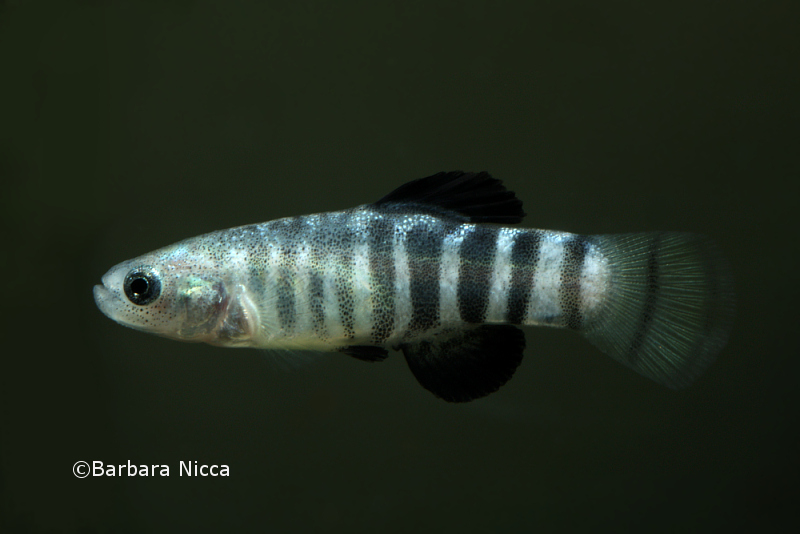
Anatolichthys transgrediensAcı Toothcarp
Ermin, 1946
Max length50mm SL2.0in SLTanknot recordedTempnot recordedpH8.0–10.0The modified lower jaw and reduced scalation exhibited by this little-known species have seen it placed in the disused genera Anatolichthys and Turkichthys in the past and it is still sometimes listed as a species of Lebias although that generic name has long been considered a synonym of Cyprinodon by most authorities and an ICZN committee voted to suppress the name in favour of Aphanius as recently as 2003. You're unlikely to find it on sale in aquatic stores although it ma...
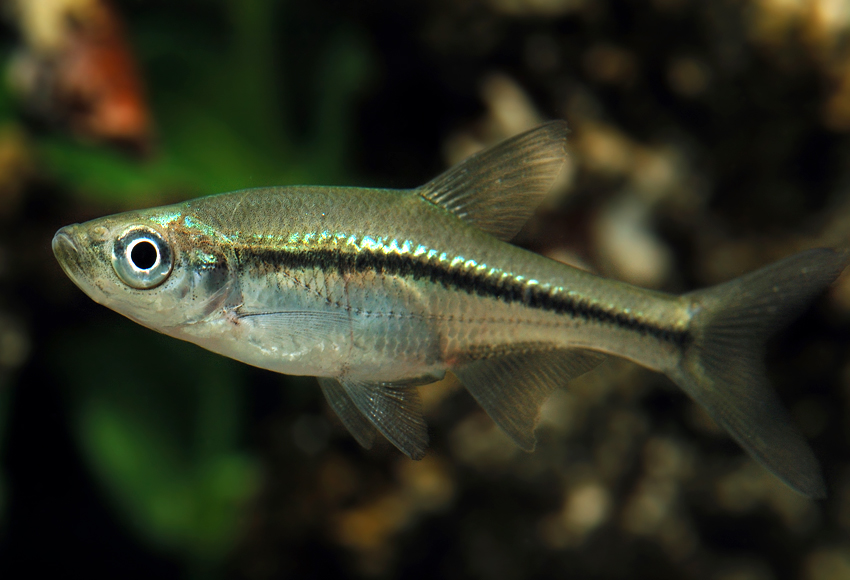
Metzia formosae
Oshima, 1920
Max length75mm SL3.0in SLTanknot recordedTempnot recordedpHnot recordedAlthough it is included in the genus Metzia this grouping remains somewhat unresolved in terms of taxonomy and it may contain more than a single genetic lineage. For example, members share a number of characters with the genera Ischikauia Jordan and Snyder 1900, Hemiculterella Warpachowski 1887, and several species of Anabarilius Cockerell 1923, including a bipartite gas bladder, a non-spinous dorsal-fin ray, and a sharp ventral keel between the pelvic-fin insertion and anus.
Sundadanio axelrodi
authority not recorded
Max length22mm SL0.9in SLTank30 × 20cm12 × 8inTemp23–26°C73–79°FpHnot recordedThis species was initially described as Rasbora axelrodi and is referred to as such in older literature, but in 1999 was moved into the new genus Sundadanio where it remains the monotype. Its wider placement within the family Cyprinidae is still not fully resolved. Following Rüber et al. (2007) it is most closely-related to the miniature species of the genus Paedocypris, the two genera characteristically lacking bones in the roof of the skull as well as exhibiting genetic similarities. Howe...
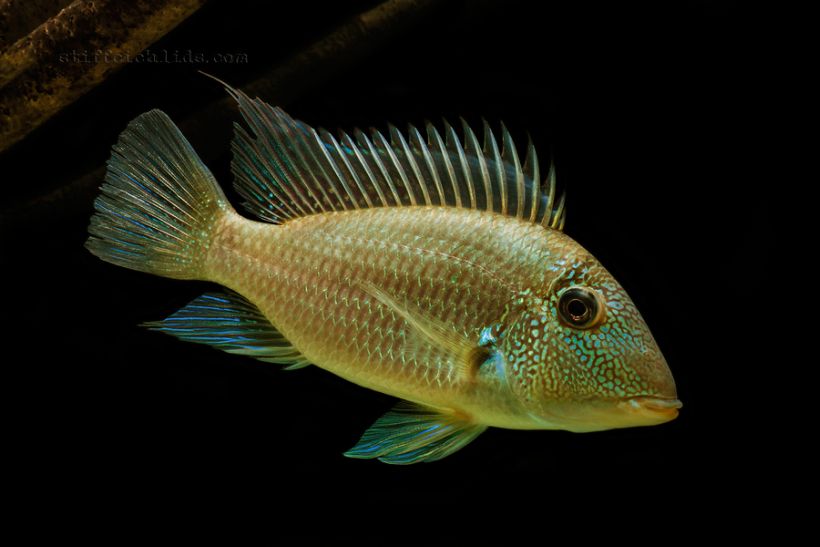
Satanoperca mapiritensis
Fernández-Yépez, 1950
Max length150mm SL6in SLTank180 × 60cm72 × 24inTemp22–28°C72–82°FpH5.5–7.5Recent genetic research has revealed there to be a possibility that although S. mapiritensis is genetically distinct from S. leucosticta, it may turn out to be conspecific with S. jurupari and S. rhynchitis. There appears to be no clear genetic separation between these three putative species nor a form known to aquarists as S. sp. 'Negro-Alto Orinoco' which replaces S. mapiritensis in the middle and upper Orinoco, Casiquiare Canal, and upper rio Negro.
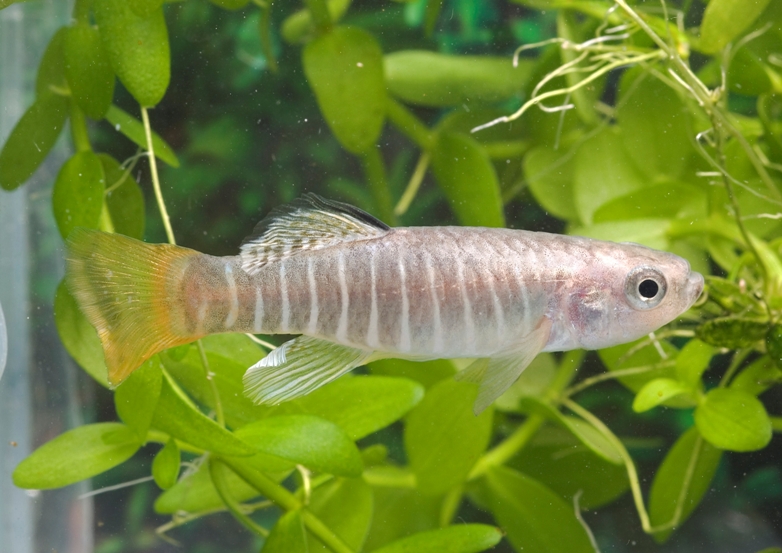
Aphanius fasciatusMediterranean Toothcarp
Valenciennes, 1821
Max length55mm SL2.2in SLTank120 × 30cm48 × 12inTemp2–30°C36–86°FpH7.5–9.0A 2003 phylogenetic study by Hrbek and Meyer showed that in genetic terms specimens of A. fasciatus collected from different localities do not vary as much as with other members of the genus. The latter tend to exist in geographically separated populations and exhibit localised differentiation. While A. fasciatus does show certain disparities in appearance depending on locality it is thought that periodic migration events have restricted the development of genetic diversity within the species to...
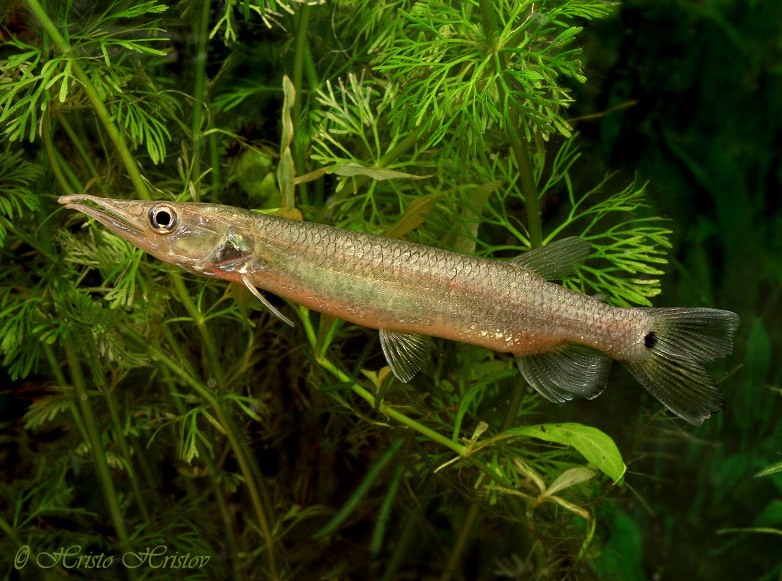
Ctenolucius hujetaGar 'Characin'
Valenciennes, 1850
Max length250mm SL10in SLTank180 × 60cm72 × 24inTemp22–28°C72–82°FpH5.0–7.5C. hujeta is traded under various names including 'slant-nosed gar', 'hujeta gar', 'rocket gar' and 'freshwater barracuda' but it and other members of the family Ctenoluciidae have traditionally been referred to as 'pike characids'. They're all predatory fishes native to South America, included in the order Characiformes and currently spread across two genera; Ctenolucius with two species and Boulengerella with five. The two genera are ...
Melanotaenia australisWestern rainbowfish
authority not recorded
Max length120mm SL5in SLTank120 × 30cm48 × 12inTemp22–27°C72–81°FpH6.5–8.0This species was formerly classified as part of the Melanotaenia splendida complex, but more recent research into the genetics of the species has shown that not only is M. australis genetically dissimilar to the splendida group, but also that there are 2 clear lineages within australis This may yet result in another official member of the genus. M. australis exhibits a wide variation in colour and patterning depending on locality, and is probably the commonest rainbowfish species in Australi...
Pimelodus maculatusSpotted Pim
authority not recorded
Max length180mm SL7in SLTank120 × 60cm48 × 24inTemp20–24°C68–75°FpH6.4–7.4There are currently 32 genera and over 80 species included in the family Pimelodidae (including Pimelodus), making it the second largest and one of the most diverse amongst catfish. Most experts agree however, that a full systematic revision of the family is needed, as little information about the phylogenetic (evolutionary relatedness) relationships between the various genera exists. Taxonomy information at the species level is also basic at best. It's therefore likely that at least some o...
Pimelodus ornatusOrnate Pim
authority not recorded
Max length280mm SL11in SLTank150 × 60cm60 × 24inTemp24–25°C75–77°FpH6.0–7.2There are currently 32 genera included in the family Pimelodidae (including Pimelodus), making it the second largest and one of the most diverse amongst catfish. However most experts agree that a full systematic revision of the family is needed, as little information about the phylogenetic (evolutionary relatedness) relationships between the various genera exists. Taxonomy information at the species level is also basic at best. It's therefore likely that at least some of the Pimelodids will...
Pimelodus pictusPictus Cat
authority not recorded
Max length120mm SL5in SLTank120 × 45cm48 × 18inTemp22–25°C72–77°FpH5.8–6.8There are currently 32 genera and over 80 species included in the family Pimelodidae (including Pimelodus), making it the second largest and one of the most diverse amongst catfish. However most experts agree that a full systematic revision of the family is needed, as little information about the phylogenetic (evolutionary relatedness) relationships between the various genera exists. Taxonomy information at the species level is also basic at best. It's therefore likely that at least some of...
Potamotrygon falkneriLarge Spot Stingray
authority not recorded
Max length470mm SL19in SLTank180 × 60cm72 × 24inTemp23.9–28.9°C75–84°FpH6.0–7.5P. falkneri is arguably among the most beautiful Potamotrygonids seen in the hobby. It's not imported with any great degree of regularity, and is usually expensive when available. There are currently three genera in the family Potamotrygonidae, all of which hail from South America. Paratrygon and Plesiotrygon are both monotypic genera (contain only a single described species) and are rarely seen in the hobby. The vast majority of imported rays belong to the biggest genus, Potamotrygon. T...
Potamotrygon scobinaMosaic Stingray
authority not recorded
Max length350mm SL14in SLTank180 × 75cm72 × 30inTemp24–26°C75–79°FpH6.0–7.5There are currently three genera in the family Potamotrygonidae, all of which hail from South America. Paratrygon and Plesiotrygon are both monotypic genera (contain only a single described species) and are rarely seen in the hobby. The vast majority of captive rays belong to the biggest genus, Potamotrygon. This contains 17 species at present, and its members are sometimes referred to as "big-eyed" stingrays for fairly obvious reasons. There are also a number of undescribed species th...
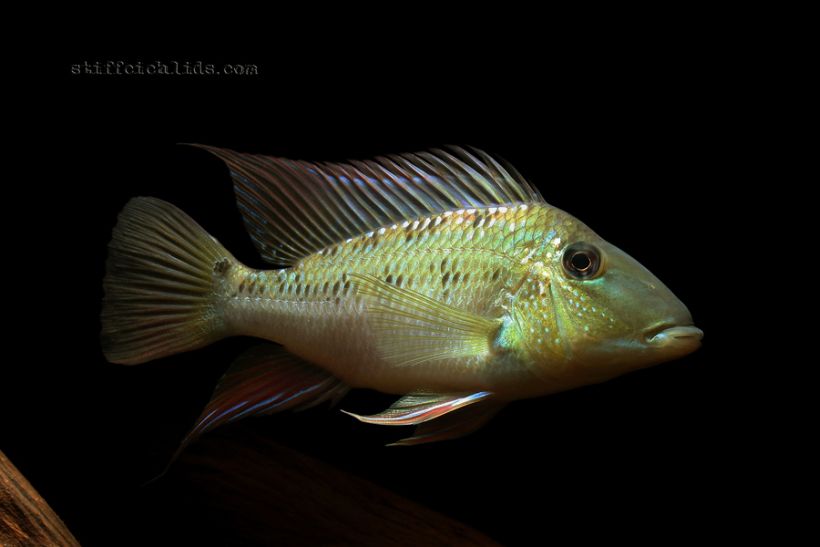
Satanoperca pappaterraPantanal Eartheater
Heckel, 1840
Max length200mm SL8in SLTank210 × 60cm84 × 24inTemp20–28°C68–82°FpH5.5–7.5S. pappaterra is relatively rare in the ornamental trade and much sought after by enthusiasts. It is easily distinguished from all known congeners by presence of a series of prominent black blotches beneath the dorsal-fin, plus a well-defined dark band extending along the side of the body. In recent genetic analyses its genetic distinctness was strongly supported, with S. jurupari and S. leucosticta its closest relatives.
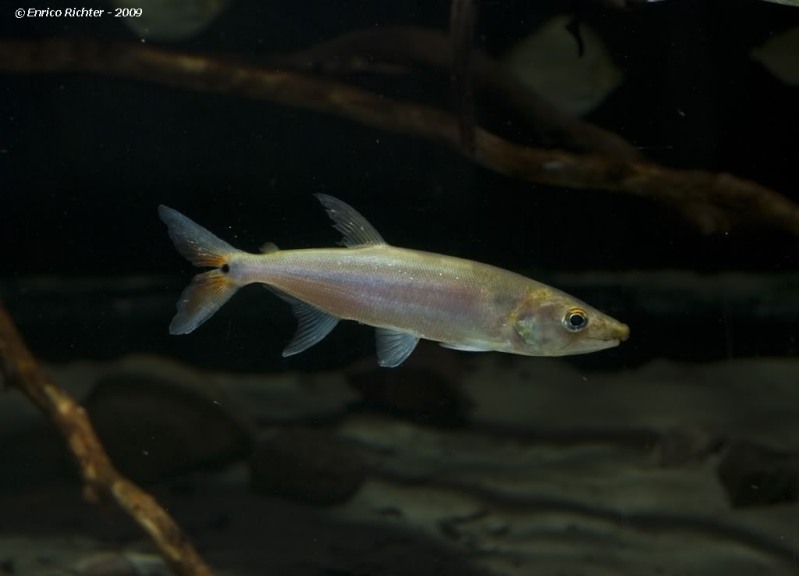
Acestrorhynchus falcatusRed-Tailed Freshwater Barracuda
Bloch, 1794
Max length275mm SL11in SLTank250 × 90cm98 × 36inTemp22–28°C72–82°FpH6.0–7.5The vernacular name of this fish is derived from its appearance and behaviour, rather than a genetic association with the marine barracuda, and it's also sometimes referred to as 'pike characin' or 'spotted cachorro' with local vernacular names including 'Grand dent-chien' (French Guiana), ' Cachorrinho' or 'Ueua' (Brazil). Although most species of Acestrorhynchus appear superficially similar to one another most exhibit distinguishable external chara...
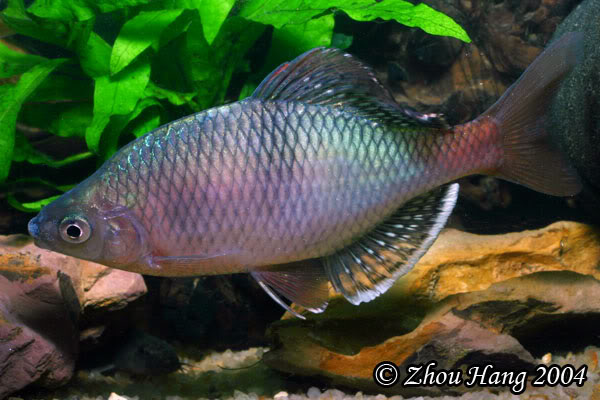
Acheilognathus macropterusGiant Chinese Bitterling
Bleeker, 1871
Max length275mm SL11in SLTank180 × 60cm72 × 24inTemp14–22°C57–72°FpH6.0–8.0A. macropterus appears in the ornamental trade on an irregular basis and should only be considered by more experienced aquarists with sufficiently large facilities. Given its wide geographical distribution there is a possibility that it represents a group of closely-related species, with genetic studies indicating the existence of several distinct clades.
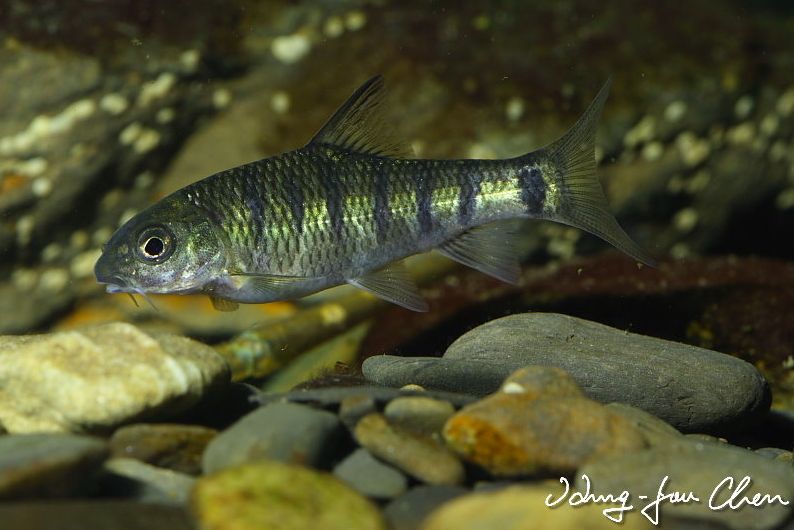
Acrossocheilus paradoxusTaiwan Banded Barb
Günther, 1868
Max length200mm SL8in SLTank180 × 45cm72 × 18inTemp15–25°C59–77°FpH6.0–8.0The genus Acrossocheilus is restricted to southern China, northern Vietnam and northern Laos. It can be distinguished from related genera by the following combination of characters: rostral fold present; lips fleshy and continuous around corners of mouth; lower lip with a median interruption; mouth inferior; horny sheath on lower jaw; two pairs of barbels; last simple ray of dorsal fin osseous with a serrated or smooth posterior margin.
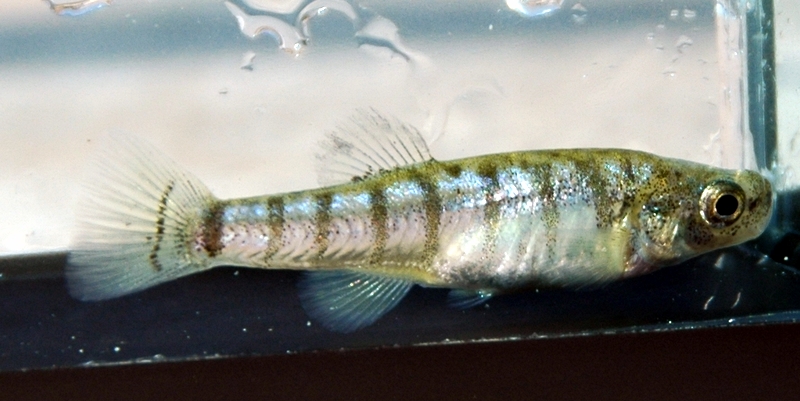
Anatolichthys saldaeSalda Toothcarp
Akşiray, 1955
Max length50mm SL2.0in SLTank120 × 30cm48 × 12inTemp6.5–22°C44–72°FpH8.0–10.0The elongated, slender body profile, angular lower jaw and reduced scalation exhibited by this little-known subspecies have seen it placed in the disused genera Anatolichthys and Kosswigichthys in the past and it's still inexplicably listed as a species of Lebias by some sources (for the record Lebias has long been considered a synonym of Cyprinodon by most authorities and an ICZN committee voted to suppress the name in favour of Aphanius as recently as 2003). You're unlikely to find i...
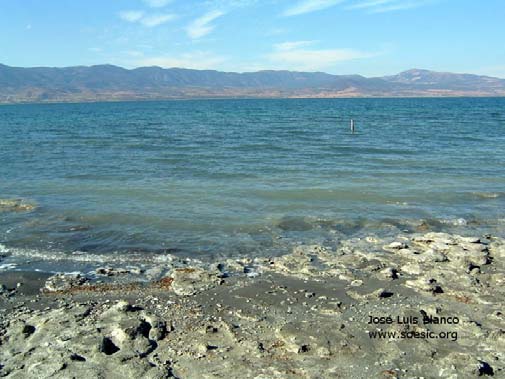
Anatolichthys sureyanusBurdur Toothcarp
Neu, 1937
Max length50mm SL2.0in SLTank120 × 30cm48 × 12inTemp5–22°C41–72°FpH8.0–10.0The elongated, slender body profile, angular lower jaw and reduced scalation exhibited by this little-known subspecies have seen it placed in the disused genera Anatolichthys and Kosswigichthys in the past. It has also been referred to, and still is in some cases, as A. transgrediens or more often A. burdurensis/burduricus. Some of these names were erected due to the differences in scalation that can be observed among the population in Lake Burdur but studies by Villwock and others revealed that...
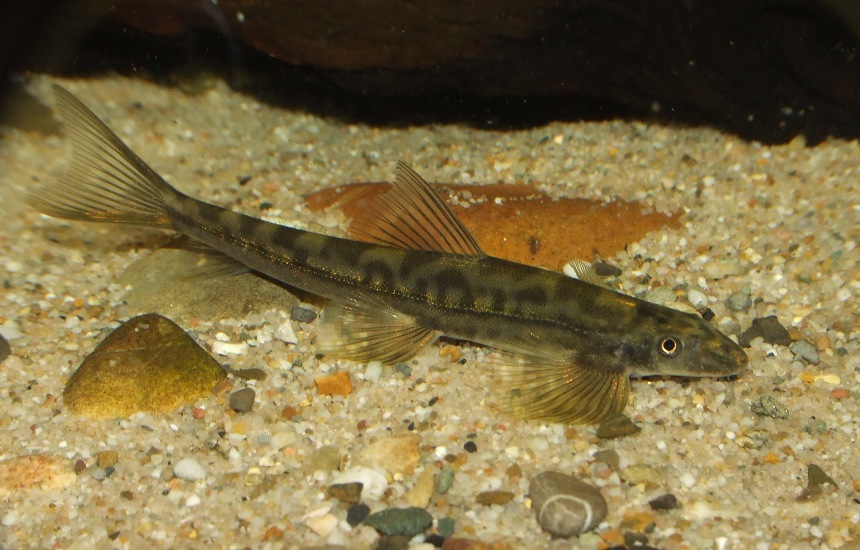
Annamia cf. thuathienensis
Nguyen, 2005
Max length100mm SL3.9in SLTank120 × 30cm48 × 12inTemp16–22°C61–72°FpH6.0–7.5Annamia spp. may be confused with related genera such as those of the genus Balitoropsis. They can be identified by their more depressed body shape, elongate lower caudal-fin lobe, and the presence of a single unbranched ray in the pectoral and pelvic fins. At least one undescribed member of the genus is thought to exist.