Results for “insertion”
Type a name: scientific, common, or one a species used to go by. Or narrow the catalogue with the filters.
Filters
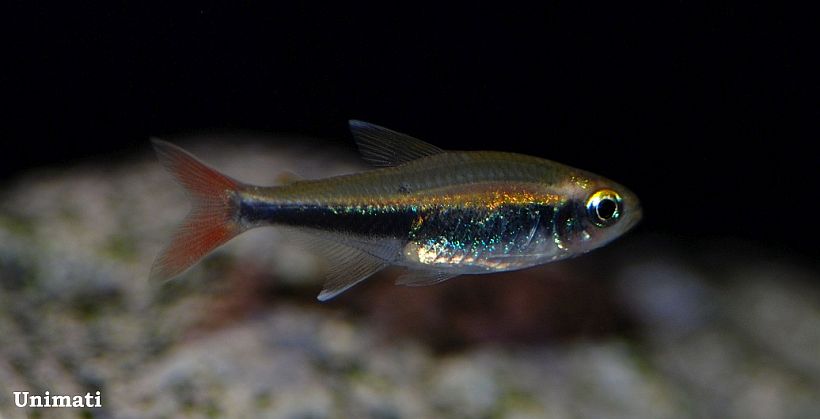
Hyphessobrycon loretoensisLoreto Tetra
Ladiges, 1938
Max length25mm SL1.0in SLTank60 × 30cm24 × 12inTemp22–28°C72–82°FpH5.0–7.0The most recent diagnosis appears to be that of Géry (1977), in which it was separated from other members of the group by the following combination of characters: dorsal-fin insertion at or slightly anterior to mid-body; caudal-fin brick red to orange-red; body depth fits less than 3.6 times in SL; head length fits 3.5-4.0 times in SL; caudal peduncle length u...
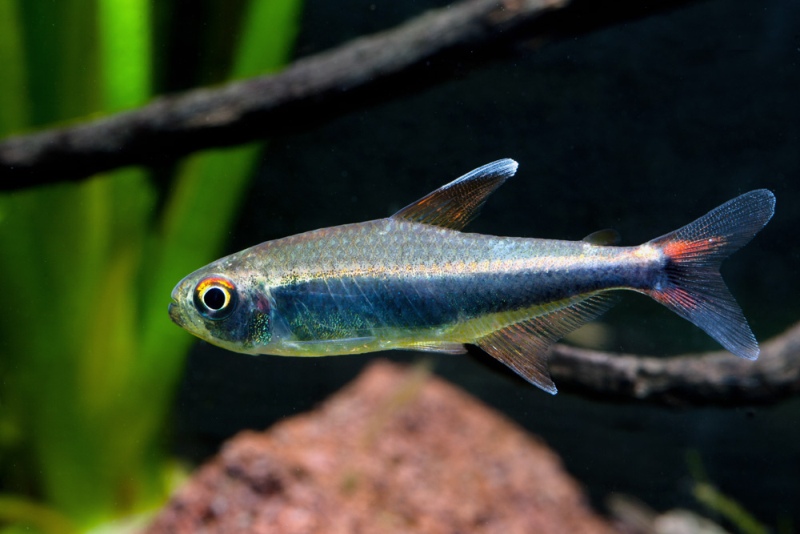
Hyphessobrycon peruvianusPeruvian Tetra
Ladiges, 1938
Max length40mm SL1.6in SLTank60 × 30cm24 × 12inTemp22–27°C72–81°FpH5.0–7.0This species is available on a relatively regular basis, although it's sometimes confused with the similar-looking congeners H. loretoensis and H. metae. It can be identified via the following combination of characters as per Géry (1977): elongate in shape with body depth fitting 3.8-3.9 times in its standard length; caudal peduncle narrow, its depth fitting 1.8 times in its length; head short, interorbital broad, snout short and rounded; dorsal-fin insertion an...
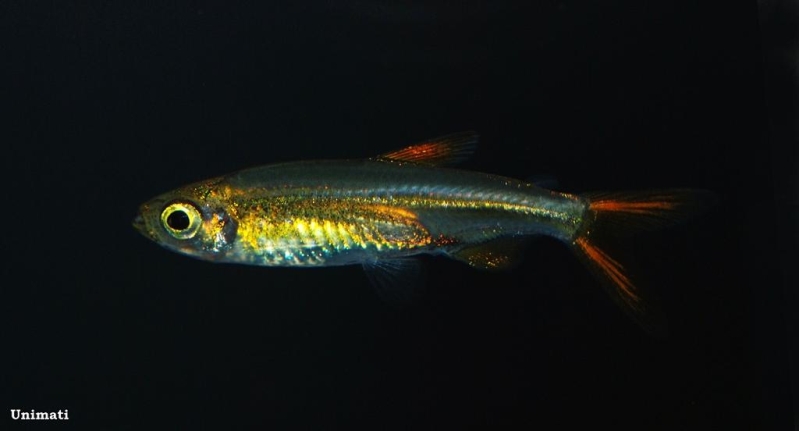
Ladigesia roloffiJelly Bean Tetra
Géry, 1968
Max length31mm SL1.2in SLTank60 × 30cm24 × 12inTemp20–26°C68–79°FpH5.0–7.0This species is sometimes referred to as 'Sierra Leone dwarf characin' and is the only member of its genus which can be distinguished from other alestids by lacking dorsal scales anterior to the adipose-fin insertion. The family Alestidae is the most spe...
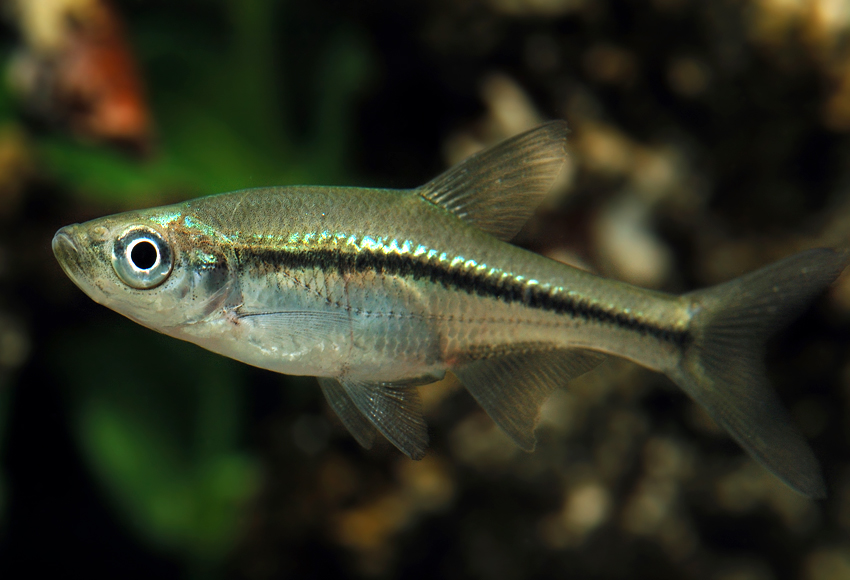
Metzia formosae
Oshima, 1920
Max length75mm SL3.0in SLTanknot recordedTempnot recordedpHnot recordedAlthough it is included in the genus Metzia this grouping remains somewhat unresolved in terms of taxonomy and it may contain more than a single genetic lineage. For example, members share a number of characters with the genera Ischikauia Jordan and Snyder 1900, Hemiculterella Warpachowski 1887, and several species of Anabarilius Cockerell 1923, including a bipartite gas bladder, a non-spinous dorsal-fin ray, and a sharp ventral keel between the pelvic-fin insertion and anus.