Results for “jaw”
Type a name: scientific, common, or one a species used to go by. Or narrow the catalogue with the filters.
Filters
Campylomormyrus tamanduaWorm-Jawed Mormyrid
authority not recorded
Matched on the common name Worm-Jawed Mormyrid
Max length400mm SL16in SLTank180 × 60cm72 × 24inTemp23–28°C73–82°FpH5.0–7.0C. tamandua is quite a rare fish in the hobby, but is imported occasionally. It's not a good beginner's fish as it requires pristine soft, acidic water conditions, will generally not feed on standard foods and attains a very respectable adult size. It's also sensitive to many aquarium medications. It can sometimes be found as a contaminant among imports of the much more common Elephant Fish, Gnathonemus petersii. Unlike this species, C. tamandua has both upper and lower jaws exten...
Potamotrygon leopoldiPolka Dot Stingray
authority not recorded
Max length600mm SL24in SLTank240 × 90cm96 × 36inTemp20–29°C68–84°FpH6.0–7.5P. leopoldi is aruably one of the most stunning freshwater species in the hobby and comes with a price tag to match. A fully grown one of these makes a jaw-dropping sight. Sadly exports from Brazil are now illegal under the IBAMA regulations, although captive bred fish are available occasionally. The price tends to be even more expensive as a result. A rare form in which the light spots appear as rings with black centres is known as P. leopoldi "eclipse" is more costly still. The stunn...
Potamotrygon sp. "pearl"Pearl Ray
authority not recorded
Max length600mm SL24in SLTank240 × 90cm96 × 36inTemp23–29°C73–84°FpHnot recordedThis undescribed species must rank among the most jaw-dropping freshwater fish yet seen in the hobby. A good-sized adult makes a truly incredible sight. Unfortunately due to the current ban on ray exports from Brazil it is almost unobtainable and correspondingly expensive when it is. The handful of captive-bred specimens released each year can cost up to £1000 each, and we know of only a single breeder in the UK. The patterning of this "species" is highly variable, with...
Polypterus weeksiiMottled Bichir
authority not recorded
Max length550mm SL22in SLTank150 × 60cm60 × 24inTempnot recordedpHnot recordedP. weeksii is one of the "upper-jawed" tribe of polypterids so named on account of the upper jaw being longer than or equal in length to the lower jaw. It is one of the rarer bichir species in the hobby. Like other bichirs it is an incredibly hardy, nocturnal species with very poor vision, relying on its excellent sense of smell to locate food. This species along with others of its genus are some of the last surviving relatives of very ancient species. Fossils of earlier relatives have...
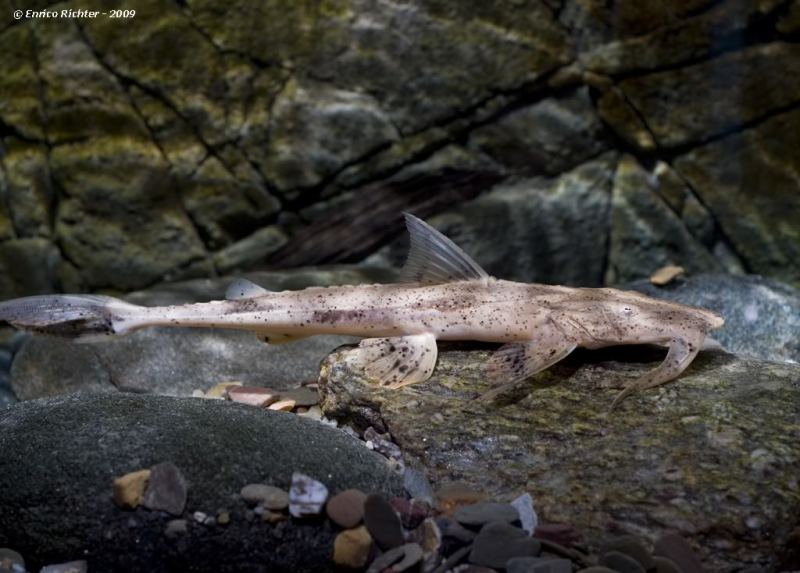
Bagarius suchusCrocodile Catfish
Roberts, 1983
Max length700mm SL28in SLTanknot recordedTemp18–23°C64–73°FpH6.0–7.5The genus Bagarius is distinguished from all other genera in the putative subfamily Sisoridae by having markedly heterodont teeth in the lower jaw. Teeth are present in two or three outer rows of relatively numerous, close-set conical teeth, and one or two inner rows of less numerous, widely separated, and much larger conical teeth (vs. dentition of the lower jaw consisting of only small conical teeth, or a roughened bony plate).
Catoprion mentoWimpel Piranha
authority not recorded
Max length150mm SL6in SLTank120 × 38cm48 × 15inTemp23–26°C73–79°FpH5.8–6.5This species is not actually a piranha in ichthyologic terms, being monotypic and therefore unique. It was so named due to its general resemblance to true piranha, and the fact that it is quite closely related to Pygocentrus species. Mento means "chin", referring to the protruding jaw of the fish. This jaw structure, along with the adapted teeth, is used in its natural feeding behaviour. It has been observed to swim at great speed into a selected target, biting hard as it collides w...
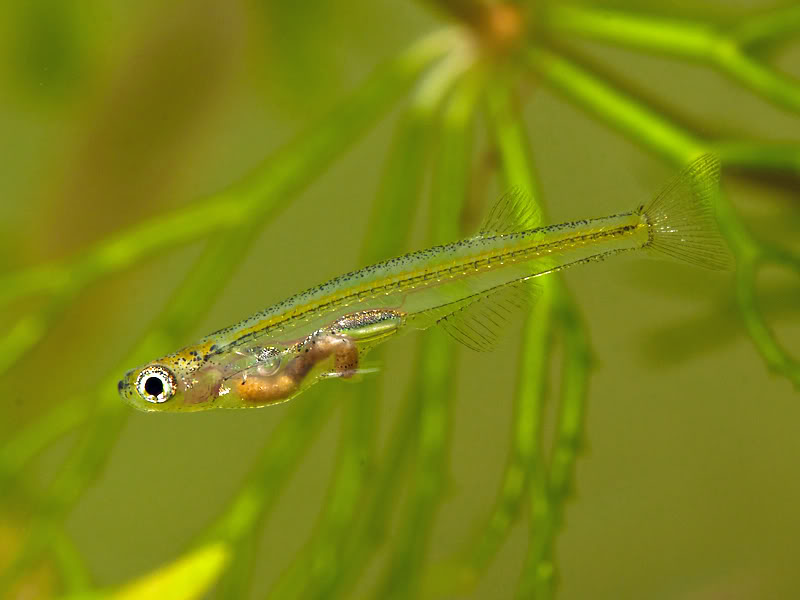
Danionella dracula
Conway & Rüber, 2009
Max length17mm SL0.7in SLTank45 × 30cm18 × 12inTemp20–26°C68–79°FpH6.5–7.5This species is available in the trade on occasion and has been sold as Danionella sp. 'neon green' or 'flourescent green'. The specific name was inspired by its jaw morphology which according to current knowledge is unique among cypriniform fishes. Both upper and lower jaws contain a series of toothlike odontoid processes; these are only rudimentary in females but in males appear to form rows of teeth of which the front pair is large and fang-like. The upper fangs project th...
Dermogenys pusillaWrestling Halfbeak
authority not recorded
Max length55mm SL2.2in SLTank60 × 38cm24 × 15inTemp24–28°C75–82°FpH6.5–8.0Halfbeaks derive their common name from the elongated lower jaw shared by all species. The 'wrestling' moniker given to this particular species is due to the tendency of males to fight with each other, often locking jaws in the process. It is used as a fighting fish in some of its native countries, with wagers being placed on the outcome of fights between males. The two fish are placed in a small container for fighting purposes, as they will spar incessantly in such confined conditions...
Mylochromis melanonotusHaplochromis Yellow-black Line
authority not recorded
Max length260mm SL10in SLTank150 × 60cm60 × 24inTemp24–28°C75–82°FpH7.6–8.8M. melanonotus is rarely imported and little information is available regarding its captive care. The shovel-like lower jaw possessed by some individuals of this species has been the cause of some confusion regarding the fishes' true identity. It was originally placed in the genus Platygnathochromis, in which it was the only species. However, Ad Konings observed that amongst wild breeding populations there existed individuals both with and without the modified lower jaw. The specimens witho...
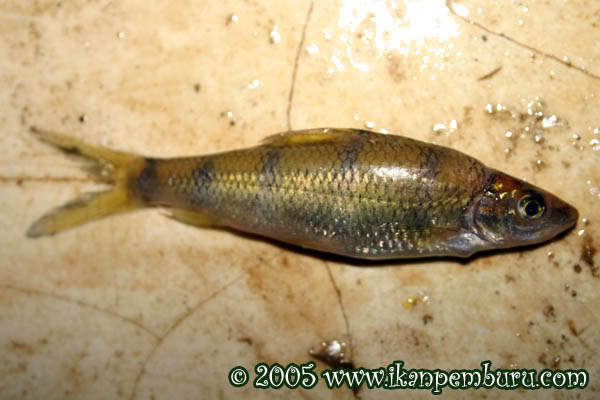
Acrossocheilus iridescens
Nichols & Pope, 1927
Max length300mm SL12in SLTanknot recordedTempnot recordedpHnot recordedA. iridescens and its closest relative A. longipinnis can be distinguished from all other barred species of Acrossocheilus by the following characters: wider (vs. narrower) black vertical bars on the flank in adults, each five to eight (vs. no more than four) scales in width; a horse-shoe shaped (vs. arched) mouth gape; rostral barbel located posteriorly (vs. anteriorly) to a horizontal line through the anteriormost margin of the lower jaw; two postlabial grooves extending anteromedially beyond (vs. away from) a horizontal line through the roots of the rostral barbels.
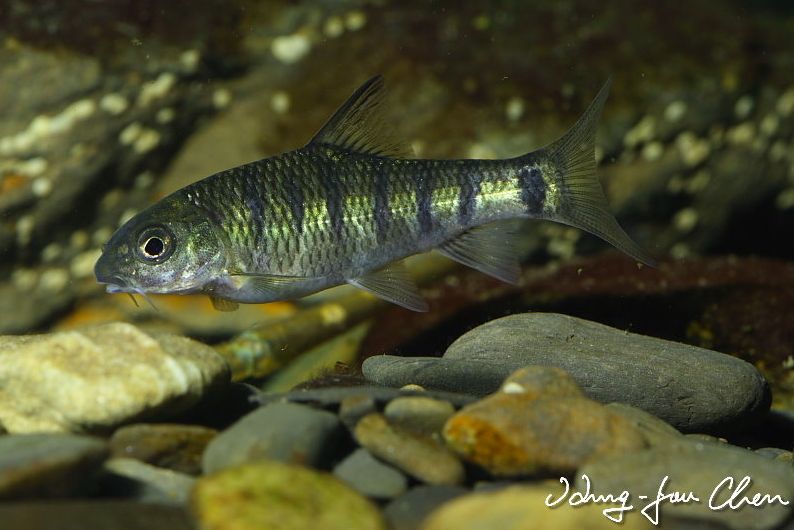
Acrossocheilus paradoxusTaiwan Banded Barb
Günther, 1868
Max length200mm SL8in SLTank180 × 45cm72 × 18inTemp15–25°C59–77°FpH6.0–8.0The genus Acrossocheilus is restricted to southern China, northern Vietnam and northern Laos. It can be distinguished from related genera by the following combination of characters: rostral fold present; lips fleshy and continuous around corners of mouth; lower lip with a median interruption; mouth inferior; horny sheath on lower jaw; two pairs of barbels; last simple ray of dorsal fin osseous with a serrated or smooth posterior margin.
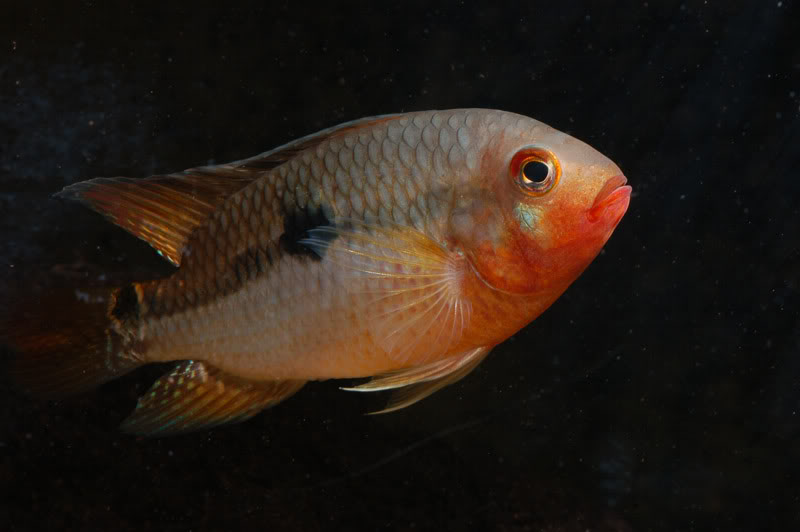
Aequidens tetramerusSaddle Cichlid
Heckel, 1840
Max length162mm SL6in SLTanknot recordedTemp24–27°C75–81°FpH4.5–7.5This is the type species of the genus Aequidens and has the widest distribution of any member species. It exists in various colour forms depending on locality with variants from Ecuador and Peru being particularly sought after since they develop striking red (Ecuador) or orange (Peru) colouration on the lower part of the jaw, head and anterior portion of the belly whereas those from Brazil tend to have an overall grey/blue/green colouration, for example. Despite its type status it's long...
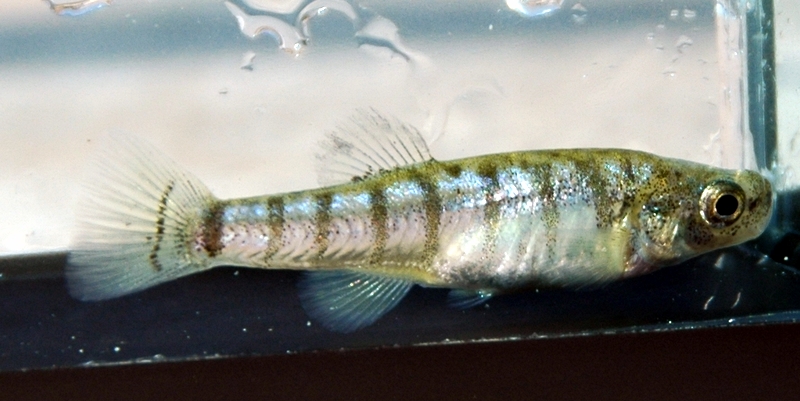
Anatolichthys saldaeSalda Toothcarp
Akşiray, 1955
Max length50mm SL2.0in SLTank120 × 30cm48 × 12inTemp6.5–22°C44–72°FpH8.0–10.0The elongated, slender body profile, angular lower jaw and reduced scalation exhibited by this little-known subspecies have seen it placed in the disused genera Anatolichthys and Kosswigichthys in the past and it's still inexplicably listed as a species of Lebias by some sources (for the record Lebias has long been considered a synonym of Cyprinodon by most authorities and an ICZN committee voted to suppress the name in favour of Aphanius as recently as 2003). You're unlikely to find i...
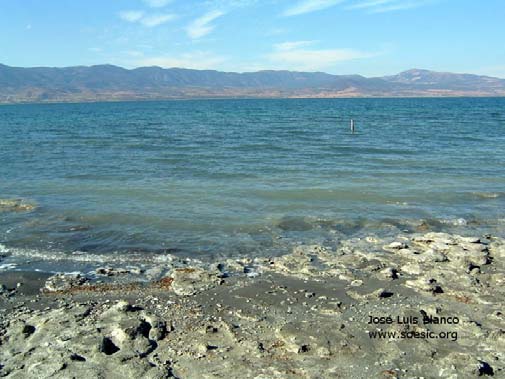
Anatolichthys sureyanusBurdur Toothcarp
Neu, 1937
Max length50mm SL2.0in SLTank120 × 30cm48 × 12inTemp5–22°C41–72°FpH8.0–10.0The elongated, slender body profile, angular lower jaw and reduced scalation exhibited by this little-known subspecies have seen it placed in the disused genera Anatolichthys and Kosswigichthys in the past. It has also been referred to, and still is in some cases, as A. transgrediens or more often A. burdurensis/burduricus. Some of these names were erected due to the differences in scalation that can be observed among the population in Lake Burdur but studies by Villwock and others revealed that...
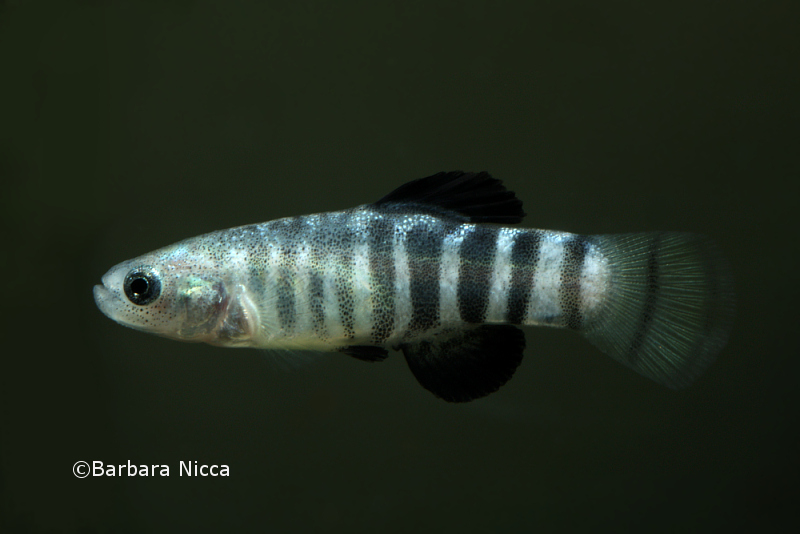
Anatolichthys transgrediensAcı Toothcarp
Ermin, 1946
Max length50mm SL2.0in SLTanknot recordedTempnot recordedpH8.0–10.0The modified lower jaw and reduced scalation exhibited by this little-known species have seen it placed in the disused genera Anatolichthys and Turkichthys in the past and it is still sometimes listed as a species of Lebias although that generic name has long been considered a synonym of Cyprinodon by most authorities and an ICZN committee voted to suppress the name in favour of Aphanius as recently as 2003. You're unlikely to find it on sale in aquatic stores although it ma...
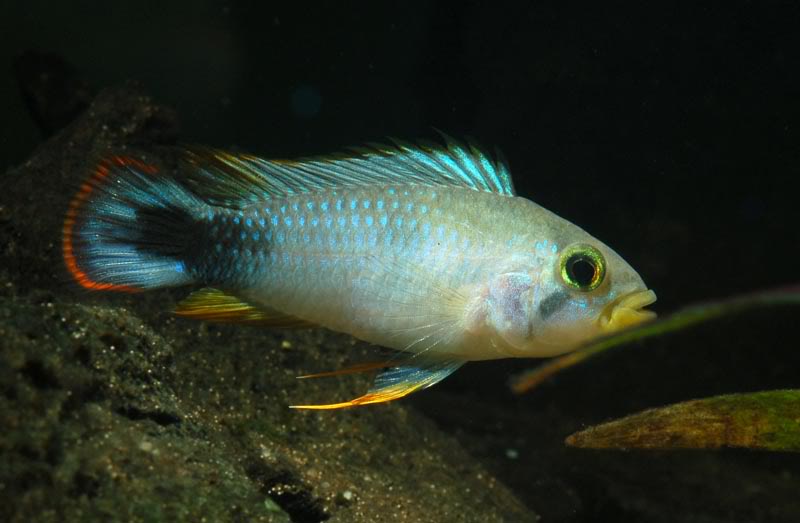
Apistogramma panduro
Römer, 1987
Max length♂ 75 · ♀ 55mm SL♂ 3.0 · ♀ 2.2in SLTank60 × 30cm24 × 12inTemp22–29°C72–84°FpH4.0–6.5This species is also known by the alternative vernacular names 'blue panda cichlid', 'blue sky dwarf cichlid and 'azure cichlid' as well as the confusing trade name A.sp. 'pandurini'. It has also been assigned the 'A' number A183 under the DATZ system with possibly conspecific, related forms similarly numbered A184 or A185 depending on locality. It can be distinguished from similar-looking species by the length of the lower jaw which characte...
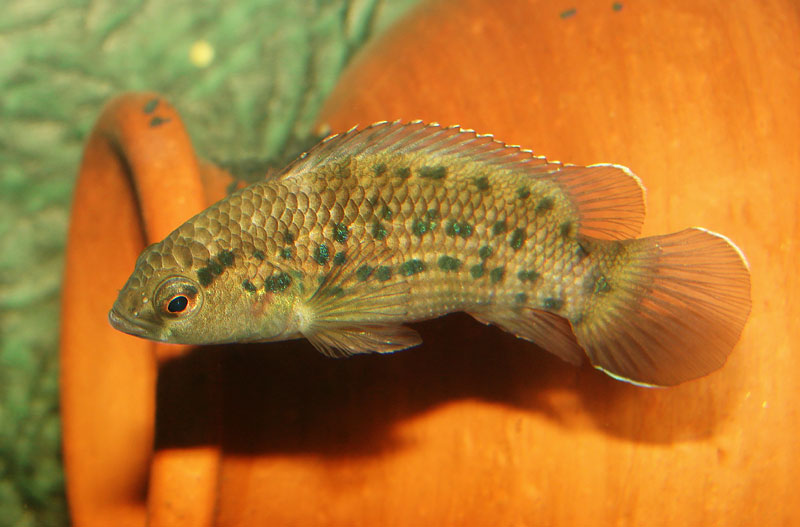
Badis assamensis
Ahl, 1937
Max length75mm SL3.0in SLTank75 × 30cm30 × 12inTemp15–25°C59–77°FpH6.0–7.5Like most badids this species is poorly documented and has yet to find significant popularity in the aquarium hobby. It is easily confused with B. blosyrus at first glance as the body patterning of the two is almost identical but can be distinguished by its slightly larger adult size, noticeably shorter jaw profile and some other, mostly internal, meristic characters. Prior to 2002 the family Badidae inc...
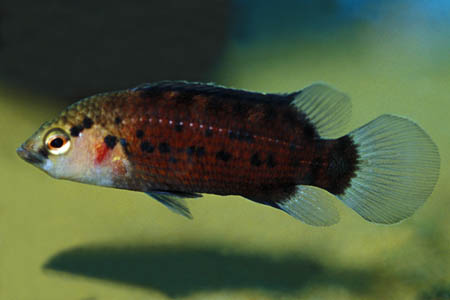
Badis blosyrus
Kullander & Britz, 2002
Max length70mm SL2.8in SLTank75 × 30cm30 × 12inTemp15–25°C59–77°FpH6.0–7.5Like most badids this species is poorly documented and has yet to find significant popularity in the aquarium hobby. It is easily confused with B. assamensis at first glance as the body patterning of the two is almost identical but can be distinguished by its slightly smaller adult size, noticeably elongated, more well-developed jaw profile and some other, mostly internal, meristic characters.
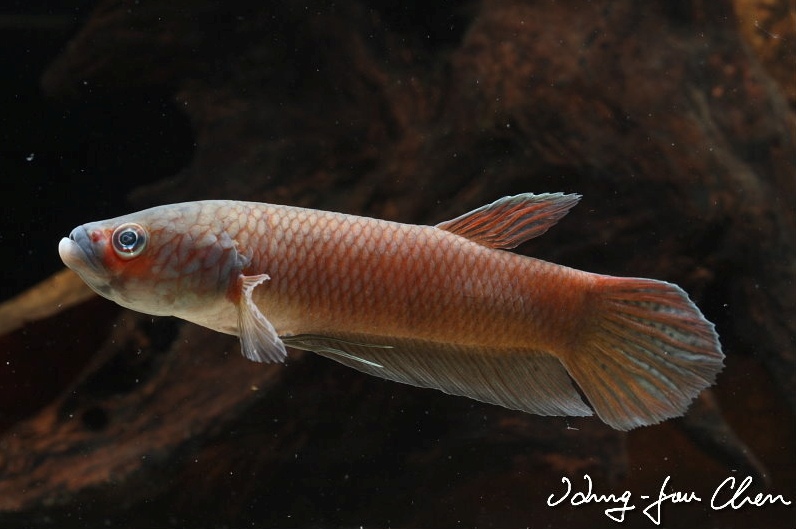
Betta ideii
Tan & Ng, 2006
Max length110mm SL4in SLTank90 × 30cm36 × 12inTemp20–26°C68–79°FpH5.5–7.5Prior to official description this species was traded as B. sp. 'Laut'. It's included in the Betta unimaculata complex of closely-related species within the genus, , of which members share the following set of characters: body long and slender with depth at dorsal fin origin 18-25 % SL; head large and blunt with width 19-24 % SL; long maxilla and lower lip with distance from tip of lower jaw to posterior end of maxilla 27-54 % HL; caudal-fin rounded in sha...
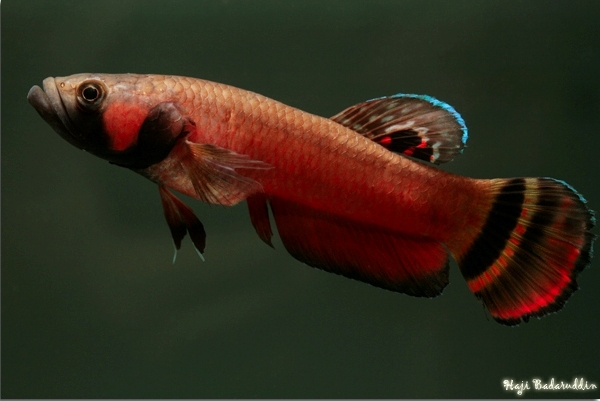
Betta macrostomaBrunei Beauty
Regan, 1910
Max length100mm SL3.9in SLTank80 × 30cm31 × 12inTemp20–25°C68–77°FpH4.0–6.0B. macrostoma is included in the Betta unimaculata complex of closely-related species within the genus, of which members share the following set of characters: body long and slender with depth at dorsal fin origin 18-25 % SL; head large and blunt with width 19-24 % SL; long maxilla and lower lip with distance from tip of lower jaw to posterior end of maxilla 27-54 % HL; caudal-fin rounded in shape, occasionally with elongated median rays; pelvic-fin short and filamentous; dorsal and anal fins relatively pointed.