Results for “opercular”
Type a name: scientific, common, or one a species used to go by. Or narrow the catalogue with the filters.
Filters
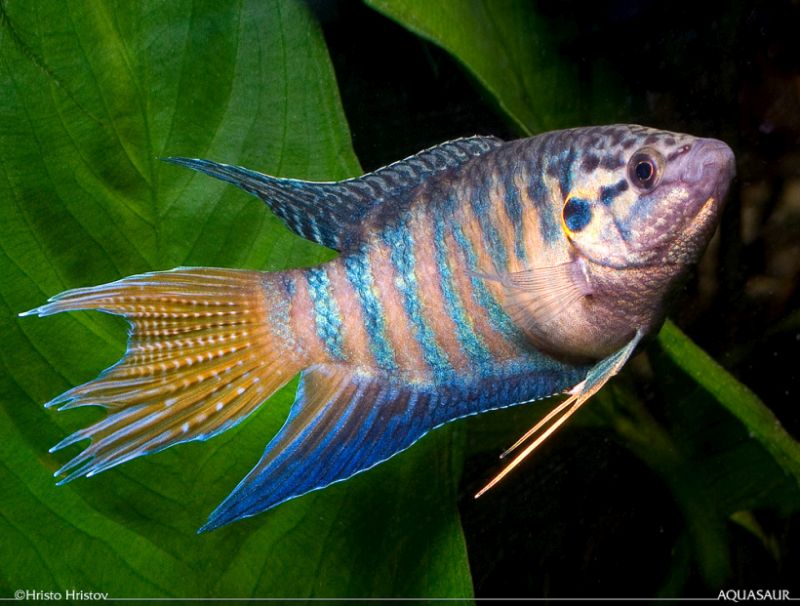
Macropodus opercularisParadise Fish
Linnaeus, 1758
Matched on Labrus opercularis, a name it was formerly known by
Max length80mm SL3.1in SLTank80 × 30cm31 × 12inTemp10–22°C50–72°FpH6.0–8.0M. opercularis is a classic aquarium fish, having been introduced to the hobby by a French soldier named Gerault in 1869. Of the initial 100 specimens shipped, 22 survived and were successfully bred later that same year by another Frenchman, the Parisian Pierre Carbonnier. This gives the species the distinction of being one of the very first ornamental fish imported to Europe. It is also known as 'Chinese fighting fish', 'paradise gourami', and 'blue paradise fish'.
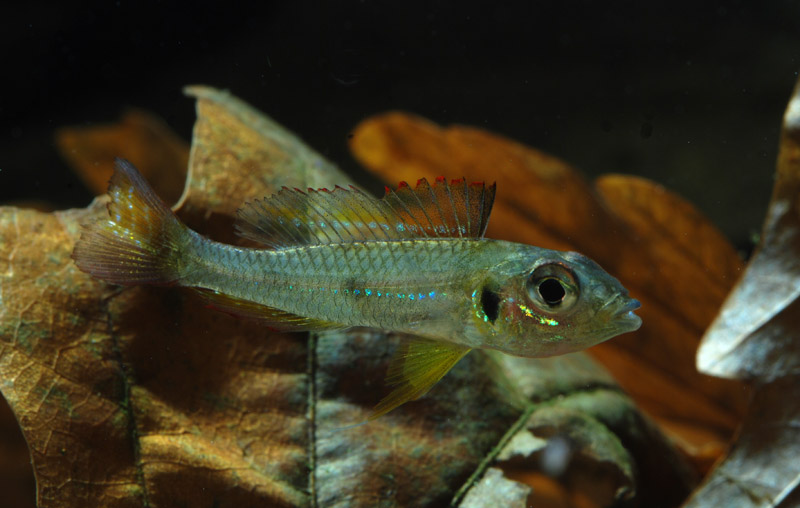
Biotoecus opercularis
Steindachner, 1875
Max length40mm SL1.6in SLTank90 × 30cm36 × 12inTemp25–30°C77–86°FpH4.0–6.5At time of writing there exists no scientific evidence that the different populations of this species seen in the aquarium trade (see 'Distribution') represent anything other than a single, widely-distributed species although some exibit minor morphological differences including relative body depth, longer fin rays in the unpaired fins and yellow or orange colouration in the paired fins. There is apparently a form from the upper rio Negro which may turn out to be distinct but it's...
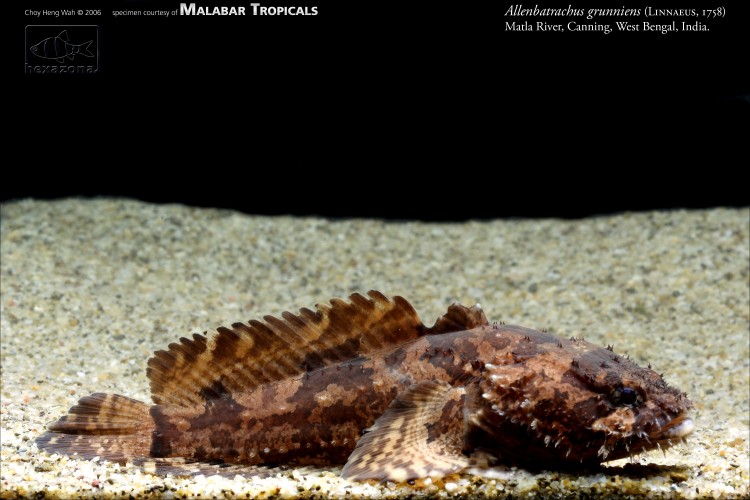
Allenbatrachus grunniensFreshwater Toadfish
Linnaeus, 1758
Max length300mm SL12in SLTanknot recordedTemp23–28°C73–82°FpH7.5–9.0This species is relatively common in the aquarium hobby but contrary to popular belief is not venomous in any way. Its dorsal and opercular spines can pierce the skin, however, meaning extreme caution is necessary when netting it or performing aquarium maintenance. The genus Allenbatrachus was erected in 1997 to accom...
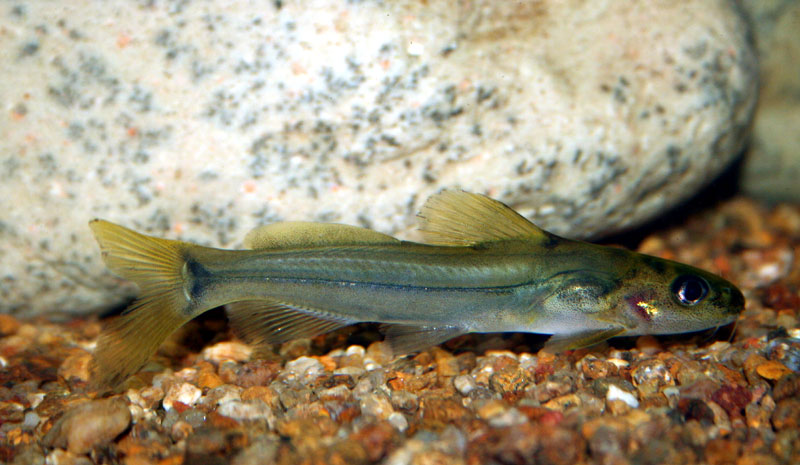
Batasio travancoriaMalabar Batasio
Hora & Law, 1941
Max length100mm SL3.9in SLTank120 × 30cm48 × 12inTemp18–25°C64–77°FpH6.0–7.0The only other described member of the genus native to southwestern India is B. sharavtiensis which occurs a little further north than B. travancoria in Karanataka state. The two are easily distinguished by colour pattern in that B. travancoria possesses a darkish midlateral stripe and a poorly-defined, but normally visible, post-opercular spot, whereas B. sharavtiensis has no such mark...
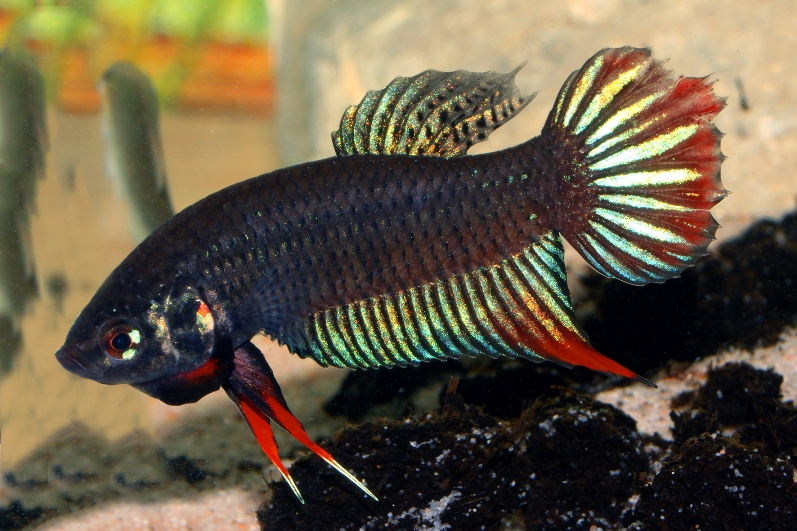
Betta siamorientalis
Kowasupat, Panijpan, Ruenwongsa & Jeenthong, 2012
Max length33mm SL1.3in SLTank45 × 30cm18 × 12inTemp22–28°C72–82°FpH5.5–7.5This species was considered a colour form of the closely-related B. imbellis and commonly-referred to as 'black imbellis' prior to description due to its blackish opercle and body. It's also previously been confused with B. splendens due to the colour of the vertical opercular bars which tend to be reddish (but may also be pale red, greenish-silvery, plain silvery or without colour in some populations), but DNA analysis has demonstrated it...
Liosomadoras oncinusJaguar Catfish
authority not recorded
Max length250mm SL10in SLTank120 × 45cm48 × 18inTemp20–28°C68–82°FpH4.8–7.2Often confused with its congener, L. morrowi, the jaguar cat can be distinguished by its more attractive, brighter patterning and larger adult size. It's an ideal and good looking bottom dweller for the larger community. Previously considered a member of the Doradidae, due to the opercular spines, it has now been reclassified. It occurs over a wide range in nature, hence its apparent tolerance to wildly different water chemistry. In reality, its requirements are determined by collection loc...
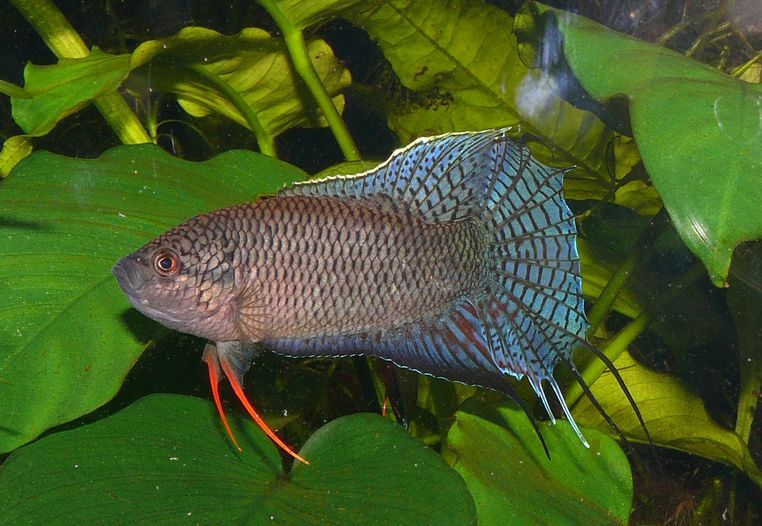
Macropodus spechtiBlack Paradise Fish
Schreitmüller, 1936
Matched on Macropodus opercularis var. spechti, a name it was formerly known by
Max length80mm SL3.1in SLTank80 × 30cm31 × 12inTemp20–30°C68–86°FpH6.0–8.0M. spechti is also sometimes referred to as M. concolor, particularly in older literature. A dispute regarding conservation of that name was resolved by the ICZN in 2006, however, since M. concolor Ahl, 1937 is a junior primary homonym of M. concolor Schreitmüller, 1936 and thus permanently invalid.