Results for “pH”
Type a name: scientific, common, or one a species used to go by. Or narrow the catalogue with the filters.
Filters
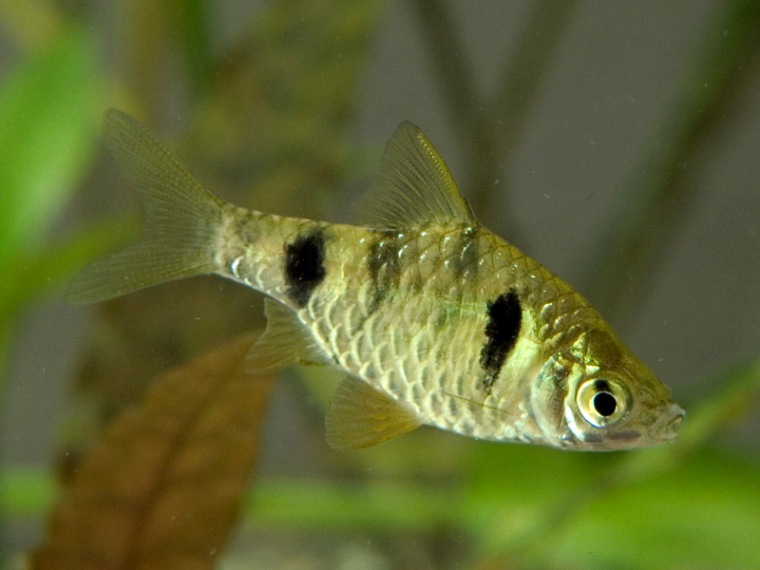
Pethia phutunioDwarf Barb
Hamilton, 1822
Matched on Cyprinus phutunio, a name it was formerly known by
Max length30mm SL1.2in SLTank60 × 30cm24 × 12inTemp21–26°C70–79°FpH6.0–7.0In P. phutonio the flank markings comprise two black, vertically-orientated blotches, one posterior to the operculum and the other on the caudal peduncle, and within the P. conchonius group this patterning is shared with P. bandula, P. cumingii, P. didi, P. meingangbii, P. padamya, and P. tiantian. It can be told apart from these by the following combination of characters: smaller adult size of 25 - 30 mm vs. at least 35 - 40 mm; minute maxillary barbels; incomplete lateral line with ab...
Phractocephalus hemioliopterusRed-tail Catfish
authority not recorded
Max length1340mm SL53in SLTanknot recordedTemp21–26°C70–79°FpH6.0–7.5Although this profile has been included for information purposes, we do not recommend keeping this species in the home unless you are one of the select few with the facilities available to house it for life. The aquarium dimensions quoted above should be considered an absolute minimum and in reality this fish requires a phenomenal volume of water if it is to be housed long term. Unfortunately, the price of red-tails has fallen considerably in recent years and "kittens" are readily a...
Pseudocrenilabrus philanderSouthern Mouth-Brooder
authority not recorded
Max length75mm SL3.0in SLTank120 × 30cm48 × 12inTemp22–25°C72–77°FpH6.5–7.5This species is not often seen in the hobby, which is a pity as it is a stunning fish with interesting behaviour. If you do manage to get some, be sure to provide the best possible conditions from the start, as they appear to travel quite badly and losses are common. There are currently 3 subspecies, Pseudocrenilabrus philander philander, P. p. dispersus and P. p. luebberti. However, recent studies suggest as many as 11 distinct populations exist, differing in location, colour, patterning, be...
Hemiancistrus sp.Blue Phantom Plec
authority not recorded
Matched on the common name Blue Phantom Plec
Max length180mm SL7in SLTank120 × 30cm48 × 12inTemp22–25°C72–77°FpH6.0–7.0This stunning species must surely rank among the most attractive Loricariids available in the hobby. There are several colour forms available, depending on collection locality. These vary in base colour and in the number, size and positioning of the spots on the body. The true identity of this fish is shrouded in confusion. It may or may not be Hemiancistrus subviridis, also known as the green phantom plec (L200), which it resembles very closely in morphology. The two are also found in diffe...
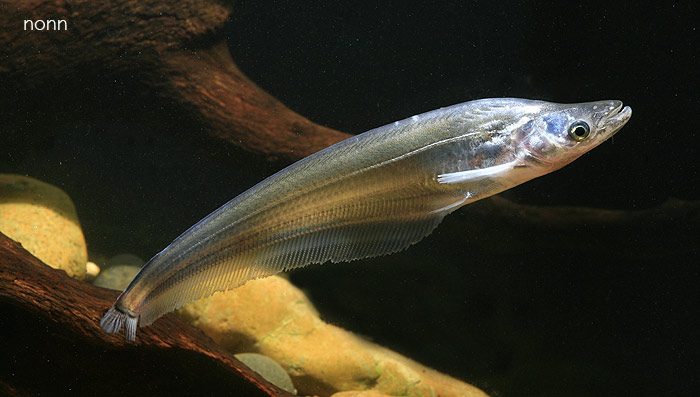
Phalacronotus apogon
Bleeker, 1851
Max length700mm SL28in SLTanknot recordedTemp20–27°C68–81°FpH6.0–7.5P. apogon has formerly been placed within the genera Kryptopterus, Micronema (Rainboth, 1996) and more recently Phalacronotus (Ferraris, 2007) and is an important food fish across much of its native range. It's very similar to P. micronema but can be told apart by its longer head (HL fits 4.6± 5.3 times in...
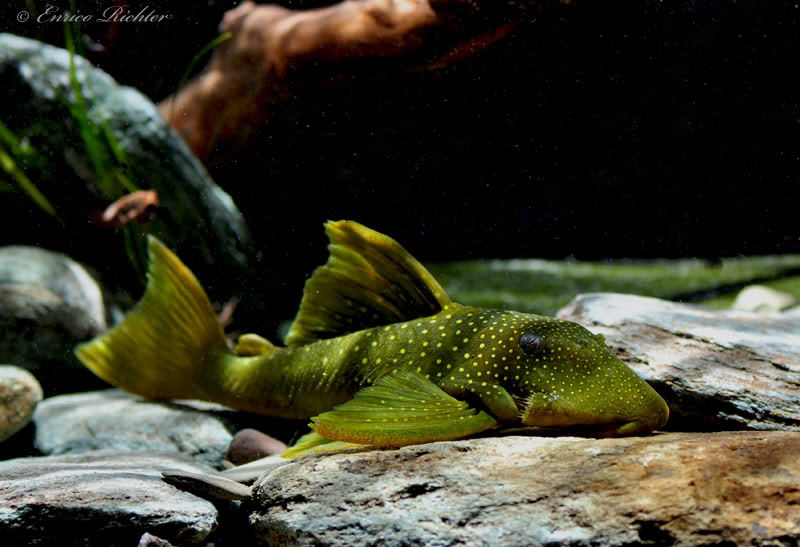
Baryancistrus demantoidesGreen Phantom Pleco
Werneke, Sabaj Pérez, Lujan & Armbruster, 2005
Matched on the common name Green Phantom Pleco
Max length151mm SL6in SLTank120 × 45cm48 × 18inTemp26–30°C79–86°FpH5.5–7.5This species is very similar to Hemiancistrus subviridis in appearance and the two occur sympatrically in nature, although B. demantoides is less common in the aquarium trade. Both have been marketed under the DATZ code L200 with B. demantoides sometimes referred to as 'L200 high-fin' or 'L200a', the former name in reference to its comparatively long dorsal-fin spine (average length in the type series 42.1 mm vs. 34.3 mm in H. subviridis).
Fundulopanchax sjoestedtiGolden Pheasant
authority not recorded
Matched on the common name Golden Pheasant
Max length120mm SL5in SLTank90 × 30cm36 × 12inTemp23–26°C73–79°FpH6.0–8.0One of the most stunning killifish available, due to the sublime colouration of adult males combined with their impressive maximum size. It was formerly classified as Aphyosemion sjoestedti and much of the available literature still refers to it by this name. There are several colour forms available, including a smaller variety known as "Dwarf Red".
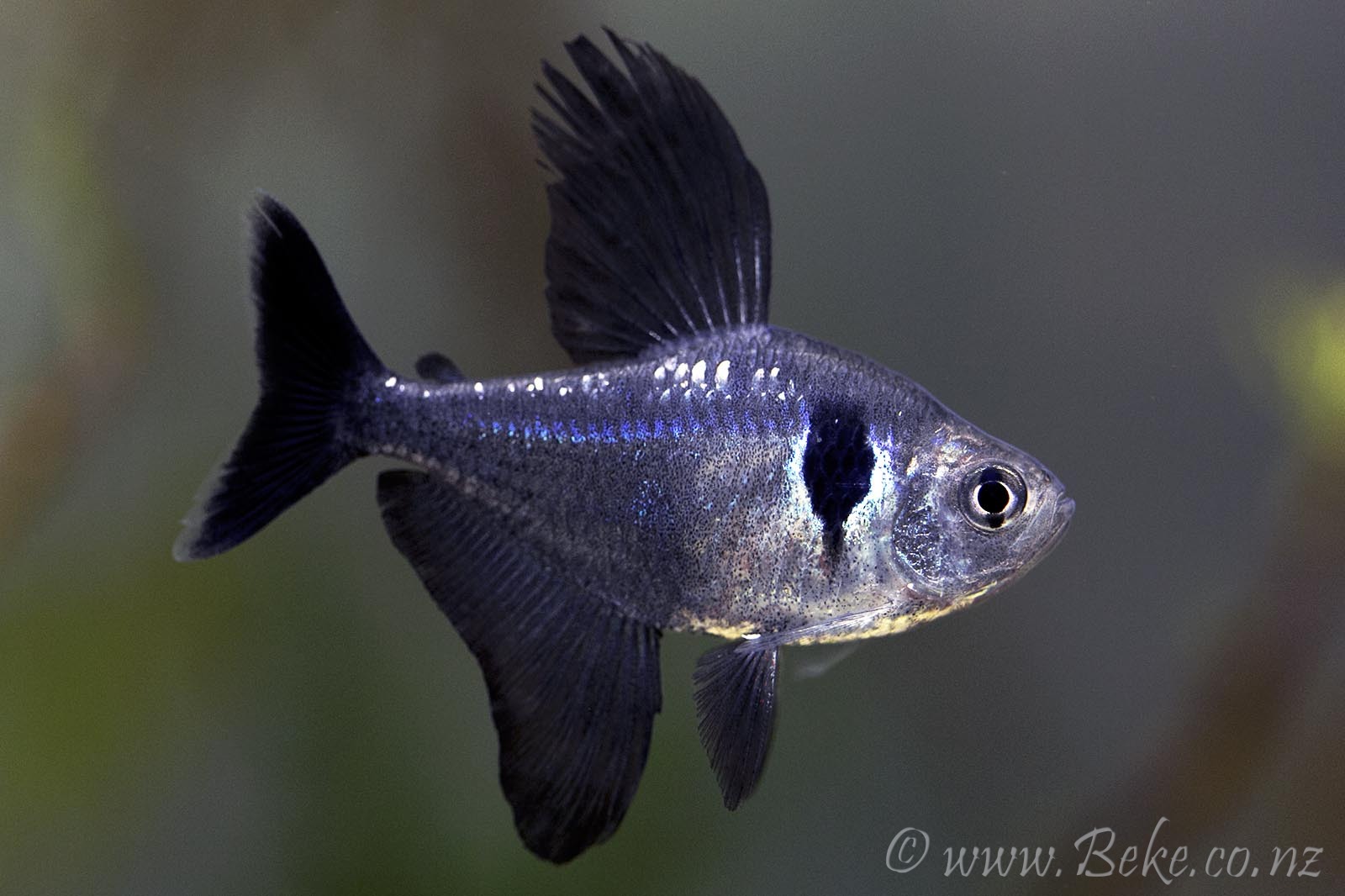
Hyphessobrycon megalopterusBlack Phantom Tetra
Eigenmann, 1915
Matched on the common name Black Phantom Tetra
Max length36mm SL1.4in SLTank80 × 30cm31 × 12inTemp20–28°C68–82°FpH5.0–7.0The majority of records pertain to the rio Guaporé (Río Iténez in Bolivia), the main affluent of the rio Mamoré, which drains the vast tropical wetland known as the Pantanal, and the upper rio Paraguai, which also has its headwaters in the Pantanal but flows in the opposite direction. The Guaporé and Paraguai are connected due to rising water levels during the annual wet season.
Hyphessobrycon roseusYellow Phantom Tetra
Géry, 1960
Matched on the common name Yellow Phantom Tetra
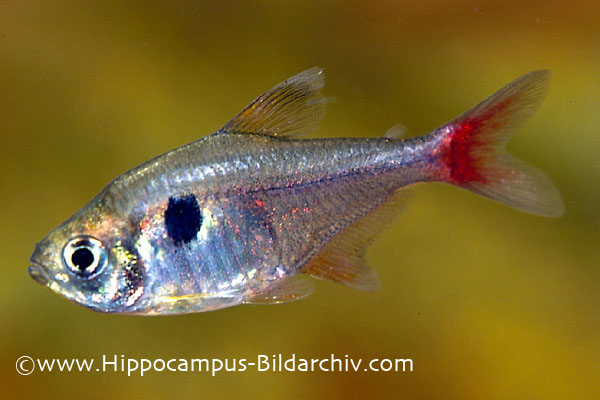
Max length20mm SL0.8in SLTank60 × 30cm24 × 12inTemp20–28°C68–82°FpH5.0–7.0This small species is a popular aquarium fish but there is some confusion surrounding its identity. Two colour forms have been traded, one of which also possesses tiny hooks on the fin rays. It can be distinguished from congeners by colour pattern; the body is rose-coloured, fins red with no black markings, and the ovoid humeral spot is prominent, measuring around half of the body depth.
Hyphessobrycon sweglesiRed Phantom Tetra
Géry, 1961
Matched on the common name Red Phantom Tetra
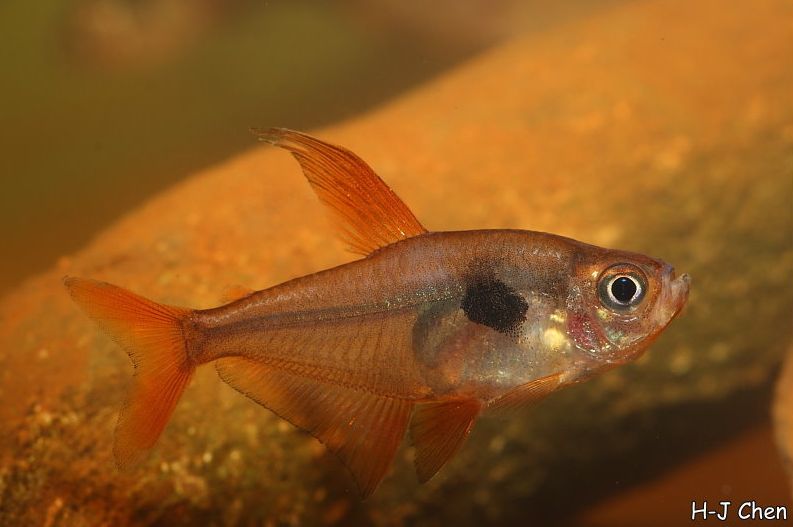
Max length35mm SL1.4in SLTank80 × 30cm31 × 12inTemp20–28°C68–82°FpH4.5–7.5At least two colour forms have been traded, one of which is more intensely-coloured and has been referred to as H. sweglesi 'red' or 'rubra'. The bright red pigmentation is retained in long-term captive specimens, suggesting that it is not considered to be an artefact of diet, but we suspect it might reflect conditions at the collection locality with the reddest fish putatively inhabiting blackwater and plainer forms clearwater environments. Zarske (2014) found the two forms to be identical in terms of morphology an...
Phalloceros caudimaculatusDusky Millions Fish
Hensel, 1868
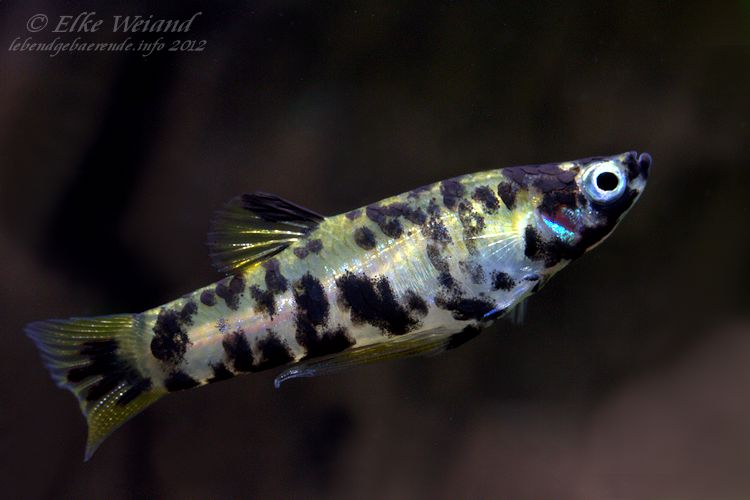
Max length70mm SL2.8in SLTanknot recordedTemp16–22°C61–72°FpH7.0–8.0Occurs naturally in Brazil, Paraguay, Uruguay and Argentina with feral populations in Australia, New Zealand, Ethiopia and Malawi which were purportedly introduced for purposes of mosquito control but are now considered invasive. Following Lucinda (2008) its natural range comprises the Lagoa dos Patos system, lower rio Uruguai, rio Tramandaí, and rio Mampituba in Rio Grande do Sul st...
Phenacogaster tegatus
Eigenmann, 1911
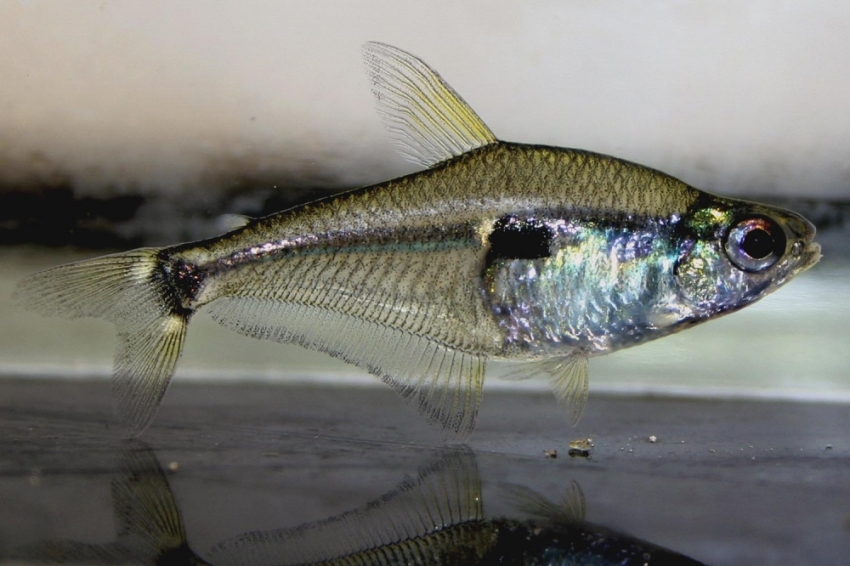
Max length45mm SL1.8in SLTank60 × 30cm24 × 12inTemp20–28°C68–82°FpH6.0–7.5This species has been traded as 'six-eyed tetra' in reference to its colour pattern comprising two dark spots on each flank plus the eye. Based on the extensive review of the genus by Lucena and Malabarba (2010), in which nine new species were described, P. tegatus can be told apart from congeners by the following combination of characters: lateral line incomplete with 8-13 perforated scales; laterally elongate humera...
Phenacogrammus interruptusCongo Tetra
authority not recorded
Max length80mm SL3.1in SLTank120 × 30cm48 × 12inTemp23–28°C73–82°FpH6.0–7.5P. interruptus are quite sensitive to water quality and if a high standard is not maintained the development of the males' fins may be impaired and the fish will lose colour. They are also quite an easily frightened fish, particularly if they are not maintained in numbers. This species is most often seen for sale as a fairly drab, greyish 1 1/2" fish and is often overlooked. However once they are settled into the aquarium and have begun to mature they develop spectacular colouration. ...
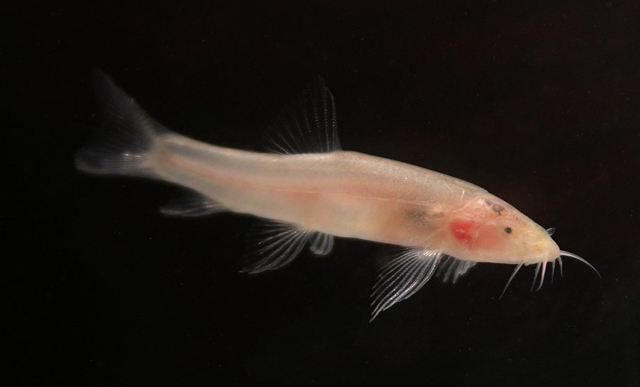
Schistura deansmarti
Vidthayanon & Kottelat, 2003
Max length105mm SL4in SLTanknot recordedTempnot recordedpHnot recordedType locality is 'Tham [=cave] Phra Sai Ngam, about 200 meters from entrance, Thung Salaeng Luang National Park, Phitsanulok Province, Thailand, 16°37'22"N, 100°39'47"E', and this species is endemic to the Tham Phra Sai Ngam cave system. Tham Phra Sai Ngam is a limestone cave system about 1.7 km long and containing a subterranean stre...
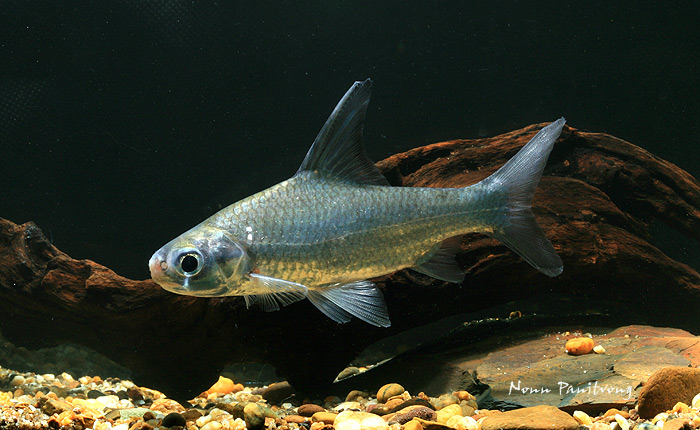
Amblyrhynchichthys micracanthus
Ng & Kottelat, 2004
Max length200mm SL8in SLTanknot recordedTempnot recordedpHnot recordedNative to the Mekong River drainage in Laos (where Vientiane province represents the upper limit of its range), Thailand, Cambodia, and Vietnam, and the Tapi, Chao Phraya, and Mae Klong systems in Thailand. Type locality is '22 kilometers upstream from Phnom Penh, Tonle Sap River, Kandal Province, Cambodia'.
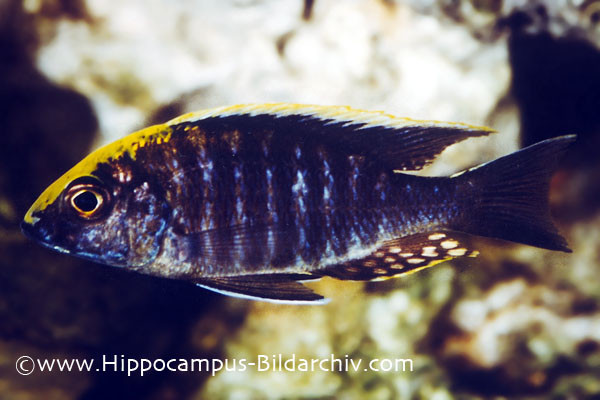
Aulonocara maylandiSulphurhead Peacock
Trewavas, 1984
Max length100mm SL3.9in SLTank120 × 30cm48 × 12inTemp25–29°C77–84°FpH7.5–9.0This species exists in two distinctive phenotypes, with male individuals from West reef and Eccles reef possessing a bright yellow stripe of colour running from the tip of the snout over the anterior portion of the dorsal surface and along the distal margin of the dorsal fin. This form is commonly referred to as 'sulphurhead' or 'sulfurhead' in the aquarium hobby. At Kande Island males exhibit a similar overall colour patterm but the dorsal stripe is whitish in colour and both males and females possess an enlarged lower pharyngeal bone. This population was described...
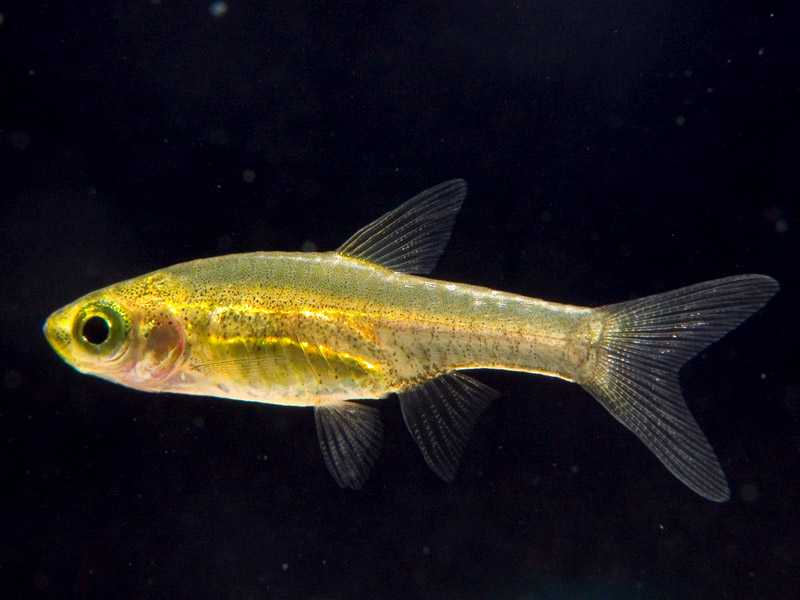
Horadandia atukorali
Deraniyagala, 1943
Max length30mm SL1.2in SLTank45 × 30cm18 × 12inTemp20–26°C68–79°FpH5.5–7.5The genus is monotypic and distinguished from other cyprinid taxa by a combination of a moderately compressed, elongated body with two rows of teeth on the lower pharyngeal (throat) bone and lacking barbles, visible lateral line and a symphyseal knob on the lower jaw (Talwar & Jhingran, 1991). Its small adult size evolved via a process known as miniaturisation characterised by sexually mature adults with a significantly reduced size of less than 20 mm SL. Among bony fishes cyprinids are one of the few groups in which this phenomenon occurs repeatedly...
Lamprologus congoensisCongo Lamprologus
authority not recorded
Max length150mm SL6in SLTank120 × 30cm48 × 12inTemp23–25°C73–77°FpH6.0–7.5An interesting species which resembles the popular Steatocranus species, both physically and in lifestyle. It has several physiological adaptations to allow it to live in rapids and fast-moving waters. The body is very streamlined, with strong pectoral fins. The swimbladder is also modified, being much reduced in size. This makes the fish less buoyant and thus less likely to be swept away by strong currents. In the aquarium it spends most of its time on the substrate, where it swims in a comical...
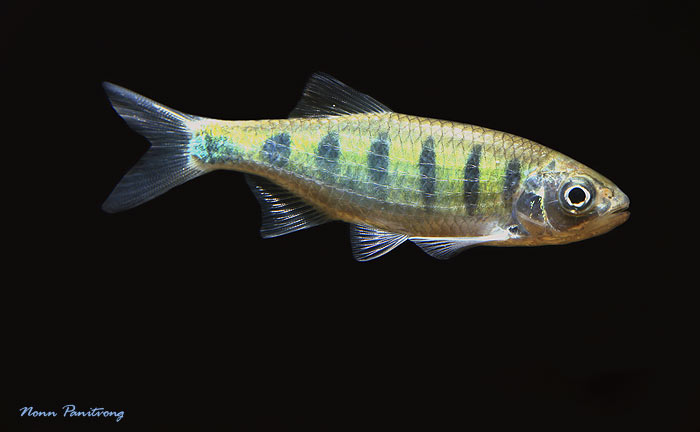
Opsarius bernatziki
Koumans, 1937
Max length90mm SL3.5in SLTank120 × 45cm48 × 18inTemp18–26°C64–79°FpH6.0–7.5Type locality is ' Kapa, northwestern peninsular Thailand', which may refer to modern-day Kapoe district, Ranong province, and additional records exist from other localities in Ranong as well as Phang-nga and Pattani provinces. Although the precise extent of its distribution is unclear it appears to occur in river systems on both sides of the Tennaserim Hills in pen...
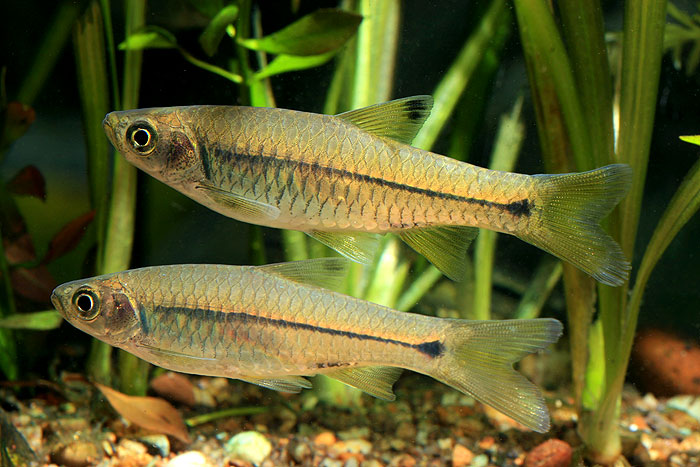
Rasbora dorsinotata
Kottelat, 1987
Max length43mm SL1.7in SLTank90 × 30cm36 × 12inTemp20–25°C68–77°FpH6.0–7.5Type locality is 'Mae Nam Huey Bon, kilometer 45 on road from Amphoe ThaWang Pha to Amphoe Chiang Kham, Chiang Rai Province, Thailand', and this species appears restricted to the Mekong and upper Chao Phraya river basins in northern Thailand and northern Laos. The specimens pictured here were collected from th...