Results for “predatory”
Type a name: scientific, common, or one a species used to go by. Or narrow the catalogue with the filters.
Filters
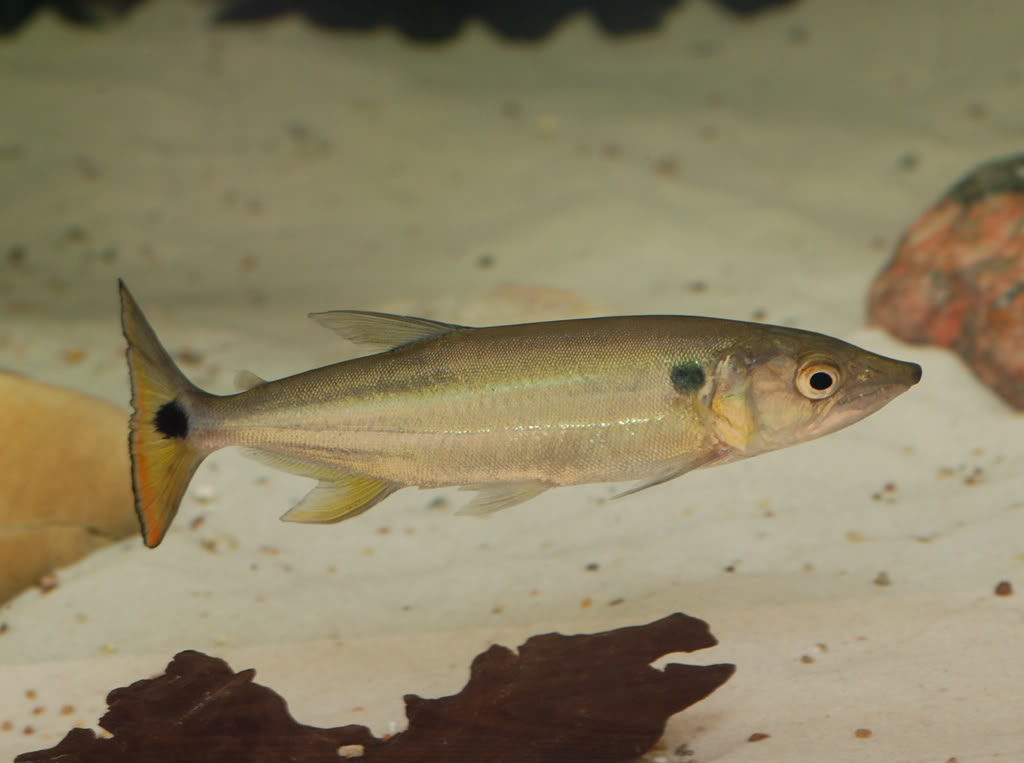
Acestrorhynchus pantaneiroPantanal Barracuda Tetra
Menezes, 1992
Max length240mm SL9in SLTank250 × 90cm98 × 36inTemp22–28°C72–82°FpH6.0–7.5An obligate piscivore capable of consuming surprisingly surprisingly large prey. Newly-imported specimens may refuse to accept anything but live fishes although most can be weaned onto dead alternatives once they recognise them as edible, and some even learn to accept dried foods- Like the vast majority of predatory fishes this specie...
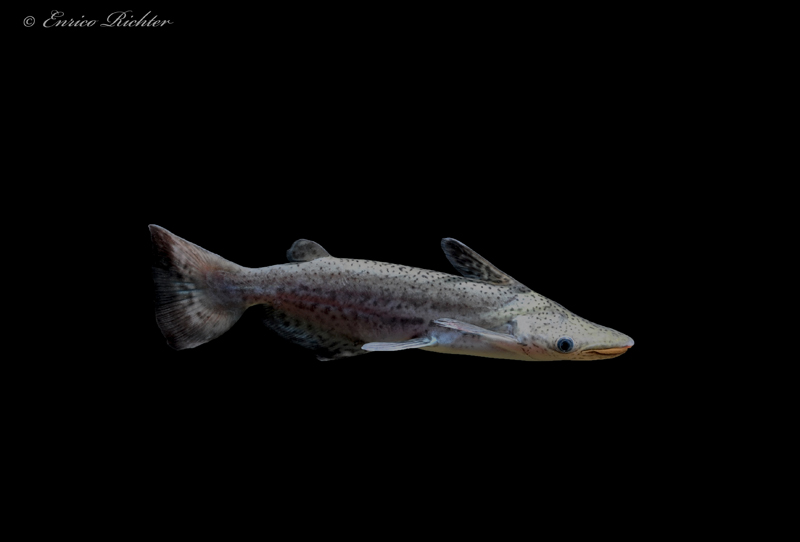
Ageneiosus marmoratusBottlenose Catfish
Eigenmann, 1912
Max length185mm SL7in SLTank150 × 60cm60 × 24inTemp22.5–26°C73–79°FpH6.0–7.0This species may also be seen on sale as 'Guyana slopehead catfish' 'dolphin catfish' or 'hammerhead catfish'. The attractive juvenile patterning is largely lost as the fish grow but this nevertheless remains an impressive predatory species for the larger aquarium. The genus Ageneiosus was at one point classified in the family Ageneiosidae alongside the genus Tetranematichthys, but this was not accepted by all...
Champsochromis spilorhynchus
authority not recorded
Max length350mm SL14in SLTank180 × 60cm72 × 24inTemp24–27°C75–81°FpH7.5–8.5This species is only occasionally offered for sale, as it is difficult to collect, living a predominantly solitary lifestyle. As a result, it is much sought after by enthusiasts. It may be confused with the other species in the genus, C. caerulus, but can be distinguished by its deeper body shape and very distinctive black markings on its snout. Champsochromis have widely spaced teeth compared to some other pelagic predatory cichlids found in Lake Malawi, such as Buccochromis species....
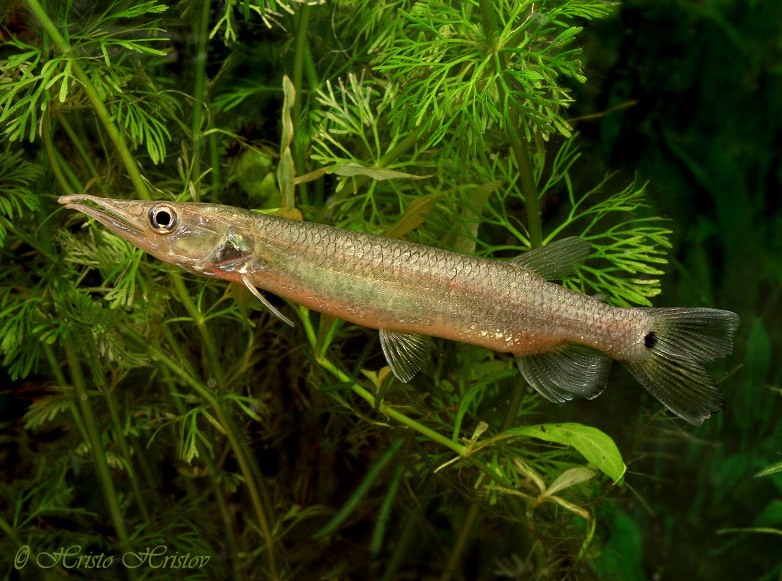
Ctenolucius hujetaGar 'Characin'
Valenciennes, 1850
Max length250mm SL10in SLTank180 × 60cm72 × 24inTemp22–28°C72–82°FpH5.0–7.5C. hujeta is traded under various names including 'slant-nosed gar', 'hujeta gar', 'rocket gar' and 'freshwater barracuda' but it and other members of the family Ctenoluciidae have traditionally been referred to as 'pike characids'. They're all predatory fishes native to South America, included in the order Characiformes and currently spread across two genera; Ctenolucius with two species and Boulengerella with five. The two genera are ...
Exodon paradoxusBucktooth Tetra
authority not recorded
Max length150mm SL6in SLTank120 × 45cm48 × 18inTemp23–28°C73–82°FpH5.5–7.5The genus Exodon is currently monotypic, with this single species having uniquely designed teeth. These allow it to rip the scales from other species. It's an ideal choice for those wishing to keep a large shoal of a predatory species without possessing the massive amount of tank space needed for a shoal of piranha or similar. A tank full of these makes for a very colourful and active display....
Hoplerythrinus unitaeniatusGold Wolf Fish
authority not recorded
Max length400mm SL16in SLTanknot recordedTemp23–27°C73–81°FpH5.5–7.5Also known as the golden trahira, H. unitaeniatus is the only one of the three recognised species currently in the genus to appear in the trade with any regularity. It's really a fish suitable only for the specialist, and as with any predatory species, care must be taken when performing tank maintenance. It's a representative of an ancient group of fishes, and possesses a modified, highly vascularised swim bladder that acts as an accessory breathing organ, allowing the fish to survi...
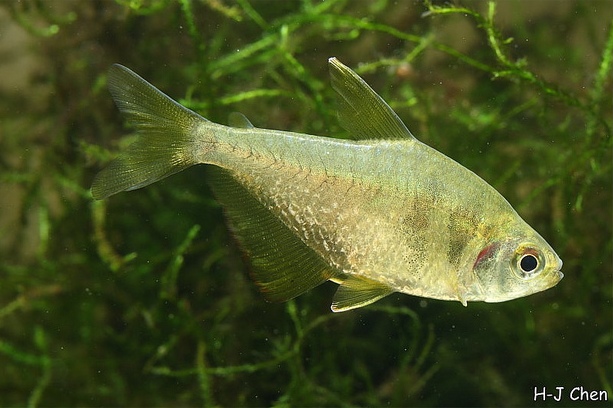
Hyphessobrycon bifasciatusYellow Tetra
Ellis, 1911
Max length45mm SL1.8in SLTanknot recordedTemp20–25°C68–77°FpH5.0–7.5Generally peaceful making it an ideal resident of the well-researched community aquarium. It is perhaps best-maintained alongside similarly-sized characids, gasteropelecids, lebiasinids, smaller callichthyid or loricariid catfishes and non-predatory, medium-sized cichlids. Try to buy a mixed-sex group of at least 8-10 specimens, incl...
Lamprologus lemairiiLemaire's Lamprologus
authority not recorded
Max length250mm SL10in SLTank120 × 45cm48 × 18inTemp23–27°C73–81°FpH7.5–9.0A highly piscivorous, predatory species unsuited to the general aquarium. It is an ambush predator in nature, often being seen hanging motionless around rocky structures or on the floor of the lake. It is a sedentary species and does not move around a lot. This is a behavioural adaptation known as thanatosis, or 'playing dead'. This strategy is usually used as a defensive means in other animals, but in L. lemairii it is adapted for offensive means. The fish has a mottled colour pattern...
Melanochromis chipokae
authority not recorded
Max length120mm SL5in SLTank120 × 45cm48 × 18inTemp24–28°C75–82°FpH7.6–8.8This species belongs to the group of Melanochromis often called "Pike Auratus". These species predate on the fry of other species, although M. chipokae will also eat crustaceans and algae. Female and juvenile male M. chipokae are easily confused with M. auratus. However, it can be distinguished by its noticeably more pointed mouth, denoting the predatory nature of this species (auratus has a rounded mouth which is designed for feeding on algae). The striped patterning in the also exten...
Neolamprologus sexfasciatusSix-barred Lamprologus
authority not recorded
Max length150mm SL6in SLTanknot recordedTemp23–27°C73–81°FpH7.5–9.0Several geographical morphs of this species are available, including "Sambia" and "Kipili". These vary in base colour from blue to yellow to white. It is not recommended for the general Tanganyikan community due to its aggressive and predatory nature....
Parachromis managuensisJaguar Cichlid
authority not recorded
Max length610mm SL24in SLTank120 × 38cm48 × 15inTemp23–25°C73–77°FpH6.0–8.0Parachromis Managuense are your typical north/central American large predatory cichlid. They are extremely attractive, but a large aquarium is required. They are not difficult to look after, as long as filtration is up to standard. Choose tankmates carefully - if you are hoping to breed Managuense, house a breeding pair or grow 6 juveniles up until a pair is formed. One of the biggest problems with breeding Managuense is the fact that a single spawn from 12" parents can produce 3000 f...
Synodontis nigriventrisUpside-down Catfish
authority not recorded
Max length100mm SL3.9in SLTanknot recordedTemp24–28°C75–82°FpH6.0–7.5One of the commonest Synos seen for sale, S. nigriventris is occasionally confused with S. contractus. However, on close inspection the species are easy to tell apart as S. nigriventris lacks the large head and mouth and larger eye of S. contractus. The scientific name nigriventris refers to the fact that the belly of this fish is darker than the dorsal area. This is a form of camouflage, making the fish harder to spot by predators above, such as predatory fish, birds etc. It is a basic re...
Wallago leeriiStriped Wallago Catfish
authority not recorded
Max length2032mm SL80in SLTanknot recordedTemp22–26°C72–79°FpH6.0–7.0Wallago are fearsome predatory catfish that are fairly widespread in southeast Asia. There are currently five recognised species, W. attu, W. leerii, W. hexanema, W. maculatus and W. micropogon. The latter was described to science in 2004 by renowned catfish expert Heok Hee Ng and was previously considered to be a geographic variant of W. leerii. All members of the genus possess an enormous mouth full of backward pointing teeth, which are used to rip chunks from their prey. Smaller fish or amphi...