Results for “sand”
Type a name: scientific, common, or one a species used to go by. Or narrow the catalogue with the filters.
Filters
Sandelia bainsiiEastern Cape Rocky
authority not recorded
Max length325mm SL13in SLTank180 × 60cm72 × 24inTemp18–22°C64–72°FpH6.8–8.0There are only two described species in the genus Sandelia. Both have very limited natural ranges in parts of South Africa, which in itself is odd as they're completely isolated from other genera of anabantoids. This is probably due to some ancient radiation of species, but as yet remains unresolved. Sandelia spp. are also considered the most primitive of anabantoids, as they possess a less well-developed labyrinth organ than their relatives. You're unlikely to see any of these fo...
Sandelia capensisCape kurper
authority not recorded
Max length215mm SL8in SLTank120 × 45cm48 × 18inTemp18–22°C64–72°FpH6.5–7.2There are only two described species in the genus Sandelia. Both have limited natural ranges in parts of South Africa, which in itself is odd as they're completely isolated from other genera of anabantoids. This is probably due to some ancient radiation of species, but as yet remains unresolved. Sandelia spp. are also considered the most primitive of anabantids, as they possess a less well-developed labyrinth organ than their relatives. S. capensis is of considerable conservation importa...
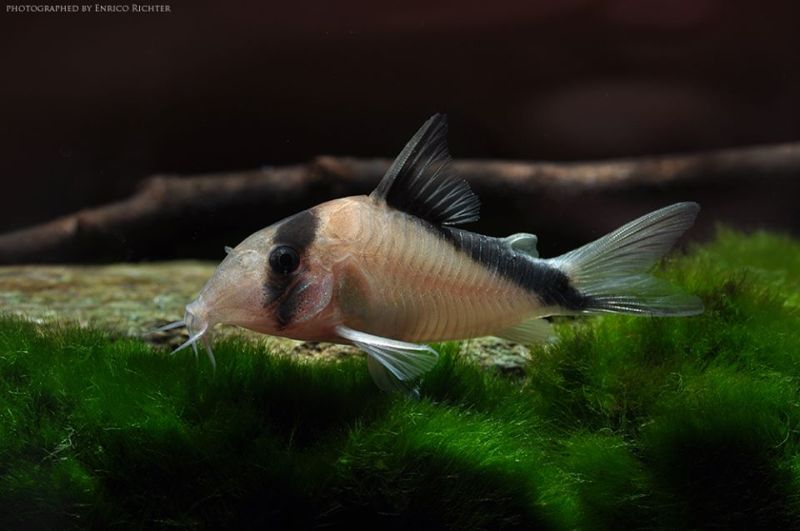
Corydoras davidsandsiSand's Cory
Black, 1987
Matched on the common name Sand's Cory
Max length60mm SL2.4in SLTank90 × 30cm36 × 12inTemp20–28°C68–82°FpH5.0–7.0The type series was said to have been collected from a "whitewater area", but images of the rio Unini depict a blackwater system typical of the rio Negro basin, and this is supported by empirical evidence. There are sections of rapidly-flowing water so perhaps this is what the author was referring to. Habitats should therefore comprise tributaries and areas of flooded forest where the water is...
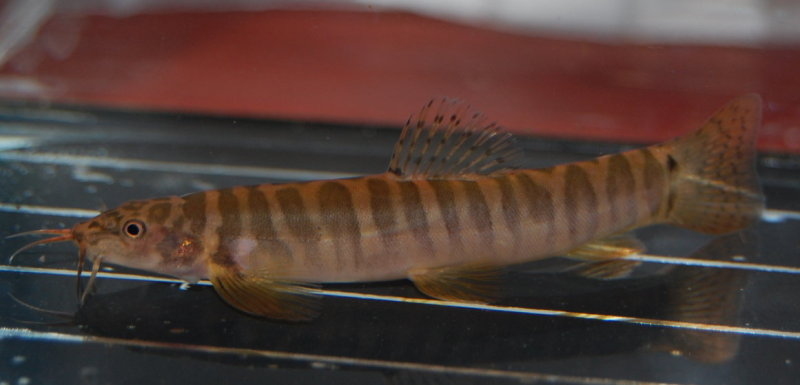
Schistura kohchangensisOrnate Tiger Sand Loach
Smith, 1933
Matched on the common name Ornate Tiger Sand Loach
Max length75mm SL3.0in SLTank90 × 30cm36 × 12inTemp20–26°C68–79°FpH6.0–7.5On Koh Chang one habitat consisted of a stream flowing from the waterfall Nam Tok Mai Yom which empties into the Gulf of Thailand after less than 1 km. The stream was dry in its lower reaches and had a substrate of boulders and pebbles. Sympatric fi...
Xenotilapia flavipinnisYellow Sand Cichlid
authority not recorded
Matched on the common name Yellow Sand Cichlid
Max length90mm SL3.5in SLTank75 × 30cm30 × 12inTemp23–27°C73–81°FpH8.0–9.5In nature, the pair bond formed by this species lasts only for the duration of the breeding season. However, in aquaria this bond can last much longer, with the pair remaining in their territory and defending it even when not spawning. It is thought that this is directly due to the fish being kept in the confines of the aquarium, where the territory is a permanent fixture. X. flavipinnis is very sensitive to deteriorating water conditions and regular water changes are essential to its good heal...
Fossorochromis rostratus
authority not recorded
Max length250mm SL10in SLTank150 × 38cm60 × 15inTemp25–29°C77–84°FpH7.5–8.8F. rostratus was formerly classified as Haplochromis rostratus. When startled, it may bury itself in the substrate. It often displays its natural sand-sifting method of feeding in aquaria, and a substrate of sand is essential as gravel may injure the fish. In nature, it is only the largest dominant males that build nests, whilst the subdominant males and females shoal together. There also exists a feeding relationship between this species and Cyrtocara moorii in the wild, in which shoals of C. m...
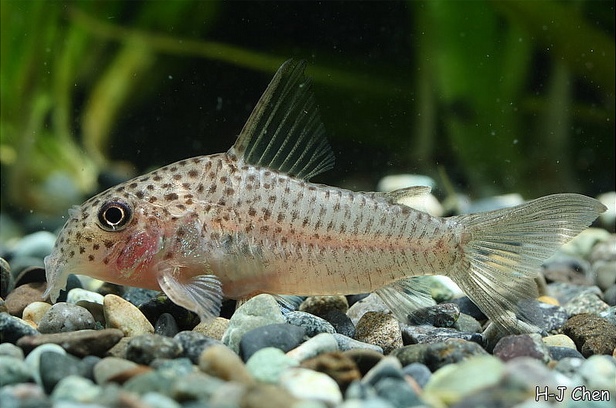
Corydoras albolineatusC056
Knaack, 2004
Max length50mm SL2.0in SLTanknot recordedTemp22–32°C72–90°FpH6.0–7.5In the upper Iténez it most commonly inhabits riparian zones with sandy substrates or edges of sand banks, although it's also been collected in smaller streams and residual flood waters. It typically forms large aggregations of up to several thousand individuals and at the confluence of the ríos Paraguá and Iténez occurs sympatrically with the congener C. paragua.
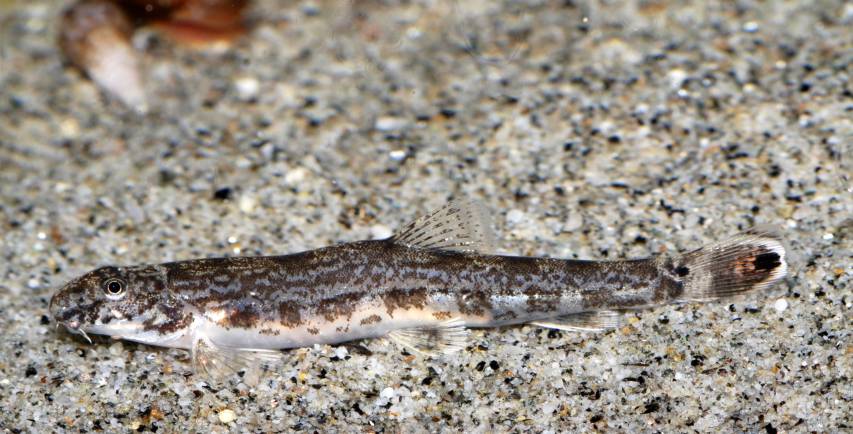
Lepidocephalichthys annandalei
Chaudhuri, 1912
Max length45mm SL1.8in SLTank45 × 30cm18 × 12inTemp22.5–26°C73–79°FpH5.5–7.5Sand-dwelling loaches from the families Botiidae, Cobitidae and Nemacheilidae are also suitable but proper research is essential as some can be excessively territorial or otherwise aggressive. A community based around fishes from its natural waters could include species such as Badis badis,...
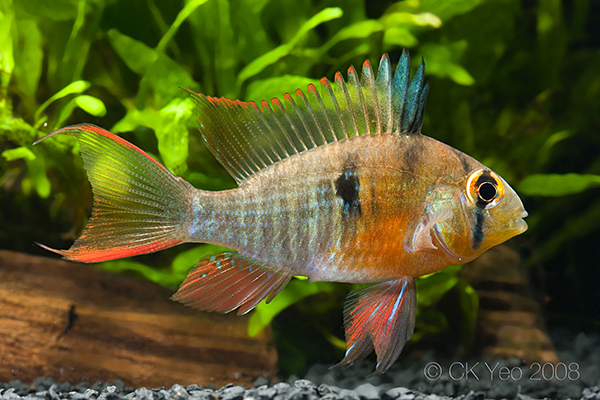
Mikrogeophagus altispinosusBolivian Ram
Haseman, 1911
Max length80mm SL3.1in SLTank90 × 45cm36 × 18inTemp24–28°C75–82°FpH6.0–7.5This species appears endemic to the upper rio Madeira basin in Bolivia and Brazil. Records exist from the Río Mamoré and Río Guaporé drainages in Bolivia (where the Guaporé is known as the Iténez) and Brazil plus the upper Río Orthon (ríos Tahuamanu and Manuripi). Type locality is 'sand-bank in the Rio Marm...
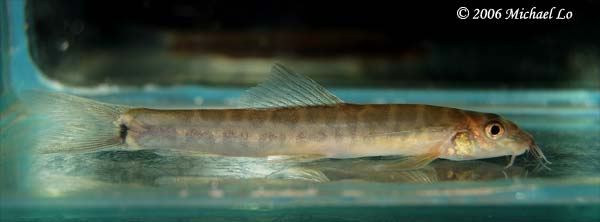
Nemacheilus saravacensis
Boulenger, 1894
Max length50mm SL2.0in SLTank60 × 30cm24 × 12inTemp23–26°C73–79°FpH4.5–7.0Images depict clear, tea-coloured forest streams with dense marginal vegetation and substrates of sand and/or small rocks and pebbles. It's also known from environments with sandy substrate and organic debris in the form of submerged roots/branches and le...
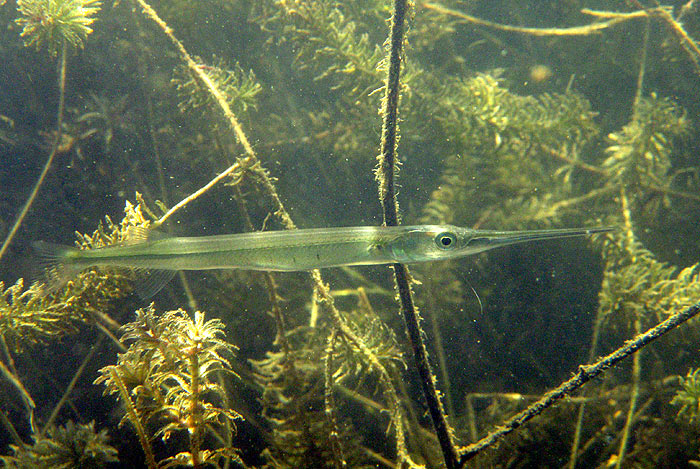
Xenentodon canciloides
Bleeker, 1854
Max length300mm SL12in SLTank180 × 60cm72 × 24inTemp18–26°C64–79°FpH6.0–8.0This species is a near-exclusive inhabitant of the upper water column and appreciates surface cover in the form of floating or overhanging vegetation. Other décor is relatively unimportant but can consist of a sandy substrate with leaf litter plus some large driftwood branches and twisted roots. Plants which can grow rooted in sand can al...
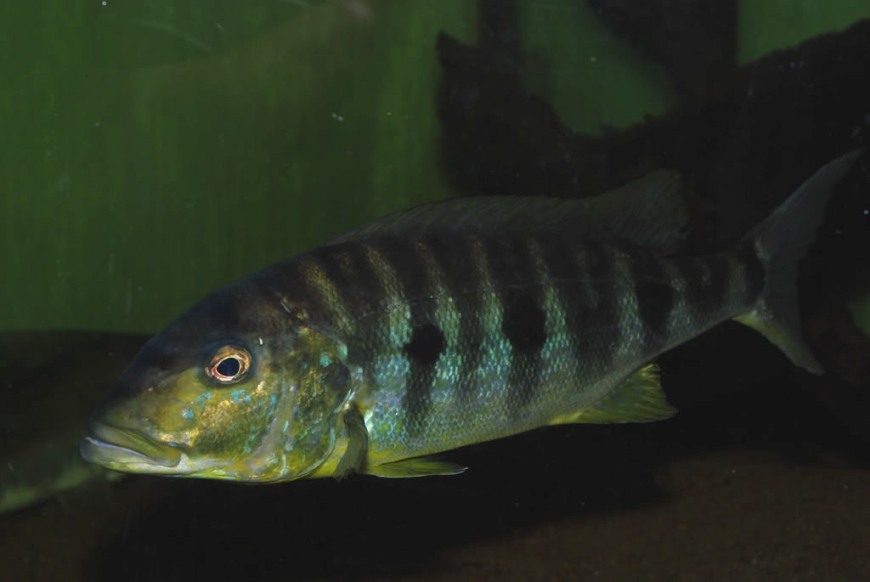
Boulengerochromis microlepisEmperor Cichlid
Boulenger, 1899
Max length550mm SL22in SLTanknot recordedTemp24–28°C75–82°FpH7.5–9.0Mostly inhabits littoral to sublittoral zones, habitats which normally comprise a mixture of rocky rubble and exposed sandy areas, but has been recorded to depths of around 100 m. When not breeding adults exhibit a more-or-less pelagic lifestyle and apparently tends to form small, foraging groups in open water, whereas juveniles inhabit shallower, sandy nursery zones with some rock cover. There exists some evidence to suggest that adults move inshore at night or during early morning in order to feed.
Callochromis macropsBig-eyed Mouthbrooder
authority not recorded
Max length135mm SL5in SLTank120 × 45cm48 × 18inTemp24–27°C75–81°FpH7.8–9.5Members of the genus Callochromis feed in a similar way to the South American "eartheaters" such as Geophagus species. They extract invertebrates and other items hidden in the substrate by taking in mouthfulls of sand and sifting it through the gills. The common term "sand sifters" is applied to these and other Tanganyikan species that inhabit a similar ecological niche, such as Enantiopus and Xenotilapia spp. Several geographical colour forms of this species exist. These ...
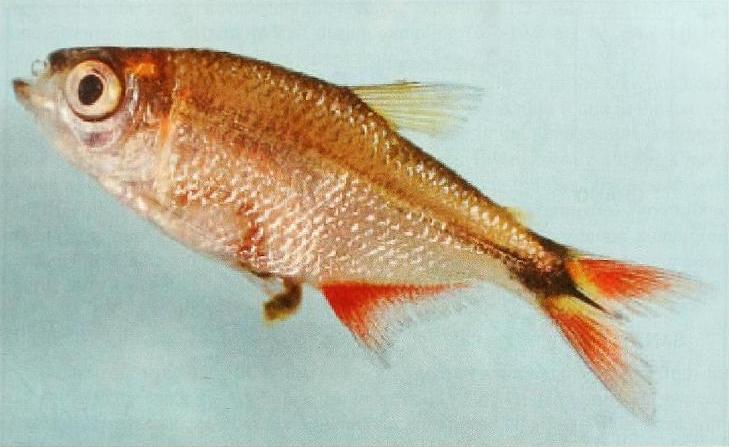
Hyphessobrycon auca
Almirón, Casciotta, Bechara & Ruíz Díaz, 2004
Max length55mm SL2.2in SLTanknot recordedTempnot recordedpHnot recordedThe two ponds where H. auca was collected were located on a sand bar deposited by the nearby Paraná river during the Pleistocene. At time of collection the substrates were composed of sand with submerged vegetation dominated by Egeria najas plus floating Eichhornia in marginal areas.
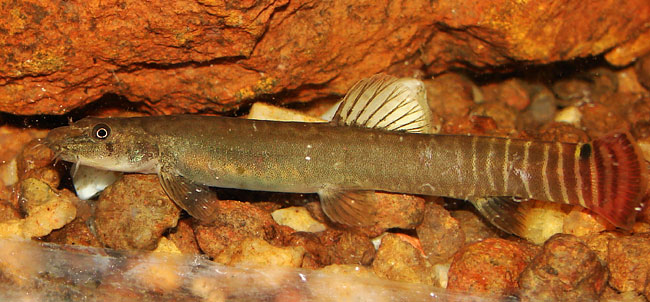
Aborichthys elongatusRed-Tailed Squirrel Loach
Hora, 1921
Max length75mm SL3.0in SLTank60 × 30cm24 × 12inTemp15–21°C59–70°FpH6.5–7.5This species may be seen listed as a member of Nemacheilus or the nomen nudum Noemacheilus in older literature and is sometimes sold as 'red tailed, striped sand loach' or 'red tailed squirrel loach'. Only two other Aborichthys have been described to...
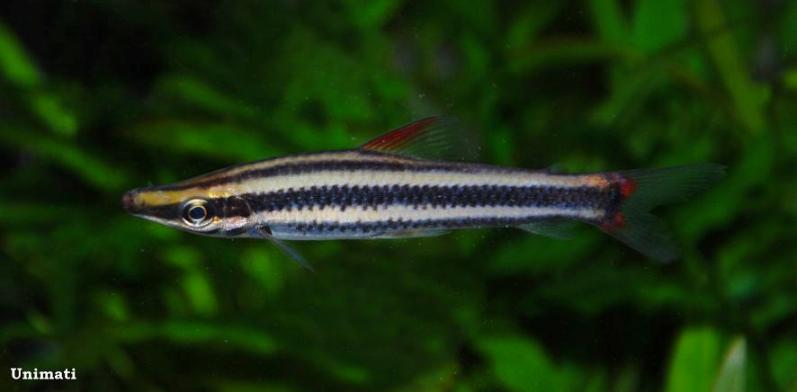
Anostomus anostomusStriped Headstander
Linnaeus, 1758
Max length200mm SL8in SLTank120 × 30cm48 × 12inTemp20–28°C68–82°FpH5.5–7.5A biotope-style set-up could consist of a sandy substrate, piles of smooth rocks and driftwood roots and branches, some of which should penetrate the water surface. Aquatic vegetation can be included if you wish but is likely to be eaten.
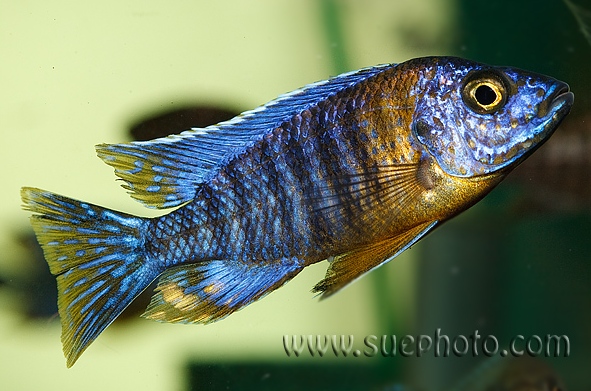
Aulonocara hansbaenschiRed Shoulder Peacock
Meyer, Riehl & Zetzsche, 1987
Max length120mm SL5in SLTank90 × 45cm36 × 18inTemp24–29°C75–84°FpH7.4–9.0Some eminent authors believe this species to be a geographical variant of the highly variable congener A. stuartgranti rather than a distinct taxon but since most popular resources continue to view it as valid we also list it here. At Masinje it has been observed to show a distinct preference for rocky caves and crevices in relatively shallow (3-6 metres deep) water. This is in contrast to most other members of the genus, which tend to forage over sand, but similar to behaviour seen in A. jacobfreibergi.
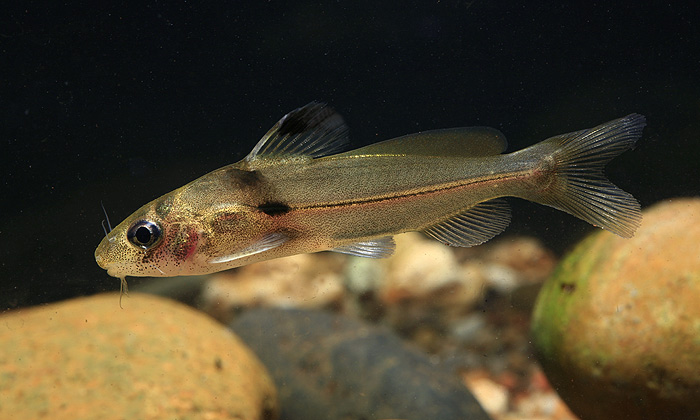
Batasio feruminatus
Ng & Kottelat, 2008
Max length60mm SL2.4in SLTank90 × 30cm36 × 12inTemp16–24°C61–75°FpH6.0–7.0Batasio spp. are obligate inhabitants of headwater streams and the upper reaches of smaller rivers characterised by shallow, fast-flowing, highly-oxygenated stretches of riffles and runs broken up by pools or cascades in some cases. Images of the Ataran correspondingly depict flowing sections of forest-shaded, seemingly well-oxygenated headwaters containing clear water, a mixed sand/rock substrate and lots of submerged driftwood/leaf litter.
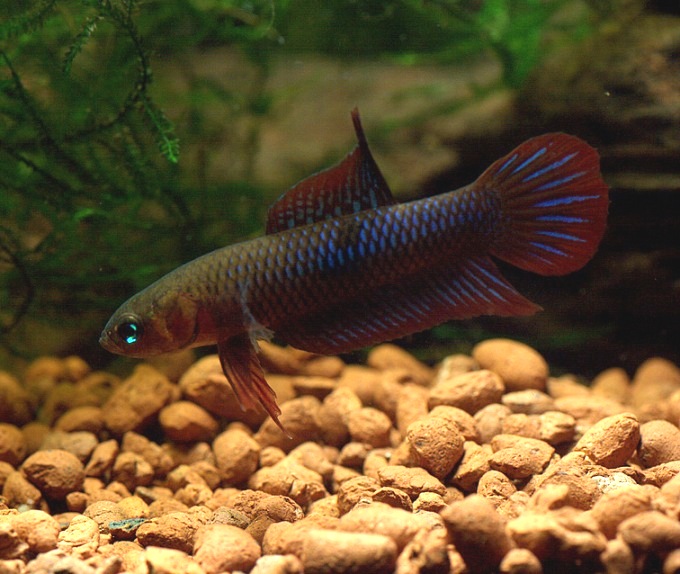
Betta uberis
Tan & Ng, 2006
Max length36mm SL1.4in SLTank45 × 30cm18 × 12inTemp22–27°C72–81°FpH4.0–6.0The majority of records pertain to an area sandwiched between the lower Arut and Kumai rivers, south of the towns of Pangkalan Bun and Kumai in Kalimantan Tengah (Central Kalimantan) province, Borneo, Indonesia. Addditional collections have taken place in the Sampit river basin to the east, and several hundred kilometres further north in Sukadana district Kalimantan Barat (West Kalimantan) province. Type locality is 'Indonesia: Borneo: Kalimantan Tengah: Arut basin: Pankalanbun', with the specimens having been obtained from the aquarium trade.
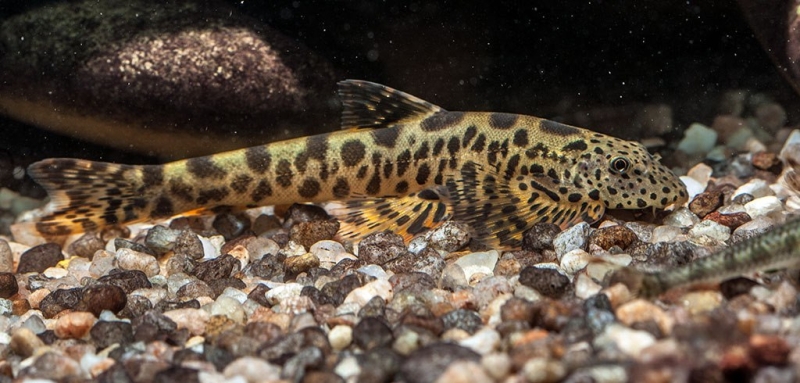
Bhavania australis
Jerdon, 1849
Max length100mm SL3.9in SLTank120 × 30cm48 × 12inTemp16–24°C61–75°FpH6.0–7.5An obligate dweller of shallow, fast-flowing, highly-oxygenated headwaters and minor tributaries characterised by stretches of riffles and runs broken up by pools or cascades in some cases. Substrates are normally composed of smaller rocks, sand and gravel with jumbles of boulders, and whil...