Results for “snout length”
Type a name: scientific, common, or one a species used to go by. Or narrow the catalogue with the filters.
Filters
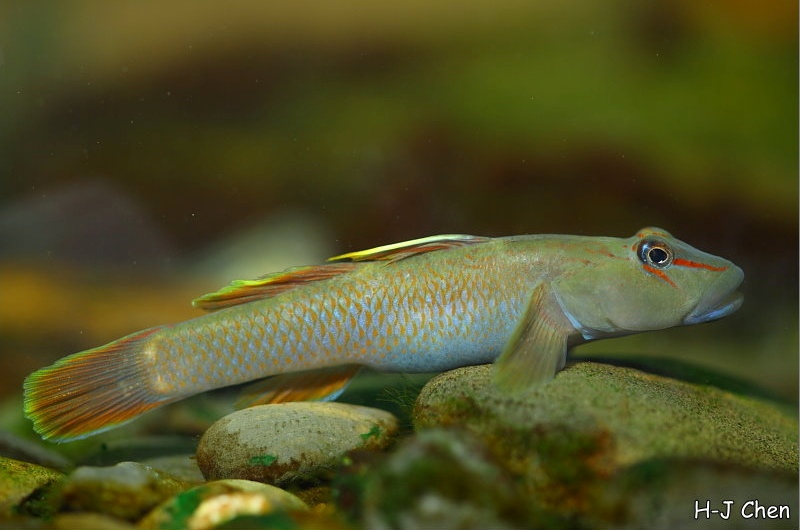
Rhinogobius candidianus
Regan, 1908
Max length80mm SL3.1in SLTank80 × 30cm31 × 12inTemp18–28°C64–82°FpH6.0–8.0This species is normally imported alongside a smaller-growing, near-identical congener currently listed as R. cf. nantaiensis with both traded as R. candidianus. They can be separated by snout length, which is noticeably longer in R. candidianus, and adult size with R. cf. nantaiensis reaching just 50-55 mm. R. candidianus can be distinguished from other congeners by a combination of cha...
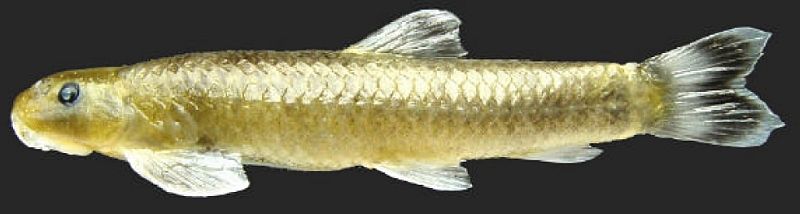
Garra nambulica
Vishwanath & Joyshree, 2005
Max length65mm SL2.6in SLTanknot recordedTempnot recordedpHnot recordedThis species is diagnosed by the following combination of characters: body moderate sized; head squarish; no proboscis or transverse groove on snout; mental disc length 96.9% its own width; pre...
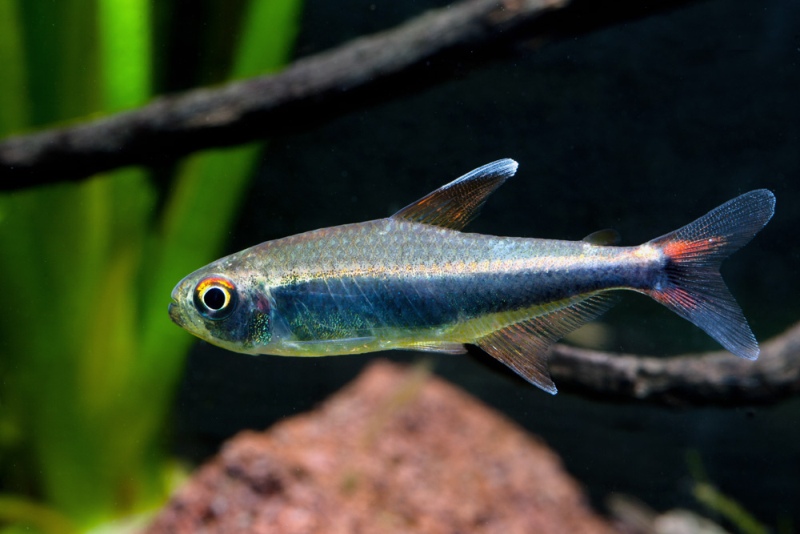
Hyphessobrycon peruvianusPeruvian Tetra
Ladiges, 1938
Max length40mm SL1.6in SLTank60 × 30cm24 × 12inTemp22–27°C72–81°FpH5.0–7.0This species is available on a relatively regular basis, although it's sometimes confused with the similar-looking congeners H. loretoensis and H. metae. It can be identified via the following combination of characters as per Géry (1977): elongate in shape with body depth fitting 3.8-3.9 times in its standard length; caudal peduncle narrow, its depth fitting 1.8 times in its length; head short, interorbital broad, snout short and rounded; dorsal-fin insertion an...
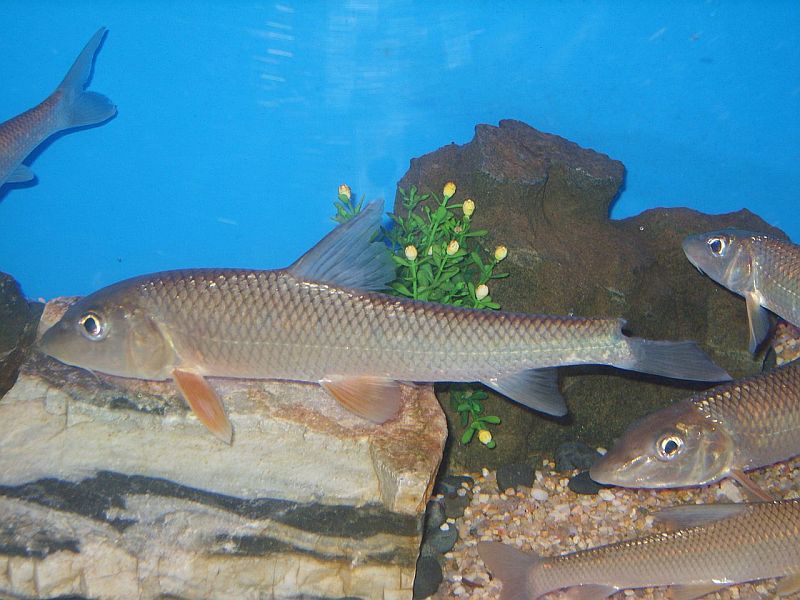
Hemibarbus labeoBarbel Steed
Pallas, 1776
Max length450mm SL18in SLTanknot recordedTempnot recordedpHnot recordedThis species can be distinguished from other members of the genus by the following combination of characters: absence of dark spots on body in adults; body elongate with slightly convex dorsal profile; head longer than body is deep; snout much longer than postorbital head length; lips well developed, lateral lobes of lower lip broad and thick with folds, median process small; barbel thickness shorter or equal to eye diameter; dorsal spine strong, ⅔ of HL; dorsal-fin origin closer to tip of snout than caudal-fin base base; 15+ gill rakers; 6½ branched anal-fin rays; posterior simple dorsal-fin rays ossified and spinous.
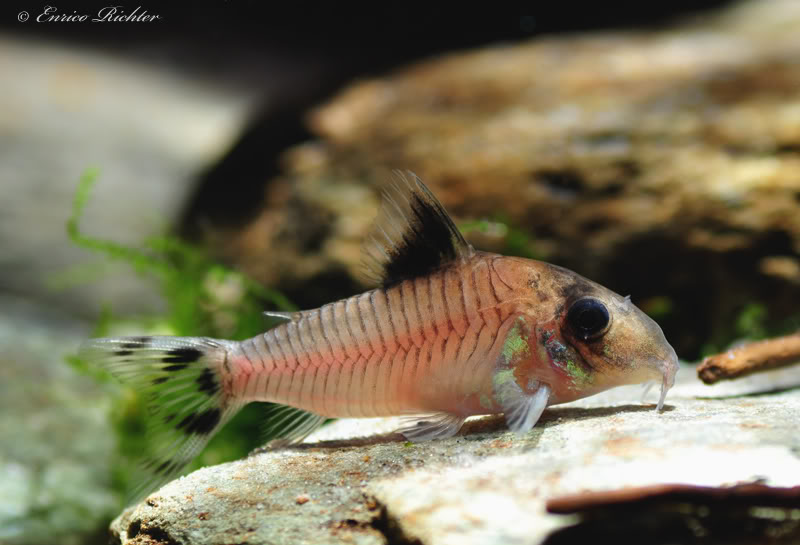
Corydoras condiscipulus
Nijssen & Isbrücker, 1980
Max length65mm SL2.6in SLTank90 × 30cm36 × 12inTemp20–26°C68–79°FpH6.0–7.5This species occurs alongside the similar-looking congener C. oiapoquensis in nature, from which it can be told apart by the following combination of characters: larger adult size; narrower body (body breadth fits 4.0-4.4 times in standard length vs. 3.4-3.8 times in C. oiapoquensis); shorter pectoral spine (3.4-3.8 times in SL vs. 2.7-3.2 times); longer snout (1.7-1.9 times in SL vs. 2.0-2.2).