Results for “ubiquitous”
Type a name: scientific, common, or one a species used to go by. Or narrow the catalogue with the filters.
Filters
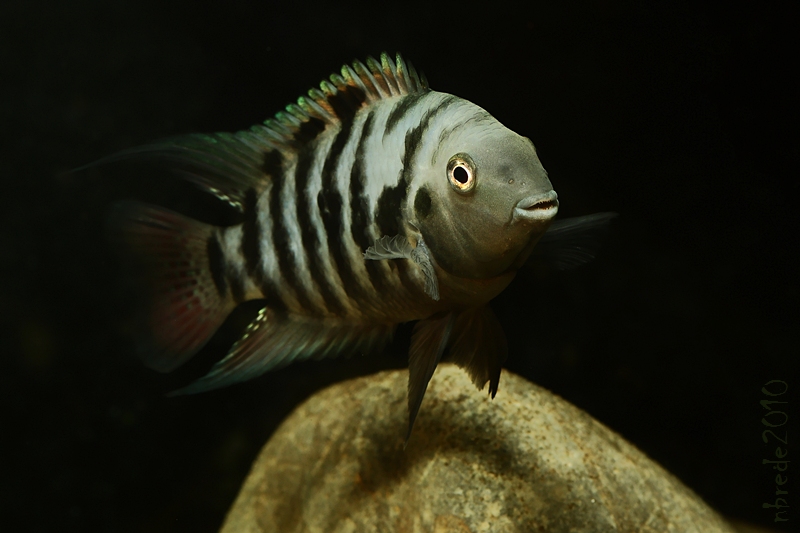
Amatitlania nigrofasciataConvict Cichlid
Günther, 1867
Max length150mm SL6in SLTanknot recordedTemp24–28°C75–82°FpH6.0–8.0A hugely popular and very adaptable species, the convict is one of the most ubiquitous fish in the hobby. It is often referred to by synonyms such as Cryptoheros nigrofasciatus and Cichlasoma nigrofasciatus. It's difficult to know how much to recommend it to the beginner, as despite its hardiness and ease of breeding, it's not really a community fish. However, if you want to breed a species and witness some amazing parental behaviour, it's an unreserved recommendation. It now exis...
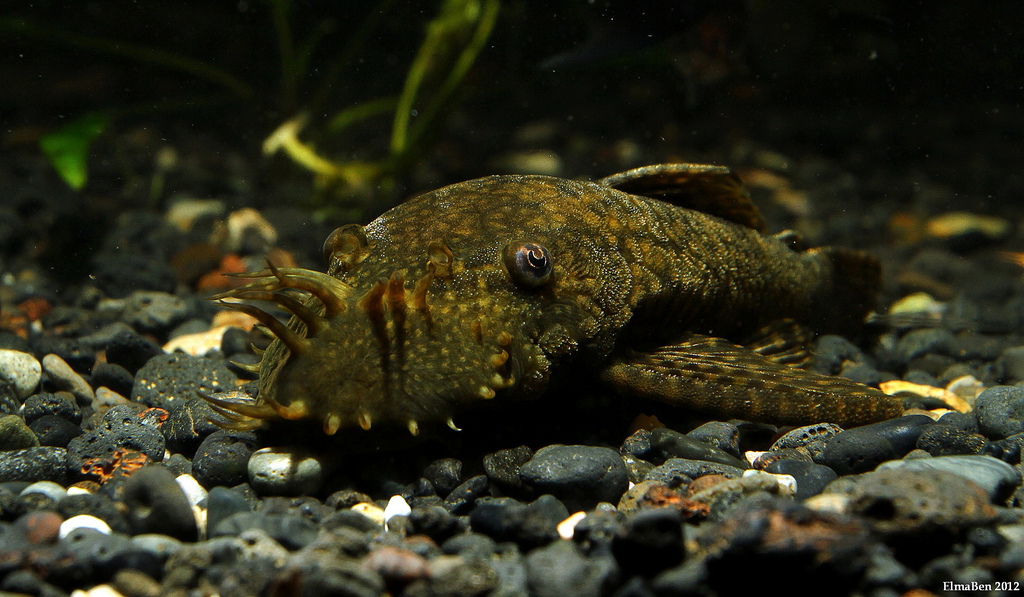
Ancistrus sp. '3'Common Bristlenose Catfish
authority not recorded
Max length125mm SL5in SLTank60 × 30cm24 × 12inTemp21–26°C70–79°FpH5.5–7.5This is the ubiquitous 'bristlenose' catfish in the aquarium hobby and is bred commerically on a large scale although it's precise origin is unknown with some of the opinion that it may be a hybrid. Several line-bred ornamental varieties exist, including piebald, albino and long-finned forms of both the standard and albino fish, of which long-finned fish are sometimes sold as 'butterfly' or 'veiltail' catfish.
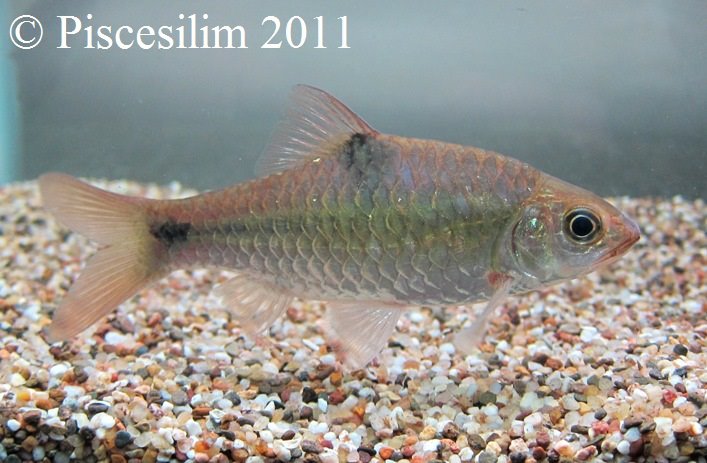
Barbodes binotatusSpotted Barb
Valenciennes, 1842
Max length200mm SL8in SLTank120 × 45cm48 × 18inTemp18–30°C64–86°FpH6.0–7.5This species is so ubiquitous across its natural range that it's often referred to simply as 'common barb'. Basic adult colour pattern consists of a small, dark spot at the base of the dorsal-fin origin and another on the caudal peduncle but overall appearance varies somewhat depending on origin, with the anterior dark spot enlarged ventrally forming a bar or posterior spot extending into the caudal-fin, for example. The spots may also appear darker or lighter in some individuals.
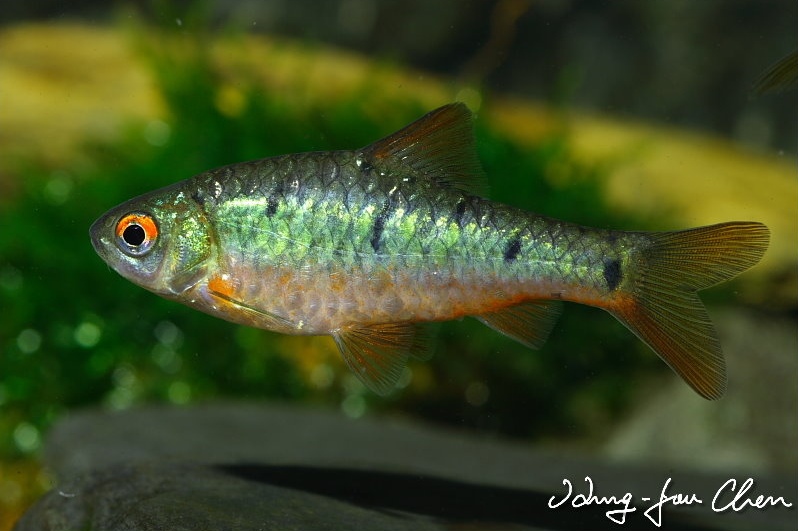
Barbodes semifasciolatusGolden Barb*
Günther, 1868
Max length75mm SL3.0in SLTank90 × 30cm36 × 12inTemp16–24°C61–75°FpH6.0–8.0This species is also known by the alternative names 'green' or 'Chinese' barb. The natural 'green' form is an infrequent find in the aquarium trade whereas the selectively-bred 'golden' variant is farmed in huge numbers and is among the most popular of freshwater aquarium fish. The latter was first produced in the 1960s and is now so ubiquitous that many hobbyists are initially unaware that it is not the natural form.
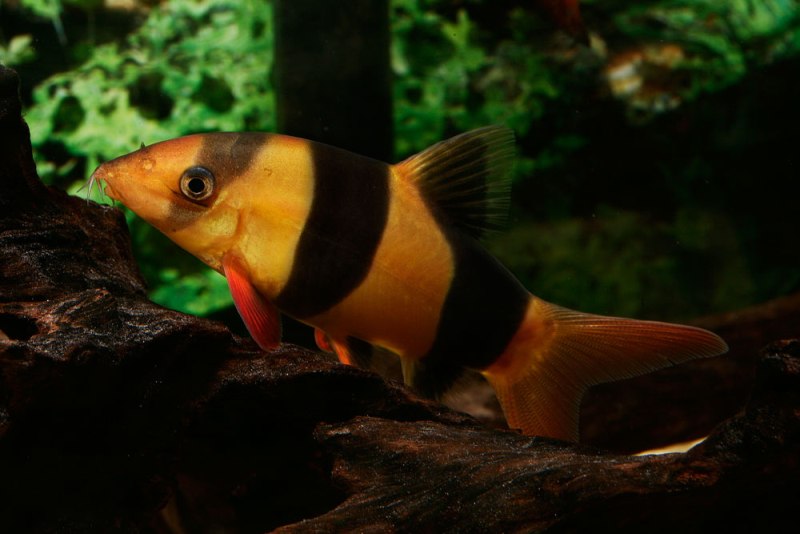
Chromobotia macracanthusClown Loach
Bleeker, 1852
Max length400mm SL16in SLTank180 × 60cm72 × 24inTemp24–30°C75–86°FpH5.0–7.0This species is arguably one of the most misunderstood in the hobby since it's wholly unsuitable for smaller aquaria despite its ubiquitous availability. Most retailers sell it without providing what should be considered essential information regarding long-term care and most specimens undoubtedly fail to reach their potential in captivity. The purchase of a group is also a considerable investment given that if properly cared for typical life span is in excess...
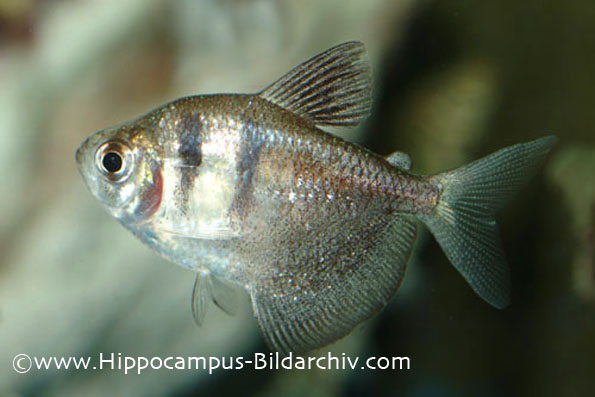
Gymnocorymbus ternetziBlack Widow Tetra
authority not recorded
Max length60mm SL2.4in SLTank75 × 30cm30 × 12inTemp20–26°C68–79°FpH6.0–7.0This species is ubiquitous in most dealers' tanks and is one of the best choices for the newcomer to fishkeeping. All the fish sold in the trade have been captive bred and as such are unfussy regarding water chemistry and diet. The intense black colouration of juveniles does fade as they grow, but adult fish provide a subtle contrast to most other commonly kept species. It goes by several common names, including 'butterfly tetra', 'black skirt tetra' and simply '...
Hasemania nanaSilvertip Tetra
authority not recorded
Max length50mm SL2.0in SLTank60 × 38cm24 × 15inTemp23–28°C73–82°FpH6.0–8.0The genus Hasemania is one of the few in the family Characidae in which members do not possess an adipose fin. This species is ubiquitous in most dealers' tanks and is one of the best choices for the newcomer to fishkeeping. All the fish sold in the trade have been captive bred and as such are unfussy with regard to both water chemistry and diet. It is sometimes seen for sale with the common name 'copper tetra'....
Hemigrammus erythrozonusGlowlight Tetra
authority not recorded
Max length40mm SL1.6in SLTank60 × 38cm24 × 15inTemp24–28°C75–82°FpH5.5–7.5This species is ubiquitous in most dealers' tanks and is one of the best choices for the newcomer to fishkeeping, being both hardy and inexpensive. There is a selectively-bred albino form that has been produced for the trade and has become popular in recent years. Care for this is identical to the standard form. Like all Hemigrammus, the taxonomic status of this species is currently Incertae Sedis, meaning uncertain. The genus is currently used as something of a catch-all for over 70 spe...
Hemigrammus ocelliferHead-and-tail light Tetra
authority not recorded
Max length45mm SL1.8in SLTank60 × 38cm24 × 15inTemp24–28°C75–82°FpH5.5–7.5Also known as the beacon tetra, this species is ubiquitous in most dealers' tanks and is one of the best choices for the newcomer to fishkeeping. It's both hardy and inexpensive. It has been popular in the hobby for several decades. There is a selectively bred albino form that has become popular in recent years, for which care is identical to the standard fish. There is possibly also a subspecies, H. ocellifer falsus that lacks the red spot at the caudal peduncle (the gold-coloured tai...
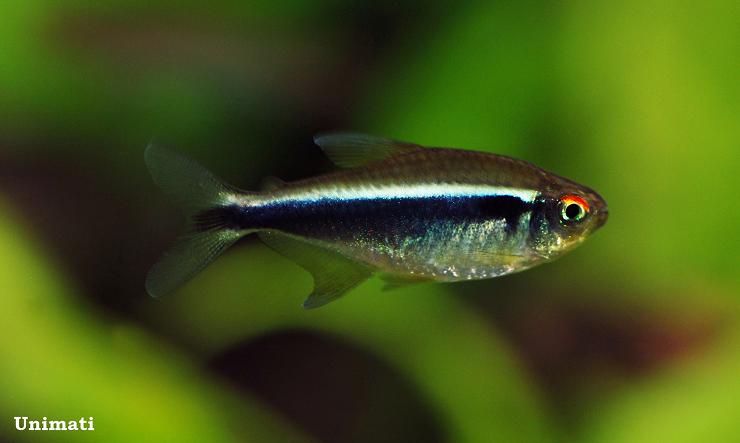
Hyphessobrycon herbertaxelrodiBlack Neon Tetra
Géry, 1961
Max length35mm SL1.4in SLTank80 × 30cm31 × 12inTemp20–28°C68–82°FpH5.0–7.5This species has been a ubiquitous aquarium fish since its discovery, and is produced on a commercial basis in several countries, therefore wild fish are no longer collected. An ornamental albino form is sometimes available. Apart from its distinctive colour pattern, it can be identified from related species via the following combination of charac...
Labidochromis caeruleusCaeruleus
authority not recorded
Max length100mm SL3.9in SLTank90 × 45cm36 × 18inTemp24–28°C75–82°FpH7.7–8.6This species is one of the most popular Rift Lake cichlids in the hobby, due to its striking colouration and somewhat peaceful (for a mbuna) nature. It exists in many different colour forms in nature, and the ubiquitous "electric yellow" morph, so popular in the hobby, is actually one of the rarer forms in nature, with the blue and white variety being more widespread. Wild fish are correspondingly rare in the hobby, with the vast majority of specimens offered for sale being tank-bred. ...
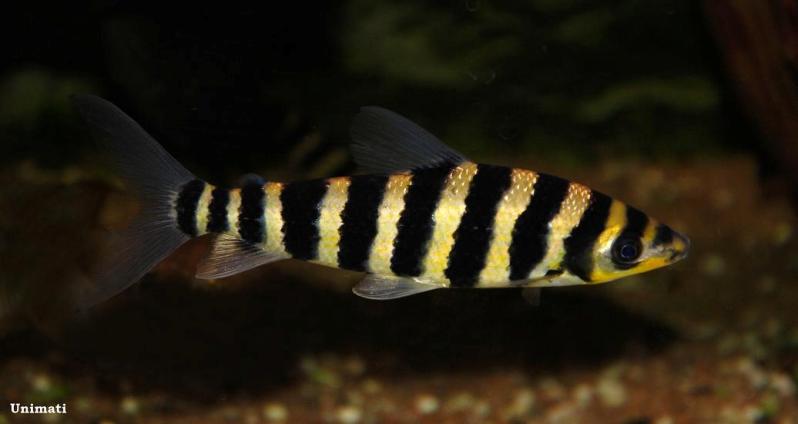
Leporinus fasciatusBanded Leporinus
Bloch, 1794
Max length270mm SL11in SLTank210 × 60cm84 × 24inTemp20–28°C68–82°FpH5.0–7.5This species is also referred to as 'black-anded leporinus', 'striped leporinus' and 'eight-banded leporinus'. Young specimens are often traded for aquaria without warning as to their potential size and requirements, and as a result it's fairly ubiquitous in public aquarium displays.
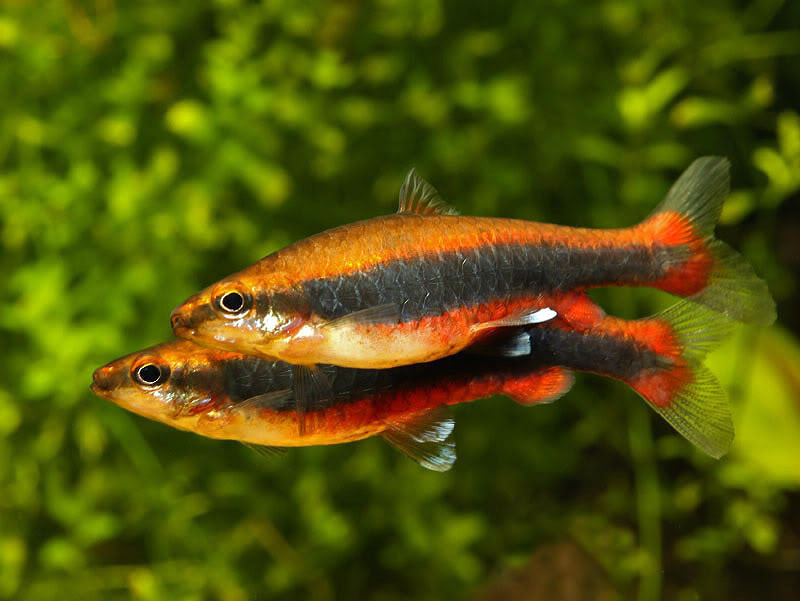
Nannostomus beckfordiGolden Pencilfish
Günther, 1872
Max length65mm SL2.6in SLTank45 × 30cm18 × 12inTemp21–27°C70–81°FpH5.0–8.0This is the type species of the genus, fairly ubiquitous in the aquarium trade, and represents an excellent choice for the newcomer to fishkeeping since it's less demanding than most congeners. It's sometimes referred to as 'Beckford's pencil fish' or 'brown pencilfish'. Don't worry if your fish look different when you switch on the aquarium lights after dark or in the morning as like most Nannostomus species it assumes a cryptic, vertically-barred colour pattern at ni...
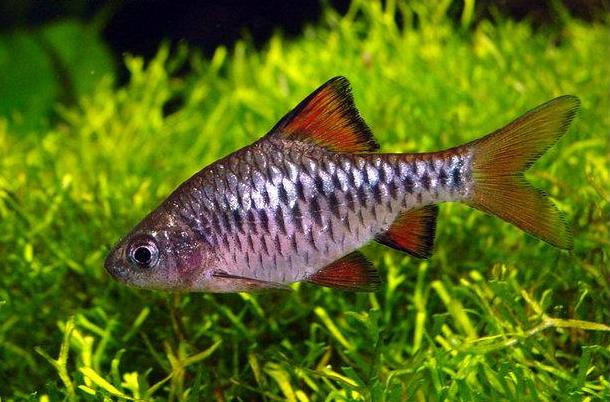
Oliotius oligolepisCheckered Barb
Bleeker, 1853
Max length45mm SL1.8in SLTank75 × 30cm30 × 12inTemp18–25°C64–77°FpH5.5–7.5This species is also traded as 'checker barb', 'checkerboard barb', or 'island barb', and is among the most ubiquitous species available in the aquarium trade. It is farmed commercially in enormous numbers with wild examples rarely, if ever, available. It was formerly included in the polyphyletic catch-all genus Puntius which contained over 100 species, but this situation has been largely resolved since the turn of the century.
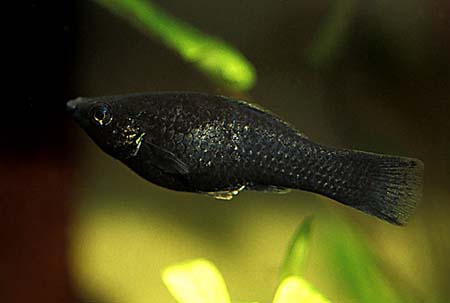
Poecilia sphenopsShort-finned Molly/Black Molly
Valenciennes, 1846
Max length80mm SL3.1in SLTank90 × 30cm36 × 12inTemp21–28°C70–82°FpH7.0–8.5A hugely popular aquarium fish. Many aquarium-bred colour morphs of this species are available, including the ubiquitous black molly. There are also Gold, Green, Lyretail, Silver and Dalmation varieties. Some of these are the results of P. sphenops being crossed with P. latipinnis. The 2 species will also interbreed readily in the aquarium and in order to avoid this we suggest keeping only one of them per tank. There also exists a (in our opinion) grotesque 'balloon' variety of this fi...
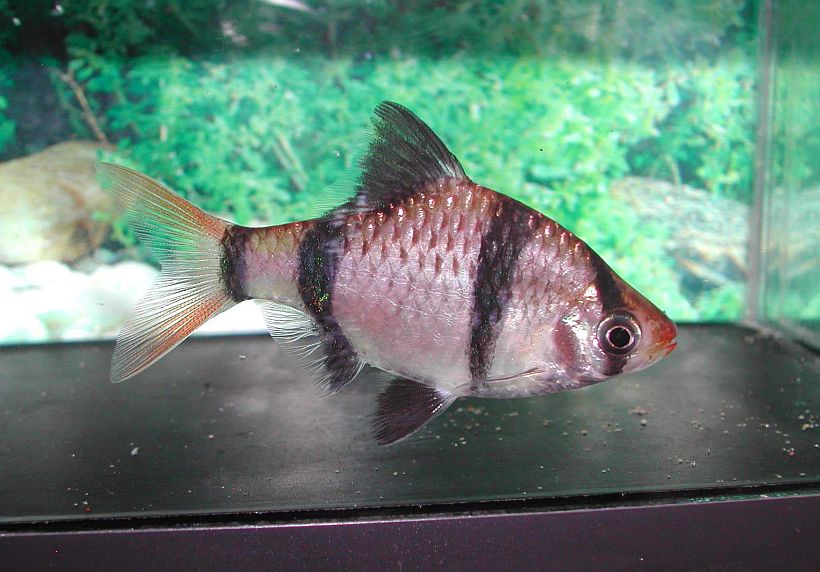
Puntigrus tetrazonaTiger Barb
Bleeker, 1855
Max length60mm SL2.4in SLTank80 × 30cm31 × 12inTemp20–26°C68–79°FpH5.0–8.0P. tetrazona is traditionally considered to be among the most ubiquitous species available in the aquarium trade. Wild examples are rarely traded, however, and there exists ongoing confusion as to the identity of the commercially-produced 'aquarium' tiger barb. A number of selectively-bred, ornamental strains are available. The albino, 'green' (aka 'moss'), and 'golden' (leucistic) variants are particularly pop...
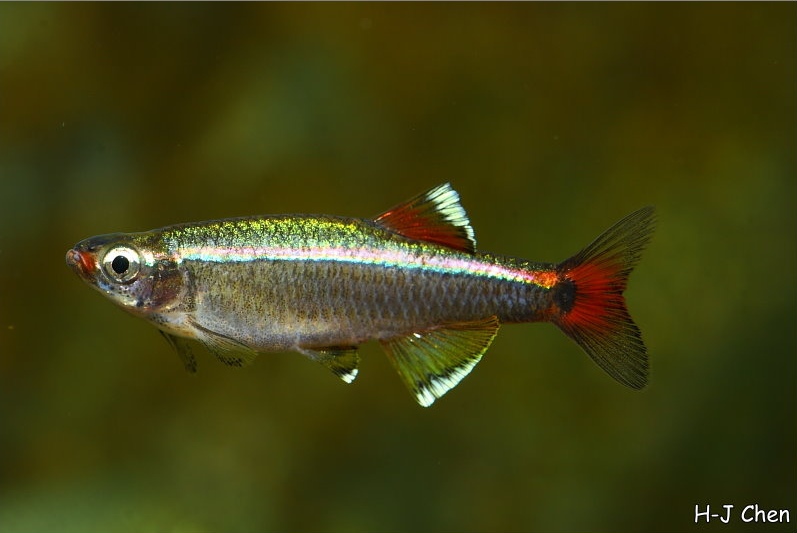
Tanichthys albonubesWhite Cloud Mountain Minnow
Lin, 1932
Max length40mm SL1.6in SLTank60 × 30cm24 × 12inTemp14–22°C57–72°FpH6.0–8.5One of the most ubiquitous species in the hobby and several ornamental strains are available including 'long-finned', 'golden', 'albino', and 'super red', for which care is identical to that of the 'standard' fish. Unfortunately the degree of inbreeding amongst farm-bred stock has resulted in a situation whereby many of the fish available today are genetically weak and prone to disease or develop physical deformities.
Trichogaster laliusDwarf Gourami
authority not recorded
Max length88mm SL3.5in SLTanknot recordedTemp22–27°C72–81°FpH6.0–7.5The Dwarf Gourami is one of the most ubiquitous freshwater species in the aquarium hobby, and is unarguably a beautiful fish. Several colour forms have been line-bred for the trade and have also proved popular. These include "Sunset" (also sold as "Red" or "Robin") and "Neon" varieties, although it's highly debatable whether these come close to matching the brilliance of the natural form. Unfortunately the general quality of dwarf gouramis availab...