Results for “wild-collected”
Type a name: scientific, common, or one a species used to go by. Or narrow the catalogue with the filters.
Filters
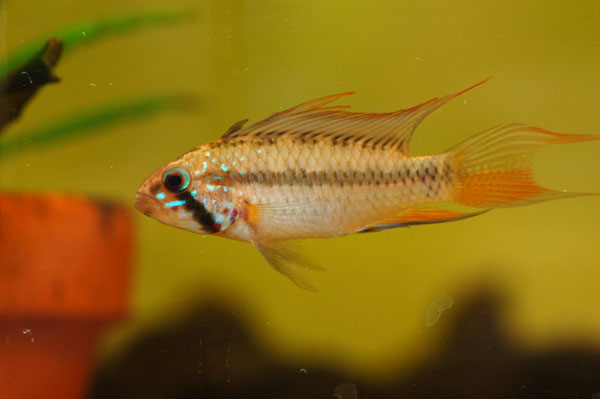
Apistogramma sp. 'breitbinden'A164
authority not recorded
Max length♂ 70 · ♀ 50mm SL♂ 2.8 · ♀ 2.0in SLTank60 × 30cm24 × 12inTemp22–29°C72–84°FpH4.0–6.5The German term 'breitbinden' translates literally as "broad-banded" and refers to the uniformly broad suborbital stripe seen in males of this 'species' which remains undescribed despite being known in the aquarium hobby for several decades. It's often imported as bycatch among shipments of wild-collected A. iniridae. Some of the populations have also been assigned th...
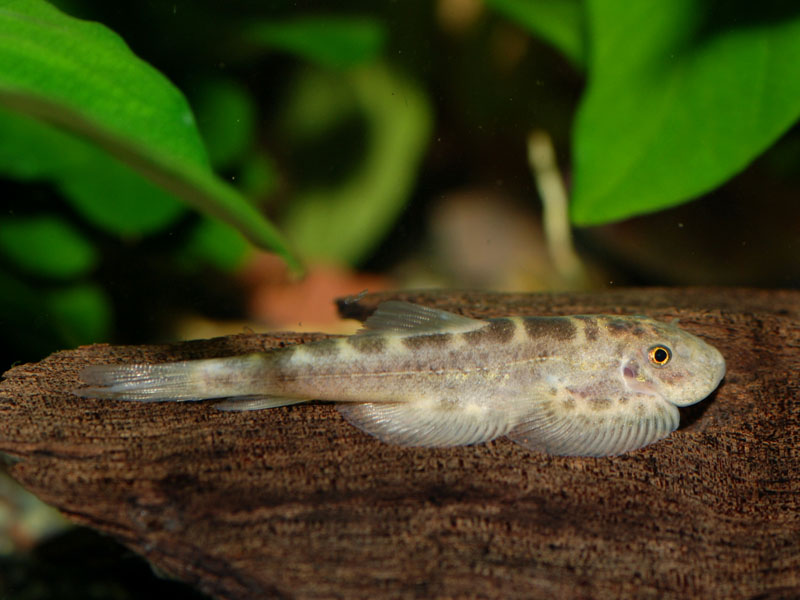
Sinogastromyzon wui
Fang, 1930
Max length110mm SL4in SLTank75 × 30cm30 × 12inTemp20–24°C68–75°FpH6.5–8.0This species is probably the most common member of the genus in the aquarium trade but still not often exported in numbers. Instead it's more often found in mixed shipments of other wild-collected fishes from southern China, particularly Beaufortia or Pseudogastromyzon spp. It may appear superficially simi...
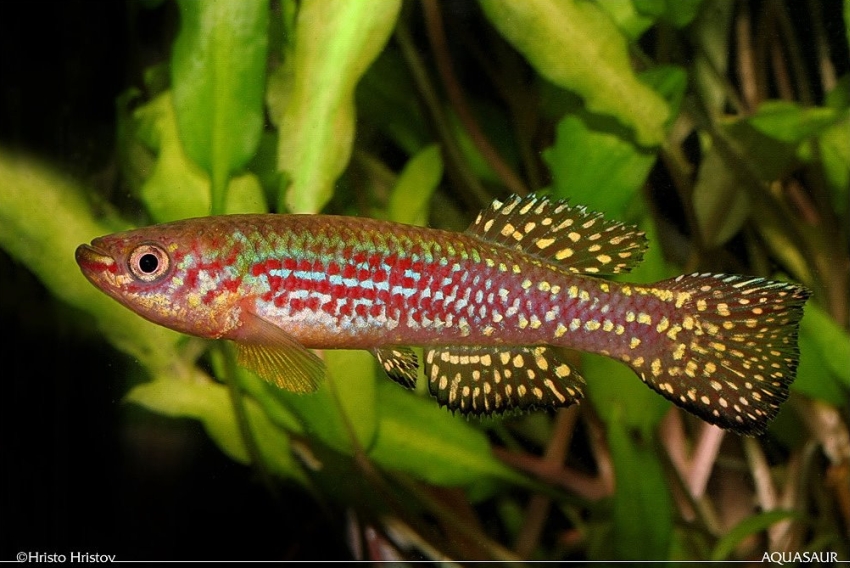
Fundulopanchax gresensi
Berkenkamp, 2003
Max length47mm SL1.9in SLTanknot recordedTemp22–26°C72–79°FpH6.0–7.5Known only from a relatively small area near the villages of Takwai I and II, Atebong Wire and Edjuingan in wester Cameroon, with records existing from the Bagwor and Mack river systems both of which are tributaries within the upper Cross River basin, western Cameroon. Type locality is 'West Cameroon, 5°34'N, 9°50'E'. Collections of wild fish are generally lab...
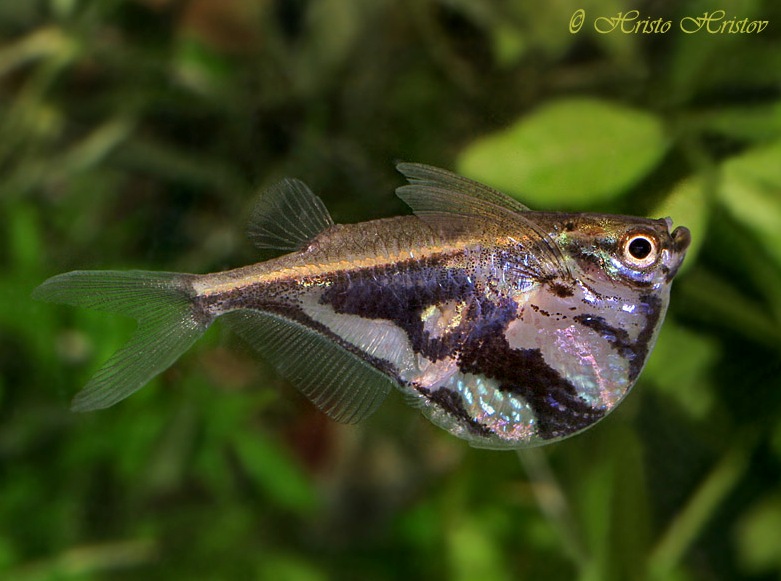
Carnegiella strigataMarbled Hatchetfish
Günther, 1864
Max length35mm SL1.4in SLTank75 × 30cm30 × 12inTemp20–28°C68–82°FpH4.0–7.0C. strigata is an enduringly popular species in the aquarium hobby but is not bred on a commercial basis with all fish offered for sale collected in the wild. It can be told apart from other members of the genus by its larger adult size and dark, marbled colour pattern appearing as a series of dark and light stripes running diagonally across the body below the lateral line. This colour pattern is variable and popul...
Theraps bocourtiChisel-tooth cichlid
authority not recorded
Max length300mm SL12in SLTank150 × 60cm60 × 24inTemp26–28°C79–82°FpHnot recordedA rather elusive species in the hobby, this beautiful cichlid is sometimes referred to as the "Chisel-toothed" cichlid. Despite being described in 1902 it was not until the mid-1990s that it appeared in the aquarium trade, wild specimens being collected by American aquarists Ross Socolof, Harry Specht, and Rusty Wessel in 1994....
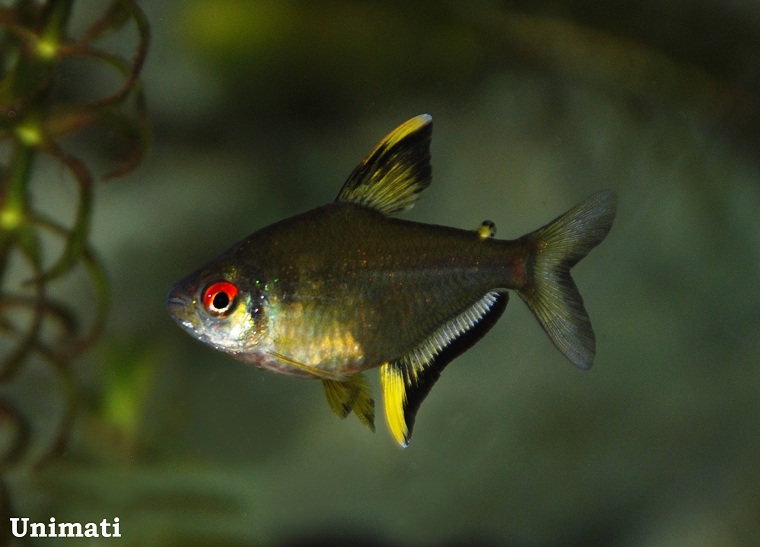
Hyphessobrycon pulchripinnisLemon Tetra
Ahl, 1937
Max length40mm SL1.6in SLTank80 × 30cm31 × 12inTemp20–28°C68–82°FpH5.0–7.5This species is a popular aquarium fish and is bred on a commercial basis in several countries, with a selectively-bred albino form also available. Wild specimens are rarely collected due to the low price of the farmed fish, but the origin of the commercial strain is questionable. The species was considered endemic to the rio Tapajós basin, but in the early 1990s fish appearing identical to the aquarium form were photographed in the...
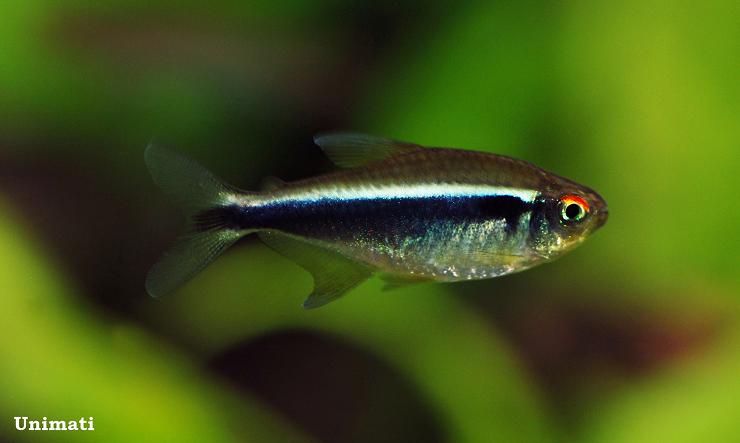
Hyphessobrycon herbertaxelrodiBlack Neon Tetra
Géry, 1961
Max length35mm SL1.4in SLTank80 × 30cm31 × 12inTemp20–28°C68–82°FpH5.0–7.5This species has been a ubiquitous aquarium fish since its discovery, and is produced on a commercial basis in several countries, therefore wild fish are no longer collected. An ornamental albino form is sometimes available. Apart from its distinctive colour pattern, it can be identified from related species via the following combination of charac...
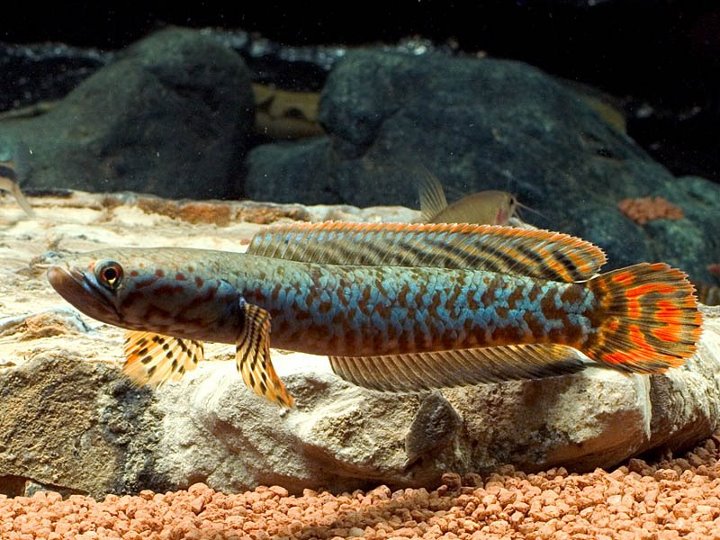
Channa bleheriRainbow snakehead
Vierke, 1991
Max length170mm SL7in SLTank120 × 30cm48 × 12inTemp14–28°C57–82°FpH6.0–8.0C. bleheri is a popular aquarium fish though it remains unclear whether collection for the ornamentaol trade is having a detrimental effect on wild populations (see 'Habitat'). It's one of several genus members to lack pelvic fins and can be further distinguished from other Channa species by the following combination of characters: sides of lower jaw with one large cycloid scale; lateral line complete with 46-50 scales; 14 pectoral-fin rays; 25 anal-fin rays; 4-11 irregular reddish orange markings on the caudal-fin
Liosomadoras oncinusJaguar Catfish
authority not recorded
Max length250mm SL10in SLTank120 × 45cm48 × 18inTemp20–28°C68–82°FpH4.8–7.2Often confused with its congener, L. morrowi, the jaguar cat can be distinguished by its more attractive, brighter patterning and larger adult size. It's an ideal and good looking bottom dweller for the larger community. Previously considered a member of the Doradidae, due to the opercular spines, it has now been reclassified. It occurs over a wide range in nature, hence its apparent tolerance to wildly different water chemistry. In reality, its requirements are determined by collection loc...
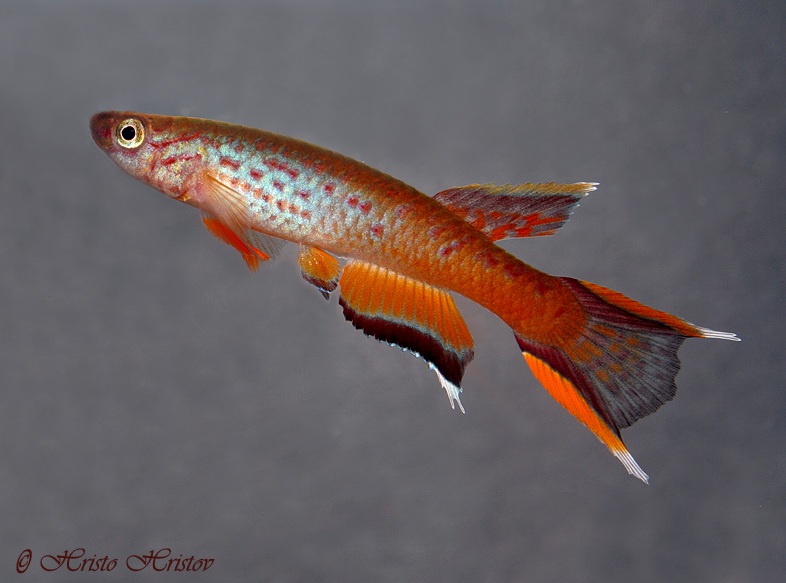
Aphyosemion australeGolden Lyretail
Rachow, 1921
Max length60mm SL2.4in SLTank45 × 25cm18 × 10inTemp21–32°C70–90°FpH5.5–7.0Also known by the vernacular names You might also see it for sale as 'golden lyretail' or 'lyretail panchax, A. australe was among the first killifishes to become popular in the hobby and still a favourite today. There exist a number of wild forms which tend to be labelled with place and year of collection in order to preserve bloodlines and avoid hybridisation, as well as several ornamental strans including 'orange', 'gold', 'chocolate', and 'albino'.
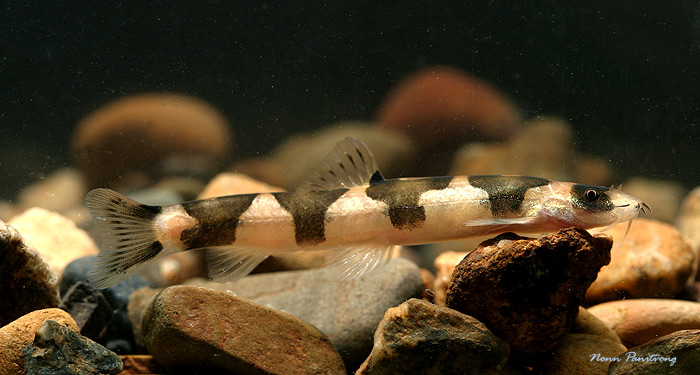
Schistura pridiiMini Dragon Loach
Vidthayanon, 2003
Max length40mm SL1.6in SLTank60 × 30cm24 × 12inTemp18–24°C64–75°FpH7.0–8.5Endemic to a handful of tributary streams within the upper Chao Phraya river system in northern Thailand. Six populations are known to date, with the majority lying inside the Doi Chiang Dao Wildlife Sanctuary. Some of its habitats are under threat by over-grazing, deforestation, deliberate forest fires, and collection for the aquarium trade.
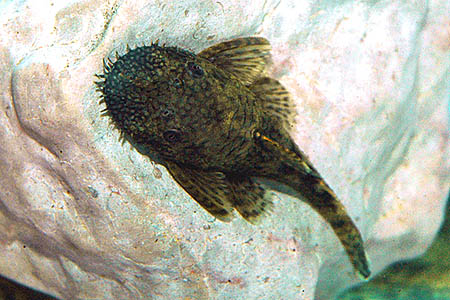
Ancistrus triradiatusHorned Bristlenose Pleco
Eigenmann, 1918
Max length120mm SL5in SLTanknot recordedTemp24–30°C75–86°FpH6.6–7.6Often confused with the common bristlenose, Ancistrus sp. (3) and some other members of the genus. This species is imported quite often, but unlike sp. (3) is almost always wild caught. So similar are some of these species that a definite id is sometimes impossible without knowing the collection locality of the fish. When buying Loricariids always check that the fish has a rounded belly and that its eyes aren't sunken, as these are classic signs of emaciation in newly imported specimens...
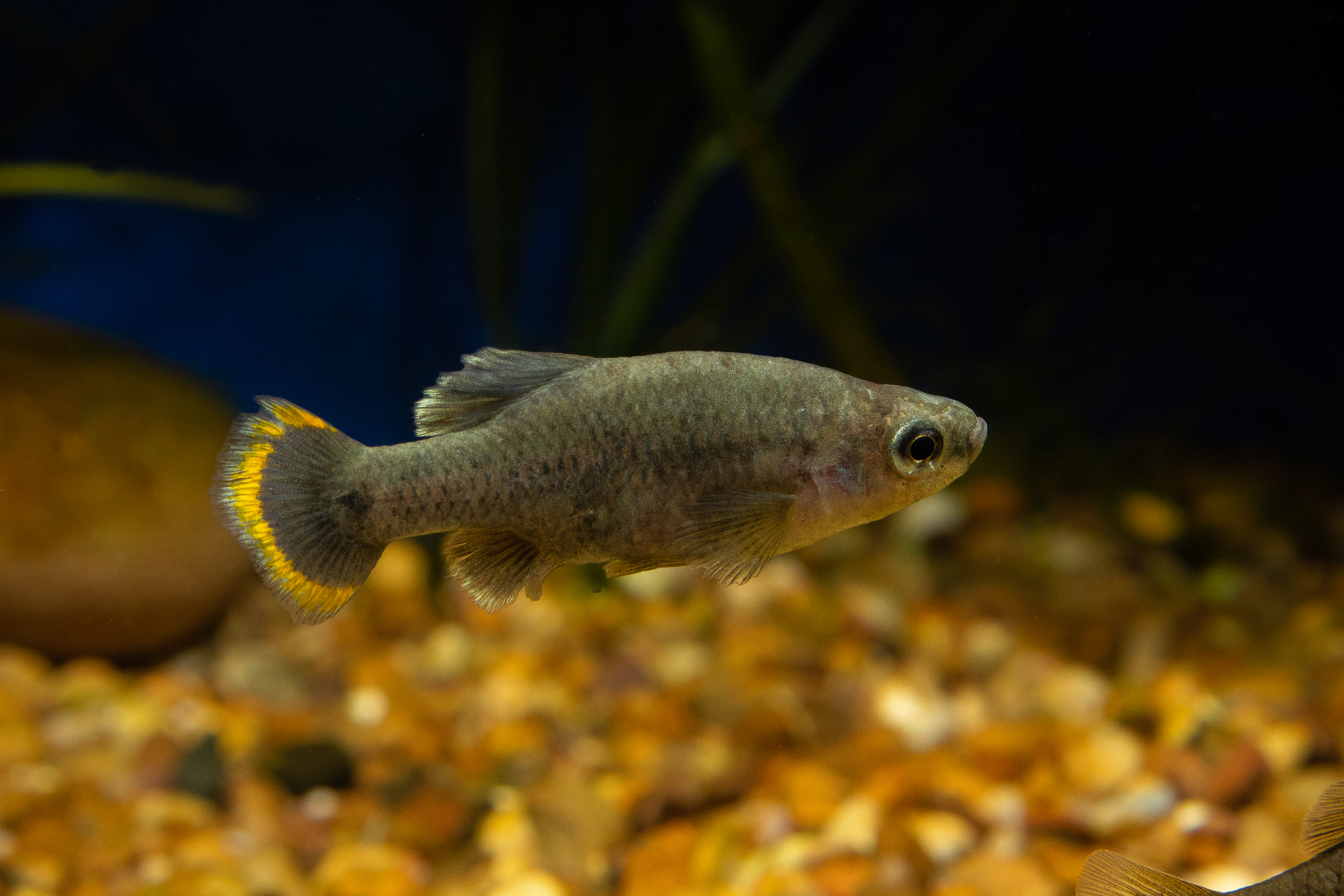
Zoogoneticus tequilaTequila Splitfin
Webb & Miller, 1998
Max length♂ 30 · ♀ 50mm SL♂ 1.2 · ♀ 2.0in SLTank90 × 30cm36 × 12inTemp17–27°C63–81°FpH6.8–7.6A single male of the Tequila Splitfin was sampled in 1955 by Miller and Greenbank, but identified erroneously as Zoogoneticus quitzeoensis, with which species it was collected and found sympatrically . Many years later, the mistake was detected, the fish identified as a new species and finally, 43 years after the first capture, described by Webb and Miller. In 2001, a wild population of this species was rediscovered in a very small spring pool (3 x 4m in diameter). The population there was composed of only a handful of adult fish and a few tens of juveniles (De la Vega-Salazar et al., 2003). In 2007, N. W. Bailey et al showed, that the allelic richness of this population (though it was comparable in size to an aquatic stock) was higher than in any aquatic stock. In 2013 the loss of this population was reported (pers. comm. Domínguez), so there is not much hope that this species is still persisting in the wild.
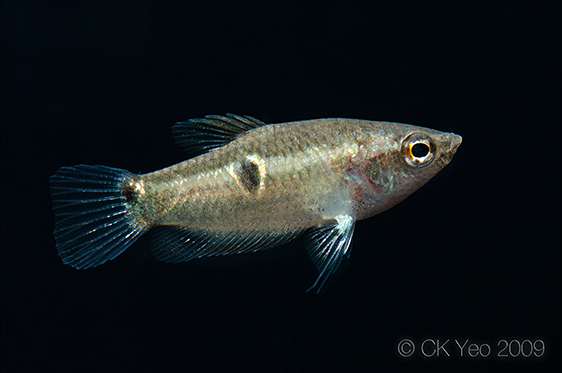
Parasphaerichthys ocellatusEyespot Gourami
Prashad & Mukerji, 1929
Max length32mm SL1.3in SLTank45 × 30cm18 × 12inTemp15–25°C59–77°FpH6.5–7.5To date the species is known mostly from the upper Ayeyarwady River basin in northern Myanmar where it's been collected close to the city of Myitkyina in Kachin State as well as around nearby Lake Indawgyi, the largest inland lake in Southeast Asia and home to ten globally threatened bird species. The lake and surrounding area were designated a protected zone by the Ministry of Ecotourism in 1999 and now form the Indawgyi Lake Wildlife Sanc...