Fundulopanchax gresensi
On this page6 sections
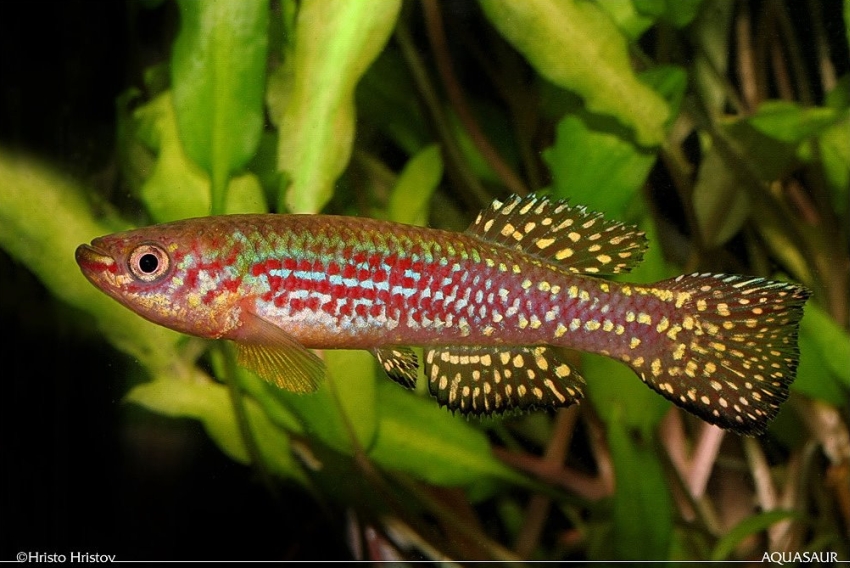
Quick facts
Difficulty5 of 6 measures
More bars, more demanding.
- Space
- any tank
- Water
- tap water
- Temp
- steady heat
- Temperament
- unknown
- Social
- in a pair
- Compatibility
- not a community fish
Known only from a relatively small area near the villages of Takwai I and II, Atebong Wire and Edjuingan in wester Cameroon, with records existing from the Bagwor and Mack river systems both of which are tributaries within the upper Cross River basin, western Cameroon. Type locality is 'West Cameroon, 5°34'N, 9°50'E'. Collections of wild fish are generally lab...
Etymology
Distribution
Known only from a relatively small area near the villages of Takwai I and II, Atebong Wire and Edjuingan in wester Cameroon, with records existing from the Bagwor and Mack river systems both of which are tributaries within the upper Cross River basin, western Cameroon.
Type locality is 'West Cameroon, 5°34'N, 9°50'E'.
Collections of wild fish are generally labelled with some form of code or locality details in order that they can be told apart, thus limiting the possibility of hybridisation, and in this case the commonest hobby strain is known as 'Takwai'.
Habitat
Collected from shallow, swampy sections of forested streams, some of which may dry out during the dry season.
Certain parts of its range may also be threatened with deforestation but details are scarce.
Maintenance
The set-up need not be too complicated but be sure to cover the aquarium well since this species is a prodigious jumper.
Provide plenty of cover in the form of aquatic plants, wool mops, etc., and if using filtration air-powered, sponge-type units are best as these will not harm eggs or fry.
Lighting is unimportant but can be used if you wish, and growth of filamentous algae should not be discouraged.
Water conditions
Species images · 2
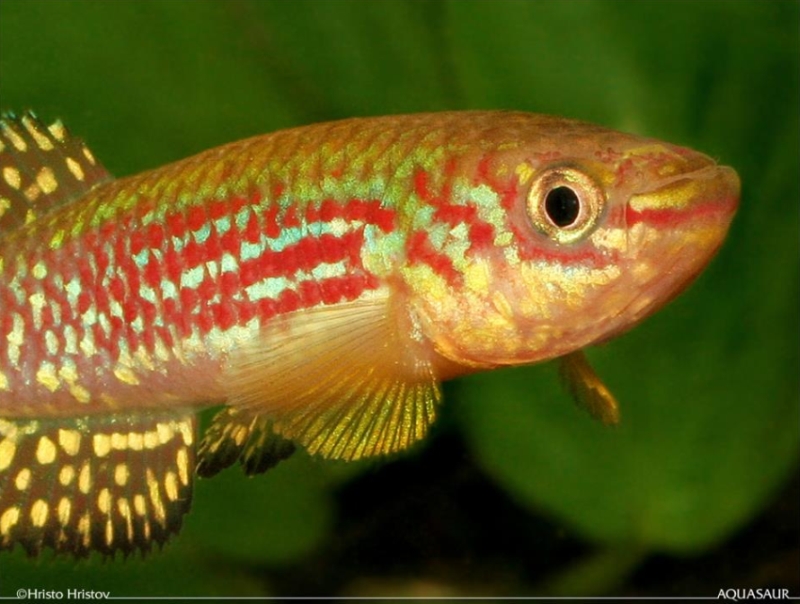
Used with the photographer’s permission. Not licensed for reuse.