Aphyosemion bitaeniatum
Two-Striped Lyretail · Zweistreifen Prachtkärpfling
Formerly Fundulus bitaeniatus Ahl, 1924 · Fundulopanchax multicolor Brüning, 1929 · Aphyosemion (Fundulopanchax) nigri Ahl, 1935
On this page4 sections
Quick facts
Difficulty3 of 6 measures
More bars, more demanding.
- Space
- any tank
- Water
- mild adjustment
- Temp
- unfussy
- Temperament
- unknown
- Social
- unknown
- Compatibility
- unknown
This species is widely-distributed in lowland, coastal regions of Togo, Benin and Nigeria as far as the Cross River delta, and occurs at some inland localities along the lower Niger River. Populations in Cameroon, Equatorial Guinea and Gabon are now considered to represent other species.
Water conditions
Etymology
Aphyosemion: from the Greek aphúe (Gr. ἀφύη), meaning 'a small fish', and semeion (Gr. σημεῖον), meaning 'banner, flag', in reference to the "ornamented, often lyre-shaped" caudal fin in male individuals of genus members.
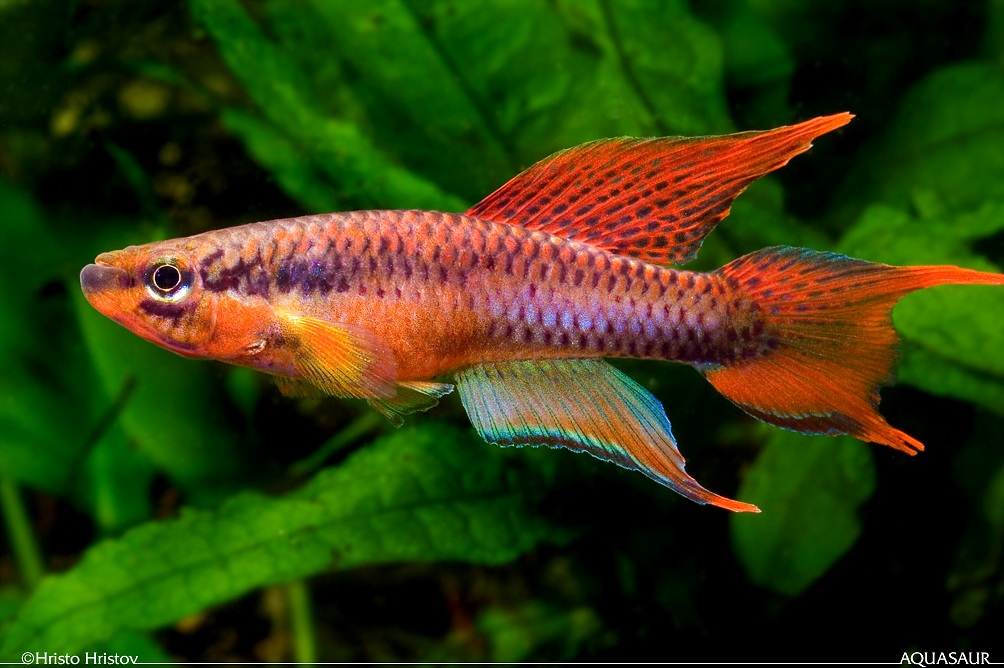
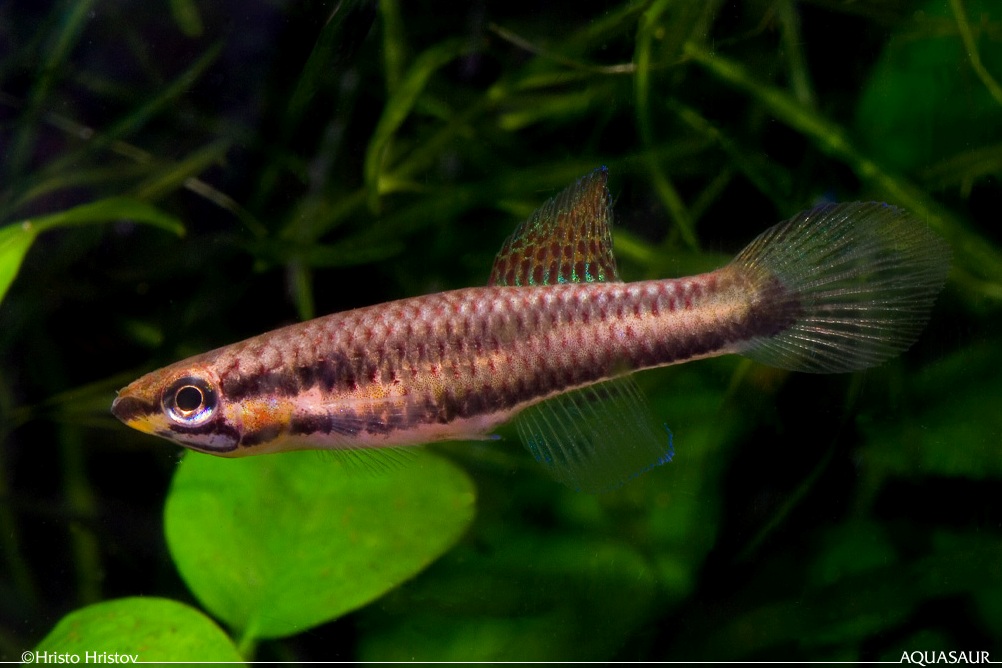
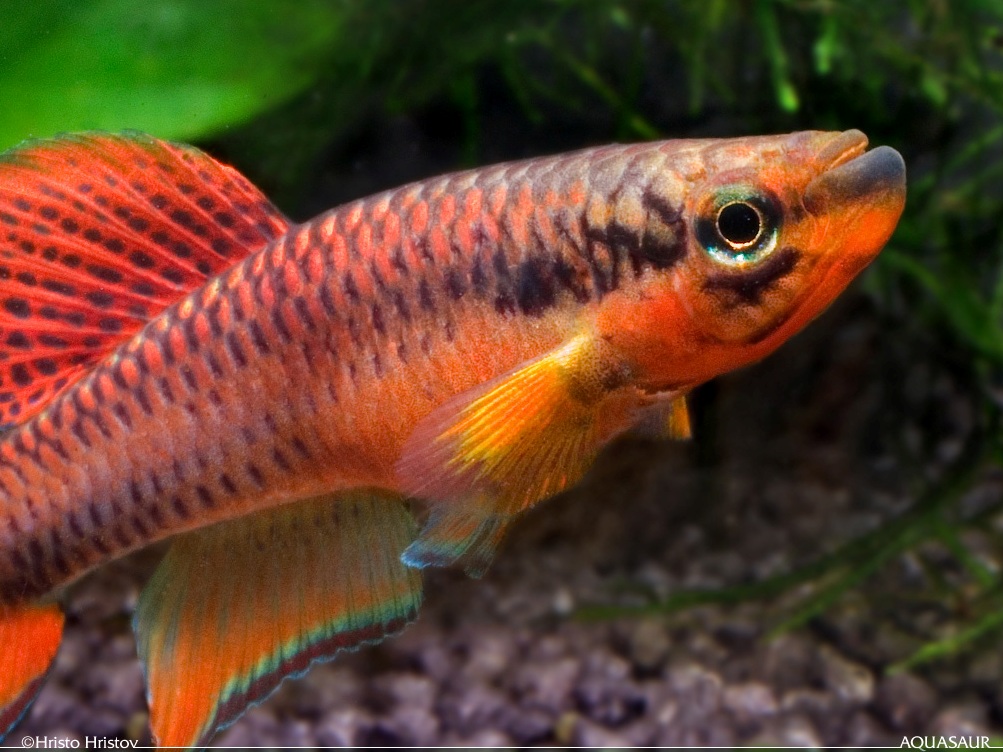
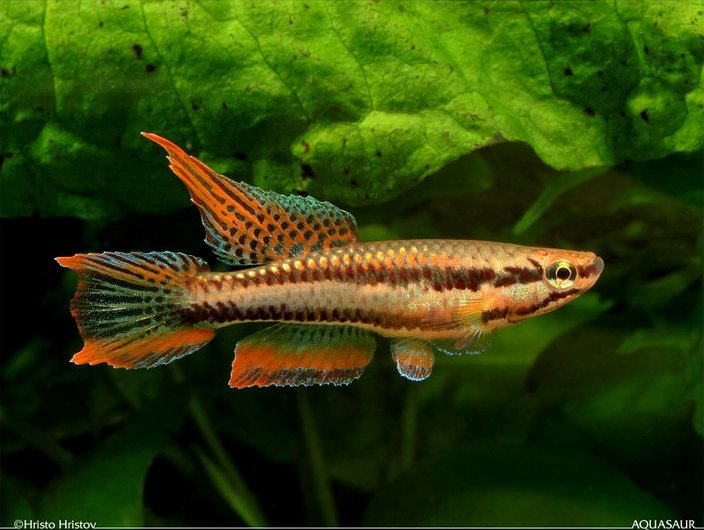
bitaeniatum: from the Latin bi-, a prefix meaning 'having two parts', and taeniatus, meaning 'beribboned', in reference to the colour pattern of the preserved holotype, which comprised two dark longitudinal stripes on the body. In life, individuals from different subpopulations exhibit various colour patterns.
Distribution
Species images · 5
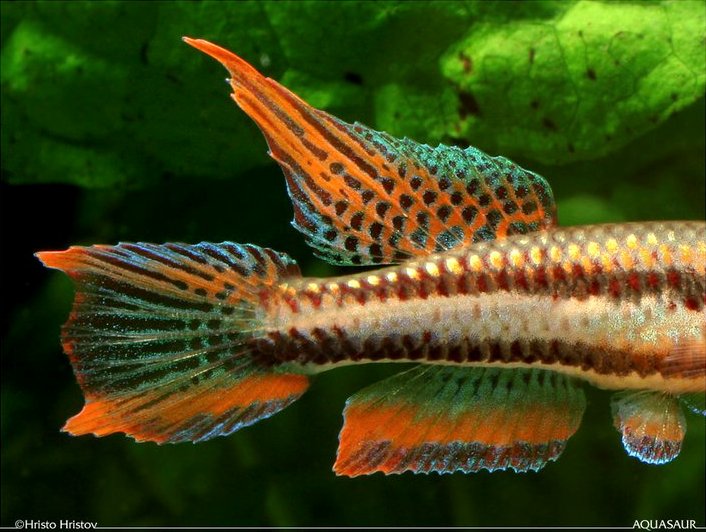
Used with the photographer’s permission. Not licensed for reuse.