Aspidoras spilotus
C125
On this page10 sections
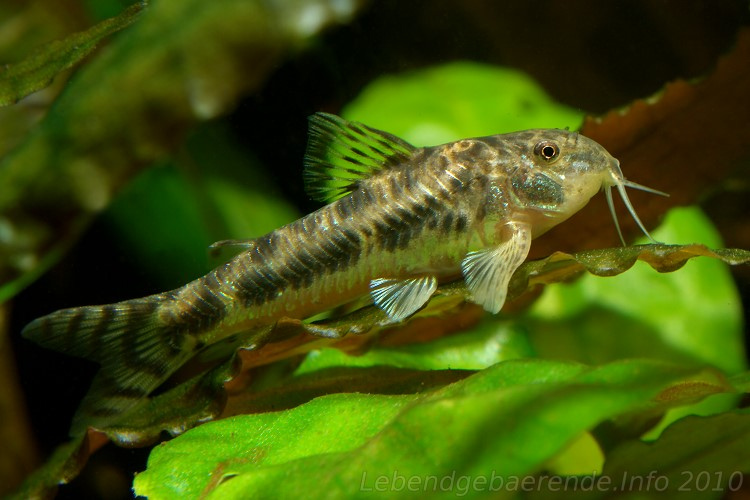
Quick facts
Difficulty6 of 6 measures
More bars, more demanding.
- Space
- modest tank
- Water
- tap water
- Temp
- unfussy
- Temperament
- peaceful
- Social
- shoal
- Compatibility
- community tank
Aspidoras spp. are foraging omnivores and will accept most sinking dried foods, as well as small live and frozen varieties such as chironomid larvae (bloodworm), Tubifex, etc. Feeding a varied diet will ensure the fish are in optimum condition.
Etymology
Aspidoras: from the Ancient Greek ἀσπίς (aspis), meaning 'shield', and δορά (dora), meaning 'skin, hide of an animal', in allusion to the rows of bony plates on the flanks of genus members.
spilotus: from the Latin spilotus, meaning ‘spotted’.
Distribution
Aquarium size
An aquarium with minimum base dimensions of 60 ∗ 30 cm24 ∗ 12 in or more is recommended.
Maintenance
Ideally use a substrate of fine sand, although rounded gravel is an acceptable alternative provided it's kept scrupulously clean.
Other décor is largely down to personal choice, but some cover should be provided to give the fish security.
This species requires stable, clean water conditions and should never be added to a biologically immature set-up.
Water conditions
These boxes carry affiliate links and we may earn a commission. What they recommend comes from each profile’s own figures, never chosen by hand or paid for.
Diet
Aspidoras spp. are foraging omnivores and will accept most sinking dried foods, as well as small live and frozen varieties such as chironomid larvae (bloodworm), Tubifex, etc.
Feeding a varied diet will ensure the fish are in optimum condition.
Under no circumstances should they be expected to survive on 'left-overs' from other inhabitants of the aquarium or relied on to 'clean' the aquarium.
Behaviour and compatibility
Peaceful and gregarious. Should be maintained in a group of at least 4-6 individuals.
Sexual dimorphism
Females tend to grow larger, and sexually mature individuals are noticeably rounder and broader-bodied than males, especially when gravid.
References
- Ferraris, C. J., Jr. (2007). Checklist of catfishes, recent and fossil (Osteichthyes: Siluriformes), and catalogue of siluriform primary types. Zootaxa 1418, 1-628
- Reis, R. E., S. O. Kullander and C. J. Ferraris, Jr. (eds) (2003). Check list of the freshwater fishes of South and Central America. CLOFFSCA. EDIPUCRS, Porto Alegre, i-xi + 1-729
- Nijssen, H. and I. J. H. Isbrücker (1976). The South American plated catfish genus Aspidoras R. von Ihering, 1907, with descriptions of nine new species from Brazil (Pisces, Siluriformes, Callichthyidae). Bijdragen tot de Dierkunde 46(1), 107-131
Species images · 6
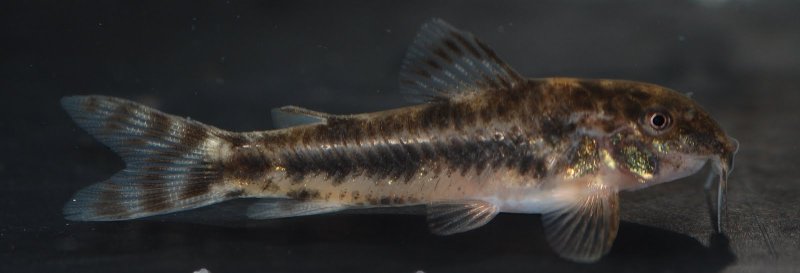
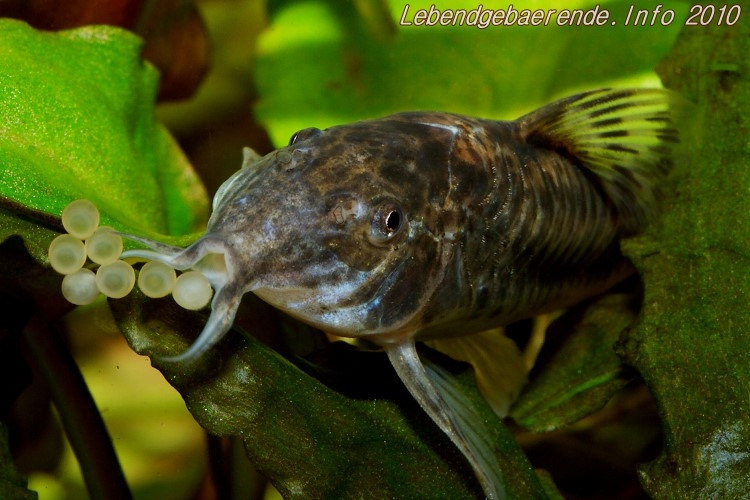
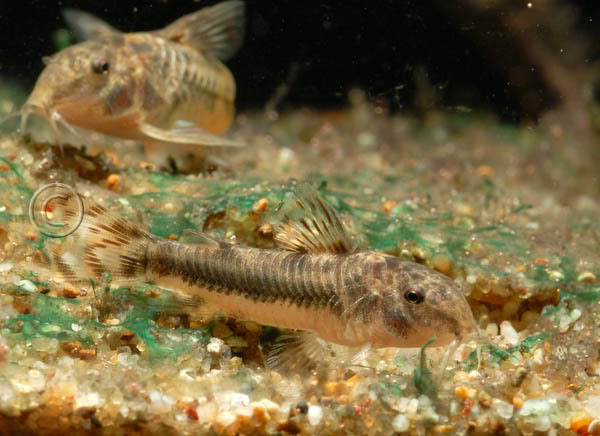
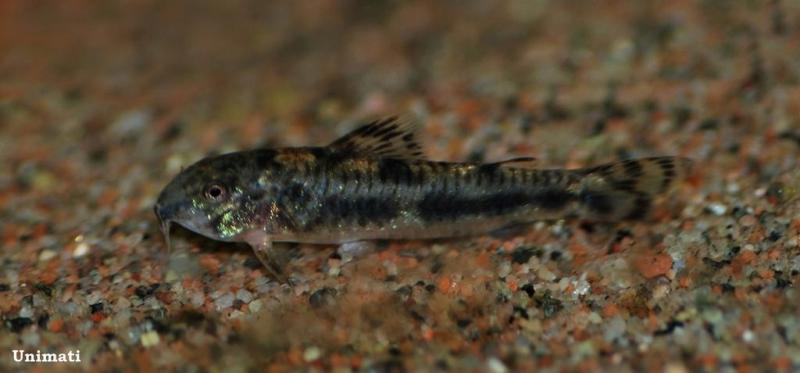
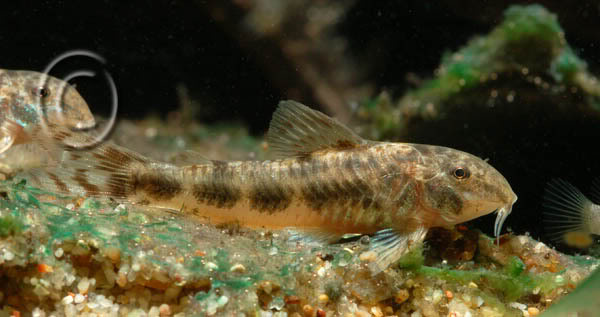
Used with the photographer’s permission. Not licensed for reuse.