Fundulopanchax scheeli
On this page10 sections
Quick facts
Difficulty4 of 6 measures
More bars, more demanding.
- Space
- modest tank
- Water
- tap water
- Temp
- steady heat
- Temperament
- peaceful
- Social
- unknown
- Compatibility
- unknown
This is not an annual species, occuring only in permanent bodies of water.
Distribution
Habitat
It inhabits small streams and ponds in a few areas of coastal rainforest.
Aquarium size
45 ∗ 25 ∗ 25 cm18 ∗ 10 ∗ 10 in - ~28 litres~7 US gal, although it can be spawned in smaller aquaria.
Maintenance
A dark substrate should be used, ideally peat moss or the like and the tank should have dense areas of planting and pieces of wood to serve as cover. The use of floating plants to further diffuse the light is also recommended. This species is an accomplished jumper so the cover must be very tight fitting. The water in the aquarium should be filtered through peat if possible.
Water conditions
Temperature: 23 – 26 °C73 – 79 °F
pH: 6.0-7.5
Hardness: 3-15 dH
These boxes carry affiliate links and we may earn a commission. What they recommend comes from each profile’s own figures, never chosen by hand or paid for.
Diet
Small live or frozen foods such as daphnia or bloodworm are preferred, although the fish will also accept good quality flake in most cases.
Behaviour and compatibility
F. scheeli can be kept in a community setup provided tankmates are chosen with care. This is a very peaceful, shy species and will easily be outcompeted by more vigorous fish. Ideal choices include small characins, rasboras and dwarf cichlids, Corydoras, small Loricariids and peaceful Anabantoids. Not recommended for the general community.
Sexual dimorphism
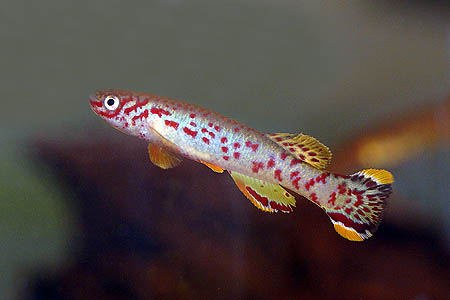
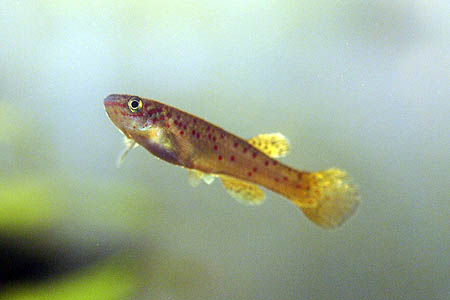
Males are more brightly coloured than females.
Notes
This is not an annual species, occuring only in permanent bodies of water.
Species images · 2
Used with the photographer’s permission. Not licensed for reuse.
Profile completeness16 of 24
67% complete
Missing: references, a recorded distribution, taxonomic authority, a common name, social needs, community suitability, reproduction, etymology.