Every species
Every freshwater profile, A–Z.
Filters
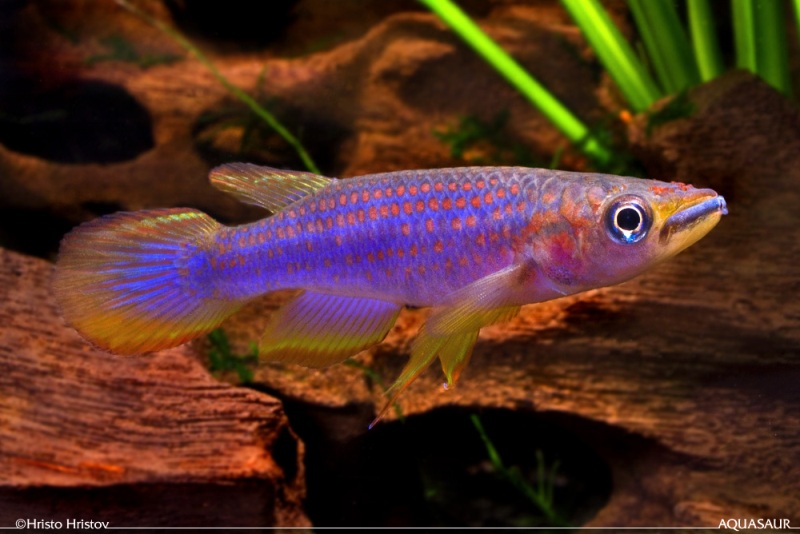
Epiplatys lamotteiRed-spotted Panchax
Daget, 1954
Max length60mm SL2.4in SLTank80 × 30cm31 × 12inTemp18–23°C64–73°FpH5.0–7.0Following the key of Romand (1992) this species can be told apart from congeners by the following combination of characters: adult size > 40 mm SL; large, dark, transverse bars and some reddish-brown pigmentation on flanks; longitudinal bands more-or-less defined; longitudinal bands composed of small red spots; caudal-fin subquadrangular caudal fin; 11-13 anal-fin rays; 16-17 dorsal-fin rays; 7-8 anal-fin rays located anterior to dorsal-fin origin.
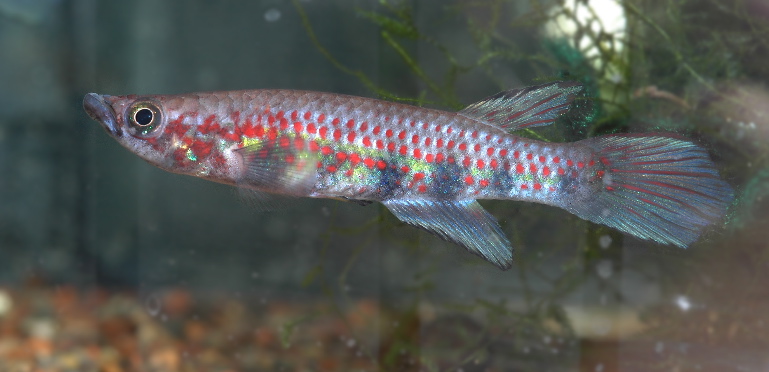
Epiplatys mesogramma
Huber, 1980
Max lengthnot recordedTanknot recordedTempnot recordedpHnot recordedEndemic to the Ubangi (also spelled Oubangui) River drainage in southwestern Central African Republic with type locality given as 'Small stream along Mbaiki-Mongoumba road, south of Bangui, 3°55'N, 18°10'E, Central African Republic'. The Ubangi is is the largest right-ba...
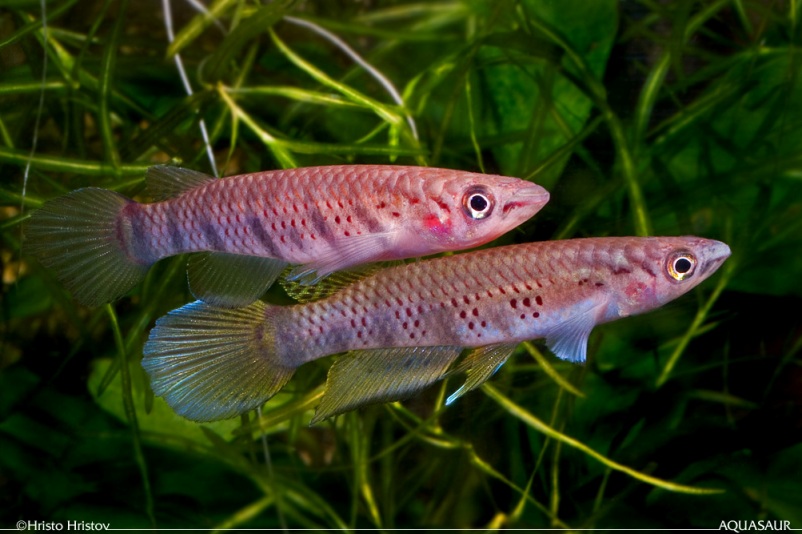
Epiplatys sexfasciatusSix-barred Panchax
Gill, 1862
Max length70mm SL2.8in SLTank80 × 30cm31 × 12inTemp20–27°C68–81°FpH5.0–7.0Distributed throughout coastal regions north and westwards from Gabon through Equatorial Guinea, Cameroon, Nigeria, Benin and Togo as far as Ghana although some consider it restricted to northwestern Gabon and Equatorial Guinea with the remaining populations representing various subspecies (see 'Notes'). Type locality is 'Gaboon River', which presumably refe...
Erethistes maesotensis
authority not recorded
Max length40mm SL1.6in SLTank45 × 30cm18 × 12inTemp20–24°C68–75°FpH6.0–7.0This species is now considered a member of the Hara genus by many experts, but as things stand it is still officially included in Erethistes. It is, in all likelihood, a Hara, as Erethistes is characterised by divergent denticles on the pectoral fins, whereas Hara possess outwardly pointing denticles. E. maesotensis has these outwardly pointing denticles. It's quite rare in the trade, but makes an interesting addition to an Asian stream community tank if you can get hold of some....
Eretmodus cyanostictusStriped Goby Cichlid
authority not recorded
Max length80mm SL3.1in SLTank90 × 30cm36 × 12inTemp24–28°C75–82°FpH8.0–9.0Also known as the Tanganyikan Clown, this is one of the so-called Tanganyikan goby cichlids. They occur only in the upper few feet of water around rocky shores, also known as the surge zone, where they scrape algae from the rocks with their specialised teeth. This habitat is typified by breaking waves and strong currents. They have a few adaptations allowing them to inhabit such an environment. The swim bladder is rendered useless to reduce their buoyancy. They also have a longand a laterally co...
Erpetoichthys calabaricusRopefish
authority not recorded
Max length900mm SL35in SLTank150 × 60cm60 × 24inTemp23–30°C73–86°FpH6.0–7.5This is the only species in the genus Erpetoichthys, and is an incredibly hardy, nocturnal species. Due to its poor vision, the Ropefish relies on its excellent sense of smell to locate food. It's closely related to the Polypterus genus and both these are some of the last surviving relatives of very ancient species. Fossils of earlier relatives have been found that date back to the Triassic Period, which occured during the early development of the dinosaurs, more than 200 million years ago....
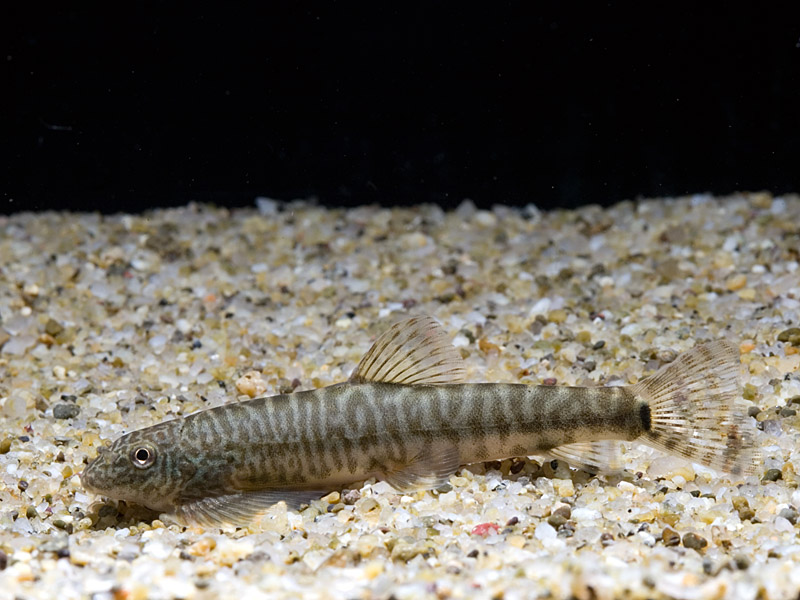
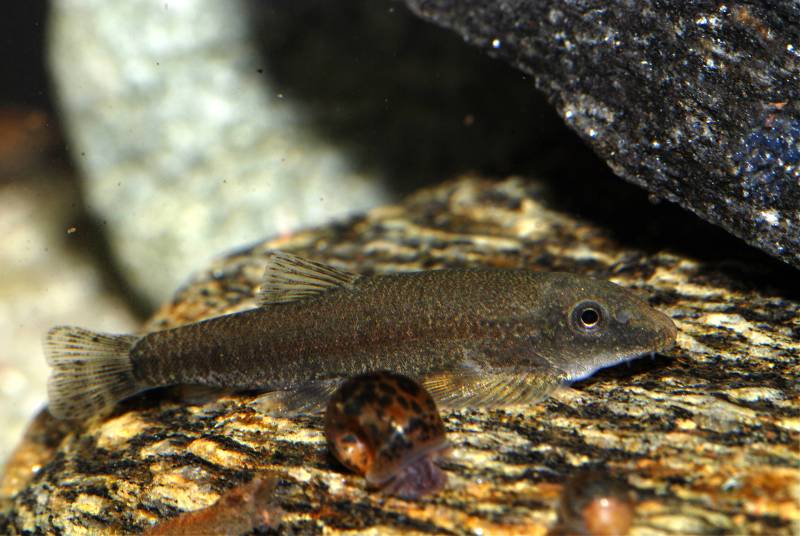
Erromyzon sinensis
Chen, 1980
Max length55mm SL2.2in SLTank75 × 30cm30 × 12inTemp18–24°C64–75°FpH6.0–7.5E. sinensis was initially included in the genus Protomyzon where it remained until 2004 when Kottelat found sufficient geographical and morphological differences between members of the group inhabiting the island of Borneo and those from mainland East/South East Asia to warrant their separation. The genus Erromyzon was erected to accommodate the mainland fishes and there are currently three...
Erromyzon sp. 'ER01'
authority not recorded
Max length45mm SL1.8in SLTank60 × 30cm24 × 12inTemp18–24°C64–75°FpH6.5–8.0Erromyzon spp. are obligate dwellers of shallow, fast-flowing, highly-oxygenated headwaters/minor tributaries characterised by stretches of riffles and runs broken up by pools or cascades in some cases. Substrates are normally composed of smaller rocks, sand and gravel with jumbles of boulders, and while riparian/stream-side vegetation and patches of submerged leaf litter are common features aquatic plants aren't usually present.
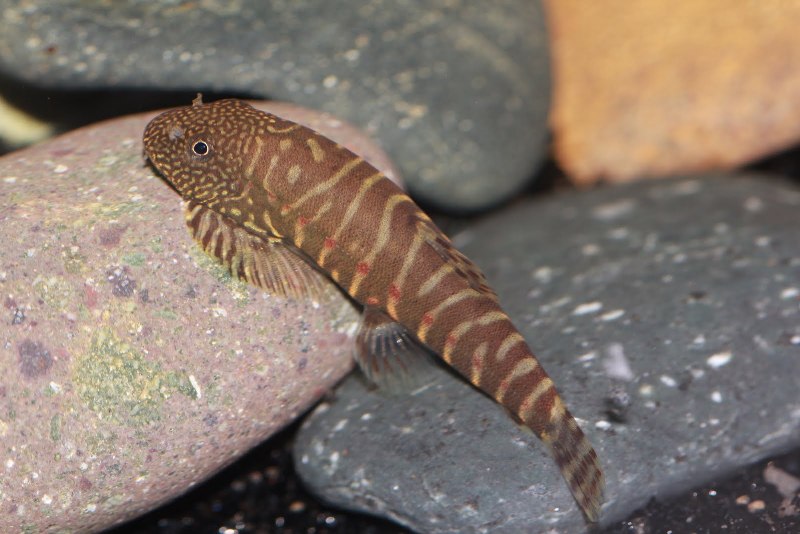
Erromyzon sp. 'ER02'
authority not recorded
Max length50mm SL2.0in SLTank60 × 30cm24 × 12inTemp18–24°C64–75°FpH6.5–8.0This fish remains in need of identification, and we've chosen to list unidentified members of the genus using an 'ER' numbering system in the absence of definitive information. It's quite easy to distinguish from congeners since it's the only species known to possess a colour pattern comprising a dark base colour and series of thin, paler vertical bars on the body and similarly-coloured spots on the head.
Erythrinus erythrinusRed Wolf Fish
authority not recorded
Max length200mm SL8in SLTank120 × 30cm48 × 12inTemp22–26°C72–79°FpH5.5–7.5A species for the specialist, E. erythrinus is also known as the rainbow wolf fish or red hi-fin wolf fish. It is quite variable in colour and pattern depending on collection locality. There is a variant from Peru that has a bright orange belly. Recent studies have highlighted genetic differences in these different populations, suggesting that E. erythrinus is actually a species complex, rather than a single species. There is currently one other recognised species in the genus, E. kessleri, but ...
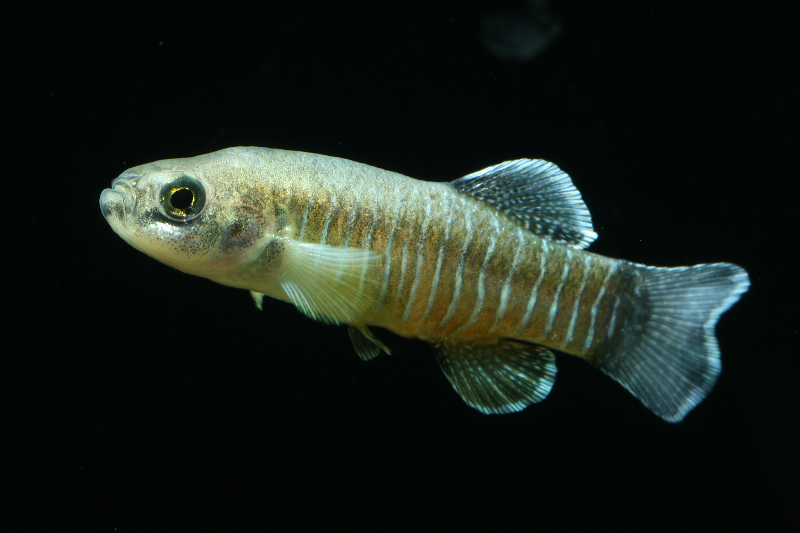
Esmaeilius arakensisArak Toothcarp
Teimori, Esmaeili, Gholami, Zarei, & Reichenbacher, 2012
Max length35mm SL1.4in SLTank120 × 30cm48 × 12inTemp8–32°C46–90°FpH7.0–8.5This species was available in the aquarium hobby for a number of years prior to publication of the official description and was generally referred to as A. sp. 'Namak' or A. sp. 'Namak River'. It can be distinguished from other members of the genus by the following combination of characters: 10–12 anal-fin rays; 28–32 lateral line scales, 10–13 caudal peduncle scales; 8–10 gill rakers; 12–19, commonly 1...
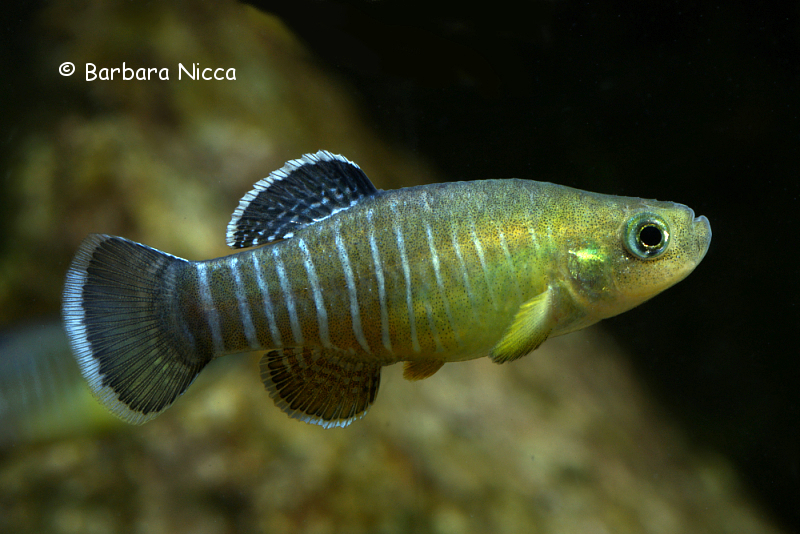
Esmaeilius persicusFarsi Toothcarp
Jenkins, 1910
Max length60mm SL2.4in SLTank120 × 30cm48 × 12inTemp8–32°C46–90°FpH6.5–8.0This species is still sometimes listed as a species of Lebias by some sources although that name has long been considered a synonym of Cyprinodon by most authorities and an ICZN committee voted to suppress the name in favour of Aphanius as recently as 2003. It was known as A. persicus until late 2011 when it was reclassified due to that name being preoccupied by a Late Miocene fossil species previously referred to as Brachylebias persicus Priem 1908. This change was necessary because Gau...
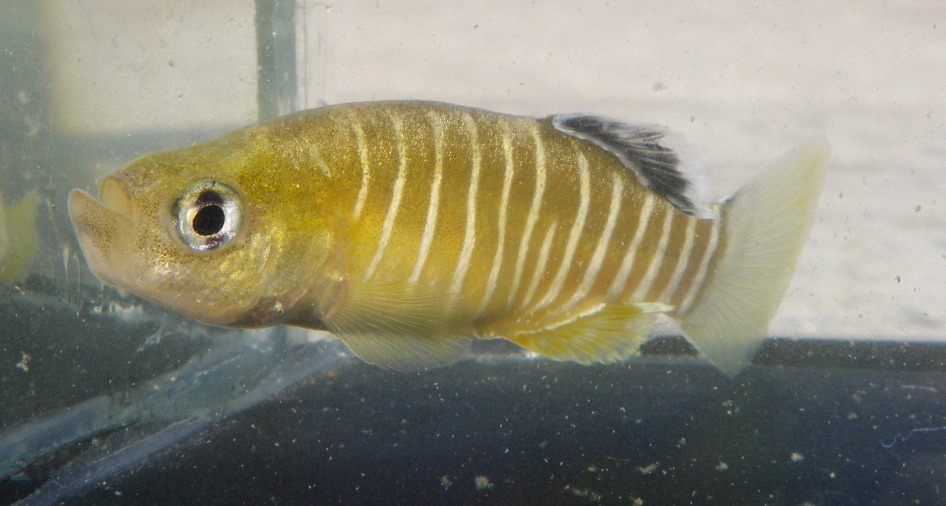
Esmaeilius vladykoviZagros Toothcarp
Coad, 1988
Max length60mm SL2.4in SLTank120 × 30cm48 × 12inTemp12–32°C54–90°FpH6.2–8.5The Iranian Plateau is home to a diverse group of Aphanius with four species already described and several awaiting description. These are among the most ancient in the genus having divereged away from a common ancestor around 20 - 24 million years ago. Among them this species is most closely related to A. sophiae from the Kor River system but can be distinguished by differences in patterning. Males of A. sophiae lack the characteristic darkcolouration seen in A. vladykovi and females possess a ...
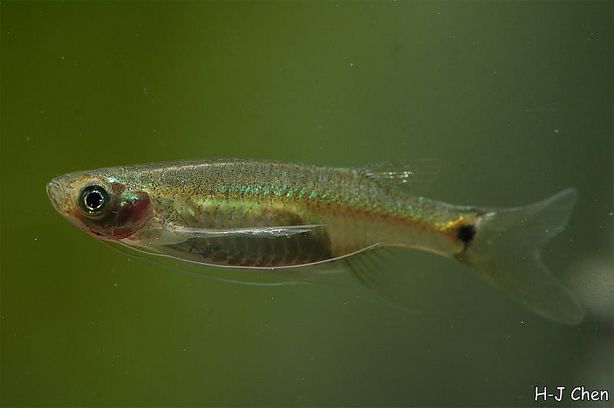
Esomus caudiocellatus
Ahl, 1924
Max length40mm SL1.6in SLTank120 × 30cm48 × 12inTemp20–26°C68–79°FpHnot recordedE. caudiocellatus can be told apart from congeners by lacking a dark lateral stripe and possessing a prominent dark marking on the caudal peduncle. In recent years a number of phylogenetic studies involving Esomus and its near relatives have been conducted and conflicting results published. For example a 2003 study by Fang et al. concluded that the genus is the sister group, i.e., most closely-related to...
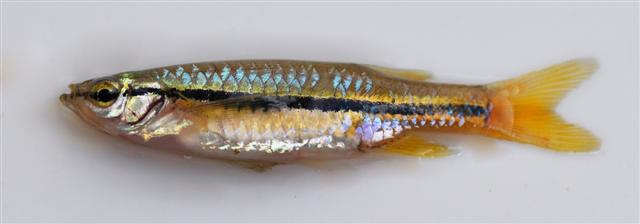
Esomus danricaFlying Barb
Hamilton, 1822
Max length70mm SL2.8in SLTank120 × 30cm48 × 12inTemp20–26°C68–79°FpH6.0–8.0Found in various types of habitat but shows a marked preference for shallow, slow-moving and standing waters such as rice paddies and other temporally-inundated environments with dense aquatic vegetation.
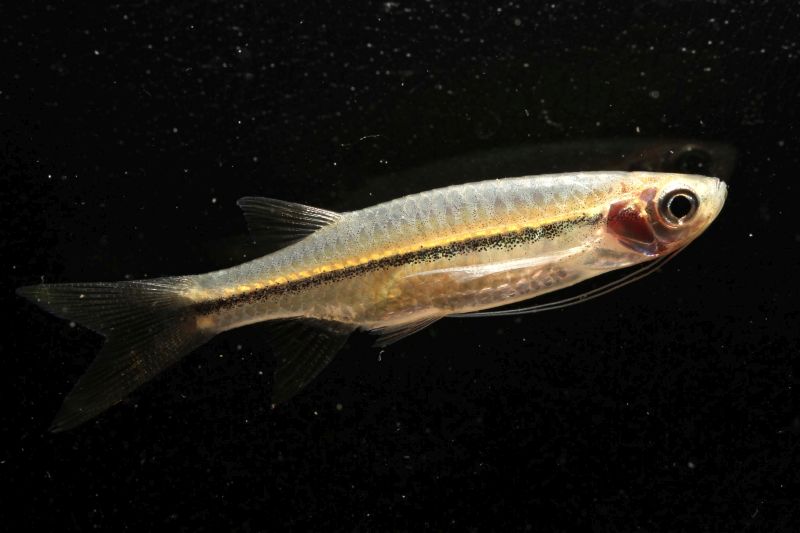
Esomus longimanusMekong Flying Barb
Lunel, 1881
Max length80mm SL3.1in SLTank120 × 30cm48 × 12inTemp20–28°C68–82°FpH6.0–8.0Known from the Mekong river basin in Thailand, Laos, Cambodia, and Vietnam, the Tonlé Sap river and lake system in Cambodia, and smaller, coastal drainages in southeast Thailand. Records from Peninsular Malaysia are likely to refer to other species. Type locality is given simply as 'Cambodia'.
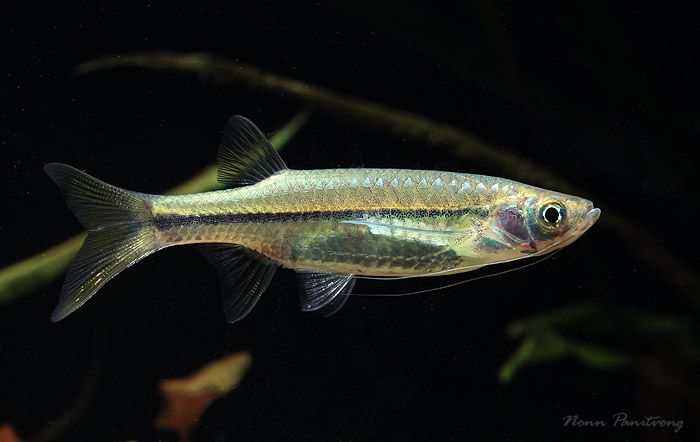
Esomus metallicusStriped Flying Barb
Ahl, 1923
Max length75mm SL3.0in SLTank120 × 30cm48 × 12inTemp20–26°C68–79°FpH6.0–7.0There currently exist a dozen described Esomus spp. alhough few are seen in the aquarium trade and none are especially popular. Most are commonplace in their native countries and also quite plainly-patterned so generally overlooked by collectors. Their most common use in some areas is actually as a feeder fish in the aquaculture of larger species. They're characterised by greatly-enlarged pectoral fins and two pairs of barbels, of which the maxillary pair are extremely long and usually reach the pectoral fins.
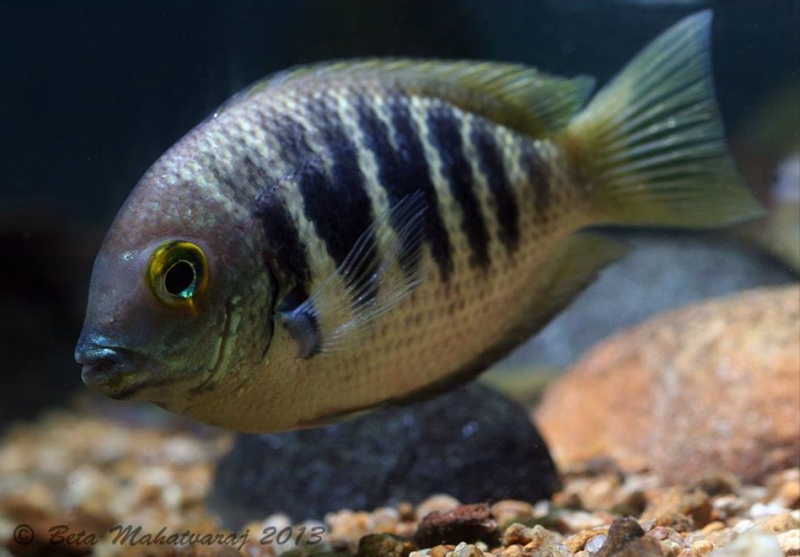
Etroplus canarensisCanara Pearlspot Cichlid
Day, 1877
Max length110mm SL4in SLTank120 × 45cm48 × 18inTemp22–32°C72–90°FpH6.0–7.5Etroplus is the only cichlid genus native to the Indian subcontinent and Sri Lanka and currently comprises three species among which E. canarensis is uniquely limited to freshwater and restricted in range. Its congeners E. maculatus and E. suratensis are both euryhaline inhabiting estuaries, coastal lagoons and the lower reaches of rivers around coastlines of western and southern India plus northern Sri Lanka.
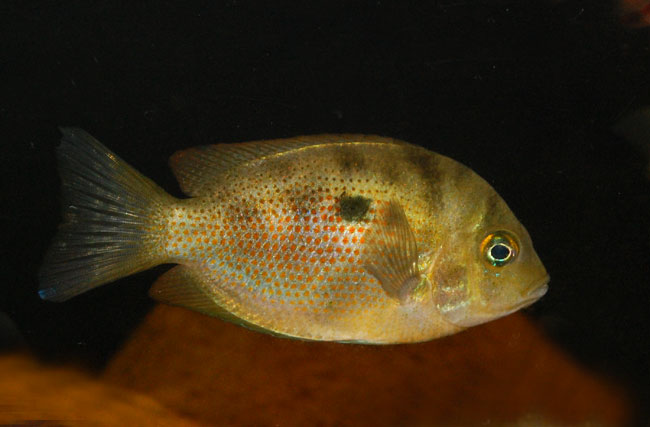
Etroplus maculatusOrange Chromide
Bloch, 1795
Max length80mm SL3.1in SLTank120 × 60cm48 × 24inTemp20–28°C68–82°FpH7.0–8.5Wild examples are rarely-seen in the aquarium hobby although selectively-bred ornamental strains are widely-available for which care is identical. These are normally traded as 'red' or 'yellow' chromide and have a solid yellow-orange colour pattern with no dark elements. It exhibits a widespread sympatry with the con...
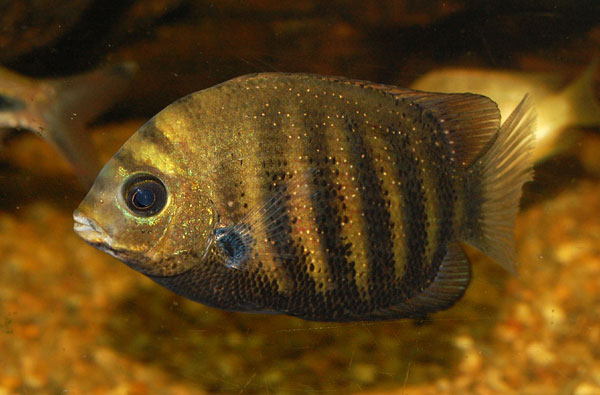
Etroplus suratensisGreen Chromide
Bloch, 1790
Max length350mm SL14in SLTanknot recordedTemp20–30°C68–86°FpH7.0–8.5This species is euryhaline and mostly inhabits brackish estuaries, coastal lagoons and the lower reaches of rivers. It also occurs in freshwater habitats, however, including a number of inland lakes in Sri Lanka although it appears to have been introduced intentionally.