Every species
Every freshwater profile, A–Z.
Filters
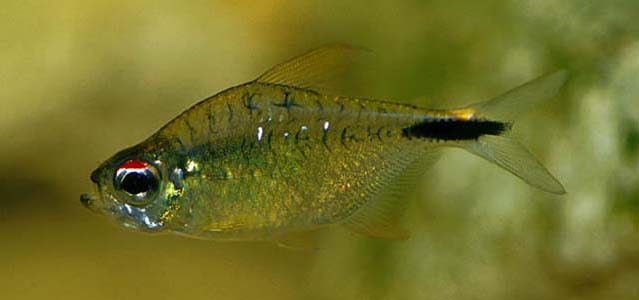
Astyanax leopoldiLeopold's Tetra
Géry, Planquette & Le Bail, 1988
Max length60mm SL2.4in SLTank60 × 30cm24 × 12inTemp23–27°C73–81°FpH5.5–7.0Most Astyanax spp. are not popular in the aquarium hobby, though the genus is among the most speciose within the family Characidae. A. leopoldi is no exception in that you'll rarely see it offered for sale but may find the occasional specimen mixed among other species in shipments of wild fishes from Peru.
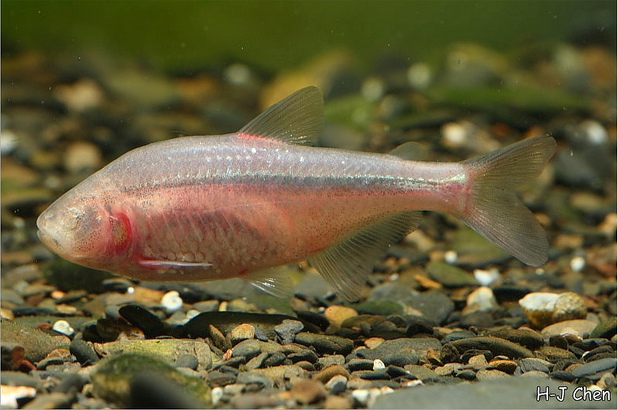
Astyanax mexicanusBlind Cave Tetra
De Filippi, 1853
Max length95mm SL3.7in SLTank80 × 30cm31 × 12inTemp20–25°C68–77°FpH6.5–8.0While the surface-dwelling form of this species is fairly unremarkable and rarely-seen in the hobby, the blind form is very popular indeed. The two may have diverged as recently as within the last 10,000 years, with the blind form losing its eyes and much of its pigment. This probably happened because the fish needed better development in other sensory areas. Losing unnecessary and energy-consuming aspects of its physiology allowed it to devote more energy to developments such as increased numbers of taste receptors on the head.
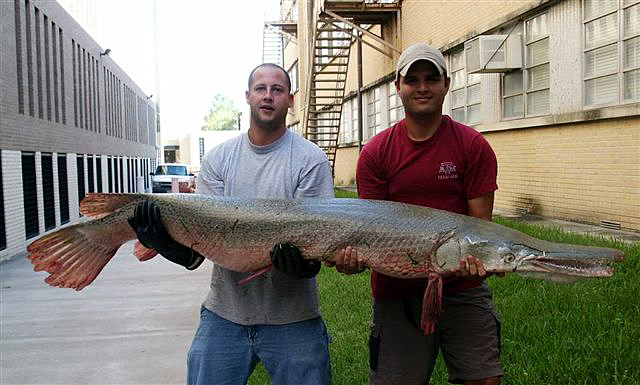
Atractosteus spatulaAlligator Gar
Lacepède, 1803
Max length3050mm SL120in SLTanknot recordedTemp11–23°C52–73°FpH6.0–8.0This is one of the largest freshwater fish species in the world, and clearly shouldn't be considered a home aquarium subject at all given its eventual size and the fact it can live for well in excess of 50 years. We include it here only because some public aquaria are able to maintain it long-term. Unfortunately, juveniles are seen for sale quite regularly in the aquari...
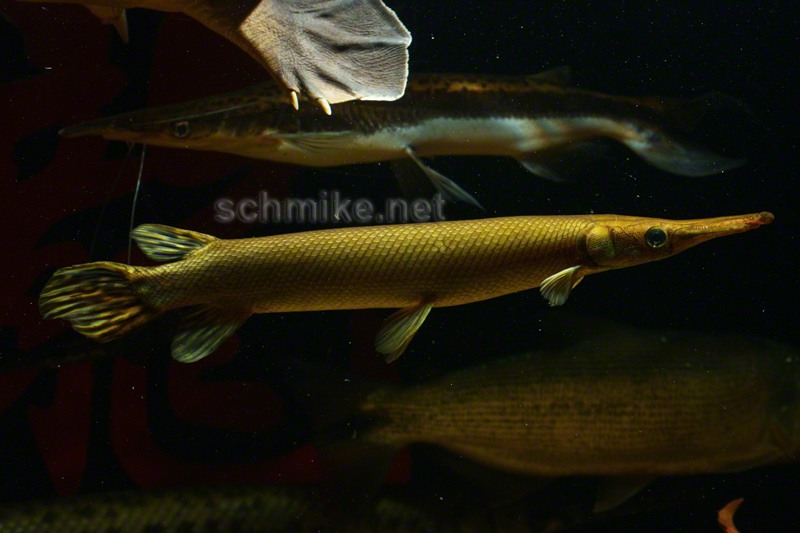
Atractosteus tristoechusCuban Gar
Bloch & Schneider, 1801
Max length1800mm SL71in SLTanknot recordedTempnot recordedpHnot recordedEndemic to Cuba where it's found throughout western parts of the island plus Isla de la Juventud (Isle of Youth, formerly known as the Isle of Pines). It's endangered across most of this range and captive breeding efforts are well-established. Known locally in Cuba as 'manjuari', it clearly shouldn't be considered a home aquarium subject...
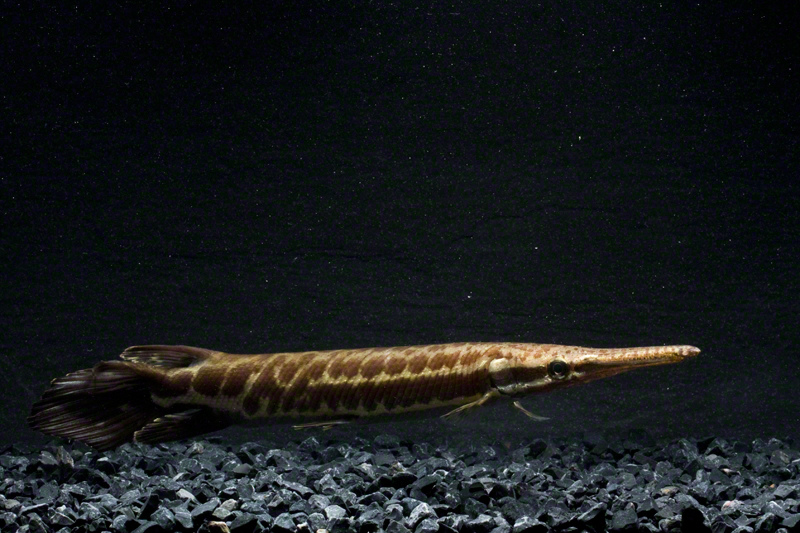
Atractosteus tropicusTropical Gar
Gill, 1863
Max length1250mm SL49in SLTanknot recordedTemp22–28°C72–82°FpH6.0–8.5Found in both Caribbean and Pacific-slope drainage basins in Central America, from southern Mexico through Belize, Guatemala, Honduras and Nicaragua, and into Costa Rica. This species clearly shouldn't be considered a home aquarium subject at all given its eventual size and the fact it can live for several decades.
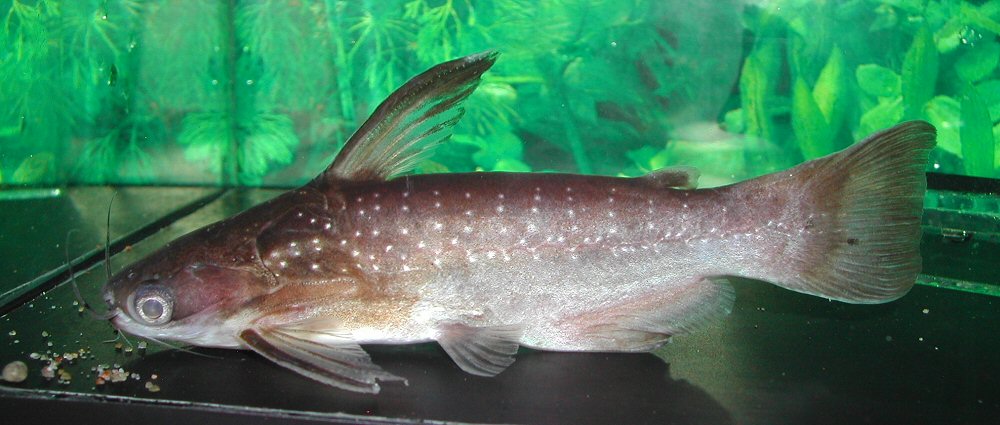
Auchenipterichthys coracoideusMidnight Catfish
Eigenmann & Allen, 1942
Max length110mm SL4in SLTank80 × 30cm31 × 12inTemp22–25°C72–77°FpH6.0–7.2This species is also known by the alternative vernacular name of 'Zamora woodcat', and is often misidentified as A. thoracatus. The latter is a valid species and very similar to A. coracoideus in that the coracoid bone is exposed ventrally and covered only by a thin layer of integument in both species. The two differ principally in the number of anal fin rays...
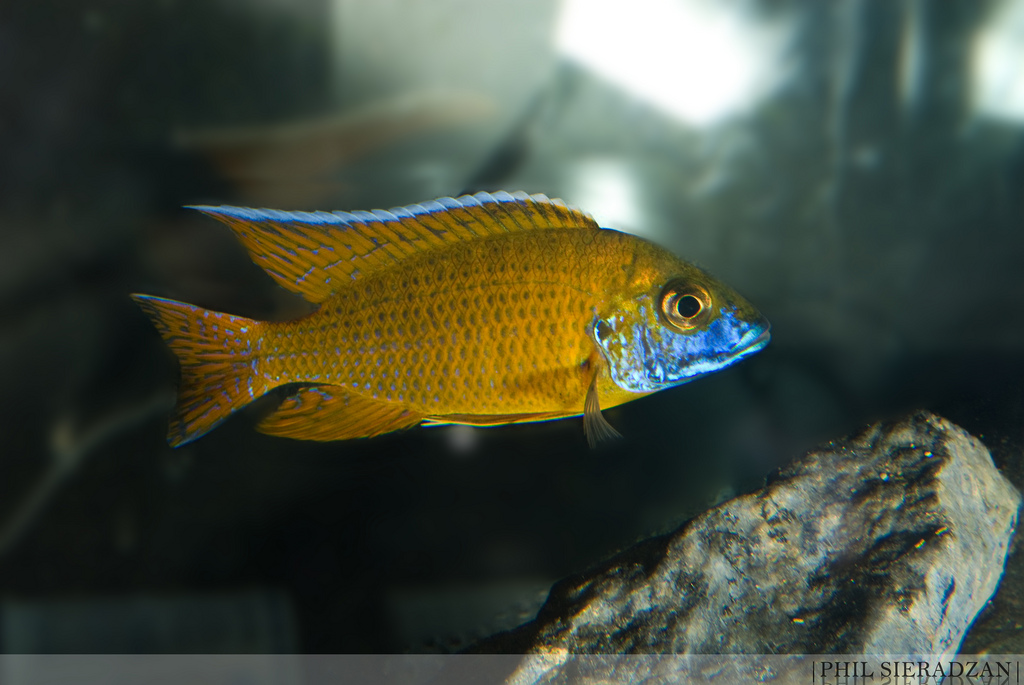
Aulonocara baenschiNew Yellow Regal Peacock
Meyer & Riehl, 1985
Max length♂ 120 · ♀ 90mm SL♂ 5 · ♀ 3.5in SLTank120 × 45cm48 × 18inTemp25–29°C77–84°FpH7.5–9.0This species may also be sold variously as 'yellow regal cichlid', 'Baensch's peacock', 'sunshine peacock' and 'Nkhomo-Benga peacock'. The easiest way to distinguish it from similar-looking congeners is to look at the profile of the snout, which is steeper and more curved than that of its congeners. Aulonocara spp. are benthophagous by nature employing a method of feeding whereby mouthfuls of substrate are taken and sifted for edible items with the remaining material expelled via the gills and mouth. They're equally-skilled at hunting as grazing, tending to hover above the substrate until tiny movements are detected, and possess enlarged sensory pores on the head which assist in this technique.
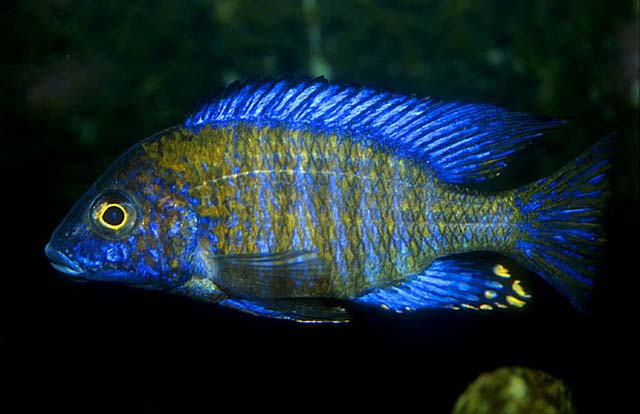
Aulonocara ethelwynnaeNorthern Aulonocara
Meyer, Riehl & Zetzsche, 1987
Max length110mm SL4in SLTank90 × 45cm36 × 18inTemp22–26°C72–79°FpH7.4–9.0Endemic to Lake Malawi where it was described from and only occurs around 'Chitendi Island', now normally referred to as Chitande island plus a short stretch of coastline between Ngara and Chilumba along the lake's northwestern shoreline. Aulonocara spp. are benthophagous by nature employing a method of feeding whereby mouthfuls of substrate are taken and sifted for edible items with the remaining material expelled via the gills and mouth. They're equally-skilled at hunting as grazing, tending to hover above the substrate until tiny movements are detected, and possess enlarged sensory pores on the head which assist in this technique.
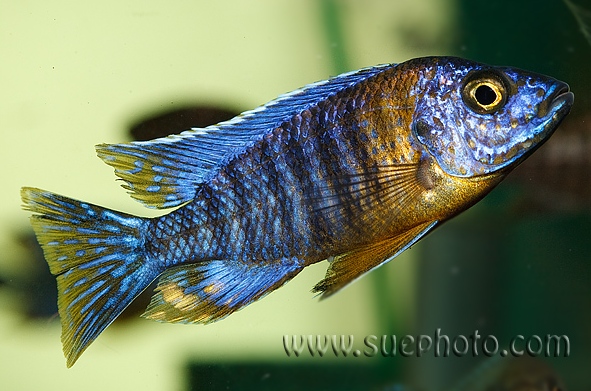
Aulonocara hansbaenschiRed Shoulder Peacock
Meyer, Riehl & Zetzsche, 1987
Max length120mm SL5in SLTank90 × 45cm36 × 18inTemp24–29°C75–84°FpH7.4–9.0Some eminent authors believe this species to be a geographical variant of the highly variable congener A. stuartgranti rather than a distinct taxon but since most popular resources continue to view it as valid we also list it here. At Masinje it has been observed to show a distinct preference for rocky caves and crevices in relatively shallow (3-6 metres deep) water. This is in contrast to most other members of the genus, which tend to forage over sand, but similar to behaviour seen in A. jacobfreibergi.
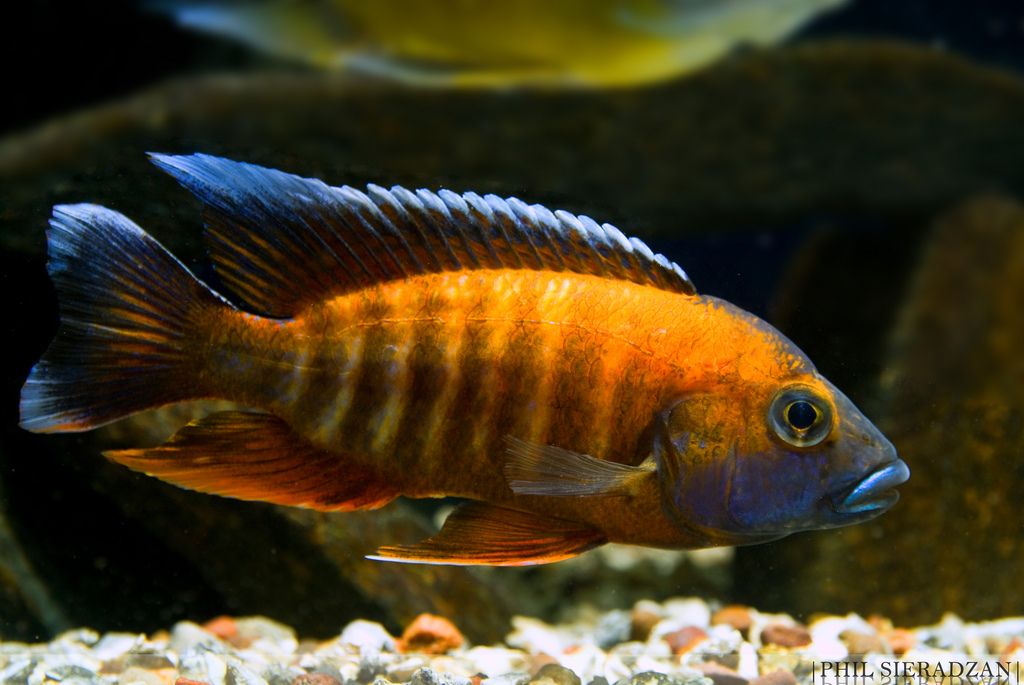
Aulonocara jacobfreibergiMalawi Butterfly
Johnson, 1974
Max length170mm SL7in SLTank120 × 60cm48 × 24inTemp25–29°C77–84°FpH7.5–9.0This was one of the first Aulonocara spp. to enter the hobby and its popularity has endured. It's known by several other vernacular names including 'Freiberg's peacock', 'fairy cichlid' and 'African butterfly' as well as the erroneous 'scientific' names Trematocranus trevori, T. jacobfreigbergi and T. regina. A naturally-occurring, yellowish form from Undu reef, Tanzania is often referred to as 'lemon jake'. It can be told apart from most other members of the genus by the broad, pale distal margins in the dorsal, anal and caudal fins, more deeply-forked caudal fin and larger adult size.
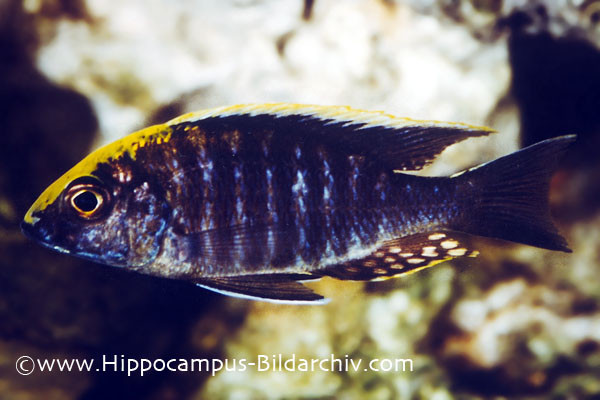
Aulonocara maylandiSulphurhead Peacock
Trewavas, 1984
Max length100mm SL3.9in SLTank120 × 30cm48 × 12inTemp25–29°C77–84°FpH7.5–9.0This species exists in two distinctive phenotypes, with male individuals from West reef and Eccles reef possessing a bright yellow stripe of colour running from the tip of the snout over the anterior portion of the dorsal surface and along the distal margin of the dorsal fin. This form is commonly referred to as 'sulphurhead' or 'sulfurhead' in the aquarium hobby. At Kande Island males exhibit a similar overall colour patterm but the dorsal stripe is whitish in colour and both males and females possess an enlarged lower pharyngeal bone. This population was described...
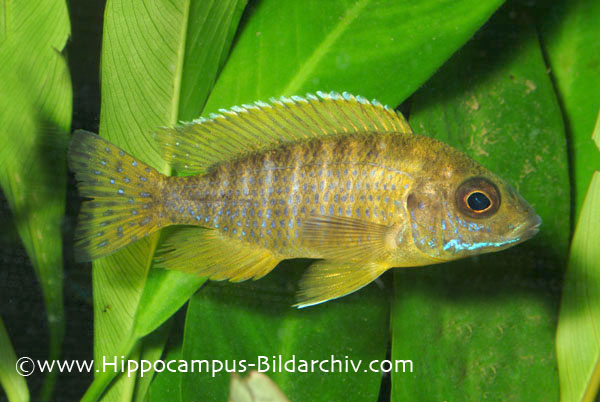
Aulonocara sp. 'stuartgranti maleri'Sunshine Peacock
authority not recorded
Max length120mm SL5in SLTank120 × 45cm48 × 18inTemp25–29°C77–84°FpH7.5–9.0It remains unclear whether this fish represents an as yet undescribed species or not but in either case the unofficial, vernacular name is confusing due to it being based on that of a described taxon. As a result it is often referred to as A. stuartgranti 'Maleri' or 'Maleri Islands', either through error or because some authors believe it to be conspecific with A. stuartgranti. The population from the Maleri Islands is traded as 'yellow regal peacock' (not to be confused with the 'new yellow regal peacock', i.e., A. baenschi) and the one from Chidunga Rocks as 'sunshine peacock' or 'orange peacock'.
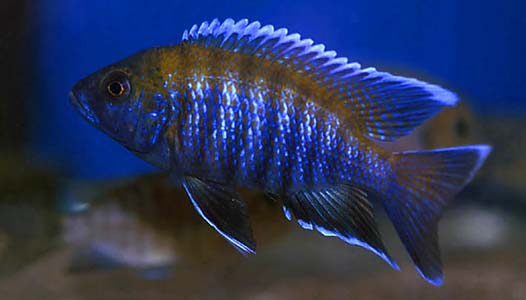
Aulonocara sp. 'walteri'Blue-faced Peacock
authority not recorded
Max length130mm SL5in SLTank120 × 45cm48 × 18inTemp25–29°C77–84°FpH7.5–9.0This fish has been known in the aquarium hobby for a number of years but remains undescribed to science despite the confusing trade name which has resulted in it often being referred to incorrectly as 'Aulonocara walteri'. It's known only from Chizumulu Island and Likoma Island in Lake Malawi, both located off the eastern shoreline of the central part of the lake (Mozambique). There is a similar-looking, potentially conspecific, fish which can be found between the coastal settlements of Meponda (Mozambique) and Ntekete (Malawi) further south, and has been referred to A. sp. 'trematocranus masinje'.
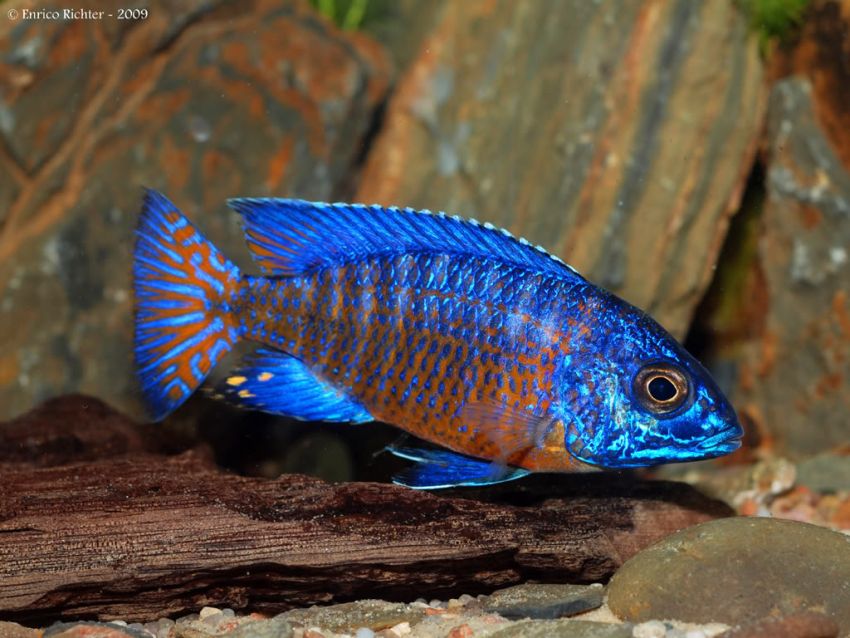
Aulonocara stuartgrantiGrant's Peacock
Meyer & Riehl, 1985
Max length130mm SL5in SLTank120 × 45cm48 × 18inTemp23–29°C73–84°FpH7.5–9.0Males of this species occur in a wide range of colour forms depending on locality, with blue variants being found predominantly (but not exclusively) towards the north of the lake and yellow in the south. This variation, alongside its relatively extensive distribution, has resulted in some taxonomical issues, several of which have not yet been resolved. For example, two forms from the southwest of the lake are referred to as A. sp. "stuartgranti maleri" and A. sp. "stuartgranti mbenji", respectively, and may turn out to be distinct species given their colour patterns an...
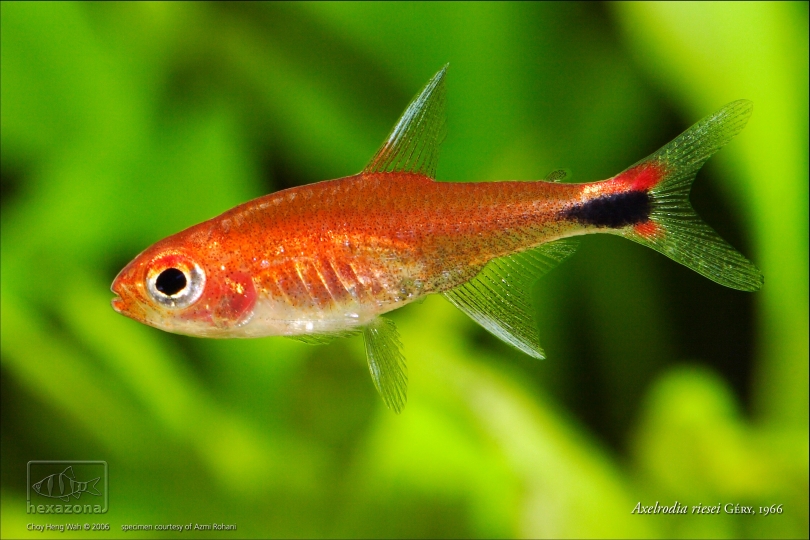
Axelrodia rieseiRuby Tetra
Géry, 1966
Max length20mm SL0.8in SLTank60 × 30cm24 × 12inTemp20–28°C68–82°FpH4.0–6.5This species is much rare in the hobby than its congener A. stigmatias, presumably a reflection of its more remote, restricted natural range. The red pigmentation on the body can vary in both extent and intensity, and apparently begins to fade when the fish have been maintained in aquaria for a period.
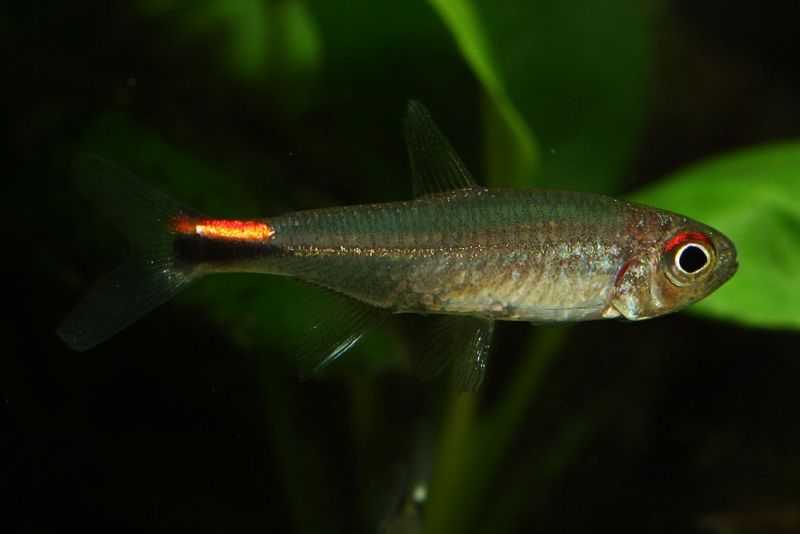
Axelrodia stigmatias
Fowler, 1913
Max length20mm SL0.8in SLTank60 × 30cm24 × 12inTemp20–28°C68–82°FpH4.0–6.5It's most similar to A. riesei but can be told apart by its more-elongate body (depth 4-5 times, vs. 3.1-3.5 times, in SL), live body colour (silvery yellow, vs. red) and suborbital bone structure (almost complete, vs. reduced). The third species, A. lindeae, is quite different posses...
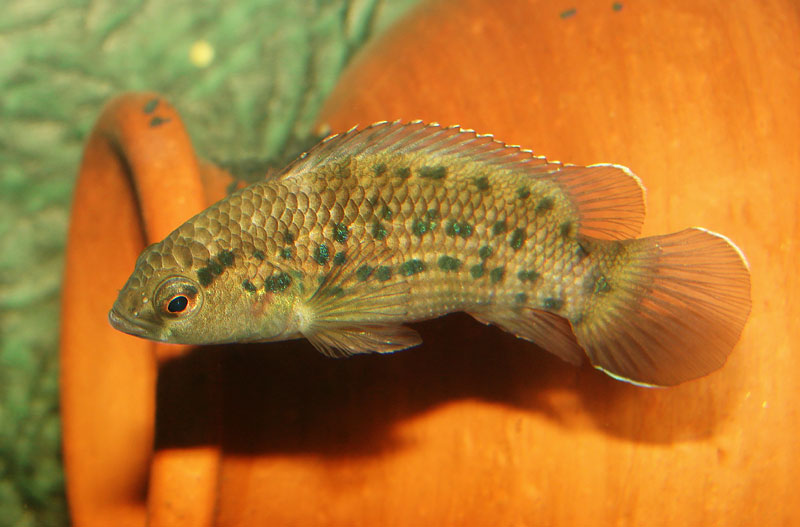
Badis assamensis
Ahl, 1937
Max length75mm SL3.0in SLTank75 × 30cm30 × 12inTemp15–25°C59–77°FpH6.0–7.5Like most badids this species is poorly documented and has yet to find significant popularity in the aquarium hobby. It is easily confused with B. blosyrus at first glance as the body patterning of the two is almost identical but can be distinguished by its slightly larger adult size, noticeably shorter jaw profile and some other, mostly internal, meristic characters. Prior to 2002 the family Badidae inc...
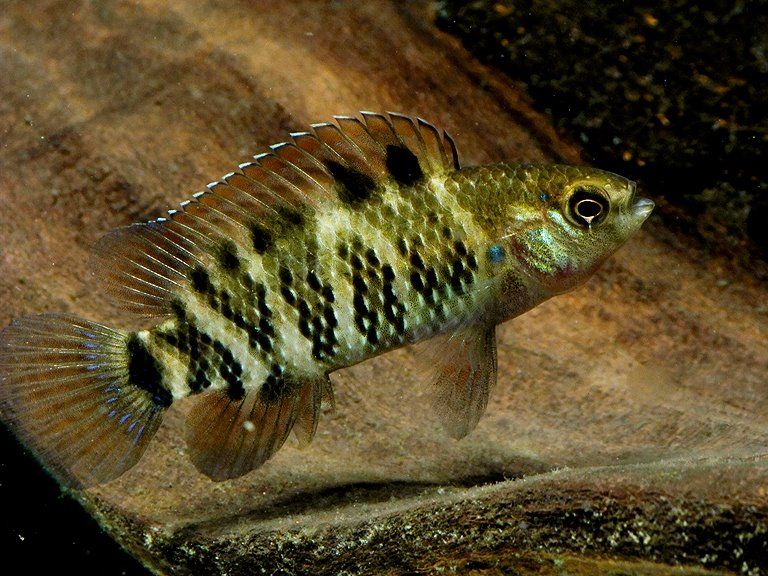
Badis badisBadis
Hamilton, 1822
Max length60mm SL2.4in SLTank80 × 30cm31 × 12inTemp15–25°C59–77°FpH6.0–7.5This species is sometimes sold under the trade name of 'chameleon fish' due to its ability to rapidly change colour, especially when breeding or stressed. It was originally described as Labrus badis by Hamilton but Bleeker reclassified it as Badis buchanani in 1854; he had adopted the species name 'badis' as the new name for the genus and wished to avoid using a tautonym. At that time the use of tautonyms was avoided in zoological taxonomy but is now permissible under ICZN ru...
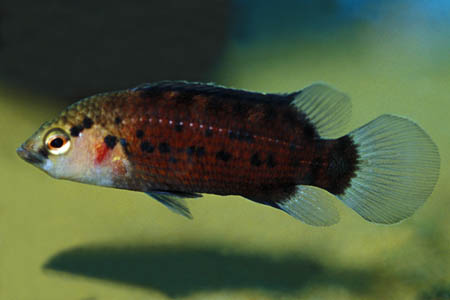
Badis blosyrus
Kullander & Britz, 2002
Max length70mm SL2.8in SLTank75 × 30cm30 × 12inTemp15–25°C59–77°FpH6.0–7.5Like most badids this species is poorly documented and has yet to find significant popularity in the aquarium hobby. It is easily confused with B. assamensis at first glance as the body patterning of the two is almost identical but can be distinguished by its slightly smaller adult size, noticeably elongated, more well-developed jaw profile and some other, mostly internal, meristic characters.
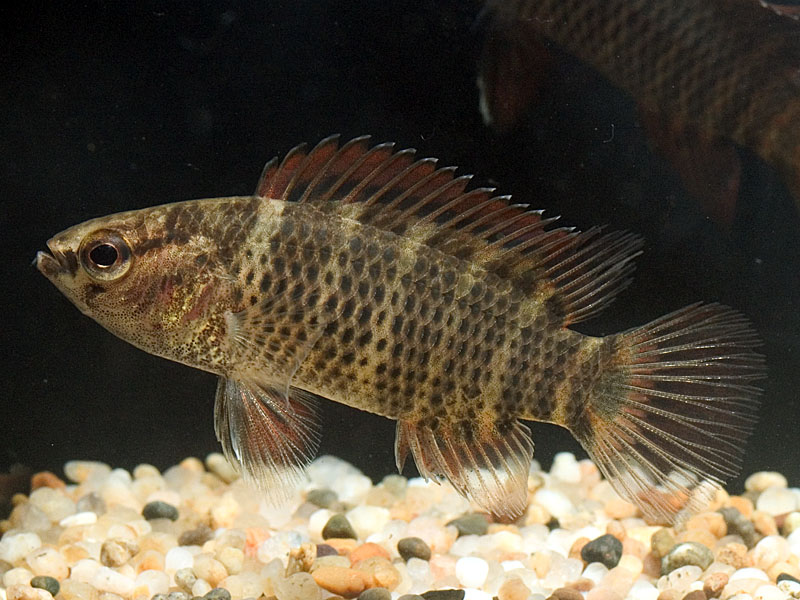
Badis corycaeus
Kullander & Britz, 2002
Max length60mm SL2.4in SLTank60 × 30cm24 × 12inTemp15–25°C59–77°FpH6.5–7.5Like most badids this species is poorly documented and has yet to find significant popularity in the aquarium hobby. Within the genus it is most closely-related to B. pyema but the two are unlikely to be confused as B. corycaeus is much the deeper, darker-bodied fish. Prior to 2002 the family Badidae included just five species of which only B. badis and, to a lesser extent, Badis dario (referred to as B. bengalensis by some sources) were popular in the aquarium hobby. However an extensive rev...