Genus
Dario
- Species
- 6
- Photographed
- 6 of 6
- Difficulty rated
- 6 of 6
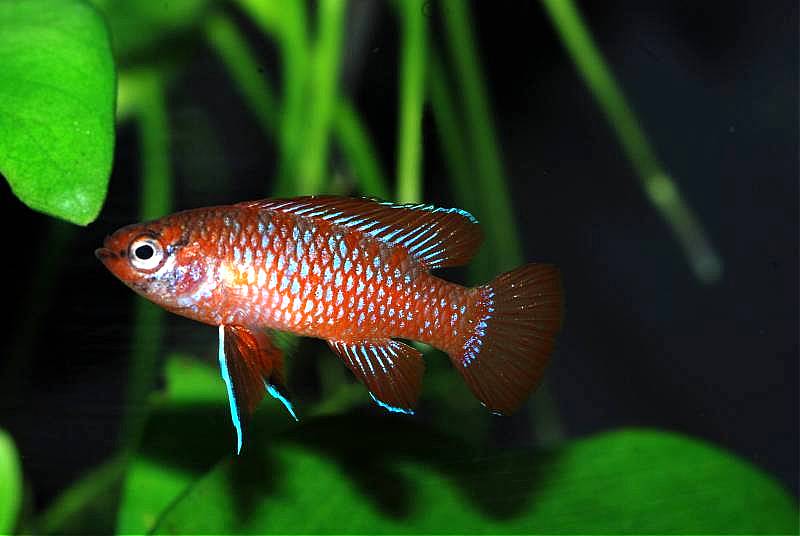
Dario darioScarlet Badis
Hamilton, 1822
This species is among the more well-known badids in the aquarium hobby, and is a popular choice for 'nano' aquaria since it is among the smallest percoid fishes known. It is easily told apart from congeners since it is the only species in which males possess a series of seven iridescent blue vertical bars on the flanks.
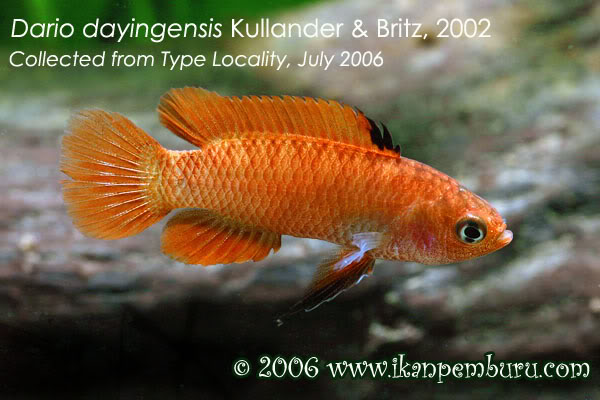
Dario dayingensis
Kullander & Britz, 2002
This species has not appeared in the ornamental fish trade to date though has been maintained by a handful of private collectors and enthusiasts. It was known for some years prior to description and identified as Badis dario (as Dario dario was known at the time) but is actually much closer to D. hysginon.
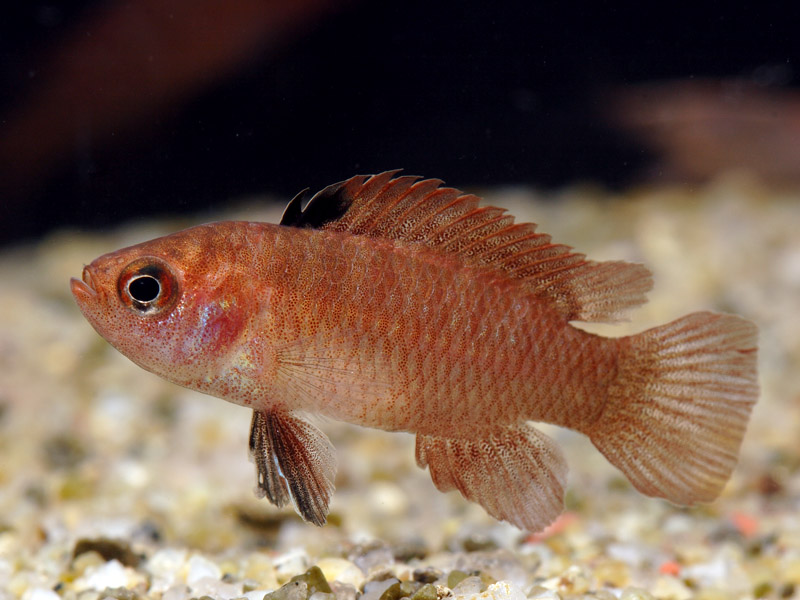
Dario hysginon
Kullander & Britz, 2002
This species is traded under various names such as 'red melon Dario' or 'flame red Dario'. Among congeners D. dayingensis is most similar since it differs only in a few meristic counts and by its slightly larger adult size. D. hysginon can be told apart by possessing 22-24, usually 23, lateral scales (vs. 24-25 in D. dayingensis), 8½ (vs. 9½) scales in the transverse scale row, a...
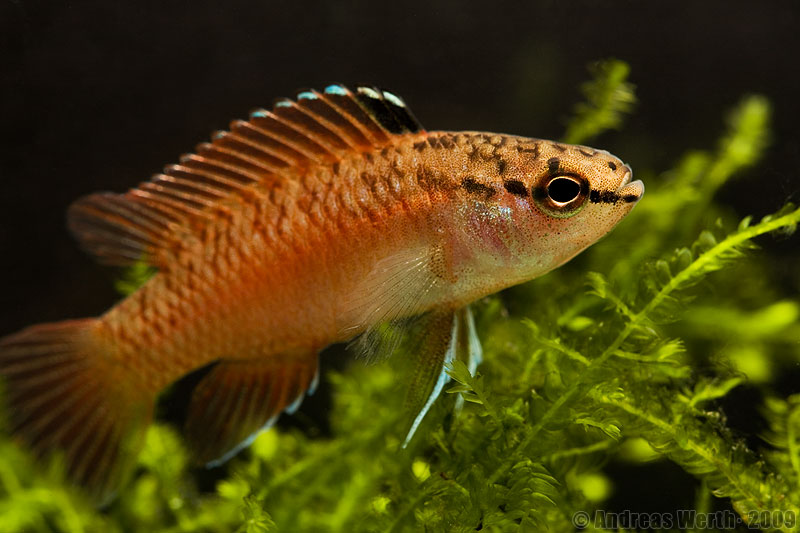
Dario kajal
Britz & Kullander, 2013
This species was referred to as Dario sp. ‘Jaintia Hills’ or D. sp. ‘Bangladesh’ prior to its description. Type locality is 'India, Meghalaya, Jaintia Hills, Seinphoh stream at Umolong, 7 km from Jowai town, 25°31’36’’N 92°08’27’’E, 1320 m asl', and in India it has not been found elsewhere to date.
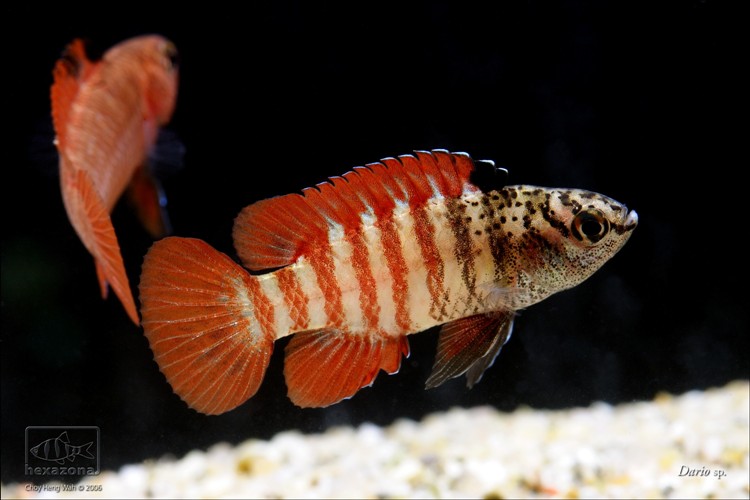
Dario sp. 'Myanmar'Black Tiger Dario
authority not recorded
This fish first became available to hobbyists in 2005 and has also been referred to as Dario sp. 'pyjamas' or 'fire red tiger badis'. Despite the striking differences in colour pattern it's officially recognised as a colour form of D. hysginon as per Kullander and Britz (2002) although D. sp. 'Myanmar' is now known to have an appreciably larger adult size (S. van der Voort, pers. comm.).
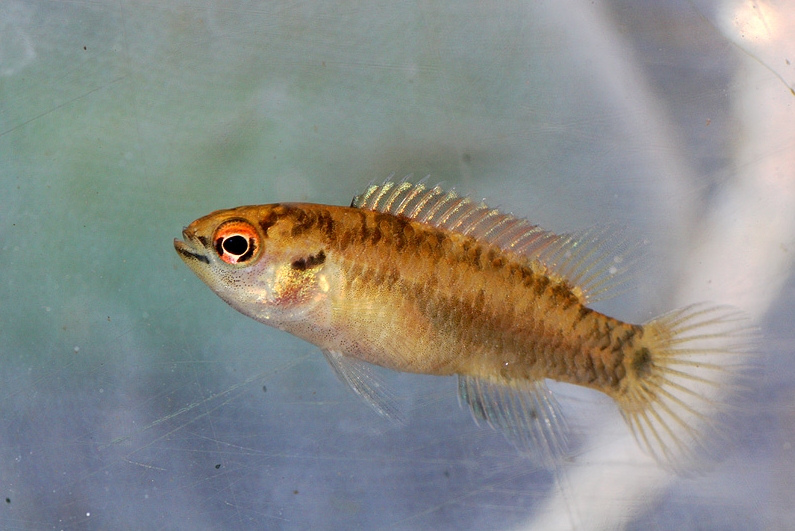
Dario urops
Britz, Ali & Philip, 2012
This species has not yet entered the aquarium trade but is maintained by a handful of private collectors. Though described in 2012 it was in fact first collected in the latter half of the 19th century with Day (1875-1878) having mentioned the presence of Badis dario in ‘Wynaad’ and its occurrence "along the Western Ghats" (the chain of mountains in southwestern India).