Genus
Rhinogobius
- Species
- 18
- Photographed
- 18 of 18
- Difficulty rated
- 16 of 18
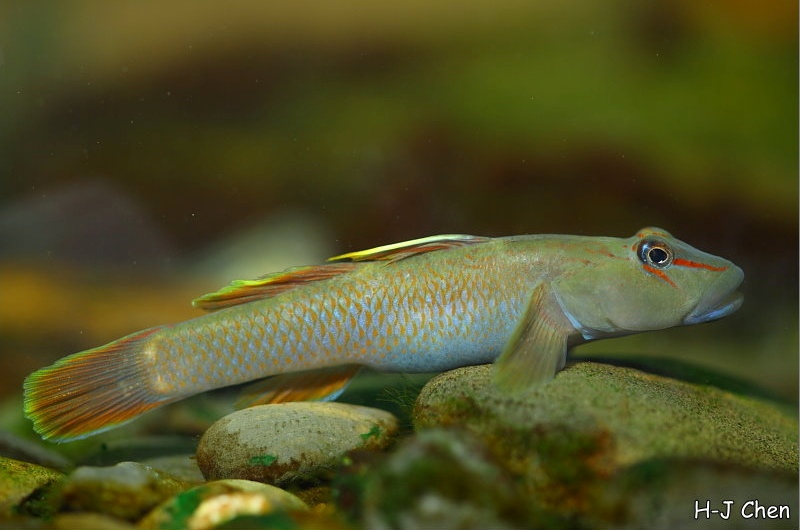
Rhinogobius candidianus
Regan, 1908
This species is normally imported alongside a smaller-growing, near-identical congener currently listed as R. cf. nantaiensis with both traded as R. candidianus. They can be separated by snout length, which is noticeably longer in R. candidianus, and adult size with R. cf. nantaiensis reaching just 50-55 mm. R. candidianus can be distinguished from other congeners by a combination of cha...
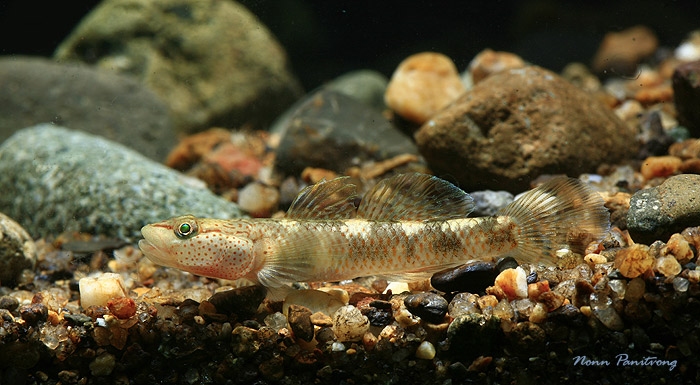
Rhinogobius chiengmaiensisChiangmai Stream Goby
Fowler, 1934
This species has been exported for the ornamental trade but often labelled as the congener R. mekongianus. Although the two do appear relatively similar R. chiengmaiensis can be identified by a combination of external characters including: presence of 5 irregular dark markings on the body (vs. 7-8 i...
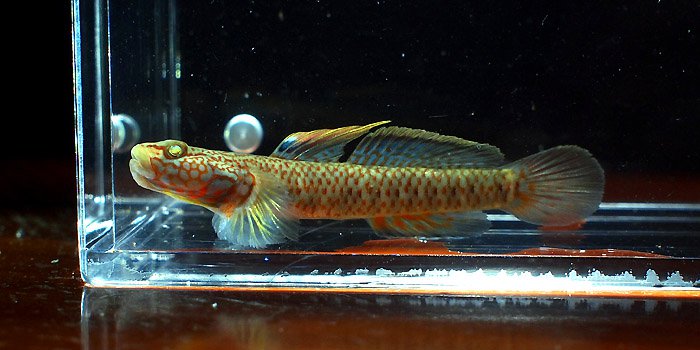
Rhinogobius filamentosus
Wu, 1939
Very few details exist but the type locality is given as 'Yangso, Li Kiang, Kwangsi Province, southern China', which should correspond to an unspecified location within the Li River (Li Jiang) system in Guangxi Zhuang Autonomous Region, southern China. The specimens in our images were collected i...
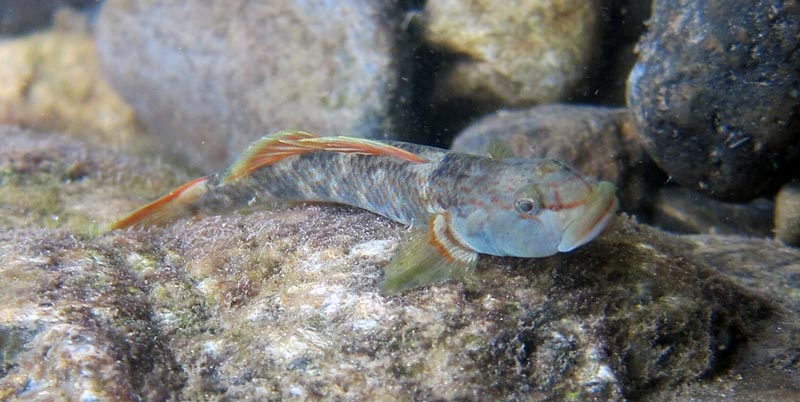
Rhinogobius flumineus
Mizuno, 1960
In addition, there appear to exist two colour forms based on male dorsal-fin morphology and patterning; one in which the 4th ray of the first dorsal-fin is longest with a square bluish-black blotch on the anterior ⅔ of the fin, and a second in which the 2nd and 3rd rays of the first dorsal-fin are longest with the fin itself paler and lacking dark markings.
Rhinogobius formosanus
Oshima, 1919
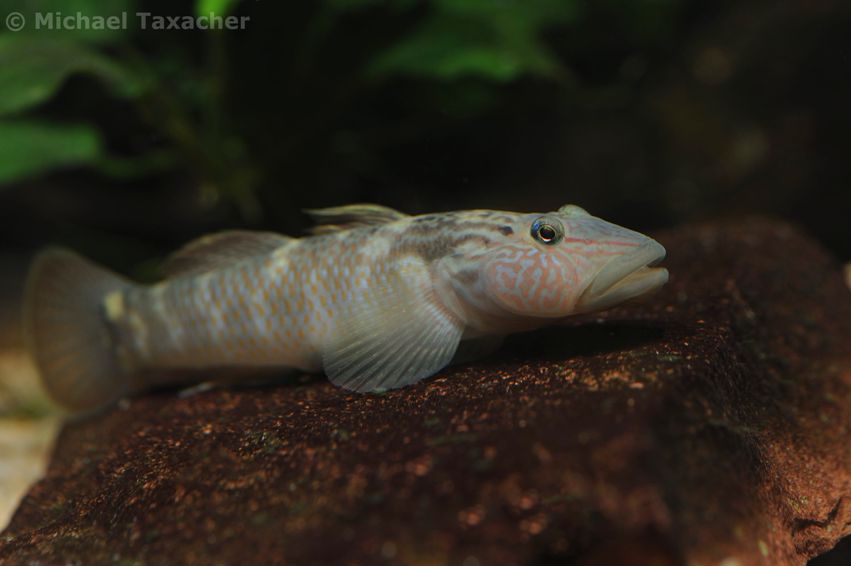
This species was previously considered to be a subspecies of R. nagoyae but has generally been accepted as distinct since 2008. It can be told apart from other Rhinogobius spp. from Taiwan by presence of irregular, wavy, reddish brown lines on the cheek and opercle.
Rhinogobius gigas
Aonuma & Chen, 1996
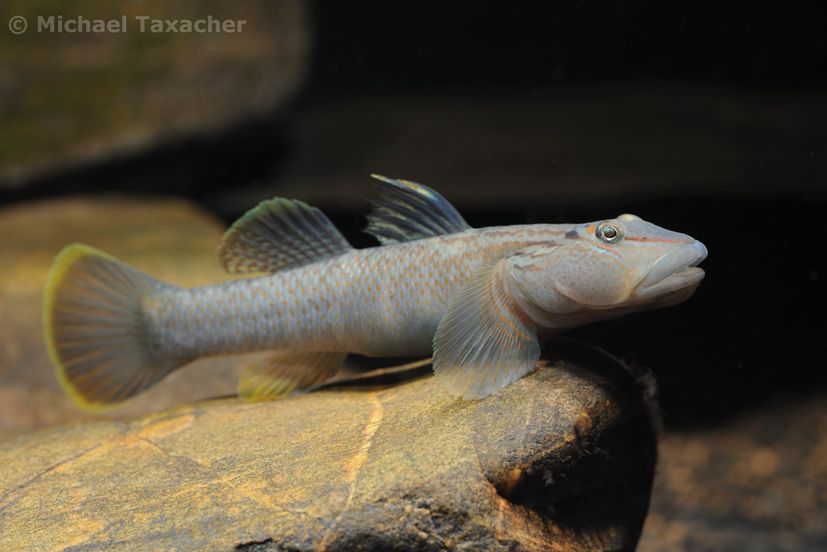
As is typical for the genus eggs are deposited on the ceiling of a cave or crevice and guarded by the male until hatching. Several potential sites should be offered in the form of rocks (flat slate tends to be easiest to handle, see below), terracotta pipes, plant pots, etc. A nuptial male will select a site and defend it agai...
Rhinogobius giurinus
Rutter, 1897
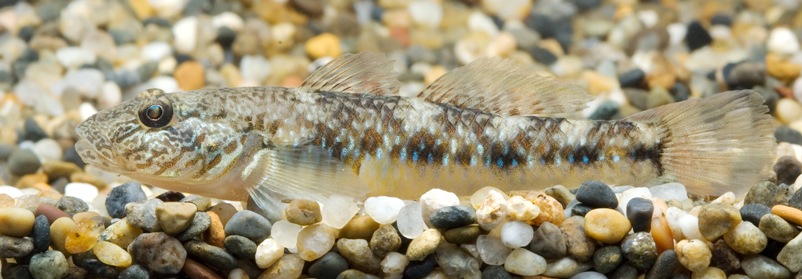
This species appears to exist in a number of different forms which exhibit differences in colour pattern, morphology, or both, and it's currently unclear whether all of them are truly conspecific or not although to avoid confusion we list all together here.
Rhinogobius lanyuensis
Chen, Miller & Fang, 1998
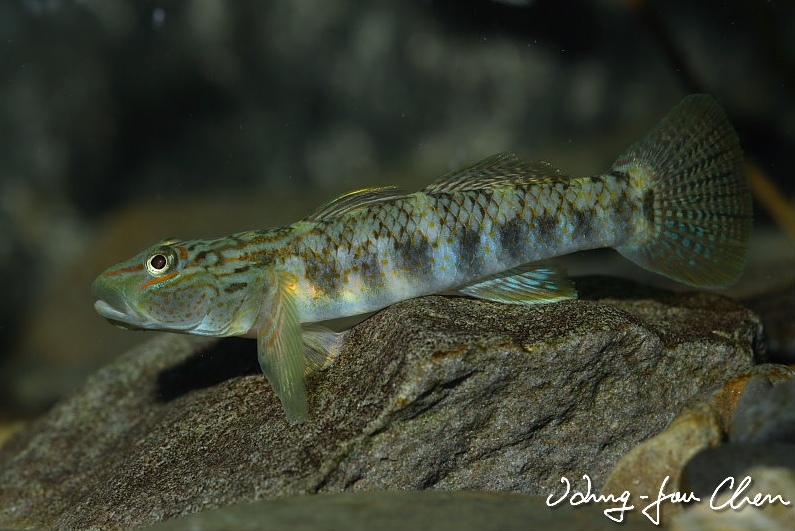
Presumably inhabits small rivers, tributaries and streams with substrates of gravel, rocks, boulders, and exposed bedrock which undergo seasonal variations in water flow rate, depth and turbidity. Lanyu Island is volcanic, measures just 45 km² and has no major rivers or large settlements with a permanent human population of around 4000, although there is a large nuclear waste storage facility at its southern end.
Rhinogobius leavelli
Herre, 1935
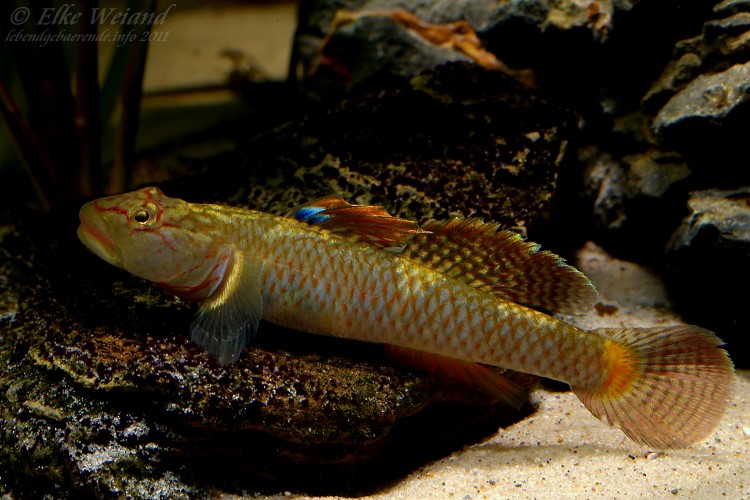
This species appears to exist in a number of different forms which exhibit differences in colour pattern, morphology, or both, and it's currently unclear whether all of them are truly conspecific or not although those in the aquarium trade all appear similar to one another. We've been unable to obtain a copy of the original description so it's not currently possible to provide a detailed diagnosis either, with most recent studi...
Rhinogobius lentiginis
Wu & Zheng, 1985
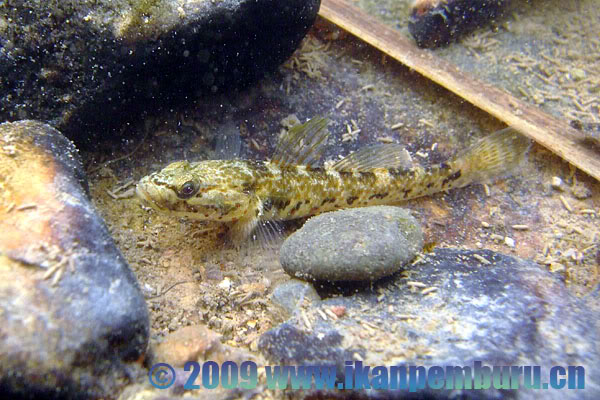
It's unlikely that this species has been in the aquarium hobby given its natural range and the lack of commercial fishing for the ornamental trade in that area. Among congeners it's most similar to R. davidi but can be told apart by presence of 8 (vs. always 9 in R. davidi) soft dorsal-fin rays, 10 (vs. 11-12) transverse scale rows, and 6-7 (vs. 8-10) scales between the first dorsal-fin origin and upper pectoral-fin base.
Rhinogobius maculafasciatus
Chen & Shao, 1996
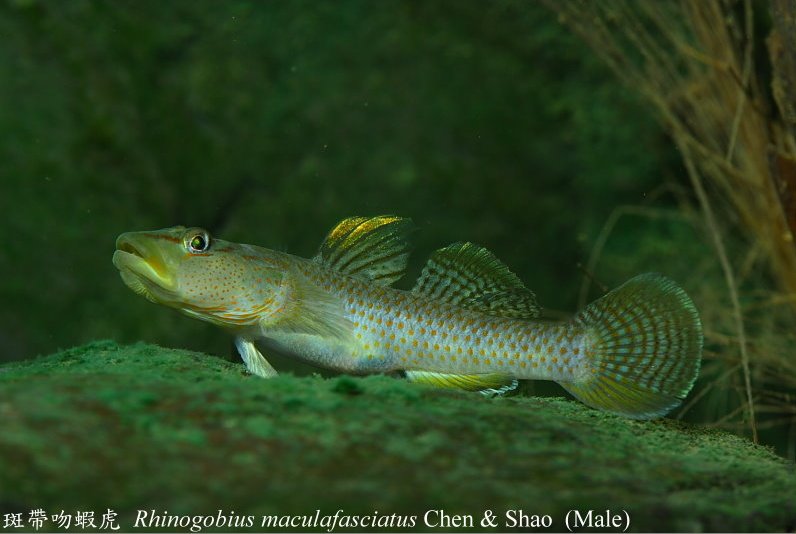
This species may not yet have appeared in the ornamental trade but it has been collected by a few individuals. It can be told apart from related species from Taiwan by possessing 30-32 longitudinal (lateral) scales vs. 32-39 in other species, and 6-8 scale rows between the origin of the first dorsal-fin and upper pectoral-fin base vs. 9-15 in other species.
Rhinogobius mekongianus
Pellegrin & Fang, 1940
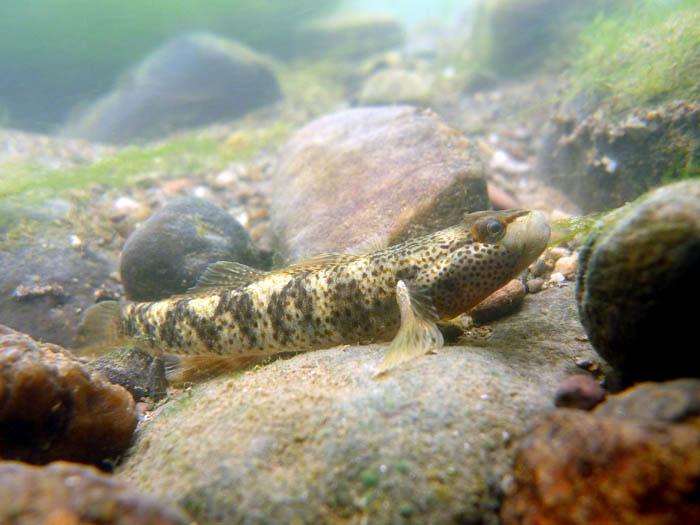
Known from various parts of the middle and upper Mekong river basins with record existing from the Nam Tha, Nam Ou, Nam Khan, Nam Lik, Nam Ngum and Nam Mang tributary systems in Laos, the Nam Noeua (a tributary of Nam Ou) in Vietnam, and the Mae Nam Kok in Thailand. Occurrences in the Chao Phraya drainage in central Thailand most likely refer to the congener R. chiengmaiensis.
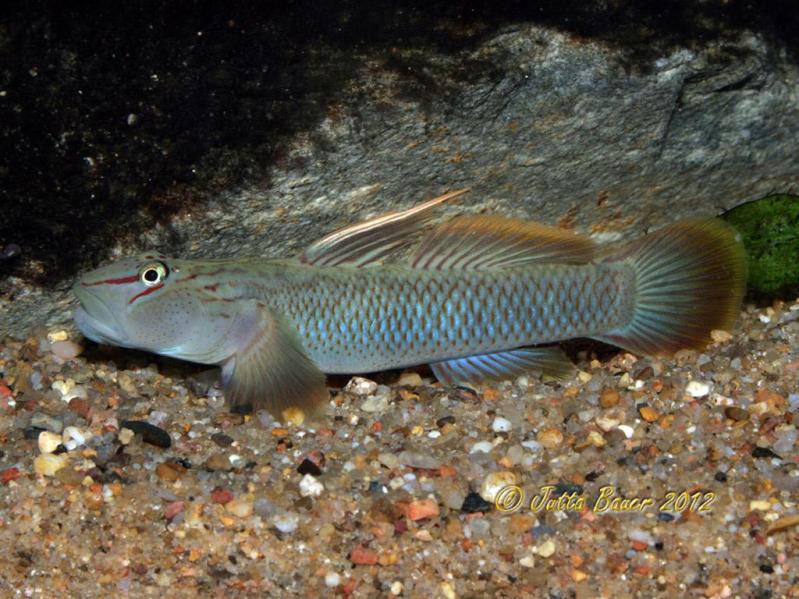
Rhinogobius nantaiensis
Aonuma & Chen, 1996
This fish is normally imported alongside the congener R. candidianus and is actually the commoner of the two in the aquarium trade. It looks very similar to R. candidianus but does not grow as large and possesses a more rounded snout. Most specimens also have spot-like markings on the sides of the head which has led to them being identified as R. nantaiensis, but the fish do no...
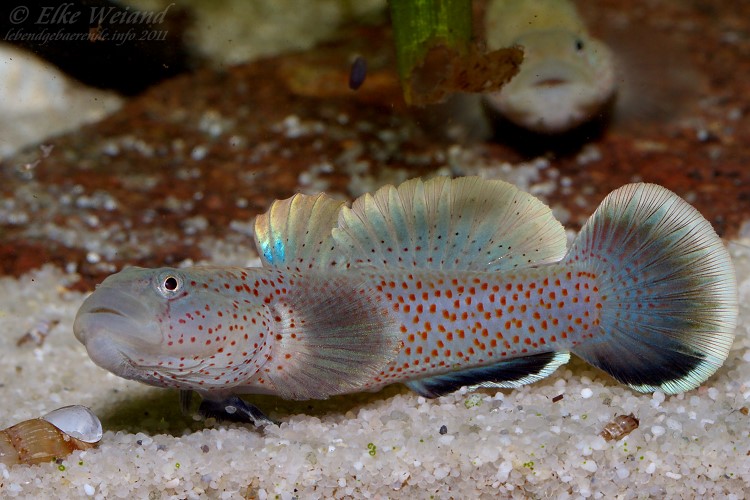
Rhinogobius rubromaculatusRed-spotted Goby
Lee & Chang, 1996
This species occurs in a couple of colour forms with fish from northern and central Taiwan possessing a greyish base body colour and those from the Linbian river, southern Taiwan having a dark marking in the anterior portion of the first dorsal fin and larger, more intense red spots on the body. The latter form is also smaller in size, lays smaller eggs, does not exhibit extreme sexual dimorphism and has been refe...
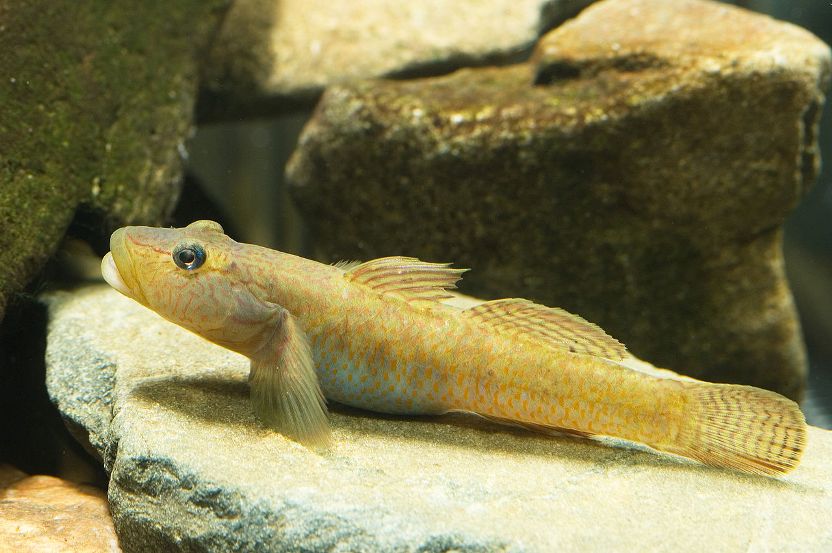
Rhinogobius sp. 'CB'
authority not recorded
There are a number of unidentified species within the grouping of which several are referred to using a two-letter code based on their respective colour pattern for ease of reference, with 'CB' shorthand for 'cross band', for example. R. sp. 'CB' is the commonest member of the grouping in Japan but has not yet entered the international aquarium trade as far as we know.
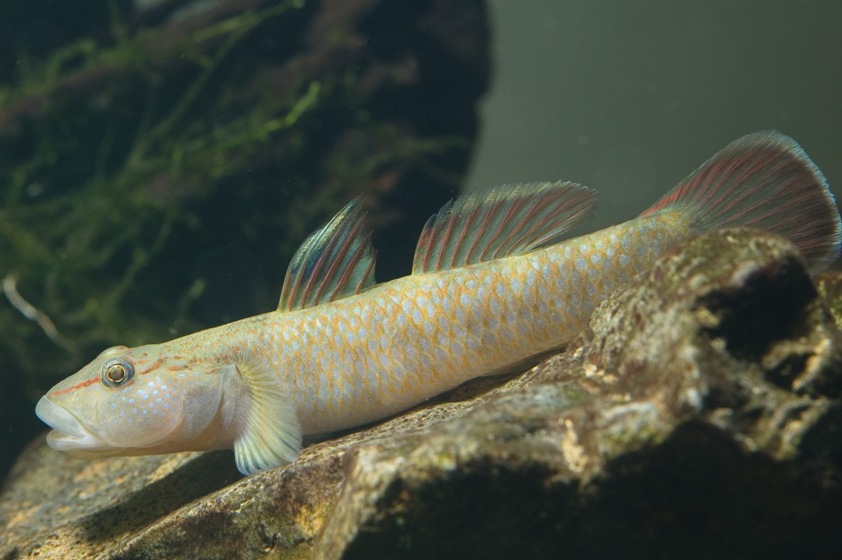
Rhinogobius sp. 'CO'
authority not recorded
Some wild populations have evolved a complex amphidromous breeding strategy in which adults live and spawn in freshwater or brackish streams and the pelagic post-hatch larvae are washed downstream to the sea where the post-larval fry spend the first part of their life developing in estuarine nursery zones under brackish to full marine conditions. Once they reach a certain stage of development they begin to migrate upstream with some mov...
Rhinogobius yaoshanensis
Luo, 1989
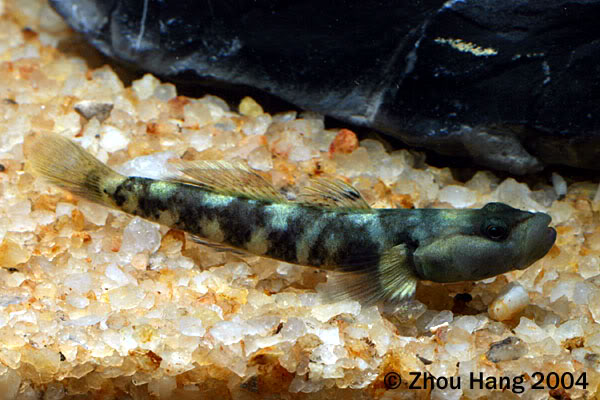
This species' name has appeared quite regularly on ornamental fish trade lists since the mid-00's but it's unclear whether the species itself has ever been exported since fish labelled as such do not appear to fully match the most recent key (see below). That said, its natural habitats lie in the same region as the loach Yaoshania pachychilus so it's reasonable to assume that some specimens may have been collected, and the fish in our images were ca...
Rhinogobius zhoui
Li & Zhong, 2009
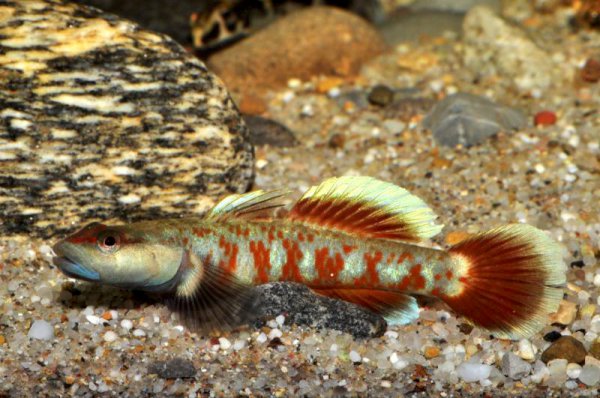
This species has been in the aquarium trade since 2010 and is sold under several names including 'Chinese vermilion goby', 'Zhou's scarlet goby', 'scarlet goby', and 'flame goby'. It can be told apart from congeners by the following combination of characters: second dorsal-fin rays I, 8-9; anal-fin rays I, 7-8; pectoral-fin rays 16-18; longitudinal scale series 29-31; predorsal scales 10-12; vertebral count 10+16=26.