Region · China
Hainan
- Species
- 12
- Countries
- 1
- Photographed
- 12 of 12
- Difficulty rated
- 12 of 12
Split acrossfrom the record that named both
Countries hereone fauna, more than one flag
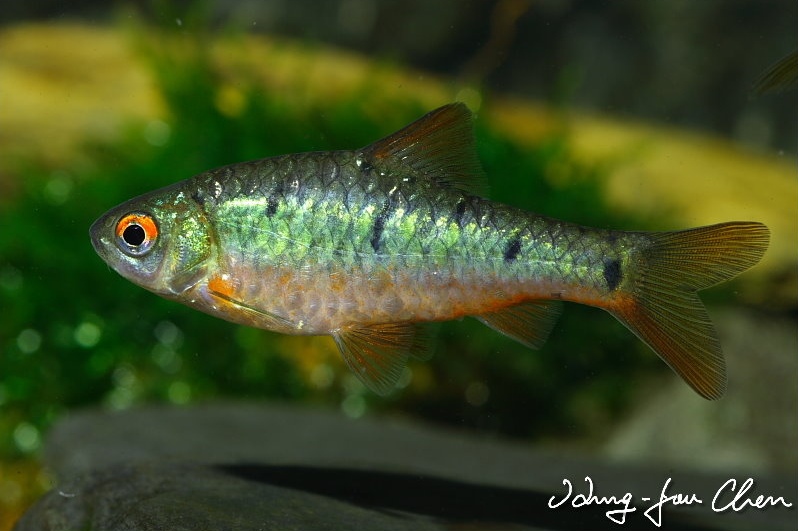
Barbodes semifasciolatusGolden Barb*
Cyprinidae · Günther, 1868
This species is also known by the alternative names 'green' or 'Chinese' barb. The natural 'green' form is an infrequent find in the aquarium trade whereas the selectively-bred 'golden' variant is farmed in huge numbers and is among the most popular of freshwater aquarium fish. The latter was first produced in the 1960s and is now so ubiquitous that many hobbyists are initially unaware that it is not the natural form.
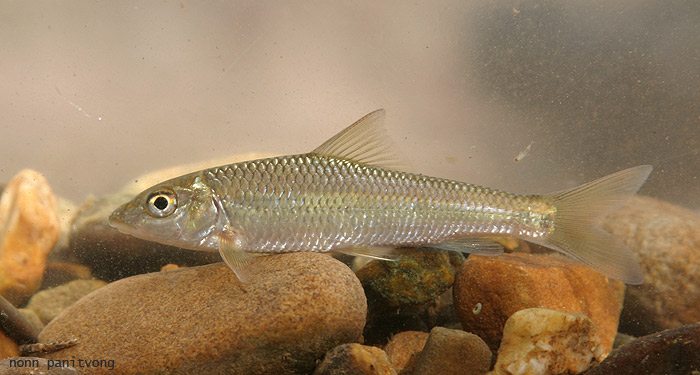
Folifer brevifilis
Cyprinidae · Peters, 1881
This species is widely-distributed in the Mekong river system in Thailand, Laos, and Vietnam, Salween and Ayeyarwaddy rivers in southern China, Myanmar, and Thailand, plus various smaller basins in Vietnam and China. It has also been recorded from the islands of Hainan and Hong Kong. Type locality is given as 'China: sent from Hong Kong'.
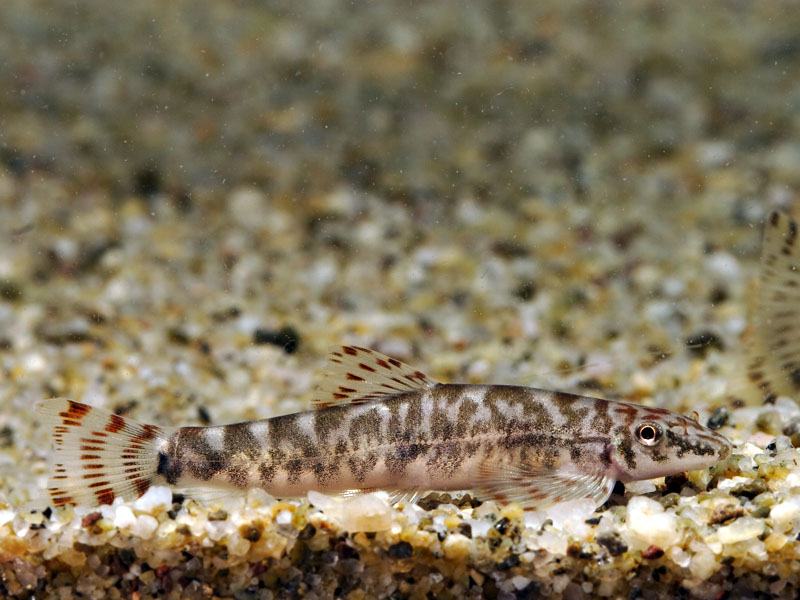
Liniparhomaloptera disparisBroken-band Hillstream Loach
Gastromyzontidae · Lin, 1934
L. disparis is sometimes available as bycatch among shipments of other species such as Rhinogobius duospilus but also appears on trade lists under the fictitious scientific name 'Homaloptera hoffmani'. It can be told apart from similar-looking members of the genus Formosania by its noticeably shorter barbels and from Vanmanenia spp. by the fact that the rostral fold is not lobed and the mouth is relatively small (25% head width. In addition the lower lip in Liniparhomaloptera is not divided and has a flat, papillated edge.
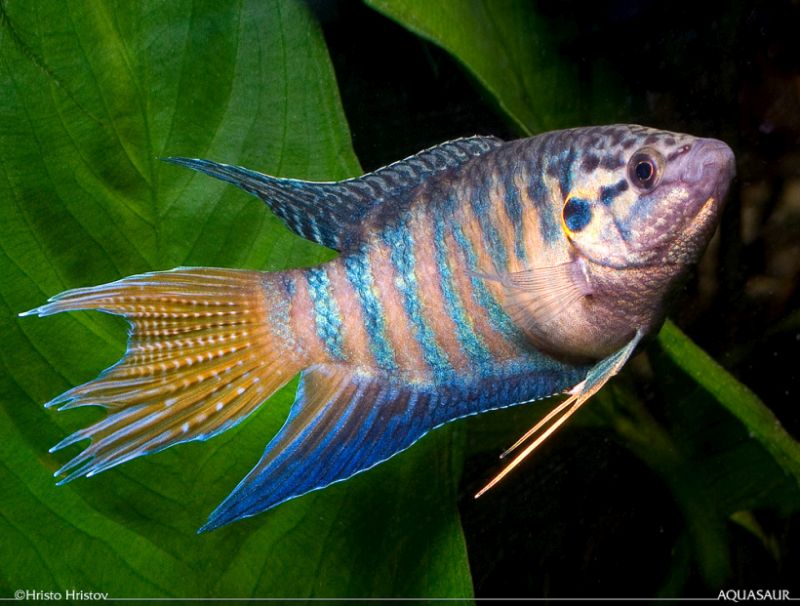
Macropodus opercularisParadise Fish
Osphronemidae · Linnaeus, 1758
M. opercularis is a classic aquarium fish, having been introduced to the hobby by a French soldier named Gerault in 1869. Of the initial 100 specimens shipped, 22 survived and were successfully bred later that same year by another Frenchman, the Parisian Pierre Carbonnier. This gives the species the distinction of being one of the very first ornamental fish imported to Europe. It is also known as 'Chinese fighting fish', 'paradise gourami', and 'blue paradise fish'.
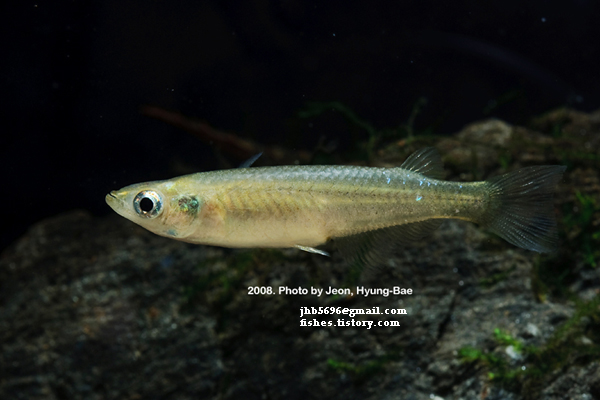
Oryzias latipesMedaka
Adrianichthyidae · Temminck & Schlegel, 1846
Commonly known as 'Japanese rice fish' or simply 'rice fish', O. latipes is well-known to science having been widely used as a model organism in genomic and experimental biology for well over a century and was the first vertebrate animal to mate in space during the mid-1990s. It's also been a popular aquarium fish for many years, though is less widely-available than it once was, with the ornamental 'gold' vari...
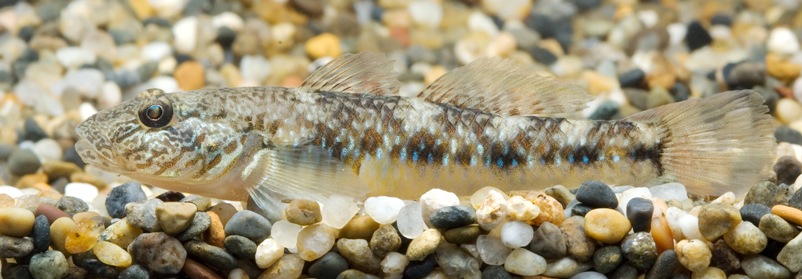
Rhinogobius giurinus
Gobiidae · Rutter, 1897
This species appears to exist in a number of different forms which exhibit differences in colour pattern, morphology, or both, and it's currently unclear whether all of them are truly conspecific or not although to avoid confusion we list all together here.
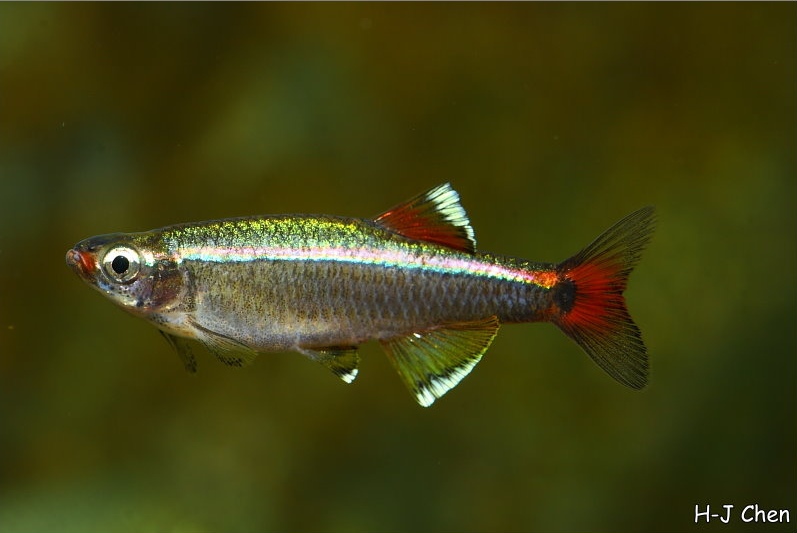
Tanichthys albonubesWhite Cloud Mountain Minnow
Cyprinidae · Lin, 1932
One of the most ubiquitous species in the hobby and several ornamental strains are available including 'long-finned', 'golden', 'albino', and 'super red', for which care is identical to that of the 'standard' fish. Unfortunately the degree of inbreeding amongst farm-bred stock has resulted in a situation whereby many of the fish available today are genetically weak and prone to disease or develop physical deformities.
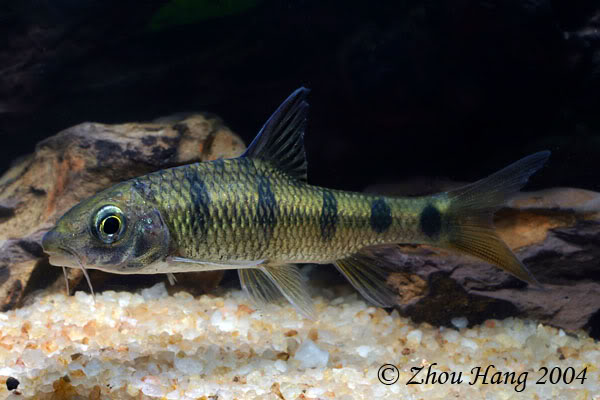
Acrossocheilus beijiangensis
Cyprinidae · Wu & Lin, 1977
Recorded from Fujian, Guangdong, and Guangxi provinces in southwestern China, plus the islands of Hainan and Hong Kong. Type locality is 'Lian-Xian and Yang-Shan, Guangdong, China', corresponding to the Bei River drainage.
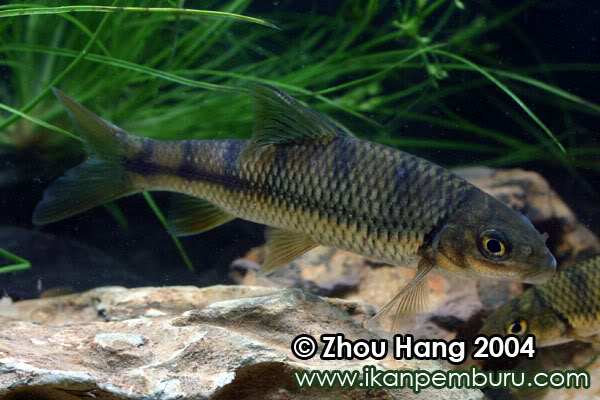
Acrossocheilus parallens
Cyprinidae · Nichols, 1931
Members of the genus are characterised by possessing a particular number of dark vertical bar on each flank, and A. parallens belongs to a group of species with five or six such bars, each of which is two scales in width. Congeners sharing this pattern include A. fasciatus, A. hemispinus (in juveniles only), A. jishouensis, A. kreyenbergii, A. paradoxus, A. spinifer, A. wenchowensis, and A. wuyiensis.
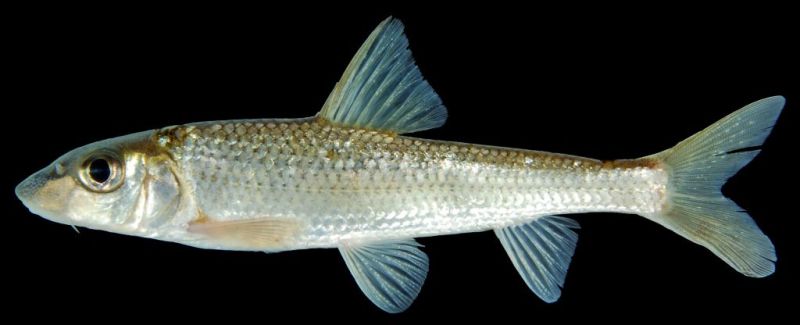
Hemibarbus maculatusSpotted Steed
Cyprinidae · Bleeker, 1871
Widepread in eastern Asia between the Yangtze and Amur river basins, including China (mainland and islands of Taiwan and Hainan), Korea, Mongolia, Russia, and Japan. It probably been introduced to Vietnam and Laos, or records from these countries represent another species.
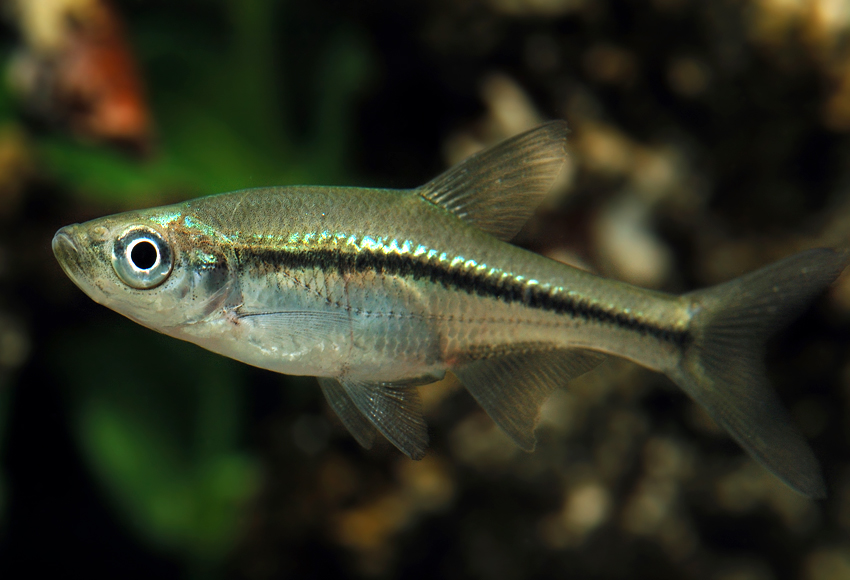
Metzia formosae
Cyprinidae · Oshima, 1920
Although it is included in the genus Metzia this grouping remains somewhat unresolved in terms of taxonomy and it may contain more than a single genetic lineage. For example, members share a number of characters with the genera Ischikauia Jordan and Snyder 1900, Hemiculterella Warpachowski 1887, and several species of Anabarilius Cockerell 1923, including a bipartite gas bladder, a non-spinous dorsal-fin ray, and a sharp ventral keel between the pelvic-fin insertion and anus.
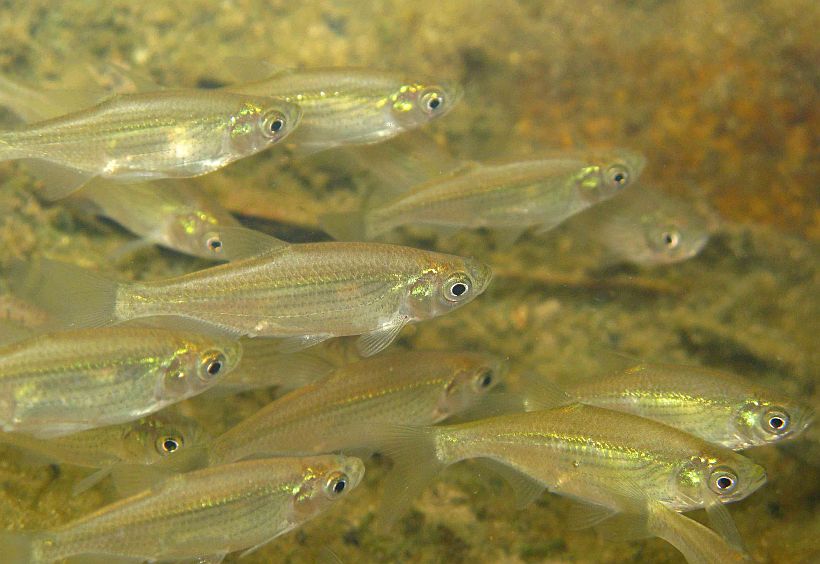
Metzia lineata
Cyprinidae · Pellegrin, 1907
Populations from the upper Pearl River (Nanpan Jiang basin) differ in several morphological characters from those inhabiting Guangdong, Guangxi, and Guizhou Provinces, and Hainan Island. Those from Vietnam also seem to be different (Gan et al., 2009), the implication being that there may be several species currently included under the name M. lineata.