River
Cuyuni
7 profiles across 6 families name the Cuyuni as a locality.
- Species
- 7
- Families
- 6
- Photographed
- 7 of 7
- Difficulty rated
- 7 of 7
Basin
Shares fishes withspecies recorded from both
Runs through
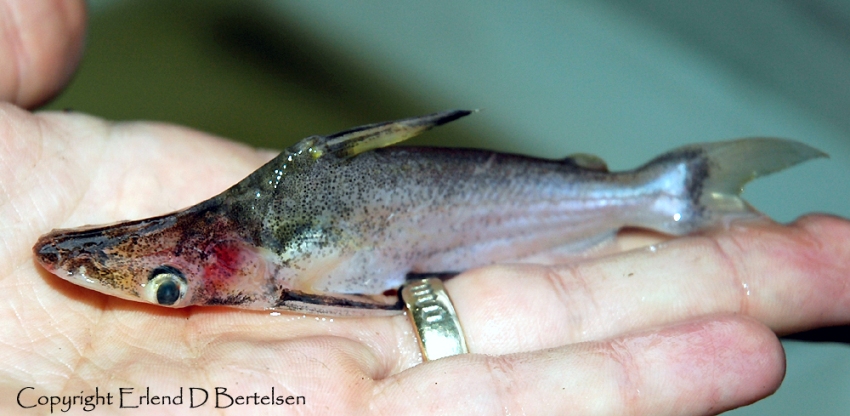
Ageneiosus ucayalensisDuck Catfish
Auchenipteridae · Castelnau, 1855
Apparently this species is polymorphic with body patterning varying significantly depending on locality. Individuals collected from black water habitats tend to be noticeably darker in overall colouration, for example, with this being particularly evident among populations from the Guiana Shield. The genus Ageneiosus was at one point classified in...
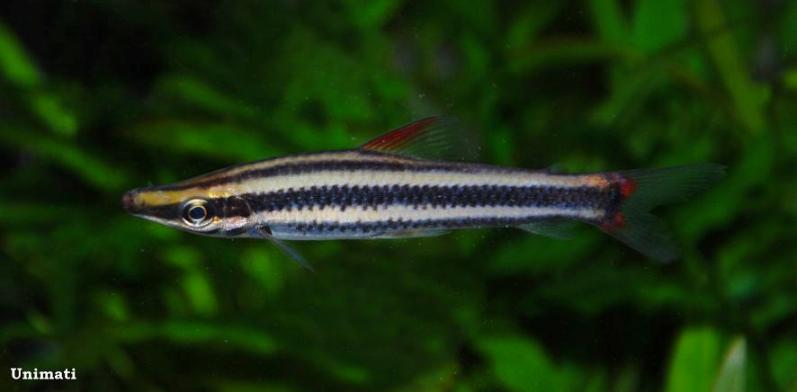
Anostomus anostomusStriped Headstander
Anostomidae · Linnaeus, 1758
A biotope-style set-up could consist of a sandy substrate, piles of smooth rocks and driftwood roots and branches, some of which should penetrate the water surface. Aquatic vegetation can be included if you wish but is likely to be eaten.
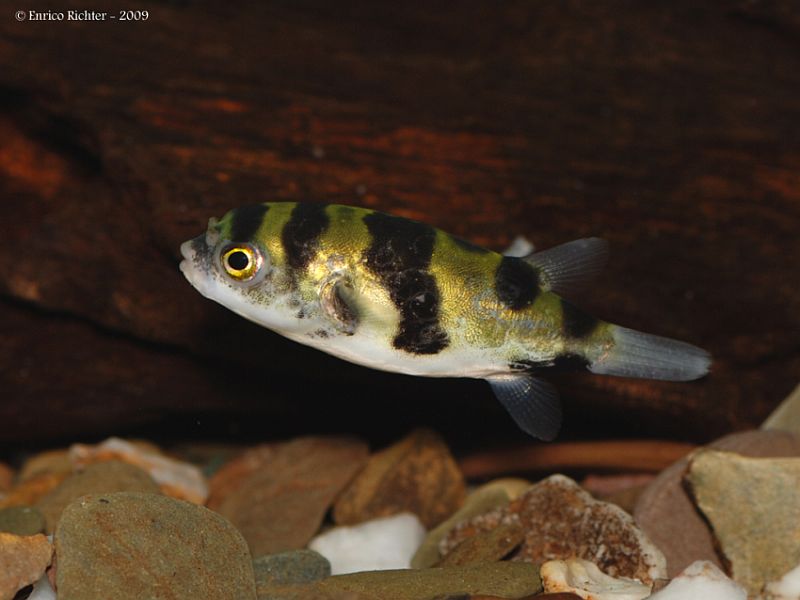
Colomesus asellusAmazon Puffer
Tetraodontidae · Müller & Troschel, 1849
This species is also referred to as 'South American puffer', 'SAP', 'Amazonian puffer', 'Peruvian puffer', or 'Brazilian puffer' in the ornamental trade. Within the genus Colomesus, C. asellus can be immediately identified by possessing a unique transverse row of dermal flaps across the chin which is absent in its congeners C. psittacus and C. tocantinensis.
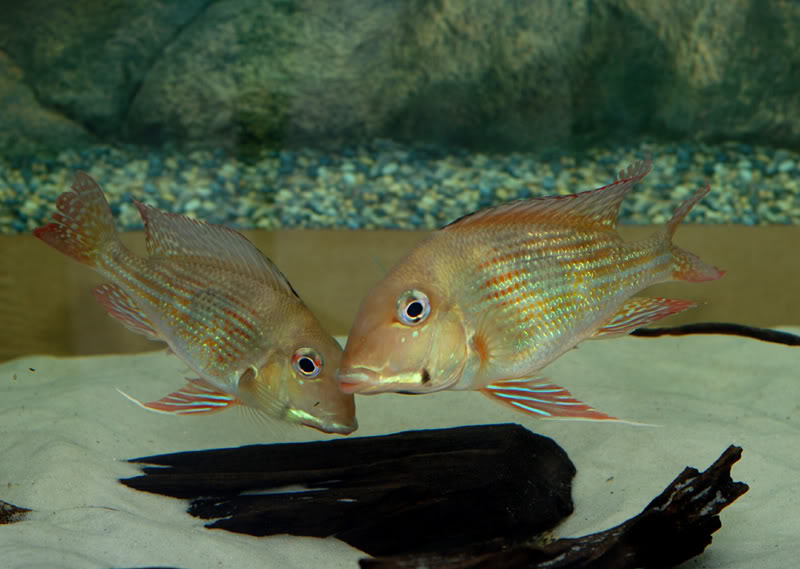
Geophagus brachybranchus
Cichlidae · Kullander & Nijssen, 1989
This species is generally rare in the aquarium hobby though oddly appears to be one of the commoner species in Australia where it's often referred to by the vernacular name 'black-throated eartheater'. It's a member of the nominal G. surinamensis 'group' of closely-related species within the genus and can be identified by a combination of characters including: presence of dark preopercular markings; no vertical bars on the flanks even when stressed/preserved; base of filaments on the first gill arch mostly covered by a flap of skin; exposed part of bra...
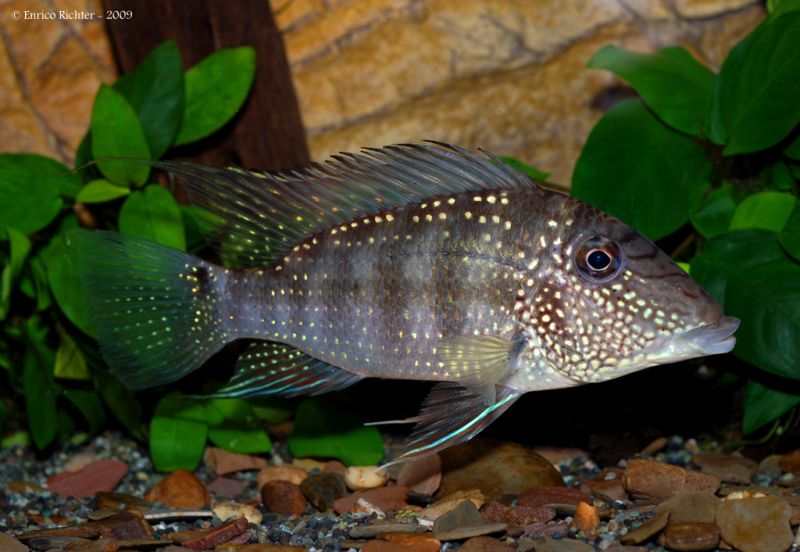
Satanoperca leucostictaWhitespot Eartheater
Cichlidae · Müller & Troschel, 1849
S. leucosticta is frequently available in the ornamental trade and farmed for the purpose in several countries. It is often confused with its congener S. jurupari in aquarium literature and on websites, but is easily recognised by presence (vs. absence) of prominent white spots or vermiform markings on the sides of the head. Although the presence of white spots on the head does not distinguish it from all known Satanoperca populations (see below), it can...
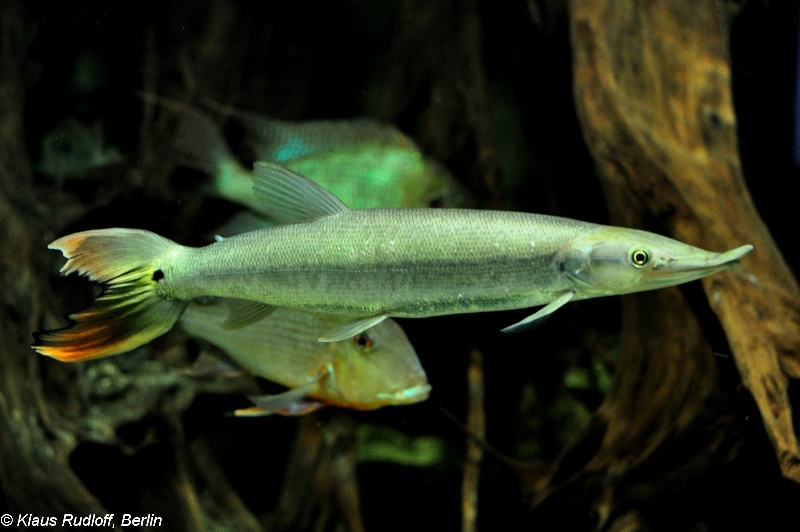
Boulengerella cuvieri
Ctenoluciidae · Spix & Agassiz, 1829
It's known by various vernacular names including 'Pirá-pacu', 'Pira-pucu' or 'Diente de cao' (central Amazon), 'Bicuda' or 'Uena' (rio Tocantins), 'Bicuda' (rio Tapajós), 'Aguejeta' or 'Picua' (Venezuela), and 'Moruwi' or 'Pirapoko' (Guyana). The entire dorsal-fin base is located anteriorly to a vertical through the anal-fin origin and this character distinguishes it from all other ctenolucids except B. lucius and B. xyrekes.
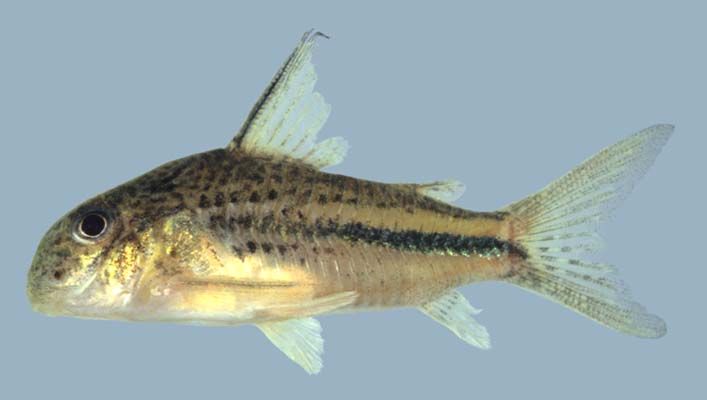
Corydoras bondiBlackstripe Cory
Callichthyidae · Gosline, 1940
Type locality is 'Río Yuruari, 3 kilometers east of El Callao, 7°18'N, 61°50'W, Bolivar, Venezuela', and this species is also known from the Rupununi River drianage in Guyana and the Courantyne/Corantijn system in Suriname. The Yuruari, an affluent of the Río Cuyuni, an...