River
Karnali
6 profiles across 4 families name the Karnali as a locality.
- Species
- 6
- Families
- 4
- Photographed
- 6 of 6
- Difficulty rated
- 6 of 6
Shares fishes withspecies recorded from both
Runs through
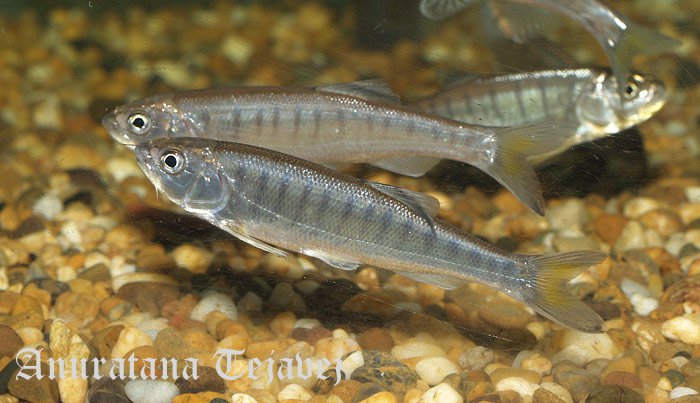
Barilius shacra
Cyprinidae · Hamilton, 1822
Like many fishes that naturally inhabit running waters it's intolerant to the accumulation of organic wastes and requires spotless water at all times in order to thrive. It also does best if there is a high proportion of dissolved oxygen and moderate degree of water movement so external filters, powerheads, airstones, etc., should be employed as necessary.
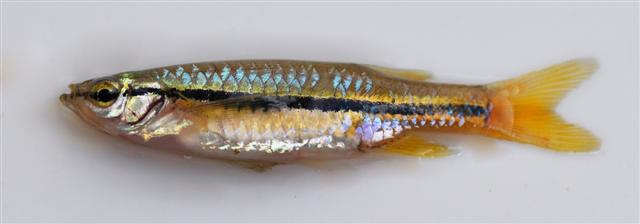
Esomus danricaFlying Barb
Cyprinidae · Hamilton, 1822
Found in various types of habitat but shows a marked preference for shallow, slow-moving and standing waters such as rice paddies and other temporally-inundated environments with dense aquatic vegetation.
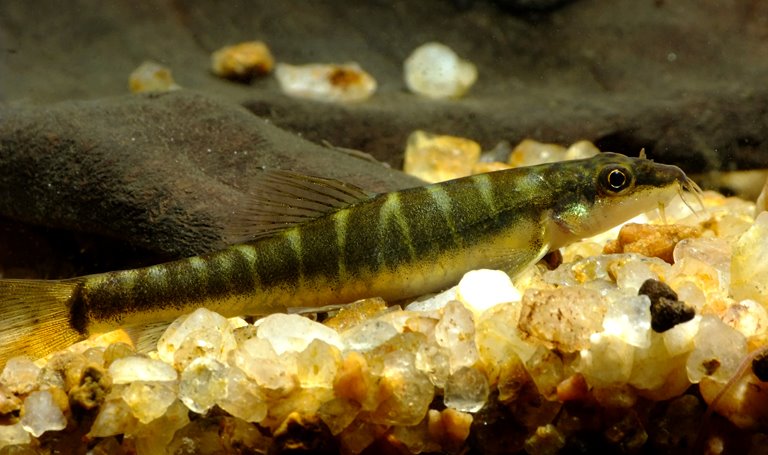
Schistura savonaHalf-banded Loach
Nemacheilidae · Hamilton, 1822
This species is seen in the aquarium trade on a relatively frequent basis and is sometimes sold as 'bicolor loach' in the United States. It can be distinguished from congeners by its unique colour pattern comprising 9-10 thin, yellowish bars on a dark background in the upper part of the body, and plain whitish colouration in the lower portion.
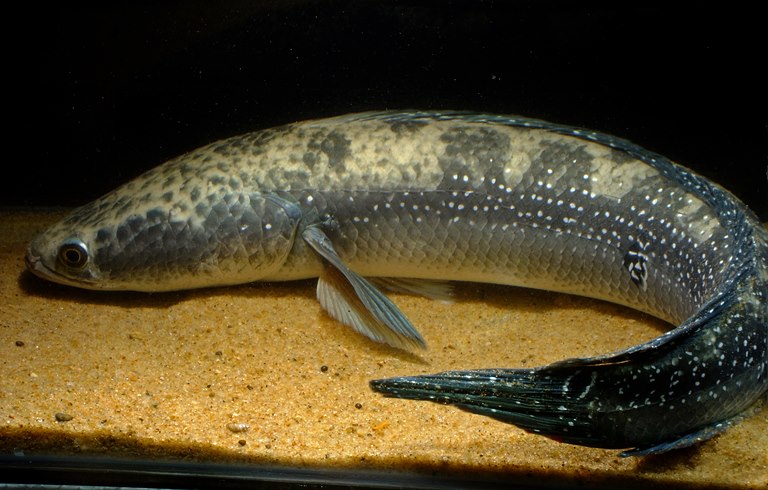
Channa maruliusBullseye Snakehead
Channidae · Hamilton, 1822
This species is also referred to as 'giant', 'great', 'cobra', or 'Indian' snakehead. Although currently-considered to be distributed throughout much of southern Asia it is widely-accepted to represent a complex of related species in need of additional research. A number of geographical variants exhibiting diffe...
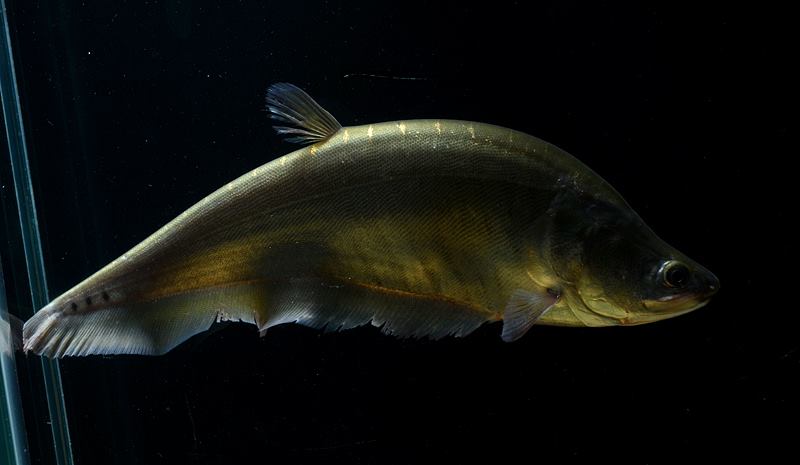
Chitala chitalaIndian Featherback
Notopteridae · Hamilton, 1822
This species' name has been widely misapplied in the aquarium trade and hobbyist literature, most often in reference to the Southeast Asian species C. ornata, but unlike its relative is in fact very rarely exported for ornamental purposes although its is fished and cultured for food in India. It can be told apart from C. ornata by possessing fe...
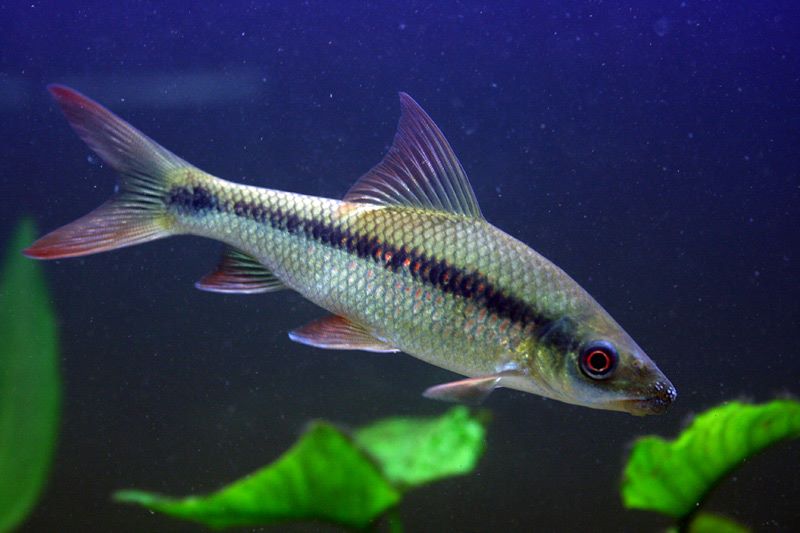
Labeo angra
Cyprinidae · Hamilton, 1822
This species can be identified by colour pattern comprising a brownish dorsal surface, yellowish flanks and abdomen, and a black to bluish lateral stripe extending from the eye to the caudal-fin base.