Search the catalogue
Type a name: scientific, common, or one a species used to go by. Or narrow the catalogue with the filters.
Filters1
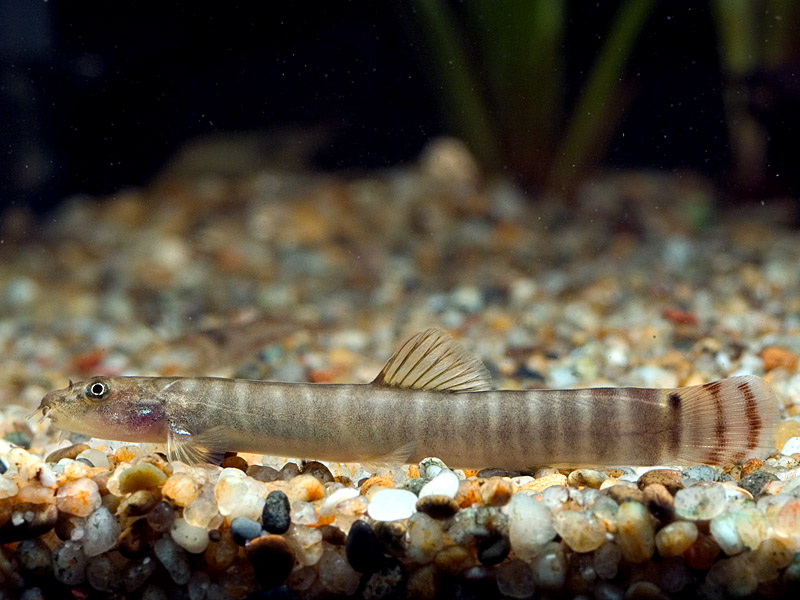
Aborichthys sp. 'AR01'
authority not recorded
Max length55mm SL2.2in SLTank60 × 30cm24 × 12inTemp21–26°C70–79°FpH6.0–7.5This fish is usually traded as A. elongatus but that species appears endemic to higher altitude waters of the Brahmaputra drainage in Darjeeling District which borders Jalpaiguri to the north east. These flow down from the Sivalik Hills whereas the Raidak I originates in Bhutan. Only three species of Aborichthys have been officially described to date meaning this is likely to represent an undescribed species. It was pictured in Tekriwal and Rao (1999) under the name 'A. bijulensis' but...
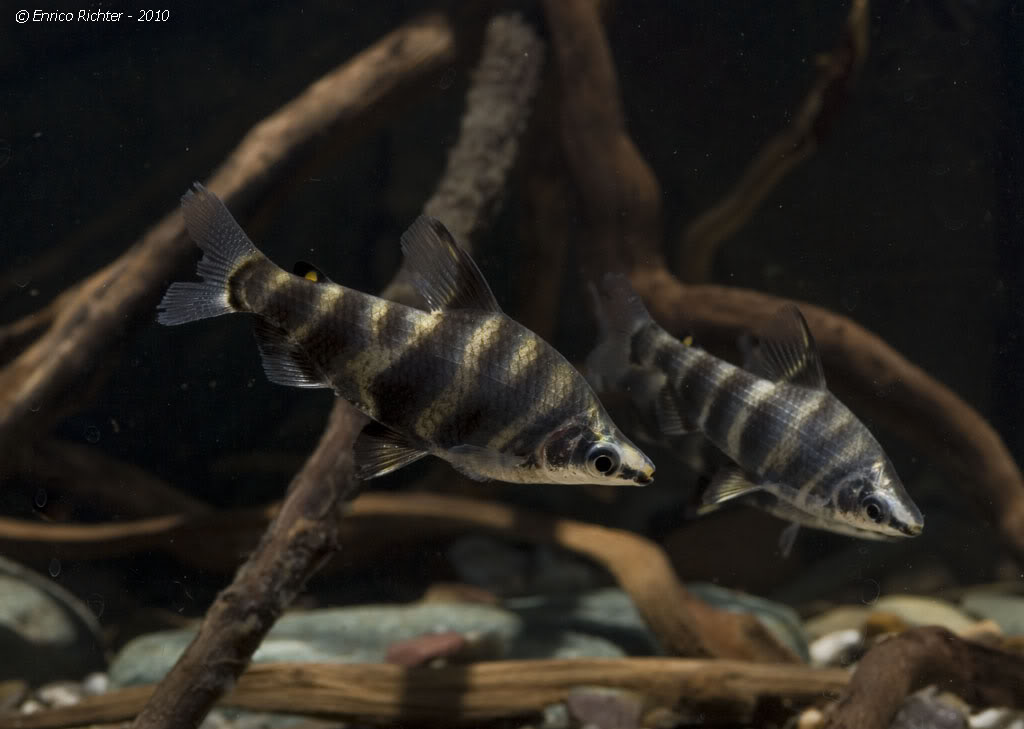
Abramites hypselonotusMarbled Headstander
Günther, 1868
Max length140mm SL6in SLTank120 × 30cm48 × 12inTemp20–30°C68–86°FpH5.5–7.5Abramites spp. are separated from other anostomids primarily on the basis of their relatively deeper bodies and presence of a prominent, post-pelvic median keel, a feature unique to the genus. At time of writing A. eques is the only other species recognised and is native to the Río Magdalena drainage in western Colombia. It can be distinguished by possession of 13-14 bra...
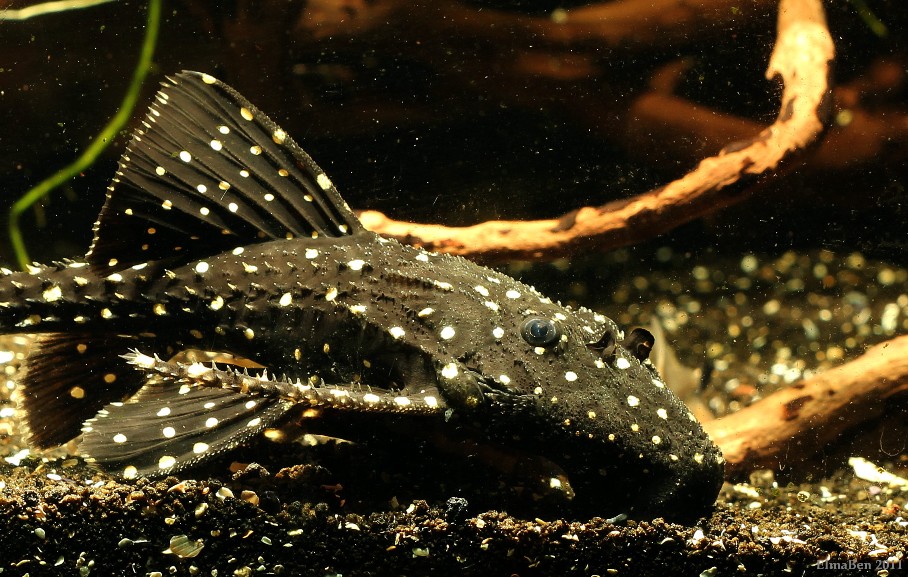
Acanthicus adonisPolka Dot Lyre Tail Pleco
Isbrücker & Nijssen, 1988
Max length1000mm SL39in SLTank600 × 200cm236 × 79inTemp23–30°C73–86°FpH6.0–7.5Despite its patent unsuitability as an aquarium subject attractively-coloured juvenile specimens of this species are traded in quite large numbers, although the scarcity of privately-maintained adults would suggest that most fail to reach their potential. The striking, spotted patterning also disappears as this species matures, and since it also becomes increasingly bellligerent with age it can only be recommended to owners of the largest private aquaria or tropical ponds. There exists an albino...
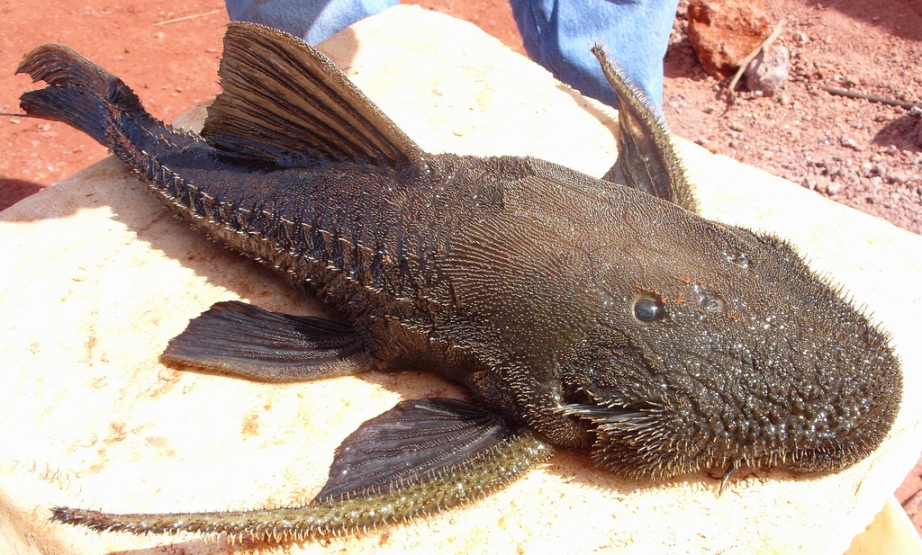
Acanthicus hystrixL155
Spix & Agassiz, 1829
Max length1000mm SL39in SLTank600 × 200cm236 × 79inTemp23–30°C73–86°FpH6.0–7.5Despite its patent unsuitability as an aquarium subject attractively-coloured juvenile specimens of this species are traded in quite large numbers, although the scarcity of privately-maintained adults would suggest that most fail to reach their potential. The striking, spotted patterning also disappears as this species matures, and since it also becomes increasingly bellligerent with age it can only be recommended to owners of the largest private aquaria or tropical ponds. There exists an albino...
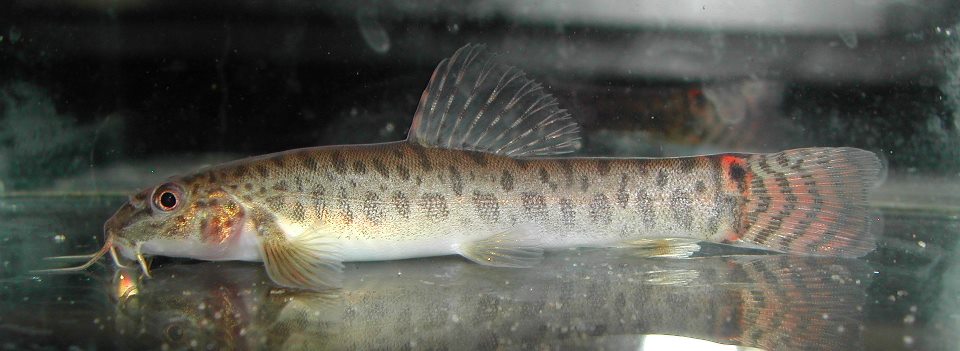
Acanthocobitis sinuata
Day, 1870
Max length75mm SL3.0in SLTank75 × 30cm30 × 12inTemp20–26°C68–79°FpH6.0–7.5A. sinuata is currently considered a synonym of A. mooreh by most authorities. This appears attributable to a lack of recent study since the two differ in distribution plu...
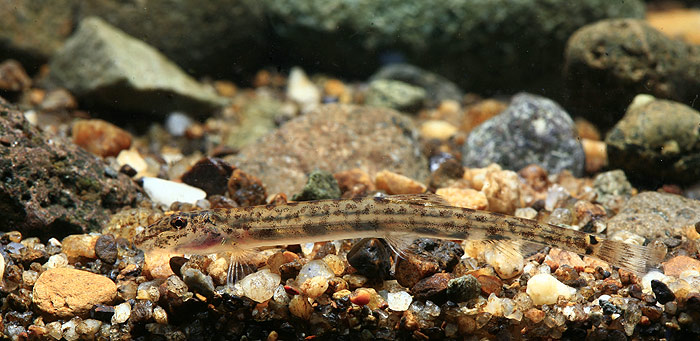
Acanthopsoides molobrion
Siebert, 1991
Max length50mm SL2.0in SLTank60 × 30cm24 × 12inTemp20–24°C68–75°FpH5.5–7.0Acanthopsoides spp. are most closely related to the horse-faced loaches of the genus Acantopsis with which they often co-occur in nature, and thus commonly referred to as 'dwarf horse-face loaches'. The genus currently comprises five species of which four were described by Siebert (1991); these were discovered in existing museum holdings...
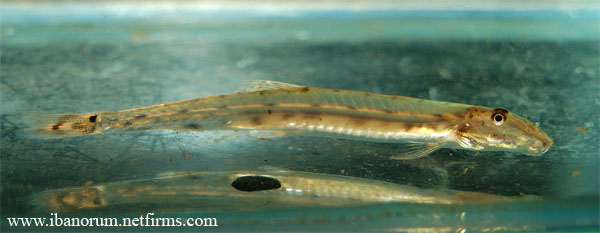
Acanthopsoides robertsi
Siebert, 1991
Max length75mm SL3.0in SLTank60 × 30cm24 × 12inTemp20–24°C68–75°FpH5.5–7.0Acanthopsoides spp. are most closely related to the horse-faced loaches of the genus Acantopsis with which they often co-occur in nature, and thus commonly referred to as 'dwarf horse-face loaches'. Most are very difficult to tell apart but A. robertsi is quite easily identified since it's the only...
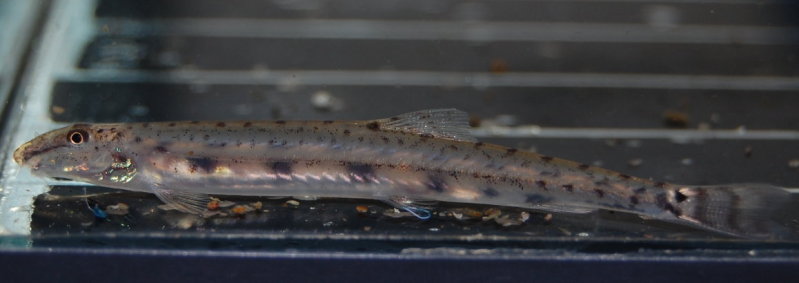
Acanthopsoides sp. 'A01'
authority not recorded
Max length65mm SL2.6in SLTank60 × 30cm24 × 12inTemp20–24°C68–75°FpH5.5–7.0Acanthopsoides spp. are most closely related to the horse-faced loaches of the genus Acantopsis with which they often co-occur in nature, and thus commonly referred to as 'dwarf horse-face loaches'.
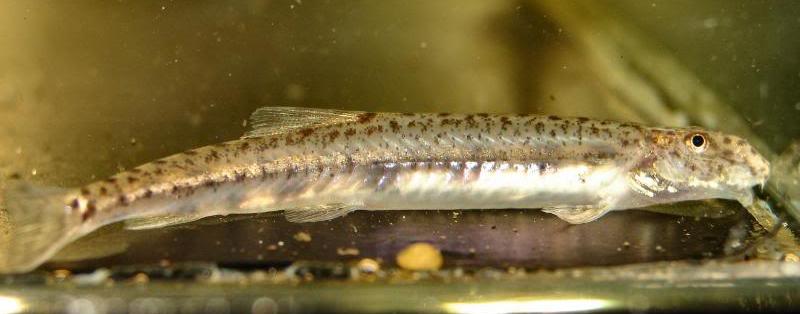
Acanthopsoides sp. 'A02'
authority not recorded
Max length55mm SL2.2in SLTank60 × 30cm24 × 12inTemp20–24°C68–75°FpH5.5–7.0Acanthopsoides spp. are most closely related to the horse-faced loaches of the genus Acantopsis with which they often co-occur in nature, and thus commonly referred to as 'dwarf horse-face loaches'. The genus currently comprises five species of which four were described by Siebert (1991);...
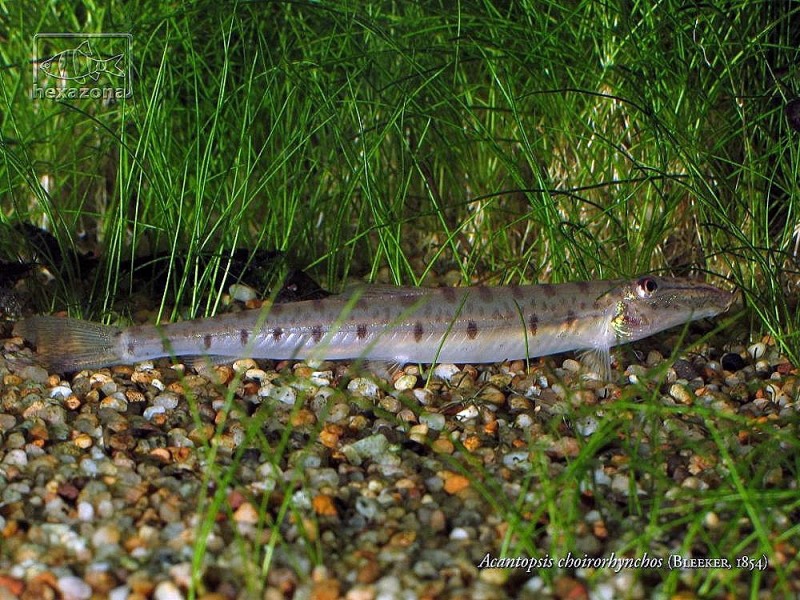
Acantopsis dialuzonaHorseface Loach
van Hasselt, 1823
Max length200mm SL8in SLTank120 × 45cm48 × 18inTemp16–24°C61–75°FpH6.0–8.0Juveniles of this 'species' (probably a group of species - see 'distribution') are traded in large numbers but it's still uncommon to see adult specimens in the hobby suggesting their needs are not catered for often enough. This is a shame as when maintained properly they're hardy, long-lived and interesting aquarium residents. Other trade names include 'long-nosed' and 'banana' loach. Please note although certain that more than one species is being tr...
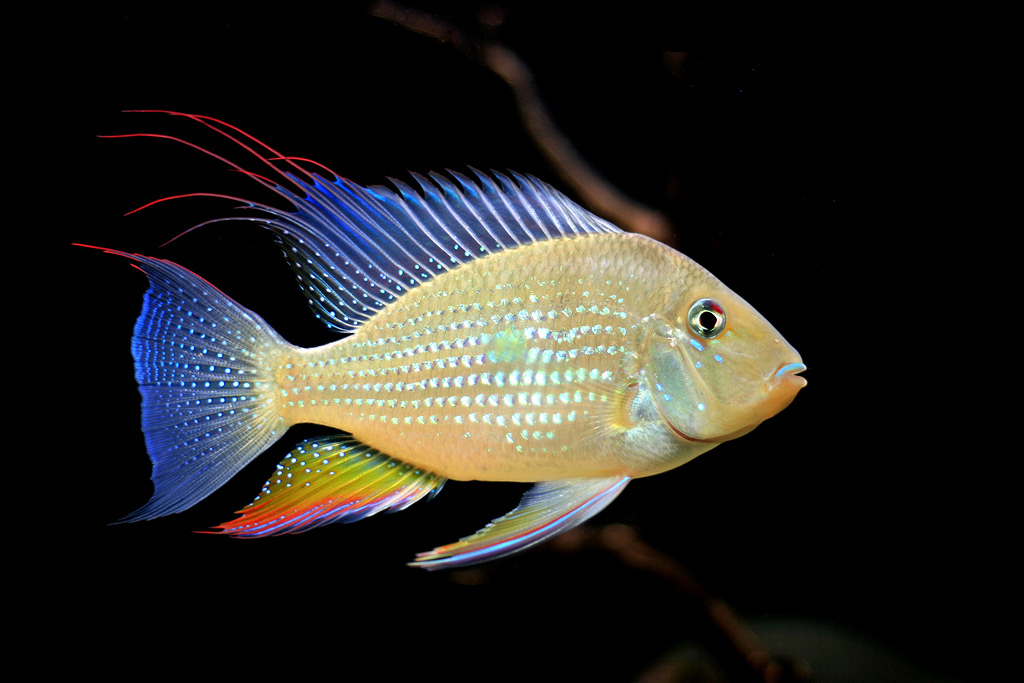
Acarichthys heckeliiThreadfin Acara
Müller & Troschel, 1849
Max length200mm SL8in SLTanknot recordedTemp24–30°C75–86°FpH6.0–8.0The genus Acarichthys remains monotypic and was resdescribed by Kullander (1986) who characterised it by the following: lack of epibranchial lobe; comparatively few (12-14)rays; pelvic fins with relatively broad tips (branches of the first ray are equal in length or the inner is slightly longer); possession of a single supraneural plus 14-15 vertebrae (these characters taken as a combination); no caudal extensions to swim bladder; no caudal ribs. Its current taxonomic position is based largel...
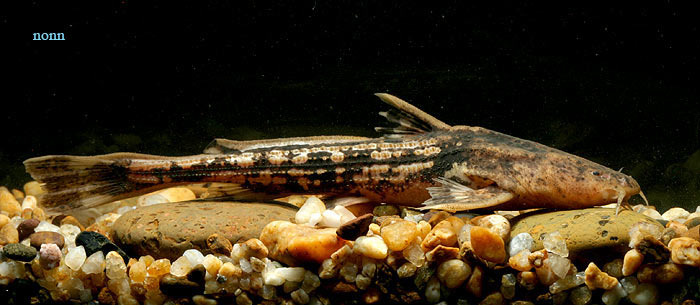
Acrochordonichthys gyrinusFalcate Chameleon Catfish
Vidthayanon & Ng, 2003
Max length80mm SL3.1in SLTank75 × 30cm30 × 12inTemp17.5–24°C64–75°FpH5.0–7.0As in other members of the genus body colouration in this species is variable, even among individuals collected from a single locality, although a few regularities have been observed which can be used to distinguish certain species from one another. This is thought related to the fact that Acrochordonichthys spp. periodically shed their skins and appear paler post-moulting.
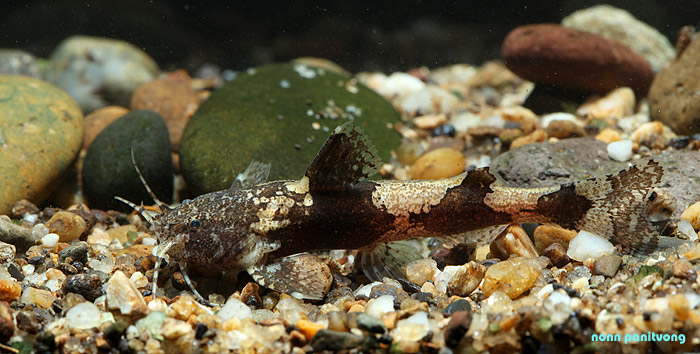
Akysis hendricksoniHendrickson's Stream Catfish
Alfred, 1966
Max length50mm SL2.0in SLTank45 × 30cm18 × 12inTemp16.5–24°C62–75°FpH6.0–7.2This species is among the few members of the family to have been exported for the aquarium hobby. It can be differentiated from all other Akysis species by the following combination of characters: head length 17.7-26.5% of standard length (SL); head width 25.4-28.7% SL; body depth at anus 13.0-17.0% SL; caudal peduncle depth 8.1-10.1% SL; interorbital di...
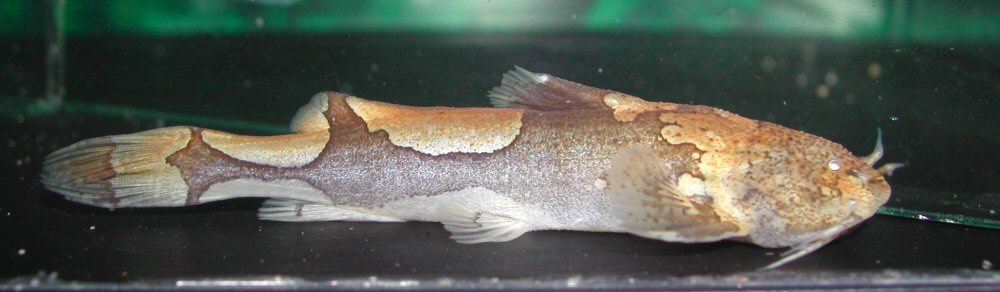
Akysis longifilisSittaung Stream Catfish
Ng, 2006
Max length53mm SL2.1in SLTank45 × 30cm18 × 12inTemp16.5–24°C62–75°FpH6.0–7.5This species is among the few members of the family to have been exported for the aquarium hobby. It can be differentiated from all other Akysis species by the following combination of characters: base of...
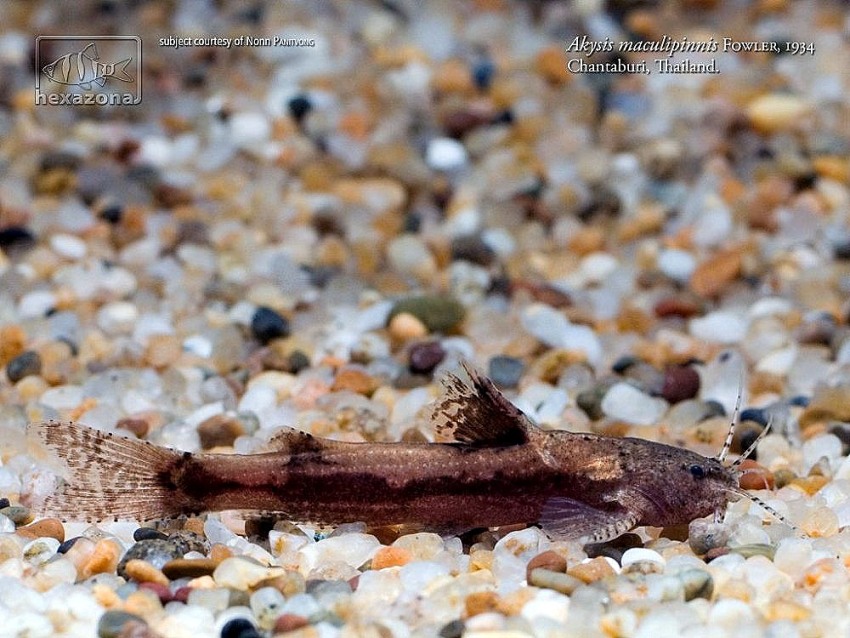
Akysis maculipinnisSpotfin Stream Catfish
Fowler, 1934
Max length35mm SL1.4in SLTank45 × 30cm18 × 12inTemp16.5–24°C62–75°FpH6.0–7.5This species has been exported for the aquarium hobby and ranks among the smaller members of the family. It can be differentiated from all other Akysis species by the following combination of characters: head length 22.0-28.6% of standard length (SL); caudal peduncle depth 8.8-10.7% of SL; anal-fin base length 15.2-19.1% of SL; eye diameter 12-16% of head length (HL); nasal barbel length 57 92% of HL; posession of 3-4 serrae on the posterior edge ofspine; body patterning mottled with indistinct ...
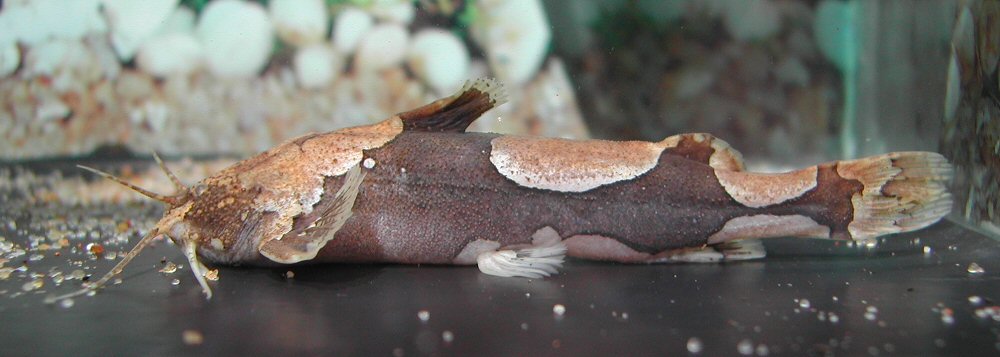
Akysis portellusSmallmouth Stream Catfish
Ng, 2009
Max length43mm SL1.7in SLTank45 × 30cm18 × 12inTemp16.5–24°C62–75°FpH6.0–7.5This species is among the few members of the family to have been exported for the aquarium hobby. It can be differentiated from all other Akysis species by the following combination of characters: base ofmeasures 17.1-19.2% of standard length (S...
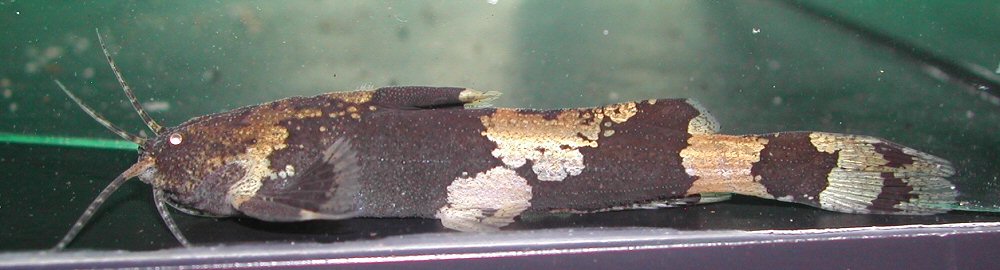
Akysis prashadiIndawgyi Stream Catfish
Hora, 1936
Max length62mm SL2.4in SLTank45 × 30cm18 × 12inTemp16.5–24°C62–75°FpH6.0–7.2This species is among the few members of the family to be exported for the aquarium hobby though is by no means common. It can be differentiated from a...
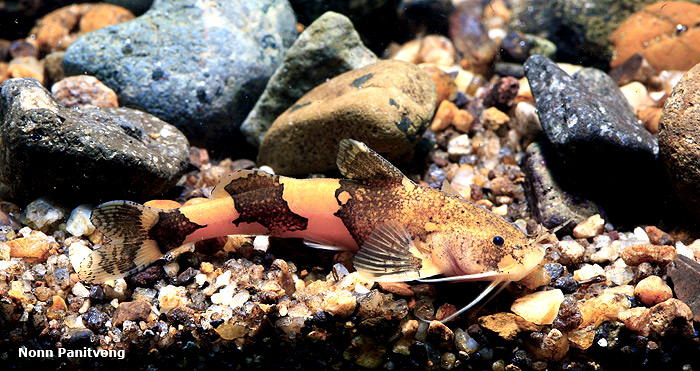
Akysis pulvinatusKra Stream Catfish
Ng, 2007
Max length30mm SL1.2in SLTank45 × 30cm18 × 12inTemp16.5–23.5°C62–74°FpH6.0–7.2This species has been exported for the aquarium hobby on an extremely limited basis. It can be differentiated from all other Akysis species by the following combination of characters: head length 27.6–29.8% of standard length (SL); head width 21.9–25.1% SL; caudal peduncle depth 9.4–10.3% SL; length ofbase 23.0–25.2% SL; nasal barbel len...
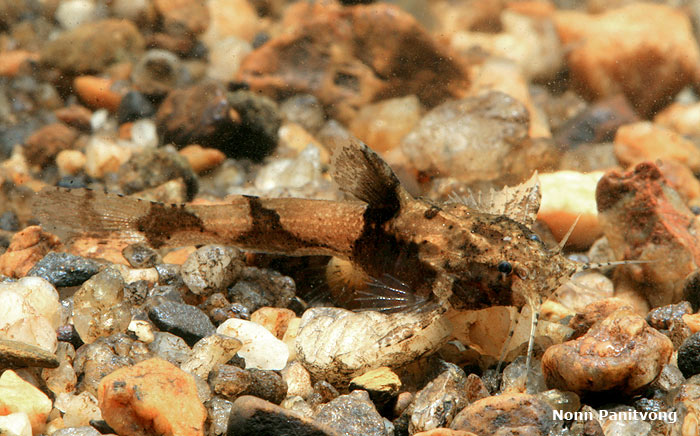
Akysis variusVariable Stream Catfish
Ng & Kottelat, 1998
Max length40mm SL1.6in SLTank45 × 30cm18 × 12inTemp16.5–24°C62–75°FpH6.0–7.5This species is among the smaller members of the family. It can be differentiated from all other Akysis species by the following combination of characters: caudal peduncle length 16.1-19.8% of standard length (SL); caudal peduncle depth 6.5-9.3% SL; length of adipose-fin base 25.6-29.5% SL; interorbital distance 42.0-46.0% of head length (HL), eye diameter 13.0-20.0% HL; length of nasal barbel 44.0-66.0% HL; lateral margins of the head appear straight when viewed from above; possession of 0-5 se...
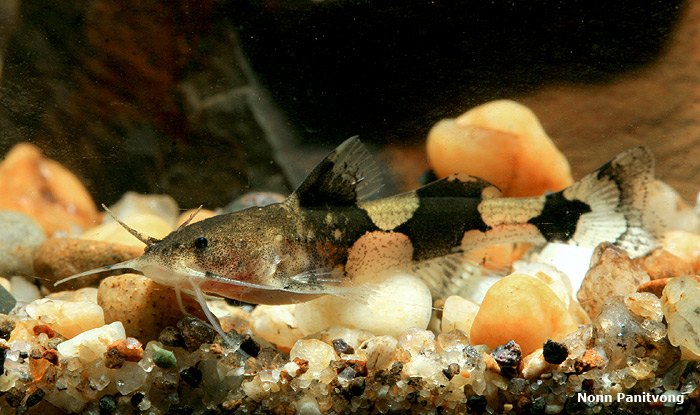
Akysis vespaOrange-Banded Stream Catfish
Ng & Kottelat, 2004
Max length31mm SL1.2in SLTank45 × 30cm18 × 12inTemp16.5–23.5°C62–74°FpH6.0–7.5This species is among the few members of the family to be exported for the aquarium hobby and we've also seen it on sale under various names such as 'orange-banded stone catfish', 'orange micro bumblebee catfish', 'Burmese orange mini bee catfish' or more simply 'wasp catfish'. Though the majority of forms are yellowish to orange in colouration there appears to exist a bright red variant which to date we've only seen in photos.