Search the catalogue
Type a name: scientific, common, or one a species used to go by. Or narrow the catalogue with the filters.
Filters1
Dicrossus filamentosusLyretail Checkerboard Cichlid
authority not recorded
Max length102mm SL4in SLTank60 × 30cm24 × 12inTemp27–30°C81–86°FpHnot recordedDicrossus Filamentosa were once part of the Crenicara genus, but now share the Dicrossus genus with Dicrossus Maculata. The two species look similar, but the Maculata lack the lyretailed of the Filamentosa. Some say however, that the Maculata has even more striking body colouration than the already impressive Filamentosa. These fish aren't impossible to find, but aren't readily available in local fish shops either. They are seen as a challenge to breed, but plenty of breeders have h...
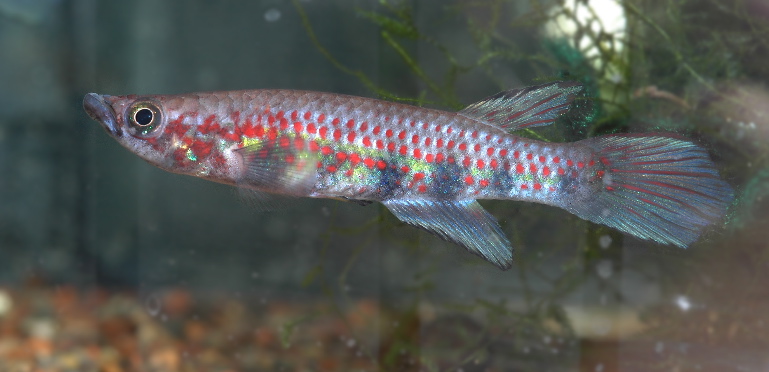
Epiplatys mesogramma
Huber, 1980
Max lengthnot recordedTanknot recordedTempnot recordedpHnot recordedEndemic to the Ubangi (also spelled Oubangui) River drainage in southwestern Central African Republic with type locality given as 'Small stream along Mbaiki-Mongoumba road, south of Bangui, 3°55'N, 18°10'E, Central African Republic'. The Ubangi is is the largest right-ba...
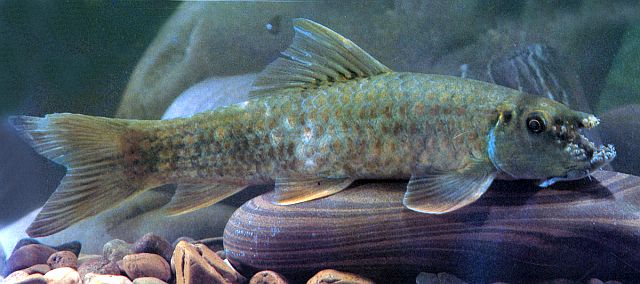
Garra orientalis
Nichols, 1925
Max length120mm SL5in SLTanknot recordedTempnot recordedpHnot recordedAmong other Garra species from Southeast Asia and China, G. orientalis is most similar to G. salweenica and G. fuliginosa in that all three possess a roughly triangular, trilobed proboscis on the snout, the anterior margin of which is densely tuberculated, and the inferior margin not in contact with the depressed rostral surface, i.e., the proboscis projects forwards.
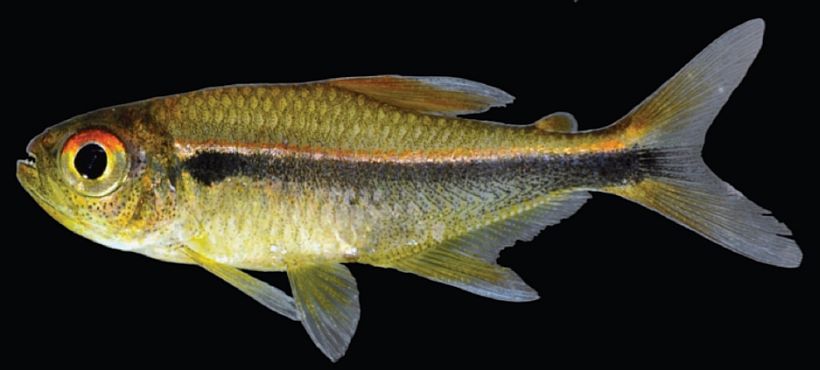
Hyphessobrycon eschwartzae
Román-Valencia & Ortega, 2013
Max lengthnot recordedTanknot recordedTempnot recordedpHnot recordedH. eschwartzae is told apart from other laterally-striped Hyphessobrycon species from the Madre de Dios watershed by the following characters: 4 simple anal-fin rays (vs. 3 in other species listed); 13-15 dentary teeth (vs. 5-11); 6 teeth in the internal premaxillary ro...
Mesonauta festivusFlag Cichlid
authority not recorded
Max length100mm SL3.9in SLTank120 × 38cm48 × 15inTempnot recordedpH6.0–8.0Flag Cichlids are enduringly popular in the hobby and can be found in most aquatic stores. Interestingly, this species is not the species most commonly sold as the Flag cichlid. It is usually m. insignis that makes it into dealers tanks....
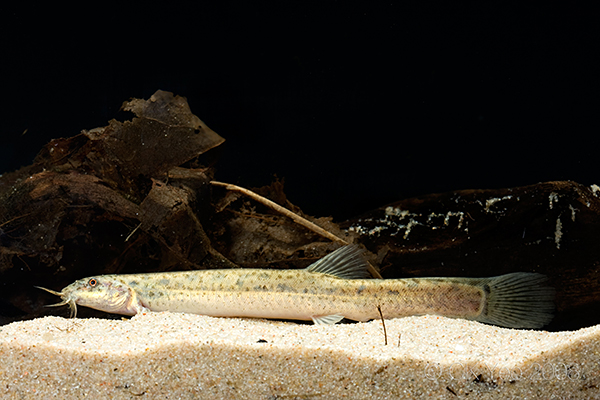
Misgurnus anguillicaudatusOriental Weather Loach
authority not recorded
Max length280mm SL11in SLTank120 × 45cm48 × 18inTempnot recordedpH6.0–8.0An exceptionally hardy and adaptable species tolerant of a wide range of physiological variables and flexible of diet, factors which have allowed it to become established as an alien species around the globe. Its high reproductive potential and low vulnerability to predation have made it a cause for concern to conservation scientists although as yet there remains no proof of it exerting a negative effect on native fishes in countries outside its natural range.
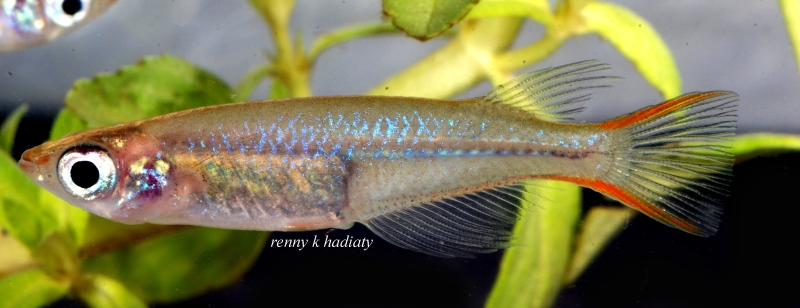
Oryzias asinuaAsinua Ricefish
Parenti, Hadiaty, Lumbantobing & Herder, 2013
Max length25mm SL1.0in SLTank45 × 30cm18 × 12inTempnot recordedpHnot recordedWhen the type series was collected the Sungai Asinua contained clear, slow to fast-moving water with a temperature of 26 °C. The substrate was composed of mud, sand an...
Oxydoras nigerRipsaw Catfish
authority not recorded
Max length900mm SL35in SLTank240 × 60cm96 × 24inTempnot recordedpH6.0–7.0Previously referred to a Pseudodoras niger, the Ripsaw Cat is a fish only for the experienced fishkeeper due to its large adult size. Although a visually stunning fish, realistically, it is best suited to public aquaria. Much more peaceful than its common name suggests, which it gets from the spines that run down the lateral line of the fish. This fish is becoming more readily available to the hobby and prices are also falling, meaning that many fishkeepers are being tempted into buying a fis...
Polypterus weeksiiMottled Bichir
authority not recorded
Max length550mm SL22in SLTank150 × 60cm60 × 24inTempnot recordedpHnot recordedP. weeksii is one of the "upper-jawed" tribe of polypterids so named on account of the upper jaw being longer than or equal in length to the lower jaw. It is one of the rarer bichir species in the hobby. Like other bichirs it is an incredibly hardy, nocturnal species with very poor vision, relying on its excellent sense of smell to locate food. This species along with others of its genus are some of the last surviving relatives of very ancient species. Fossils of earlier relatives have...
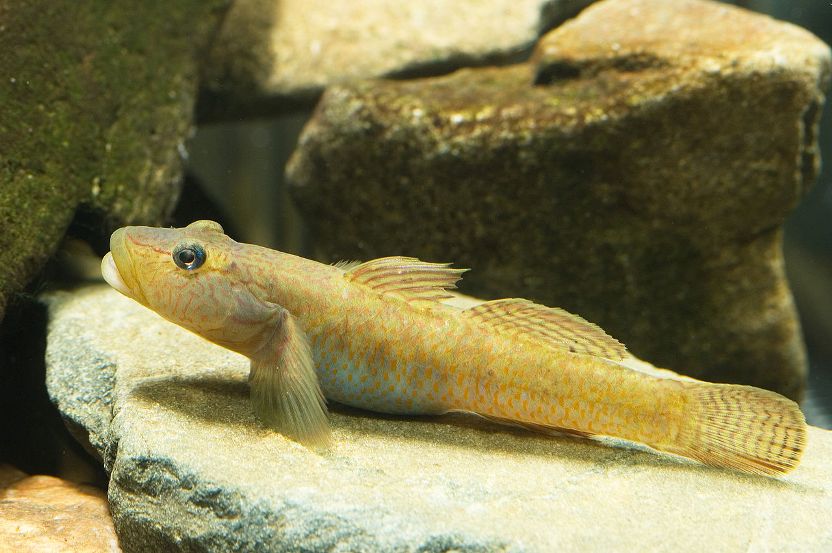
Rhinogobius sp. 'CB'
authority not recorded
Max lengthnot recordedTanknot recordedTempnot recordedpHnot recordedThere are a number of unidentified species within the grouping of which several are referred to using a two-letter code based on their respective colour pattern for ease of reference, with 'CB' shorthand for 'cross band', for example. R. sp. 'CB' is the commonest member of the grouping in Japan but has not yet entered the international aquarium trade as far as we know.
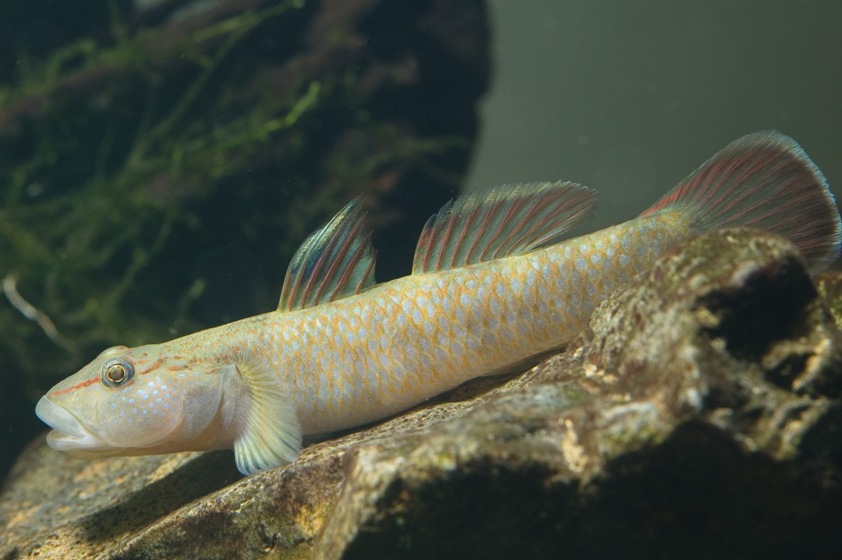
Rhinogobius sp. 'CO'
authority not recorded
Max lengthnot recordedTanknot recordedTempnot recordedpHnot recordedSome wild populations have evolved a complex amphidromous breeding strategy in which adults live and spawn in freshwater or brackish streams and the pelagic post-hatch larvae are washed downstream to the sea where the post-larval fry spend the first part of their life developing in estuarine nursery zones under brackish to full marine conditions. Once they reach a certain stage of development they begin to migrate upstream with some mov...
Thalassophryne amazonicaPrehistoric Monster Fish
authority not recorded
Max length150mm SL6in SLTank75 × 30cm30 × 12inTemp24–28°C75–82°FpHnot recordedThere are currently six described species in the genus Thalassophryne, of which T. amazonica is the only freshwater representative. The others (T. nattereri, T. maculosa, T. megalops, T. montevidensis and T. punctata) are all estuarine animals distributed along the western Atlantic coastlines of Central and South America and inhabit brackish-to-marine waters. They are members of the family Batrachoididae or toadfishes, of which most are exclusively marine species. All batrachoidids are ambush pr...
Vanmanenia hainanensis
authority not recorded
Max lengthnot recordedTanknot recordedTempnot recordedpHnot recordedVanmanenia hainanensis