Results for “sp.”
Type a name: scientific, common, or one a species used to go by. Or narrow the catalogue with the filters.
Filters
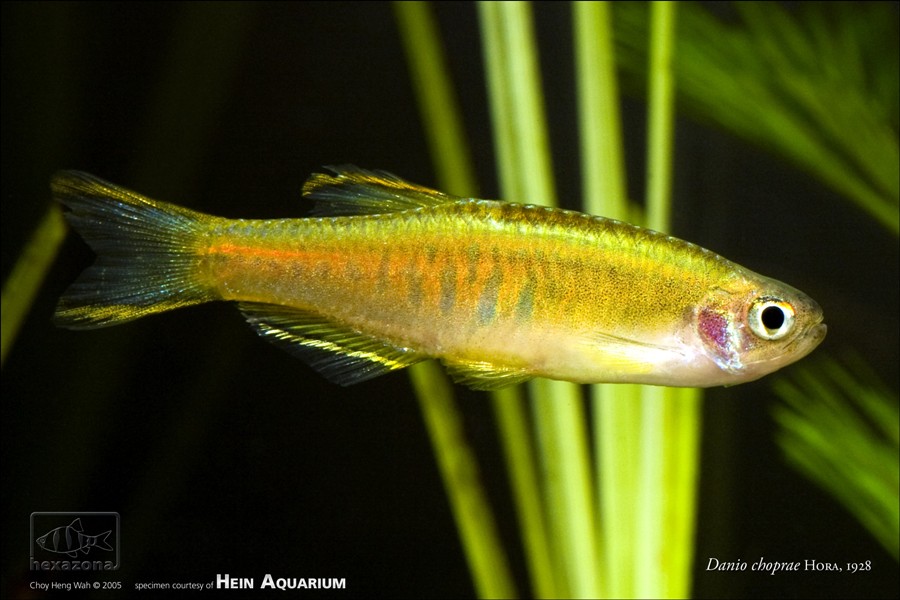
Celestichthys chopraeGlowlight 'Danio'
Hora, 1928
Max length30mm SL1.2in SLTank80 × 30cm31 × 12inTemp16–26°C61–79°FpH6.0–8.0C. choprae has only been available since 2003 but has quickly established itself as one of the most popular small danios in the hobby. There has been some confusion regarding the correct spelling of the specific name with many resources listing it incorrectly as "choprai". Briefly, when Hora described the species he named it after a man, Dr B. N. Chopra, meaning that "choprai" is technically correct as under ICZN rules the specific name ought to follow the gender of the indiv...
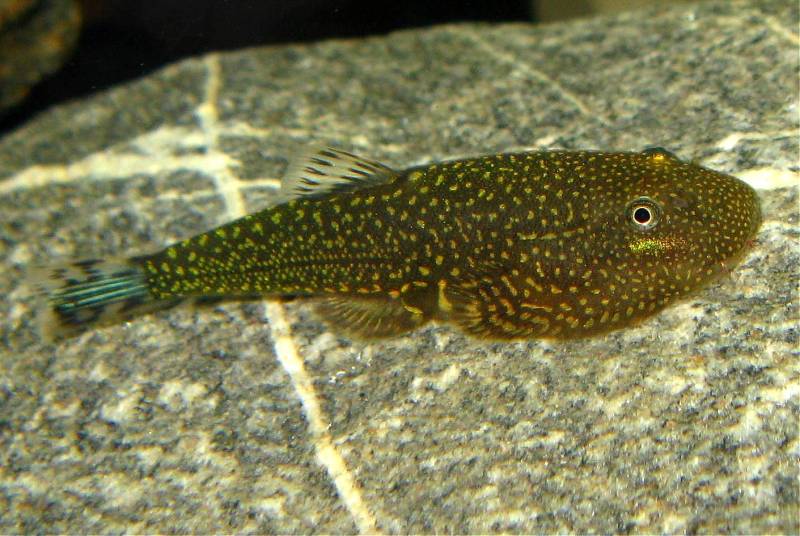
Gastromyzon stellatus
Tan, 2006
Max length55mm SL2.2in SLTank75 × 30cm30 × 12inTemp20–24°C68–75°FpH6.0–7.5One of the more commonly-traded members of the genus and often found in mixed shipments which may contain other Gastromyzon spp. or related fishes like Beaufortia kweichowensis. These are typically labelled 'Borneo sucker', 'Hong Kong pleco', 'butterfly loach', etc. regardless of species. It's sometimes misidentified as G. punctulatus, a species not currently traded which possesses yellow finnage and a lighter-coloured, less-intensely spo...
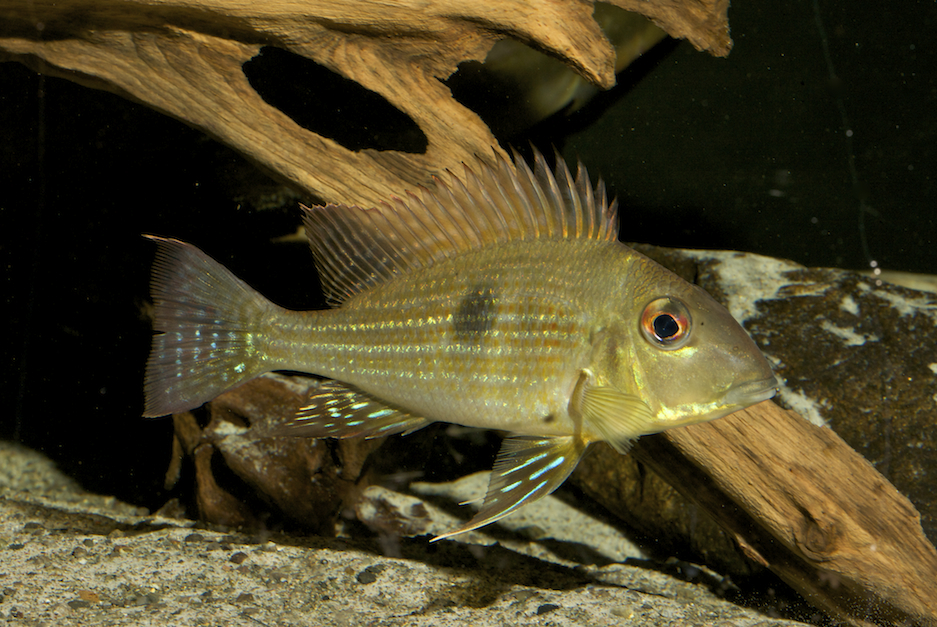
Geophagus brokopondo
Kullander & Nijssen, 1989
Max length150mm SL6in SLTank150 × 60cm60 × 24inTemp25–33°C77–91°FpH5.0–7.0This species is very rarely-traded since collections of fishes for commercial purposes aren't common in Suriname. It's a member of the nominal G. surinamensis 'group' of closely-related species within the genus and can be identified by a combination of characters including: no dark preopercular marking; six vertical/parallel bars on each flank (normally visible only when the fish are stressed, spawning or preserved); dark, squarish lateral spot positioned within the third vertical bar; sixth (posterior) bar elongate an...
Gymnotus pedanopterusZebra Knifefish
authority not recorded
Max length280mm SL11in SLTanknot recordedTemp22–28°C72–82°FpH6.0–7.0The genus Gymnotus has undergone considerable taxonomic revision in recent years, with over 20 new species being described since 1994, of which this stunning species is one. It's still very rare in the hobby and tends to command a high price when available. Like other Gymnotids, it produces a weak electric field using specially-adapted muscle tissue located towards the tail. It also possesses electroreceptors which allow the fish to receive electrical signals. With these the fish can sense ...
Hepsetus odoeAfrican Pike Characin
authority not recorded
Max length700mm SL28in SLTank180 × 60cm72 × 24inTemp25–28°C77–82°FpH6.0–7.5The only species in the genus, and a popular game fish in its native range, H. odoe superficially resembles our native European Pike. It is an ambush predator with a fearsome set of teeth, and should be handled very carefully, particularly when maintaining its tank. Although juvenile specimens have become relatively common in the trade in the last few years, this is strictly a species for the specialist who is able to provide it with a suitably large aquarium and the correct conditions. In sm...
Julidochromis ornatusGolden Julie
authority not recorded
Max length80mm SL3.1in SLTanknot recordedTemp23–27°C73–81°FpH7.5–9.0Julidochromis are commonly known as "Julies" in the hobby. This is one of the most common Julie species encountered in aquaria and may also be sold as the Yellow or Ornate Julie. The majority of specimens available are tank bred and do not exhibit as bright colouration as wild fish. As with other Julies, large water changes should be avoided as this can cause mated pairs to turn on one another. Several geographical morphs of this species are available, as is an aquarium sport albino...
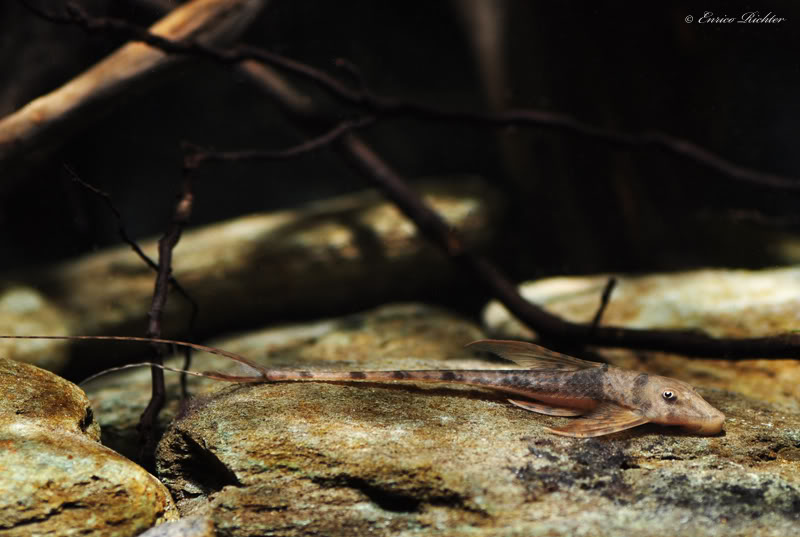
Lamontichthys filamentosusSturgeon Catfish
La Monte, 1935
Max length167mm SL7in SLTank120 × 45cm48 × 18inTemp22–30°C72–86°FpH5.5–7.5This species is relatively common in the aquarium hobby but is not easy to maintain and recommended only for experienced aquarists. It can be told apart from all congeners by specimens larger than 60 mm SL possessing an extended pectoral-fin spine forming an extremely long filament that may be more than four times the length of the first branched pectoral-fin ray (vs. not possessing such a filament in other species of Lamontichthys).
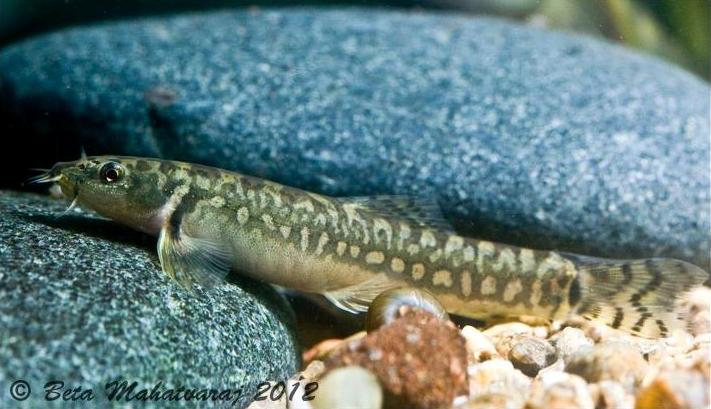
Mesonoemacheilus herrei
Nalbant & Bãnãrescu, 1982
Max length60mm SL2.4in SLTank60 × 30cm24 × 12inTemp18–25.5°C64–78°FpH6.0–7.5It's unclear if this species has ever been exported for the aquarium hobby outside of India but there may be a chance of finding the occasional specimen mixed in with shipments of M. guentheri or M. triangularis. It was earlier considered synonymous and may still be confused with M. guentheri since both species share similar body patterning consisting of rows of yellowish, dark-edged spots.
Mystus leucophasisAsian Upside Down Catfish
authority not recorded
Max length300mm SL12in SLTank120 × 60cm48 × 24inTemp23–27°C73–81°FpH6.0–8.0Like some members of the African catfish genus Synodontis, this species spends the vast majority of it's time swimming in an inverted position. It is often seen for sale at only a couple of inches in length and may be confused with the popular (and much smaller) Synodontis nigriventris. It can easily be distinguished from this species by its patterning. It does not exhibit the or brown colours of the Synodontis and is a uniform black colour all over. Larger specimens may have some lighter c...
Nanochromis nudiceps
authority not recorded
Max length80mm SL3.1in SLTanknot recordedTemp24–27°C75–81°FpH5.0–7.0This species is rarely imported. It is easily confused with N. parilus but can be distinguished by the fact that male fish lack the barring seen in the upper part of the of parilus and have dark edges to the scales on the body. Females can be distinguished by the spotting in the lower part of the caudal, which is unpatterned in parilus. We do not recommend this species to the beginner due to its very specific water and care requirements....
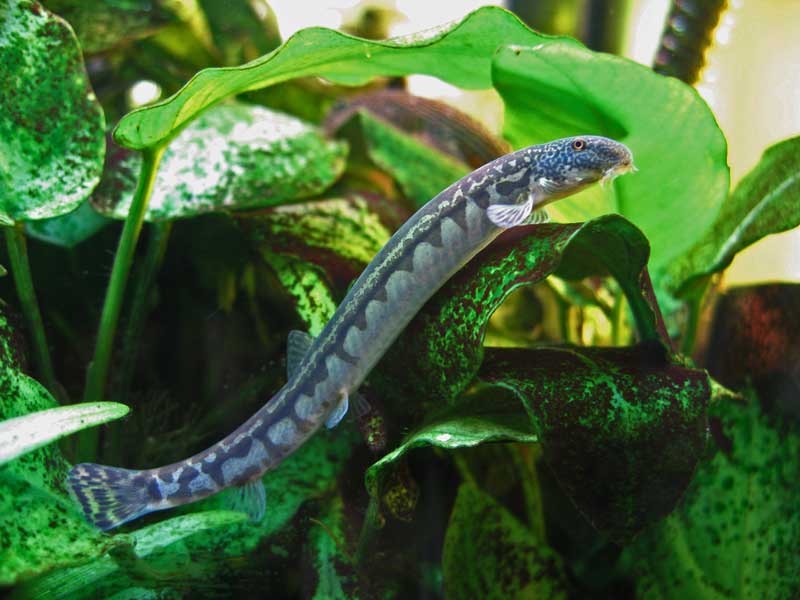
Niwaëlla delicataAjime Loach
Niwa, 1937
Max length110mm SL4in SLTank90 × 30cm36 × 12inTemp20–24°C68–75°FpH6.5–7.5During winter months N. delicata retreats to streams or underflows where it remains dormant between October and April (Kano, 2000) before emerging to spawn. Other species living alongside it in nature include Rhinogobius flumineus, Cottus pollux and Phoxinus spp. Niwaëlla is closely related to Cobitis and N. delicata, also the type species, was described as C. delicata (Niwa, 1937). The combination of characters used to tell it...
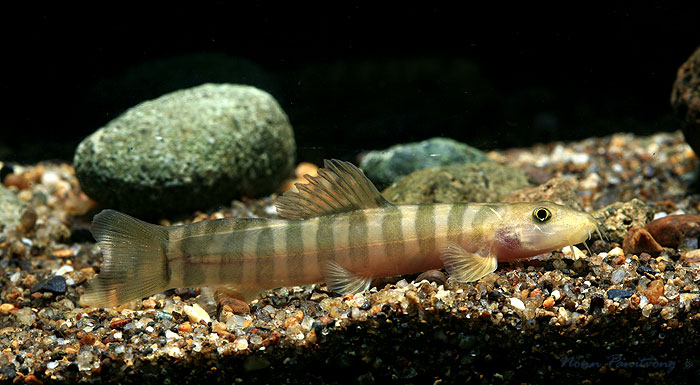
Schistura alticrista
Kottelat, 1990
Max length75mm SL3.0in SLTank90 × 30cm36 × 12inTemp21–26°C70–79°FpH6.0–7.5This species is very rare in the aquarium trade but available on occasion. It has 8-9 darkish body bars which usually split vertically as the fish mature, and like some conspecifics possesses a prominent dorsal adipose crest on the caudal peduncle. Schistura is the most species-rich genus among...
Serrasalmus manueliManny
authority not recorded
Max length435mm SL17in SLTank210 × 75cm84 × 30inTempnot recordedpHnot recordedThe native name for this species is Caribito Parguasero. It's sometimes sold as the "green tiger piranha" in the trade and is usually highly coveted and expensive when available. A notoriously sensitive traveller, mortality rates are sadly quite high among imported fish. The lack of fully-grown specimens known to the hobby is also a worry, and would suggest that the majority are not being maintained correctly. This really is a species for the specialist with the resources necessar...
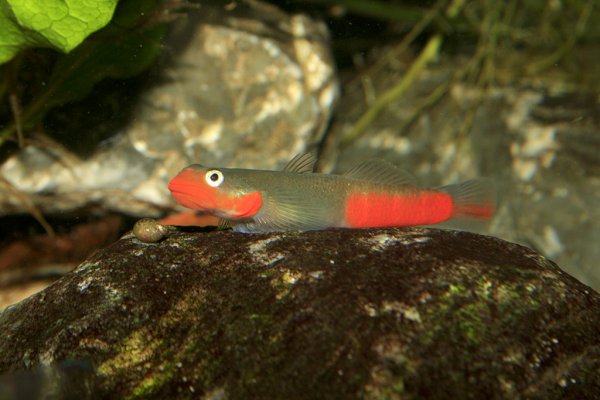
Sicyopus exallisquamulus
Watson & Kottelat, 2006
Max length52mm SL2.0in SLTank60 × 30cm24 × 12inTemp22–28°C72–82°FpH6.5–7.5Live colouration of this species was not included in the original description but the specimens in our images were identified by Dr. Ronald E. Watson, the principal author, as S. exallisquamulus. It's normally misidentified and traded as the Sri Lankan endemic species Sicyopus jonklaasi. It is diagnosable from congeners by the following combination of characters: 14-15 pectoral-fin rays; both genders exhibit small, widely-spaced scales...
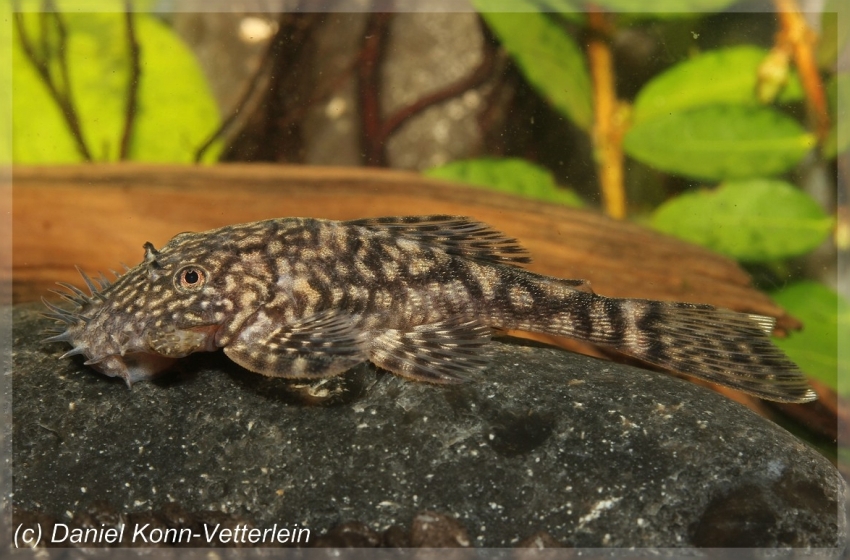
Ancistrus claroLDA 008
Knaack, 1999
Max length70mm SL2.8in SLTank60 × 30cm24 × 12inTemp23–28°C73–82°FpH6.0–7.5This species is sometimes confused with unidentified fishes such as A. sp. 'L352'. It can be told apart from closely-related congeners by possession of relatively long maxillary barbels which are free from the lower lip, and a colour pattern consisting of small spots on the head and vermiform lines on the body in males, and small spots all over the head and body in females.
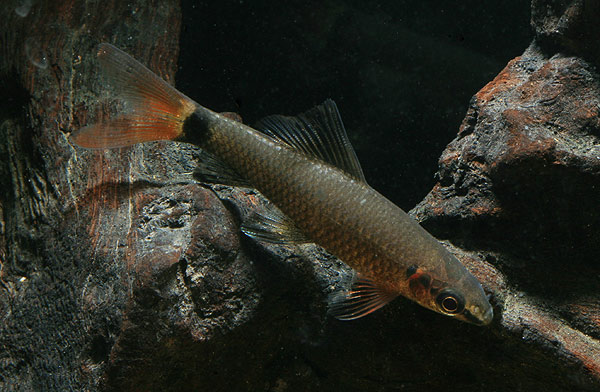
Epalzeorhynchos munense
Smith, 1934
Max length120mm SL5in SLTank120 × 45cm48 × 18inTemp20–26°C68–79°FpH6.5–7.5This species does not appear to be in the aquarium hobby at time of writing though it may have been in the past, when exports of wild Epalzeorhynchos spp. still took place. Most members of the genus were formerly regarded as Labeo spp. and are thus referred to as such in older literature. According to Rainboth (1996) they're characterised by absence of a dorsal spine, possession of 10-13 branched dorsal fin rays, a thin membrane...
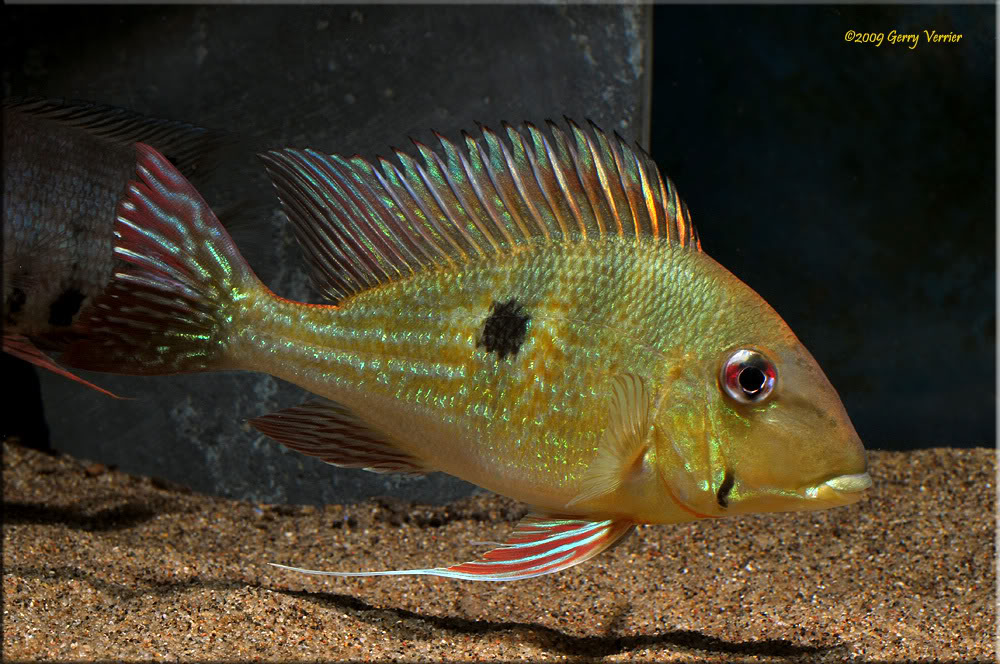
Geophagus dicrozoster
López-Fernández & Taphorn, 2004
Max length202mm SL8in SLTank180 × 60cm72 × 24inTemp26–30°C79–86°FpH4.0–7.0It's a member of the nominal G. surinamensis 'group' of closely-related species within the genus and can be identified by a combination of characters including: presence of dark preopercular markings; seven parallel vertical bars on each flank (normally visible only when the fish are stressed, spawning or preserved); vertical bars four and five meet in such a way that they form a 'Y' shape; dark lateral spot positioned within the third vertical bar; caudal fin reddish with variable pattern of iridescent blue spots and stripes.
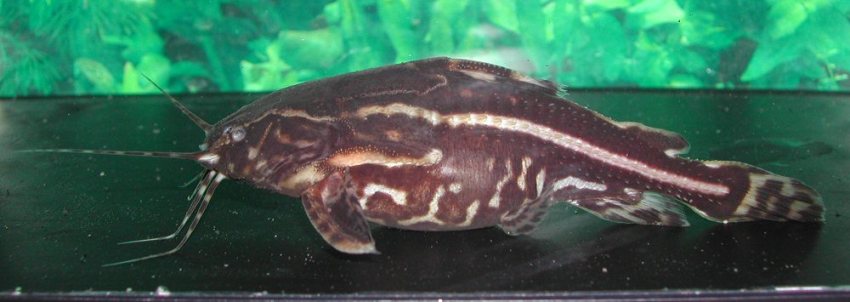
Acanthodoras cataphractusChocolate Talking Catfish
Linnaeus, 1758
Max length115mm SL5in SLTank120 × 30cm48 × 12inTemp22–26°C72–79°FpH6.0–7.5This species, which may also be referred to by the alternative vernacular names 'spiny catfish', 'painted talking catfish' or 'chocolate raphael', isn't particularly common in the trade and most often exported only as bycatch among shipments of Platydoras armatulus. It appears very similar to the congener A. spinosissimus with the most useful external distinguishing character being the presence of pale blotches on the dorsal surface, between the dorsal and caud...
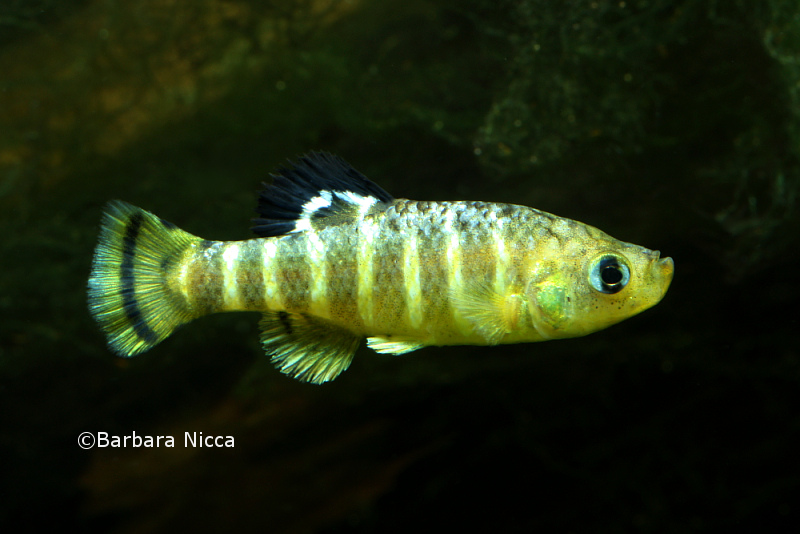
Anatolichthys anatoliaeAnatolian Toothcarp
Leidenfrost, 1912
Max length55mm SL2.2in SLTank120 × 30cm48 × 12inTemp2–30°C36–86°FpH7.0–8.5A. anatoliae is the most widely-distributed of the Anatolian Aphanius species although like most of its congeners is not easy to come by in the hobby. You are unlikely to find it on sale in aquatic stores although it may be available via specialist breeders or associations from time-to-time. While Aphanius spp. are certainly not as colourful as some of their relatives their interesting behaviour and continuous activity make them fascinating aquarium subjects and well worth a try if you possess the de...
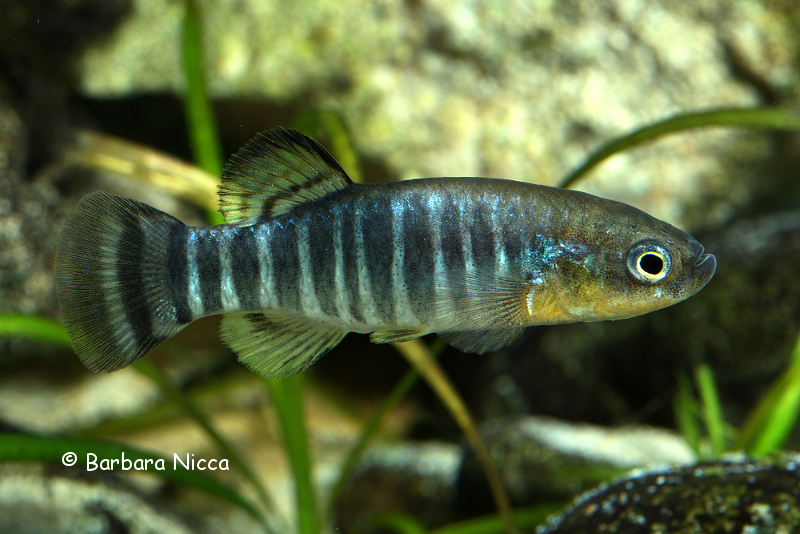
Aphaniops sirhaniAzraq Toothcarp
Villwock, Scholl & Krupp, 1983
Max length50mm SL2.0in SLTank120 × 30cm48 × 12inTemp10–35°C50–95°FpH7.0–8.5Phylogenetic studies have shown this species to be most closely related to A. dispar, A. richardsoni and A. ginaonis within the genus. It probably became isolated when the Red Sea flooded the Wadi Sirhan around 13 million years ago. You 're unlikely to find it on sale in aquatic stores although it may be available via specialist breeders or associations from time-to-time. While Aphanius spp. are certainly not as colourful as some of their relatives their interesting behaviour and continuous acti...