Results for “aquarium”
Type a name: scientific, common, or one a species used to go by. Or narrow the catalogue with the filters.
Filters
Heros efasciatusSeverum
authority not recorded
Max length300mm SL12in SLTank120 × 45cm48 × 18inTemp22.2–28.9°C72–84°FpH5.5–7.0The severum is one of the most poular and readily available cichids in the hobby, however not everyone realises that these fish can attain a fairly large size and are therefore not suitable for every aquarium. The fish is normally sold in the standard green variety and also gold. Severums make good fish for a South American community setup, as long as there are no fish small enough for them to eat. They grow quite quickly, so should be housed in an adequately sized tank from the start....
Heterobranchus longifilisVundu
authority not recorded
Max length1500mm SL59in SLTank180 × 60cm72 × 24inTemp20–27°C68–81°FpH5.5–7.5One of the largest freshwater fish species found in Africa, this is not a very good aquarium inhabitant. It is suitable only for the truly dedicated hobbyist able to house it properly or for public aquaria. It can be distinguished from similar members of the genus by its very long adipose fin....
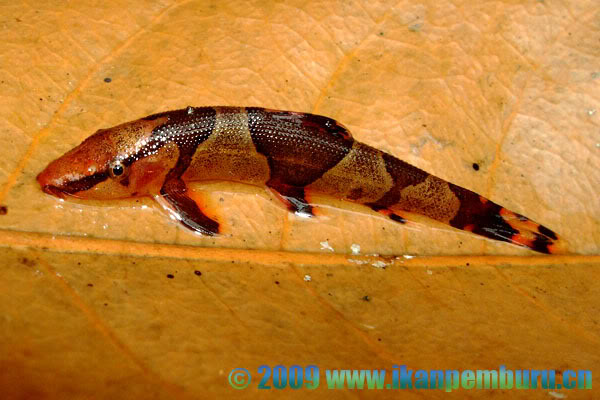
Homaloptera orthogoniataSaddle-back Loach
Vaillant, 1902
Max length95mm SL3.7in SLTank120 × 30cm48 × 12inTemp20–25.5°C68–78°FpH6.0–7.5This species appears is rare in the aquarium hobby with the majority of images both online and in the published literature instead depicting H. confuzona or H. parclitella. All three are members of the H. ocellata 'group' within the genus which currently contains H. ocellata, H. bilineata, H. confuzona, H. orthogoniata, H. ogilviei and H. parclitella. Following Tan and Ng (2005) these share possession of...
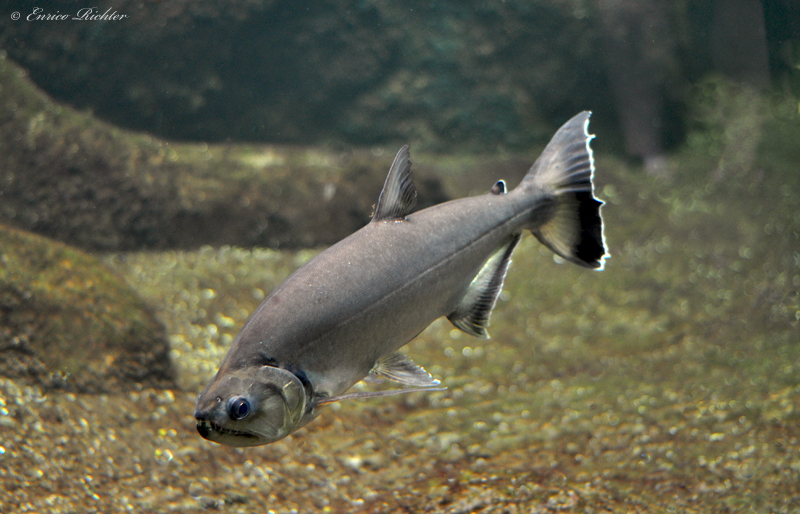
Hydrolycus armatusPayara
Jardine, 1841
Max length660mm SL26in SLTanknot recordedTemp24–28°C75–82°FpH6.0–8.0H. armatus should probably not be considered a home aquarium subject at all given its eventual size and migratory natural behaviour. Unfortunately, juveniles are seen for sale quite regularly, most often without adequate information regarding their long-term care, and it's common to see them being maintained in medium-sized aquaria with no possibility of achieving their potential.
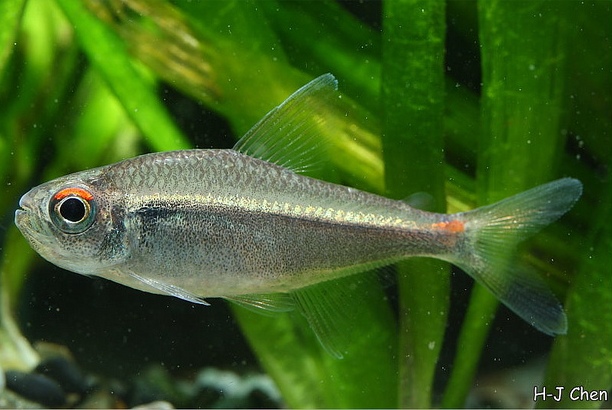
Hyphessobrycon agulha
Fowler, 1913
Max length42mm SL1.7in SLTank80 × 30cm31 × 12inTemp20–28°C68–82°FpH5.5–7.5This species is relatively rare in the aquarium hobby but is occasionally traded as 'red-tailed flag tetra'. It lends its name to the H. aghula group of closely-related species within the genus as proposed by Géry (1977, see below) of which members share the following characters which set them apart from other characids: lower half of the body dark, especially above the anal-fin; usually possessing a laterally-elongate humeral spot, more-or-less united wit...
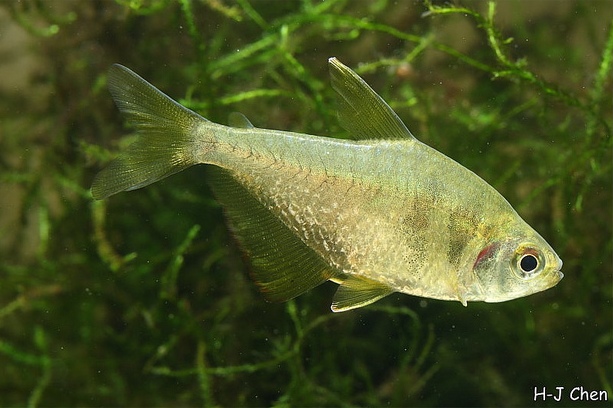
Hyphessobrycon bifasciatusYellow Tetra
Ellis, 1911
Max length45mm SL1.8in SLTanknot recordedTemp20–25°C68–77°FpH5.0–7.5Generally peaceful making it an ideal resident of the well-researched community aquarium. It is perhaps best-maintained alongside similarly-sized characids, gasteropelecids, lebiasinids, smaller callichthyid or loricariid catfishes and non-predatory, medium-sized cichlids. Try to buy a mixed-sex group of at least 8-10 specimens, incl...
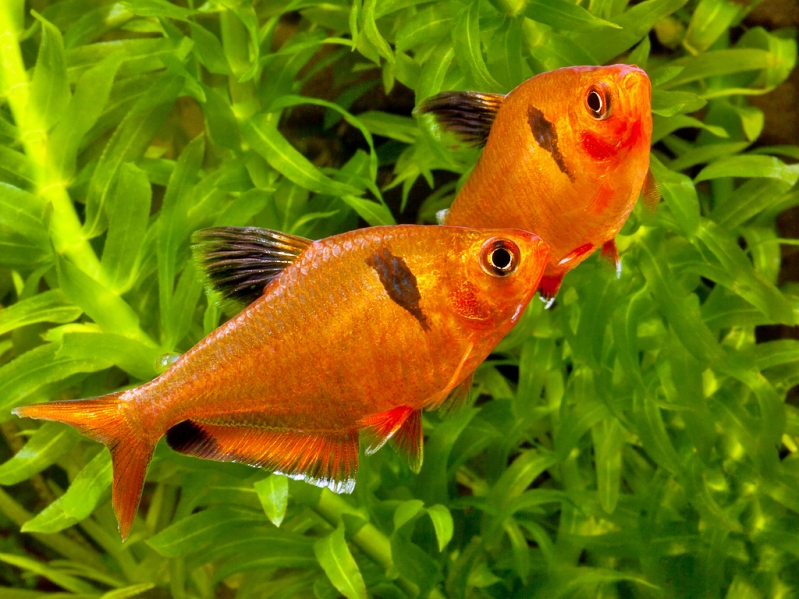
Hyphessobrycon equesSerpae Tetra
Steindachner, 1882
Max length40mm SL1.6in SLTank80 × 30cm31 × 12inTemp20–28°C68–82°FpH5.0–7.5This species is very common in the aquarium trade and is also referred to as 'jewel', 'red minor', 'blood', or 'callistus' tetra. A number of selectively-bred ornamental strains have been developed, including 'metallic', 'long-finned', 'balloon' and 'fairy-fin'. Characiformes is among the most diverse orders of freshwa...
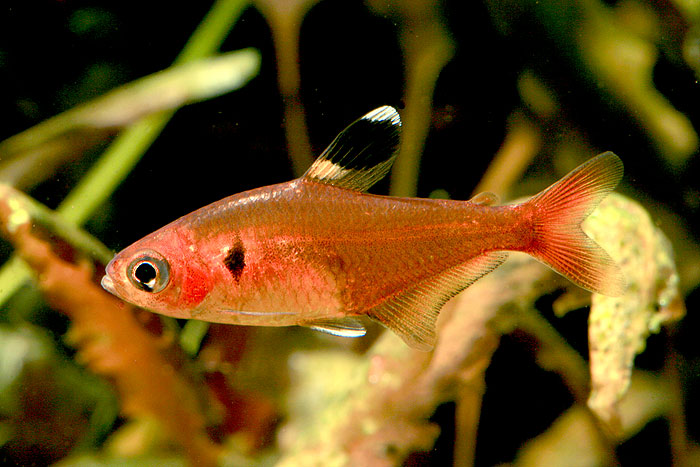
Hyphessobrycon haraldschultziCrystal Red Tetra
Travassos, 1960
Max length25mm SL1.0in SLTank60 × 30cm24 × 12inTemp20–28°C68–82°FpH5.0–7.0This species is occasionally available in the aquarium trade, although usually as bycatch among shipments of other fishes. It is sometimes traded as H. sp. 'Araguaia red', H. sp. 'Araguaia' or 'Schultz's tetra'.
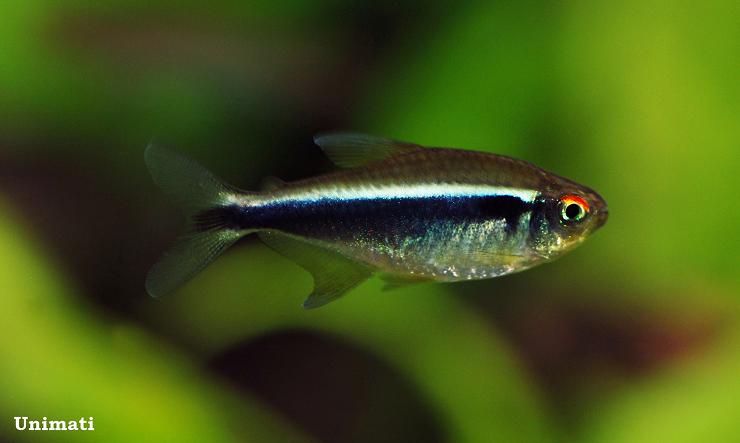
Hyphessobrycon herbertaxelrodiBlack Neon Tetra
Géry, 1961
Max length35mm SL1.4in SLTank80 × 30cm31 × 12inTemp20–28°C68–82°FpH5.0–7.5This species has been a ubiquitous aquarium fish since its discovery, and is produced on a commercial basis in several countries, therefore wild fish are no longer collected. An ornamental albino form is sometimes available. Apart from its distinctive colour pattern, it can be identified from related species via the following combination of charac...
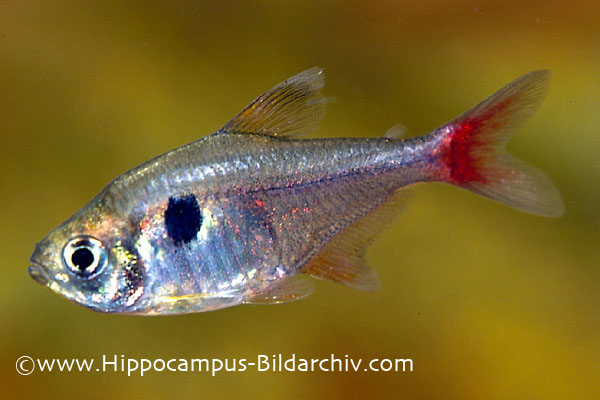
Hyphessobrycon roseusYellow Phantom Tetra
Géry, 1960
Max length20mm SL0.8in SLTank60 × 30cm24 × 12inTemp20–28°C68–82°FpH5.0–7.0This small species is a popular aquarium fish but there is some confusion surrounding its identity. Two colour forms have been traded, one of which also possesses tiny hooks on the fin rays. It can be distinguished from congeners by colour pattern; the body is rose-coloured, fins red with no black markings, and the ovoid humeral spot is prominent, measuring around half of the body depth.
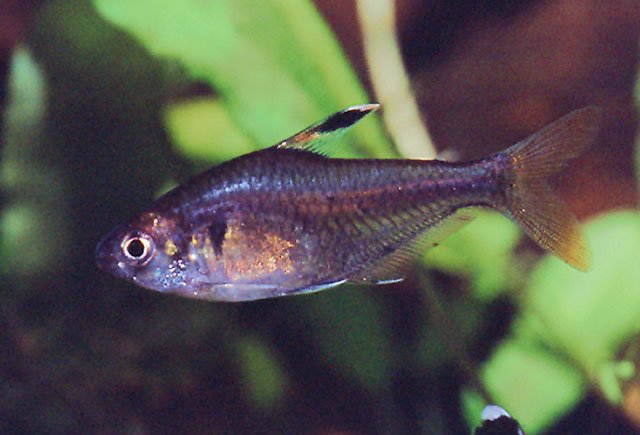
Hyphessobrycon simulatusFalse X-ray Tetra
Géry, 1960
Max length35mm SL1.4in SLTank80 × 30cm31 × 12inTemp20–28°C68–82°FpH5.0–7.0This species is uncommon in the aquarium trade although its name is sometimes applied to other species. It was originally described in the monotypic genus Pseudopristella, and can be distinguished from the vaguely similar Pristella maxillaris by possession of a relatively large (vs. relatively small) humeral spot and having black pigmentation in the anal-fin restricted to the first ray (vs. a prominent distal blotch).
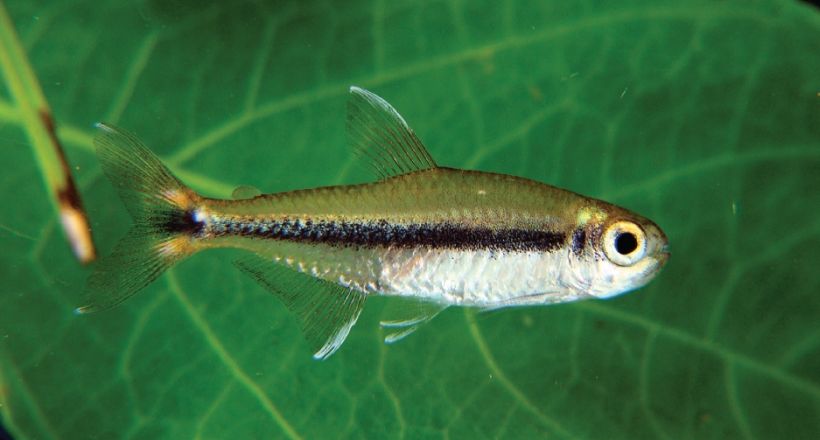
Hyphessobrycon stegemanniSavanna Tetra
Géry, 1961
Max length35mm SL1.4in SLTank60 × 30cm24 × 12inTemp20–25°C68–77°FpH5.5–7.5In the aquarium hobby the name Hyphessobrycon stegemanni has frequently been misapplied to a species that has been described as Hemigrammus ataktos Marinho, Dagosta, & Birindelli 2014. The reasons for this confusion are presumably that the two occur sympatrically in the rio Tocantins system and both possess a dark lateral stripe on the body.
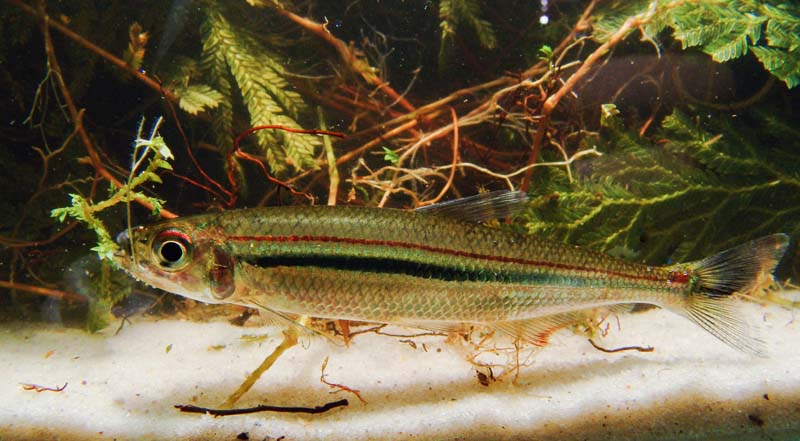
Iguanodectes geisleri
Géry, 1970
Max length55mm SL2.2in SLTank120 × 30cm48 × 12inTemp20–26°C68–79°FpH5.0–7.0I. geisleri is typically exported for the aquarium trade alongside the similar-looking congener I. adujai (Géry, 1970) but can be identified by presence (vs. absence in I. adujai) of a black lateral stripe on the body beneath the red stripe, and possession of 20-25 (vs. 28-34) anal-fin rays.
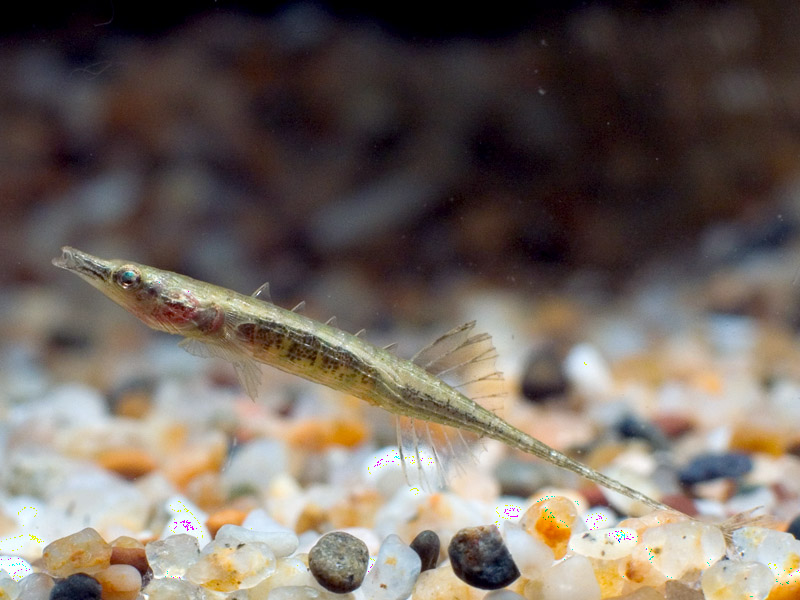
Indostomus paradoxusArmoured Stickleback
Prashad & Mukerji, 1929
Max length30mm SL1.2in SLTank40 × 20cm16 × 8inTemp22–27°C72–81°FpH6.5–7.5This species is rare in the aquarium hobby though its name is often misapplied to the closely-related I. crocodilus. It can be told apart from congeners by the following characters: dorsal and anal fins without dark markings, with a light brown bar in breeding males; ventral surface light brown; throat white, occasionally with a few brown spots; ridges of head bones weakly serrated or not serrated, depending on the bone. The family Indostomidae currently contains just a single genus with three species of which I. paradoxus is the type. It was raised alongside both family...
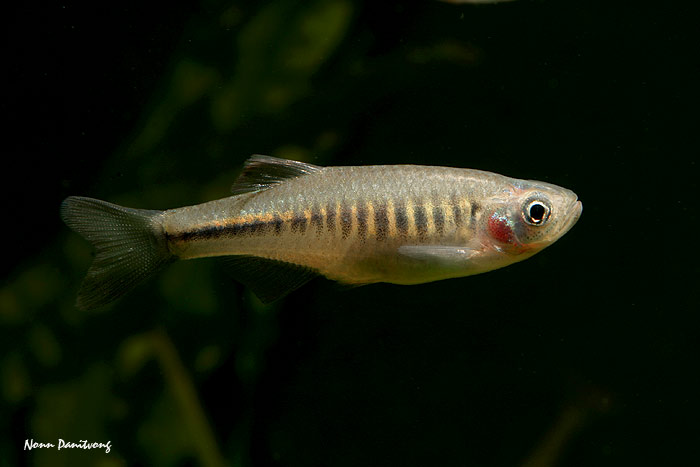
'Inlecypris' maetaengensisFire Bar 'Danio'
Fang, 1997
Max length50mm SL2.0in SLTank75 × 30cm30 × 12inTemp20–26°C68–79°FpH6.0–8.0A peaceful species suited to a well-chosen community aquarium. There are plenty of potential tankmates including many cyprinids, loaches, cichlids, catfishes and characins, although as always proper research is essential in order to avoid problems.
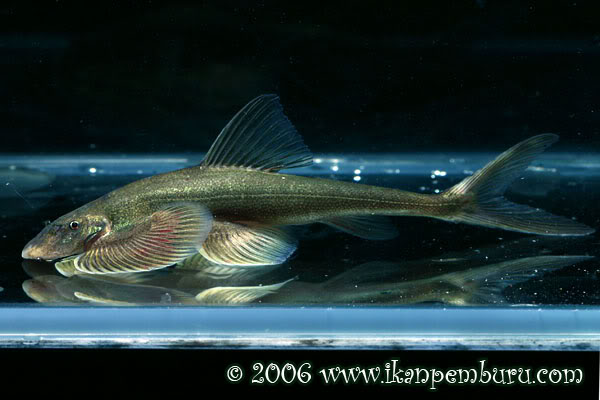
Jinshaia sinensis
Sauvage & Dabry de Thiersant, 1874
Max length75mm SL3.0in SLTank90 × 30cm36 × 12inTemp20–24°C68–75°FpH6.0–7.5This species may not yet have been seen in the aquarium trade outside its native country but has been maintained by a few private collectors. There are currently three species recognised in the genus, all endemic to the Yangtze river drainage, and they're separated from other balitorids by a combination of characters including: relatively long, deeply-forked caudal-fin; roun...
Julidochromis ornatusGolden Julie
authority not recorded
Max length80mm SL3.1in SLTanknot recordedTemp23–27°C73–81°FpH7.5–9.0Julidochromis are commonly known as "Julies" in the hobby. This is one of the most common Julie species encountered in aquaria and may also be sold as the Yellow or Ornate Julie. The majority of specimens available are tank bred and do not exhibit as bright colouration as wild fish. As with other Julies, large water changes should be avoided as this can cause mated pairs to turn on one another. Several geographical morphs of this species are available, as is an aquarium sport albino...
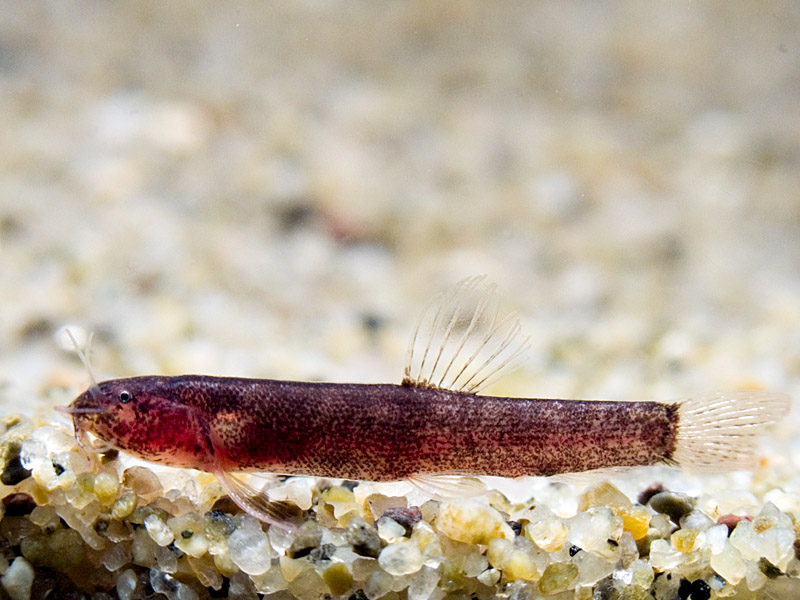
Kottelatlimia katik
Kottelat & Lim, 1992
Max length14mm SL0.6in SLTank45 × 30cm18 × 12inTemp23–26°C73–79°FpH3.5–6.5We're unaware of this species having yet appeared in the aquarium trade although a few private collectors have experience with it. Among congeners it uniquely possesses a simple suborbital spine and further differs from K. pristes by: smaller adult size (13.5 mm SL vs. 40); presence of a long nasal barbel (vs. absence); anatomy of the modified second pectoral ray in males (6-7 fine, narrow serrae vs. 8-11 pointed, anteriorly-orientated serrae). In K. hipporhynchos the serrae on the second pectoral ray in males form a broad, contiguous blade-like structure but other differences are the same as for K. pristes.
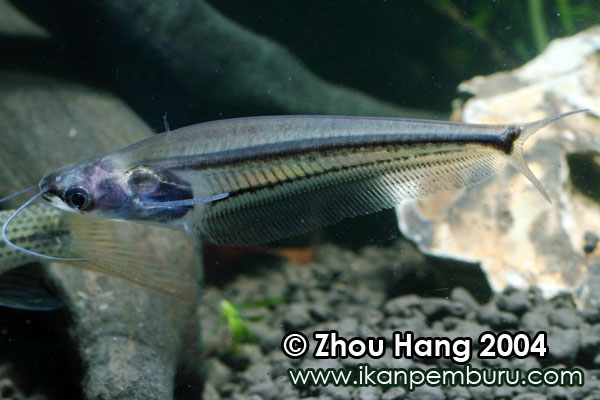
Kryptopterus palembangensis
Bleeker, 1852
Max length140mm SL6in SLTank120 × 30cm48 × 12inTemp20–28°C68–82°FpH6.0–7.5This species is almost unheard of in the aquarium trade though may occasionally be exported among shipments of wild fishes from Sumatra. It's closely-related to K. bichirris but is told apart by presence (vs. absence) of a prominent, dark lateral stripe on each flank. Kryptopterus species are found only in Southeast Asia and the genus has been consi...
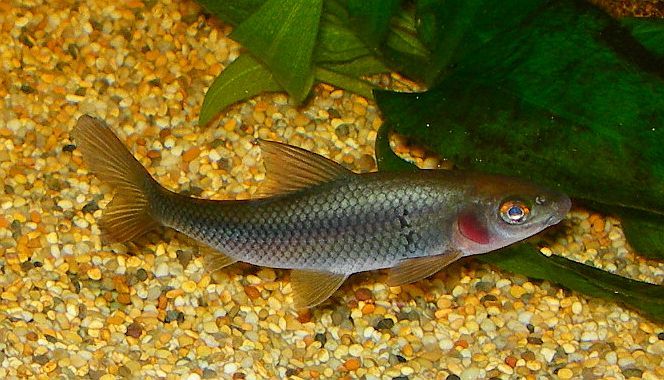
Labeo bogaViolet Shark
Hamilton, 1822
Max length250mm SL10in SLTank240 × 60cm96 × 24inTemp18–24°C64–75°FpH6.0–8.0Despite its unsuitability for the majority of home aquaria, this species is available in the aquarium trade on an irregular basis, and has also been marketed as 'violet-gilled shark', 'red-gilled violet shark' and 'blushing violet shark'. It appears likely that L. boga as currently recognised represents a complex of closely-related species.