Results for “bar”
Type a name: scientific, common, or one a species used to go by. Or narrow the catalogue with the filters.
Filters
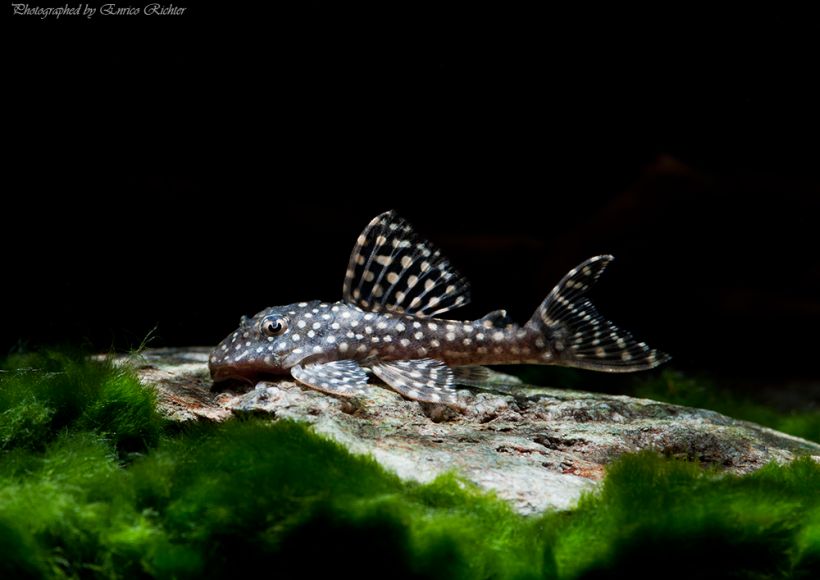
Hypancistrus sp.L136
authority not recorded
Max length90mm SL3.5in SLTank90 × 30cm36 × 12inTemp23–29°C73–84°FpH5.0–7.0L136 and its variants are collected in the rio Negro basin, Amazonas state, Brazil, and in particular the rio Demini, a northern tributary flowing into the central Negro in the municipality of Barcelos. Collection details for LDA05 and LDA06 are currently unclear but presumably in the vicinity. This unidentified 'species' is highly variable in terms of colour pattern, and it has been assigned a ser...
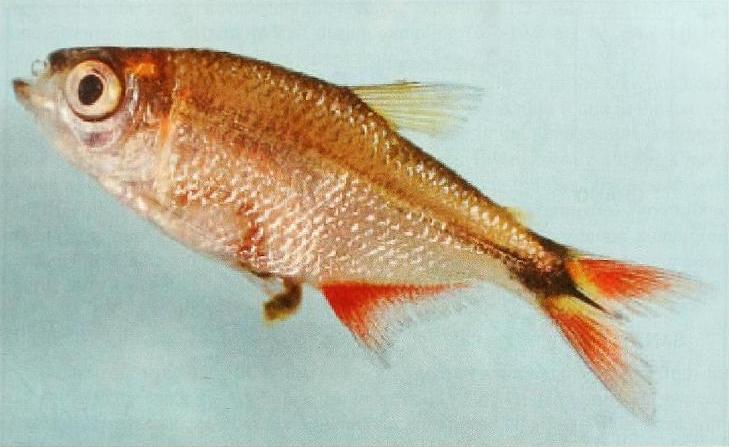
Hyphessobrycon auca
Almirón, Casciotta, Bechara & Ruíz Díaz, 2004
Max length55mm SL2.2in SLTanknot recordedTempnot recordedpHnot recordedThe two ponds where H. auca was collected were located on a sand bar deposited by the nearby Paraná river during the Pleistocene. At time of collection the substrates were composed of sand with submerged vegetation dominated by Egeria najas plus floating Eichhornia in marginal areas.
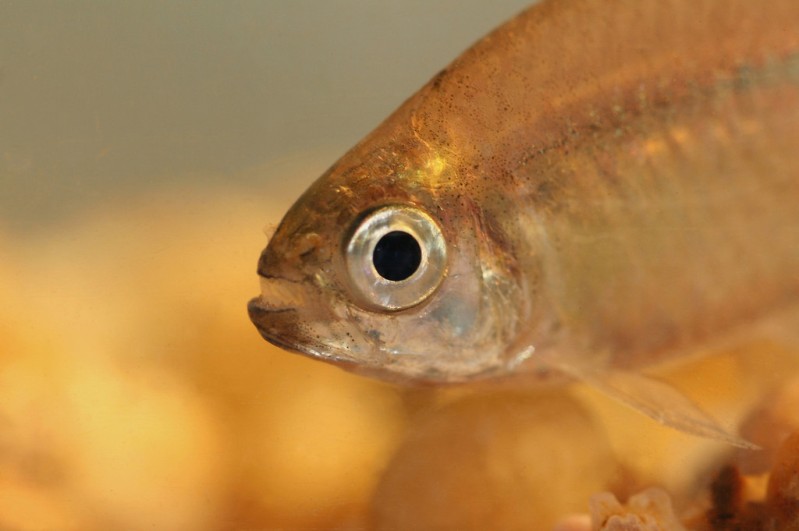
Hyphessobrycon balbus
Myers, 1927
Max length50mm SL2.0in SLTanknot recordedTempnot recordedpHnot recordedKnown only from headwaters of the upper Paraná river basin in the Federal District plus the neighbouring state of Goiás, central Brazil. Type locality is 'Planaltina, Lagoa Fervedeira, Goiás, Brazil' with additional records existing mostly from the rio São Bartolomeu including the Bananal, Santa Maria-Torto and Gama tributary systems.
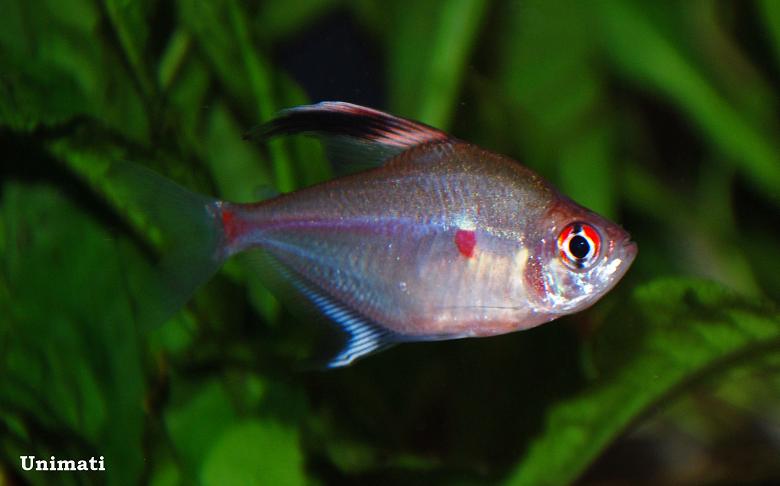
Hyphessobrycon erythrostigmaBleeding Heart Tetra
Fowler, 1943
Max length60mm SL2.4in SLTank90 × 30cm36 × 12inTemp21–28°C70–82°FpH4.0–7.5In the igarapés Baré and Ubim, western Brazil H. erythrostigma was collected from stretches measuring 5-7 metres in width with thick riparian and overhanging vegetation. The substrate was mostly composed of sand and the fish displayed a preference for boundary zones between shallow and deeper water. Conductivity was measured at 14.2-62.1 mS/cm³, dissolved oxy...
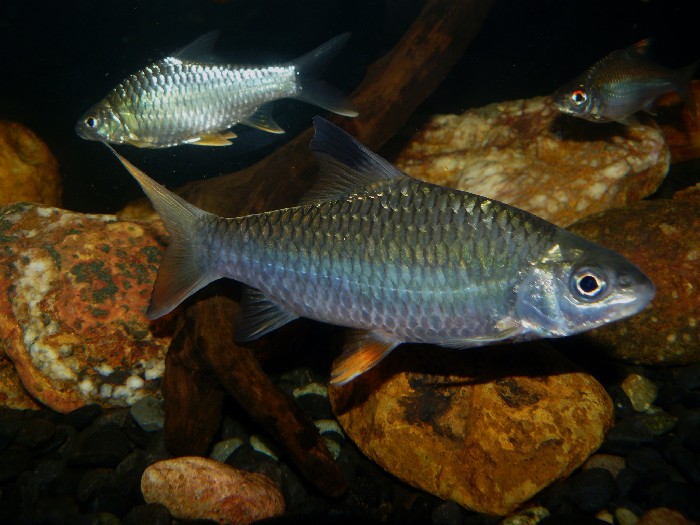
Hypselobarbus jerdoniJerdon's Carp
authority not recorded
Max length460mm SL18in SLTank240 × 120cm96 × 48inTemp20–26°C68–79°FpH6.5–7.5There are currently eleven species in the genus most of which have previously been included in Puntius, Barbus and the now defunct genus Gonoproktopterus. Of these the only ones we've seen in the trade are H. jerdoni and H. curmuca although it's possible that others have been exported in small numbers or as contaminants among shipments of other species. Even these two are very rarely encountered and little has been written about the group as a whole....
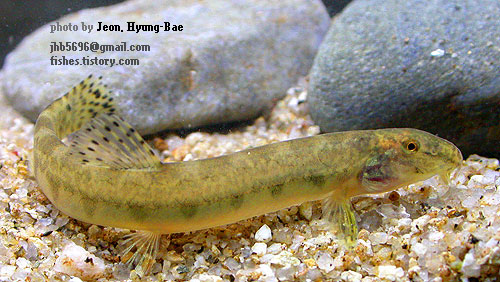
Iksookimia yongdokensis
Kim & Park, 1997
Max length160mm SL6in SLTank100 × 30cm39 × 12inTemp20–24°C68–75°FpH7.0–8.0Among them it's most similar to I. longicorpus and I. hugowolfeldi but can be distinguished by the following combination of characters: body patterning consisting of 9-13 dark vertical bars along the flanks plus a small dark spot at the base of the upper caudal-fin lobe; no black blotch or markings posterior to the operculum; reduced lamina circularis in males; interorbital width measures 14.7-17.8% o...
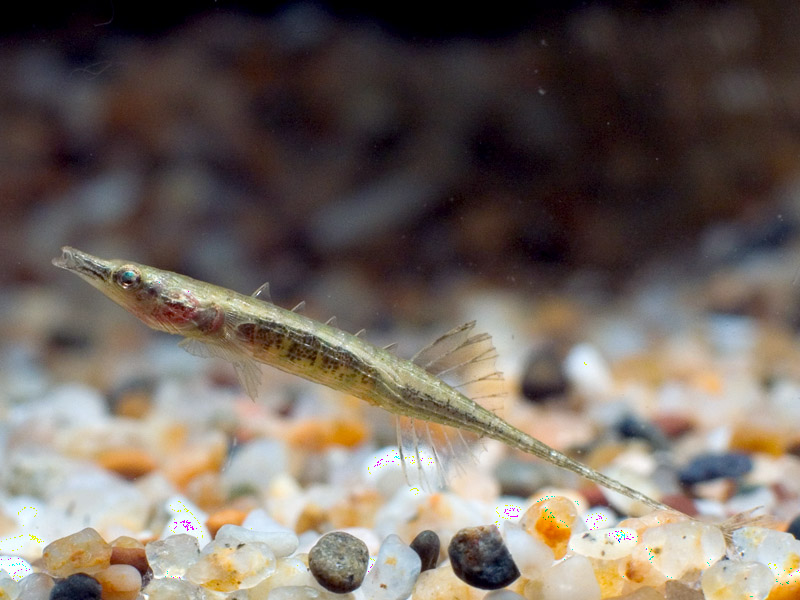
Indostomus paradoxusArmoured Stickleback
Prashad & Mukerji, 1929
Max length30mm SL1.2in SLTank40 × 20cm16 × 8inTemp22–27°C72–81°FpH6.5–7.5This species is rare in the aquarium hobby though its name is often misapplied to the closely-related I. crocodilus. It can be told apart from congeners by the following characters: dorsal and anal fins without dark markings, with a light brown bar in breeding males; ventral surface light brown; throat white, occasionally with a few brown spots; ridges of head bones weakly serrated or not serrated, depending on the bone. The family Indostomidae currently contains just a single genus with three species of which I. paradoxus is the type. It was raised alongside both family...
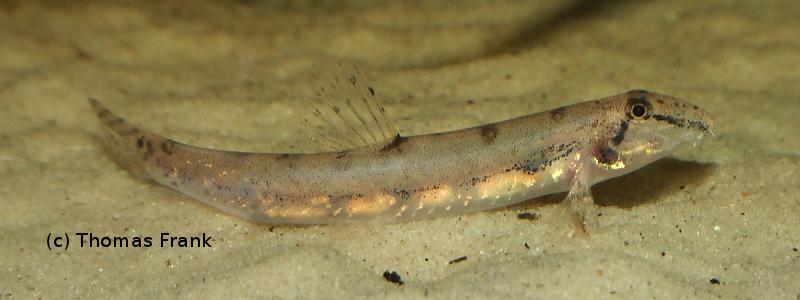
Kottelatlimia hipporhynchos
Kottelat & Tan, 2008
Max length52mm SL2.0in SLTank60 × 30cm24 × 12inTemp23–26°C73–79°FpH4.0–6.5This species differs from congeners in the presence of papillae covering the mouthparts (lips, barbels, and lobes) which are absent in other species. It's also the largest species in the genus and the serrae on the second pectoral fin rays in males form a broa...
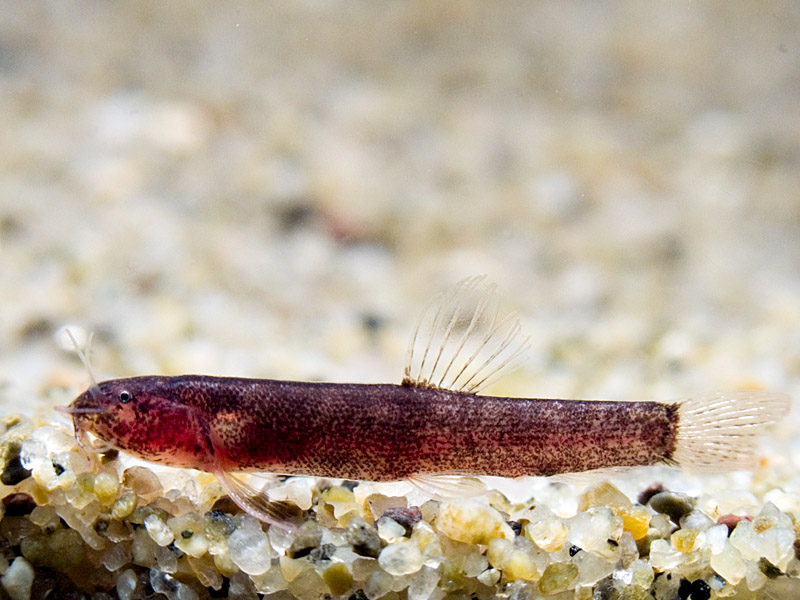
Kottelatlimia katik
Kottelat & Lim, 1992
Max length14mm SL0.6in SLTank45 × 30cm18 × 12inTemp23–26°C73–79°FpH3.5–6.5We're unaware of this species having yet appeared in the aquarium trade although a few private collectors have experience with it. Among congeners it uniquely possesses a simple suborbital spine and further differs from K. pristes by: smaller adult size (13.5 mm SL vs. 40); presence of a long nasal barbel (vs. absence); anatomy of the modified second pectoral ray in males (6-7 fine, narrow serrae vs. 8-11 pointed, anteriorly-orientated serrae). In K. hipporhynchos the serrae on the second pectoral ray in males form a broad, contiguous blade-like structure but other differences are the same as for K. pristes.
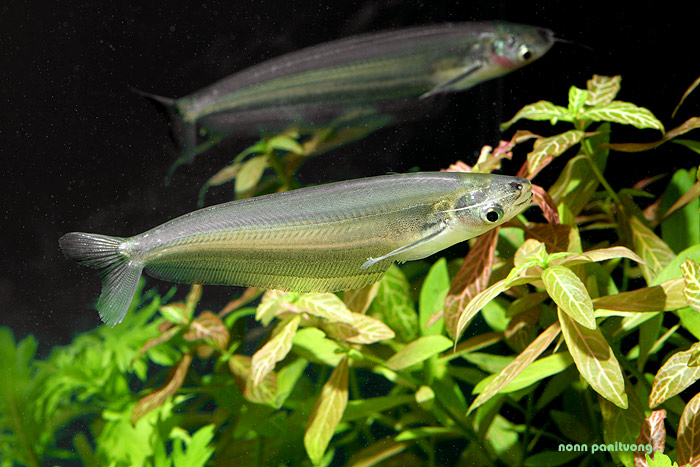
Kryptopterus geminus
Ng, 2003
Max length171mm SL7in SLTank150 × 45cm60 × 18inTemp20–28°C68–82°FpH6.0–7.5This species is likely to be traded for aquaria but probably misidentified as the very similar-looking K. cyrptopterus with which wild populations were formerly considered conspecific. These two are closely-related and can be distinguished from congeners by the dorsal profile lacking a nuchal concavity (vs. possessing a nuchal concavity) and possessing short maxillary barbels (extending to the pectoral-fin base vs. ext...
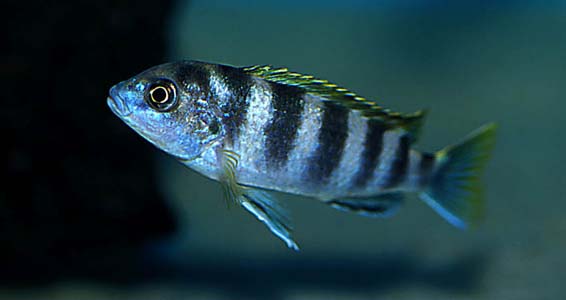
Labidochromis sp. "perlmutt"Pearly Labidochromis
authority not recorded
Max length100mm SL3.9in SLTank90 × 45cm36 × 18inTemp24–28°C75–82°FpH7.5–8.5This 'species' was only discovered in 1995, and remains undescribed to science. The common name 'perlmutt' is the German word for 'mother of pearl', and refers to the beautiful pearly white colouration of adult fish. It's sometimes sold with the alternative trade name of Labidochromis sp. 'yellow bar'. Konings has hypothesised that the Mbamba Bay Island population so closely resembles L. caeruleus that it may turn out to be a geographical variant o...
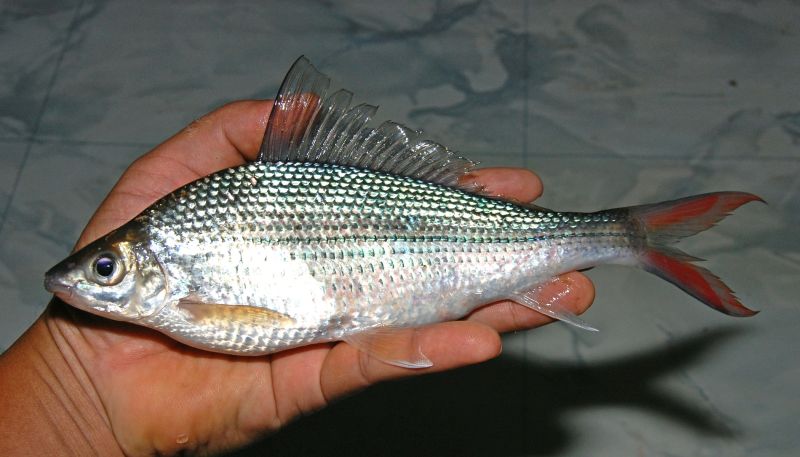
Labiobarbus fasciatus
Bleeker, 1853
Max length200mm SL8in SLTanknot recordedTempnot recordedpHnot recordedKnown from the Pahang River system in southern Peninsular Malaysia, and the Greater Sunda Islands of Sumatra and Borneo. On the latter records exist from the Kapuas, Barito, and Mahakam watersheds in Kalimantan, the Indonesian portion of the island Type locality is 'Pangabuang, Lampong Province, Sumatra, Indonesia'.
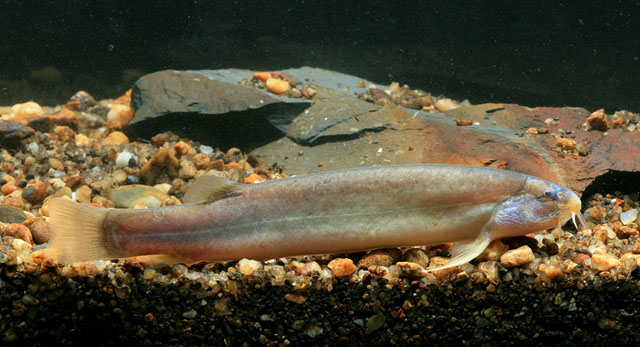
Lepidocephalus macrochir
Bleeker, 1854
Max length90mm SL3.5in SLTank75 × 30cm30 × 12inTemp22–26°C72–79°FpH5.5–7.5The distribution records for this species are somewhat confusing. It was described from the confluence of the Lamatang and Enim rivers, Palambang Province, Sumatra and has since been recorded from Thailand (Chao Phraya River), Peninsular Malaysia (Pahang River) plus the islands of Java (Solo River) and Borneo (Kapuas and Barito rivers).
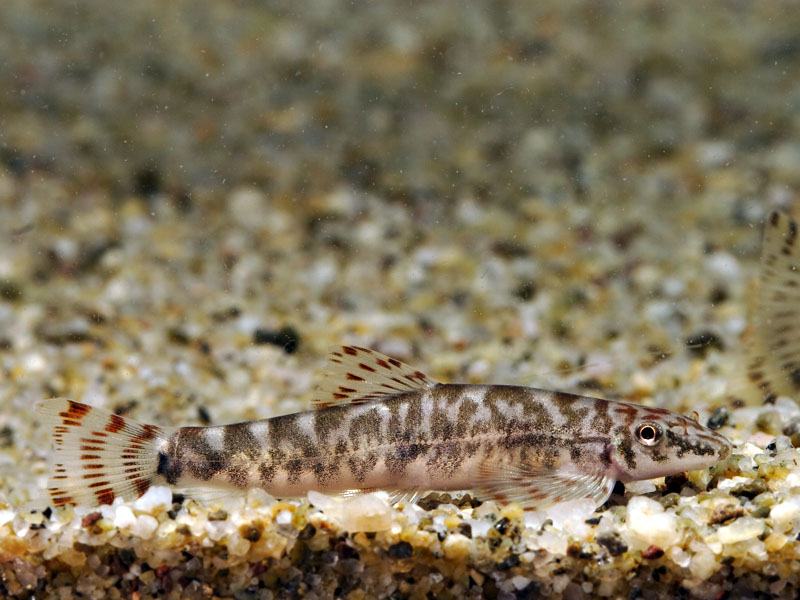
Liniparhomaloptera disparisBroken-band Hillstream Loach
Lin, 1934
Max length80mm SL3.1in SLTank80 × 30cm31 × 12inTemp20–24°C68–75°FpH6.5–8.0L. disparis is sometimes available as bycatch among shipments of other species such as Rhinogobius duospilus but also appears on trade lists under the fictitious scientific name 'Homaloptera hoffmani'. It can be told apart from similar-looking members of the genus Formosania by its noticeably shorter barbels and from Vanmanenia spp. by the fact that the rostral fold is not lobed and the mouth is relatively small (25% head width. In addition the lower lip in Liniparhomaloptera is not divided and has a flat, papillated edge.
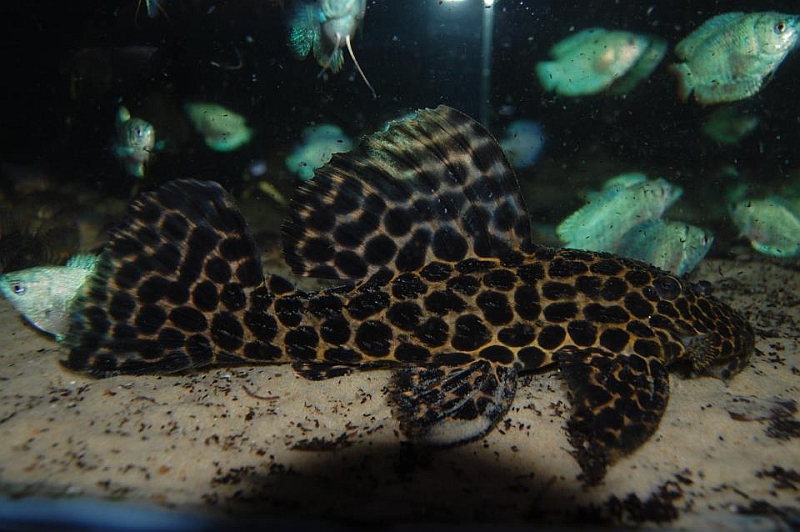
Megalancistrus parananusL113
Peters, 1881
Max length588mm SL23in SLTanknot recordedTemp20–28°C68–82°FpH6.0–7.5This species was formerly considered to be represented by the L-numbers L113 and L234 but it appears that only the former is native to the Paraná, Paraguay and Uruguay drainages, whereas L234 is collected in the rio São Francisco in eastern Brazil. M. barrae and M. sp. 'LDA097' are also exported from the São Francisco system.
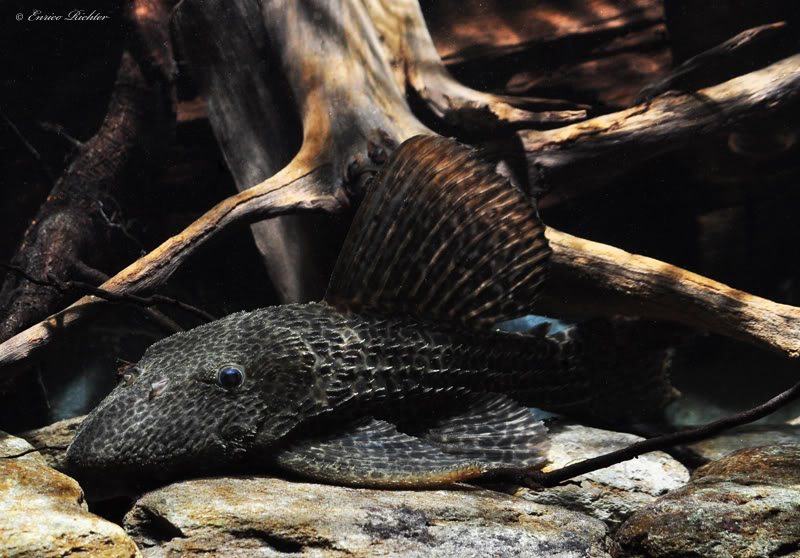
Megalancistrus sp.L234
authority not recorded
Max length600mm SL24in SLTanknot recordedTemp20–30°C68–86°FpH6.0–7.5L234 was previously applied to M. paranus, which has also has the L-number L113 assigned to it. However M. paranus is native to the Paraná, Paraguay and Uruguay drainages, whereas L234 is collected in the rio São Francisco so appears to represent an unidentified species. M. barrae and M. sp. 'LDA097' are also exported from the São Francisco system.
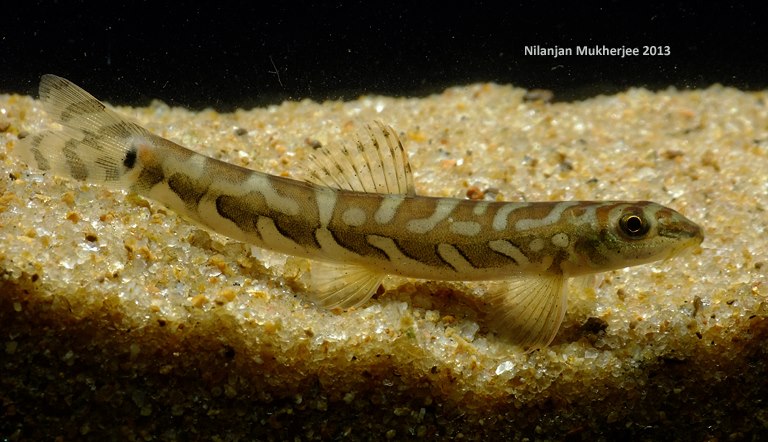
Mesonoemacheilus triangularisZodiac Loach
Day, 1865
Max length60mm SL2.4in SLTank75 × 30cm30 × 12inTemp18–25.5°C64–78°FpH6.0–7.5This species is also referred to by the alternative vernacular name 'Batik loach' and is the most-commonly traded member of the genus at present. It's easily-distinguished from congeners by body patterning which comprises a series of pale, oblique saddle-like markings edged in black and running along the dorsal surface, plus a similar set of bars originating from the otherwise plain ventral surface.
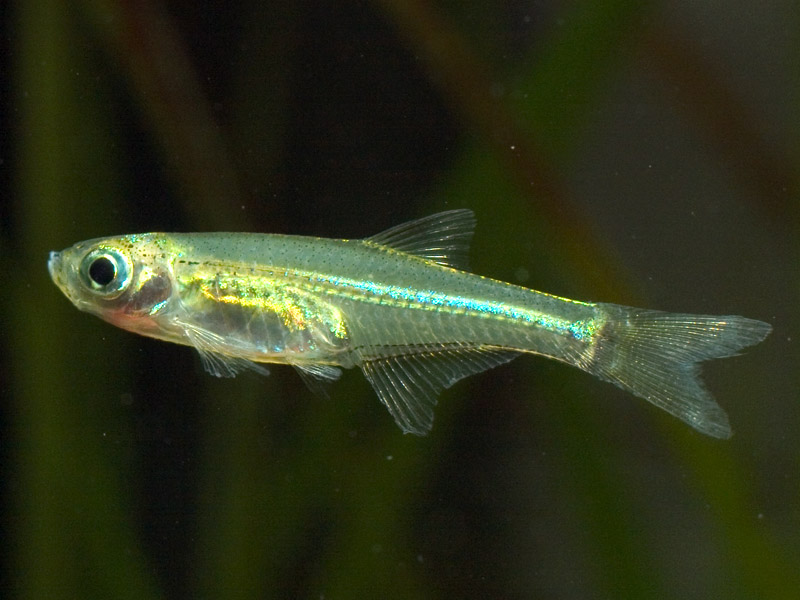
Microdevario gatesi
Herre, 1939
Max length23mm SL0.9in SLTank45 × 30cm18 × 12inTemp20–27°C68–81°FpH6.0–7.5The genus Microdevario was raised by Fang et al. (2009) after phylogenetic analyses revealed that some species formerly included in Microrasbora to be more closely allied with Devario and in need of reclassification. Microdevario is largely separated from Devario and other closely related genera such as Chela and Laubuca by virtue of internal characters but also the following: small adult size; anal and dorsal fins with concave-shaped distal margin; absence of barbels; absence of perforated scales; 9-10 branched anal-fin rays; 7 branched dorsal-fin rays; less abdominal than caudal vertebrae.
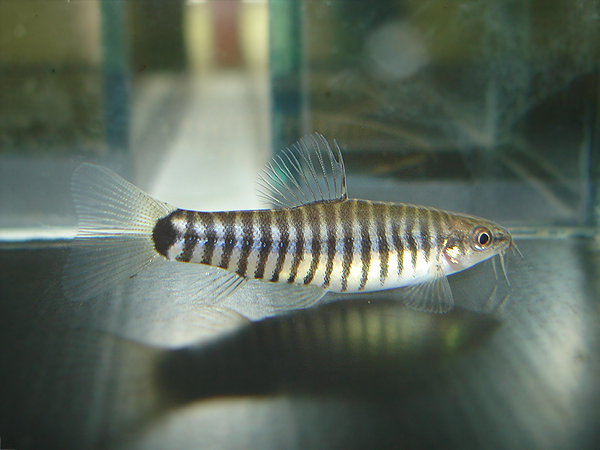
Micronemacheilus cruciatus
Rendahl, 1944
Max length40mm SL1.6in SLTank60 × 30cm24 × 12inTemp22–27°C72–81°FpH6.0–7.5This species is traded under various names including 'Vietnamese multi-banded zebra loach', 'hovering zebra loach', 'Laos pygmy multi-stripe loach', and 'banded dwarf loach'. It can be distinguished from related species by the following combination of characters: body with distinct vertical bars; 8 branched dorsal-fin rays; 3-10 pored lateral line scales; one pair of large papillae in median portion of upper lip; two pairs of large papillae in median portion of lower lip; lower posterior edge of opercle with 3-4 prominent indentations.
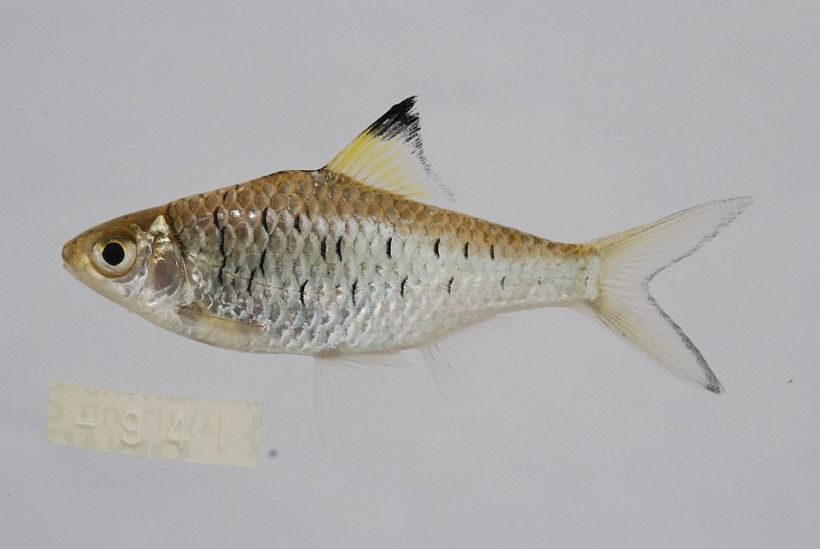
Mystacoleucus atridorsalis
Fowler, 1937
Max length80mm SL3.1in SLTanknot recordedTempnot recordedpHnot recordedThis species can be distinguished from congeners by the following combination of characters: body depth fits 2.5-2.7 times in SL; 28-31 +2-3 lateral line scales; 14-16 circumpeduncular scale rows; 5-5½ scale rows between the lateral line and dorsal-fin origin; a triangular distal blotch on the dorsal-fin; a few body scales with crescent-shaped black edges; a thin dark margin on the dorsal-fin, posterior to the distal blotch; a dark posterior margin on the caudal-fin; normally a single pair of rudimentary barbels present.