Results for “várzea”
Type a name: scientific, common, or one a species used to go by. Or narrow the catalogue with the filters.
Filters
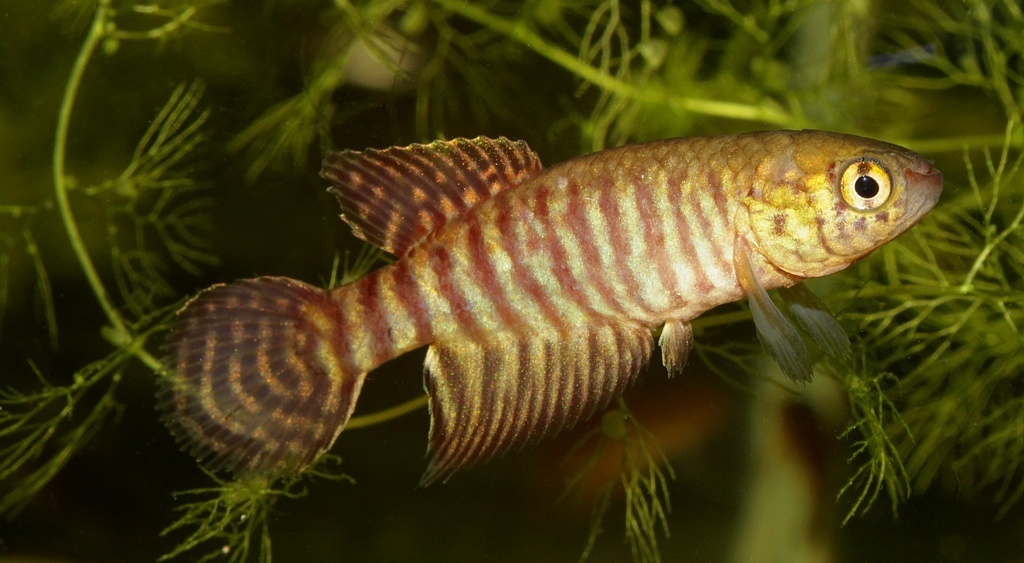
Simpsonichthys myersi
de Carvalho, 1971
Max length40mm SL1.6in SLTank45 × 30cm18 × 12inTemp20–27°C68–81°FpH5.5–7.0This species has a somewhat confusing taxonomic history and it remains unclear whether it is conspecific with S. izecksohni (Da Cruz, 1983) or not. The latter is considered to represent a synonym of S. myersi by Costa (2007), but the majority of authors do not follow the conclusions of that study (see below) and continue to view both as valid.
Synodontis pleuropsBig Eyed Synodontis
authority not recorded
Max length230mm SL9in SLTank120 × 30cm48 × 12inTemp22–26°C72–79°FpH6.0–7.0S. pleurops is a very nocturnal species and unless the light in the aquarium is dim will rarely be seen. It is also very distinctive and is hard to confuse with other species. It has very large eyes and a downturned mouth, denoting its algae grazing habits. It will rarely venture into open water in the aquarium, preferring to hug the surface of pieces of driftwood, rocks and broad plant leaves. The colouration and patterning can vary considerably depending on type locality....
Xiphophorus helleriiGreen Swordtail
Heckel, 1848
Max length140mm SL6in SLTank120 × 30cm48 × 12inTemp16–28°C61–82°FpH7.0–8.0Wild swordtails are a fairly basic green colur. However the vast majority of swordtails available in the hobby today are hybrids of X.helleri with X.maculatus or X.variatus. There are a huge number of selectively-bred varieties available, including wagtail, lyretail, tuxedo, albino, neon, red, green and hi-fin. Swordtails may undergo what appears to be a change in sex. In young fish this may simply be late development. However some adult females develop male characteristics which is thought ...
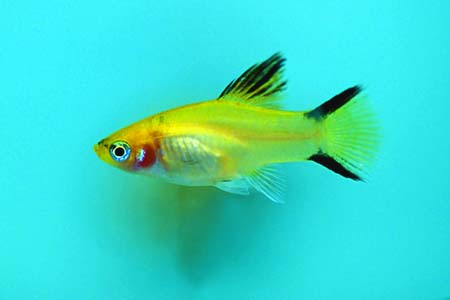
Xiphophorus maculatusPlaty
Gunther, 1866
Max length50mm SL2.0in SLTank60 × 30cm24 × 12inTemp20–26°C68–79°FpH7.0–8.2Another massively popular aquarium fish, with dozens of selectively bred varieties available, including mickey mouse, wagtail, tuxedo, moon, blue, red, comet and hi-fin. Some of these are produced by crossbreeding with X.helleri or X. variatus. Unfortunately many commercially bred platies are not very hardy due to inbreeding and over-production and are prone to disease and premature death. Wild fish are almost never seen in the hobby. As long as the ph remains above neutral this fish is ...
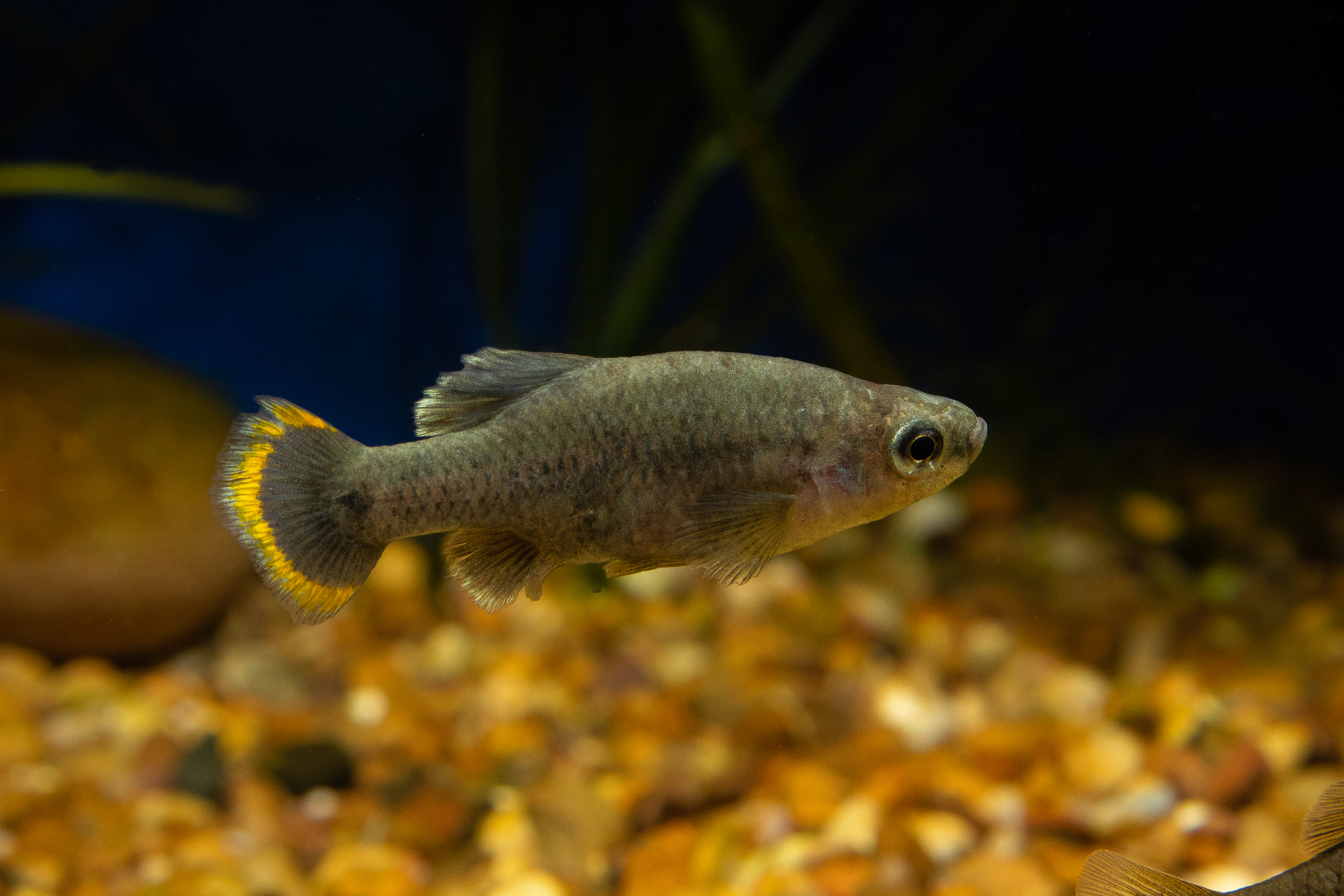
Zoogoneticus tequilaTequila Splitfin
Webb & Miller, 1998
Max length♂ 30 · ♀ 50mm SL♂ 1.2 · ♀ 2.0in SLTank90 × 30cm36 × 12inTemp17–27°C63–81°FpH6.8–7.6A single male of the Tequila Splitfin was sampled in 1955 by Miller and Greenbank, but identified erroneously as Zoogoneticus quitzeoensis, with which species it was collected and found sympatrically . Many years later, the mistake was detected, the fish identified as a new species and finally, 43 years after the first capture, described by Webb and Miller. In 2001, a wild population of this species was rediscovered in a very small spring pool (3 x 4m in diameter). The population there was composed of only a handful of adult fish and a few tens of juveniles (De la Vega-Salazar et al., 2003). In 2007, N. W. Bailey et al showed, that the allelic richness of this population (though it was comparable in size to an aquatic stock) was higher than in any aquatic stock. In 2013 the loss of this population was reported (pers. comm. Domínguez), so there is not much hope that this species is still persisting in the wild.
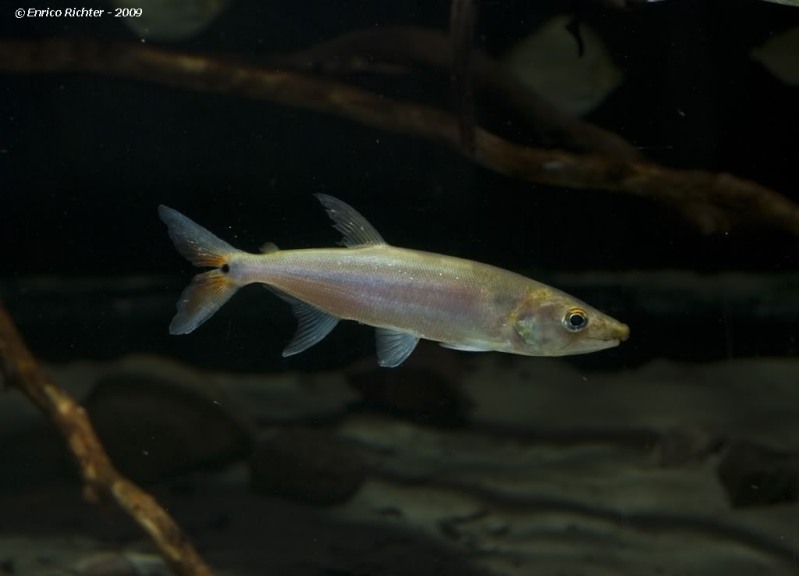
Acestrorhynchus falcatusRed-Tailed Freshwater Barracuda
Bloch, 1794
Matched on Acestrorhynchus falcatus varius, a name it was formerly known by
Max length275mm SL11in SLTank250 × 90cm98 × 36inTemp22–28°C72–82°FpH6.0–7.5The vernacular name of this fish is derived from its appearance and behaviour, rather than a genetic association with the marine barracuda, and it's also sometimes referred to as 'pike characin' or 'spotted cachorro' with local vernacular names including 'Grand dent-chien' (French Guiana), ' Cachorrinho' or 'Ueua' (Brazil). Although most species of Acestrorhynchus appear superficially similar to one another most exhibit distinguishable external chara...
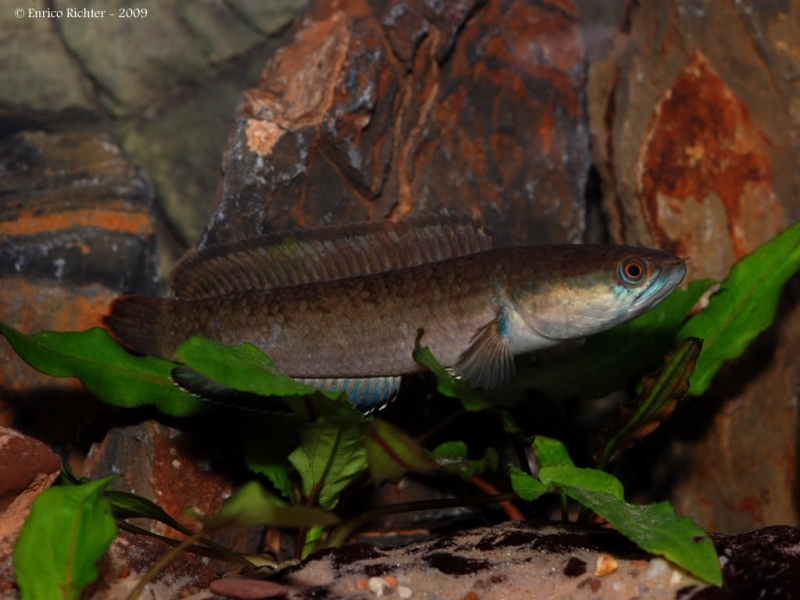
Channa gachuaDwarf Snakehead
Hamilton, 1822
Matched on Ophiocephalus gachua var. basalis, a name it was formerly known by
Max length200mm SL8in SLTank120 × 45cm48 × 18inTemp18–28°C64–82°FpH5.0–8.0Generally considered to have an enormous natural range extending from Iran to Taiwan and Bali, with records existing from Iran, Iraq, Afghanistan, Pakistan, Nepal, India, Sri Lanka, Bangladesh, Bhutan, China, Myanmar, Thailand, Laos, Cambodia, Vietnam, Malaysia, Indonesia, and Singapore. However there exists significant evidence to suggest that C. gachua as currently understood represents a complex of similar-looking species, and a taxonomic review of the group is clearly required.
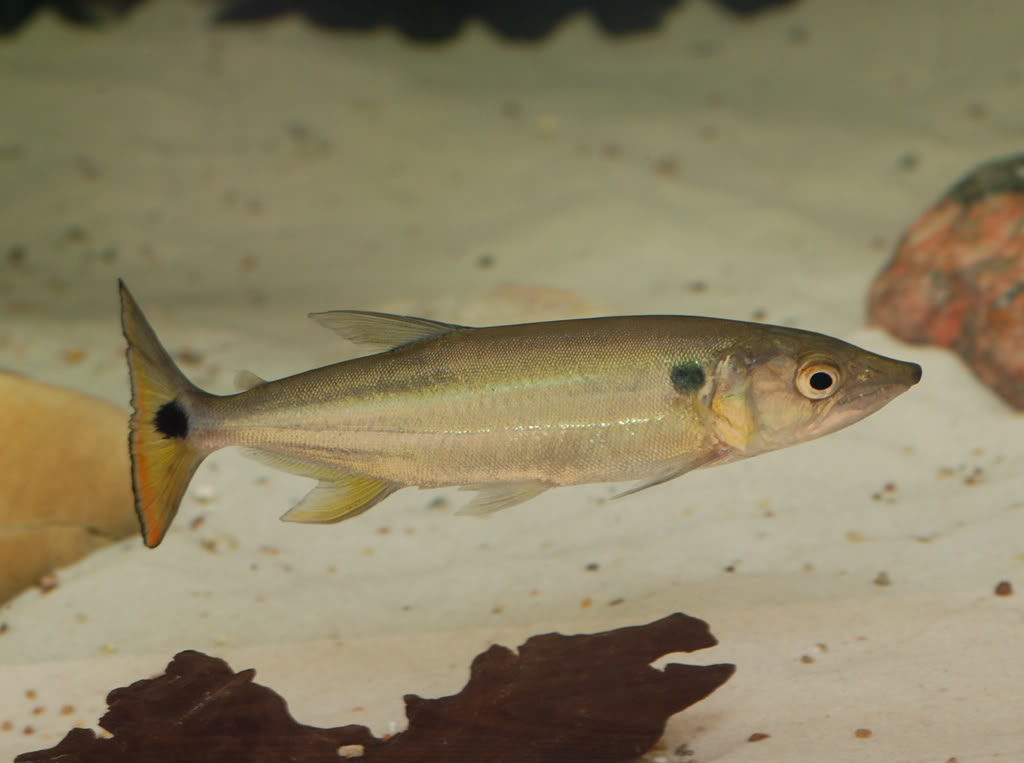
Acestrorhynchus pantaneiroPantanal Barracuda Tetra
Menezes, 1992
Matched on Salmo vigintisexradiatus, a name it was formerly known by
Max length240mm SL9in SLTank250 × 90cm98 × 36inTemp22–28°C72–82°FpH6.0–7.5An obligate piscivore capable of consuming surprisingly surprisingly large prey. Newly-imported specimens may refuse to accept anything but live fishes although most can be weaned onto dead alternatives once they recognise them as edible, and some even learn to accept dried foods- Like the vast majority of predatory fishes this specie...
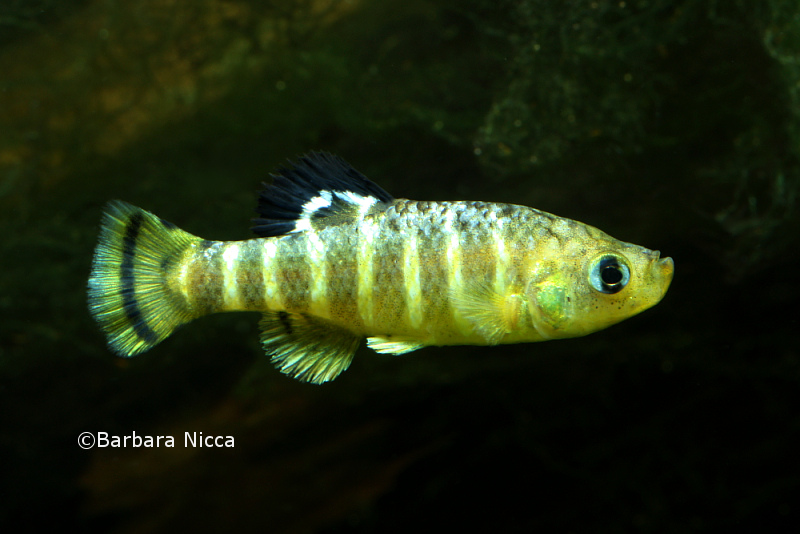
Anatolichthys anatoliaeAnatolian Toothcarp
Leidenfrost, 1912
Matched on Aphanius chantrei venustus Kosswig & Sözer, 1945, a name it was formerly known by
Max length55mm SL2.2in SLTank120 × 30cm48 × 12inTemp2–30°C36–86°FpH7.0–8.5A. anatoliae is the most widely-distributed of the Anatolian Aphanius species although like most of its congeners is not easy to come by in the hobby. You are unlikely to find it on sale in aquatic stores although it may be available via specialist breeders or associations from time-to-time. While Aphanius spp. are certainly not as colourful as some of their relatives their interesting behaviour and continuous activity make them fascinating aquarium subjects and well worth a try if you possess the de...
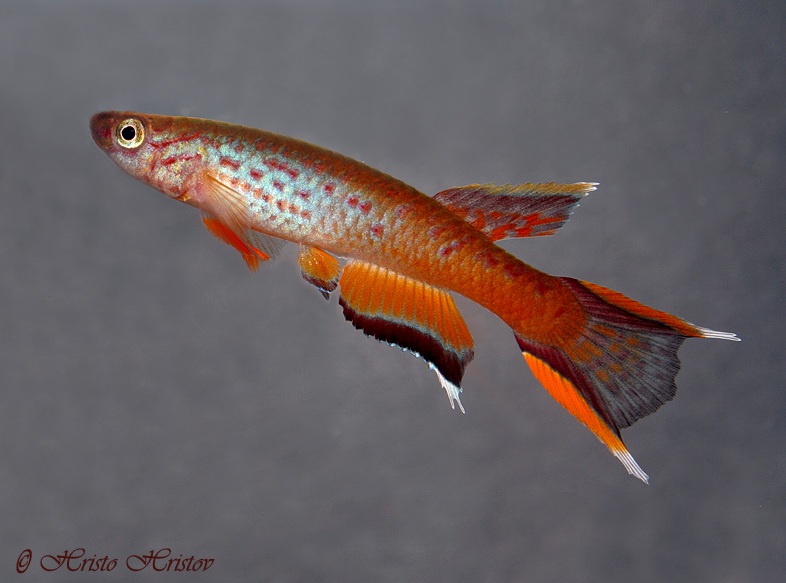
Aphyosemion australeGolden Lyretail
Rachow, 1921
Matched on Haplochilus calliurus var. australis, a name it was formerly known by
Max length60mm SL2.4in SLTank45 × 25cm18 × 10inTemp21–32°C70–90°FpH5.5–7.0Also known by the vernacular names You might also see it for sale as 'golden lyretail' or 'lyretail panchax, A. australe was among the first killifishes to become popular in the hobby and still a favourite today. There exist a number of wild forms which tend to be labelled with place and year of collection in order to preserve bloodlines and avoid hybridisation, as well as several ornamental strans including 'orange', 'gold', 'chocolate', and 'albino'.
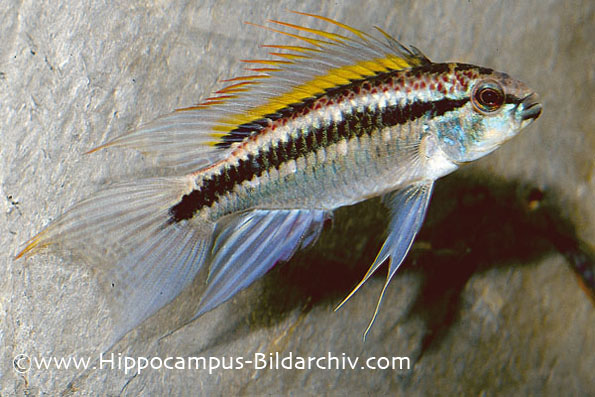
Apistogramma bitaeniataTwo-Striped Dwarf Cichlid
Pellegrin, 1936
Matched on Apistogramma pertense var. bitaeniata, a name it was formerly known by
Max length♂ 75 · ♀ 55mm SL♂ 3.0 · ♀ 2.2in SLTank60 × 30cm24 × 12inTemp22–29°C72–84°FpH4.5–7.0Localities known in the hobby include 'Pastaza', 'Putumayo', 'Requena', 'Río Nanay', 'Rio Napo', 'Maniti', 'Momón', 'Río Tigre', 'Río Ampiyacu', 'Shishita', 'Shushupi', 'Yavari', 'Tefé', 'Manaquiri', 'Lago do Januari', 'Mamori' (often misspelled 'Mamuri'), 'Careiro', 'Manacapuru', 'Juruá', 'Curuaí', and 'Purutu' though we've been unable to find anywhere matching the latter name within the species' known distribution, and in fact several of these names are applied incorrectly on a regular basis.
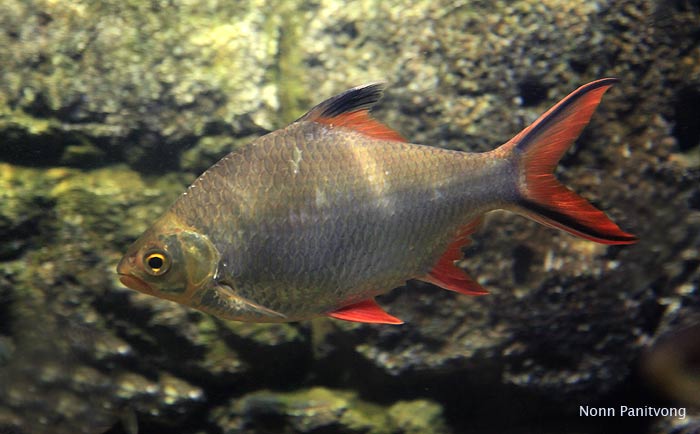
Barbonymus schwanefeldiiTinfoil barb
Bleeker, 1854
Matched on Barbus schwanefeldi var. rubra, a name it was formerly known by
Max length355mm SL14in SLTank210 × 60cm84 × 24inTemp20–28°C68–82°FpH6.0–8.0This is one of two species traded under the vernacular name 'tinfoil barb', the other being the less well-known congener B. altus. Despite this it appears that B. altus is just as widely available as B. schwanefeldii and in many cases is seen on sale more regularly. Unfortunately both are usually offered at a small size (usually around 50 - 75 mm) with little to no information regarding the eventual size of the fish.
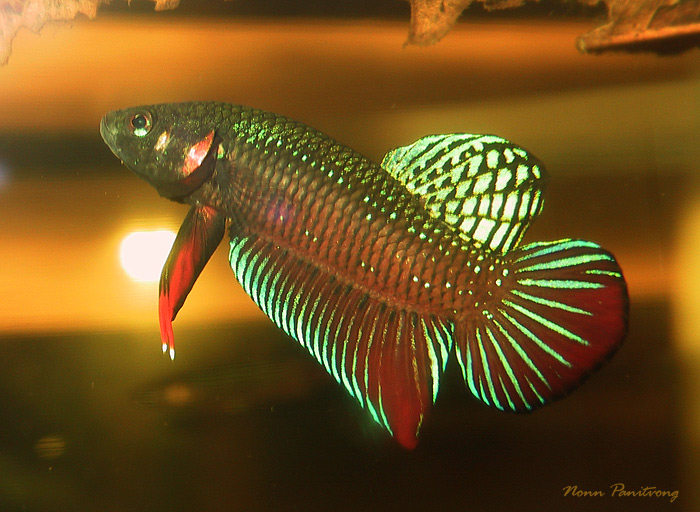
Betta splendensSiamese Fighting Fish
Regan, 1910
Matched on Betta splendens var. abbreviata, a name it was formerly known by
Max length70mm SL2.8in SLTank45 × 30cm18 × 12inTemp22–30°C72–86°FpH6.0–8.0This species' common name is derived from the tradition of keeping the fish in order to fight against each other in organised 'bouts' upon which participants and onlookers place wagers. It has been extensively line-bred for vigour, strength, and the ornamental trade, and hybridised with the congeners B. imbellis, B. smaragdina, and B. mahachaiensis.
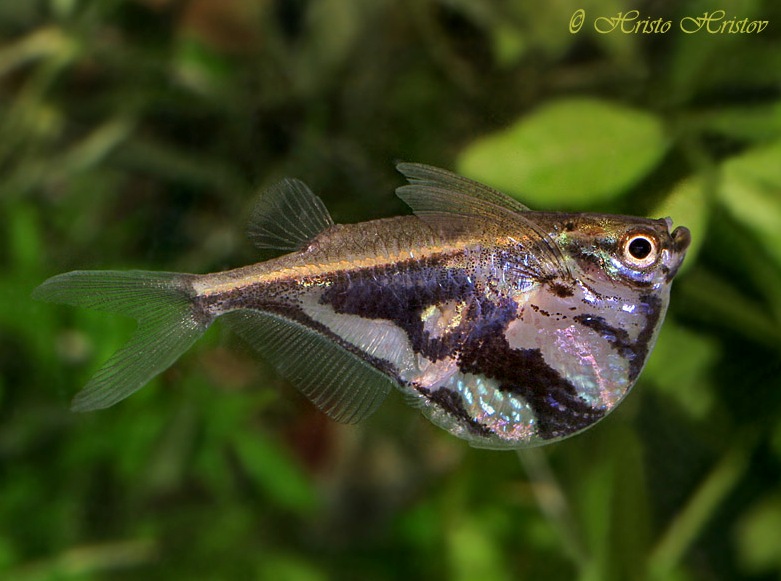
Carnegiella strigataMarbled Hatchetfish
Günther, 1864
Matched on Carnegiella strigata vesca, a name it was formerly known by
Max length35mm SL1.4in SLTank75 × 30cm30 × 12inTemp20–28°C68–82°FpH4.0–7.0C. strigata is an enduringly popular species in the aquarium hobby but is not bred on a commercial basis with all fish offered for sale collected in the wild. It can be told apart from other members of the genus by its larger adult size and dark, marbled colour pattern appearing as a series of dark and light stripes running diagonally across the body below the lateral line. This colour pattern is variable and popul...
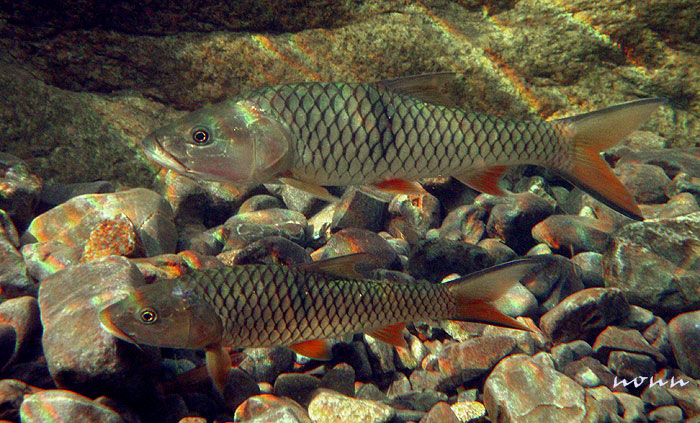
Hampala macrolepidotaHampala Barb
Kuhl & van Hasselt, 1823
Matched on Barbus hampal var. bifasciata, a name it was formerly known by
Max length700mm SL28in SLTanknot recordedTemp20–26°C68–79°FpH5.5–8.0This species is also known by the vernacular 'jungle perch' or 'sidebar barb' and should not be considered an aquarium subject in all but the most extreme circumstances since it can grow to over 2 feet in length, weigh in excess of 5 kg and is a powerful, pelagic predator. It's also a popular sport fish with a reputation for striking hard.
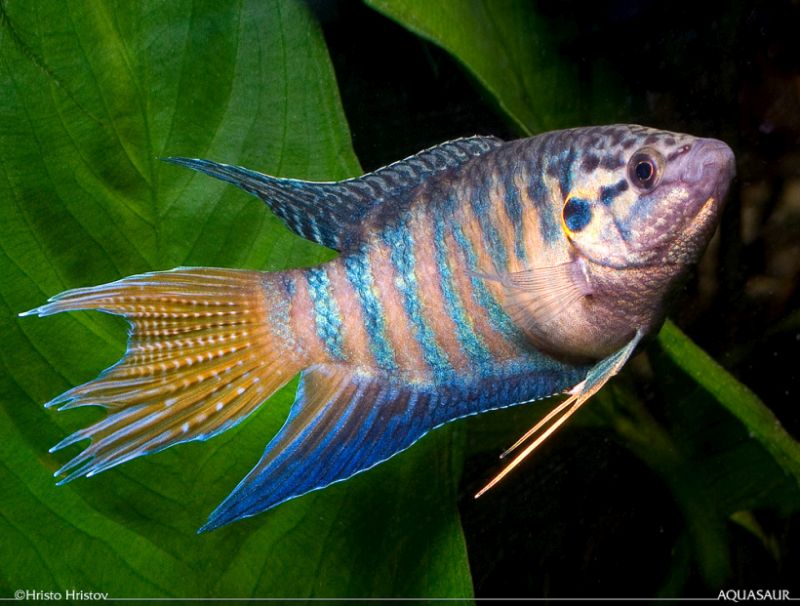
Macropodus opercularisParadise Fish
Linnaeus, 1758
Matched on Macropodus viridi-auratus, a name it was formerly known by
Max length80mm SL3.1in SLTank80 × 30cm31 × 12inTemp10–22°C50–72°FpH6.0–8.0M. opercularis is a classic aquarium fish, having been introduced to the hobby by a French soldier named Gerault in 1869. Of the initial 100 specimens shipped, 22 survived and were successfully bred later that same year by another Frenchman, the Parisian Pierre Carbonnier. This gives the species the distinction of being one of the very first ornamental fish imported to Europe. It is also known as 'Chinese fighting fish', 'paradise gourami', and 'blue paradise fish'.
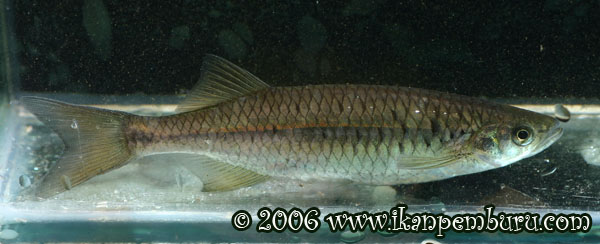
Nematabramis alestes
Seale & Bean, 1907
Matched on Nematabramis verecundus, a name it was formerly known by
Max length105mm SL4in SLTanknot recordedTempnot recordedpHnot recordedN. alestes is the only member of the genus in which the barbels are shorter than the head, with additional diagnostic characters as follows: 8-9 branched dorsal-fin rays; 12-14 branched anal-fin rays; 22-23 predorsal scales; body with a pronounced ventral keel.
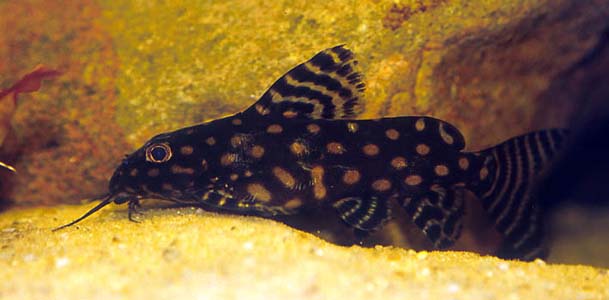
Synodontis angelicusPolka Dot Synodontis
Schilthuis, 1891
Matched on Synodontis angelicus var. zonatus, a name it was formerly known by
Max length250mm SL10in SLTank120 × 45cm48 × 18inTemp24–28°C75–82°FpH6.0–8.0A very nocturnal species that will be seen only infrequently during daylight hours. S. angelicus is very long-lived and can survive for over 20 years if maintained correctly. S. angelicus was much sought after when first imported and commanded a correspondingly large price. They are still relatively expensive, though prices have dropped considerably. It is quite a rare species in its native waters. The patterning and colour varies cosiderably, depending on type locality. Some specimens have w...
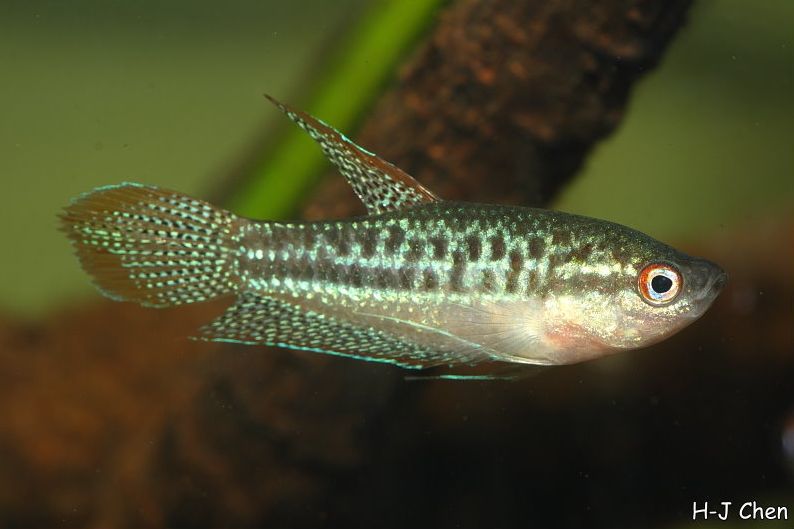
Trichopsis pumilaSparkling Gourami
Arnold, 1936
Matched on Trichopsis pumilus var. siamensis, a name it was formerly known by
Max length40mm SL1.6in SLTank45 × 30cm18 × 12inTemp22–28°C72–82°FpH5.0–7.5It can be distinguished from congeners by its small adult size and presence of a single solid dark midlateral stripe on the body, above which is a series of dark blotches forming a second stripe. In the similar but larger, T. schalleri the upper stripe is more variable depending on the mood of the fish, sometimes fading entirely.
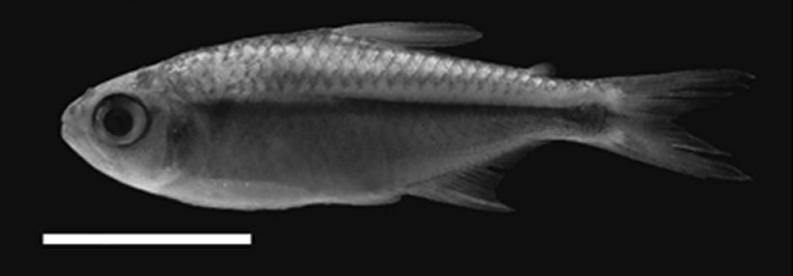
Hyphessobrycon acaciae
García-Alzate, Román-Valencia & Prada-Pedreros, 2010
Max length30mm SL1.2in SLTanknot recordedTempnot recordedpHnot recordedIt differs from H. paucilepis by possessing 30-31 scales in the lateral row (vs. 28-29), 3 scales between the lateral line and anal-fin (vs. 4), 10 predorsal scales (vs. 9), ii, 9 dorsal-fin rays (vs. iii, 8), 4 maxillary teeth (vs. 1), and the distance between the dorsal-fi...