Results for “aquarium”
Type a name: scientific, common, or one a species used to go by. Or narrow the catalogue with the filters.
Filters
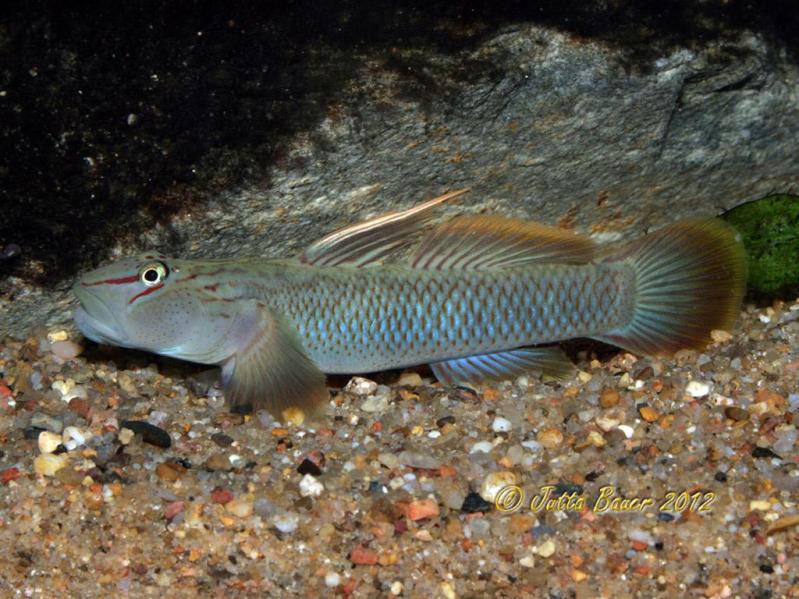
Rhinogobius nantaiensis
Aonuma & Chen, 1996
Max length55mm SL2.2in SLTank60 × 30cm24 × 12inTemp18–28°C64–82°FpH6.0–8.0This fish is normally imported alongside the congener R. candidianus and is actually the commoner of the two in the aquarium trade. It looks very similar to R. candidianus but does not grow as large and possesses a more rounded snout. Most specimens also have spot-like markings on the sides of the head which has led to them being identified as R. nantaiensis, but the fish do no...
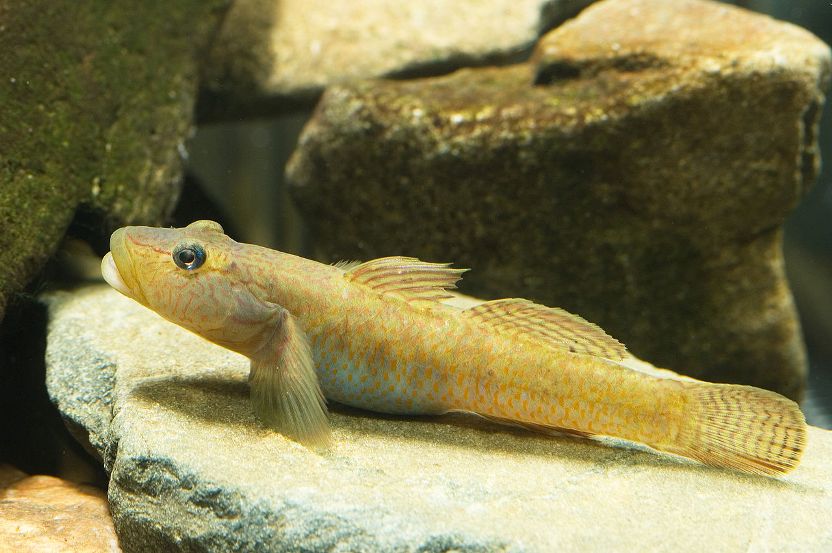
Rhinogobius sp. 'CB'
authority not recorded
Max lengthnot recordedTanknot recordedTempnot recordedpHnot recordedThere are a number of unidentified species within the grouping of which several are referred to using a two-letter code based on their respective colour pattern for ease of reference, with 'CB' shorthand for 'cross band', for example. R. sp. 'CB' is the commonest member of the grouping in Japan but has not yet entered the international aquarium trade as far as we know.
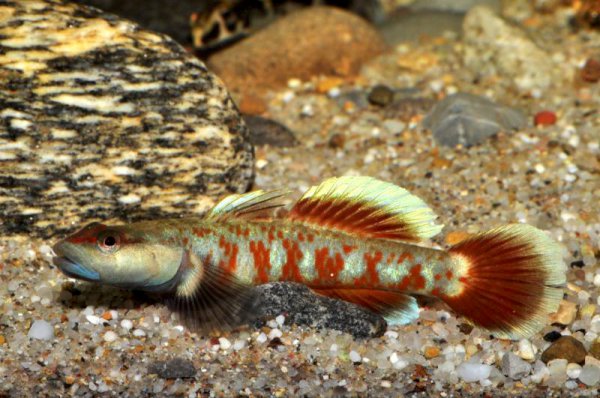
Rhinogobius zhoui
Li & Zhong, 2009
Max length36mm SL1.4in SLTank60 × 30cm24 × 12inTemp19–24°C66–75°FpH7.0–7.8This species has been in the aquarium trade since 2010 and is sold under several names including 'Chinese vermilion goby', 'Zhou's scarlet goby', 'scarlet goby', and 'flame goby'. It can be told apart from congeners by the following combination of characters: second dorsal-fin rays I, 8-9; anal-fin rays I, 7-8; pectoral-fin rays 16-18; longitudinal scale series 29-31; predorsal scales 10-12; vertebral count 10+16=26.
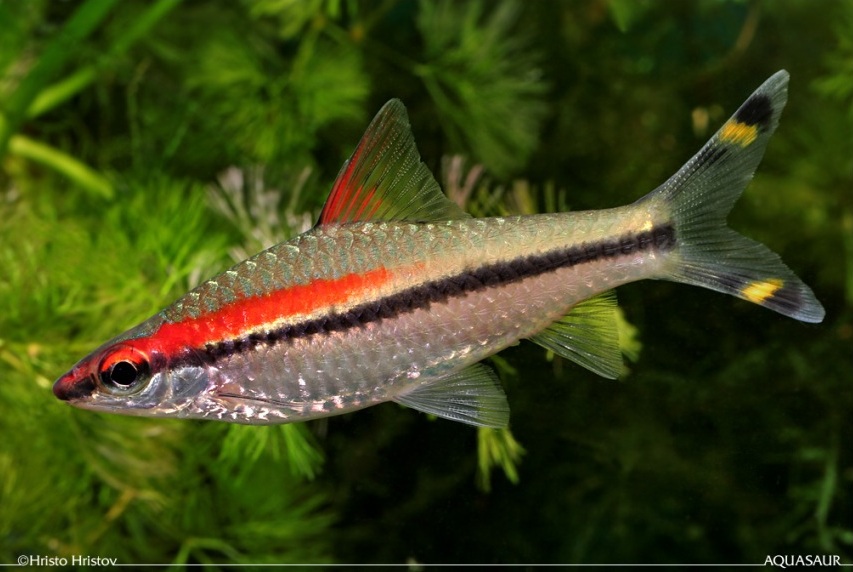
Sahyadria denisoniiRed-line Torpedo Barb
Day, 1865
Max length110mm SL4in SLTank120 × 45cm48 × 18inTemp15–25°C59–77°FpH6.5–7.8This species has become an extremely popular aquarium fish since it first appeared in the ornamental trade during the late 1990s, and it has been sold under various names including 'Denison's barb', 'denisoni barb', 'Denison's flying fox', 'rose line shark', 'bleeding-eye barb', 'red flash barb', and 'Indian flasher barb'. In India it is known locally as 'Miss Kerala' and 'Chorai Kanni' ( literally 'bleeding eyes').
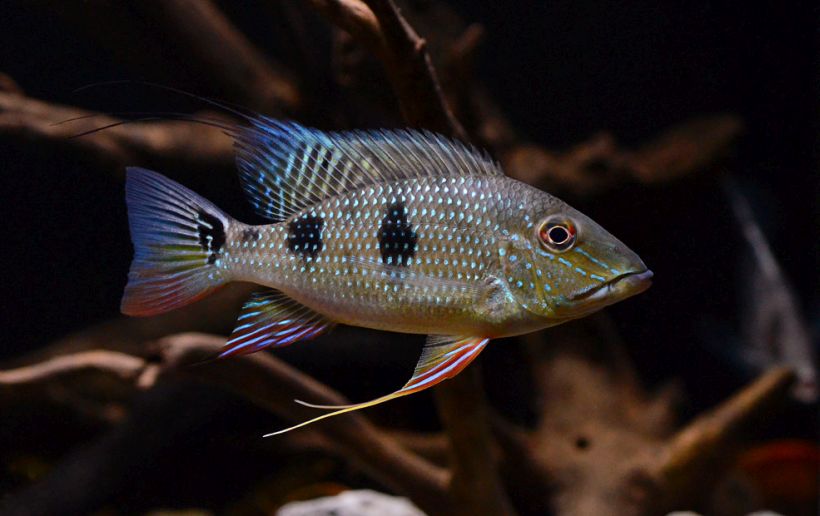
Satanoperca daemonThreespot Eartheater
Heckel, 1840
Max length250mm SL10in SLTank210 × 60cm84 × 24inTemp24–28°C75–82°FpH3.5–6.0S. daemon is relatively common in the aquarium trade but is by no means easy to maintain, with particular attention to space, diet, water quality, and chemistry required in order for it to thrive. It can be distinguished from other members of the genus by possessing two dark blotches on the flank and a prominent ocellus at the caudal-fin base. Among the named species it is most similar to...
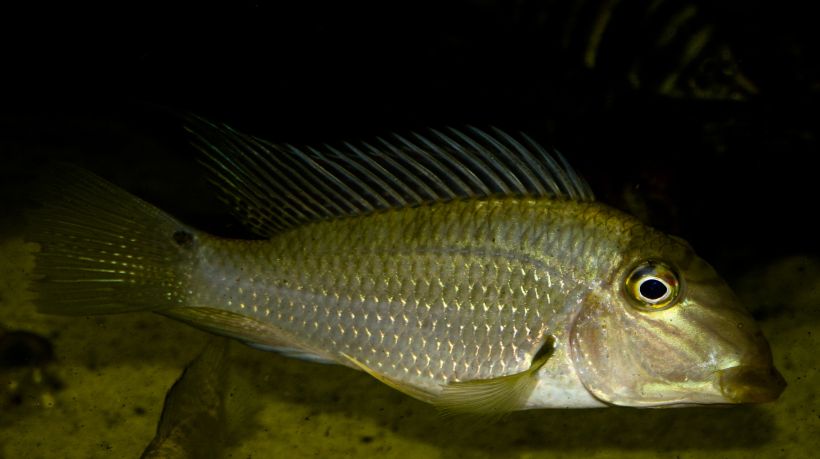
Satanoperca jurupariDemon Eartheater
Heckel, 1840
Max length185mm SL7in SLTank210 × 60cm84 × 24inTemp20–28°C68–82°FpH5.5–7.5S. jurupari is also known as 'demon fish', 'jurupari earth eater', 'green horse face', or simply 'jurupari' in the aquarium hobby. It can be distinguished from other members of the genus by the following combination of characters: presence of a relatively small dark ocellus on the upper caudal-fin base; absence of well-defined dark blot...
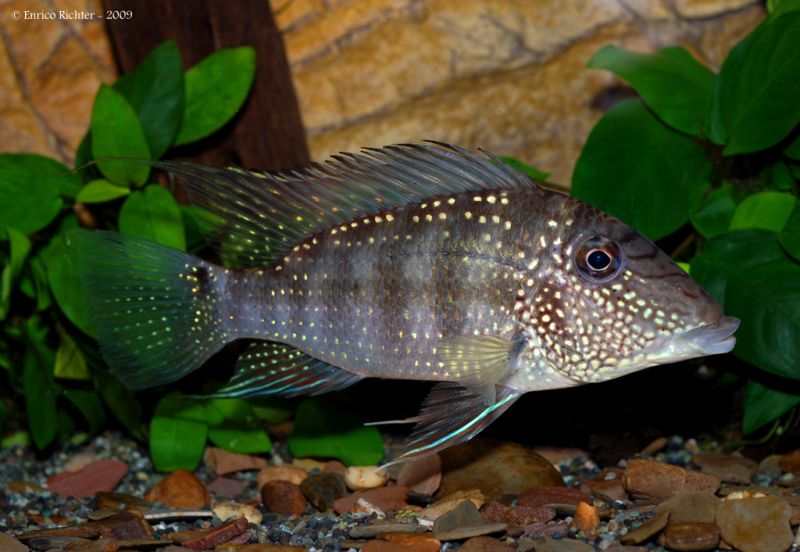
Satanoperca leucostictaWhitespot Eartheater
Müller & Troschel, 1849
Max length150mm SL6in SLTank180 × 60cm72 × 24inTemp20–28°C68–82°FpH5.5–7.5S. leucosticta is frequently available in the ornamental trade and farmed for the purpose in several countries. It is often confused with its congener S. jurupari in aquarium literature and on websites, but is easily recognised by presence (vs. absence) of prominent white spots or vermiform markings on the sides of the head. Although the presence of white spots on the head does not distinguish it from all known Satanoperca populations (see below), it can...
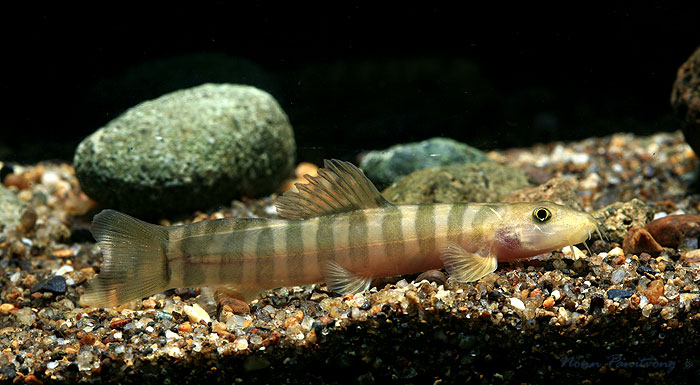
Schistura alticrista
Kottelat, 1990
Max length75mm SL3.0in SLTank90 × 30cm36 × 12inTemp21–26°C70–79°FpH6.0–7.5This species is very rare in the aquarium trade but available on occasion. It has 8-9 darkish body bars which usually split vertically as the fish mature, and like some conspecifics possesses a prominent dorsal adipose crest on the caudal peduncle. Schistura is the most species-rich genus among...
Schistura balteataSumo Loach
Rendahl, 1948
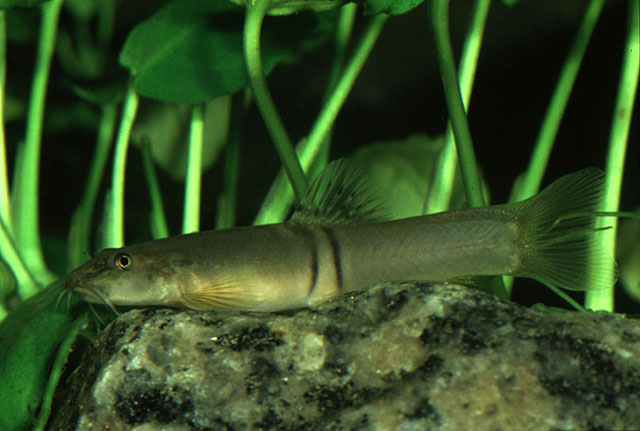
Max length80mm SL3.1in SLTank90 × 30cm36 × 12inTemp22–26°C72–79°FpH6.0–7.5This species is quite uncommon in the aquarium hobby although its name is sometimes used in reference to the similar-looking, apparently undescribed congener S. cf. balteata, and both are also traded as 'sumo loach', 'tri-banded sumo loach', and 'orange saddle-back loach'. Following Kottelat (1990) it's diagnosed by the following combination of characters: unique colour pattern consisting of two da...
Schistura denisonii
Day, 1867
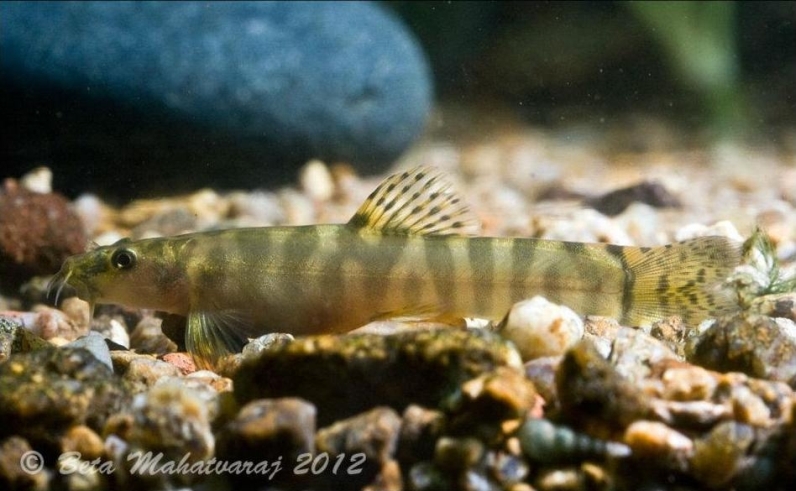
Max length52mm SL2.0in SLTank75 × 30cm30 × 12inTemp18–24°C64–75°FpH6.0–7.5This species is feisty and largely unsuitable for the general community aquarium. This is not to say it must be kept alone, rather that tankmates must be selected with care and proper research. Slow-moving or long-finned species should certainly be omitted because they're likely to struggle with the necessary level of water movement and may end up with nipped fins.
Schistura jarutanini
Kottelat, 1990
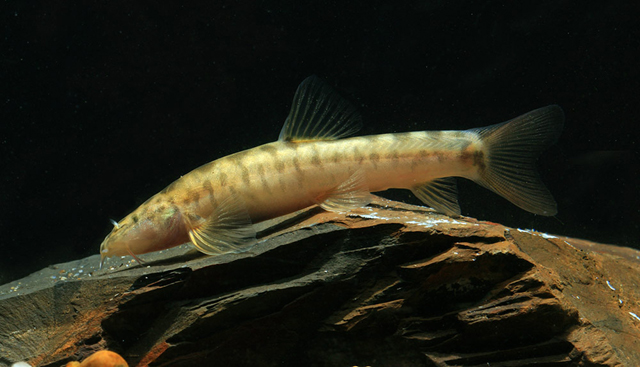
Max length67mm SL2.6in SLTanknot recordedTempnot recordedpHnot recordedThis species' conservation status clearly precludes its suitability as an aquarium fish so it's included here for reasons of interest only. It's protected by Thai national law and illegal to remove from its habitat. Species exhibiting morphological, physiological or behavioral adaptations to a subterranean existence are often referred to as troglomorphic.
Schistura kodaguensis
Menon, 1987
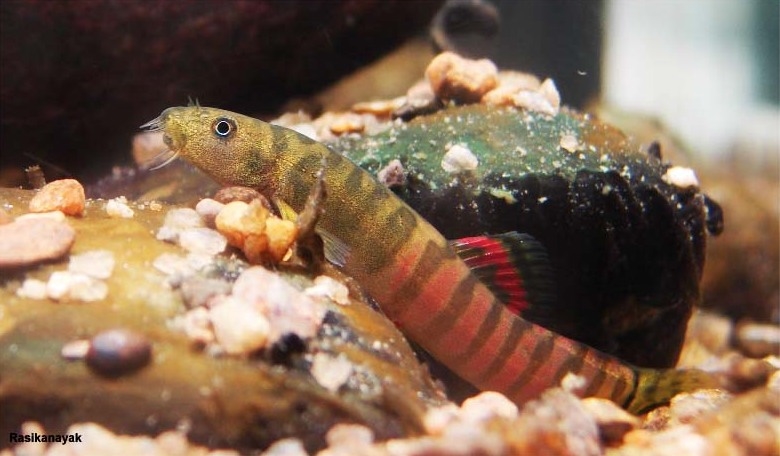
Max length36mm SL1.4in SLTank60 × 30cm24 × 12inTemp20–25°C68–77°FpH6.0–7.5This species is not a well-known aquarium fish but is maintained by a number of Indian enthusiasts. It can be told apart from related species by the following combination of characters as per Sreekantha et al. (2006): pectoral-fin rays 10; absence of black spot at base of dorsal-fin; presence of rows of spots on caudal-fin; lateral line incomplete; caudal-fin slightly emarginate; 11-14 vertical bars on the body.
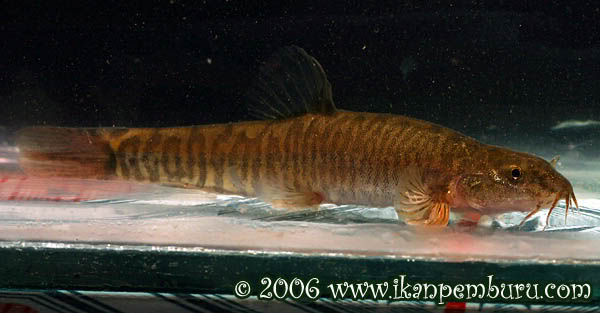
Schistura polytaenia
Zhu, 1982
Max length50mm SL2.0in SLTank60 × 30cm24 × 12inTemp20–24°C68–75°FpH6.0–7.5Schistura species are omnivorous although the bulk of their diet consists of small insects, worms, crustaceans and other zooplankton with only relatively small amounts of plant matter consumed, mostly via the stomach contents of prey items. In the aquarium they will acc...
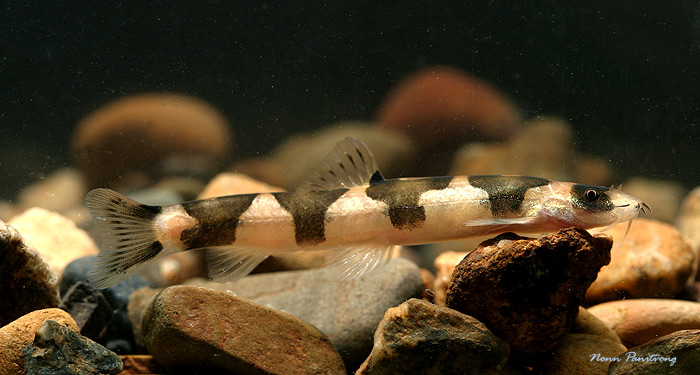
Schistura pridiiMini Dragon Loach
Vidthayanon, 2003
Max length40mm SL1.6in SLTank60 × 30cm24 × 12inTemp18–24°C64–75°FpH7.0–8.5Endemic to a handful of tributary streams within the upper Chao Phraya river system in northern Thailand. Six populations are known to date, with the majority lying inside the Doi Chiang Dao Wildlife Sanctuary. Some of its habitats are under threat by over-grazing, deforestation, deliberate forest fires, and collection for the aquarium trade.
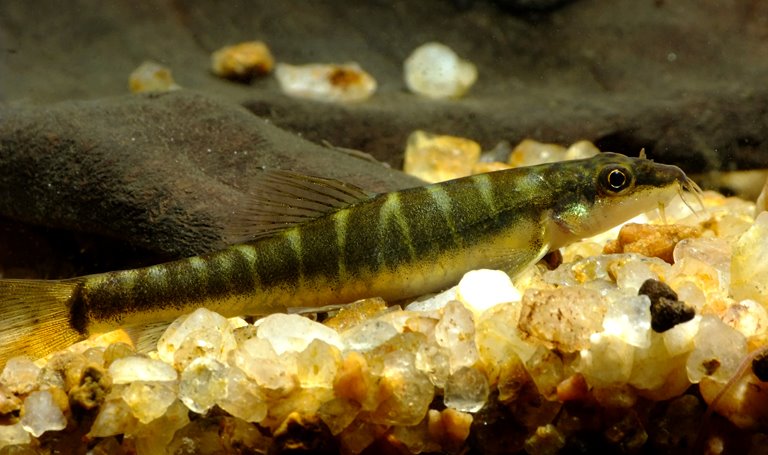
Schistura savonaHalf-banded Loach
Hamilton, 1822
Max length50mm SL2.0in SLTank60 × 30cm24 × 12inTemp15–24°C59–75°FpH6.5–8.5This species is seen in the aquarium trade on a relatively frequent basis and is sometimes sold as 'bicolor loach' in the United States. It can be distinguished from congeners by its unique colour pattern comprising 9-10 thin, yellowish bars on a dark background in the upper part of the body, and plain whitish colouration in the lower portion.
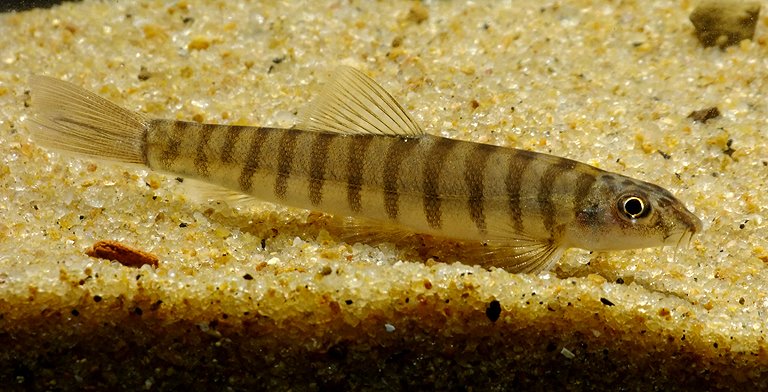
Schistura sp. 1Ring Loach
authority not recorded
Max lengthnot recordedTank75 × 30cm30 × 12inTemp18–24°C64–75°FpH6.0–7.5The identity of this fish is somewhat unclear although it's available in the aquarium trade on an occasional basis. It's been considered to represent various species including Schistura beavani, S. montana and S. himachalensis but there exi...
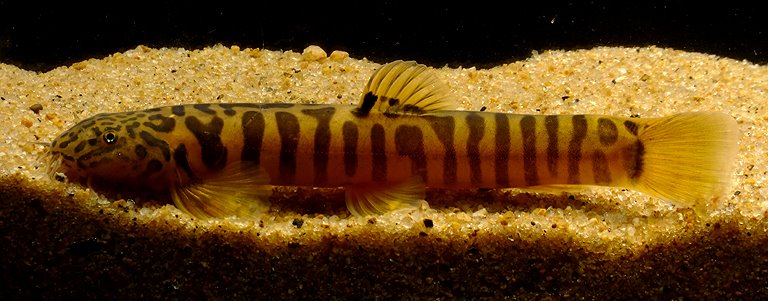
Schistura sp. 4Grizzled Loach
authority not recorded
Max length100mm SL3.9in SLTank120 × 30cm48 × 12inTemp12–20°C54–68°FpH7.0–8.5This species has been collected for the aquarium hobby, albeit in small numbers at time of writing, but its identity is unclear. Though obtained from close to the type local...
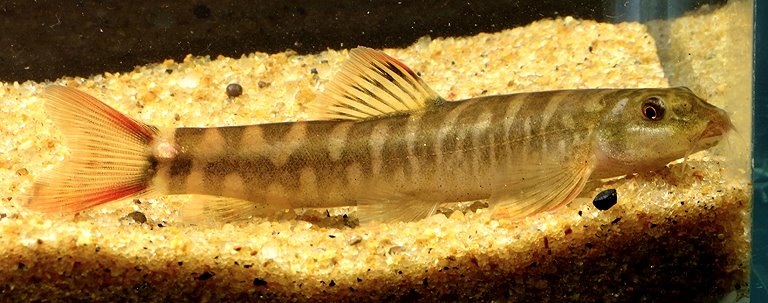
Schistura sp. 6
authority not recorded
Max length50mm SL2.0in SLTank80 × 30cm31 × 12inTemp18–24°C64–75°FpHnot recordedThis fish was collected for the aquarium trade during 2012 but its identity has not yet been established. The fish in our images were obtained at an unspecified locality in the Garo Hills, these for...
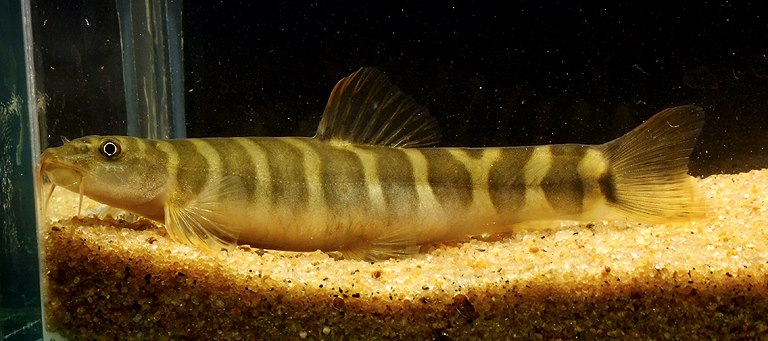
Schistura sp. 7
authority not recorded
Max length50mm SL2.0in SLTanknot recordedTempnot recordedpHnot recordedThis fish was collected for the aquarium trade during 2012 but its identity has not yet been established. Schistura is the most species-rich genus among nemacheilid loaches with some 190 members and it continues to grow with over 100 having be...
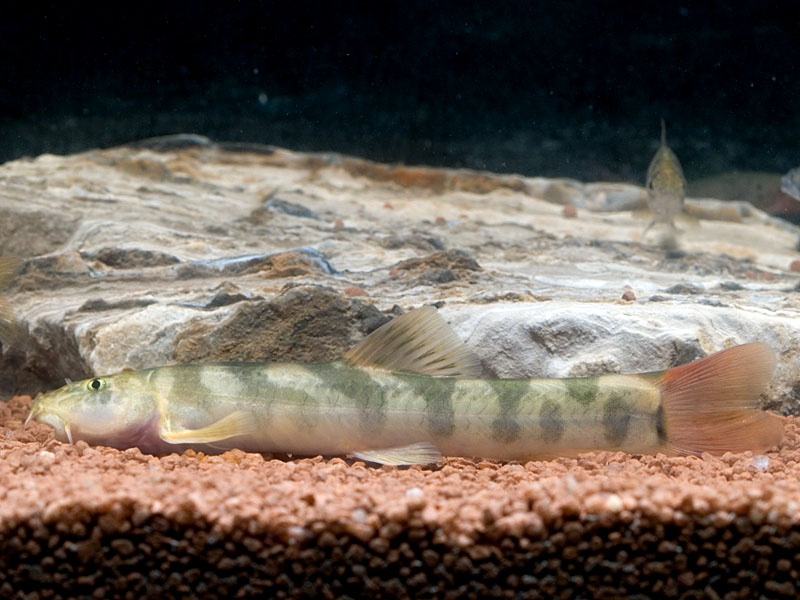
Schistura spilota
Fowler, 1934
Max length100mm SL3.9in SLTank120 × 30cm48 × 12inTemp20–26°C68–79°FpH6.0–7.5Not a commonly species in the aquarium hobby but sporadically available in shipments of wild fishes from Thailand. Following Kottelat (1990) it's a member of a group of species possessing a complete or near-complete lateral line, 8 ½ branched dorsal-fin rays, 17 branched caudal-fin rays and lacking sexual dimorphism (the latter is not strictly true - see above). Its colour pattern is quite distinctive, howe...