Results for “cross”
Type a name: scientific, common, or one a species used to go by. Or narrow the catalogue with the filters.
Filters
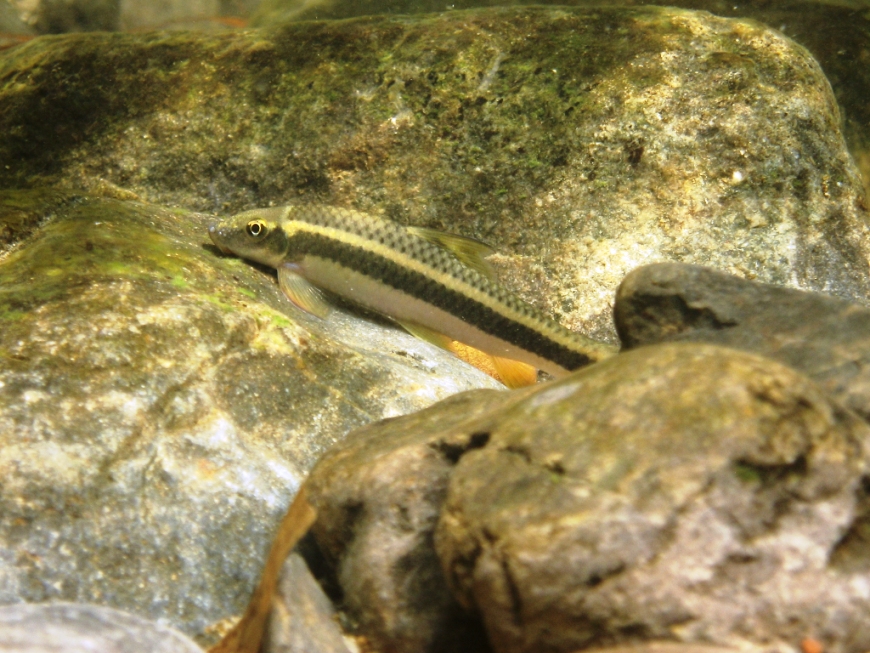
Garra cambodgiensisFalse SAE
Tirant, 1883
Max length150mm SL6in SLTank120 × 45cm48 × 18inTemp20–27°C68–81°FpH6.0–7.5Also known by the vernacular names ''black band garra', 'stone-lapping minnow' or 'false flying fox' and continues to be traded as Garra taeniata, an invalid name synonymous with G. cambodgiensis. It is often confused with those laterally-striped members of the genus Crossocheilus sold as 'Siamese algae eater' or 'Siamese flying fox', but in those species the dark lateral body stripe continues into the caudal-fin whereas in G. cambodgiensis it terminates...
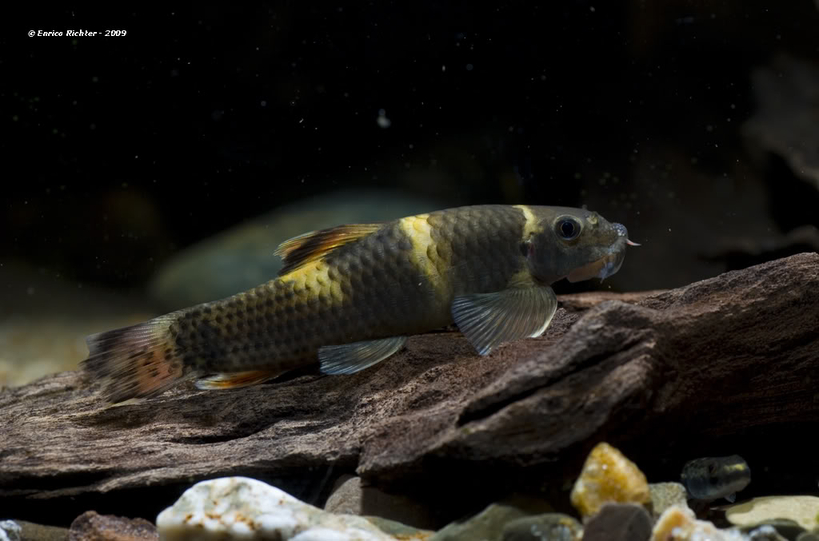
Garra flavatraPanda Garra
Kullander & Fang, 2004
Max length90mm SL3.5in SLTank90 × 30cm36 × 12inTemp22–27°C72–81°FpH6.5–7.5Garra species are usually included in the subfamily Labeoninae/Cyprininae (name varies with author) which by current thinking is further divided into several tribes and subtribes (Stiassny and Getahun, 2007). The putatively monophyletic subtribe Garraina comprises Garra plus numerous other genera including the well-known Crossocheilus and Epalzeorhynchos. Within this division their closest relatives are members of Discogobio, Discocheilus and Placocheilus (the lat...
Oreochromis mossambicusMozambique Mouthbrooder
authority not recorded
Max length390mm SL15in SLTank210 × 60cm84 × 24inTemp21–27°C70–81°FpH6.2–8.5One of the most invasive fish species in the world, O. mossambicus is one of the species farmed for supermarkets and restaurants across the globe. Several colour varieties have been selectively bred from the natural green fish to make the fish more appealing to consumers and unsurprisingly, it is these more brightly coloured forms which are usually seen in aquaria. Some of these variants are cross breeds with other species of Oreochromis. The destructive effect of O. mossambicus on non-nativ...
Pelvicachromis subocellatusOcellated Kribensis
authority not recorded
Max length80mm SL3.1in SLTanknot recordedTemp22–26°C72–79°FpH5.5–7.5This is one of the less commonly seen Pelvicachromis species in the hobby. There are a few morphs available, including "Matadi" and "Moanda". Males and females of these should not be cross bred in order to keep the lines pure. It can be distinguished from others in the genus by it's higher, shorter body shape and by the fact that the spotting in the upper part of the is much lighter in this species than in others. A female condition is hard to confuse with anything else....
Pelvicachromis taeniatusStriped Kribensis
authority not recorded
Max length80mm SL3.1in SLTanknot recordedTemp22–26°C72–79°FpH5.0–7.5This stunning species is now much more readily available than it once was. There are over a dozen morphs available, including "Dehane", "Moliwe", "Kienke", "Lobe", "Wouri", "Nigeria Red" and "Calabar". Males and females of these should not be cross bred in order to keep the lines pure. It can be distinguished from others in the genus by the more pronounced upper lip, which is often bright yellow in colour. Males of this spe...
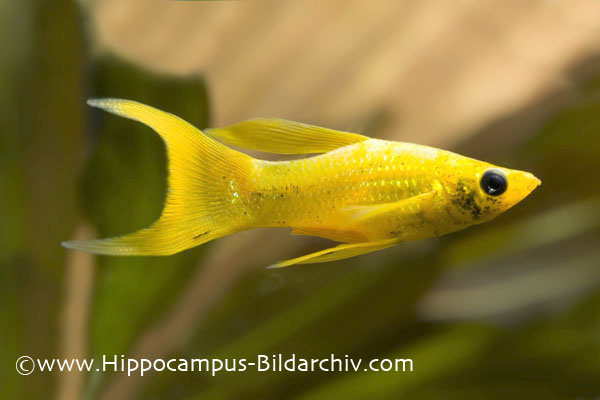
Poecilia latipinnaSailfin Molly
Lesueur, 1821
Max length125mm SL5in SLTank76 × 38cm30 × 15inTemp21–26°C70–79°FpH7.0–8.5The wild fish can exhibit several different types of patterning. P. latipinna has been selectively bred into many different colour morphs for the aquarium trade, and has also been crossbred with other molly species, particularly P. sphenops. They will also interbreed readily in the aquarium and in order to avoid this we suggest keeping only one species of molly per tank. There also exists a (in our opinion) grotesque 'balloon' variety of this fish in which the body is malformed and rou...
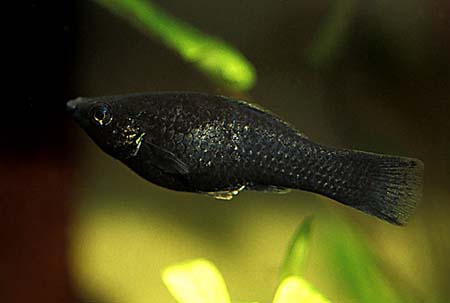
Poecilia sphenopsShort-finned Molly/Black Molly
Valenciennes, 1846
Max length80mm SL3.1in SLTank90 × 30cm36 × 12inTemp21–28°C70–82°FpH7.0–8.5A hugely popular aquarium fish. Many aquarium-bred colour morphs of this species are available, including the ubiquitous black molly. There are also Gold, Green, Lyretail, Silver and Dalmation varieties. Some of these are the results of P. sphenops being crossed with P. latipinnis. The 2 species will also interbreed readily in the aquarium and in order to avoid this we suggest keeping only one of them per tank. There also exists a (in our opinion) grotesque 'balloon' variety of this fi...
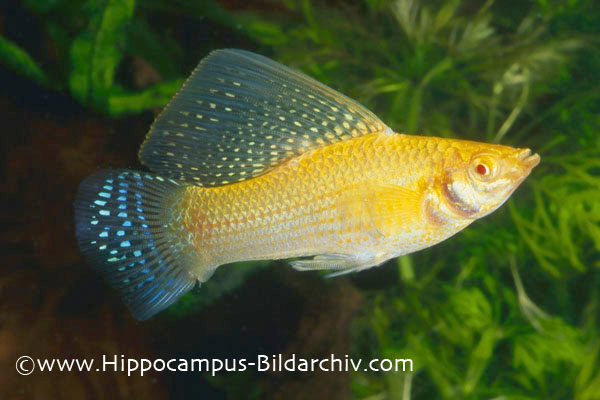
Poecilia veliferaGiant Sailfin Molly
Regan, 1914
Max length150mm SL6in SLTank91 × 38cm36 × 15inTemp22–28°C72–82°FpH7.0–8.5Another popular molly in the hobby, and another that has been selectively bred to produce several different varieties, such as albino, black, red etc. Some of these are the result of cross breeding with P.latipinna. There also exists a (in our opinion) grotesque 'balloon' variety of this fish in which the body is malformed and rounded, giving a balloon-like appearance. This condition can cause swimbladder and digestive problems and may bring about premature death. It is difficult to...
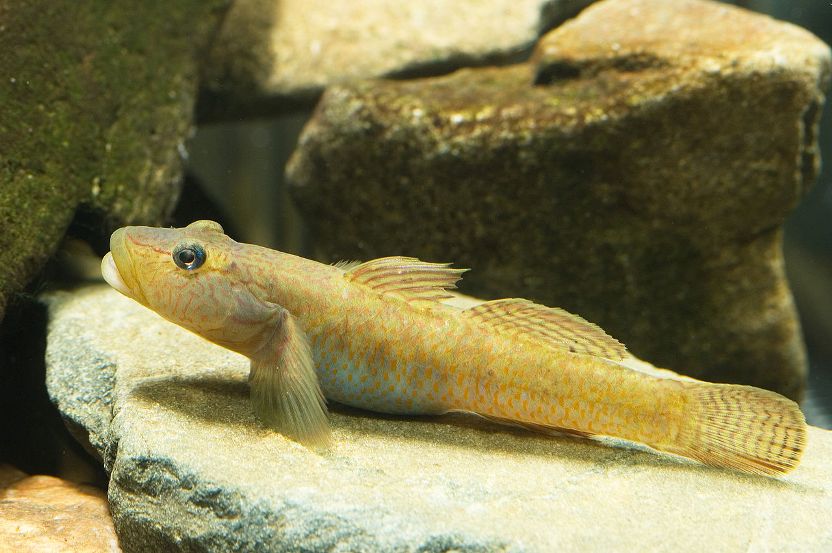
Rhinogobius sp. 'CB'
authority not recorded
Max lengthnot recordedTanknot recordedTempnot recordedpHnot recordedThere are a number of unidentified species within the grouping of which several are referred to using a two-letter code based on their respective colour pattern for ease of reference, with 'CB' shorthand for 'cross band', for example. R. sp. 'CB' is the commonest member of the grouping in Japan but has not yet entered the international aquarium trade as far as we know.
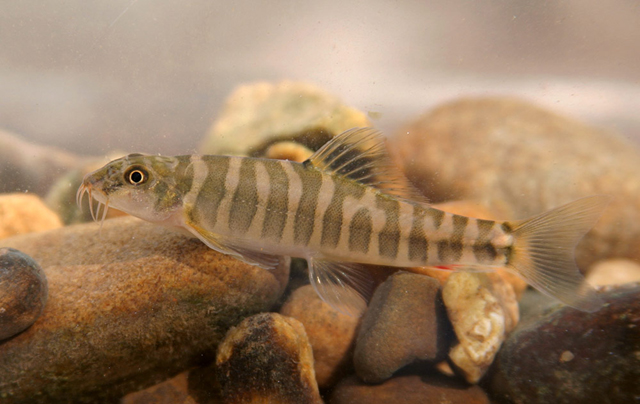
Schistura maepaiensis
Kottelat, 1990
Max length45mm SL1.8in SLTank80 × 30cm31 × 12inTemp20–26°C68–79°FpH6.0–7.5The type locality originally consisted of a shallow (0.5 - 1.5 m deep) stream with a substrate of rocks and boulders and flow varying from 'moderate to swift'. When the holotype was collected there in 1980 sympatric species included Acanthocobitis zonalternans, Puntius orphoides, Pethia ticto, Raiamas guttatus, Barilius barnoides, Mystacoleucus argenteus and Mastacembelus armatus plus unidentified members of Crossocheilus an...
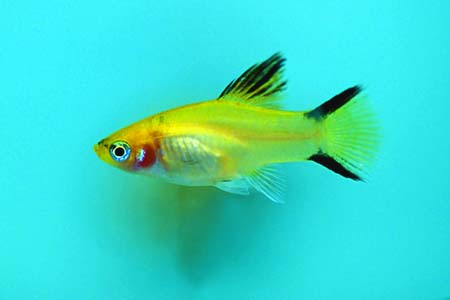
Xiphophorus maculatusPlaty
Gunther, 1866
Max length50mm SL2.0in SLTank60 × 30cm24 × 12inTemp20–26°C68–79°FpH7.0–8.2Another massively popular aquarium fish, with dozens of selectively bred varieties available, including mickey mouse, wagtail, tuxedo, moon, blue, red, comet and hi-fin. Some of these are produced by crossbreeding with X.helleri or X. variatus. Unfortunately many commercially bred platies are not very hardy due to inbreeding and over-production and are prone to disease and premature death. Wild fish are almost never seen in the hobby. As long as the ph remains above neutral this fish is ...
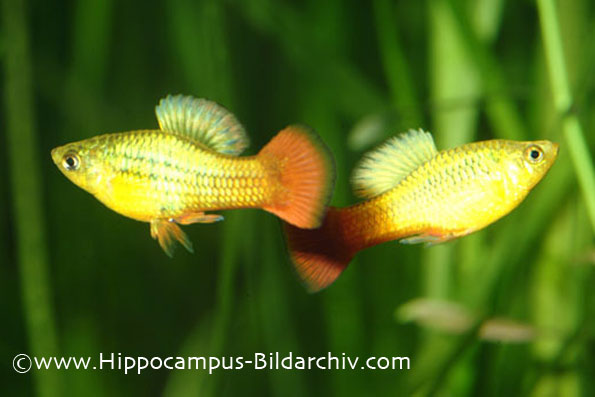
Xiphophorus variatusVariable Platy
Meek, 1904
Max length50mm SL2.0in SLTank60 × 30cm24 × 12inTemp20–26°C68–79°FpH7.0–8.2Another massively popular aquarium fish, with dozens of selectively bred varieties available. Some of these are produced by crossbreeding with X.helleri or X. maculatus. Unfortunately many commercially bred platies are not very hardy due to inbreeding and over-production and are prone to disease and premature death. The wild X. variatus can be distinguished from X. maculatus by its slimmer, more elongated body shape and slightly longer dorsal fin. This last feature has been seized upon by many...
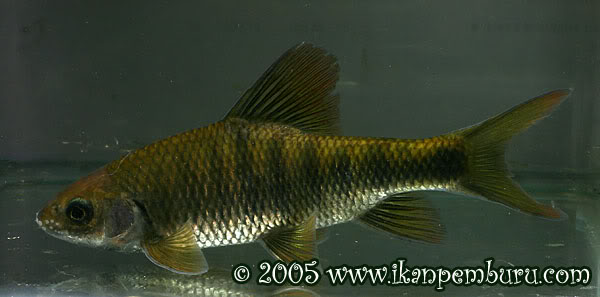
Acrossocheilus monticola
Günther, 1888
Matched on Crossochilus monticola, a name it was formerly known by
Max length150mm SL6in SLTanknot recordedTempnot recordedpHnot recordedApparently endemic to the upper Yangtze River basin, China. Type locality is 'mountain-stream fiowing into the Ichang gorge of the Yangtsze River'.
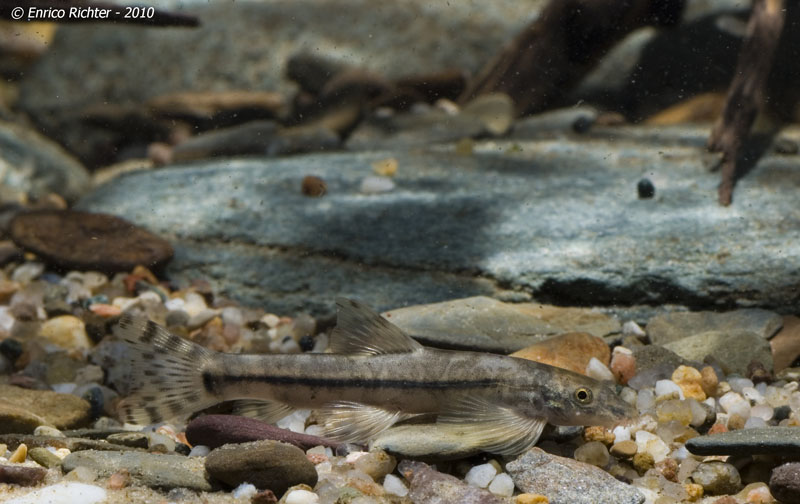
Formosania lacustrisTasseled-mouth Loach
Steindachner, 1908
Matched on Crossostoma lacustre, a name it was formerly known by
Max length120mm SL5in SLTank120 × 30cm48 × 12inTemp20–24°C68–75°FpH6.0–7.5An obligate dwellers of swiftly-flowing streams and headwaters containing clear, oxygen-saturated water. It inhabits riffles and runs and according to studies shows a preference for shallower zones. Substrates are generally composed of gravel, rocks, boulders or bedrock carpeted with a rich biofilm formed by algae and other micro-organisms. Aquatic plants are uncommon and while riparian/streamside vegetation may be present...
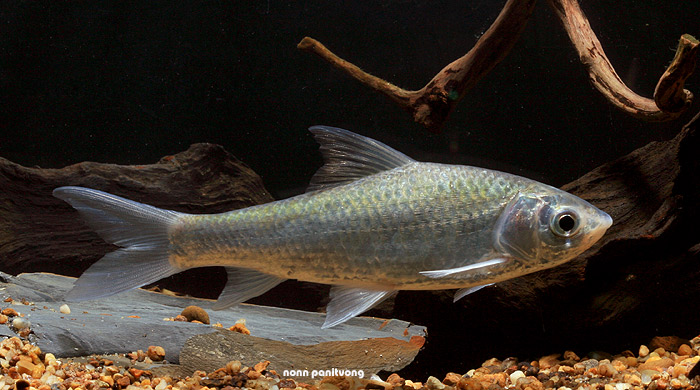
Gymnostomus siamensisSiamese Mud Carp
Sauvage, 1881
Matched on Crossocheilus thai, a name it was formerly known by
Max length150mm SL6in SLTanknot recordedTempnot recordedpHnot recordedG. siamensis can be distinguished from congeners by the following combination of characters: possession of 5½ lateral line scales; body relatively deep, depth fits 3.2-3.4 times in SL; head large and broad, width fits 5.5-6.7 times in SL; snout not or only weakly projecting; body plain silver in colour with no dark marking on caudal peduncle.
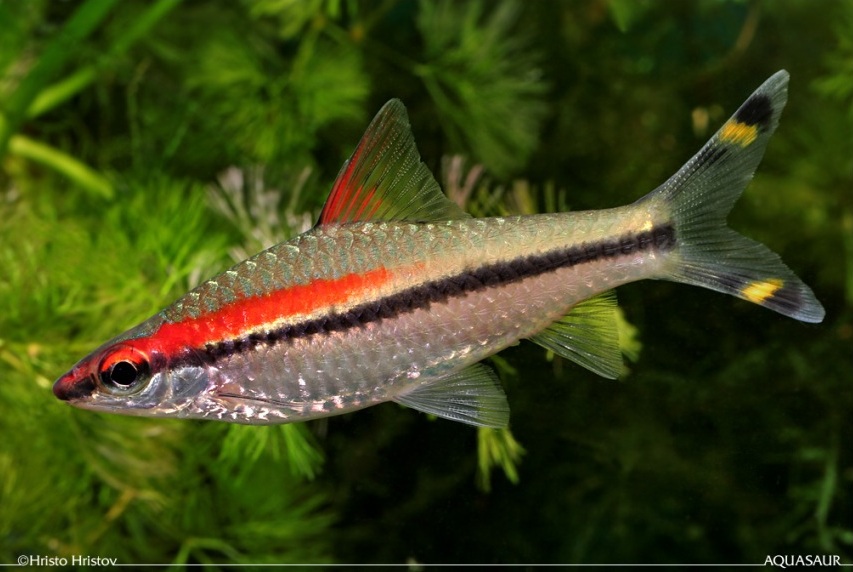
Sahyadria denisoniiRed-line Torpedo Barb
Day, 1865
Matched on Crossocheilus denisonii, a name it was formerly known by
Max length110mm SL4in SLTank120 × 45cm48 × 18inTemp15–25°C59–77°FpH6.5–7.8This species has become an extremely popular aquarium fish since it first appeared in the ornamental trade during the late 1990s, and it has been sold under various names including 'Denison's barb', 'denisoni barb', 'Denison's flying fox', 'rose line shark', 'bleeding-eye barb', 'red flash barb', and 'Indian flasher barb'. In India it is known locally as 'Miss Kerala' and 'Chorai Kanni' ( literally 'bleeding eyes').