Results for “cross”
Type a name: scientific, common, or one a species used to go by. Or narrow the catalogue with the filters.
Filters
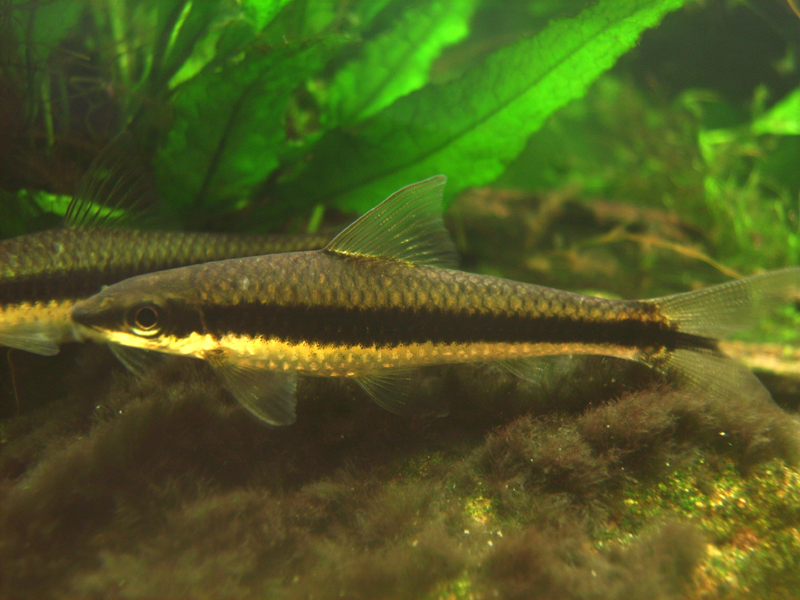
Crossocheilus langeiSiamese Algae Eater
Bleeker, 1860
Matched on Crossocheilos langei, a name it was formerly known by
Max length150mm SL6in SLTank150 × 45cm60 × 18inTemp20–26°C68–79°FpH6.0–7.5C. oblongus is another name widely misused in the trade but that species has seemingly never been exported and was described as a blueish fish with yellow fins. It's native to streams of Gunung Salak mountain in Bogor Regency, West Java, Indonesia where collecting of ornamental fishes is almost non-existent. Other species of laterally-striped Crossocheilus also exist and may be available from time-to-time but are more easily told apart from the group described above.
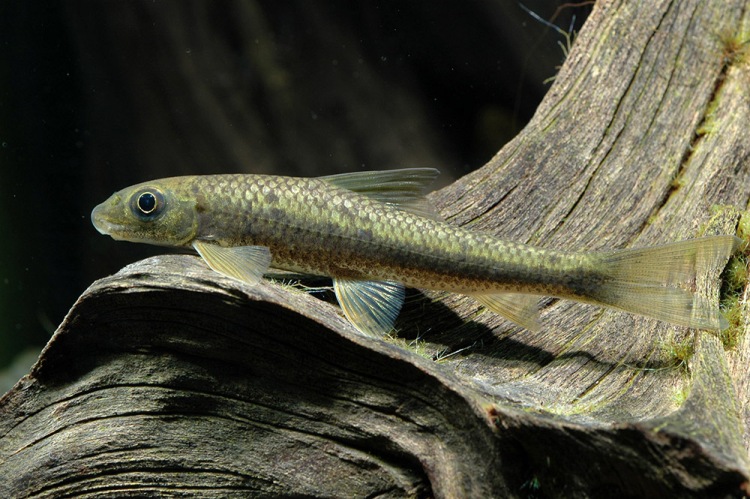
Crossocheilus latius
Hamilton, 1822
Matched on Crossochilus latius punjabensis, a name it was formerly known by
Max length150mm SL6in SLTank150 × 45cm60 × 18inTemp18–24°C64–75°FpH6.0–7.5C. latius isn't often available in the trade but makes an excellent alternative to more commonly-offered members of the genus should you be lucky enough to find some. Shipments of similar-looking Indian Garra species such as G. mullya or G. gotyla sometimes contain the odd specimen. It exhibits morphological differences when compared with other members of the genus and may be assigned to a separate taxon at some point in the future.
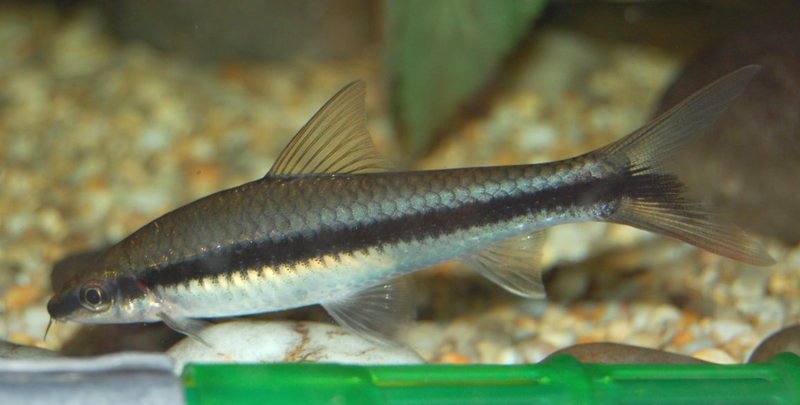
Crossocheilus nigriloba
Popta, 1904
Matched on Crossochilus oblongus var. nigriloba, a name it was formerly known by
Max length150mm SL6in SLTank150 × 45cm60 × 18inTemp20–26°C68–79°FpH6.0–7.5While separating some of the fish that may be found on sale as 'C. siamensis' is a tricky task, C. nigriloba is quite simple to identify. The dark lateral body stripe uniquely breaks up into a series of blotches when the fish are sparring, stressed or sleeping and the lower caudal fin lobe contains dark pigmentation suffused with red. The latter feature has given rise to the trade name of 'penguin flying fox'.
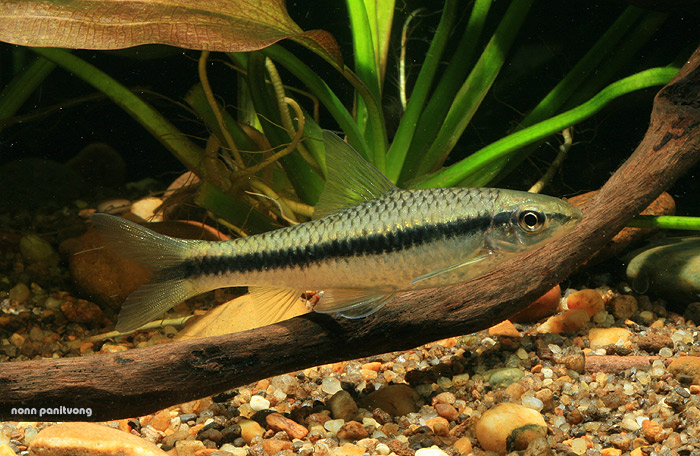
Crossocheilus atrilimesSiamese Algae Eater
Kottelat, 2000
Max length75mm SL3.0in SLTank120 × 30cm48 × 12inTemp20–26°C68–79°FpH6.0–7.5This species is among a handful of near-identical congeners that are traded as 'Siamese algae-eater' (often abbreviated to 'SAE'), 'Siamese flying fox' and 'Crossocheilus siamensis'. The latter name is not valid, however, and is a synonym of Epalzeorhynchos siamensis which is itself a synonym of Crossocheilus oblongus, a species described from Java. C. oblongus is currently accepted to...
Crossocheilus burmanicus
Hora, 1936
Matched on Crossocheilus latius burmanicus, a name it was formerly known by
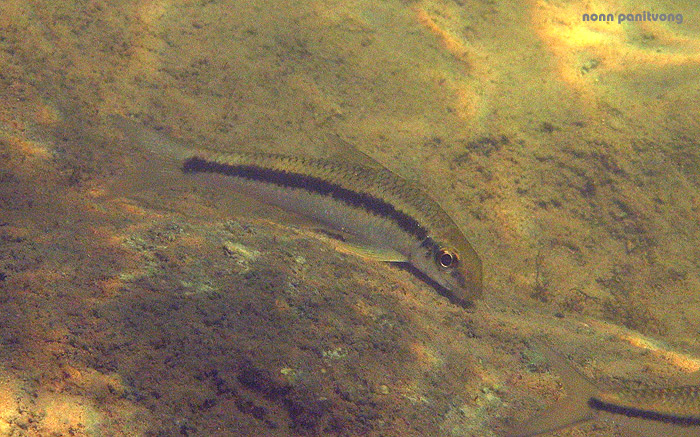
Max length120mm SL5in SLTank150 × 45cm60 × 18inTemp20–26°C68–79°FpHnot recordedWe've been unable to obtain a diagnosis for this species to date but it can at least be distinguished from those congeners traded as 'Crossocheilus siamensis' (an invalid name synonymous with C. oblongus, which is itself of questionable identity), 'Siamese algae eater', or 'SAE' by the fact that the dark lateral stripe does not extend into the caudal-fin. Members of Crossocheilus are characterised by...
Crossocheilus elegans
Kottelat & Tan, 2011
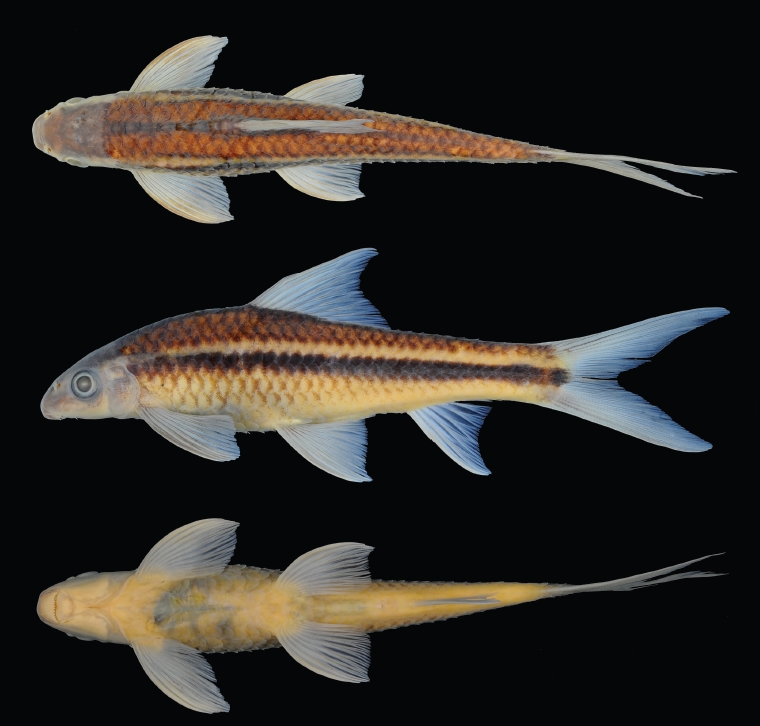
Max length110mm SL4in SLTank150 × 45cm60 × 18inTemp20–25.5°C68–78°FpHnot recordedThis species can be most easily distinguished from other members of the genus by its colour pattern which consists of a blackish midlateral stripe extending from the tip of the gill opening to the middle of the caudal-fin base, which is separated from the dark brown dorsum by a pale yellowish brown stripe. This differs from the pattern seen in other Crossocheilus species with a black midlateral stripe in which the the dorsum is olive brown and much paler than the midlateral stripe, there is no yellow stripe between the dorsum and the black stripe, and the black stripe extends to the tip of the snout.
Crossocheilus reticulatus
Fowler, 1934
Matched on Crossocheilus reticulatus, a name it was formerly known by
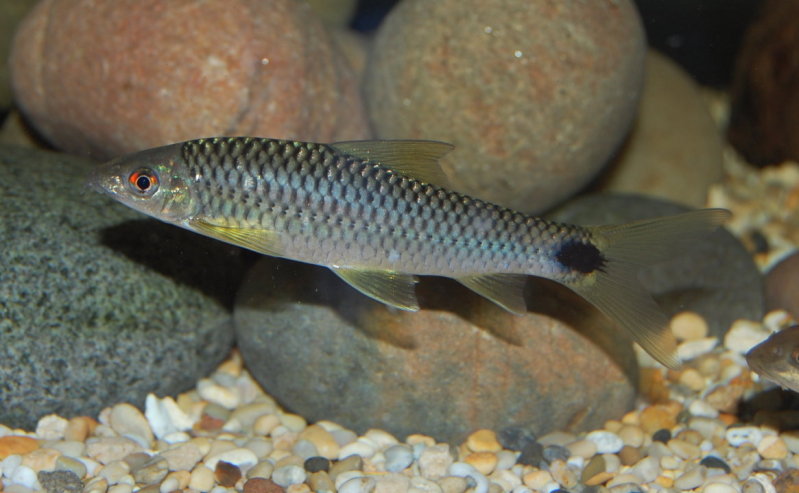
Max length170mm SL7in SLTank180 × 45cm72 × 18inTemp16–24°C61–75°FpH6.0–7.5While some laterally-striped members of the genus look very similar to one another the combination of silvery body, dark-edged scales and dark caudal peduncle blotch set C. reticulatus uniquely apart. The names Crossocheilus tchangi, Epalzeorhynchos coatesi and E. stigmaeus are all now considered synonyms of the species but were erected because the fish vary, most often in minor aspects of patt...
Crossocheilus cobitis
Bleeker, 1854
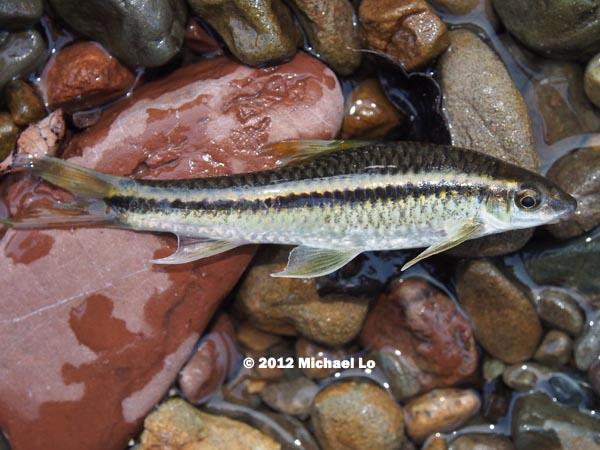
Max length52mm SL2.0in SLTank100 × 30cm39 × 12inTemp20–26°C68–79°FpHnot recordedGiven its wide natural range it seems logical that this species is or has been available in the aquarium trade, although its correct name may never have been applied. It is told apart from congeners by the following combination of characters: two pairs of barbels; a continuous midlateral stripe from the tip of the snout to the base of the caudal-fin, with a conspicuous small blotch at the posterior extremity, faintly marked on the caudal-fin; a faint mark between the anus and the anal-fin origin in juveniles; a narrow mouth.
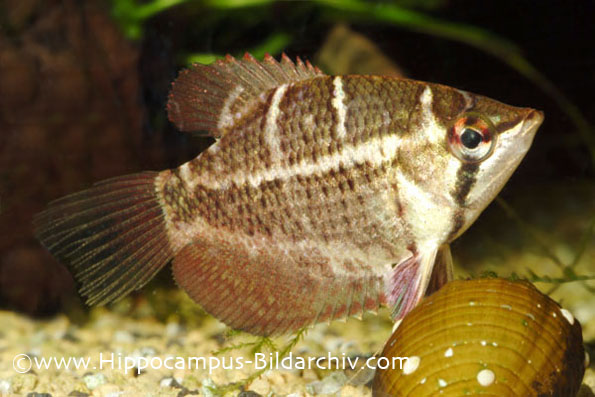
Sphaerichthys selatanensisCrossband Chocolate Gourami
Vierke, 1979
Matched on the common name Crossband Chocolate Gourami
Max length45mm SL1.8in SLTank60 × 30cm24 × 12inTemp26–31°C79–88°FpH4.0–6.5This species is only occasionally seen in the hobby and sometimes sold as 'cherry chocolate gourami'. It was originally described as a subspecies of S. osphromenoides since the two are very similar-looking but has been considered a species in its own right since the late 1980s. The two differ in the number ofrays (7 in S. selatanensis vs. 9-10 in S. osphromenoides),rays (7 vs. 8),...
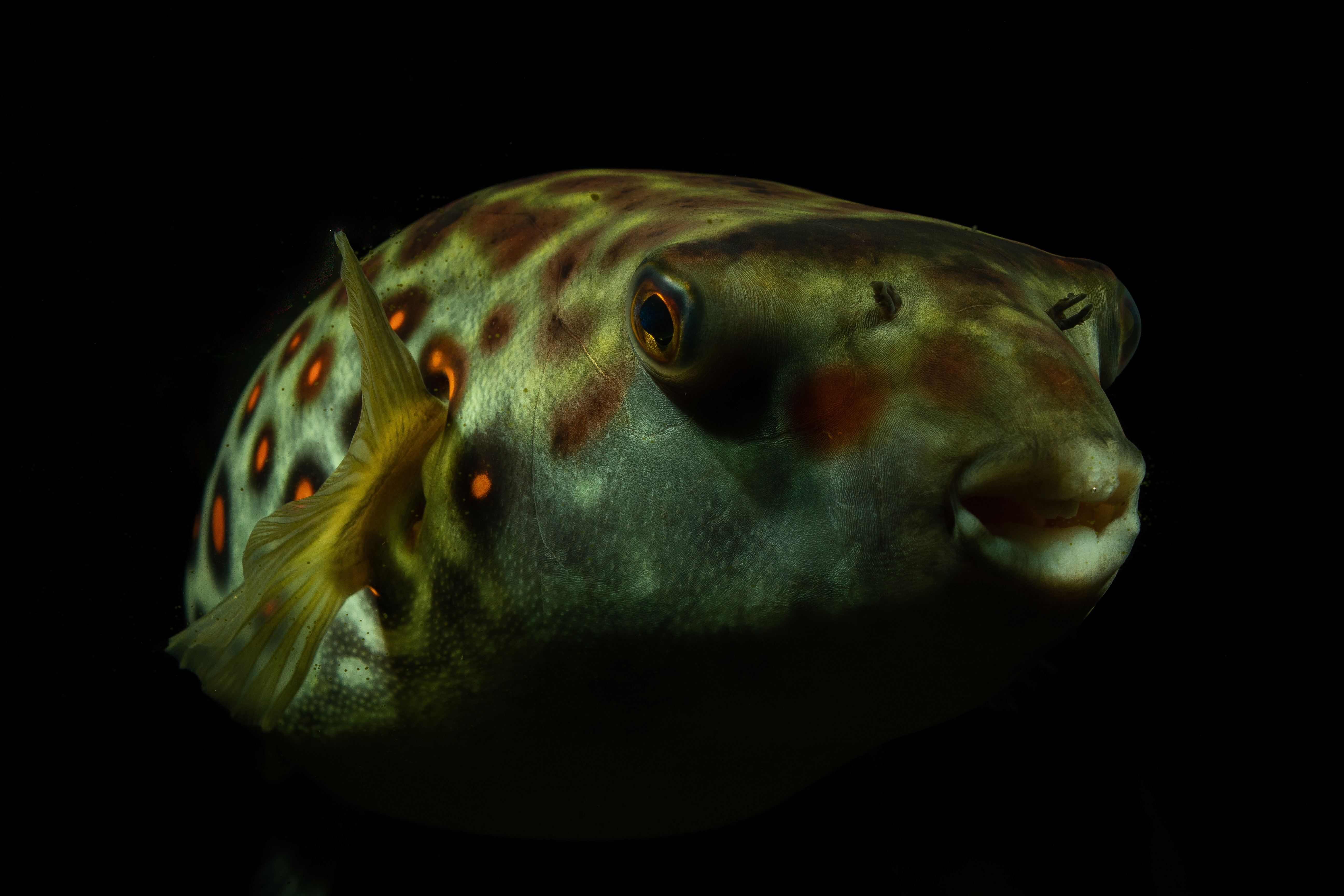
Tetraodon pustulatusCross River Pufferfish
Murray, 1857
Matched on the common name Cross River Pufferfish
Max length300mm SL12in SLTank150 × 60cm60 × 24inTemp20–28°C68–82°FpH6.5–7.5Tetraodon pustulatus
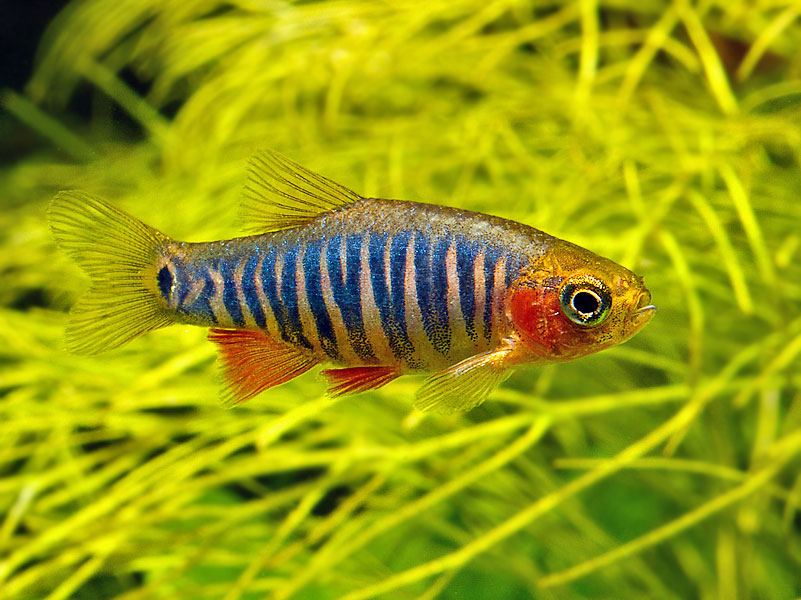
Celestichthys erythromicron
Annandale, 1918
Max length20mm SL0.8in SLTank60 × 30cm24 × 12inTemp20–24°C68–75°FpH7.0–8.0This species was formerly included in the genus Microrasbora although it's long-been considered a danionin by certain authors, e.g., Kottelat and Witte (1999) and was placed within the genus Danio for a period. In the aquarium trade it's marketed under various names including 'emerald dwarf danio', 'thick band purple zebra danio' and 'cross-banded dwarf rasbora'.
Oreochromis niloticus niloticusNile Tilapia
authority not recorded
Max length600mm SL24in SLTank210 × 60cm84 × 24inTemp21–27°C70–81°FpH6.2–8.5One of the most invasive fish species in the world but also one of the most economically important, O. niloticus is bred in huge numbers in many countries as a food fish. It is often cross-bred with other Oreochromis species for colour in order to make the fish more appealing to consumers. The destructive effect of O. niloticus on non-native ecosystems into which it escapes or is released is mainly due to it's adaptibility. It has been recorded over a temperature range of 60-110°F an...
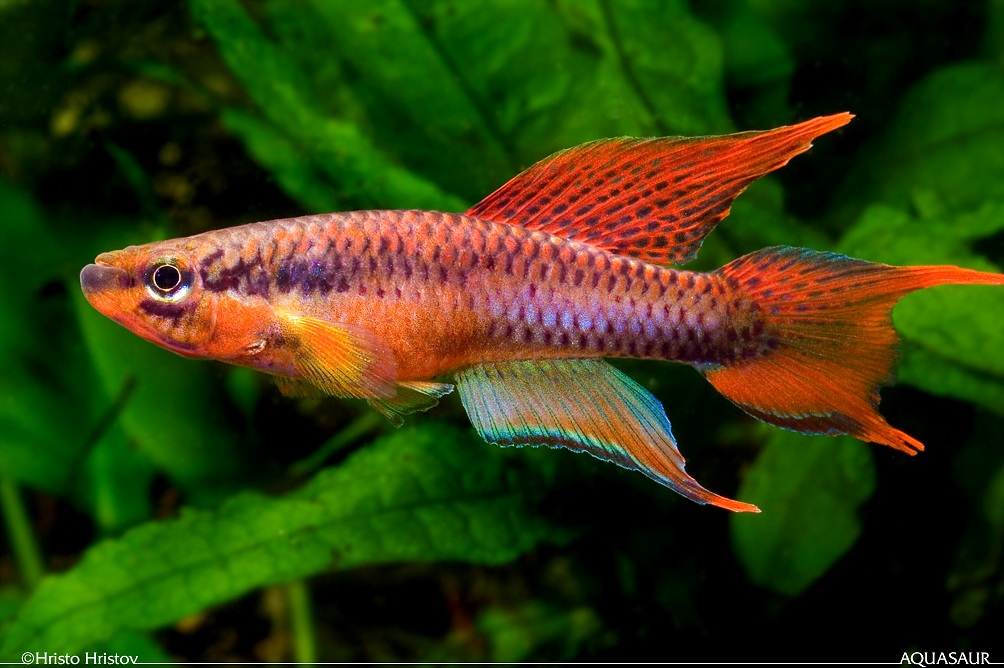
Aphyosemion bitaeniatumTwo-Striped Lyretail
Ahl, 1924
Max length45mm SL1.8in SLTanknot recordedTemp24–30°C75–86°FpH5.0–6.5This species is widely-distributed in lowland, coastal regions of Togo, Benin and Nigeria as far as the Cross River delta, and occurs at some inland localities along the lower Niger River. Populations in Cameroon, Equatorial Guinea and Gabon are now considered to represent other species.
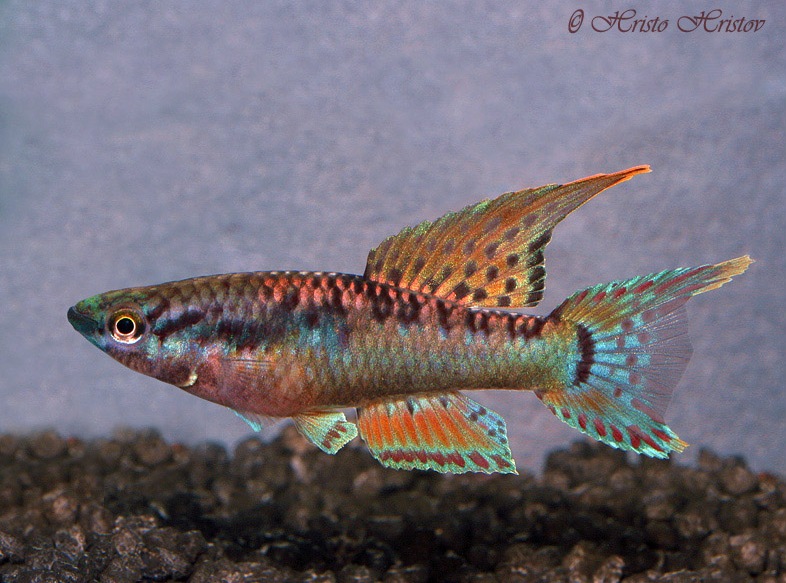
Aphyosemion bivittatumTwo-Banded Lyretail
Lönnberg, 1895
Max length50mm SL2.0in SLTanknot recordedTempnot recordedpHnot recordedType locality is close to a waterfall on the Ndian River in southwestern Cameroon, and appears restricted to the coastal plains either side of the border between Cameroon and Nigeria, including the Korup and Cross River National Parks.
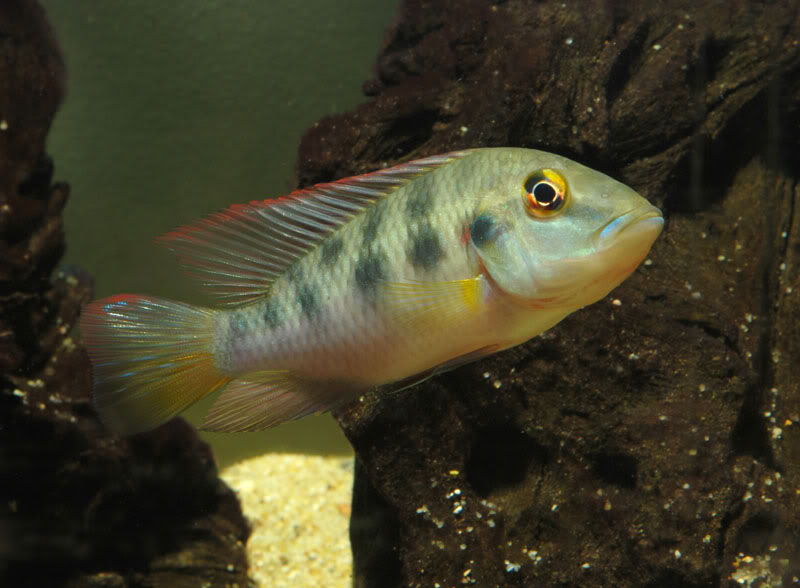
Chromidotilapia guntheri
Sauvage, 1822
Max length♂ 150 · ♀ 100mm SL♂ 6 · ♀ 3.9in SLTank120 × 30cm48 × 12inTemp24–27°C75–81°FpH6.0–8.0Described from Assinie-Mafia in south-eastern Côte d'Ivoire (Ivory Coast), western Africa but currently accepted to be extensively distributed in coastal river drainages of central western Africa from the Saint John River, central Liberia to the Cross River drainage, in southeastern Nigeria and southwestern Cameroon. It also occurs in the Niger and its major tributary the Benue (Bénoué) and has thus been recorded from Benin, Burkina Faso, Cameroon, Côte d'Ivoire, Equatorial Guinea, Ghana, Guinea, Liberia, Mali, Niger, Nigeria and Togo.
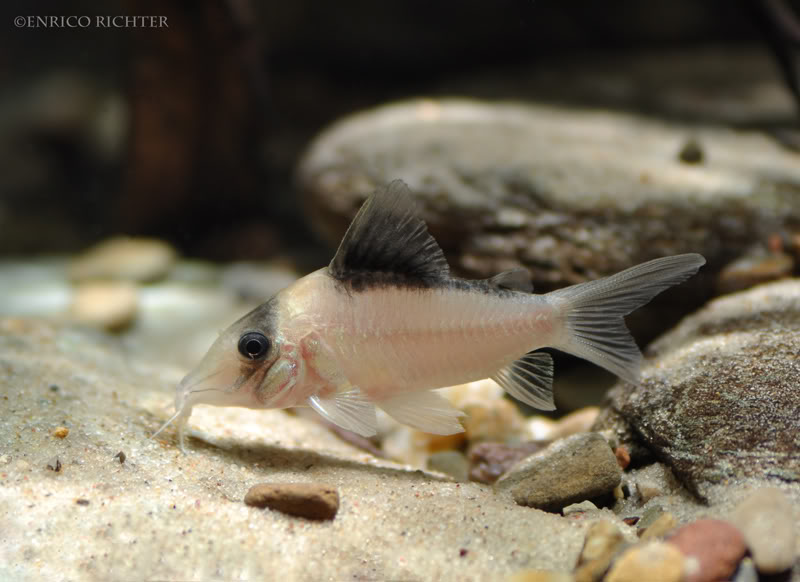
Corydoras imitatorImitator Cory
Nijssen & Isbrücker, 1983
Max length65mm SL2.6in SLTank90 × 30cm36 × 12inTemp20–26°C68–79°FpH4.0–7.0Endemic to the upper rio Negro basin in Amazonas state, northern Brazil, and Amazonas state, southern Venezuela. One specific locality is Igarapé Muiá (00°09'03"N 66°48'10"W). Type locality is 'Upper Rio Negro, eastern Amazonas, Brazil', which is thought to refer to forest brooks crossing the "new army road", north of São Gabriel da Cachoeira municipality.
Ctenopoma kingsleyaeTailspot Ctenopoma
authority not recorded
Max length250mm SL10in SLTanknot recordedTemp25–28°C77–82°FpH6.0–8.0This species can be exceptionally long-lived and there are reports of specimens surviving in aquaria for over 30 years. It is named after the explorer Mary Kingsley, and often goes by the common name of Kingsley's climbing perch. While Ctenopoma are closely related to the Asian climbing perch (Anabas sp.), they are not known to have the ability to cross areas of land like this species. Like others in the suborder Anabantoidei, the species possesses an accessory breathing organ known as t...
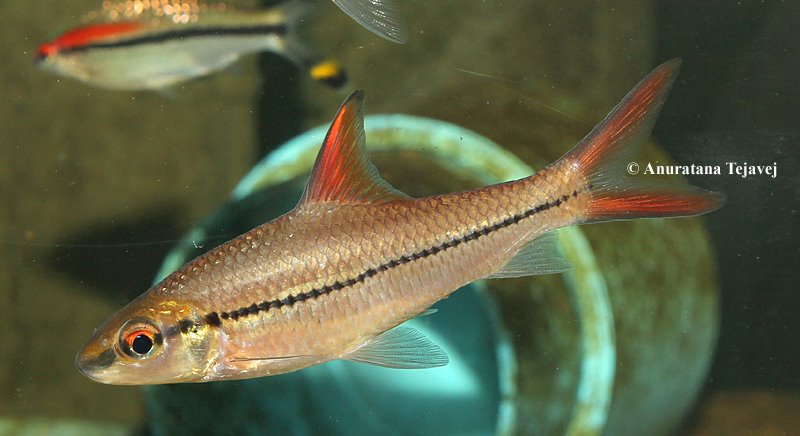
Cyclocheilichthys janthochir
Bleeker, 1854
Max length200mm SL8in SLTank180 × 45cm72 × 18inTemp22–27°C72–81°FpH4.0–7.0In the exceptionally diverse Danau Sentarum lake system of the upper Kapuas River basin, West Kalimantan, sympatric species include Scleropages formosus, Barbonymus gonionotus, B. schwanenfeldii, Crossocheilus nigriloba, Cyclocheilichthys apogon, C. repasson, Epalzeorhynchos kalopterus, Labiobarbus ocellatus , Leptobarbus hoevenii, Luciosoma spilopleura plus various representatives of Barbodes, Rasbora and Osteochilus.
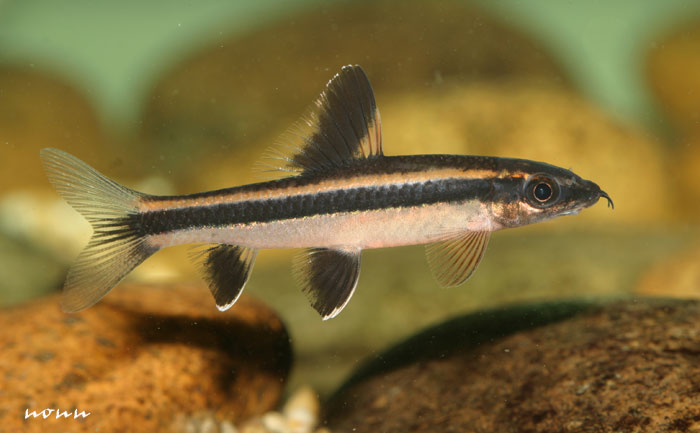
Epalzeorhynchos kalopterumFlying Fox
Bleeker, 1850
Max length160mm SL6in SLTank120 × 45cm48 × 18inTemp20–26°C68–79°FpH6.0–7.5Confusion with similar-looking fishes from other genera, such as Garra cambodgiensis, laterally-striped Crossocheilus spp. or Gyrinocheilus aymonieri is not uncommon, and are largely attributable to the use of trade names such as 'false flying fox' or 'Siamese flying fox'. When compared with the other species E. kalopterus exhibits several unique characters but perhaps the simplest way to identify it is by the characteristic white-edged, red and black coloured fins and the presence of two pairs of barbels.
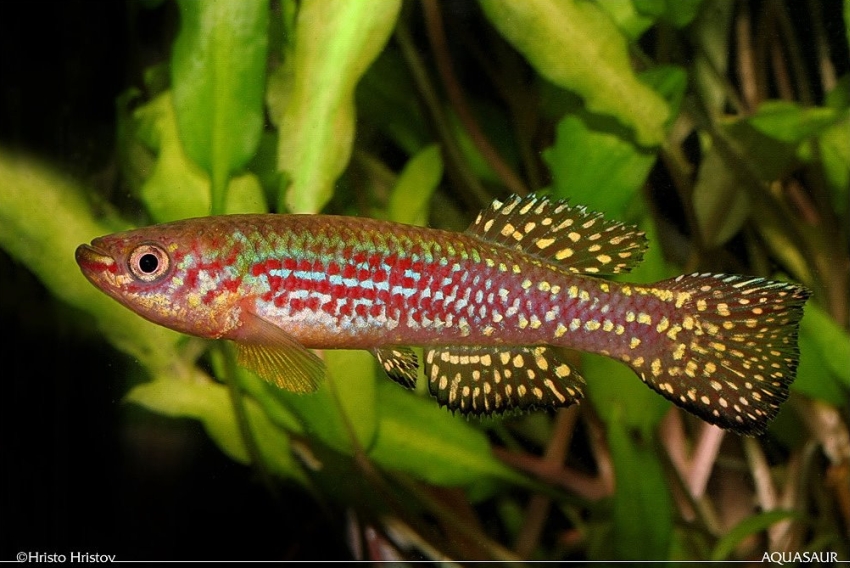
Fundulopanchax gresensi
Berkenkamp, 2003
Max length47mm SL1.9in SLTanknot recordedTemp22–26°C72–79°FpH6.0–7.5Known only from a relatively small area near the villages of Takwai I and II, Atebong Wire and Edjuingan in wester Cameroon, with records existing from the Bagwor and Mack river systems both of which are tributaries within the upper Cross River basin, western Cameroon. Type locality is 'West Cameroon, 5°34'N, 9°50'E'. Collections of wild fish are generally lab...