Results for “várzea”
Type a name: scientific, common, or one a species used to go by. Or narrow the catalogue with the filters.
Filters
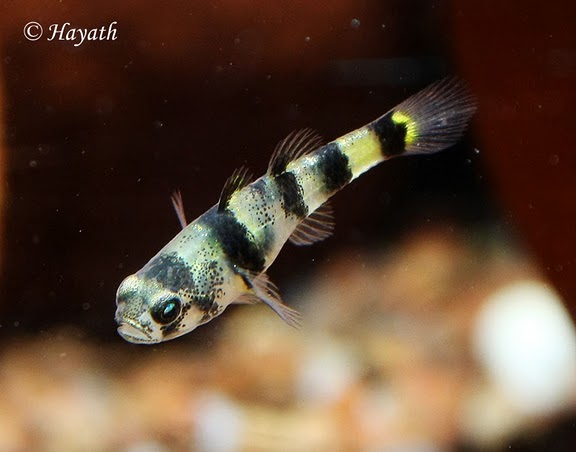
Brachygobius nunus
Hamilton, 1822
Max length25mm SL1.0in SLTank45 × 30cm18 × 12inTemp22–28°C72–82°FpHnot recordedType locality is the 'river below Calcutta' which corresponds to the western side of the Ganges River delta south of Kolkata, West Bengal state, with reports as to its wider distribution varying significantly. It's sometimes said to be present throughout India plus both mainland and maritime southeast Asia, but is more likely restricted to India, Bangladesh, Sri Lanka, and possibly Myanmar.
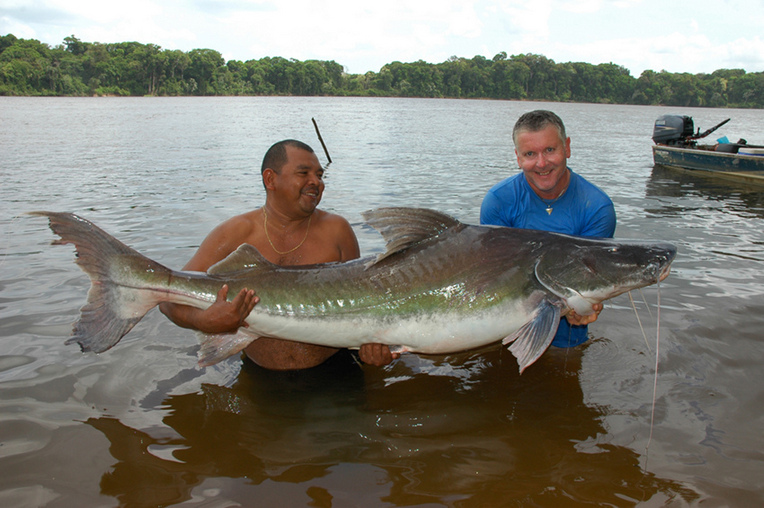
Brachyplatystoma filamentosumPiraíba
Lichtenstein, 1819
Max length2500mm SL98in SLTanknot recordedTemp22–28°C72–82°FpH6.0–8.0In the Amazon region it is only specimens larger than around 160 cm and werighing in excess of 50 kg that are referred to as 'Piraíba' with the name 'filhote' normally applied to smaller individuals. Other vernacular names include 'Salton catfish', 'Kumakuma'; and 'tiger antenna catfish'; with members of the genus often referred to collectively as 'goliath catfishes'.
Bunocephalus coracoideusBanjo Catfish
authority not recorded
Max length150mm SL6in SLTank60 × 38cm24 × 15inTemp20–27°C68–81°FpH5.8–7.8Bunocephalus is the largest genus within the Aspredinidae family and there are several undescribed species. B. coracoideus is the most common member seen in dealers' tanks. Its native name "Guitarrita" translates as "little guitar" and refers to the shape of the fish when viewed from above. Despite the regularity with which it is seen for sale, it isn't really a good catfish for the general community tank because it's a largely inactive, secretive species, ...
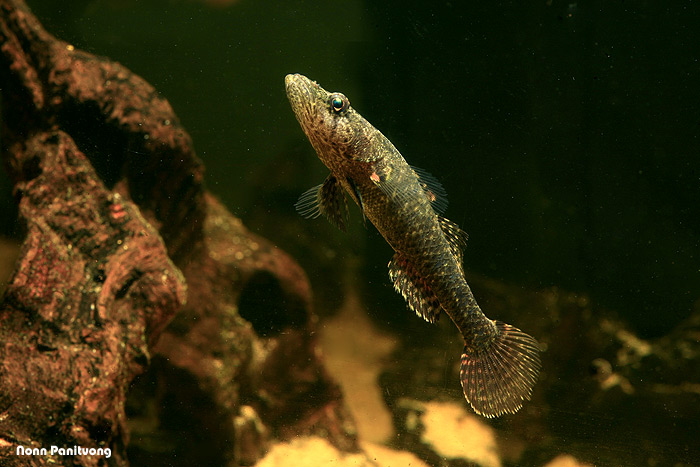
Butis butisCrazy Fish
Hamilton, 1822
Max length120mm SL5in SLTank75 × 30cm30 × 12inTemp22–27°C72–81°FpH7.0–8.5Butis spp. are largely nocturnal ambush predators with cryptic patterning to help them blend in with their surroundings. They can also lighten and darken their body colouration to an extent, have a habit of aligning themselves with solid surfaces whether horizontal, vertical, or inverted, and often swim in an upside-down position. The genus is usually included in the family Eleotridae of which members are often referred to...
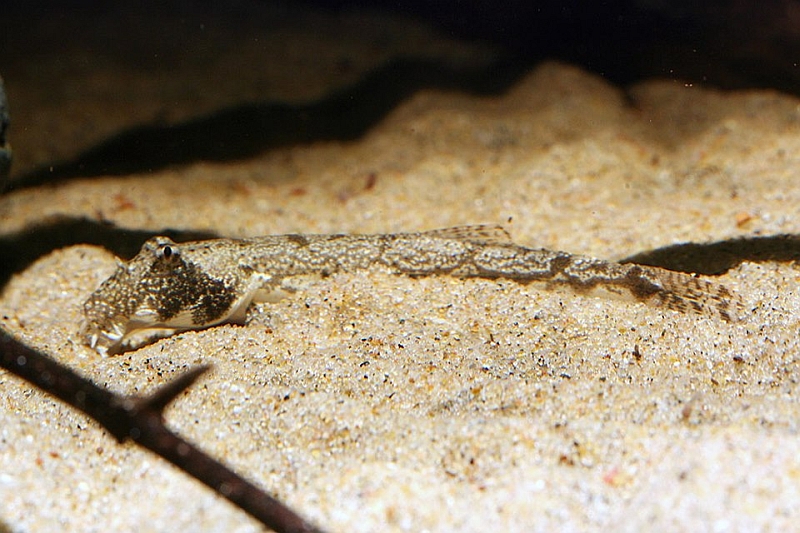
Canthophrys gongotaMoose-faced Loach
Hamilton, 1822
Max length110mm SL4in SLTank90 × 30cm36 × 12inTemp18–22°C64–72°FpH6.0–7.0Mostly known from slow-moving, relatively shallow tributaries and minor rivers with substrates of mud, sand or gravel. Aquatic plants are only occasionally present but riparian vegetation apparently grows thickly at some localities. In the Schutunga River, part of the Mansai River drinage which is itself a tributary of the Brahmaputra in West Bengal state, In...
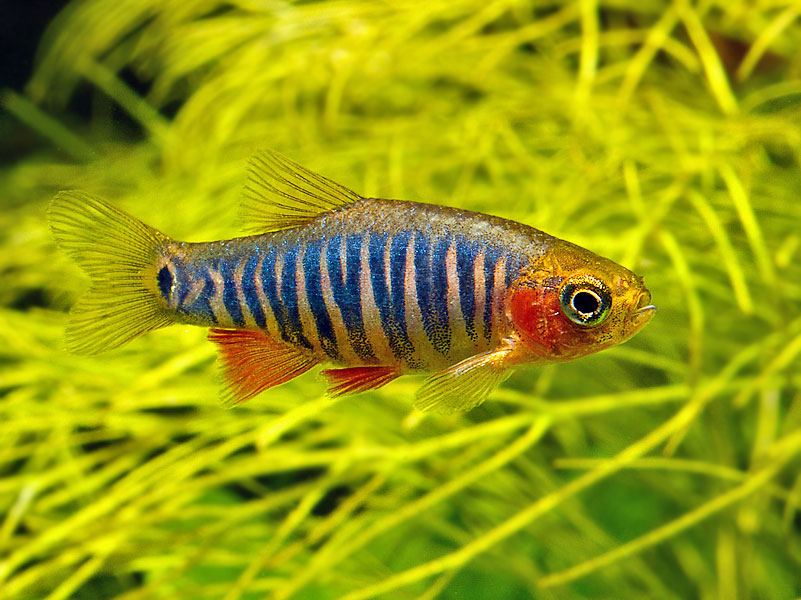
Celestichthys erythromicron
Annandale, 1918
Max length20mm SL0.8in SLTank60 × 30cm24 × 12inTemp20–24°C68–75°FpH7.0–8.0This species was formerly included in the genus Microrasbora although it's long-been considered a danionin by certain authors, e.g., Kottelat and Witte (1999) and was placed within the genus Danio for a period. In the aquarium trade it's marketed under various names including 'emerald dwarf danio', 'thick band purple zebra danio' and 'cross-banded dwarf rasbora'.
Cetopsis coecutiensBlue Whale Catfish
authority not recorded
Max length265mm SL10in SLTank120 × 45cm48 × 18inTemp22–26°C72–79°FpH6.0–7.4An infrequently seen but very interesting oddball species for those who are looking for something a little different. To others, it might appear to be a rather nasty species. In the wild, it swims in voracious feeding groups. Apparently, it can home in on weakened or distressed fish as it has a very well developed sense of smell. Other specialisations include the tiny eyes and particularly slimy skin. The former are reduced in size and covered by a thin layer of skin so they are less likely to b...
Chaetostoma formosaeStriped Bulldog Pleco
Ballen, 2011
Max length105mm SL4in SLTank120 × 30cm48 × 12inTemp20–24°C68–75°FpH6.5–7.8This species is traded under a number of English vernacular names, of which some others include 'blonde bulldog pleco', 'blonde rubber pleco', 'blonde rubbernose pleco', 'striped rubber pleco', and 'striped rubbernose pleco'. It may also be seen referred to as 'L146', 'L146a', or 'L187b', these codes having been used for it in the Aqualog series of books. It can be told apart from all congeners except C. anale and C. jegui by...
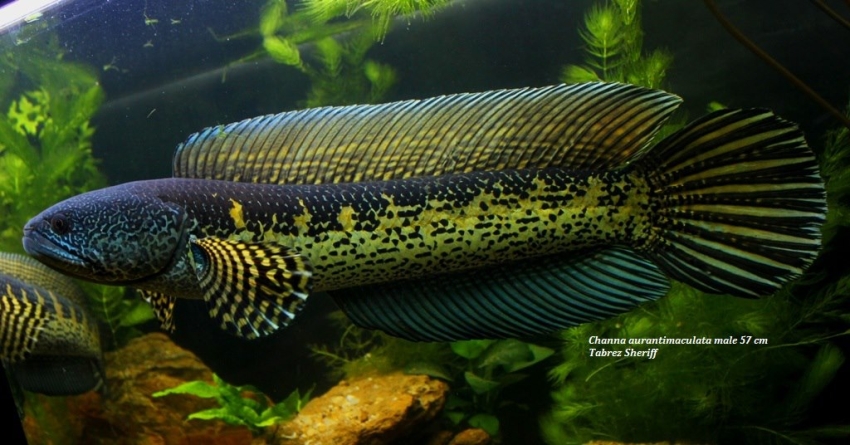
Channa aurantimaculataOrange-spotted Snakehead
Musikasinthorn, 2000
Max length400mm SL16in SLTank150 × 60cm60 × 24inTemp10–28°C50–82°FpH6.0–8.0This species is also traded as 'golden cobra snakehead' and is available in the aquarium trade on a regular basis. It can be distinguished from other Channa species by the following combination of characters: 51-54 lateral line scales; 45-47 dorsal-fin rays; 28-30 anal-fin rays; 8-12 cheek scales; 50-52 total verte...
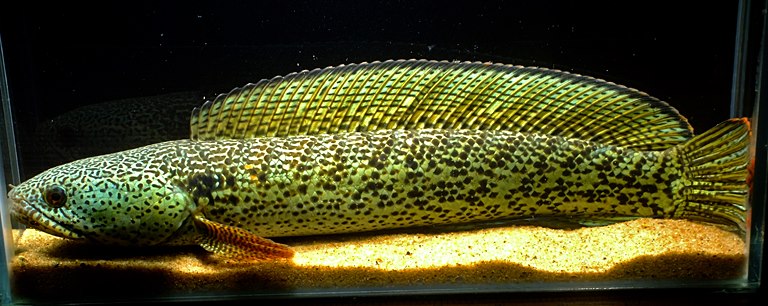
Channa barca
Hamilton, 1822
Max length900mm SL35in SLTanknot recordedTemp10–28°C50–82°FpH6.0–8.0Has been observed to inhabit vertical burrows around the margins of wetlands which typically become dry during winter months. These burrows are most often around a metre dee...
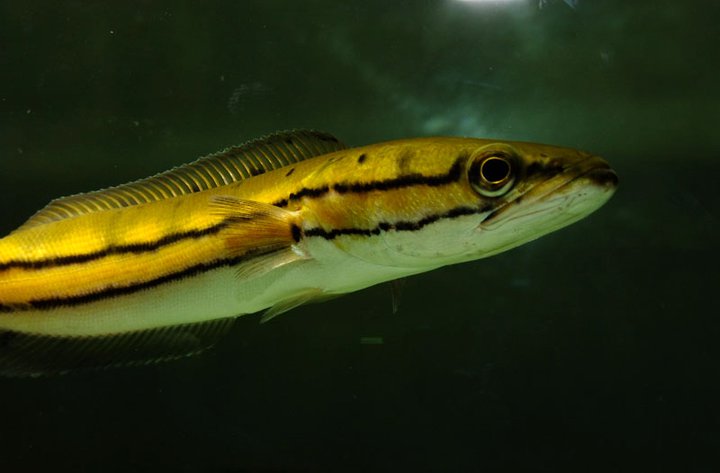
Channa diplogrammaMalabar Snakehead
Day, 1865
Max length480mm SL19in SLTanknot recordedTemp22–32°C72–90°FpH6.0–8.0This species was considered synonymous with the Indochinese congener C. micropeltes for over a century before being revalidated in 2011. Like in C. micropeltes colour pattern varies depending on the age of the fish. Juveniles possess two longitudinal black stripes on the head and body with the are...
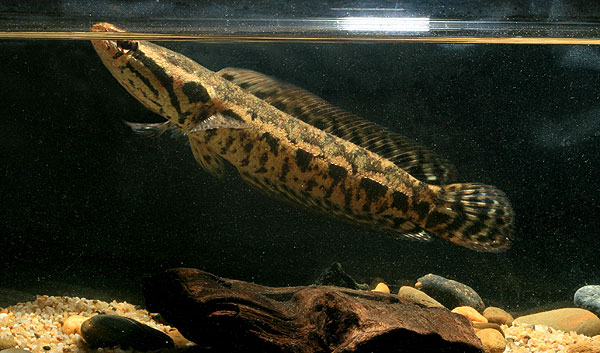
Channa luciusForest Snakehead
Cuvier, 1831
Max length400mm SL16in SLTank150 × 60cm60 × 24inTemp20–30°C68–86°FpH5.0–7.5Prefers a dimly-lit aquarium with plenty of cover in the form of live plants, driftwood branches, terracotta pipes, plant pots, etc., arranged to form a network of nooks, crannies, and shaded spots. Surface vegetation such as Ceratopteris spp. is also appreciated and makes the fish less inclined to conceal themselves.
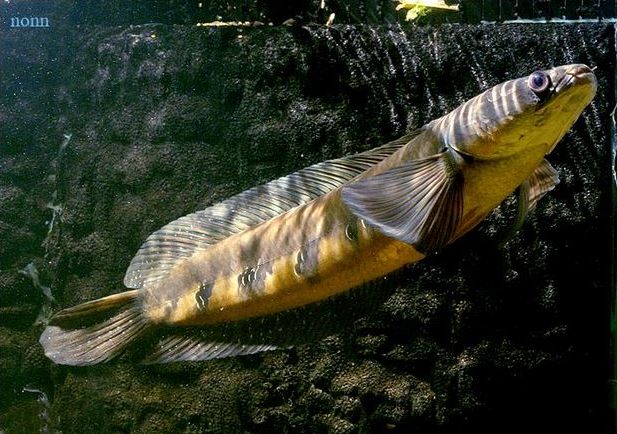
Channa marulioidesEmperor Snakehead
Bleeker, 1851
Max length650mm SL26in SLTanknot recordedTemp22–30°C72–86°FpH6.0–8.0This species is often confused with the nominal congeners C. marulius (Hamilton, 1822) and C. melanoptera (Bleeker, 1855) with all three presenting taxonomic problems. For example, C. marulioides exhibits a number of variations in colour pattern depending on collection locality with the most common possessing a brownish base colour with a series of dark, chevron-like markings along each flank and some scales margined posteriorly in white.
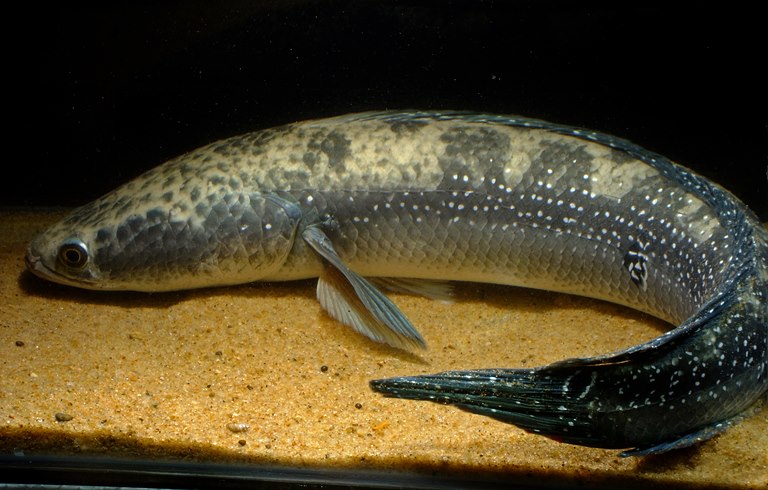
Channa maruliusBullseye Snakehead
Hamilton, 1822
Max length600mm SL24in SLTanknot recordedTemp15–28°C59–82°FpH6.0–8.0This species is also referred to as 'giant', 'great', 'cobra', or 'Indian' snakehead. Although currently-considered to be distributed throughout much of southern Asia it is widely-accepted to represent a complex of related species in need of additional research. A number of geographical variants exhibiting diffe...
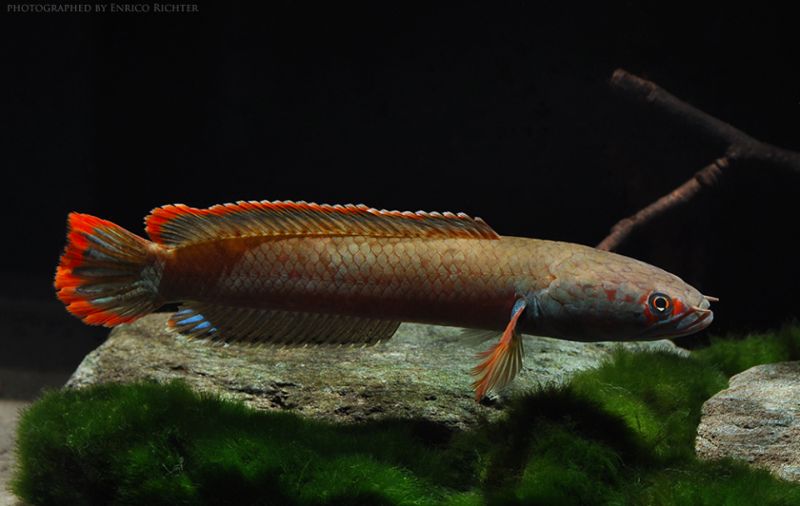
Channa sp. 'fire and ice'
authority not recorded
Max length150mm SL6in SLTank120 × 30cm48 × 12inTemp22–28°C72–82°FpH6.0–7.5This unidentified species first appeared in the aquarium trade during 2009. It's easily told apart from similar-looking congeners by the patches of vivid red pigmentation surrounding the eye and sides of the mouth plus the thick, reddish, marginal band in the caudal-fin.
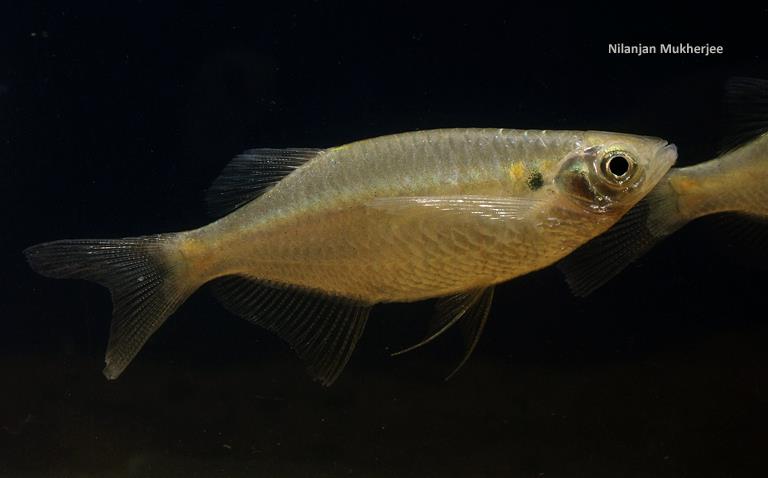
Chela cachiusNeon Hatchet Fish
Hamilton, 1822
Max length50mm SL2.0in SLTank90 × 30cm36 × 12inTemp18–24°C64–75°FpH6.0–8.0It is currently the only valid member of the genus but it is possible that additional taxa exist, particularly in Myanmar, while a number of former species are contained within the Laubuka assemblage, to which C. cachius is closely related. Phylogenetic studies suggest the existence of a monophyletic clade consisting of the genera Devario, Chela, Laubuca, Microdevario and Microrasbora plus the genus Betadevario.
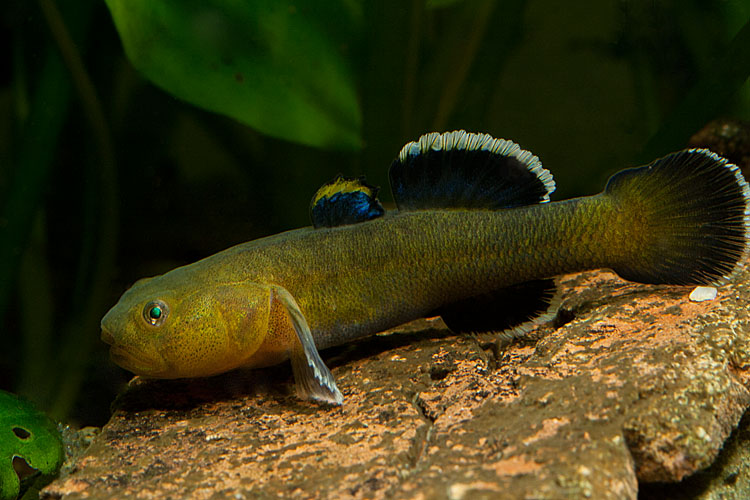
Chlamydogobius eremiusDesert Goby
Zietz, 1896
Max length60mm SL2.4in SLTank45 × 30cm18 × 12inTemp20–28°C68–82°FpH7.0–8.5Lake Eyre is a vast endorheic basin within which lies the lowest point in Australia at some 15 m BMSL. It only fills with water occasionally and when it does so forms the country's largest salt lake. C. eremius does not occur in the lake itself since no fishes are able to survive there, rather it inhabits isolated freshwater springs, flowing artesian bores (wells), and ephemeral waterholes where it tends to be associated with rocks and other submerged cover.
Cichla monoculusTucanare Peacock Bass
authority not recorded
Max length800mm SL31in SLTanknot recordedTemp25–28°C77–82°FpH6.5–7.5Due to their large size, Peacock Bass are only really recommended for the experienced fishkeeper that can house them adequately. That said, they are a hardy and robust species that will adapt to a variety of conditions. Peacock Bass are becoming much more available in the hobby and are often seen for sale as cute 2" babies, often tempting people into buying a fish they will not be able to care for in the long term. Peacock Bass are also fished as a sport fish....
Cichla ocellarisPeacock Bass
authority not recorded
Max length750mm SL30in SLTanknot recordedTemp24–27°C75–81°FpH6.5–7.0Due to their large size, Peacock Bass are only really recommended for the experienced fishkeeper that can house them adequately. That said, they are a hardy and robust species that will adapt to a variety of conditions. Peacock Bass are becoming much more available in the hobby and are often seen for sale as cute 2" babies, often tempting people into buying a fish they will not be able to care for in the long term. Peacock Bass are also fished as a sport fish....
Cichla orinocensisOrinoco Peacock bass
authority not recorded
Max length600mm SL24in SLTanknot recordedTemp27–29°C81–84°FpH5.5–6.5Due to their large size, Peacock Bass are only really recommended for the experienced fishkeeper that can house them adequately. That said, they are a hardy and robust species that will adapt to a variety of conditions. Peacock Bass are becoming much more available in the hobby and are often seen for sale as cute 2" babies, often tempting people into buying a fish they will not be able to care for in the long term. Peacock Bass are also fished as a sport fish....