Results for “anal-fin”
Type a name: scientific, common, or one a species used to go by. Or narrow the catalogue with the filters.
Filters
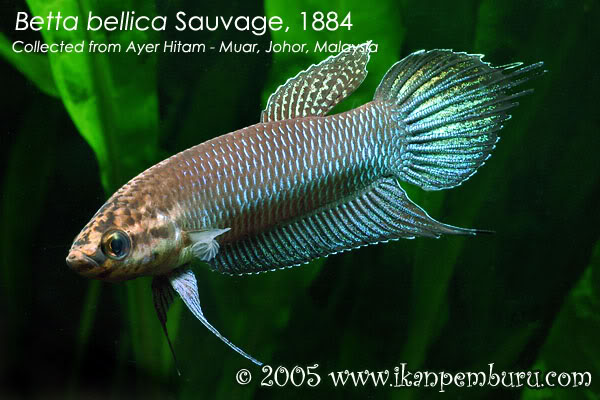
Betta bellicaSlender Betta
Sauvage, 1884
Max length90mm SL3.5in SLTank80 × 30cm31 × 12inTemp25–30°C77–86°FpH4.0–7.0This species lends it name to the B. bellica group/complex of closely-related species within the genus, an assemblage of which members share the following set of characters: long and slender body with dorsal and ventral margins almost parallel; body depth 23-28 % SL; 30-33 anal-fin rays; 11-13 dorsal-fin rays; 32-34 total vertebrae; body dark brown in colour with iridescent green markings on each individual scale.
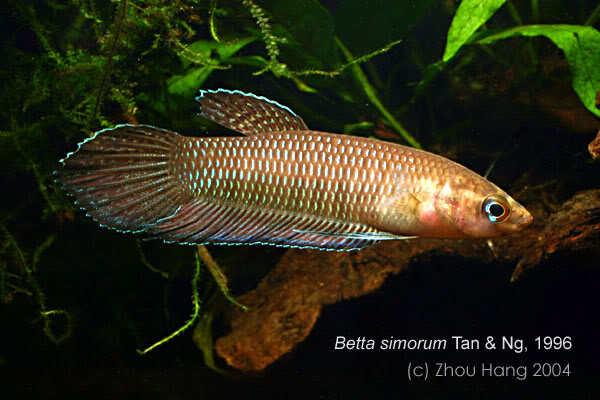
Betta simorum
Tan & Ng, 1996
Max length90mm SL3.5in SLTank80 × 30cm31 × 12inTemp25–30°C77–86°FpH3.0–6.0This species is included in the B. bellica group/complex of closely-related species within the genus, an assemblage of which members share the following set of characters: long and slender body with dorsal and ventral margins almost parallel; body depth 23-28 % SL; 30-33 anal-fin rays; 11-13 dorsal-fin rays; 32-34 total vertebrae; body dark brown in colour with iridescent green markings on each individual scale.
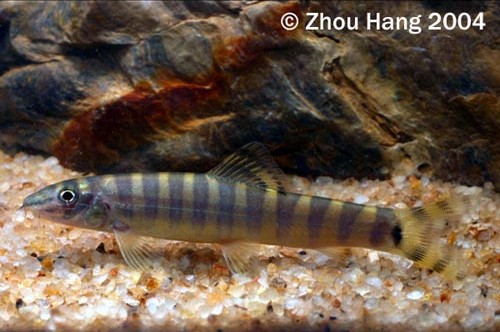
Parabotia lijiangensis
Chen, 1980
Max length83mm SL3.3in SLTank120 × 30cm48 × 12inTemp20–24°C68–75°FpH6.0–7.5It's told apart from congeners by a combination of characters as follows: large scales present on body and sides of head; caudal fin deeply forked with subequal lobes; 10-13 dark, vertical bars on the body; a dark, ocellated spot in the centre of the caudal-fin base; two bars on top of head, dorsal-fin with two rows of greyish spots; caudal-fin lobes with 3-4 dark bands on each; anal-fin with one indistinct band and another, more distinct, submarginal band; ventral fins with two indistinct bands.
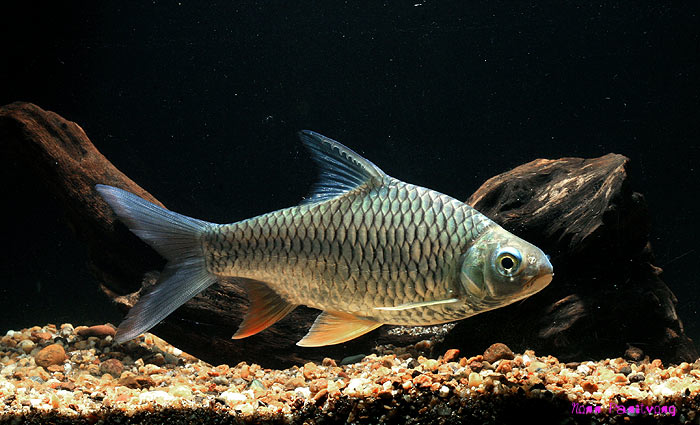
Hypsibarbus vernayi
Norman, 1925
Max length216mm SL9in SLTank240 × 60cm96 × 24inTemp20–26°C68–79°FpH6.0–8.0It is very similar to H. wetmorei but can be told apart by possessing yellow (vs. orange to red in H. wetmorei) pectoral, pelvic, and anal fins. It thus appears likely that yellow-finned fish marketed as H. wetmorei or 'lemon fin barb' in the ornamental trade are actually H. vernayi, with both species available on a regular basis.
Crossocheilus cobitis
Bleeker, 1854
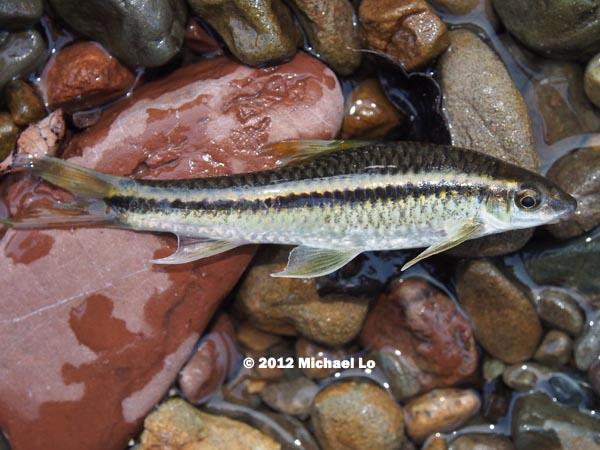
Max length52mm SL2.0in SLTank100 × 30cm39 × 12inTemp20–26°C68–79°FpHnot recordedGiven its wide natural range it seems logical that this species is or has been available in the aquarium trade, although its correct name may never have been applied. It is told apart from congeners by the following combination of characters: two pairs of barbels; a continuous midlateral stripe from the tip of the snout to the base of the caudal-fin, with a conspicuous small blotch at the posterior extremity, faintly marked on the caudal-fin; a faint mark between the anus and the anal-fin origin in juveniles; a narrow mouth.
Pethia cumingiiCuming's Barb
Günther, 1868
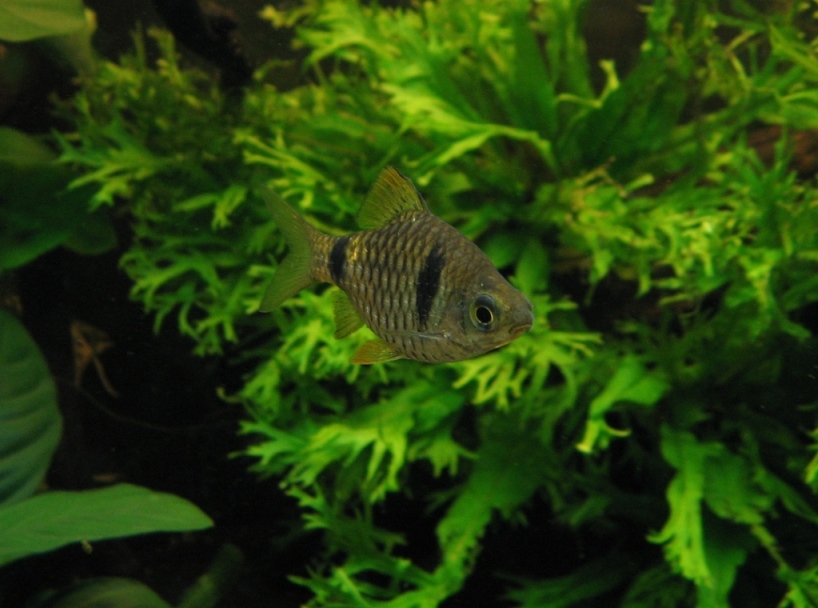
Max length41mm SL1.6in SLTank60 × 30cm24 × 12inTemp20–27°C68–81°FpH5.5–7.0For many years this species was considered to occur in two colour forms with yellow or red dorsal, anal, and pelvic fins, respectively, but the red-finned variant has now been elevated to full species status as P. reval (Meegaskumbura et al. 2008). The latter is a smaller fish with a maximum SL of 33.6 mm recorded to date. As well as the obvious differences in body size and fin colour P. cumingii can be told apart from P. reval by the following...
Aulonocara jacobfreibergiMalawi Butterfly
Johnson, 1974
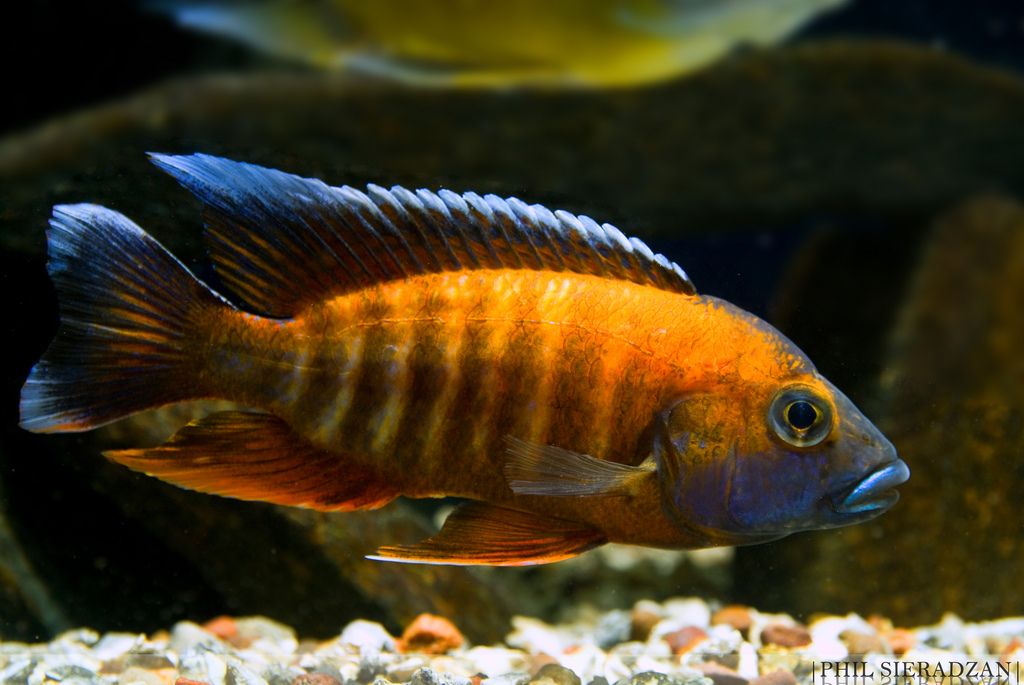
Max length170mm SL7in SLTank120 × 60cm48 × 24inTemp25–29°C77–84°FpH7.5–9.0This was one of the first Aulonocara spp. to enter the hobby and its popularity has endured. It's known by several other vernacular names including 'Freiberg's peacock', 'fairy cichlid' and 'African butterfly' as well as the erroneous 'scientific' names Trematocranus trevori, T. jacobfreigbergi and T. regina. A naturally-occurring, yellowish form from Undu reef, Tanzania is often referred to as 'lemon jake'. It can be told apart from most other members of the genus by the broad, pale distal margins in the dorsal, anal and caudal fins, more deeply-forked caudal fin and larger adult size.
Oreichthys cosuatis
Hamilton, 1822
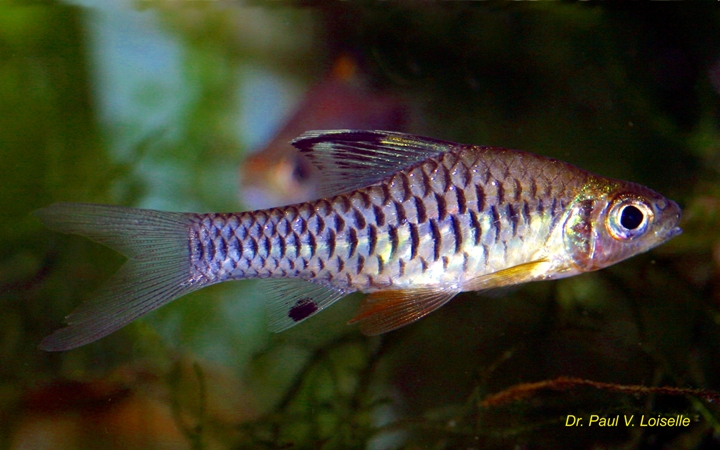
Max length43mm SL1.7in SLTank60 × 30cm24 × 12inTemp24–28°C75–82°FpH6.5–7.5An assortment of undescribed Oreichthys spp. from India, Myanmar and Thailand are currently traded as O. cosuatis. It can be distinguished from other described members of the genus by lacking a black blotch on the caudal peduncle, plus the following combination of characters: 2-3 perforated scales in lateral line; ½6½ between pelvic-fin origin and dorsal midline; presence of dark stripe in centre of anal-fin, forming a triangular blotch in adult individuals; dorsal-fin with whitish tip and broad, black, subdistal margin in the upper portion of the fin; 11-13 rows...
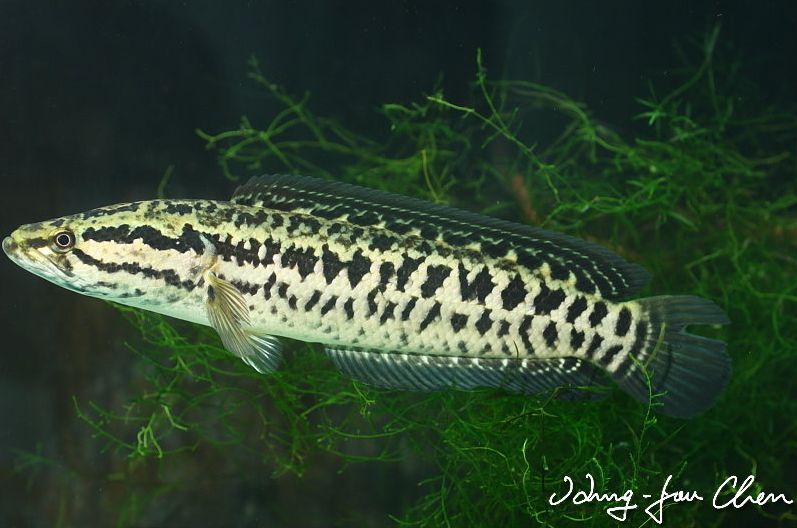
Channa maculataBlotched Snakehead
Lacepède, 1801
Max length300mm SL12in SLTanknot recordedTempnot recordedpHnot recordedThis species is frequently confused with C. argus but can be distinguished by the following characters: dorsal-fin rays 38-45 (vs. 47-50 in C. argus); anal fin rays 26-29 (vs. 31-36); lateral line scales 50-56 (vs. 60-66); 2-3 rounded blotches on caudal peduncle (vs. no blotches on caudal peduncle). It is widely-distributed in Pacific coastal drainages of southeastern China (e.g. the Yangtze, Minjiang, Hangjiang River, and Pearl (Nanjiu...
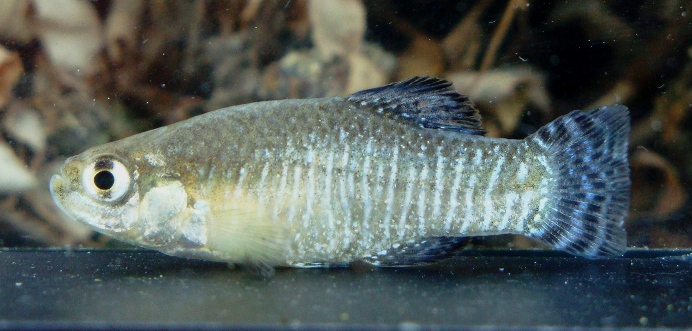
Apricaphanius baeticusBaetican Toothcarp
Doadrio, Carmona & Fernández-Delgado, 2002
Max length50mm SL2.0in SLTank120 × 30cm48 × 12inTemp2–30°C36–86°FpH7.0–9.0Prior to its description this species was considered a geographic variant of A. iberus but the 2002 paper revealed the pair to be genetically quite distinct and also highlighted some morphological differences. It is distinguished from A. iberus by possessing 8-9 (usually 8 ) branched dorsal-fin rays (vs. 8-9, sometimes 10), 9-11 branched anal-fin rays (vs. 8-9), a deeper, more elongate body shape, noticeably shorter snout, relatively thick (vs. thin) vertical bars in males and a flank patterning consisting of a few la...
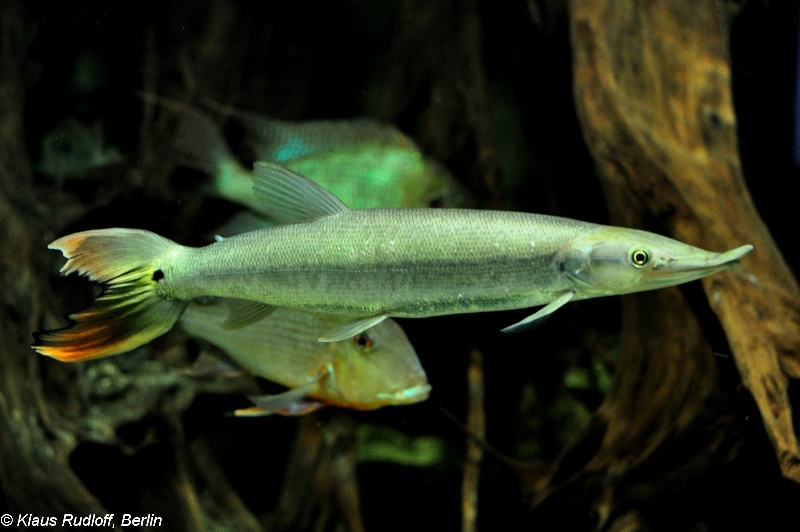
Boulengerella cuvieri
Spix & Agassiz, 1829
Max length800mm SL31in SLTanknot recordedTemp22–28°C72–82°FpH5.0–7.5It's known by various vernacular names including 'Pirá-pacu', 'Pira-pucu' or 'Diente de cao' (central Amazon), 'Bicuda' or 'Uena' (rio Tocantins), 'Bicuda' (rio Tapajós), 'Aguejeta' or 'Picua' (Venezuela), and 'Moruwi' or 'Pirapoko' (Guyana). The entire dorsal-fin base is located anteriorly to a vertical through the anal-fin origin and this character distinguishes it from all other ctenolucids except B. lucius and B. xyrekes.
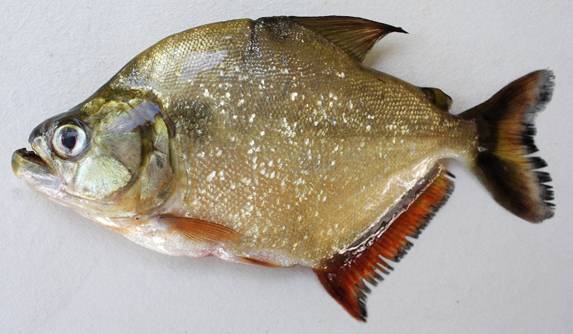
Serrasalmus brandtiiWhite Piranha
Lütken, 1875
Max length250mm SL10in SLTank150 × 60cm60 × 24inTemp20–26°C68–79°FpH5.0–8.0A number of sources state that S. brandtii can be identified by the relatively anterior position of the anal-fin origin beneath the first few dorsal-fin rays. However, images of specimens collected from the rio São Francisco, where it is the only member of the genus present, suggest that this is not always the case and this is also supported by the figure from Eigenmann (1915). No recent diagnosis of the species is available.
Papyrocranus aferArowana Knifefish
authority not recorded
Max length800mm SL31in SLTank210 × 90cm84 × 36inTemp24–28°C75–82°FpH6.5–7.5Like other members of the family Notopteridae this species differs from Gymnotiform knifefish in that its anal and caudal fins are fused together into one long, undulating fin running along the underside of the fish. There is only one other species in the genus. P. congoensis is a smaller, plain brown coloured fish found only in the Democratic Republic of Congo and is very rare in the hobby. P. afer is also infrequently imported and is one of the rarer knifefish species in the hobby. It can dev...
Betta enisae
Kottelat, 1995
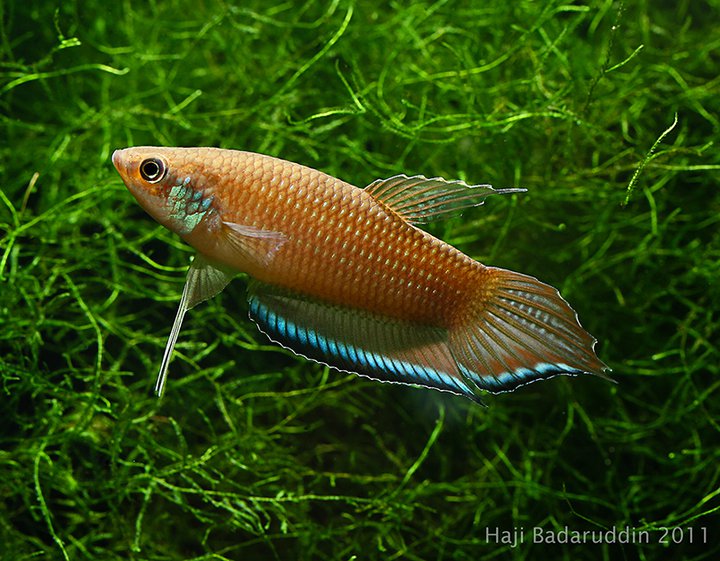
Max length60mm SL2.4in SLTank45 × 30cm18 × 12inTemp21–24°C70–75°FpH5.5–7.0This species is included in the B. pugnax complex of closely-related species within the genus, an assemblage of which members are notoriously difficult to tell apart from one another, but which can be characterised collectively by the following set of shared characters: relatively large head measuring 28-40% SL; live colouration usually brown with green or blue iridescent spots; male with similarly-coloured scales on opercle, sometimes extending to abdomen; juveniles and females usually brown with two central body stripes and a dark marking on the caudal peduncle; anal-fin in mature specimens pointed and often elongated; caudal-fin lanceolate.
Hyphessobrycon acaciae
García-Alzate, Román-Valencia & Prada-Pedreros, 2010
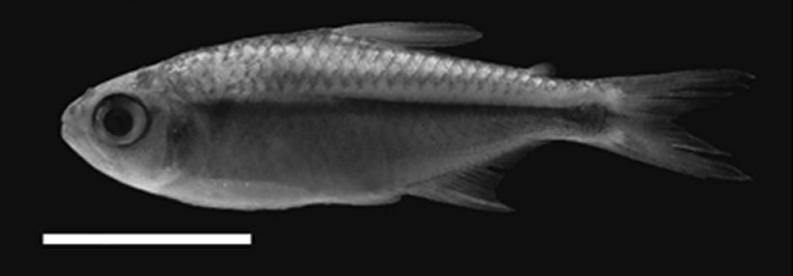
Max length30mm SL1.2in SLTanknot recordedTempnot recordedpHnot recordedIt differs from H. paucilepis by possessing 30-31 scales in the lateral row (vs. 28-29), 3 scales between the lateral line and anal-fin (vs. 4), 10 predorsal scales (vs. 9), ii, 9 dorsal-fin rays (vs. iii, 8), 4 maxillary teeth (vs. 1), and the distance between the dorsal-fi...
Oreichthys crenuchoidesDrape Fin Barb
Schäfer, 2009
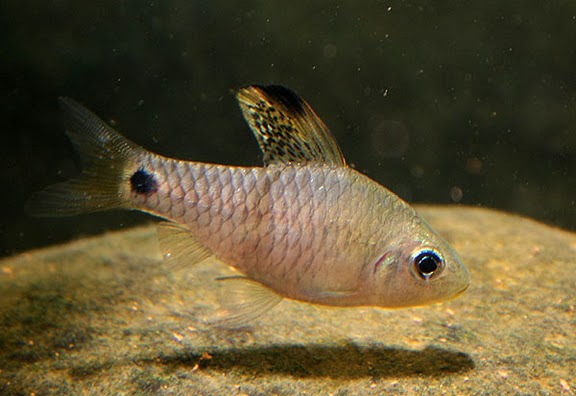
Max length45mm SL1.8in SLTank60 × 30cm24 × 12inTemp23–28°C73–82°FpH6.0–7.5This fish is sometimes traded as Oreichthys cosuatis, O. sp. 'high fin', O. 'umangii' (a nomen nudum that has only ever been applied to an image of a fish in the book 'Ornamental Aquarium Fish of India'; K. L.Tekriwal and A. A. Rao 1999), Puntius 'arunavii' or 'neon highfin barb'. It can be distinguished from congeners by the following combination of characters: absence of a dark marking in the anal-fin (vs. presence in other species); ½7½ scales scales between pelvic-fin origin and dorsal midline (vs. ½6½ in O. cosuatis and...
Opsarius barna
Hamilton, 1822
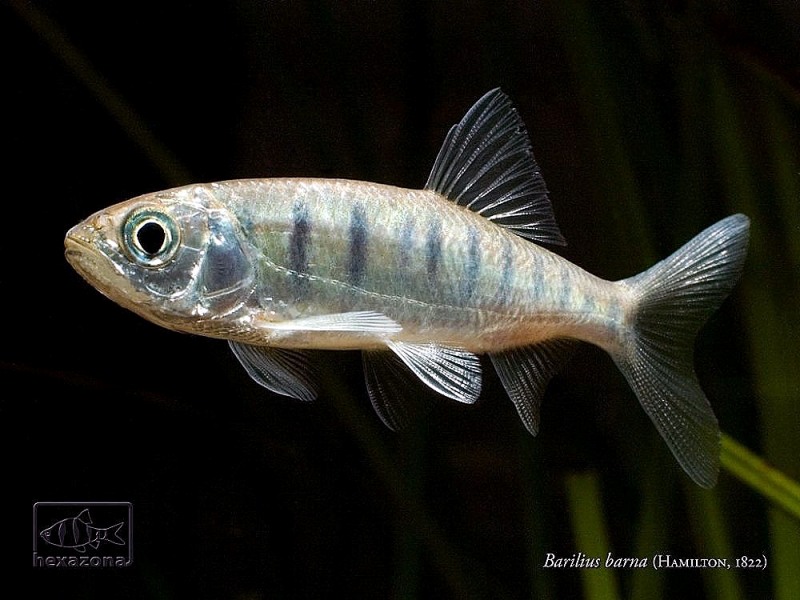
Max length130mm SL5in SLTank150 × 60cm60 × 24inTemp16–24°C61–75°FpH6.0–8.0This species occasionally appears in the ornamental trade, usually as 'striped hill trout' or 'banded hill trout'. It can be distinguished from congeners by the following combination of characters: lateral line complete with 40-42 scales; barbels absent; 10-13 anal-fin rays; body with 9-11 dark blue vertical bars; last dorsal-fin ray extending to caudal-fin base.
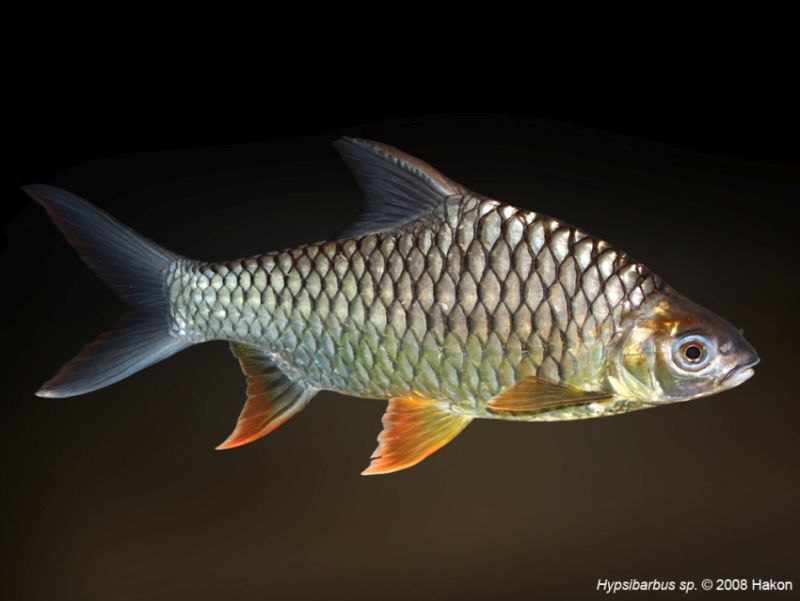
Hypsibarbus wetmorei
Smith, 1931
Max length250mm SL10in SLTank240 × 60cm96 × 24inTemp20–26°C68–79°FpH6.0–8.0H. wetmorei is distinguished from congeners by the following combination of characters: upper body reddish brown; robust body, not compressed; usually 4½ scale rows between lateral line and dorsal-fin origin; 8-12 rakers on first gill arch; 7-9 predorsal scales; 14 circumpeduncular scale rows; usually two scale rows separating vent and anal-fin; <29 lateral line scales; 9-14 serrations on the spinous dorsal-fin ray; distance between distal serrae on posterior margin of last unbranched dorsal-fin ray much greater than the width of their bases.
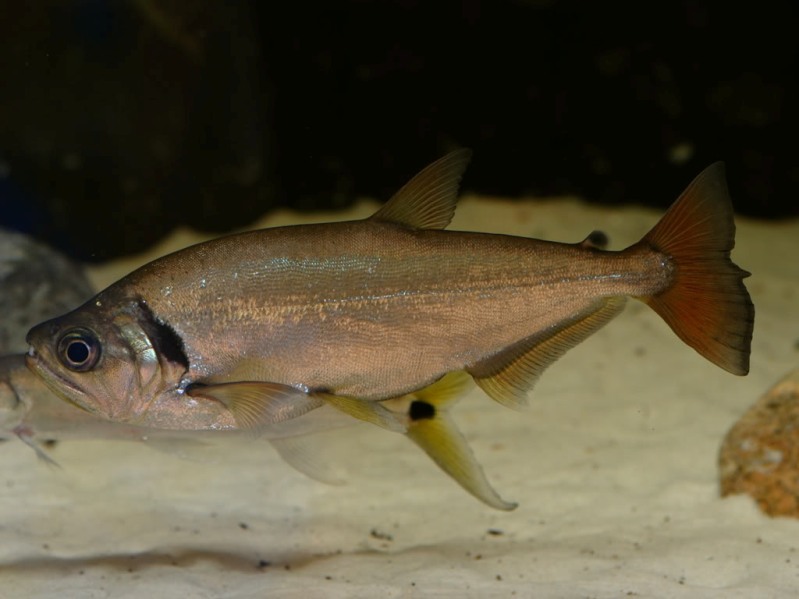
Hydrolycus tatauaia
Toledo-Piza, Menezes & Santos, 1999
Max length455mm SL18in SLTanknot recordedTemp24–28°C75–82°FpH6.0–8.0Vernacular names in Brazil include 'Cachorra' or 'Pirandirá', although these are also applied to congeners. It can be told apart from all congeners by the following combination of characters: head and body silvery with dark dorsal surface; an elongate dark blotch posterior to the opercle; dorsal, caudal and anal-fin rays reddish to orange proximally with some individual variation in intensity and tonality; adipose fin dark, with diffuse black pigmentation.
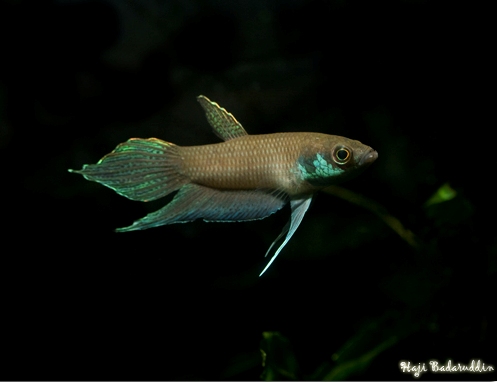
Betta lehi
Tan & Ng, 2005
Max length61mm SL2.4in SLTank60 × 30cm24 × 12inTemp22–27°C72–81°FpH4.0–7.0It can be told apart from other members of the B. pugnax group by the following characters: chin bar absent; prsence of transverse bars in the dorsal-fin; no transverse bars in caudal-fin; green iridescent scales present on opercle and body; anal fin with iridescent, light blue distal band; a pair black markings below the postorbital stripe on the opercle of females and juveniles; anal-fin rays 25-29 (mode 28); lateral scales 28-30 (mode 29); postdorsal scales 10-11 (mode 12); pelvic-fin length 34.8-50.6% SL; head length 33.4-36.8% SL; inter-orbital width 31.7-37.4% HL.