Results for “ray”
Type a name: scientific, common, or one a species used to go by. Or narrow the catalogue with the filters.
Filters
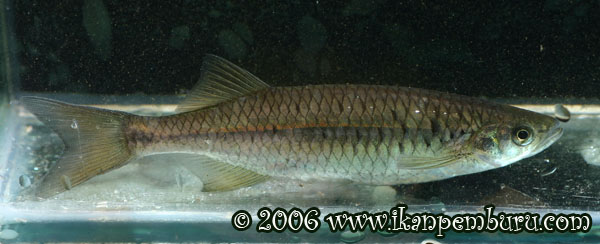
Nematabramis alestes
Seale & Bean, 1907
Max length105mm SL4in SLTanknot recordedTempnot recordedpHnot recordedN. alestes is the only member of the genus in which the barbels are shorter than the head, with additional diagnostic characters as follows: 8-9 branched dorsal-fin rays; 12-14 branched anal-fin rays; 22-23 predorsal scales; body with a pronounced ventral keel.
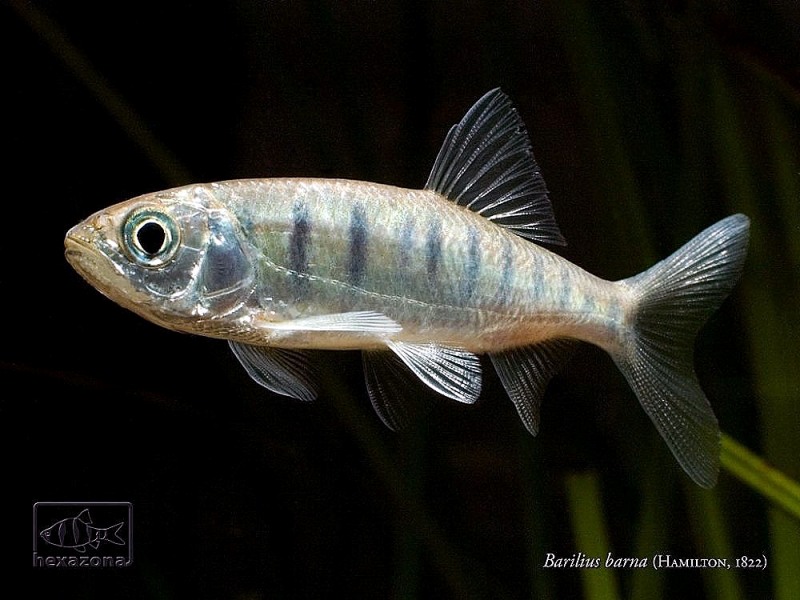
Opsarius barna
Hamilton, 1822
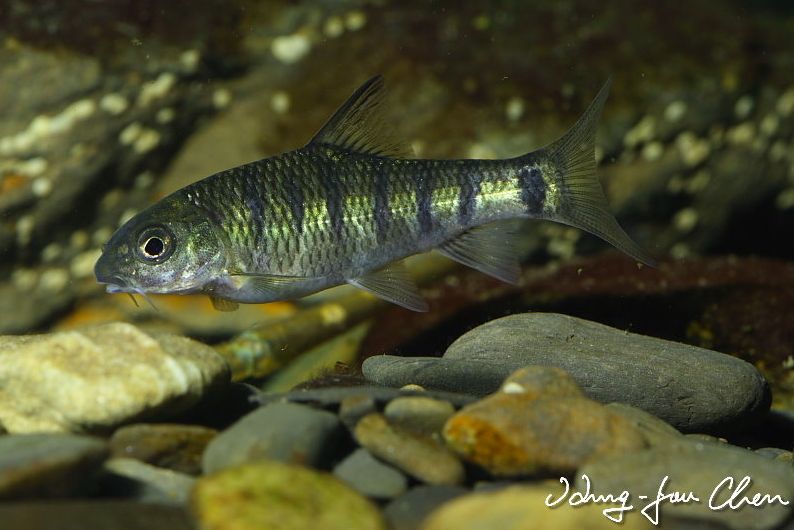
Max length130mm SL5in SLTank150 × 60cm60 × 24inTemp16–24°C61–75°FpH6.0–8.0This species occasionally appears in the ornamental trade, usually as 'striped hill trout' or 'banded hill trout'. It can be distinguished from congeners by the following combination of characters: lateral line complete with 40-42 scales; barbels absent; 10-13 anal-fin rays; body with 9-11 dark blue vertical bars; last dorsal-fin ray extending to caudal-fin base.
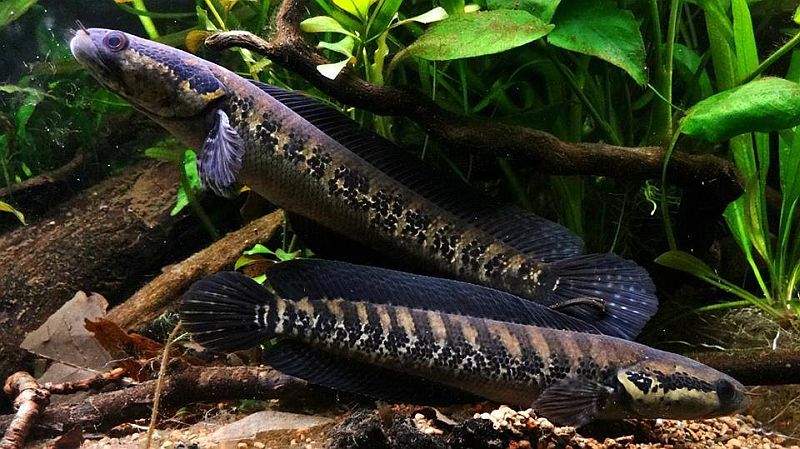
Parachanna africana
Steindachner, 1879
Max length300mm SL12in SLTank120 × 60cm48 × 24inTemp20–25°C68–77°FpH5.0–7.5Following Bonou and Teugels (1985), P. africana can be distinguished from congeners by the following combination of characters: colour pattern unique, comprising a series of 8-11 dark, chevron-shaped markings extending along the body posterior to the pectoral fins; 19-24 scales in the transverse series; lateral line complete with 73-83 pored scales; 45-48 dorsal-fin rays 45-48; 32-35 anal-fin rays.
Potamotrygon hystrixPorcupine Stingray
authority not recorded
Max length375mm SL15in SLTanknot recordedTemp24–26°C75–79°FpH6.0–7.5P. hystrix is sometimes sold as P. sp. "C", and is much sought after in the hobby. The species is usually recommended as a good beginners' ray due to its relatively small adult size. However due to current Brazilian legislation regarding the export of rays it's almost never available at present, and tends to command a high price when it is. The fish sold as hystrix in the trade are almost always Peruvian in origin and erroneously labelled. We've seen P. humerosa, P. yep...
Potamotrygon yepeziMaracaibo River Stingray
authority not recorded
Max length400mm SL16in SLTanknot recordedTemp23–29°C73–84°FpHnot recordedThis species is often confused with P. reticulata, P. humerosa and P. scobina. Such specimens are usually imported and sold as "teacup" stingrays and it is important to correctly identify what you are buying. There is also a ray sold as P. sp. "Nazca" that is often said to be P. yepezi; unlikely given that it is imported from Peru. This latter fish is one of the commonest rays seen in the trade and is usually quite reasonably priced, making it a good choice for newcomers to k...
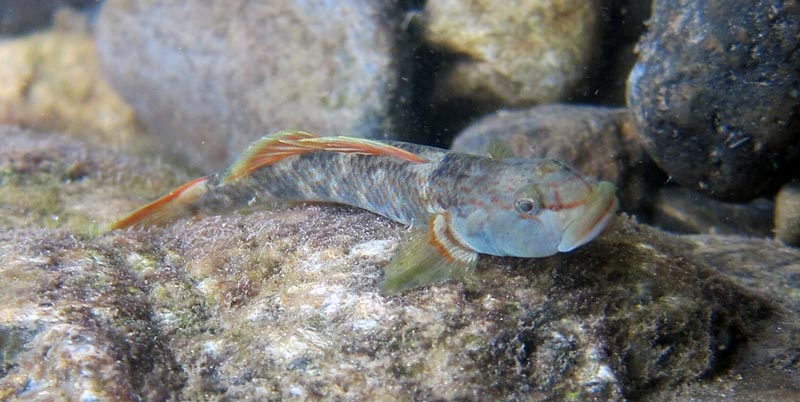
Rhinogobius flumineus
Mizuno, 1960
Max length60mm SL2.4in SLTank75 × 30cm30 × 12inTemp18–25°C64–77°FpH6.0–8.0In addition, there appear to exist two colour forms based on male dorsal-fin morphology and patterning; one in which the 4th ray of the first dorsal-fin is longest with a square bluish-black blotch on the anterior ⅔ of the fin, and a second in which the 2nd and 3rd rays of the first dorsal-fin are longest with the fin itself paler and lacking dark markings.
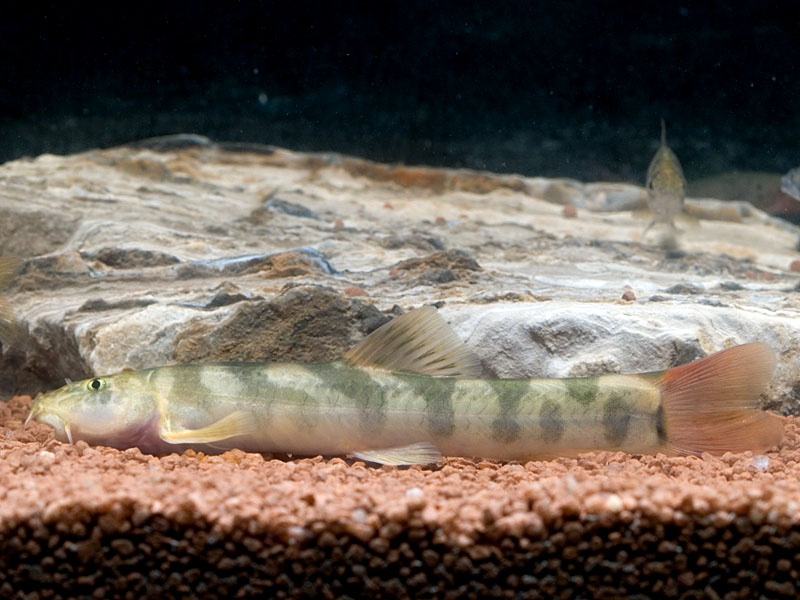
Schistura spilota
Fowler, 1934
Max length100mm SL3.9in SLTank120 × 30cm48 × 12inTemp20–26°C68–79°FpH6.0–7.5Not a commonly species in the aquarium hobby but sporadically available in shipments of wild fishes from Thailand. Following Kottelat (1990) it's a member of a group of species possessing a complete or near-complete lateral line, 8 ½ branched dorsal-fin rays, 17 branched caudal-fin rays and lacking sexual dimorphism (the latter is not strictly true - see above). Its colour pattern is quite distinctive, howe...
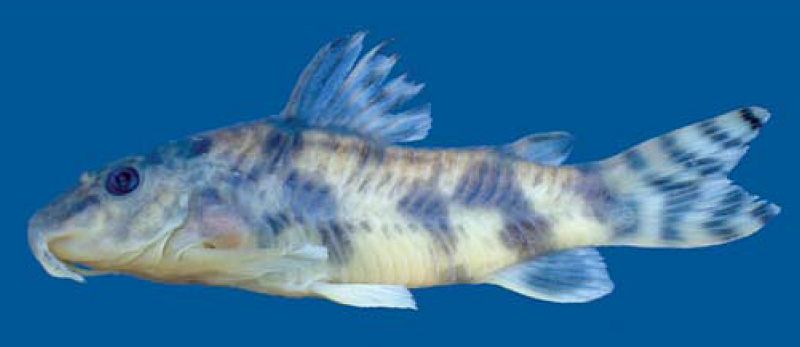
Scleromystax salmacis
Britto & Reis, 2005
Max length48mm SL1.9in SLTanknot recordedTempnot recordedpHnot recordedIt is most similar to S. macropterus, but differs in absence (vs. presence) of a black spot on the base of the median caudal-fin rays, a higher number of pectoral-fin rays (I,8,i vs. I,7,i), males with somewhat more slender bodies (25.7- 30.5% in SL [range 26.3-28.8% in type series] vs. 30.4-34.6% in SL), an...
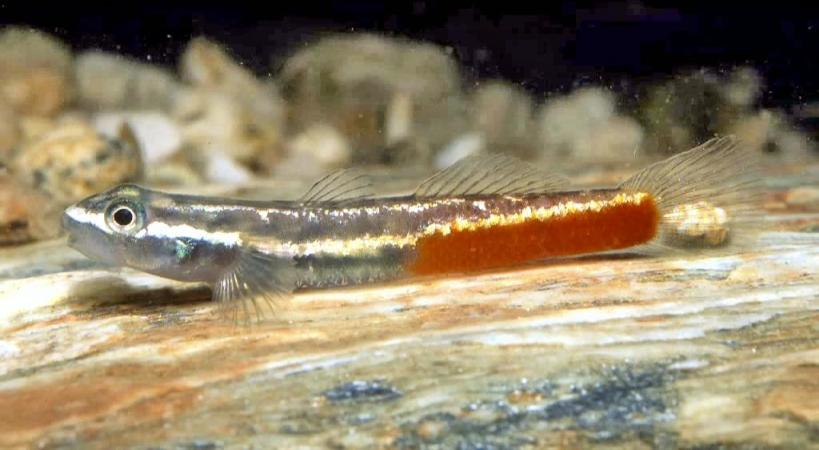
Sicyopus discordipinnis
Watson, 1995
Max length30mm SL1.2in SLTank60 × 30cm24 × 12inTemp22–26°C72–79°FpH6.0–7.5The fused pelvic fins form a structure normally referred to as the 'pelvic disc', a common feature among gobiids which is used to adhere to rocks and other submerged surfaces. In Sicyopus, as in Stiphodon, this is short-based and attached to the belly only between the fifth pair of fin rays whereas in other sicydiines it's attached between all five rays (Watson, 2005).
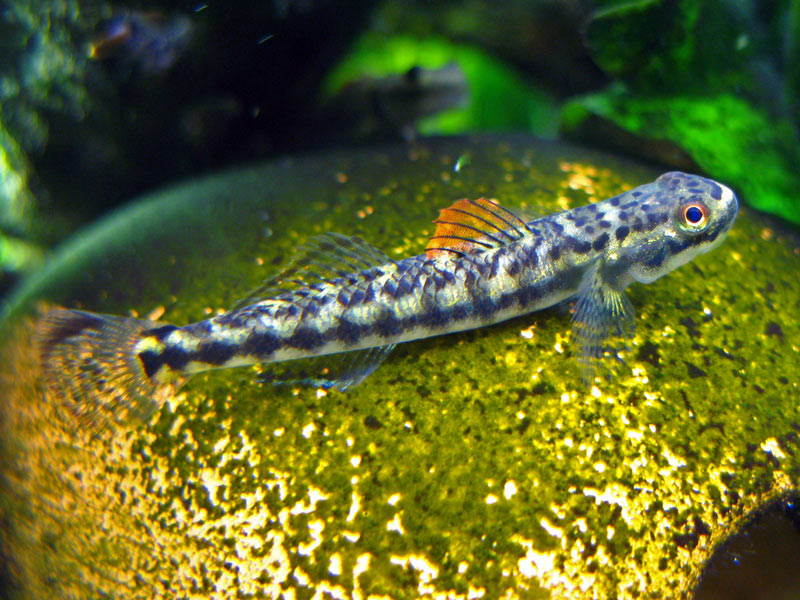
Stiphodon maculidorsalisOrange-fin Stiphodon
Maeda & Tan, 2013
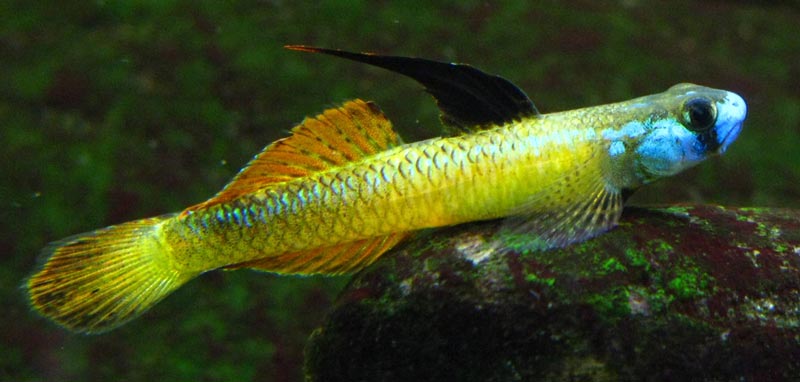
Max length80mm SL3.1in SLTank80 × 30cm31 × 12inTemp20–28°C68–82°FpH6.5–7.5This species was referred to as S. sp. 'orange fin' or S. sp. 'ST01' prior to being offically named and is one of the more commonly-traded members of the genus, though often in batches containing only one gender, a mixture of species, or misidentified under an incorrect name such as S. zebrinus. It can be told apart from congeners by the following combination of characters: usually 9 soft second dorsal-fin rays; 15 soft pectoral-fin rays; first dorsal-fin in male poin...
Stiphodon percnopterygionus
Watson & Chen, 1998
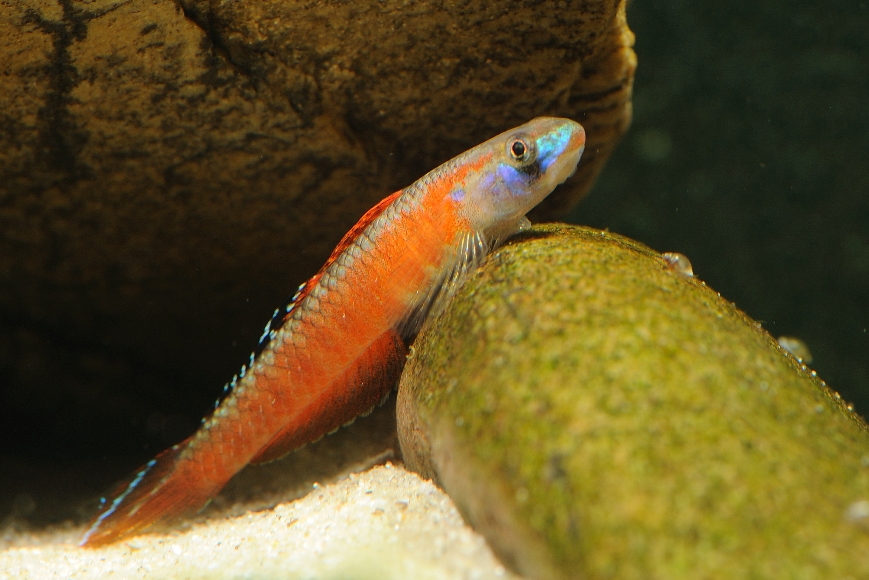
Max length35mm SL1.4in SLTank60 × 30cm24 × 12inTemp22–28°C72–82°FpH6.5–7.5This species is rare in the aquarium trade and normally expensive when available. It's one of the most easily-identifiable in the genus by the combination of usually 14 pectoral-fin rays, 10 segmented second dorsal-fin rays, relatively small adult size, unique colouration in males and the shape of the first dorsal-fin in males in which the fourth and fifth spines are...
Stiphodon rutilaureus
Watson, 1996
Max length35mm SL1.4in SLTank60 × 30cm24 × 12inTemp22–28°C72–82°FpH6.5–7.5This species is not traded commercially at present and the specimen pictured above was brought back from northern Papua New Guinea by private collectors in 2008. It's diagnosable from other members in the genus by possession of 10 segmented rays in the second dorsal fin, males with filamentous spines in the firstandusually with 14 rays. Colour patterning in males is also distinctive (see 'Sexual Dimorphism'). The Gobiidae is the most speciose vert...
Acrossocheilus paradoxusTaiwan Banded Barb
Günther, 1868
Max length200mm SL8in SLTank180 × 45cm72 × 18inTemp15–25°C59–77°FpH6.0–8.0The genus Acrossocheilus is restricted to southern China, northern Vietnam and northern Laos. It can be distinguished from related genera by the following combination of characters: rostral fold present; lips fleshy and continuous around corners of mouth; lower lip with a median interruption; mouth inferior; horny sheath on lower jaw; two pairs of barbels; last simple ray of dorsal fin osseous with a serrated or smooth posterior margin.
Alestopetersius caudalisYellow-Tailed Congo Tetra
Boulenger, 1899
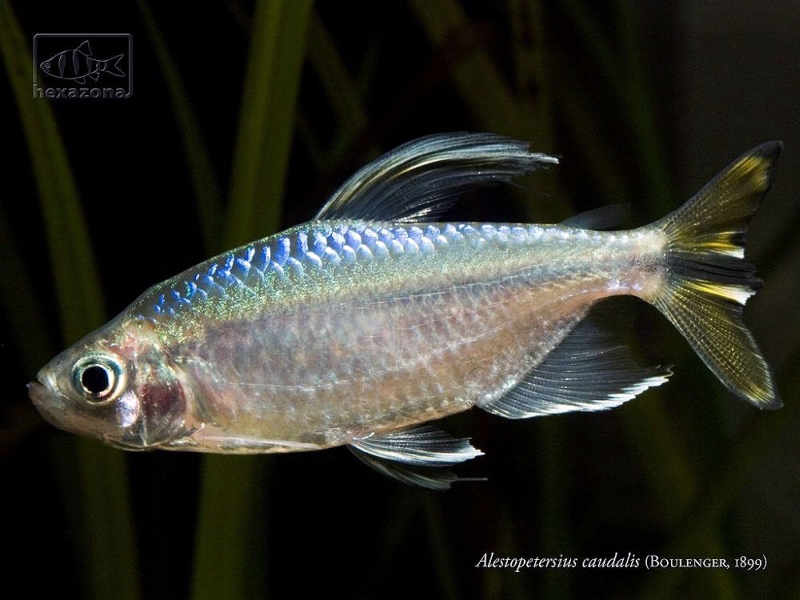
Max length60mm SL2.4in SLTank120 × 30cm48 × 12inTemp22–26°C72–79°FpH5.0–7.5This species is also traded as 'yellow-finned', 'yellowtail' or 'blue Congo' tetra and is occasionally bred on a commercial basis, although not on a scale comparable to its better-known relative Phenacogrammus interruptus. No recent key to the genus exists but based on Géry (1977) and images in Mbimbi Mayi Munene and Stiassny (2012) it can be told apart from congeners by a combination of: extended median caudal-fin rays in adult males; absence of prominent dar...
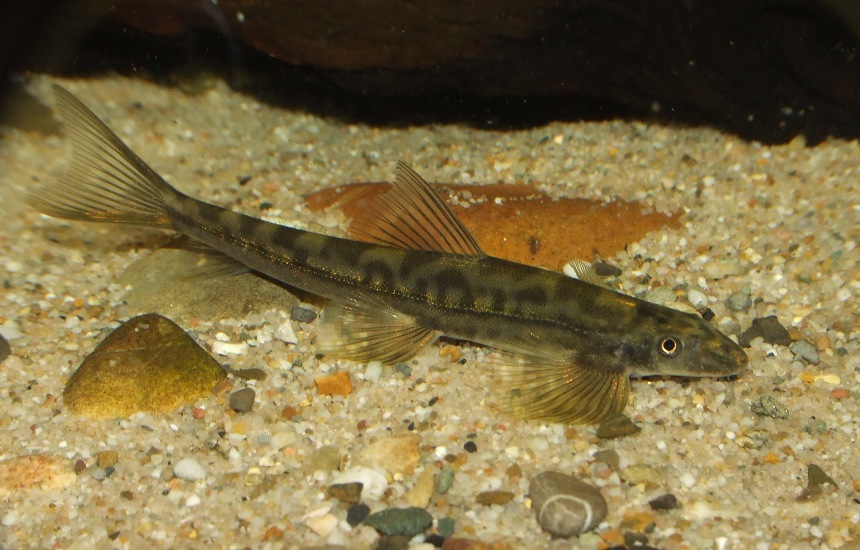
Annamia cf. thuathienensis
Nguyen, 2005
Max length100mm SL3.9in SLTank120 × 30cm48 × 12inTemp16–22°C61–72°FpH6.0–7.5Annamia spp. may be confused with related genera such as those of the genus Balitoropsis. They can be identified by their more depressed body shape, elongate lower caudal-fin lobe, and the presence of a single unbranched ray in the pectoral and pelvic fins. At least one undescribed member of the genus is thought to exist.
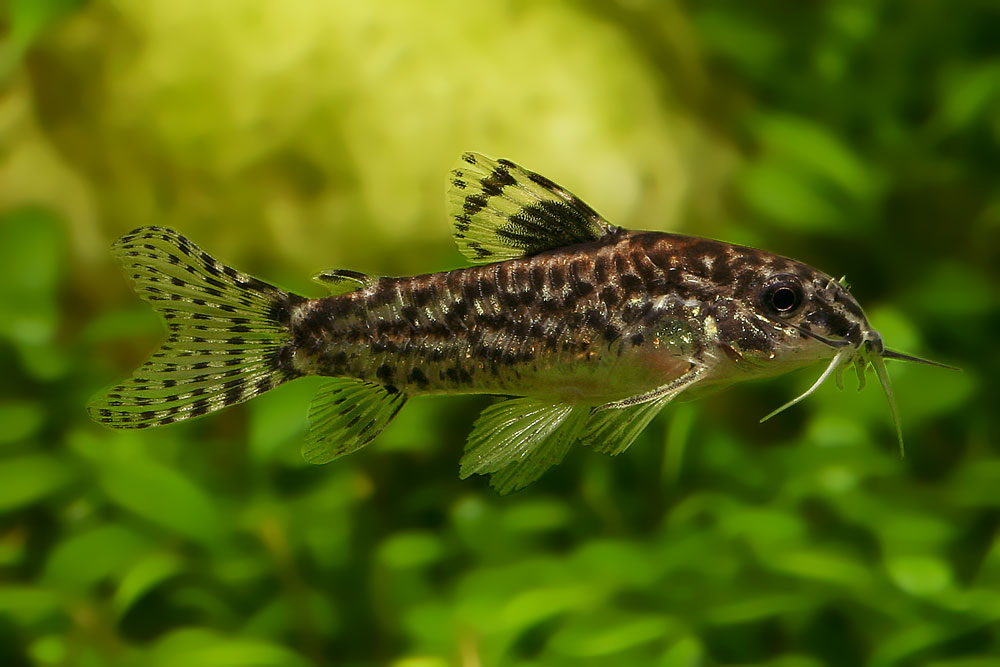
Aspidoras pauciradiatus
Weitzman & Nijssen, 1970
Max length35mm SL1.4in SLTank60 × 30cm24 × 12inTemp20–27°C68–81°FpH6.0–7.0This species is sometimes referred to as 'false corydoras' or 'sixray corydoras'. A. pauciradiatus can be distinguished from congeners by possession of 6 soft dorsal-fin rays, as opposed to 7 in other Aspidoras species, plus its distinctive colour pattern. Aspidoras species are distinguished from the very...
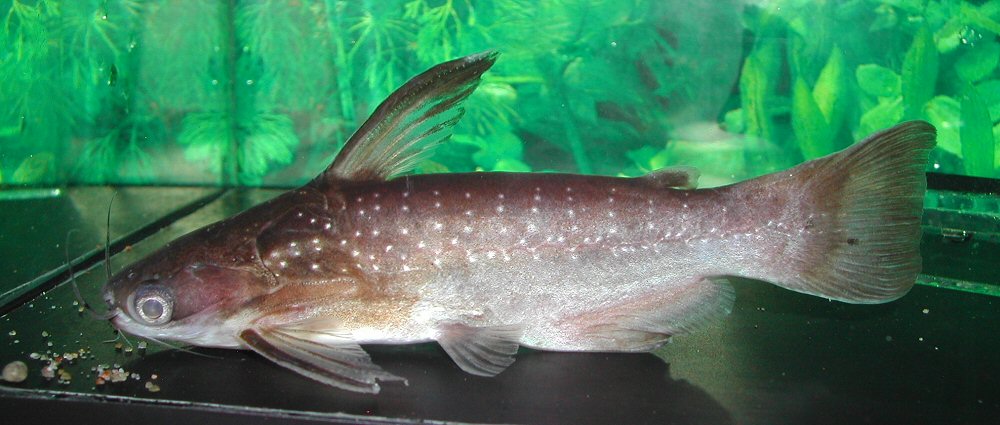
Auchenipterichthys coracoideusMidnight Catfish
Eigenmann & Allen, 1942
Max length110mm SL4in SLTank80 × 30cm31 × 12inTemp22–25°C72–77°FpH6.0–7.2This species is also known by the alternative vernacular name of 'Zamora woodcat', and is often misidentified as A. thoracatus. The latter is a valid species and very similar to A. coracoideus in that the coracoid bone is exposed ventrally and covered only by a thin layer of integument in both species. The two differ principally in the number of anal fin rays...
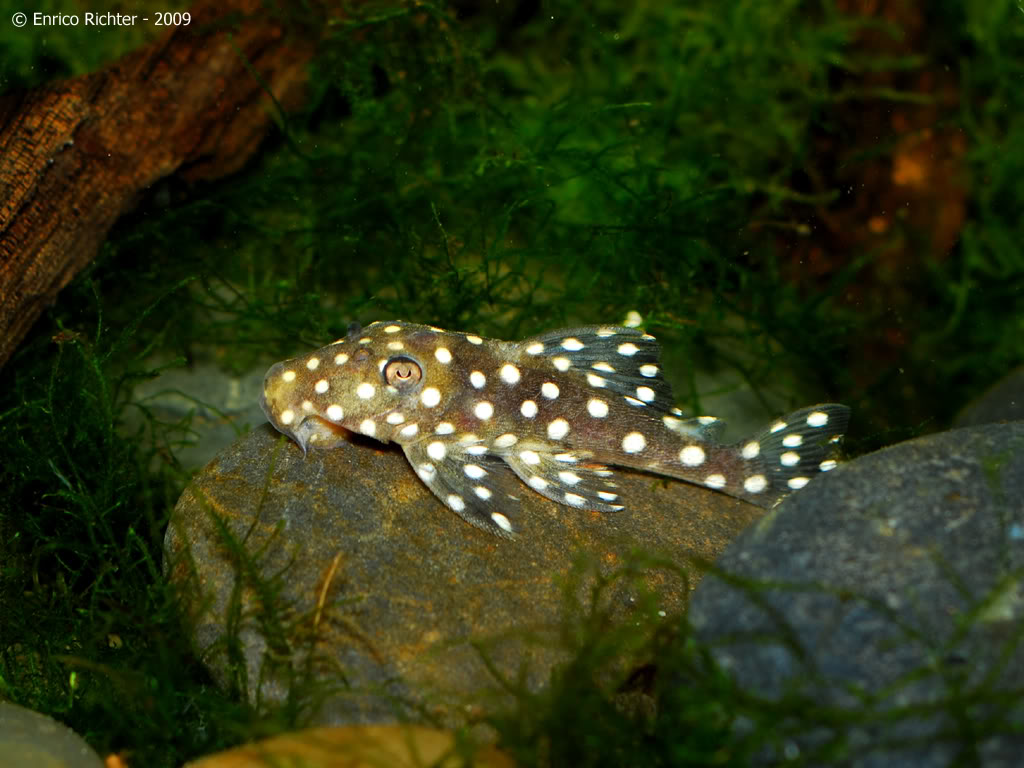
Baryancistrus sp. L142Big White Spot Pleco
authority not recorded
Max length250mm SL10in SLTank120 × 45cm48 × 18inTemp27–32°C81–90°FpH6.0–7.5The genus Baryancistrus can be distinguished from all other loricariids by possession of an enlarged membrane located posteriorly to the last branched dorsal-fin ray. This membrane may or may not reach the supporting structure of the adipose fin and in this way members can be told apart from the genera Oligancistrus, Parancistrus, and Spectracanthicus, in which the dorsal and adipose fins are completely connected, and Hemiancistrus...
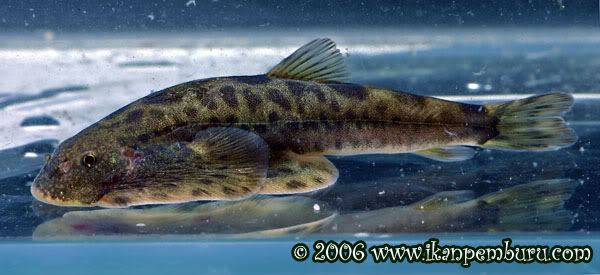
Beaufortia szechuanensis
Fang, 1930
Max length69mm SL2.7in SLTank75 × 30cm30 × 12inTemp16–24°C61–75°FpH6.5–8.0At time of writing there exist 18 recognised members of the genus though only B. kweichowensis is well-known in the trade with B. szechuanensis unlikely to have been exported. According to Chen, Huang and Yang (2009) it can be distinguished from similar congeners by the following suite of characters: 1 branched and 17-20 simple pectoral-fin rays...
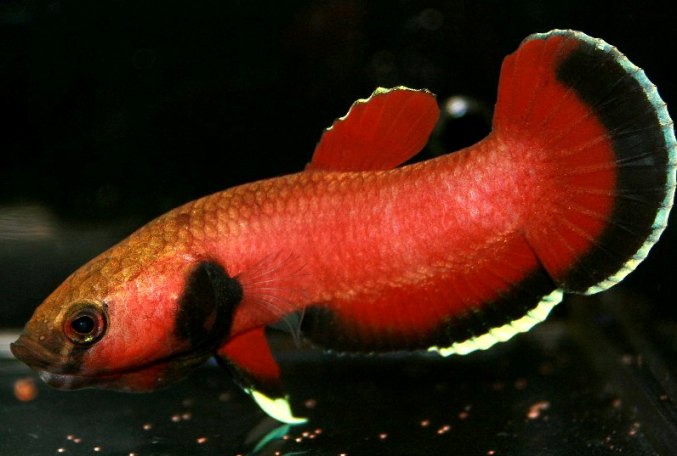
Betta channoidesSnakehead Betta
Kottelat & Ng, 1994
Max length40mm SL1.6in SLTank45 × 30cm18 × 12inTemp23–30°C73–86°FpH4.0–6.5B. channoides and B. albimarginata together comprise the Betta albimarginata group/complex of closely-related species within the genus, these differing from all other members of the genus in colour pattern and by possession of 9-12 anal-fin spines (vs. 0-4). They look very similar to one another but differ in the following characters: anal fin spines 9-11 in B. albimarginata vs. 12 in B. channoides; anal fin rays 21-23 vs. 23-25; lateral scale rows 26-27 vs. 27.5-28; trans...