Results for “river basin”
Type a name: scientific, common, or one a species used to go by. Or narrow the catalogue with the filters.
Filters
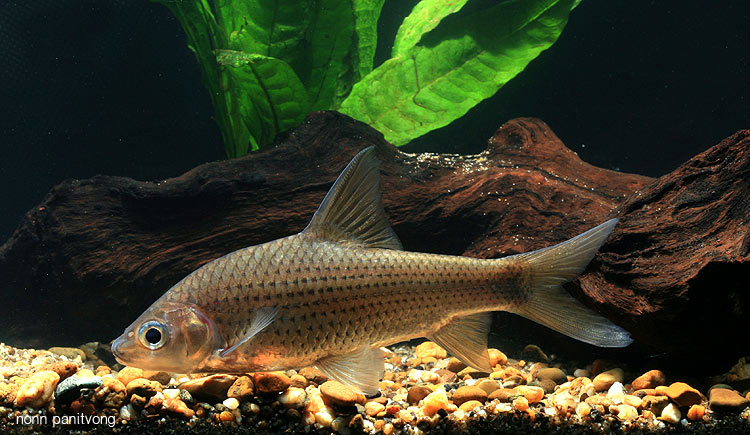
Cyclocheilichthys repasson
Bleeker, 1853
Max length280mm SL11in SLTank180 × 45cm72 × 18inTemp20–26°C68–79°FpH5.0–8.0An ideal resident of the larger, well-furnished community set-up though it might upset slow-moving or timid companions simply by its size. There are plenty of suitable tankmates including many cyprinids, loaches, cichlids, catfish and characins, but as always when selecting a compatible community of fish proper research is essential. A community based around one of its native countries or river basins...
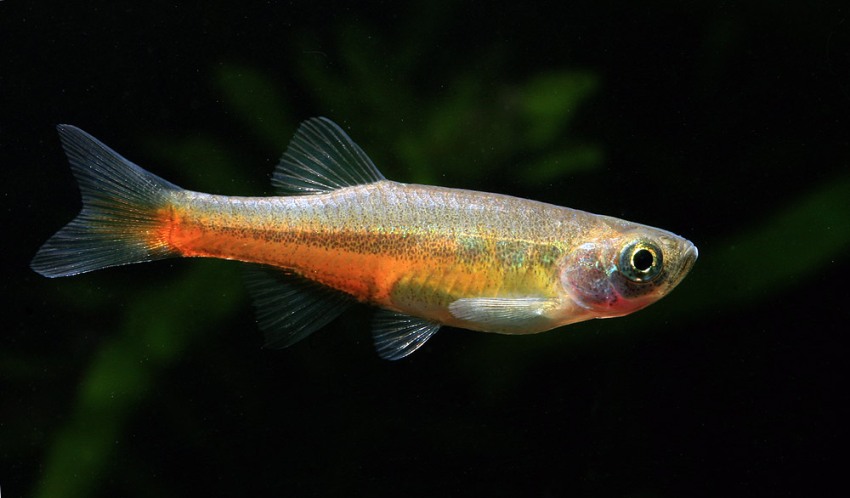
Devario acuticephalus
Hora, 1921
Max length40mm SL1.6in SLTank80 × 30cm31 × 12inTemp16–22°C61–72°FpH6.0–7.0Described from Manipur state, northeastern India and also known from neighbouring Nagaland state. In the original description Hora refers to it as 'widely-distributed' in the region but during an assessment conducted by the IUCN in 2010 it was recorded only from a handful of localities and restricted to an area of less than 15,000 square kilometres. Most habitats lie within the Manipur river basin, including the tributary Iril and Khuga drainages, and the Di...
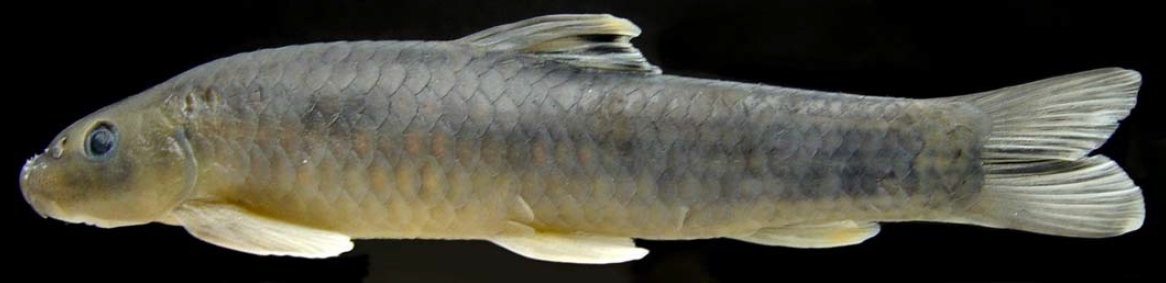
Garra arupi
Nebeshwar, Vishwanath & Das, 2009
Max length75mm SL3.0in SLTanknot recordedTempnot recordedpHnot recordedKnown from the upper Brahmaputra River basin in Arunachal Pradesh state, northern India, with records from the lower Divang Valley and Lohit District.
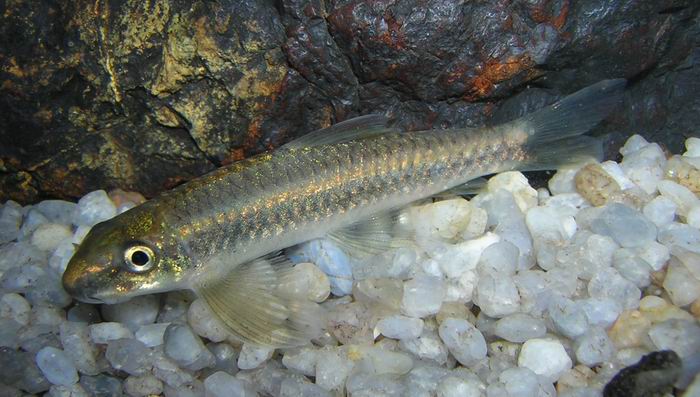
Garra borneensis
Vaillant, 1902
Max length115mm SL5in SLTanknot recordedTempnot recordedpHnot recordedSubstrates are generally composed of gravel, rocks, boulders or bedrock carpeted with a rich biofilm formed by algae and other micro-organisms. At a habitat in the Mendawai river basin in central Kalimantan, H. borneensis was collected from a foothill stream running swiftly over a rock and gravel substrate with clear water of pH 6.4.
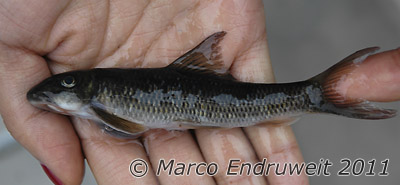
Garra imberba
Garman, 1912
Max length120mm SL5in SLTanknot recordedTempnot recordedpHnot recordedThis species can be distinguished from congeners inhabiting the Red River basin in Yunnan province, China, by the following combination of characters: no barbels; 46-52 lateral line scales; 16 circumpeduncular scales; pharyngeal teeth in 3 rows, 2.4.5-5.4.2; snout rounded, no secondary rostrum, no longitudinal...
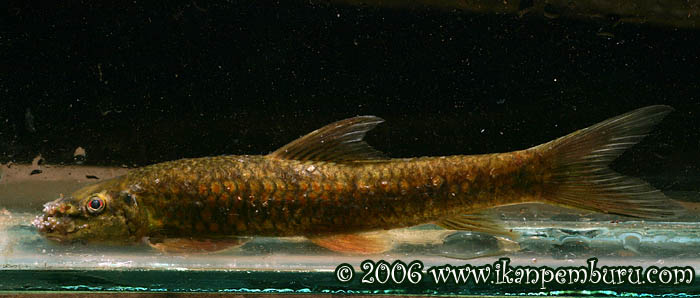
Garra rotundinasus
Zhang, 2006
Max length185mm SL7in SLTanknot recordedTempnot recordedpHnot recordedPrior to its description, G. rotundinasus was considered to represent the congener G. gravleyi, but the latter is now accepted to occur only in the Salween and Manipur river basins. These two are separated from all other Garra species in China and Southeast Asia by possession of a weakly-devel...
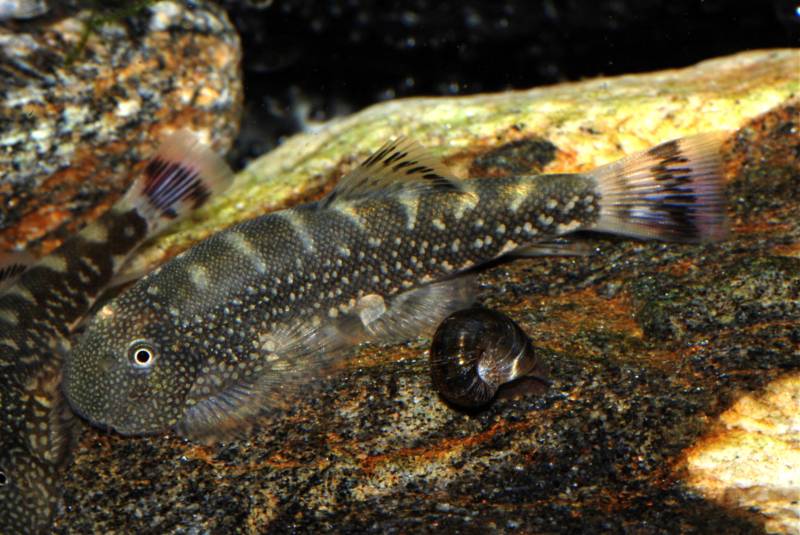
Gastromyzon farragus
Tan & Leh, 2006
Max length40mm SL1.6in SLTank60 × 30cm24 × 12inTemp20–24°C68–75°FpH6.0–7.5In fact G. farragus and G. ocellatus represent one of 12 pairs of cryptospecies to be found in the genus, differing in subtle aspects of patterning. Cryptospecies are defined as morphologically similar, but reproductively isolated species which in fishes often inhabit adjacent river basins but in some cases occur sympatrically. The phenomenon may be a result of parallel evolution, and is not normally considered to represent an early stage of speciation.
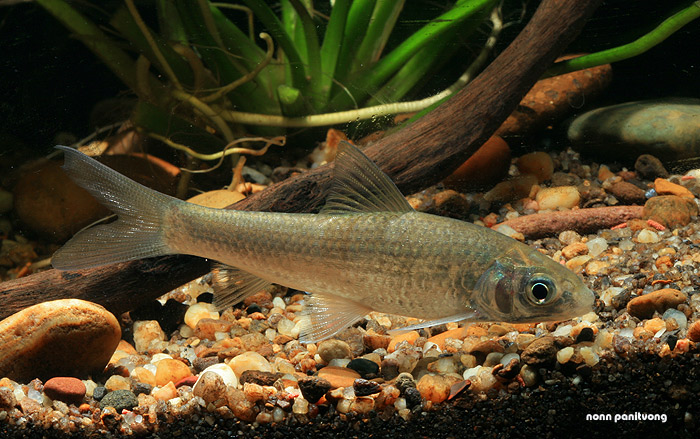
Gymnostomus lineatus
Smith, 1945
Max length150mm SL6in SLTanknot recordedTempnot recordedpHnot recordedRecorded from the middle to lower Mekong river basin in southern China (Yiunnan province), Laos, Thailand, and Cambodia, plus the Chao Phraya watershed in central Thailand. Type locality is 'Thailand: Lam Ton Lang, a tributary of Menam Sak [Mae Nam Pa Sak; Ban Lam Thong Lang, village northwest of Pakjong'.
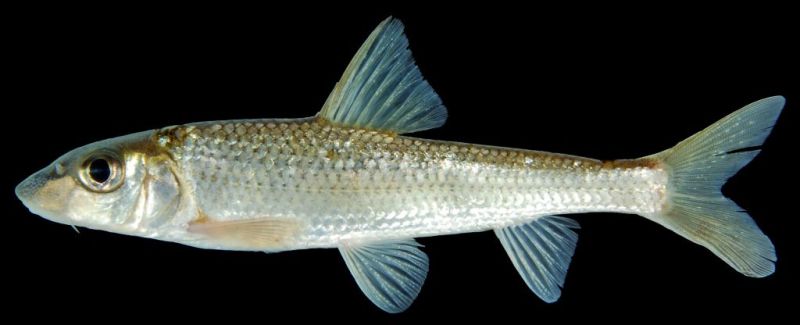
Hemibarbus maculatusSpotted Steed
Bleeker, 1871
Max length400mm SL16in SLTanknot recordedTempnot recordedpHnot recordedWidepread in eastern Asia between the Yangtze and Amur river basins, including China (mainland and islands of Taiwan and Hainan), Korea, Mongolia, Russia, and Japan. It probably been introduced to Vietnam and Laos, or records from these countries represent another species.
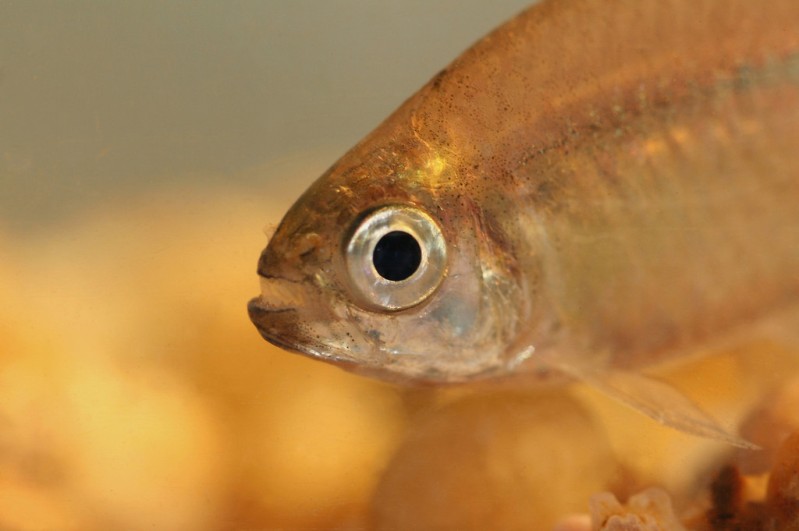
Hyphessobrycon balbus
Myers, 1927
Max length50mm SL2.0in SLTanknot recordedTempnot recordedpHnot recordedKnown only from headwaters of the upper Paraná river basin in the Federal District plus the neighbouring state of Goiás, central Brazil. Type locality is 'Planaltina, Lagoa Fervedeira, Goiás, Brazil' with additional records existing mostly from the rio São Bartolomeu including the Bananal, Santa Maria-Torto and Gama tributary systems.
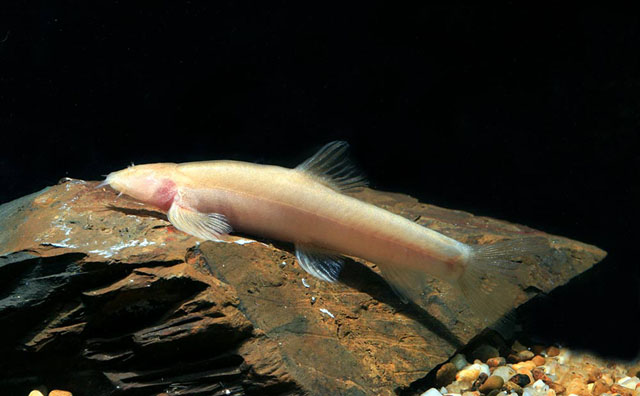
Nemacheilus troglocataractus
Kottelat & Géry, 1989
Max length68mm SL2.7in SLTanknot recordedTempnot recordedpHnot recordedKnown only from a single cave system (Tham Sai Yok Noi) near the town of Nam Tok Sai Yok Noi, Sai Yok district, Kanchanaburi Province, Thailand. The headwater stream running through the cave is part of the Khwae Noi river basin, itself a tributary of the upper Mae Klong system. 621 metres of the cave system has repor...
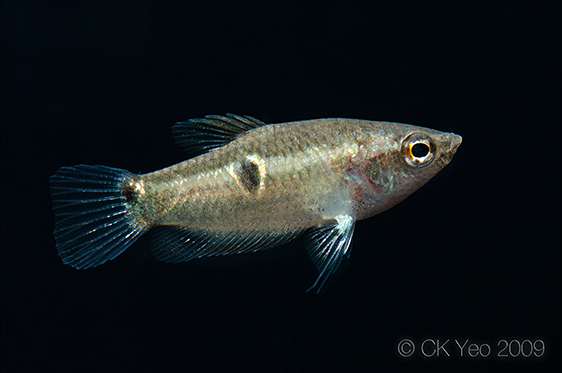
Parasphaerichthys ocellatusEyespot Gourami
Prashad & Mukerji, 1929
Max length32mm SL1.3in SLTank45 × 30cm18 × 12inTemp15–25°C59–77°FpH6.5–7.5To date the species is known mostly from the upper Ayeyarwady River basin in northern Myanmar where it's been collected close to the city of Myitkyina in Kachin State as well as around nearby Lake Indawgyi, the largest inland lake in Southeast Asia and home to ten globally threatened bird species. The lake and surrounding area were designated a protected zone by the Ministry of Ecotourism in 1999 and now form the Indawgyi Lake Wildlife Sanc...
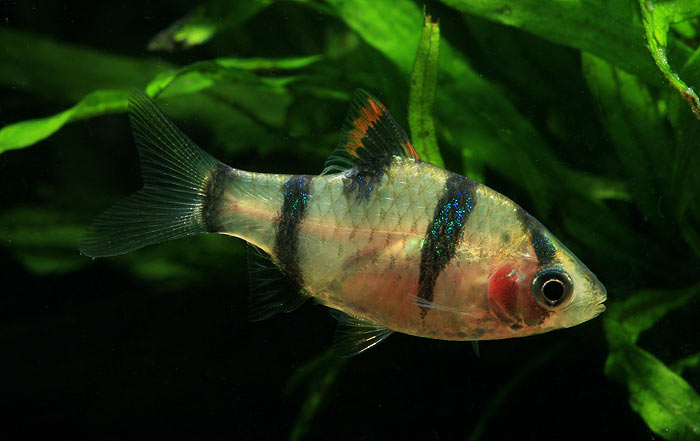
Puntigrus partipentazona
Fowler, 1934
Max length40mm SL1.6in SLTank80 × 30cm31 × 12inTemp20–26°C68–79°FpH5.0–7.0Recorded from numerous river basins in Vietnam, Cambodia, Laos, Thailand, and Peninsular Malaysia, including the Mekong, Chao Phraya, Mae Khlong, Chanthaburi, Tapi, Golok, Terengganu, Pahang, Endau, and Muar. Type locality is 'Kratt, southeastern Siam', which corresponds to modern-day Trat Province, Thailand.
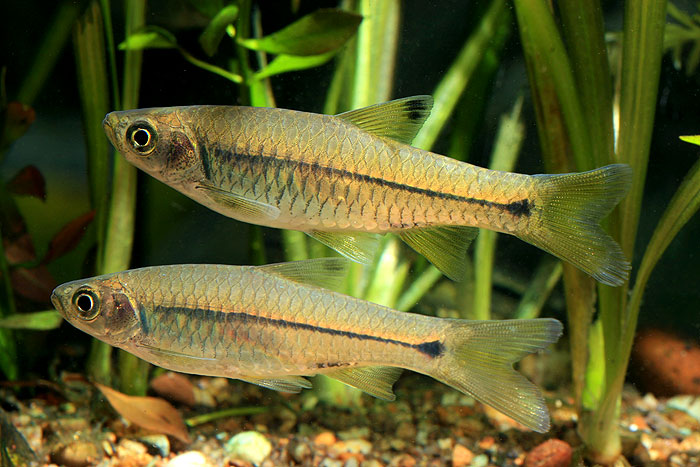
Rasbora dorsinotata
Kottelat, 1987
Max length43mm SL1.7in SLTank90 × 30cm36 × 12inTemp20–25°C68–77°FpH6.0–7.5Type locality is 'Mae Nam Huey Bon, kilometer 45 on road from Amphoe ThaWang Pha to Amphoe Chiang Kham, Chiang Rai Province, Thailand', and this species appears restricted to the Mekong and upper Chao Phraya river basins in northern Thailand and northern Laos. The specimens pictured here were collected from th...
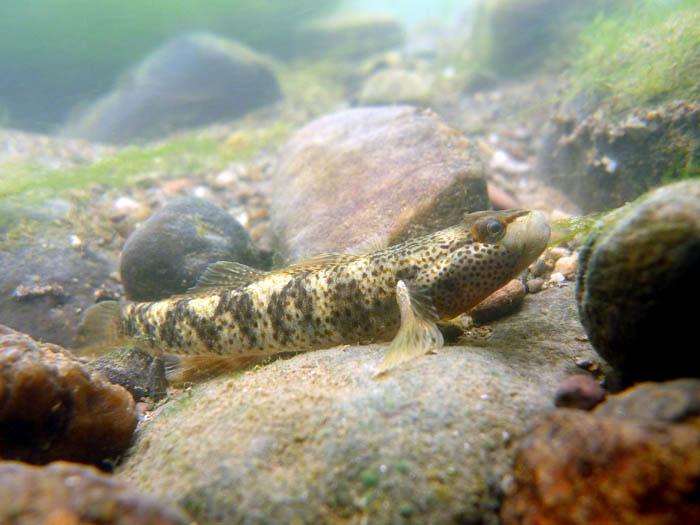
Rhinogobius mekongianus
Pellegrin & Fang, 1940
Max length50mm SL2.0in SLTank60 × 30cm24 × 12inTemp18–26°C64–79°FpH6.0–7.5Known from various parts of the middle and upper Mekong river basins with record existing from the Nam Tha, Nam Ou, Nam Khan, Nam Lik, Nam Ngum and Nam Mang tributary systems in Laos, the Nam Noeua (a tributary of Nam Ou) in Vietnam, and the Mae Nam Kok in Thailand. Occurrences in the Chao Phraya drainage in central Thailand most likely refer to the congener R. chiengmaiensis.
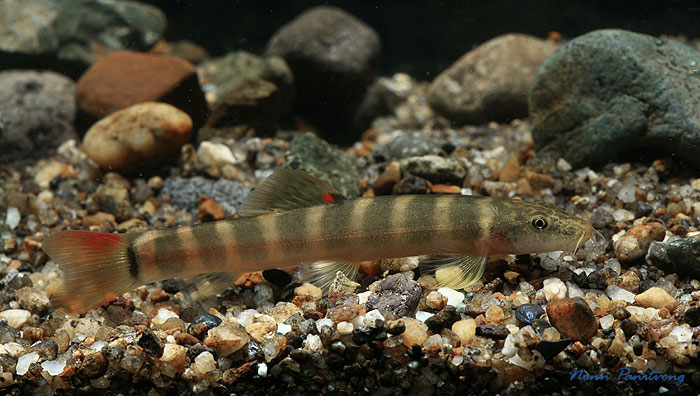
Schistura kengtungensis
Fowler, 1936
Max length65mm SL2.6in SLTank90 × 30cm36 × 12inTemp18–24°C64–75°FpH6.0–7.5This species is distributed in the middle Mekong River basin in north and northeastern Thailand, Myanmar and Xishuangbanna Dai Autonomous Prefecture, Yunnan province, southern China, and is also known from the Nam Beng, Nam Tha and Nam Yuoan drainages in Laos. Type locality is 'Laun We (Loi Mw...
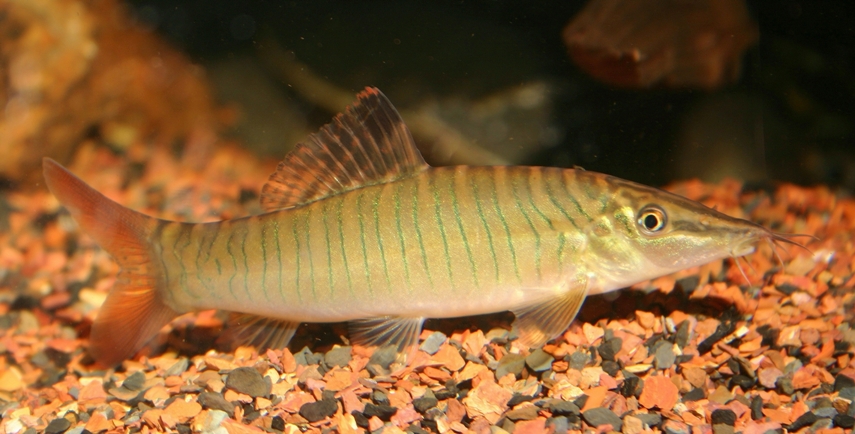
Syncrossus hymenophysaGreen Tiger Loach
Bleeker, 1852
Max length210mm SL8in SLTank150 × 45cm60 × 18inTemp25–30°C77–86°FpH5.0–7.5Described from close to the city of Palembang, therefore presumably the Musi River basin, South Sumatra province, Sumatra, Indonesia, and since recorded from elsewhere on Sumatra plus the Malaysian state of Sarawak and Indonesian province West Kalimantan on Borneo.
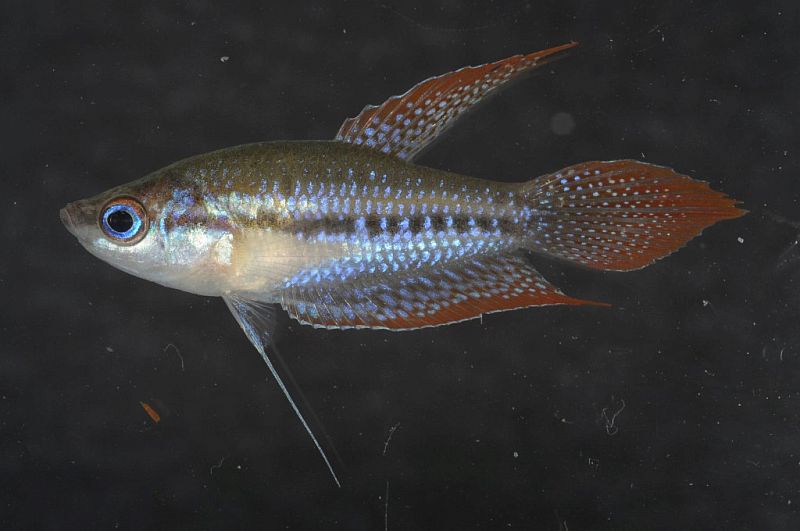
Trichopsis schalleri
Ladiges, 1962
Max length50mm SL2.0in SLTank60 × 30cm24 × 12inTemp22–28°C72–82°FpH5.0–7.5Known from the lower Mekong River basin in Laos, Thailand, Cambodia, and Vietnam, plus tributaries of the Chao Phraya watershed in central Thailand, and drainages between the Chao Phraya and Mekong in eastern Thailand. Type locality is 'Nam-Mun at Korat, 135 miles northeast of Bangkok, Thailand'.
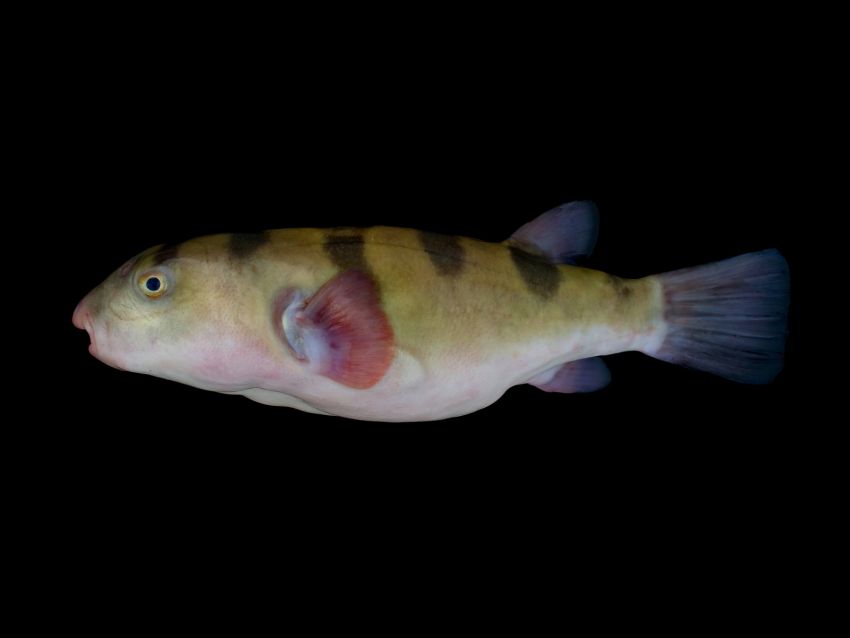
Colomesus psittacusBanded Puffer
Bloch & Schneider, 1801
Max length290mm SL11in SLTank180 × 60cm72 × 24inTemp20–26°C68–79°FpH7.0–9.0Although it does penetrate the lower basins of rivers, particularly the Amazon where it has been collected from the rio Xingu several hundred kilometres from its mouth, this species is predominantly an inhabitant of mangrove swamps, estuaries, and other such saline habitats. It is particularly common in tidal channels, shallow inshore lagoons, and the lower reaches of rivers.
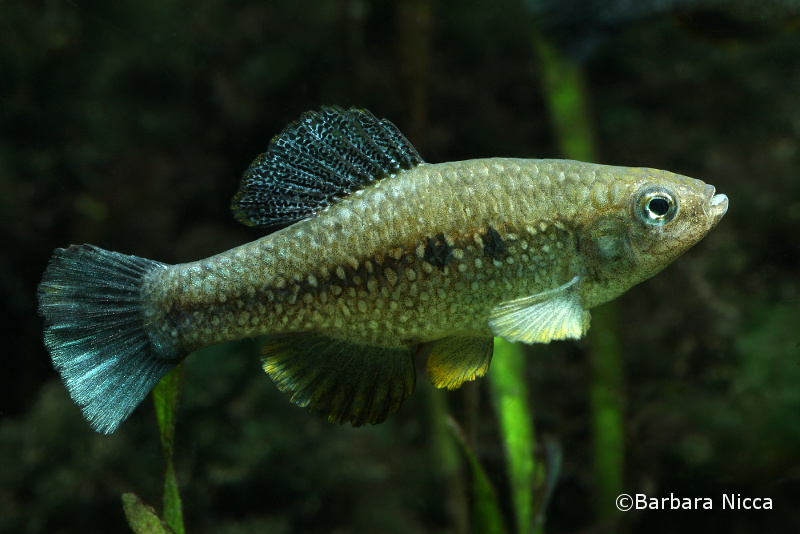
Cualac tessellatusCheckered Pupfish
Miller, 1956
Max length70mm SL2.8in SLTank60 × 30cm24 × 12inTemp20–30°C68–86°FpH7.5–8.5Endemic to a handful of natural springs in the Río Verde valley, San Luis Potosí state, Central Mexico. The valley is believed to have once been filled by a large lake and the relict springs are part of the elevated Río (river) Verde basin which later drains into the much larger Río Pánuco system. Much of the aquatic fauna found in the valley is endemic to the area but in many cases threatened by introduced species.