Search the catalogue
Type a name: scientific, common, or one a species used to go by. Or narrow the catalogue with the filters.
Filters
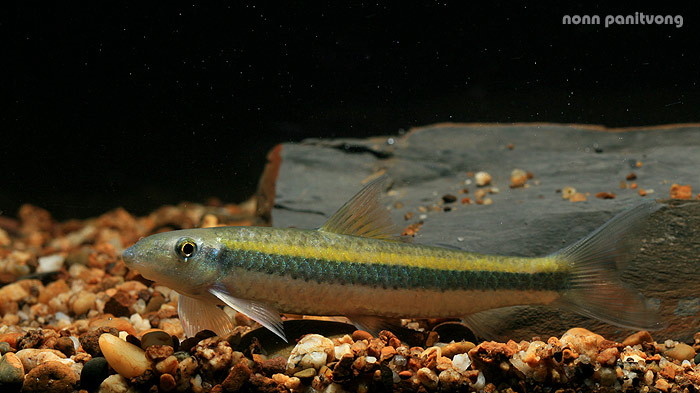
Garra fasciacauda
Fowler, 1937
Max length110mm SL4in SLTank120 × 45cm48 × 18inTemp20–26°C68–79°FpH6.0–8.0Native to the Mekong river system in Thailand, Laos, Vietnam, and Cambodia, including the Tonlé Sap basin. Type locality is 'Kemarat, Thailand', which corresponds to the Mekoong River in Khemmarat district, Ubon Ratchathani province, northeastern Thailand.
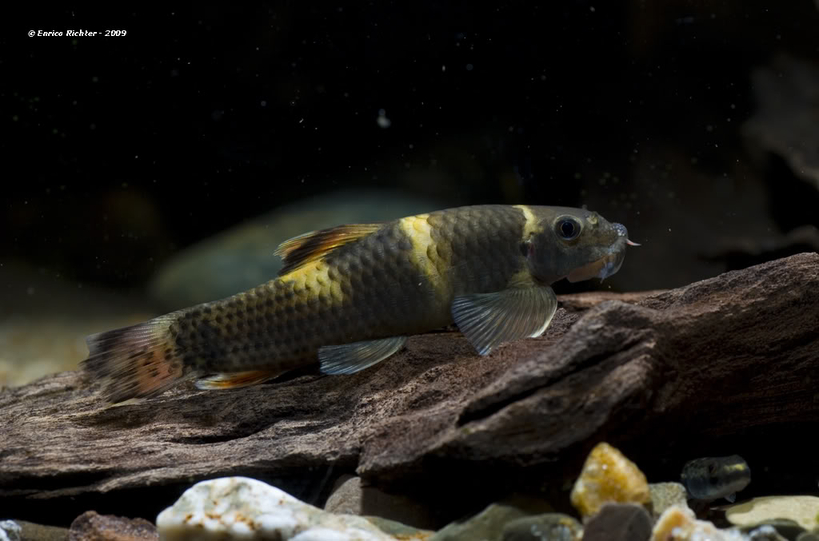
Garra flavatraPanda Garra
Kullander & Fang, 2004
Max length90mm SL3.5in SLTank90 × 30cm36 × 12inTemp22–27°C72–81°FpH6.5–7.5Garra species are usually included in the subfamily Labeoninae/Cyprininae (name varies with author) which by current thinking is further divided into several tribes and subtribes (Stiassny and Getahun, 2007). The putatively monophyletic subtribe Garraina comprises Garra plus numerous other genera including the well-known Crossocheilus and Epalzeorhynchos. Within this division their closest relatives are members of Discogobio, Discocheilus and Placocheilus (the lat...
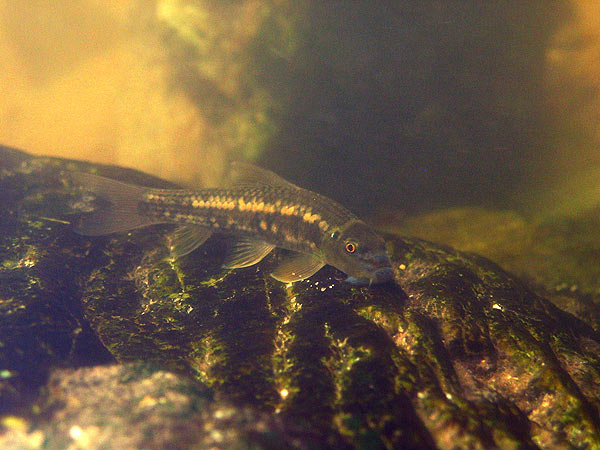
Garra fuliginosa
Fowler, 1934
Max length150mm SL6in SLTank150 × 45cm60 × 18inTemp20–27°C68–81°FpHnot recordedFollowing Rainboth (1996) distinguishing characters for G. fuliginosa include: presence of rostral and maxillary barbels; a well-developed, trilobed rostrum; possession of 10 gill rakers on the lower portion of the first gill arch; no mid-lateral body stripe; 32-34 lateral line scales; body dark with random lighter scales in places. Kottelat (2001) states that the species can be told apart from other Garra occurring in Laos by a combination of: snout with a secondary rostrum, proboscis about twice as wide...
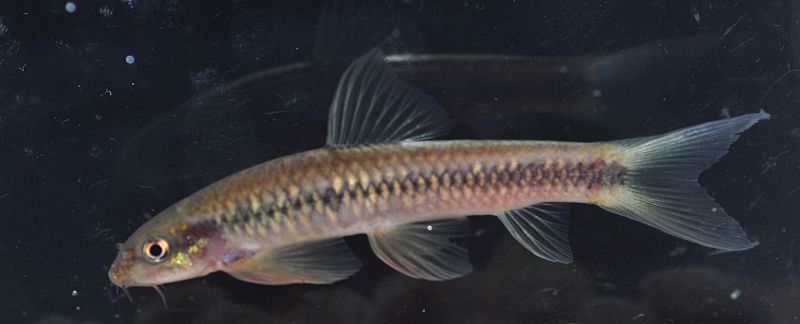
Garra hughiCardamom Garra
Silas, 1955
Max length155mm SL6in SLTanknot recordedTempnot recordedpHnot recordedG. hughi is occasionally available in the ornamental trade and may be labelled 'chocolate algae eater'. The original diagnosis of this species by Silas states that it can be identified by the following combination of characters: elongate body form; broad head...
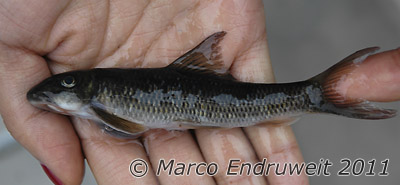
Garra imberba
Garman, 1912
Max length120mm SL5in SLTanknot recordedTempnot recordedpHnot recordedThis species can be distinguished from congeners inhabiting the Red River basin in Yunnan province, China, by the following combination of characters: no barbels; 46-52 lateral line scales; 16 circumpeduncular scales; pharyngeal teeth in 3 rows, 2.4.5-5.4.2; snout rounded, no secondary rostrum, no longitudinal...
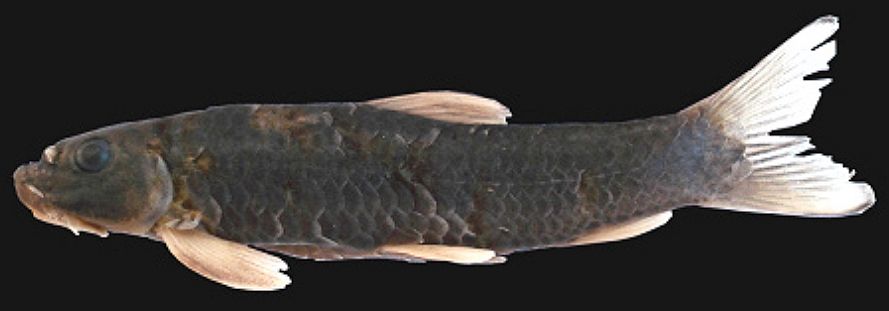
Garra kalpangi
Nebeshwar, Bagra & Das, 2012
Max length75mm SL3.0in SLTanknot recordedTempnot recordedpHnot recordedG. kalpangi is distinguished from other Garra species from the Himalayan foothills by the following combination of characters: two pairs of barbels; a weakly developed proboscis represented by a squarish area anterior to the nostrils; 16 circ...
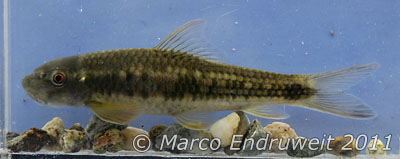
Garra mirofrontis
Chu & Cui, 1987
Max length85mm SL3.3in SLTanknot recordedTempnot recordedpHnot recordedThis species is characterised by possession of a transverse groove on the snout, directly in front of the eyes, and a bifurcate proboscis with a conical keratinised tubercle at each anterior tip.
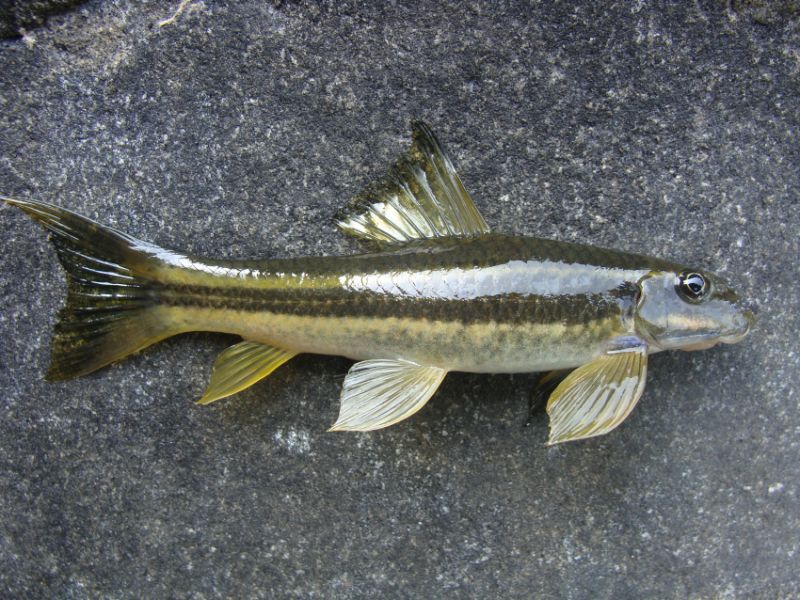
Garra mullya
Sykes, 1839
Max length170mm SL7in SLTanknot recordedTempnot recordedpHnot recordedThis species is endemic to and widespread within peninsular India, where it has been recorded from the states of Gujrat, Madhya Pradesh, Chhattisgarh, Orissa, Jharkhand, West Bengal, Maharashtra, Andhra Pradesh, Goa, Karnataka, Tamil Nadu and Kerala. It is thus found in numerous river systems of which some of the most important include the Tapti, Narmada, Mahanadi, Godavari, Krishna, and Cauvery.
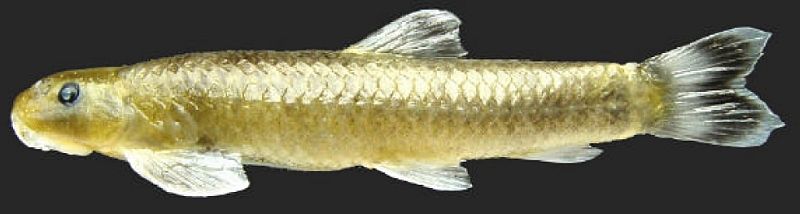
Garra nambulica
Vishwanath & Joyshree, 2005
Max length65mm SL2.6in SLTanknot recordedTempnot recordedpHnot recordedThis species is diagnosed by the following combination of characters: body moderate sized; head squarish; no proboscis or transverse groove on snout; mental disc length 96.9% its own width; pre...
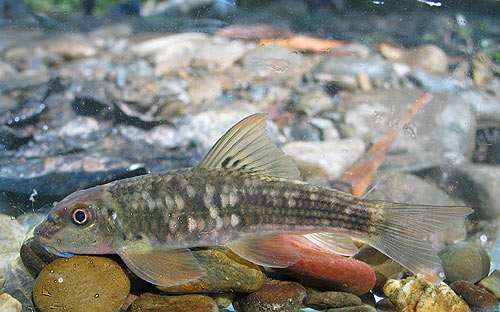
Garra notata
Blyth, 1860
Max length120mm SL5in SLTanknot recordedTempnot recordedpHnot recordedG. notata is one of a number of congeners to lack both a transverse groove and a proboscis on the snout. It also possesses 33-34 lateral line scales and a series of dark spots at the base of the dorsal-fin rays, and lacks scales on the lower portion of the body and abdomen. The genus Garra is a particularly enigmatic grouping with new taxa...
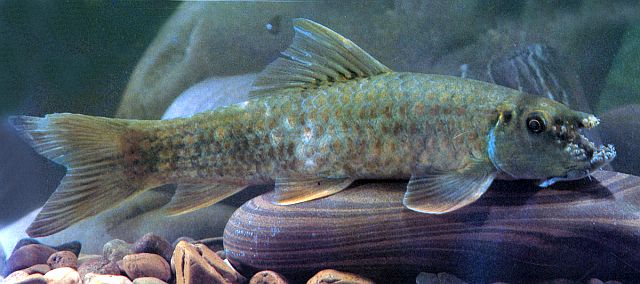
Garra orientalis
Nichols, 1925
Max length120mm SL5in SLTanknot recordedTempnot recordedpHnot recordedAmong other Garra species from Southeast Asia and China, G. orientalis is most similar to G. salweenica and G. fuliginosa in that all three possess a roughly triangular, trilobed proboscis on the snout, the anterior margin of which is densely tuberculated, and the inferior margin not in contact with the depressed rostral surface, i.e., the proboscis projects forwards.
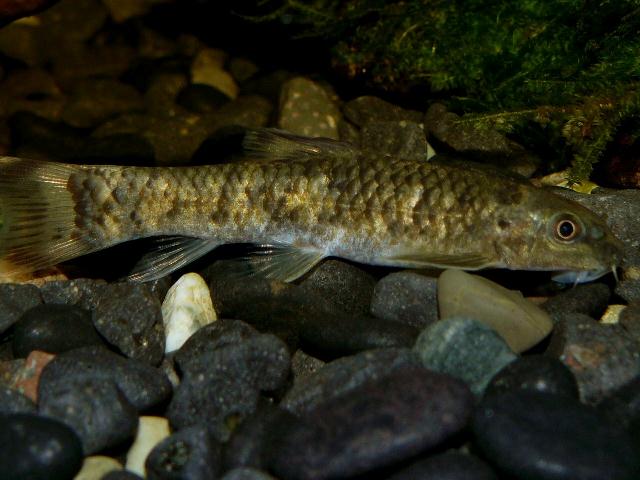
Garra poecilura
Kullander & Fang, 2004
Max length45mm SL1.8in SLTanknot recordedTempnot recordedpHnot recordedThe Naung Pin Thar Chaung is located in a hilly area mostly comprising bamboo forest. In 1998 the water was clear, colourless and flowing at a moderate pace over a substrate of rocks and gravel. It was 1-2 metres wide and maximum depth was only 0.5 metres. Due to the surrounding forest some stretches were shaded and others more open. Sympatric species included Garra spilota, Homalopteroides modestus, Mystus pulcher, and Xenentodon cancila, plus...
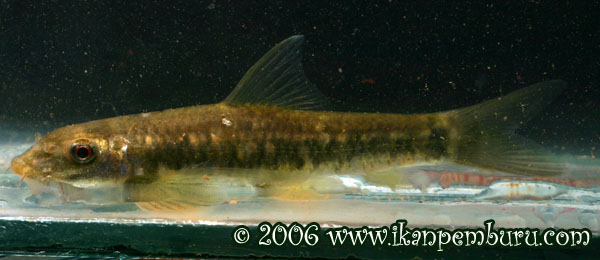
Garra qiaojiensis
Wu & Yao, 1977
Max length175mm SL7in SLTanknot recordedTempnot recordedpHnot recordedG. qiaojiensis can be differentiated from closely-related congeners by the configuration of its proboscis, which is quadrate (1.6-1.8 times wider than long), reflected downwards against the snout and heavily tuberculated anteriorly, and the relative size of its mental disc which measures 48.7-55.9 % HL.
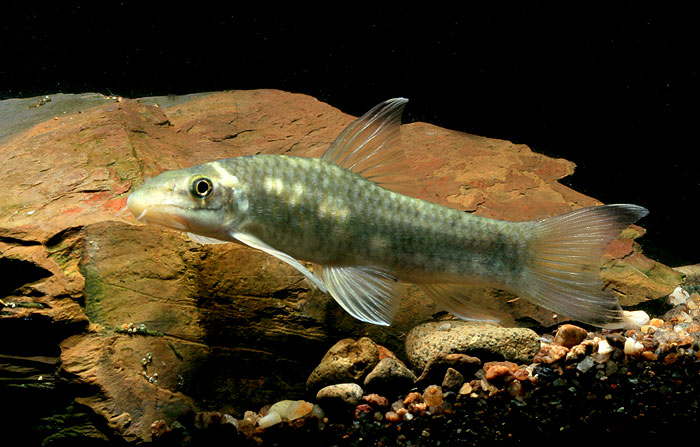
Garra rakhinica
Kullander & Fang, 2004
Max length60mm SL2.4in SLTanknot recordedTempnot recordedpHnot recordedG. rakhinica can be distinguished from other members of the genus by the following combination of characters: rostral furrow shallow and snout tip smoothly rounded; rostral lobe present, proboscis absent; scaled predorsal region, chest, and abdomen; two pairs of barbels; 28 lateral line scales; 16 circumpeduncular scale rows; colour pattern almost uniform greyish on body and caudal-fin; a dark spot immediately posterior to the upper extremity of the...
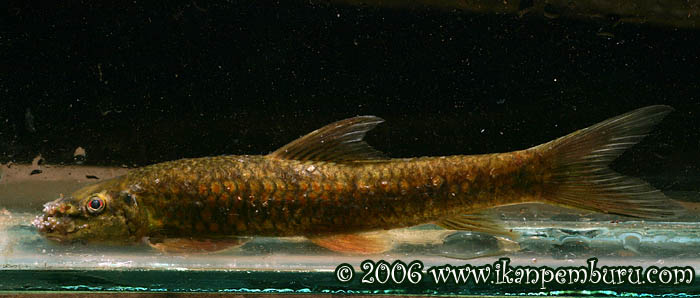
Garra rotundinasus
Zhang, 2006
Max length185mm SL7in SLTanknot recordedTempnot recordedpHnot recordedPrior to its description, G. rotundinasus was considered to represent the congener G. gravleyi, but the latter is now accepted to occur only in the Salween and Manipur river basins. These two are separated from all other Garra species in China and Southeast Asia by possession of a weakly-devel...
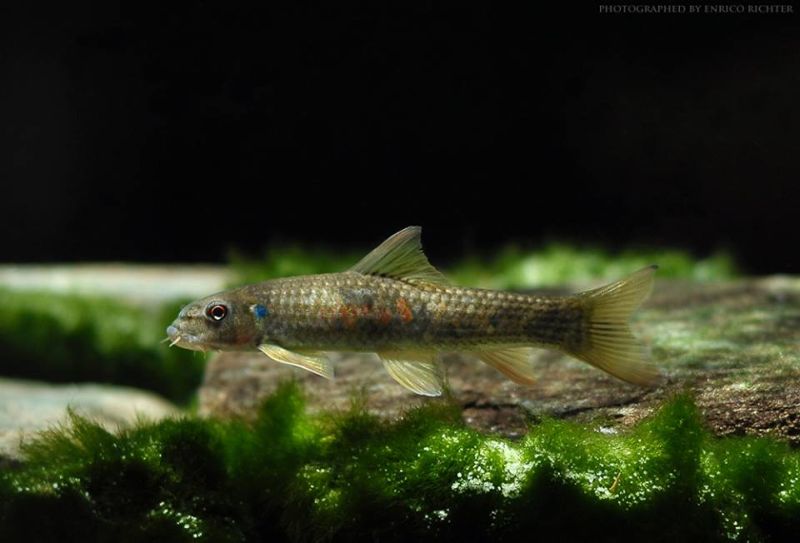
Garra rufaDoctor Fish
Heckel, 1843
Max length120mm SL5in SLTank120 × 45cm48 × 18inTemp14–20°C57–68°FpH6.0–8.0Fish referred to as G. rufa are marketed worldwide as 'doctor fish', with the questionable ability to remove dead and scaly skin and ease complaints such as psoriasis. These fish are quite commonly available in the aquarium trade as well, although in both cases it is unclear whether they represent G. rufa or another, related species.
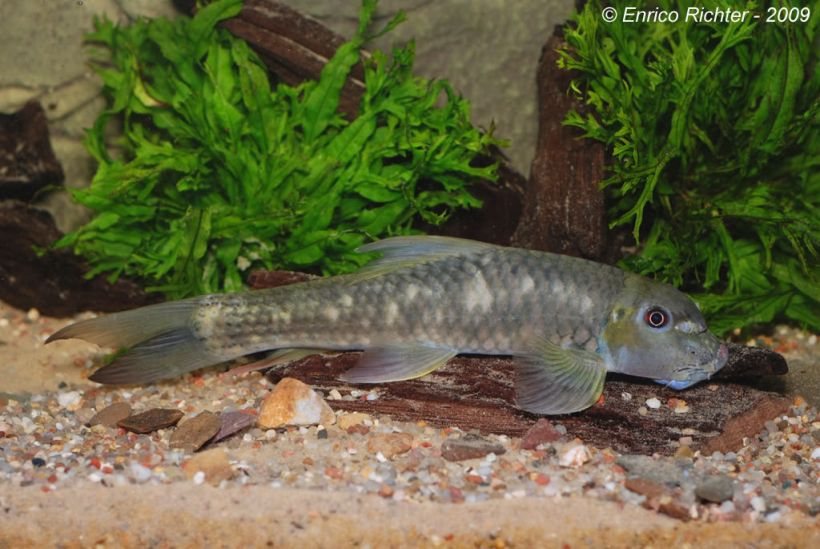
Garra salweenica
Hora & Mukerji, 1934
Max length175mm SL7in SLTanknot recordedTempnot recordedpHnot recordedG. salweenica can be distinguished from other congeners inhabiting the Salween watershed by the following combinatuion of characters: body brownish; presence of a trilobed proboscis on the snout; snout blunt; a series of black spots at the base of the central dorsal-fin rays; presence of longitudinal stripes on the posterior portion of the body; a dark marking at the tip of the upper (and lower in some specimens) caudal-fin lobe; body depth 22.4-25.3 % SL.
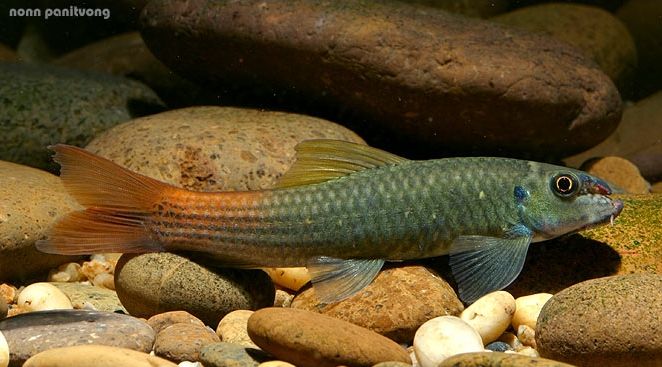
Garra sp. 'redtail'Burmese Red-tailed Garra
authority not recorded
Max length75mm SL3.0in SLTank120 × 30cm48 × 12inTemp20–27°C68–81°FpH6.0–7.5A putatively undescribed species often imported and sold as G. sp. 'burmanicus'. It first appeared in the trade during 2005 and has since been available on a sporadic basis, usually with a relatively high price tag. As well as its unique colour pattern, a primary diagnostic character is the presence of a proboscis-like rostral process between the eyes.
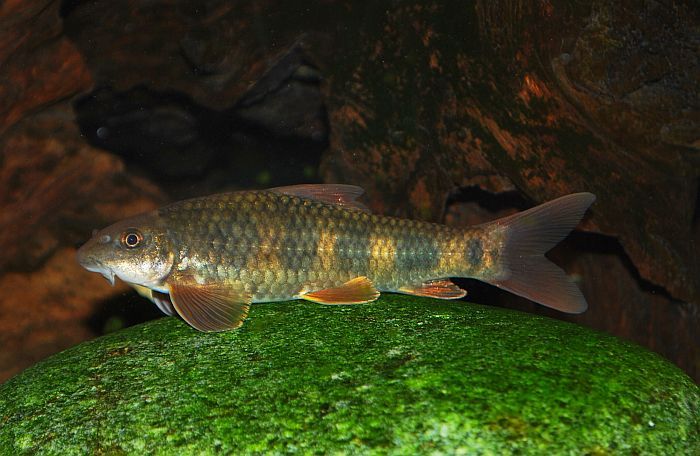
Garra spilota
Kullander & Fang, 2004
Max length69mm SL2.7in SLTank90 × 30cm36 × 12inTemp20–26°C68–79°FpH6.0–7.5The type locality is located in a hilly area mostly comprising bamboo forest. At time of collection the water was clear, colourless and flowing at a moderate pace over a substrate of rocks and gravel. It was 1-2 metres wide and maximum depth was only 0.5 metres. Due to the surrounding forest some stretches were shaded and others more open. Sympatric species included...
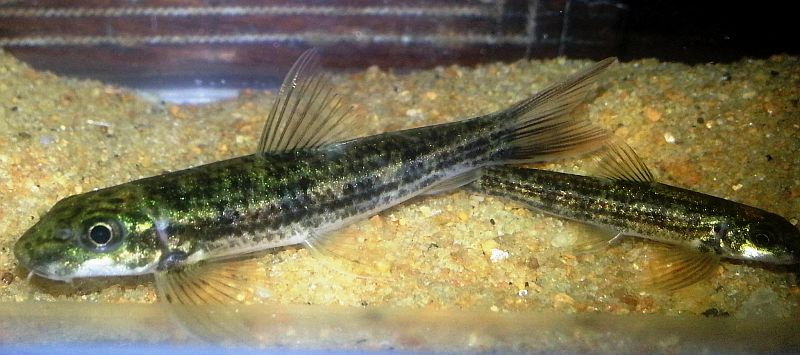
Garra surendranathanii
Shaji, Arun & Easa, 1996
Max length150mm SL6in SLTanknot recordedTempnot recordedpHnot recordedThe type series was collected from a stream-like tributary of the Chalakkudy River at an altitude of 483 m AMSL. In March 1996 the habitat measured around 15 m across and comprised shallow (~ 20 cm deep) water flowing slowly through moist deciduous forest over a substrate of pebbles and boulders.