Search the catalogue
Type a name: scientific, common, or one a species used to go by. Or narrow the catalogue with the filters.
Filters
Euchilichthys guentheri
authority not recorded
Max length190mm SL7in SLTank120 × 30cm48 × 12inTemp23–27°C73–81°FpH6.4–7.4This is one of only 4 described species of Euchilichthys (although more have been discovered) and is very rare in the hobby. It can be distinguished from similar Chiloglanis species by its elliptical (as opposed to circular) mouthparts and larger adult size. Unlike the South American Loricariids, it lacks armoured scuting on the body....
Exodon paradoxusBucktooth Tetra
authority not recorded
Max length150mm SL6in SLTank120 × 45cm48 × 18inTemp23–28°C73–82°FpH5.5–7.5The genus Exodon is currently monotypic, with this single species having uniquely designed teeth. These allow it to rip the scales from other species. It's an ideal choice for those wishing to keep a large shoal of a predatory species without possessing the massive amount of tank space needed for a shoal of piranha or similar. A tank full of these makes for a very colourful and active display....
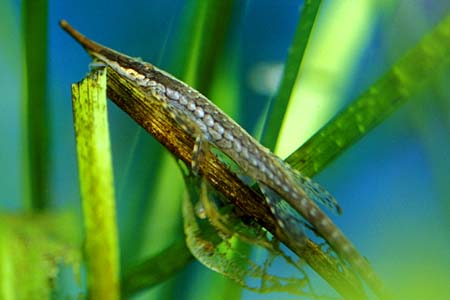
Farlowella vittataTwig Catfish
Myers, 1942
Max length150mm SL6in SLTank90 × 30cm36 × 12inTemp24–27°C75–81°FpH6.0–7.0Although often sold as the closely related F. acus (a species that is highly endangered and imported very rarely, if at all), F. vittata is the most common representative of the genus in hobbyists' tanks. The easiest way to distinguish the two is by comparing the shape of the rostrum, which is longer and more slender in vittata, although there are also differences in the arrangement of the ventral scutes. They are adapted for life among peripheral vegetation and tree roots along the edges o...
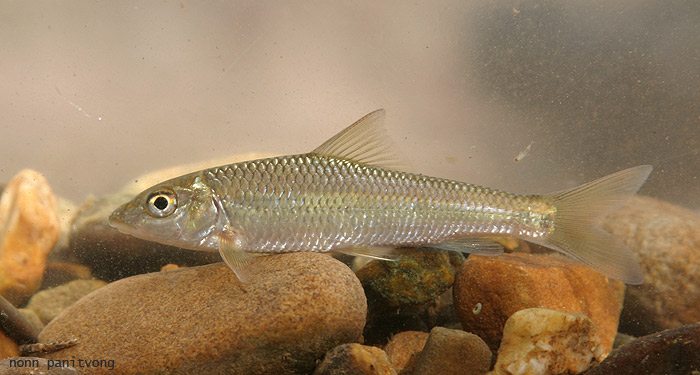
Folifer brevifilis
Peters, 1881
Max length300mm SL12in SLTank240 × 60cm96 × 24inTemp20–26°C68–79°FpH6.0–8.0This species is widely-distributed in the Mekong river system in Thailand, Laos, and Vietnam, Salween and Ayeyarwaddy rivers in southern China, Myanmar, and Thailand, plus various smaller basins in Vietnam and China. It has also been recorded from the islands of Hainan and Hong Kong. Type locality is given as 'China: sent from Hong Kong'.
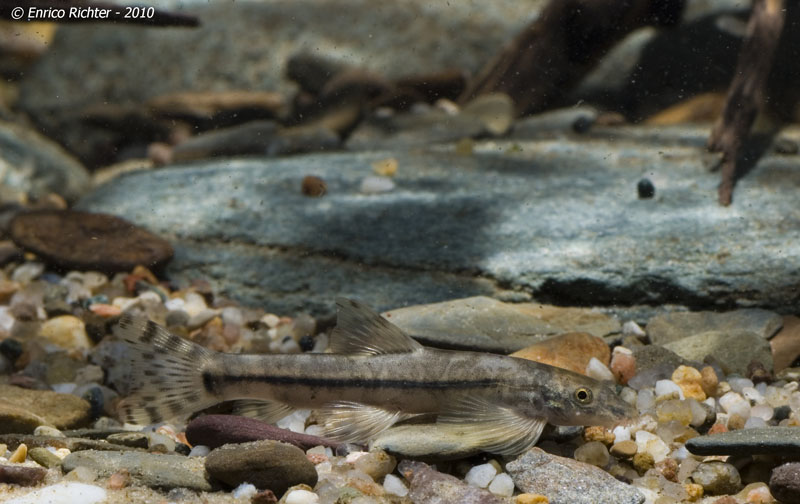
Formosania lacustrisTasseled-mouth Loach
Steindachner, 1908
Max length120mm SL5in SLTank120 × 30cm48 × 12inTemp20–24°C68–75°FpH6.0–7.5An obligate dwellers of swiftly-flowing streams and headwaters containing clear, oxygen-saturated water. It inhabits riffles and runs and according to studies shows a preference for shallower zones. Substrates are generally composed of gravel, rocks, boulders or bedrock carpeted with a rich biofilm formed by algae and other micro-organisms. Aquatic plants are uncommon and while riparian/streamside vegetation may be present...
Fossorochromis rostratus
authority not recorded
Max length250mm SL10in SLTank150 × 38cm60 × 15inTemp25–29°C77–84°FpH7.5–8.8F. rostratus was formerly classified as Haplochromis rostratus. When startled, it may bury itself in the substrate. It often displays its natural sand-sifting method of feeding in aquaria, and a substrate of sand is essential as gravel may injure the fish. In nature, it is only the largest dominant males that build nests, whilst the subdominant males and females shoal together. There also exists a feeding relationship between this species and Cyrtocara moorii in the wild, in which shoals of C. m...
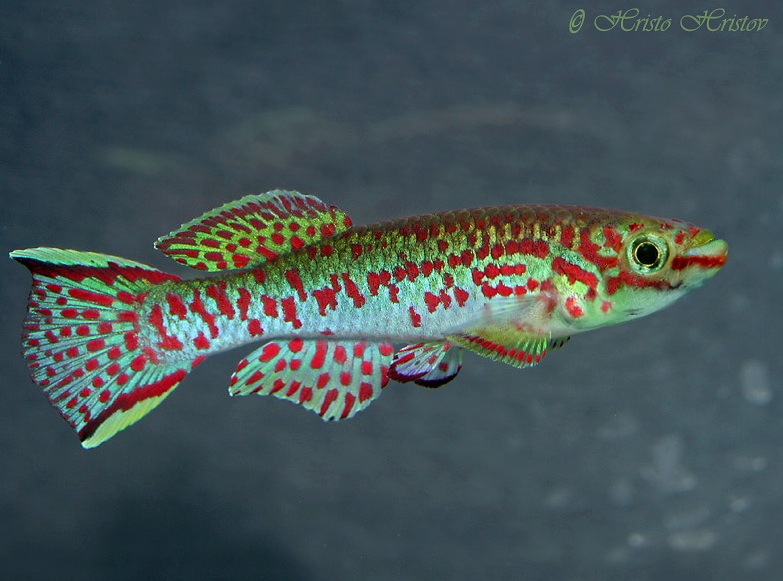
Fundulopanchax gardneriSteel-blue Killifish
Boulenger, 1911
Max length55mm SL2.2in SLTanknot recordedTemp20–26°C68–79°FpH6.0–7.5This species is also known as 'Gardner's Killi' and 'blue lyretail' and the commonly-available aquarium forms are perhaps among the best choices for those new to keeping killifishes being relatively hardy, colourful and easy to breed. A number of ornamental strains have also been line-bred by aquarists including 'gold' and 'albino'.
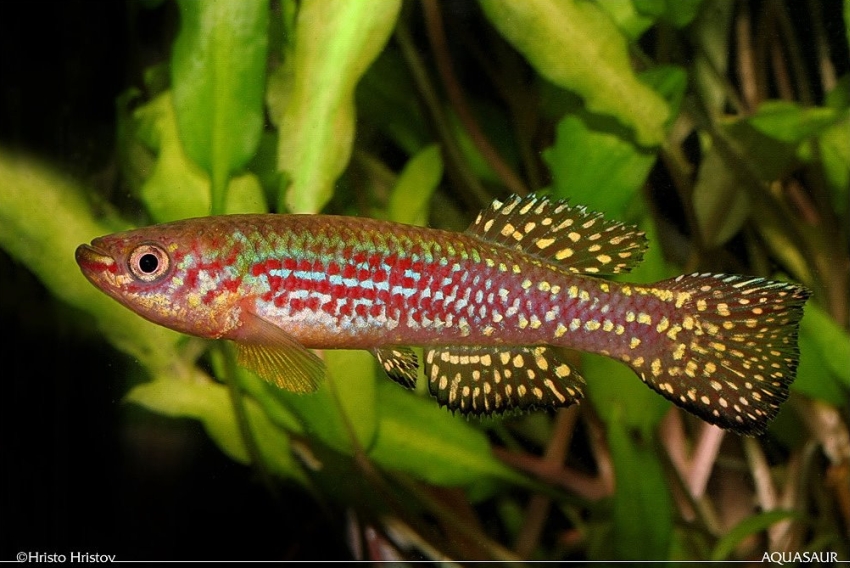
Fundulopanchax gresensi
Berkenkamp, 2003
Max length47mm SL1.9in SLTanknot recordedTemp22–26°C72–79°FpH6.0–7.5Known only from a relatively small area near the villages of Takwai I and II, Atebong Wire and Edjuingan in wester Cameroon, with records existing from the Bagwor and Mack river systems both of which are tributaries within the upper Cross River basin, western Cameroon. Type locality is 'West Cameroon, 5°34'N, 9°50'E'. Collections of wild fish are generally lab...
Fundulopanchax marmoratusMarbled Lyretail
authority not recorded
Max length60mm SL2.4in SLTank45 × 25cm18 × 10inTemp21–24°C70–75°FpH6.0–7.0Note the cooler temperatures required by this rare species. It is not an annual fish, occuring only in permanent bodies of water.
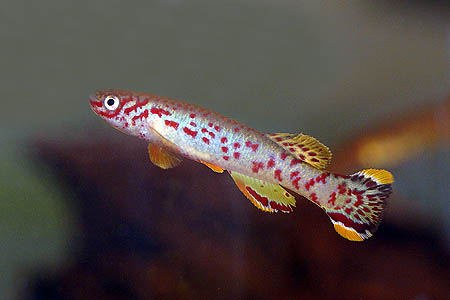
Fundulopanchax scheeli
authority not recorded
Max length60mm SL2.4in SLTank45 × 25cm18 × 10inTemp23–26°C73–79°FpH6.0–7.5This is not an annual species, occuring only in permanent bodies of water.
Fundulopanchax sjoestedtiGolden Pheasant
authority not recorded
Max length120mm SL5in SLTank90 × 30cm36 × 12inTemp23–26°C73–79°FpH6.0–8.0One of the most stunning killifish available, due to the sublime colouration of adult males combined with their impressive maximum size. It was formerly classified as Aphyosemion sjoestedti and much of the available literature still refers to it by this name. There are several colour forms available, including a smaller variety known as "Dwarf Red".
Fundulopanchax walkeri
authority not recorded
Max length65mm SL2.6in SLTank45 × 25cm18 × 10inTemp20–23°C68–73°FpH6.0–7.0There exist many different populations of this species in nature, some of which are now threatened or extinct, due to rapid human development in Ghana and the Ivory Coast in recent years. It is not a common fish in the hobby. Interestingly, it appears that F. walkeri occurs as both an annual and non-annual fish. This adaptation allows it to inhabit many different habitats, as it is able to breed in both permananent and temporary bodies of water. Note that this fish prefers cooler temperatures t...
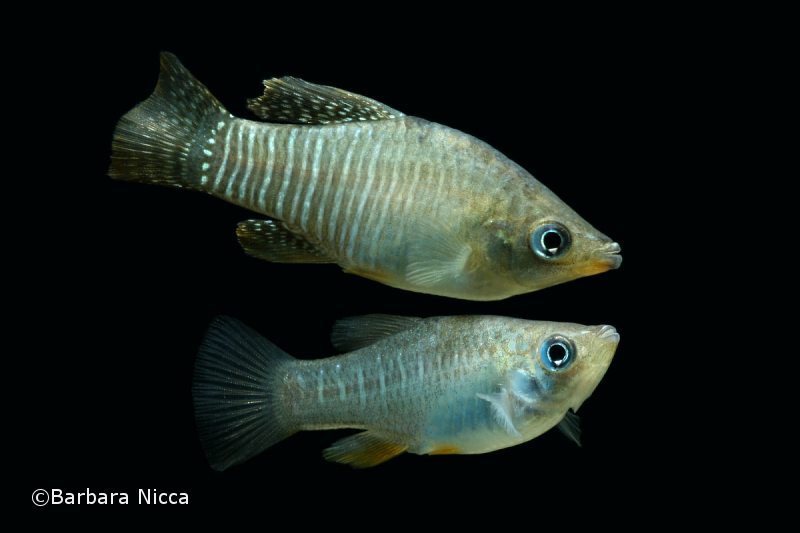
Fundulus xenicusDiamond Killifish
Jordan & Gilbert, 1882
Max length50mm SL2.0in SLTanknot recordedTemp21–35°C70–95°FpH7.5–9.0This species is not a common aquarium species but is occasionally available from specialist retailers or breeders. It was initially named Adinia multifasciata by Girard (1859) before later being redescribed as Fundulus xenicus (mispelled 'Fundnlus') by Jordan and Gilbert (1882). Body stout and trapezoidal in adults, body depth usually 2 to 3 times in standard length; scales large, fewer than 30 scales along midlateral scale row...
Gambusia affinisWestern Mosquitofish
authority not recorded
Max length40mm SL1.6in SLTanknot recordedTemp18–27°C64–81°FpH6.0–8.0For many years G. affinis was thought to be the same species as the Eastern Mosquitofish, G. holbrooki, but has since been given distinct species status. They can be distinguished by several means. In G. holbrooki the leading ray of the males' gonopodium has a serrated edge, theusually has 7 rays and males also generally have a higher degree of dark spotting on the body than G. affinis males. Male G. affinis also lack the serrated leading ray of the gonopodium and this species usually has o...
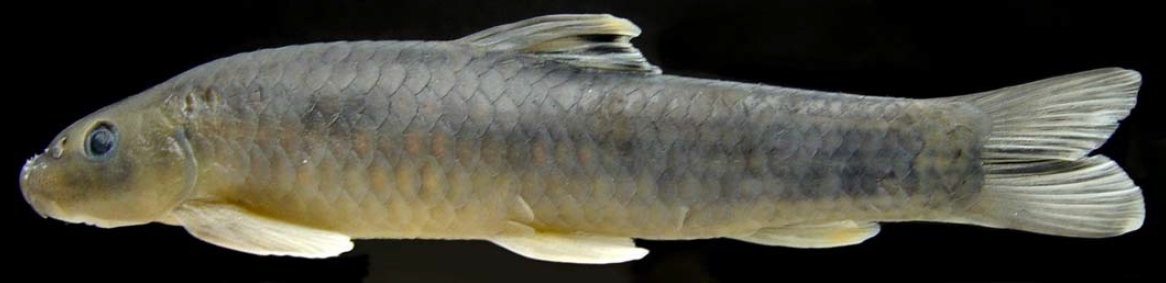
Garra arupi
Nebeshwar, Vishwanath & Das, 2009
Max length75mm SL3.0in SLTanknot recordedTempnot recordedpHnot recordedKnown from the upper Brahmaputra River basin in Arunachal Pradesh state, northern India, with records from the lower Divang Valley and Lohit District.
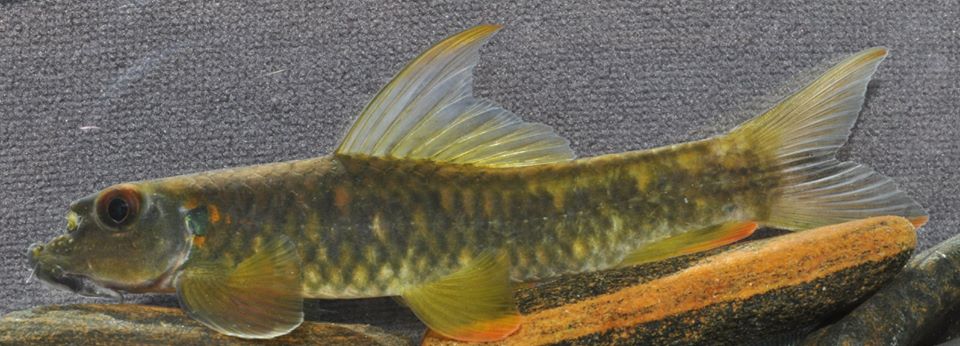
Garra bicornutaRhino Garra
Narayan Rao, 1920
Max length150mm SL6in SLTank120 × 45cm48 × 18inTemp20–27°C68–81°FpH6.0–8.0The preciose function of the secondary rostrum remains unknown; some have suggested it may have some hydro-mechanical purpose but it's perhaps more likely related to reproductiion and/or social interactions. Only males develop prominent rostra...
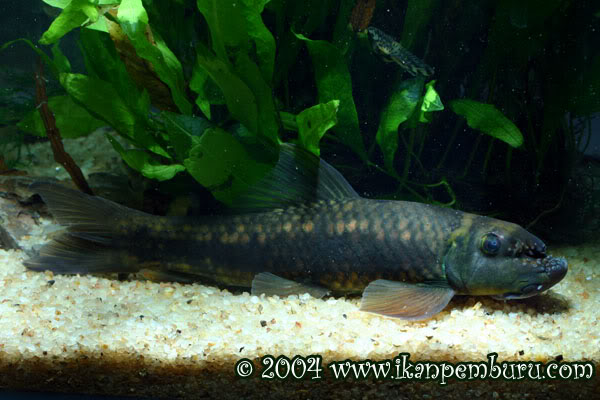
Garra bispinosa
Zhang, 2005
Max length130mm SL5in SLTanknot recordedTempnot recordedpHnot recordedG. bispinosa can be distinguished from all other congeners in Southeast Asia and China by the following combination of characters: a conspicuous, quadrate, anteriorly-directed proboscis orientated ventrally against the snout and anteriorly adorned with a single, large, uniscupid, acanthoid tubercle on the distal tip of each lobe; snout with a deep groove across its tip to form a transverse lobe; 34-35 lateral...
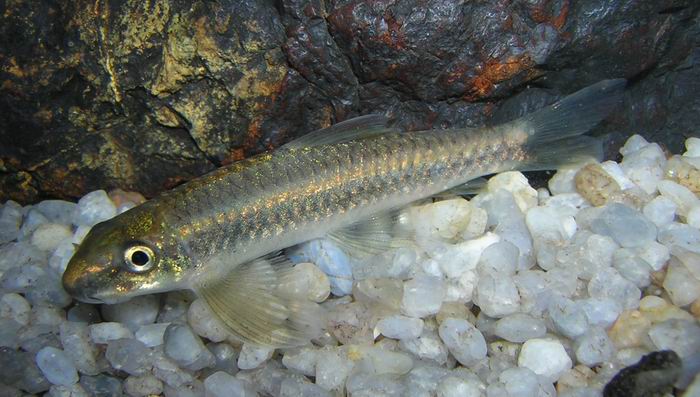
Garra borneensis
Vaillant, 1902
Max length115mm SL5in SLTanknot recordedTempnot recordedpHnot recordedSubstrates are generally composed of gravel, rocks, boulders or bedrock carpeted with a rich biofilm formed by algae and other micro-organisms. At a habitat in the Mendawai river basin in central Kalimantan, H. borneensis was collected from a foothill stream running swiftly over a rock and gravel substrate with clear water of pH 6.4.
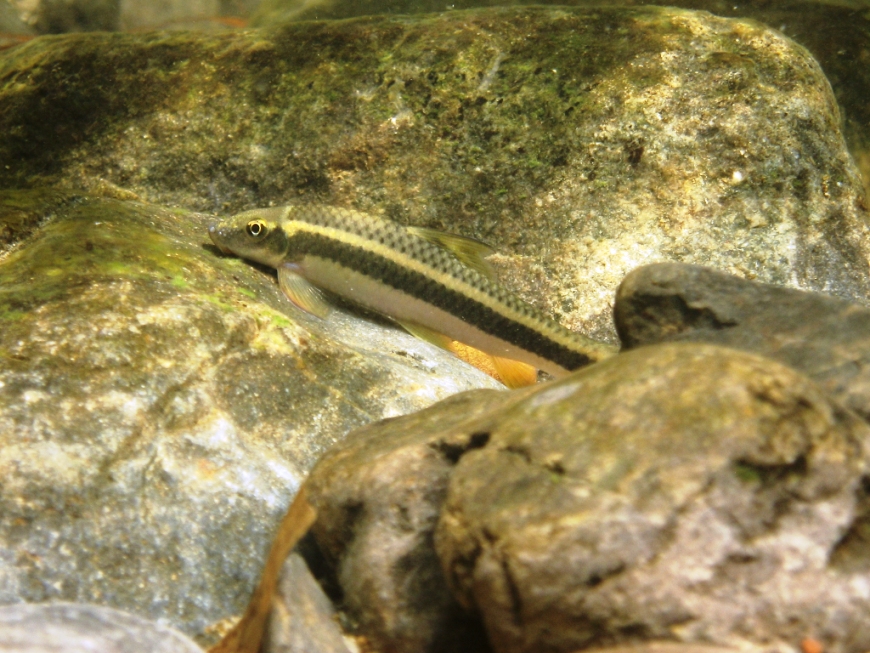
Garra cambodgiensisFalse SAE
Tirant, 1883
Max length150mm SL6in SLTank120 × 45cm48 × 18inTemp20–27°C68–81°FpH6.0–7.5Also known by the vernacular names ''black band garra', 'stone-lapping minnow' or 'false flying fox' and continues to be traded as Garra taeniata, an invalid name synonymous with G. cambodgiensis. It is often confused with those laterally-striped members of the genus Crossocheilus sold as 'Siamese algae eater' or 'Siamese flying fox', but in those species the dark lateral body stripe continues into the caudal-fin whereas in G. cambodgiensis it terminates...
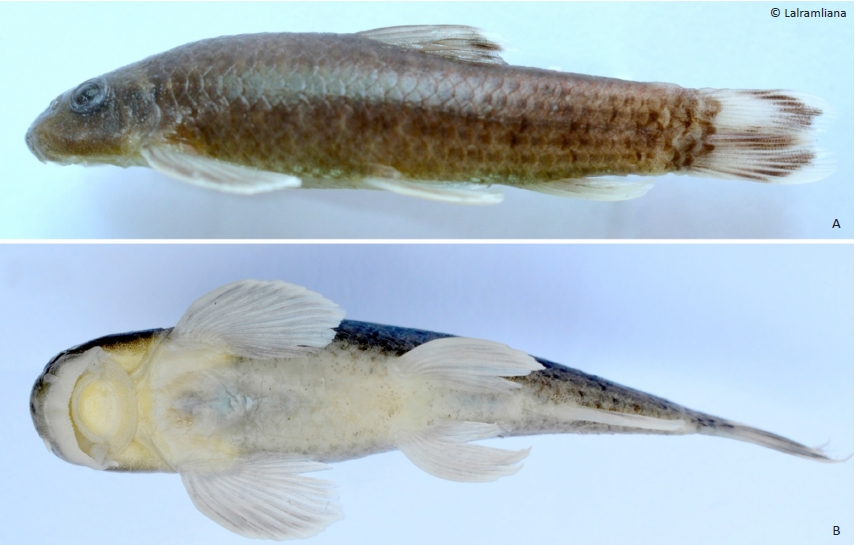
Garra dampaensis
Laironunga, Lainuntluanga & Lairamliana, 2013
Max length55mm SL2.2in SLTanknot recordedTempnot recordedpHnot recordedThis species can be told apart from Indian congeners by the following combination of characters: no transverse groove or proboscis on the snout; tip of dorsal fin falcate; long axillary scale present at the base of pelvic fin, reaching base of last pelvic fin ray; 27–29 lateral-line scales, 10–11 regularly arranged predorsal scales; W-shaped black band across middle of caudal fin; presence of scales on the abdomen.