Results for “species”
Type a name: scientific, common, or one a species used to go by. Or narrow the catalogue with the filters.
Filters
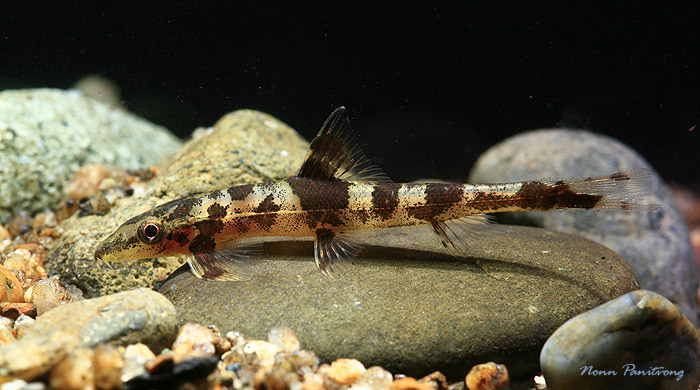
Homaloptera ogilviei
Alfred, 1967
Max length50mm SL2.0in SLTank60 × 30cm24 × 12inTemp20–25.5°C68–78°FpH6.0–7.5The reason that the paired fins are orientated vertically, as opposed to horizontally in other members of the genus, is unclear but Roberts (1989) suggest it may be an adaptation to this species' ecology, in that it displays a preference for submerged vegetation or woody structures as opposed to rocky environments. They're certainly adapted for a rea...
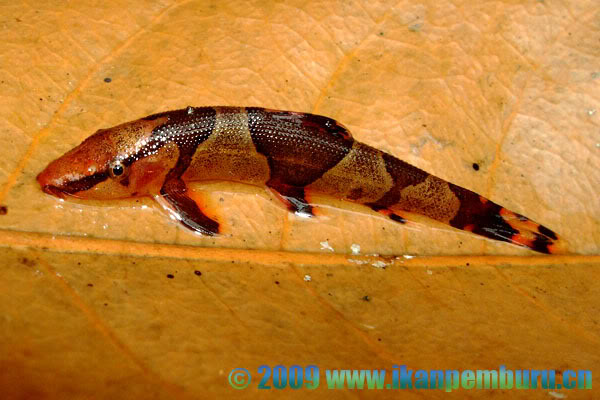
Homaloptera orthogoniataSaddle-back Loach
Vaillant, 1902
Max length95mm SL3.7in SLTank120 × 30cm48 × 12inTemp20–25.5°C68–78°FpH6.0–7.5This species appears is rare in the aquarium hobby with the majority of images both online and in the published literature instead depicting H. confuzona or H. parclitella. All three are members of the H. ocellata 'group' within the genus which currently contains H. ocellata, H. bilineata, H. confuzona, H. orthogoniata, H. ogilviei and H. parclitella. Following Tan and Ng (2005) these share possession of...
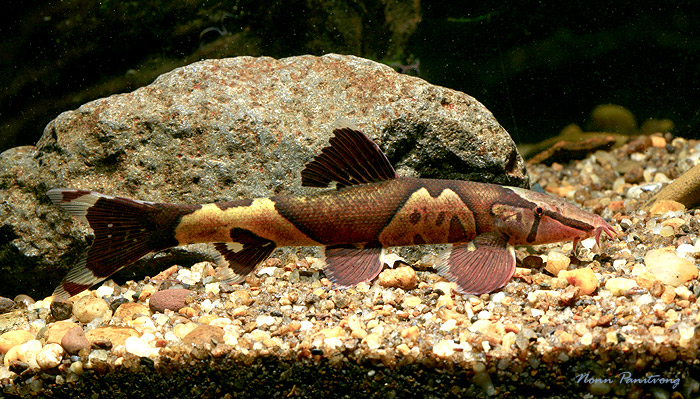
Homaloptera parclitella
Tan & Ng, 2005
Max length80mm SL3.1in SLTank120 × 30cm48 × 12inTemp20–25.5°C68–78°FpH6.0–7.5The water at the type locality is described as 'clear and fast-flowing over a rocky substratum'. H. parclitella was observed in shallow water among the rocks, and sympatric species included Garra cambodgiensis, Neolissochilus soroides, Poropuntius smedleyi, 'Puntius' binotatus, Homaloptera nebulosa and Amblyceps mangois.
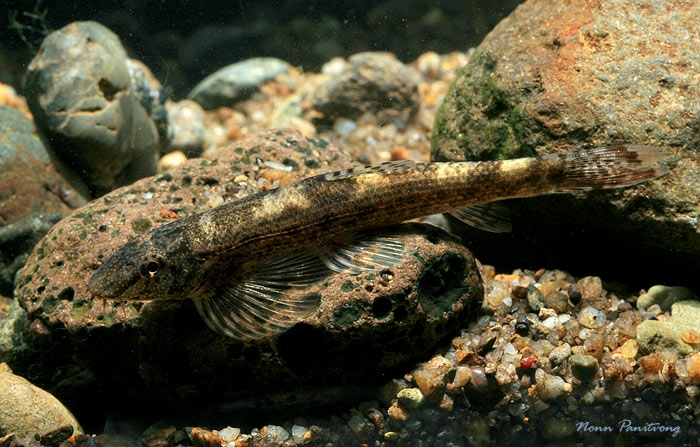
Homalopteroides modestus
Vinciguerra, 1890
Max length44mm SL1.7in SLTank60 × 30cm24 × 12inTemp18–25.5°C64–78°FpH6.0–7.5Homalopteroides spp. are specialised micropredators feeding on small crustaceans, insect larvae and other invertebrates. In captivity some sinking dried foods may be accepted but regular meals of live or frozen Daphnia, Artemia, bloodworm, etc., are essential for the maintenance of good health.
Horabagrus nigricollarisBlack Collared Catfish
authority not recorded
Max length300mm SL12in SLTank120 × 45cm48 × 18inTemp23–25°C73–77°FpH5.5–7.5There are only 2 species currently in the genus Horabagrus, with this one being the rarer in the hobby. H. brachysoma is the other, and it resembles H. nigricollaris quite closely. It is a much larger fish and is unsuitable for most home aquaria. Confusion can arise as both are usually sold as juveniles, at around 2-3" in length. They can be told apart by examining the black shoulder markings found on either side of the fish. In H. brachysoma this is no more than a vaguely circular dark blo...
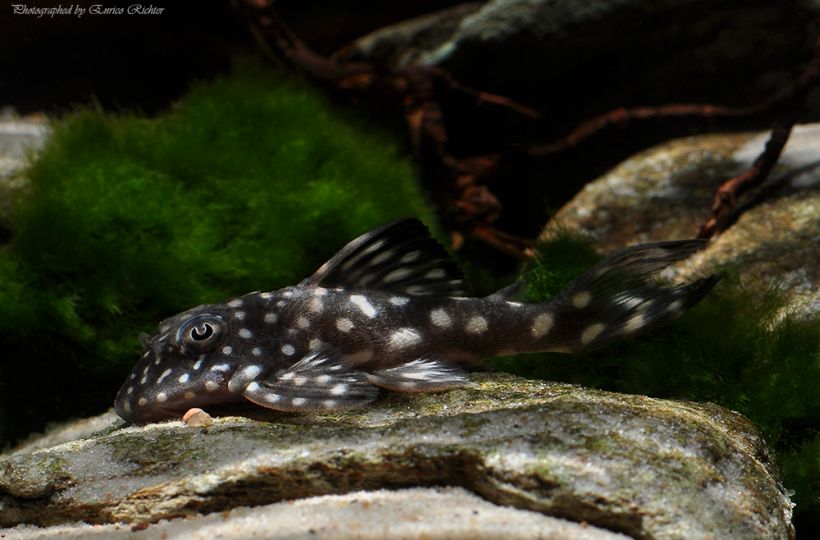
Hypancistrus inspectorL102
Armbruster, 2002
Max length160mm SL6in SLTank120 × 45cm48 × 18inTemp22–30°C72–86°FpH5.0–7.5H. inspector can be told apart from other described species in the genus by the following combination of characters: colour pattern comprising brown to black base with large whitish to yellow spots; adpressed dorsal-fin not reaching the adipose-fin spine; spots on head much smaller than on rest of body; spots in the upper caudal-fin lobe combining to form bands in adults; 24 plates in the mid-ventral series.
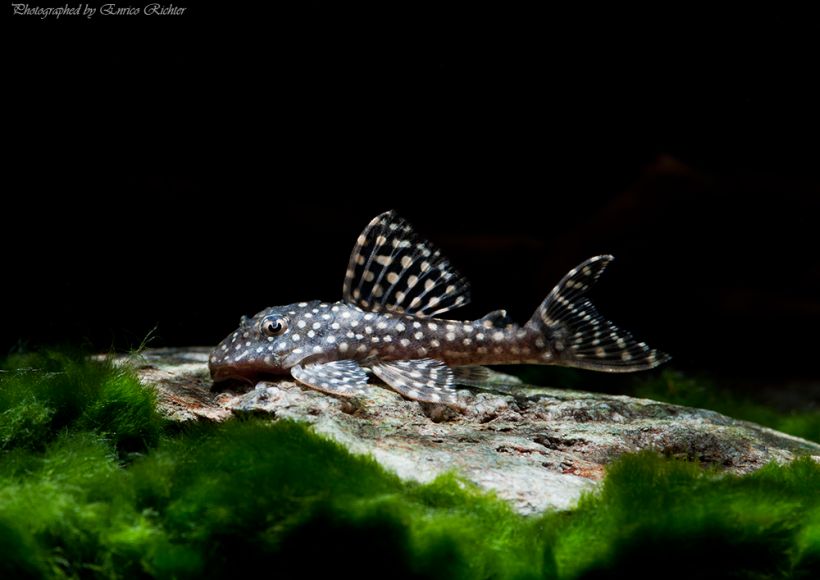
Hypancistrus sp.L136
authority not recorded
Max length90mm SL3.5in SLTank90 × 30cm36 × 12inTemp23–29°C73–84°FpH5.0–7.0L136 and its variants are collected in the rio Negro basin, Amazonas state, Brazil, and in particular the rio Demini, a northern tributary flowing into the central Negro in the municipality of Barcelos. Collection details for LDA05 and LDA06 are currently unclear but presumably in the vicinity. This unidentified 'species' is highly variable in terms of colour pattern, and it has been assigned a ser...
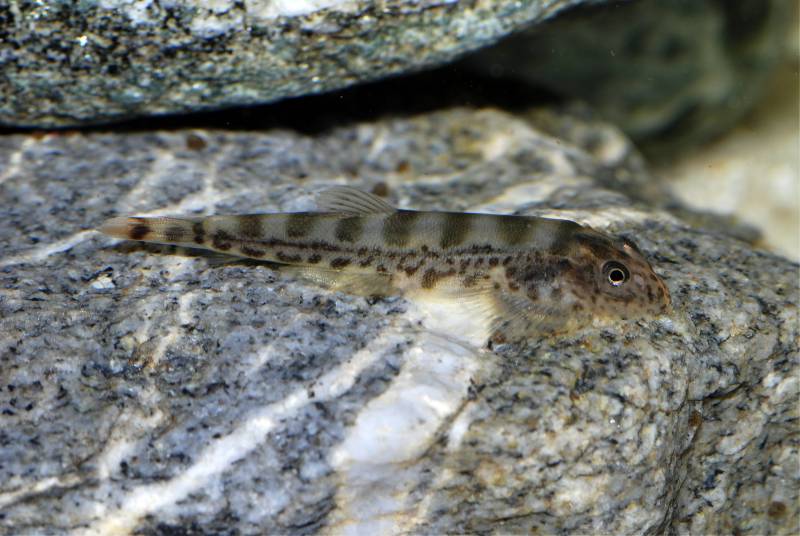
Hypergastromyzon humilis
Roberts, 1989
Max length35mm SL1.4in SLTank45 × 30cm18 × 12inTemp20–24°C68–75°FpH6.0–7.5The differences in pelvic-fin structure and gill openings led Roberts to redefine the genus when describing H. eubranchus, whereas Tan (2006) expressed doubts that the two are even congeneric but was unable to reach a definitive conclusion in the absence of fresh material. At any rate both species can be easily differentiated from Gastromyzon and Neogastromyzon spp. by observing the mo...
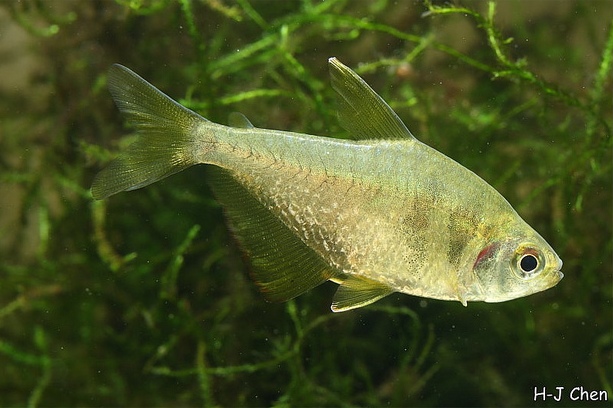
Hyphessobrycon bifasciatusYellow Tetra
Ellis, 1911
Max length45mm SL1.8in SLTanknot recordedTemp20–25°C68–77°FpH5.0–7.5Generally peaceful making it an ideal resident of the well-researched community aquarium. It is perhaps best-maintained alongside similarly-sized characids, gasteropelecids, lebiasinids, smaller callichthyid or loricariid catfishes and non-predatory, medium-sized cichlids. Try to buy a mixed-sex group of at least 8-10 specimens, incl...
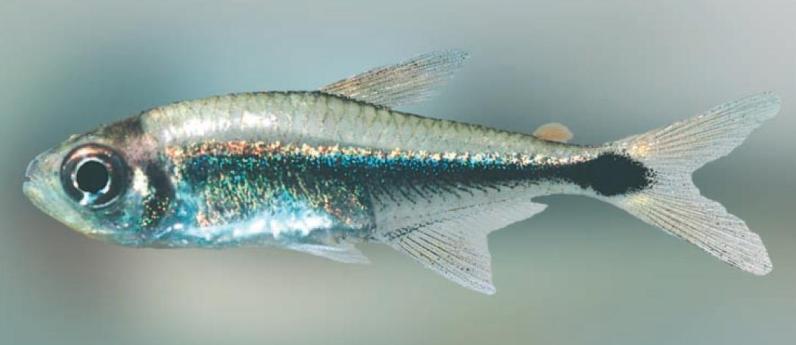
Hyphessobrycon borealis
Zarske, Le Bail & Géry, 2006
Max length28mm SL1.1in SLTanknot recordedTempnot recordedpHnot recordedH. borealis is a member of the putative ‘H. heterorhabdus-group’ of closely-related species within the genus as proposed by Géry (1977). There are around 15 members characterised by a 'longitudinal pattern' consisting of a thin, usu...
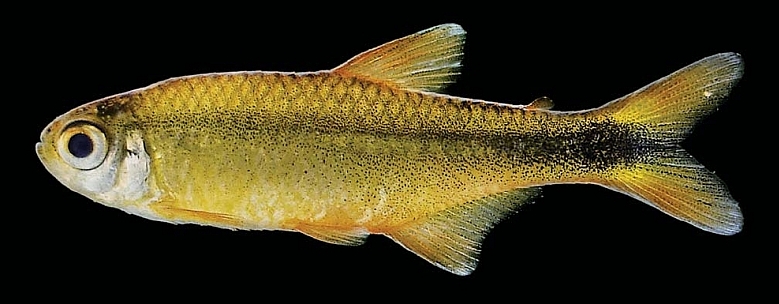
Hyphessobrycon brumado
Zanata & Camelier, 2010
Max length32mm SL1.3in SLTanknot recordedTempnot recordedpHnot recordedThis species superficially resembles the popular silver-tipped tetra, Hasemania nana, but can easily be told apart by presence (vs. absence) of an adipose-fin. It can be told apart from other Hyphessobrycon sp...
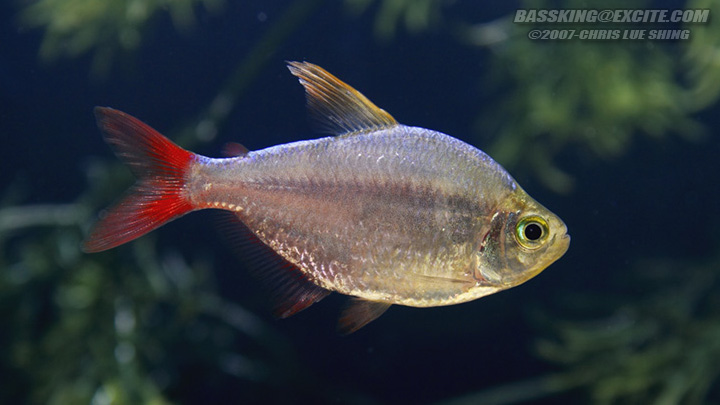
Hyphessobrycon columbianusColombian Tetra
Zarske & Géry, 2002
Max length65mm SL2.6in SLTank90 × 30cm36 × 12inTemp20–28°C68–82°FpH5.0–7.5This species is also traded as 'blue flame', 'blue-red', and 'Colombian red fin' tetra, and was misidentified as H. ecuadorensis for several years prior to its description. Within the genus it appears to be most closely related to the Costa Rica endemic H. savagei Bussing, 1967 but differs in a number of characters as fol...
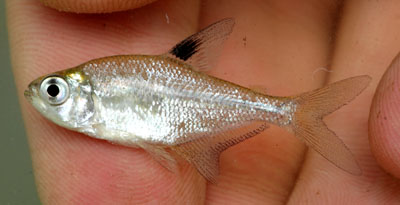
Hyphessobrycon compressusMayan Tetra
Meek, 1904
Max length45mm SL1.8in SLTanknot recordedTemp20–26°C68–79°FpH6.5–8.0H. compressus is the type species of the genus Hyphessobrycon but is not well-known in the ornamental trade. Hyphessobrycon was raised by Durbin in Eigenmann (1908) as a subgenus of Hemigrammus, differing from the latter by the absence of scales on the caudal-fin.
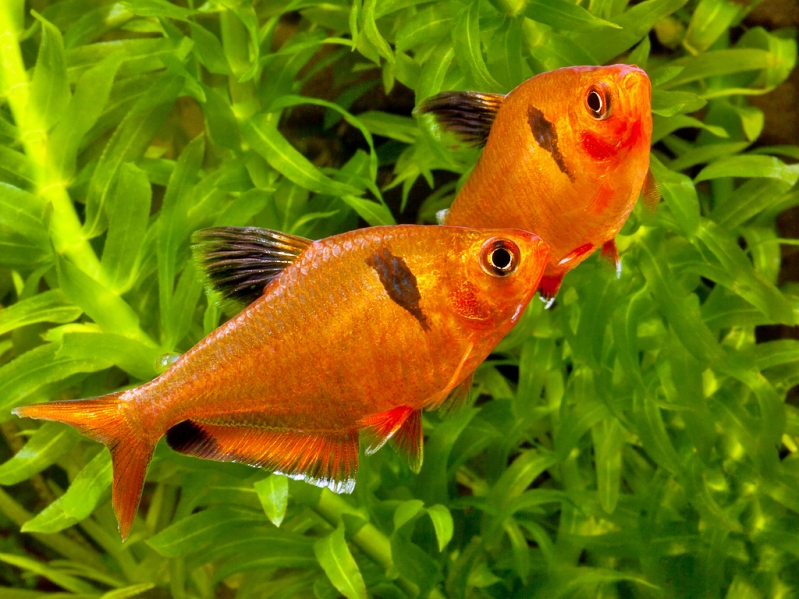
Hyphessobrycon equesSerpae Tetra
Steindachner, 1882
Max length40mm SL1.6in SLTank80 × 30cm31 × 12inTemp20–28°C68–82°FpH5.0–7.5This species is very common in the aquarium trade and is also referred to as 'jewel', 'red minor', 'blood', or 'callistus' tetra. A number of selectively-bred ornamental strains have been developed, including 'metallic', 'long-finned', 'balloon' and 'fairy-fin'. Characiformes is among the most diverse orders of freshwa...
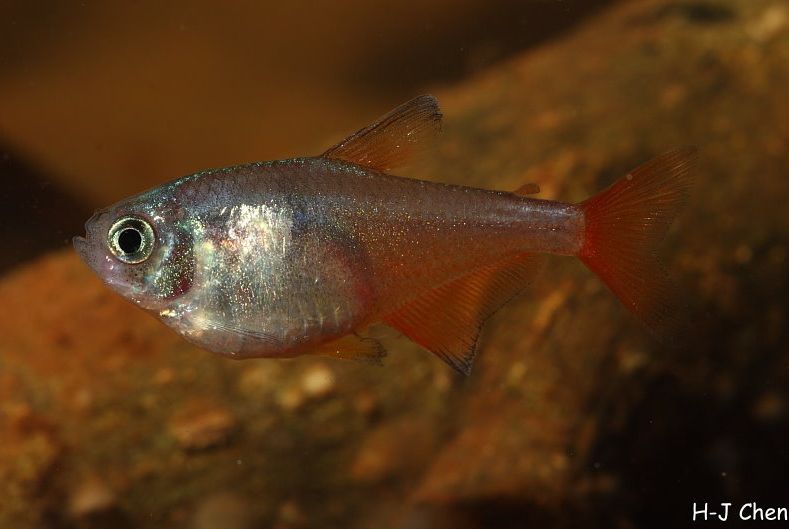
Hyphessobrycon flammeusFlame Tetra
Myers, 1924
Max length25mm SL1.0in SLTank60 × 30cm24 × 12inTemp20–26°C68–79°FpH5.5–7.5Its native rivers flow through one of the most densely-populated and industrialised parts of Brazil, and have suffered greatly from dam construction, water abstraction, pollution, introduced species (including over 40 exotic freshwater fishes in the rio Paraíba do Sul alone), and other forms of anthropogenic degradation. H. flammeus is now uncommon or even extinct across much of its putative natural range, and in Rio de Janeiro state only a handful of highly-fragmented populations remain at best, with the mo...
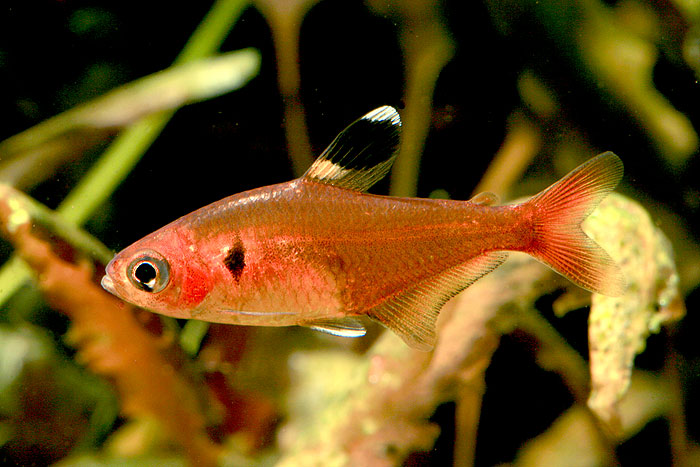
Hyphessobrycon haraldschultziCrystal Red Tetra
Travassos, 1960
Max length25mm SL1.0in SLTank60 × 30cm24 × 12inTemp20–28°C68–82°FpH5.0–7.0This species is occasionally available in the aquarium trade, although usually as bycatch among shipments of other fishes. It is sometimes traded as H. sp. 'Araguaia red', H. sp. 'Araguaia' or 'Schultz's tetra'.
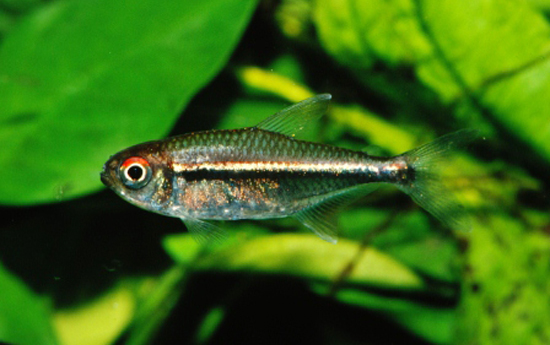
Hyphessobrycon heterorhabdusFlag Tetra
Ulrey, 1894
Max length35mm SL1.4in SLTank80 × 30cm31 × 12inTemp20–26°C68–79°FpH5.5–7.5Its name appears to have been misapplied to similar-looking fishes occurring throughout much of the middle and lower Amazon in Brazil and Colombia, plus the rio Orinoco drainage in Colombia and Venezuela, and coastal systems of the Guianas. Some of these have been described as distinct species (e.g. Hyphessobrycon amapaensis Zarske & Géry 1998; H. eschwartzae García-Alzate, Román-Valencia & Ortega 2013; H. montagi Lima, Couthino & Woziacki 2014), whereas the identity of others remains un...
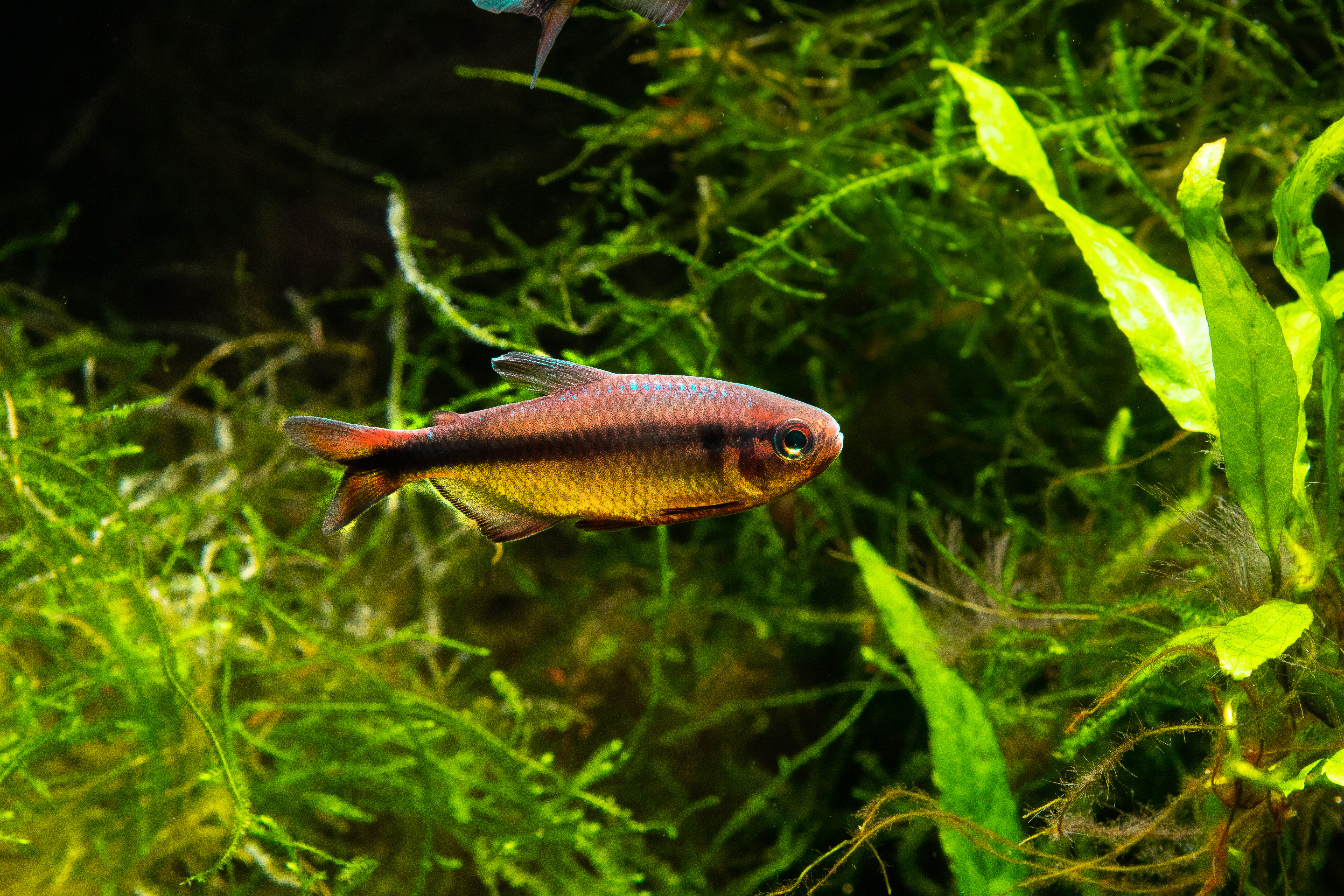
Hyphessobrycon melanostichosBlack Stripe Tetra
Carvalho & Bertaco, 2006
Max length25mm SL1.0in SLTank60 × 30cm24 × 12inTemp23–28°C73–82°FpH5.5–7.5Hyphessobrycon melanostichos shares a number of similarities with Hyphessobrycon sp. Blue Ribbon. The former can be differentiated from the latter by a lighter set, more streamlined body , smaller humeral spot and also red colouring, which is not present on the Blue Ribbon tetra. Care and maintenance of the two species is however, virtually the same.
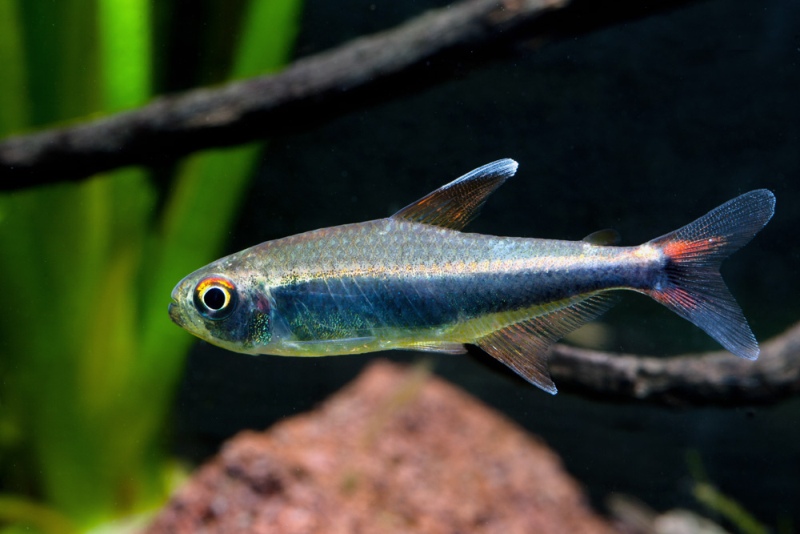
Hyphessobrycon peruvianusPeruvian Tetra
Ladiges, 1938
Max length40mm SL1.6in SLTank60 × 30cm24 × 12inTemp22–27°C72–81°FpH5.0–7.0This species is available on a relatively regular basis, although it's sometimes confused with the similar-looking congeners H. loretoensis and H. metae. It can be identified via the following combination of characters as per Géry (1977): elongate in shape with body depth fitting 3.8-3.9 times in its standard length; caudal peduncle narrow, its depth fitting 1.8 times in its length; head short, interorbital broad, snout short and rounded; dorsal-fin insertion an...
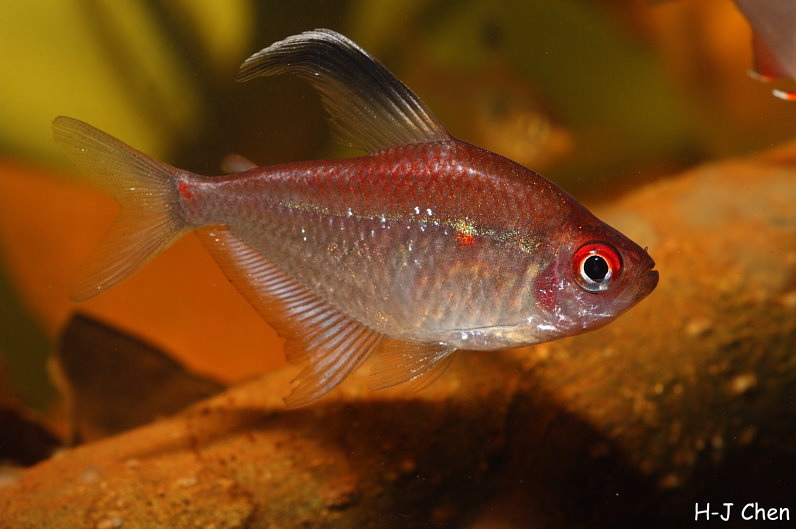
Hyphessobrycon pyrrhonotusFlame-back Bleeding Heart Tetra
Burgess, 1993
Max length45mm SL1.8in SLTank75 × 30cm30 × 12inTemp20–28°C68–82°FpH4.0–7.0This is the smallest of three similar-looking species most commonly-referred to as the 'bleeding heart' subgroup, the other two being H. erythrostigma and H. socolofi. All possess a reddish humeral spot which is not present in any other characid with other shared characters including possession of 6 -14 maxillary teeth, 7-9 scales above the lateral line, 5-7 scales below the lateral line and 26-33 anal fin rays.