Hyphessobrycon flammeus
Flame Tetra
On this page13 sections
Quick facts
Difficulty6 of 6 measures
More bars, more demanding.
- Space
- modest tank
- Water
- tap water
- Temp
- unfussy
- Temperament
- peaceful
- Social
- shoal
- Compatibility
- community tank
Its native rivers flow through one of the most densely-populated and industrialised parts of Brazil, and have suffered greatly from dam construction, water abstraction, pollution, introduced species (including over 40 exotic freshwater fishes in the rio Paraíba do Sul alone), and other forms of anthropogenic degradation. H. flammeus is now uncommon or even extinct across much of its putative natural range, and in Rio de Janeiro state only a handful of highly-fragmented populations remain at best, with the mo...
Etymology
Hyphessobrycon: from the Ancient Greek υπελάσσων (hyphesson), meaning 'of lesser stature', used as a prefix in this case, plus the generic name Brycon.
flammeus: from the Latin flammeus, meaning 'flame-coloured', in reference to this species' predominantly reddish colour pattern.
Distribution
Restricted to the neighbouring states of Rio de Janeiro and São Paulo in southwestern Brazil, although its current distribution is somewhat uncertain.
In Rio de Janeiro it is known only from coastal systems including rivers draining into Guanabara Bay, the middle rio Paraíba do Sul, and the rio Guandu. In São Paulo there exist records from the upper rio Tietê, a tributary within the upper rio Paraná system, with populations concentrated in metropolitan areas east and west of São Paulo city, between the municipalities of Suzano and Salesópolis, and around Itapecerica da Serra, respectively.
The headwaters of the Tietê and Paraíba do Sul are located close to each other in São Paulo state, and they may once have been connected with both draining the Serra do Mar mountains. Although they share a number of native fish species, H. flammeus does not occur in the upper Paraíba do Sul, meaning there is a gap of several hundred kilometers between the Rio de Janeiro and São Paulo populations.
Carvalho et al. (2014) hypothesise that the species has in fact been introduced around the city of São Paulo by aquarists or commercial breeders since it was not recorded in the area prior to 1977, the city is a centre for the ornamental trade, and it appears to be restricted to partially degraded habitats within the metropolitan zone, being absent from nearby, pristine natural areas. Molecular analysis is required in order to resolve this confusion.
Its native rivers flow through one of the most densely-populated and industrialised parts of Brazil, and have suffered greatly from dam construction, water abstraction, pollution, introduced species (including over 40 exotic freshwater fishes in the rio Paraíba do Sul alone), and other forms of anthropogenic degradation. H. flammeus is now uncommon or even extinct across much of its putative natural range, and in Rio de Janeiro state only a handful of highly-fragmented populations remain at best, with the most recent confirmed record dating from 1992. As a result, it has been included in the Brazilian list of threatened fish species since 2004.
Type locality is 'Rio de Janeiro, Brazil'.
Habitat
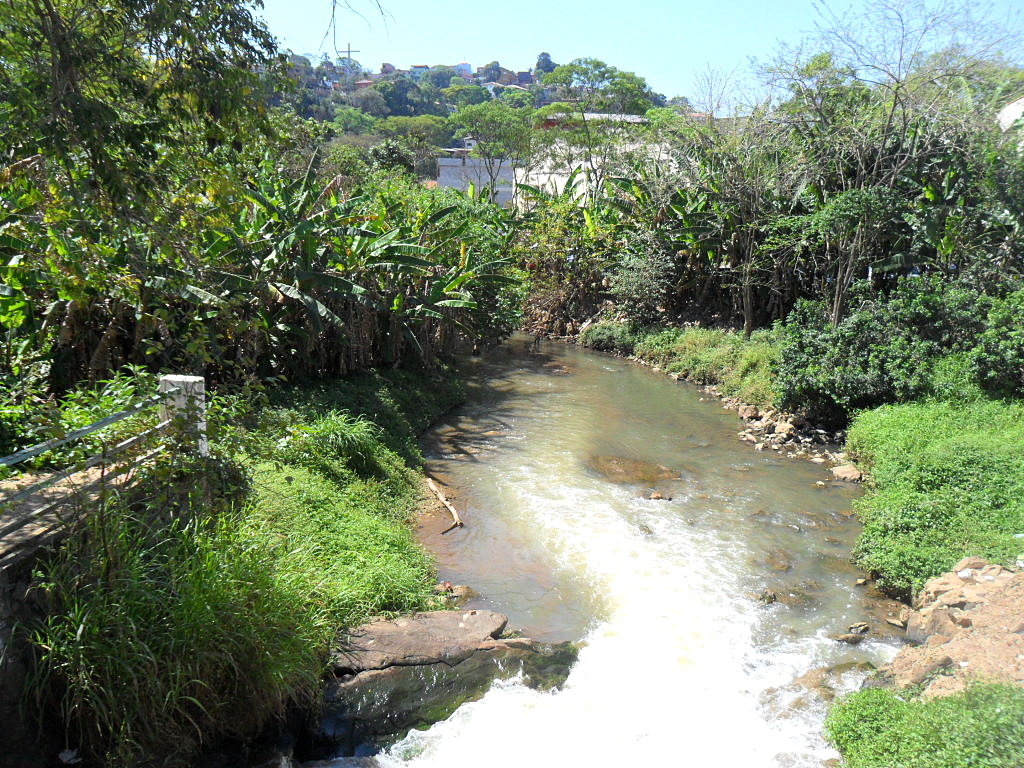
Displays a preference for small, shallow (< 50 cm20 in depth), slowly-flowing tributary streams where aquatic or otherwise submerged vegetation proliferates, although it has also been collected from marginal zones of the upper rio Tietê main channel. Its habitats tend to contain clear, transparent to brownish water and sandy substrates.
Other autochthonous, though not necessarily endemic, fish species of the region include Hyphessobrycon bifasciatus, H. luetkeni, Astyanax parahybae, Brycon insignis, Corydoras nattereri, Pogonopoma parahybae, Hypostomus auroguttatus, Steindachneridion parahybae, Phalloceros reisi, and Geophagus brasiliensis.
Aquarium size
An aquarium with base dimensions of 60 ∗ 30 cm24 ∗ 12 in or equivalent should be the smallest considered.
Maintenance
Choice of décor is not especially critical although it tends to show better colouration when maintained in a well-furnished set-up with live plants and a dark substrate.
A natural-looking arrangement might consist of a soft, sandy substrate with wood roots and branches placed such a way that plenty of shady spots are formed.
The addition of dried leaf litter would further emphasise the biotope-style feel and with it the growth of beneficial microbe colonies as decomposition occurs. These can provide a valuable secondary food source for fry, whilst the tannins and other chemicals released by the decaying leaves will aid in simulating natural conditions. Leaves can be left in the tank to break down fully or removed and replaced every few weeks.
This species seems to do best under relatively dim lighting, and floating vegetation is also appreciated.
Like many fishes that naturally inhabit pristine environments it is intolerant to accumulation of organic pollutants and requires spotless water meaning weekly water changes should be considered routine, and it should never be introduced to a biologically immature tank.
Water conditions
These boxes carry affiliate links and we may earn a commission. What they recommend comes from each profile’s own figures, never chosen by hand or paid for.
Diet
Omnivorous, feeding on small invertebrates, crustacea, filamentous algae, organic detritus, and suchlike in nature.
In aquaria it may survive on a diet of dried foods but like most fishes does best when offered a varied menu which in this case should also contain live and frozen chironomid larvae (bloodworm), mosquito larvae, Daphnia, Moina, etc.
Behaviour and compatibility
Very peaceful, making it an ideal resident of the well-researched community aquarium.
It is perhaps best-maintained alongside similarly-sized characids, gasteropelecids, lebiasinids, smaller callichthyid or loricariid catfishes and non-predatory, small-to-medium-sized cichlids.
Try to buy a mixed-sex group of at least 8-10 specimens since this species forms temporary dominance hierarchies within which males compete for female attention, and therefore displays more interesting behaviour and better colouration when maintained in numbers.
Sexual dimorphism
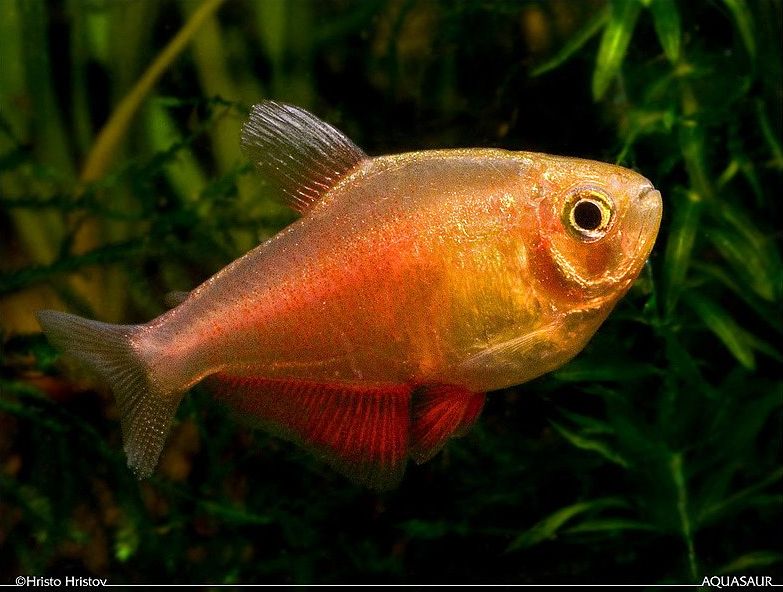
Adult males tend to be less deep-bodied, slightly smaller, and more intensely-coloured than females. Males also possess bony hooks in the anal and pelvic fins which are absent in females, and the distal portion of the anal-fin is slightly straight in males, falcate anteriorly in females.
Reproduction
An egg-scattering free spawner exhibiting no parental care.
When in good condition adults will spawn often and in a mature aquarium it is possible that small numbers of fry may start to appear without intervention, but if you want to maximise yield a more controlled approach is required.
The adult group can still be conditioned together but a smaller aquarium should also be set up and filled with mature water. This should be very dimly lit and the base covered with some kind of mesh of a large enough grade so that the eggs can fall through but small enough so that the adults cannot reach them. The widely available plastic 'grass'-type matting can also be used and works well, as does a layer of glass marbles. Alternatively, filling much of the tank with a fine-leaved plant such as Taxiphyllum spp. or spawning mops can also return decent results.
The water itself should be of slightly acidic to neutral pH with a temperature towards the upper end of the range suggested above. An air-powered sponge filter or air stone(s) should also be included to provide oxygenation and water movement.
When the adult fish are well-conditioned a single pair or group comprising one or two males and several females can then be introduced to each container and left in place until eggs are detected (typically the following morning).
Initial food should be Paramecium or a proprietary dry food of sufficiently small (5-50 micron) grade, introducing Artemia nauplii, microworm, etc., once the fry are large enough to accept them.
Notes
This species is a popular aquarium fish and bred on a commercial basis in several countries, therefore wild fish are no longer collected. It is also traded as 'red', 'fire', 'rio', 'Von Rio', and 'orange Von Rio' tetra, while a number of selectively-bred ornamental forms have been developed including 'orange', 'golden', 'diamond', and 'albino' strains.
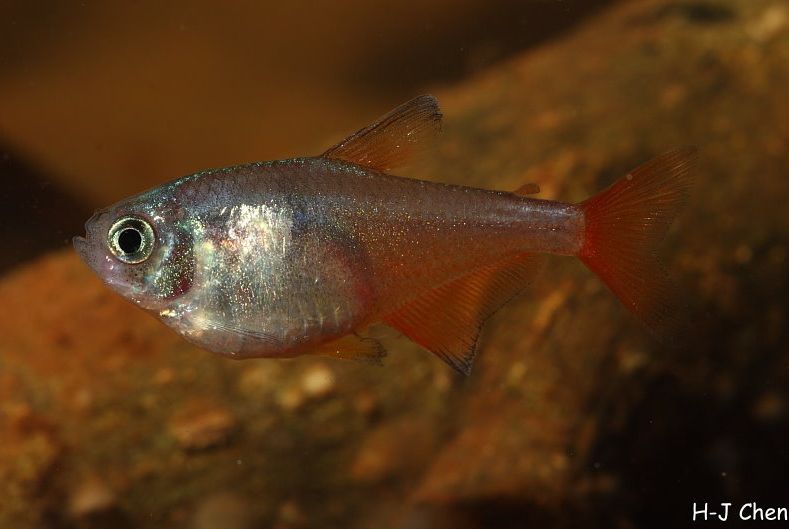
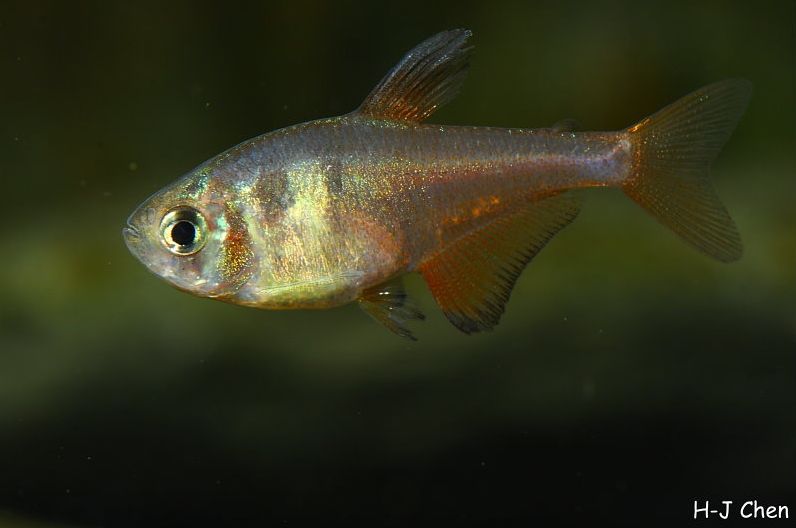
Following its redescription by Carvalho et al. (2014), H. flammeus can be distinguished from all congeners by the following combination of characters: bright reddish colour pattern; presence of two vertically elongate, equally well-defined humeral spots; absence of a blotch on the caudal peduncle; caudal fin hyaline; absence of dark longitudinal stripe on the body; 5-8 maxillary teeth.
It was also placed in an artificial group of species characterised by possession of two, vertically-elongate humeral spots as per Géry (1977). This assemblage also included Hyphessobrycon tortuguerae, H. bifasciatus, H. savagei, H. griemi, and H. balbus, from which H. flammeus was distinguished by possession of 5-6 maxillary teeth (but see new diagnosis above), 5-5½ scale rows above the lateral line, and posterior humeral spot prominent.
Hyphessobrycon was raised by Durbin in Eigenmann (1908) as a subgenus of Hemigrammus, differing from the latter by the absence of scales on the caudal-fin.
The grouping was revised by Eigenmann (1918, 1921) while Géry (1977) created artificial groups of species based on colour pattern, and these definitions are still widely used today, e.g., the H. agulha group, the H. heterohabdus group, etc. These cannot be considered to represent monophyletic assemblages, however, and their concepts continue to be redefined.
Weitzman & Palmer (1997) hypothesised the existence of a monophyletic assemblage within the genus based on colour pattern and male fin morphology that they termed the ‘rosy tetra clade’, with one of the characters supporting its monophyly being presence of a prominent dark marking on the dorsal-fin. This assemblage, plus other morphologically similar species, is considered to represent Hyphessobrycon sensu stricto by some authors, with the remaining species included in a much-expanded H. heterohabdus group.
Others have proposed conflicting, typically more restricted, views of both the genus and/or its constituent species groups, and significant confusion remains. What is clear is that, as currently recognised, Hyphessobrycon is a polyphyletic lineage containing several genera.
The process of splitting it up has already started, and Malabarba et al. (2012) revalidated the genus Ectrepopterus Fowler, previously considered a synonym of Hyphessobrycon. They also analysed its relationships within the Characidae in the context of Mirande's (2010) previous work, but included the type species, H. compressus, for the first time in such a study. The results demonstrated that H. compressus is more closely-related to 'rosy tetra' representatives such as H. eques, H. pulchripinnis, and H. socolofi than other members of the genus including H. anisitsi, H. bifasciatus, H. elachys, H. herbertaxelrodi, and H. luetkeni.
References
- Calcagnotto, D., S. A. Schaefer, and R. DeSalle (2005). Relationships among characiform fishes inferred from analysis of nuclear and mitochondrial gene sequences. Molecular Phylogenetics and Evolution 36(1), 135-153
- Reis, R. E., S. O. Kullander and C. J. Ferraris, Jr. (eds) (2003). Check list of the freshwater fishes of South and Central America. CLOFFSCA. EDIPUCRS, Porto Alegre, i-xi + 1-729
- Oliveira, C. A., G. S. Avellino, K. T. Abe, T. C. Mariguela, R. C. Benine, G. Orti, R. P. Vari, and R. M. Corrêa e Castro (2011). Phylogenetic relationships within the speciose family Characidae (Teleostei: Ostariophysi: Characiformes) based on multilocus analysis and extensive ingroup sampling. BMC Evolutionary Biology 11(1), 275-300
- Géry, J. (1977). Characoids of the World. T.F.H. Publications, Inc., 1-672
- Weitzman, S. H. and L. Palmer (1997). A new species of Hyphessobrycon (Teleostei: Characidae) from the Neblina region of Venezuela and Brazil, with comments on the putative `rosy tetra clade'. Ichthyological Exploration of Freshwaters 7(3), 209-242
- Mirande, J. M. (2010). Phylogeny of the family Characidae (Teleostei: Characiformes): from characters to taxonomy. Neotropical Ichthyology 8(3), 385-568
- Malabarba, L. R., V. A. Bertaco, F. R. Carvalho & T. O. Litz. (2012). Revalidation of the genus Ectrepopterus Fowler (Teleostei: Characiformes), with the redescription of its type species, E. uruguayensis. Zootaxa 3204, 47-60
- Myers, G. S. (1924). A new characin fish from Rio de Janeiro. The Fish Culturist v. 4, 330-331
- Carvalho, F. R., G. C. de Jesus and F. Langeani (2014). Redescription of Hyphessobrycon flammeus Myers, 1924 (Ostariophysi: Characidae), a threatened species from Brazil. Neotropical Ichthyology 12(2), 247-256
- Loeb, M. V., I. Fichberg, and G. M. T. Mattox (2014). Ichthyofauna of the Ribeirão Taboão, Paraíba do Sul river basin, Mogi das Cruzes, SP. Check List 10(3), 556-561
Species images · 6
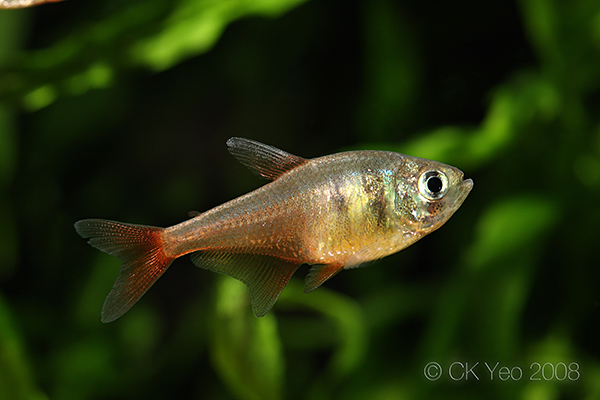
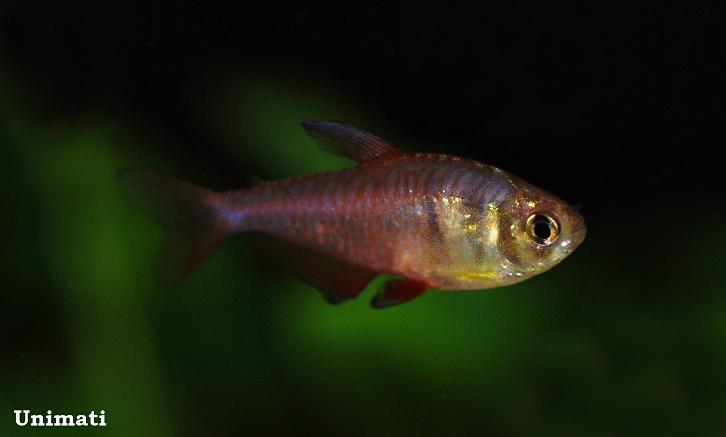
Used with the photographer’s permission. Not licensed for reuse.
Distribution
Profile completeness23 of 24
96% complete
Missing: water condition notes.