Results for “sp.”
Type a name: scientific, common, or one a species used to go by. Or narrow the catalogue with the filters.
Filters
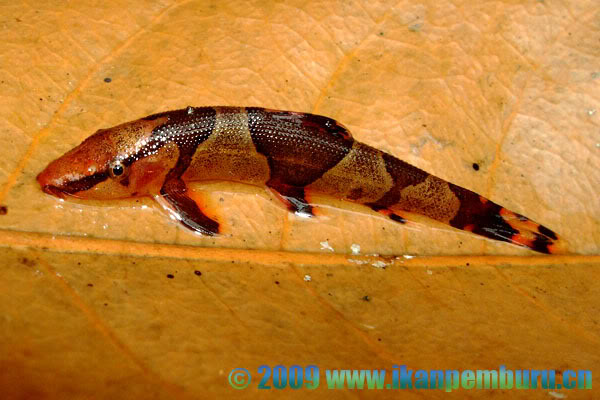
Homaloptera orthogoniataSaddle-back Loach
Vaillant, 1902
Max length95mm SL3.7in SLTank120 × 30cm48 × 12inTemp20–25.5°C68–78°FpH6.0–7.5This species appears is rare in the aquarium hobby with the majority of images both online and in the published literature instead depicting H. confuzona or H. parclitella. All three are members of the H. ocellata 'group' within the genus which currently contains H. ocellata, H. bilineata, H. confuzona, H. orthogoniata, H. ogilviei and H. parclitella. Following Tan and Ng (2005) these share possession of...
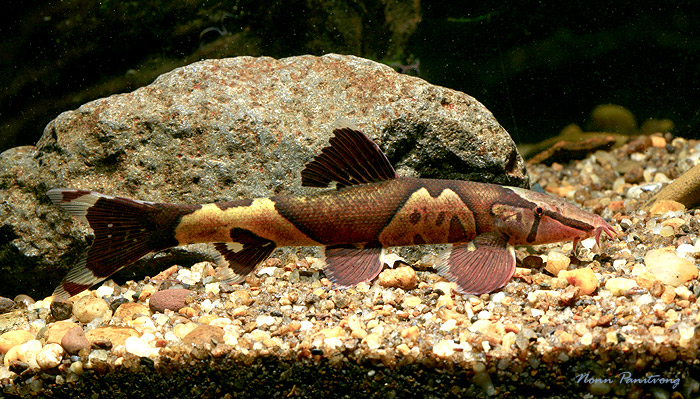
Homaloptera parclitella
Tan & Ng, 2005
Max length80mm SL3.1in SLTank120 × 30cm48 × 12inTemp20–25.5°C68–78°FpH6.0–7.5The water at the type locality is described as 'clear and fast-flowing over a rocky substratum'. H. parclitella was observed in shallow water among the rocks, and sympatric species included Garra cambodgiensis, Neolissochilus soroides, Poropuntius smedleyi, 'Puntius' binotatus, Homaloptera nebulosa and Amblyceps mangois.
Horabagrus nigricollarisBlack Collared Catfish
authority not recorded
Max length300mm SL12in SLTank120 × 45cm48 × 18inTemp23–25°C73–77°FpH5.5–7.5There are only 2 species currently in the genus Horabagrus, with this one being the rarer in the hobby. H. brachysoma is the other, and it resembles H. nigricollaris quite closely. It is a much larger fish and is unsuitable for most home aquaria. Confusion can arise as both are usually sold as juveniles, at around 2-3" in length. They can be told apart by examining the black shoulder markings found on either side of the fish. In H. brachysoma this is no more than a vaguely circular dark blo...
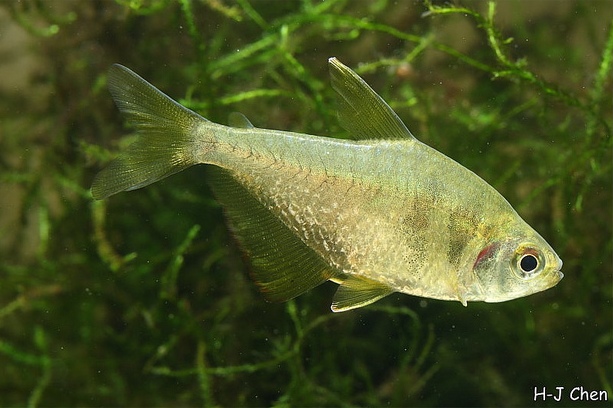
Hyphessobrycon bifasciatusYellow Tetra
Ellis, 1911
Max length45mm SL1.8in SLTanknot recordedTemp20–25°C68–77°FpH5.0–7.5Generally peaceful making it an ideal resident of the well-researched community aquarium. It is perhaps best-maintained alongside similarly-sized characids, gasteropelecids, lebiasinids, smaller callichthyid or loricariid catfishes and non-predatory, medium-sized cichlids. Try to buy a mixed-sex group of at least 8-10 specimens, incl...
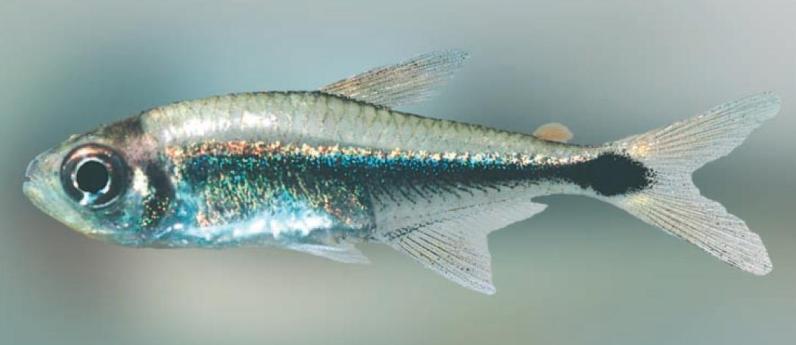
Hyphessobrycon borealis
Zarske, Le Bail & Géry, 2006
Max length28mm SL1.1in SLTanknot recordedTempnot recordedpHnot recordedH. borealis is a member of the putative ‘H. heterorhabdus-group’ of closely-related species within the genus as proposed by Géry (1977). There are around 15 members characterised by a 'longitudinal pattern' consisting of a thin, usu...
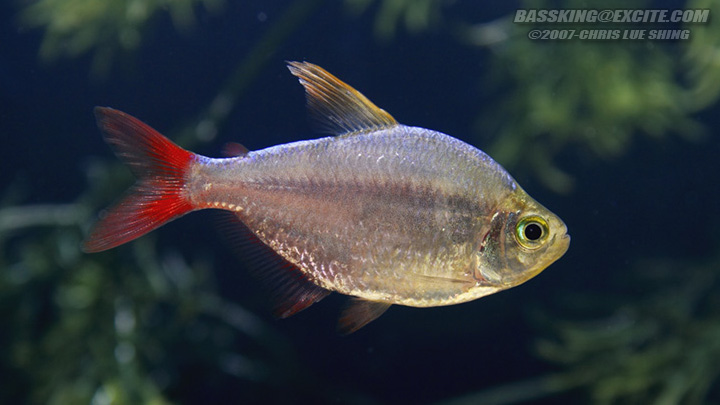
Hyphessobrycon columbianusColombian Tetra
Zarske & Géry, 2002
Max length65mm SL2.6in SLTank90 × 30cm36 × 12inTemp20–28°C68–82°FpH5.0–7.5This species is also traded as 'blue flame', 'blue-red', and 'Colombian red fin' tetra, and was misidentified as H. ecuadorensis for several years prior to its description. Within the genus it appears to be most closely related to the Costa Rica endemic H. savagei Bussing, 1967 but differs in a number of characters as fol...
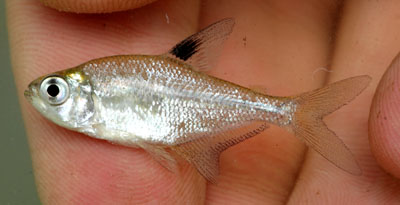
Hyphessobrycon compressusMayan Tetra
Meek, 1904
Max length45mm SL1.8in SLTanknot recordedTemp20–26°C68–79°FpH6.5–8.0H. compressus is the type species of the genus Hyphessobrycon but is not well-known in the ornamental trade. Hyphessobrycon was raised by Durbin in Eigenmann (1908) as a subgenus of Hemigrammus, differing from the latter by the absence of scales on the caudal-fin.
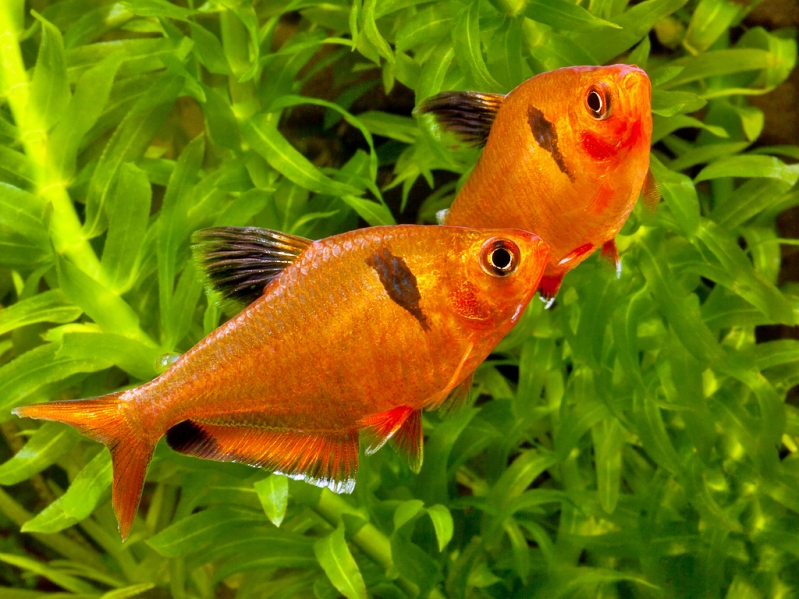
Hyphessobrycon equesSerpae Tetra
Steindachner, 1882
Max length40mm SL1.6in SLTank80 × 30cm31 × 12inTemp20–28°C68–82°FpH5.0–7.5This species is very common in the aquarium trade and is also referred to as 'jewel', 'red minor', 'blood', or 'callistus' tetra. A number of selectively-bred ornamental strains have been developed, including 'metallic', 'long-finned', 'balloon' and 'fairy-fin'. Characiformes is among the most diverse orders of freshwa...
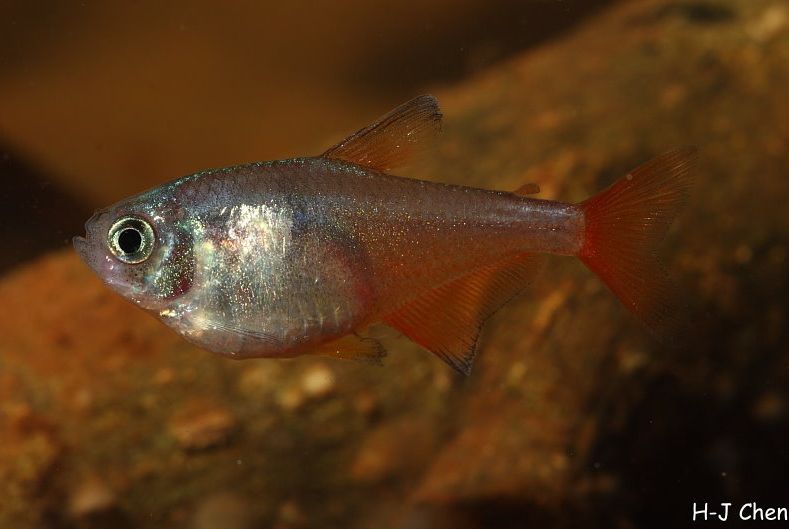
Hyphessobrycon flammeusFlame Tetra
Myers, 1924
Max length25mm SL1.0in SLTank60 × 30cm24 × 12inTemp20–26°C68–79°FpH5.5–7.5Its native rivers flow through one of the most densely-populated and industrialised parts of Brazil, and have suffered greatly from dam construction, water abstraction, pollution, introduced species (including over 40 exotic freshwater fishes in the rio Paraíba do Sul alone), and other forms of anthropogenic degradation. H. flammeus is now uncommon or even extinct across much of its putative natural range, and in Rio de Janeiro state only a handful of highly-fragmented populations remain at best, with the mo...
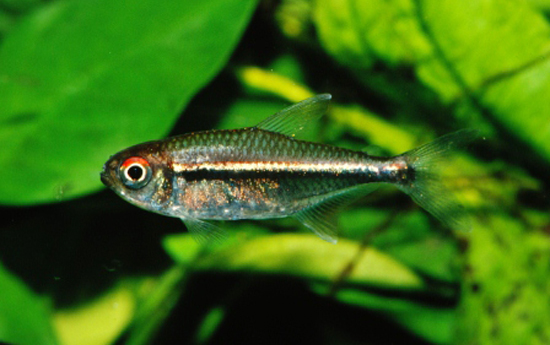
Hyphessobrycon heterorhabdusFlag Tetra
Ulrey, 1894
Max length35mm SL1.4in SLTank80 × 30cm31 × 12inTemp20–26°C68–79°FpH5.5–7.5Its name appears to have been misapplied to similar-looking fishes occurring throughout much of the middle and lower Amazon in Brazil and Colombia, plus the rio Orinoco drainage in Colombia and Venezuela, and coastal systems of the Guianas. Some of these have been described as distinct species (e.g. Hyphessobrycon amapaensis Zarske & Géry 1998; H. eschwartzae García-Alzate, Román-Valencia & Ortega 2013; H. montagi Lima, Couthino & Woziacki 2014), whereas the identity of others remains un...
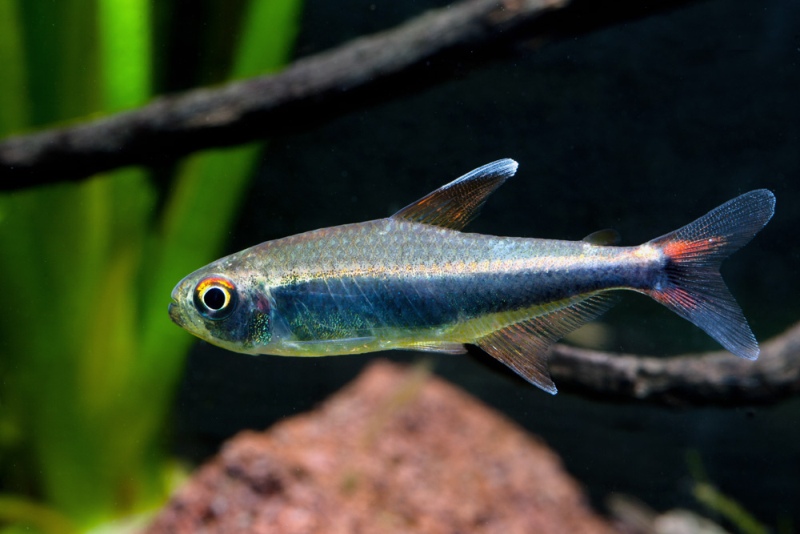
Hyphessobrycon peruvianusPeruvian Tetra
Ladiges, 1938
Max length40mm SL1.6in SLTank60 × 30cm24 × 12inTemp22–27°C72–81°FpH5.0–7.0This species is available on a relatively regular basis, although it's sometimes confused with the similar-looking congeners H. loretoensis and H. metae. It can be identified via the following combination of characters as per Géry (1977): elongate in shape with body depth fitting 3.8-3.9 times in its standard length; caudal peduncle narrow, its depth fitting 1.8 times in its length; head short, interorbital broad, snout short and rounded; dorsal-fin insertion an...
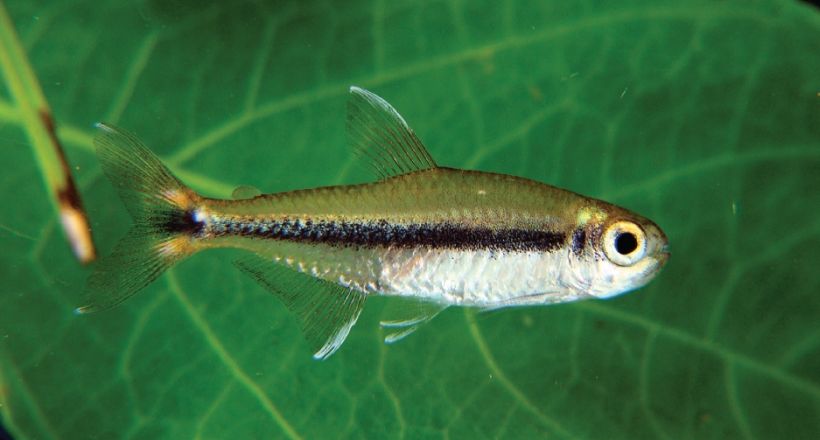
Hyphessobrycon stegemanniSavanna Tetra
Géry, 1961
Max length35mm SL1.4in SLTank60 × 30cm24 × 12inTemp20–25°C68–77°FpH5.5–7.5In the aquarium hobby the name Hyphessobrycon stegemanni has frequently been misapplied to a species that has been described as Hemigrammus ataktos Marinho, Dagosta, & Birindelli 2014. The reasons for this confusion are presumably that the two occur sympatrically in the rio Tocantins system and both possess a dark lateral stripe on the body.
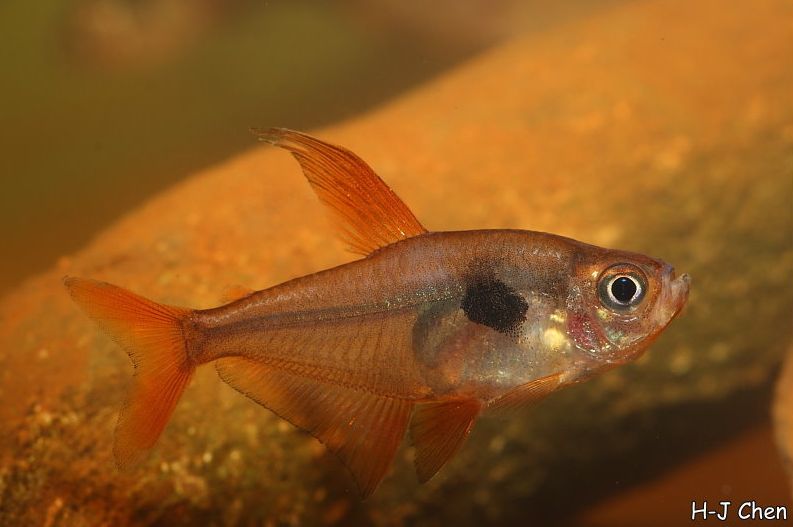
Hyphessobrycon sweglesiRed Phantom Tetra
Géry, 1961
Max length35mm SL1.4in SLTank80 × 30cm31 × 12inTemp20–28°C68–82°FpH4.5–7.5At least two colour forms have been traded, one of which is more intensely-coloured and has been referred to as H. sweglesi 'red' or 'rubra'. The bright red pigmentation is retained in long-term captive specimens, suggesting that it is not considered to be an artefact of diet, but we suspect it might reflect conditions at the collection locality with the reddest fish putatively inhabiting blackwater and plainer forms clearwater environments. Zarske (2014) found the two forms to be identical in terms of morphology an...
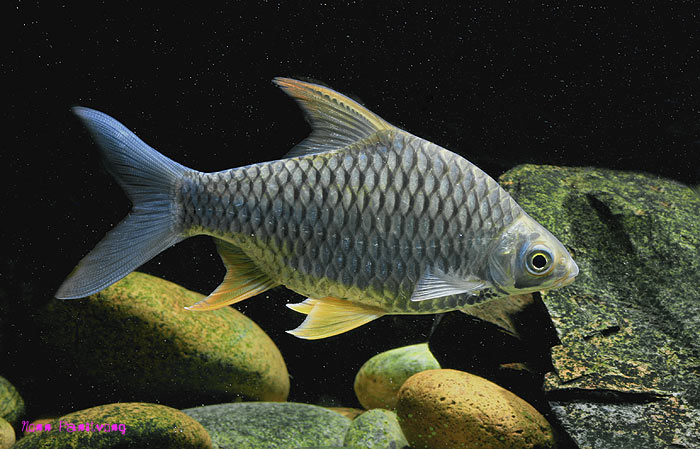
Hypsibarbus lagleri
Rainboth, 1996
Max length350mm SL14in SLTank240 × 60cm96 × 24inTemp20–26°C68–79°FpH6.0–8.0This species is migratory on a seasonal basis; during the dry season it can be found in larger river channels, whereas during drier months it moves into smaller tributaries and flooded forests. Apparently displays a preference for rocky habitats and is not known to adapt to reservoirs or other artificial impoundments.
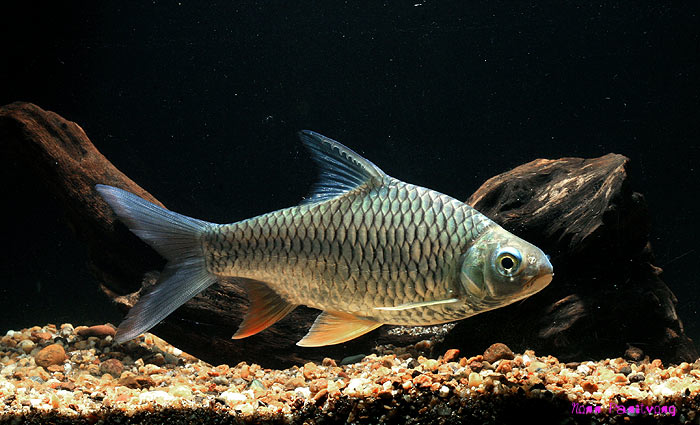
Hypsibarbus vernayi
Norman, 1925
Max length216mm SL9in SLTank240 × 60cm96 × 24inTemp20–26°C68–79°FpH6.0–8.0It is very similar to H. wetmorei but can be told apart by possessing yellow (vs. orange to red in H. wetmorei) pectoral, pelvic, and anal fins. It thus appears likely that yellow-finned fish marketed as H. wetmorei or 'lemon fin barb' in the ornamental trade are actually H. vernayi, with both species available on a regular basis.
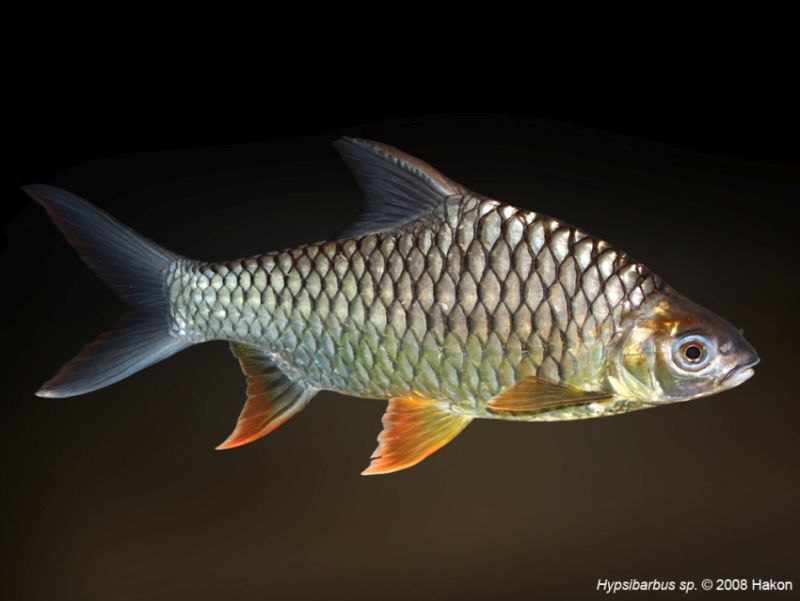
Hypsibarbus wetmorei
Smith, 1931
Max length250mm SL10in SLTank240 × 60cm96 × 24inTemp20–26°C68–79°FpH6.0–8.0H. wetmorei is distinguished from congeners by the following combination of characters: upper body reddish brown; robust body, not compressed; usually 4½ scale rows between lateral line and dorsal-fin origin; 8-12 rakers on first gill arch; 7-9 predorsal scales; 14 circumpeduncular scale rows; usually two scale rows separating vent and anal-fin; <29 lateral line scales; 9-14 serrations on the spinous dorsal-fin ray; distance between distal serrae on posterior margin of last unbranched dorsal-fin ray much greater than the width of their bases.
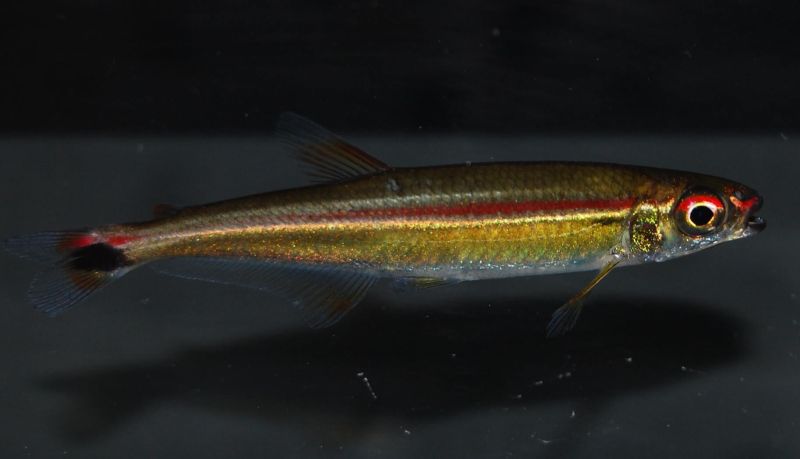
Iguanodectes adujai
Géry, 1970
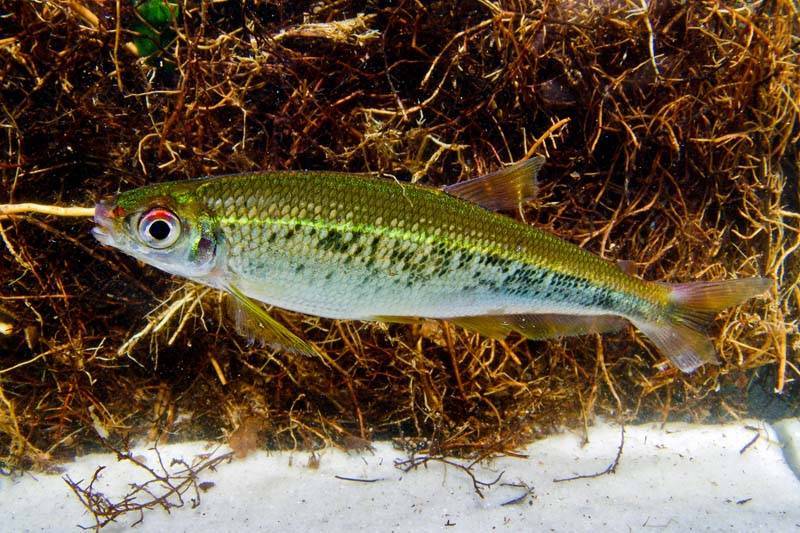
Max length62mm SL2.4in SLTank90 × 30cm36 × 12inTemp20–26°C68–79°FpH5.0–7.0This species is known from the rio Negro within the Brazilan Amazon basin and upper Río Orinoco system in Venezuela. Type locality is 'Rio Adujá, Rio Itú, tributary of middle Rio Negro, Amazonia, Brazil'.
Iguanodectes variatus
Géry, 1993
Max length103mm SL4in SLTanknot recordedTempnot recordedpHnot recordedThis species has been recorded from the Guaporé, Madeira, Branco, Trombetas, and Urubu river systems within the Amazon river basin, Brazil. Type locality is 'Igarapé Jatuarana, 5 kilometers above Samuel, Rio Guaporé, Rondonia, Brazil'.
Iksookimia pumila
Kim & Lee, 1987
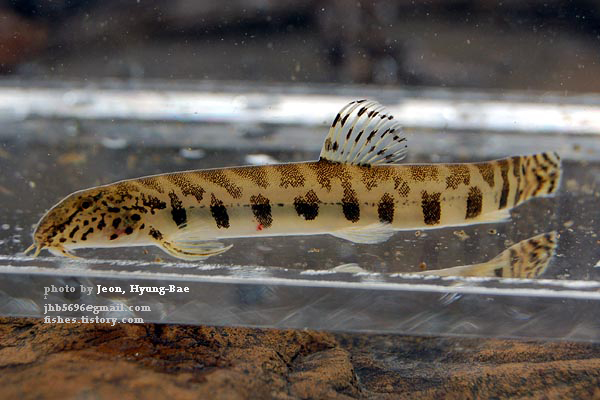
Max length80mm SL3.1in SLTank60 × 30cm24 × 12inTemp20–24°C68–75°FpH7.0–8.0All Iksookimia species are endemic to Korea, and I. pumila is known only from the Baek River drainage in south-western Korea where its presence has been undermined at some localities due to construction of a dam in the middle reaches of the river during the late 1990s. Type locality is 'Paikchon stream at Sangso-myon, Puan-gun, Chollabuk-do, South Korea'. The reservoir formed by the dam has also be...
Iksookimia yongdokensis
Kim & Park, 1997
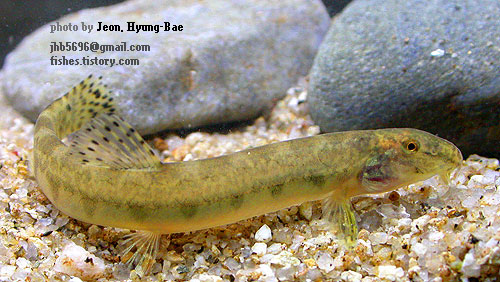
Max length160mm SL6in SLTank100 × 30cm39 × 12inTemp20–24°C68–75°FpH7.0–8.0Among them it's most similar to I. longicorpus and I. hugowolfeldi but can be distinguished by the following combination of characters: body patterning consisting of 9-13 dark vertical bars along the flanks plus a small dark spot at the base of the upper caudal-fin lobe; no black blotch or markings posterior to the operculum; reduced lamina circularis in males; interorbital width measures 14.7-17.8% o...