Results for “species”
Type a name: scientific, common, or one a species used to go by. Or narrow the catalogue with the filters.
Filters
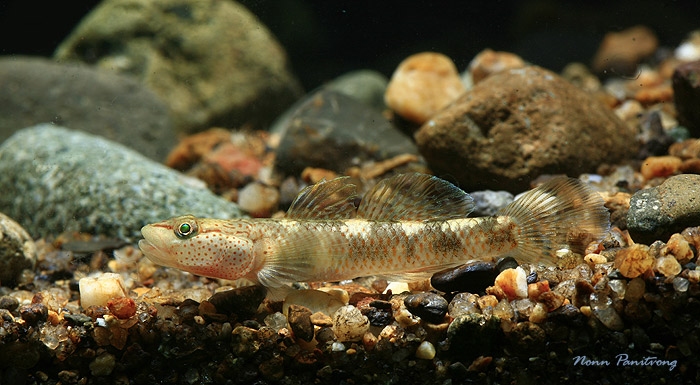
Rhinogobius chiengmaiensisChiangmai Stream Goby
Fowler, 1934
Max length50mm SL2.0in SLTank60 × 30cm24 × 12inTemp18–26°C64–79°FpH6.0–8.0This species has been exported for the ornamental trade but often labelled as the congener R. mekongianus. Although the two do appear relatively similar R. chiengmaiensis can be identified by a combination of external characters including: presence of 5 irregular dark markings on the body (vs. 7-8 i...
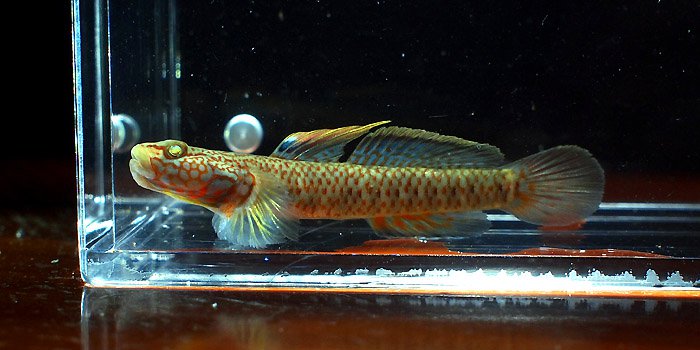
Rhinogobius filamentosus
Wu, 1939
Max length55mm SL2.2in SLTank60 × 30cm24 × 12inTemp18–25°C64–77°FpH6.0–8.0Very few details exist but the type locality is given as 'Yangso, Li Kiang, Kwangsi Province, southern China', which should correspond to an unspecified location within the Li River (Li Jiang) system in Guangxi Zhuang Autonomous Region, southern China. The specimens in our images were collected i...
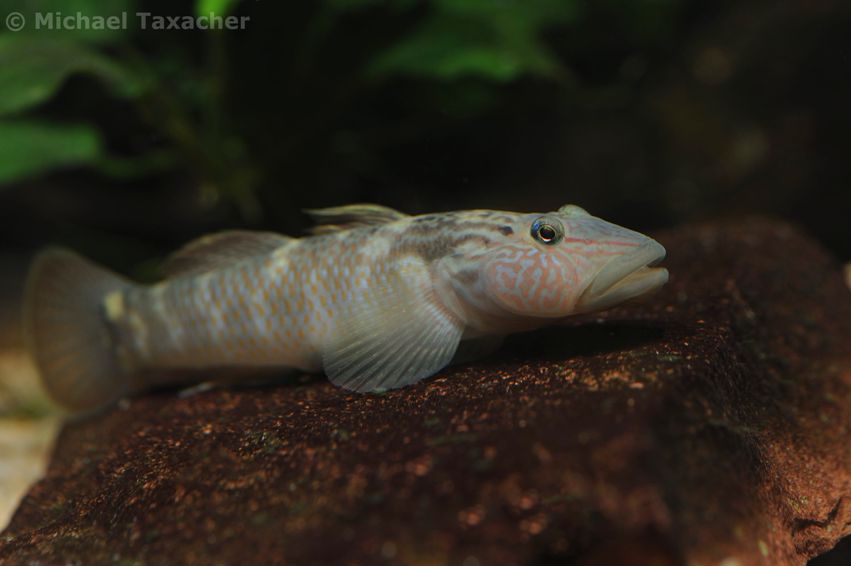
Rhinogobius formosanus
Oshima, 1919
Max length100mm SL3.9in SLTank80 × 30cm31 × 12inTemp18–28°C64–82°FpH6.0–8.0This species was previously considered to be a subspecies of R. nagoyae but has generally been accepted as distinct since 2008. It can be told apart from other Rhinogobius spp. from Taiwan by presence of irregular, wavy, reddish brown lines on the cheek and opercle.
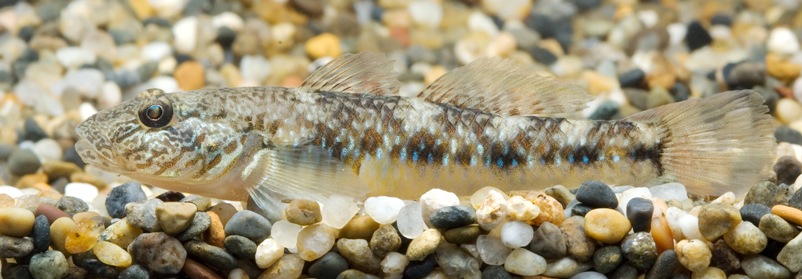
Rhinogobius giurinus
Rutter, 1897
Max length90mm SL3.5in SLTank60 × 30cm24 × 12inTemp18–24°C64–75°FpH6.5–8.5This species appears to exist in a number of different forms which exhibit differences in colour pattern, morphology, or both, and it's currently unclear whether all of them are truly conspecific or not although to avoid confusion we list all together here.
Rhinogobius leavelli
Herre, 1935
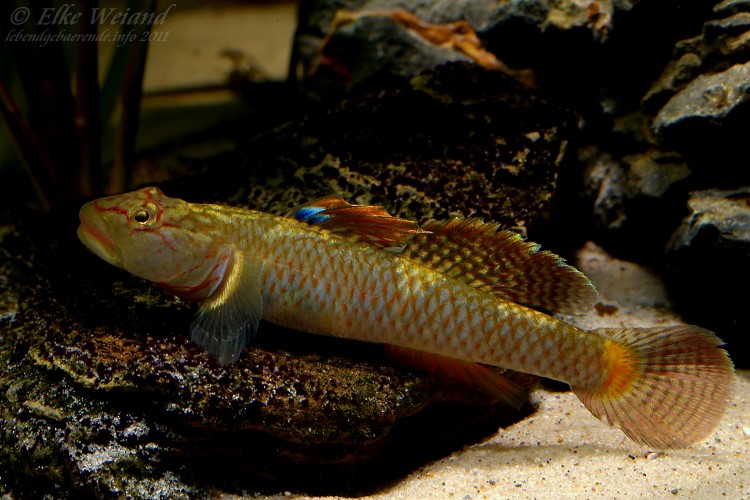
Max length60mm SL2.4in SLTank60 × 30cm24 × 12inTemp20–28°C68–82°FpH6.0–8.0This species appears to exist in a number of different forms which exhibit differences in colour pattern, morphology, or both, and it's currently unclear whether all of them are truly conspecific or not although those in the aquarium trade all appear similar to one another. We've been unable to obtain a copy of the original description so it's not currently possible to provide a detailed diagnosis either, with most recent studi...
Rhinogobius lentiginis
Wu & Zheng, 1985
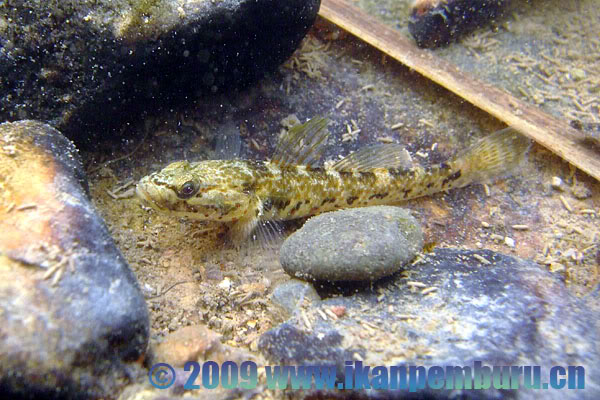
Max length32mm SL1.3in SLTank60 × 30cm24 × 12inTemp16–24°C61–75°FpH6.0–8.0It's unlikely that this species has been in the aquarium hobby given its natural range and the lack of commercial fishing for the ornamental trade in that area. Among congeners it's most similar to R. davidi but can be told apart by presence of 8 (vs. always 9 in R. davidi) soft dorsal-fin rays, 10 (vs. 11-12) transverse scale rows, and 6-7 (vs. 8-10) scales between the first dorsal-fin origin and upper pectoral-fin base.
Rhinogobius nantaiensis
Aonuma & Chen, 1996
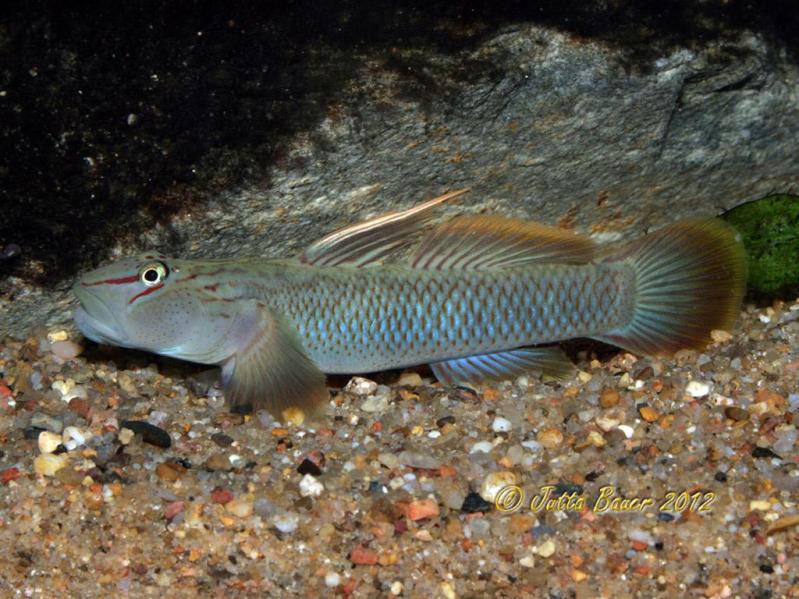
Max length55mm SL2.2in SLTank60 × 30cm24 × 12inTemp18–28°C64–82°FpH6.0–8.0This fish is normally imported alongside the congener R. candidianus and is actually the commoner of the two in the aquarium trade. It looks very similar to R. candidianus but does not grow as large and possesses a more rounded snout. Most specimens also have spot-like markings on the sides of the head which has led to them being identified as R. nantaiensis, but the fish do no...
Rhinogobius rubromaculatusRed-spotted Goby
Lee & Chang, 1996
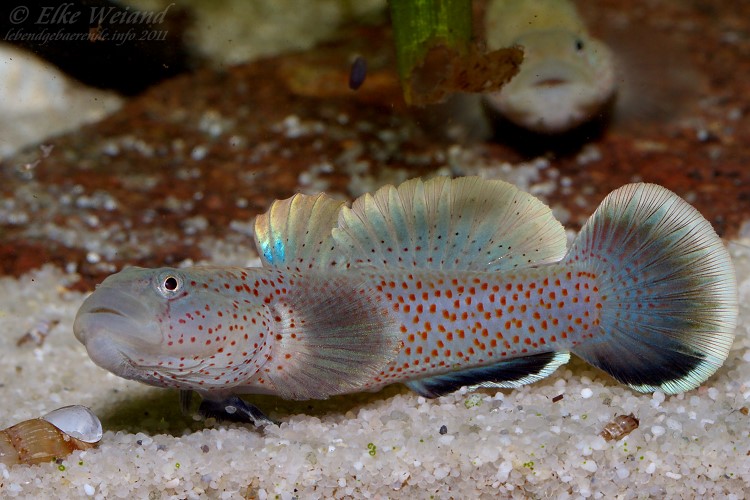
Max length55mm SL2.2in SLTank60 × 30cm24 × 12inTemp18–24°C64–75°FpH6.0–8.0This species occurs in a couple of colour forms with fish from northern and central Taiwan possessing a greyish base body colour and those from the Linbian river, southern Taiwan having a dark marking in the anterior portion of the first dorsal fin and larger, more intense red spots on the body. The latter form is also smaller in size, lays smaller eggs, does not exhibit extreme sexual dimorphism and has been refe...
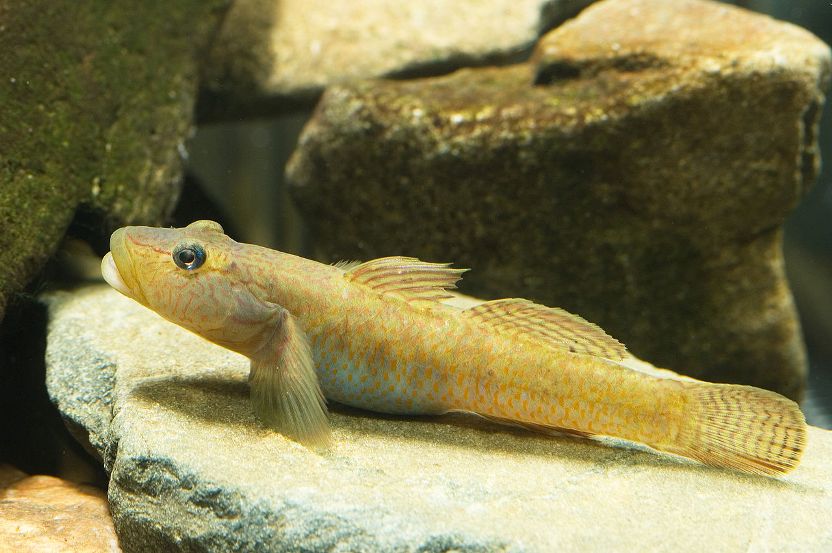
Rhinogobius sp. 'CB'
authority not recorded
Max lengthnot recordedTanknot recordedTempnot recordedpHnot recordedThere are a number of unidentified species within the grouping of which several are referred to using a two-letter code based on their respective colour pattern for ease of reference, with 'CB' shorthand for 'cross band', for example. R. sp. 'CB' is the commonest member of the grouping in Japan but has not yet entered the international aquarium trade as far as we know.
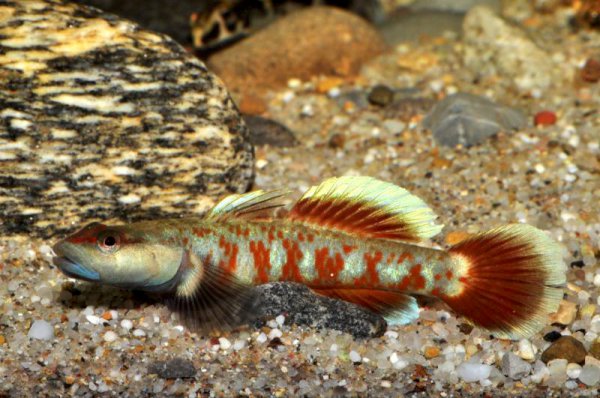
Rhinogobius zhoui
Li & Zhong, 2009
Max length36mm SL1.4in SLTank60 × 30cm24 × 12inTemp19–24°C66–75°FpH7.0–7.8This species has been in the aquarium trade since 2010 and is sold under several names including 'Chinese vermilion goby', 'Zhou's scarlet goby', 'scarlet goby', and 'flame goby'. It can be told apart from congeners by the following combination of characters: second dorsal-fin rays I, 8-9; anal-fin rays I, 7-8; pectoral-fin rays 16-18; longitudinal scale series 29-31; predorsal scales 10-12; vertebral count 10+16=26.
Rhynchodoras woodsiParrot Doradid
authority not recorded
Max length110mm SL4in SLTank90 × 38cm36 × 15inTemp24–26°C75–79°FpH5.8–7.0An interesting but rare species in the hobby, R. woodsi is nicknamed the "parrot doradid" due to its inquisitive feeding habits, and the curious bony growth extending from the upper mouthparts. The precise use of the bony growth isn't known, although one theory suggests it provides protection for the delicate barbels. Another hypothesis considers that it's some sort of feeding tool, possibly being used to lever aquatic invertebrates from crevices in submerged logs and roots....
Rineloricaria morrowi
authority not recorded
Max length130mm SL5in SLTank90 × 30cm36 × 12inTemp20–24°C68–75°FpH6.0–7.0This species is not seen as often as some others in the genus. In 2002 it was briefly placed in the resurrected genus Hemiloricaria, but this lasted less than twelve months, after which it was transferred back to Rineloricaria. Currently only Rineloricaria is valid, but you'll still see it being referred to as Hemiloricaria quite often....
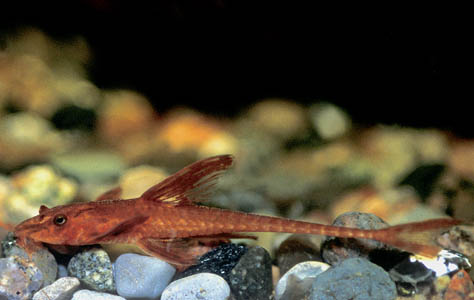
Rineloricaria sp.Red Lizard Catfish
authority not recorded
Max length110mm SL4in SLTank75 × 30cm30 × 12inTemp24–29°C75–84°FpH6.0–7.5As mentioned above, this fish may or may not be a man-made, or even hybrid, species. There are a few theories regarding this currently in circulation. Some believe that the fish are derived from a true wild caught fish, possibly of Paraguayan origin. These wild-caught red whiptails are supposed to breed true, producing all red fry, although there is no concrete evidence that they actually exist. The second possibility is that it's a selectively-bred form of Rineloricaria lanceolata, but thi...
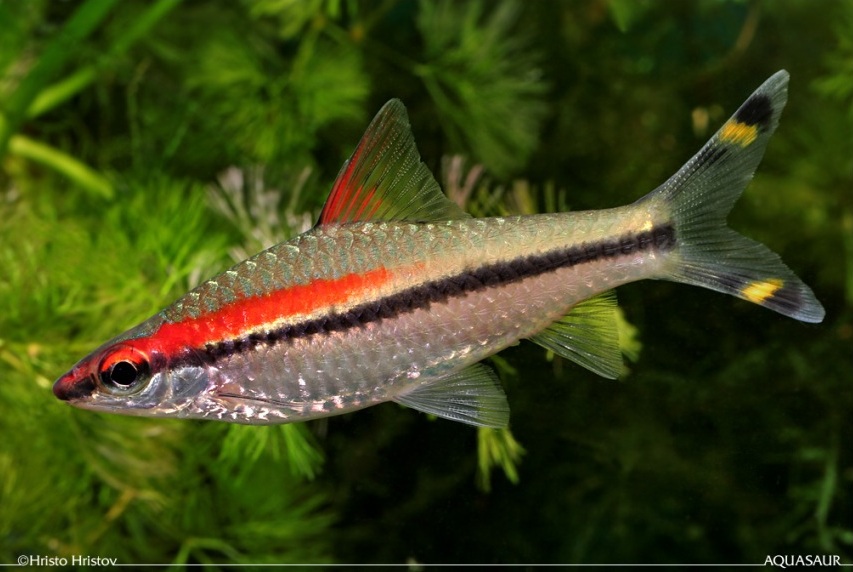
Sahyadria denisoniiRed-line Torpedo Barb
Day, 1865
Max length110mm SL4in SLTank120 × 45cm48 × 18inTemp15–25°C59–77°FpH6.5–7.8This species has become an extremely popular aquarium fish since it first appeared in the ornamental trade during the late 1990s, and it has been sold under various names including 'Denison's barb', 'denisoni barb', 'Denison's flying fox', 'rose line shark', 'bleeding-eye barb', 'red flash barb', and 'Indian flasher barb'. In India it is known locally as 'Miss Kerala' and 'Chorai Kanni' ( literally 'bleeding eyes').
Sarotherodon melanotheron melanotheronBlack Chin Tilapia
authority not recorded
Max length200mm SL8in SLTank120 × 38cm48 × 15inTemp23–28°C73–82°FpH7.0–8.0At present there are 5 sub-species, Sarotherodon melanotheron melanotheron, S. m. heudelotii, S. m. leonensis, S. m. nigripinnis and S. m. paludinosus. Confusingly, some of these are maternal mouthbrooders. It has been introduced into several countries for aquaculture purposes and thriving populations now exist in areas of Asia, Europe and the USA....
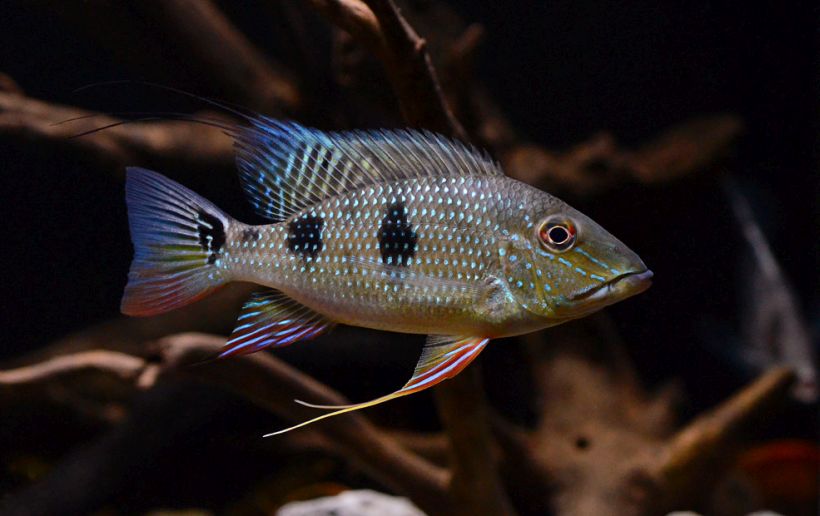
Satanoperca daemonThreespot Eartheater
Heckel, 1840
Max length250mm SL10in SLTank210 × 60cm84 × 24inTemp24–28°C75–82°FpH3.5–6.0S. daemon is relatively common in the aquarium trade but is by no means easy to maintain, with particular attention to space, diet, water quality, and chemistry required in order for it to thrive. It can be distinguished from other members of the genus by possessing two dark blotches on the flank and a prominent ocellus at the caudal-fin base. Among the named species it is most similar to...
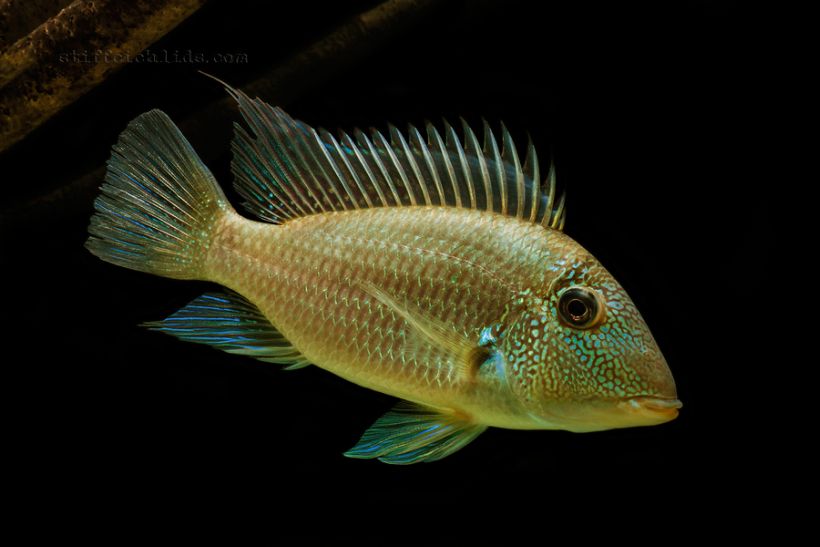
Satanoperca mapiritensis
Fernández-Yépez, 1950
Max length150mm SL6in SLTank180 × 60cm72 × 24inTemp22–28°C72–82°FpH5.5–7.5Recent genetic research has revealed there to be a possibility that although S. mapiritensis is genetically distinct from S. leucosticta, it may turn out to be conspecific with S. jurupari and S. rhynchitis. There appears to be no clear genetic separation between these three putative species nor a form known to aquarists as S. sp. 'Negro-Alto Orinoco' which replaces S. mapiritensis in the middle and upper Orinoco, Casiquiare Canal, and upper rio Negro.
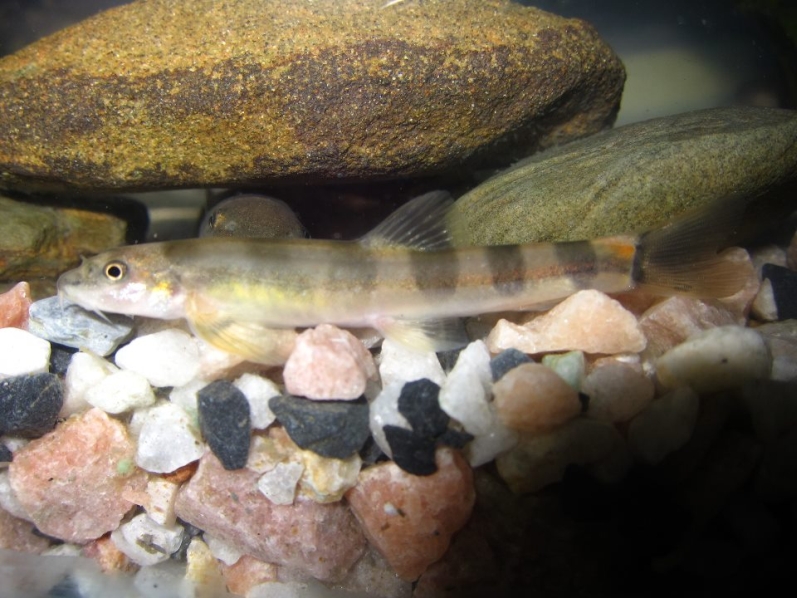
Schistura aizawlensis
Lalramliana, 2012
Max length49mm SL1.9in SLTank80 × 30cm31 × 12inTemp20–28°C68–82°FpH6.0–7.5Type locality is 'India: Mizoram: Muthi River, a tributary of Tuirial River in vicinity of Zemabawk, Aizawl, 23°44' 54" N 92°45'27" E', and to date this species is known only from the Muthi system. The Muthi is an affluent of the Tuirial River which is itself a tributary of the Barak watershed. The Barak is one of the great rivers of southern Assam and forms part of the Surma-Meghna River System.
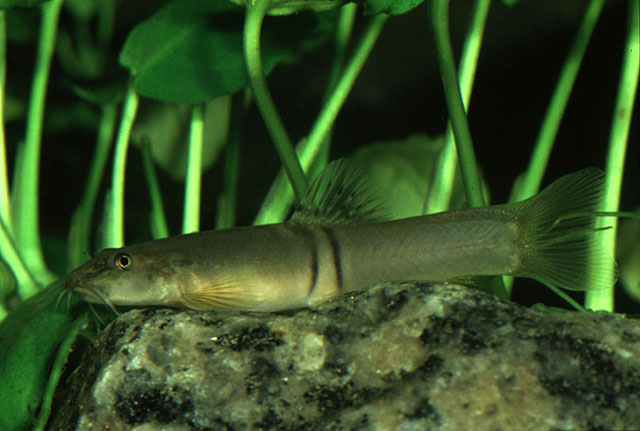
Schistura balteataSumo Loach
Rendahl, 1948
Max length80mm SL3.1in SLTank90 × 30cm36 × 12inTemp22–26°C72–79°FpH6.0–7.5This species is quite uncommon in the aquarium hobby although its name is sometimes used in reference to the similar-looking, apparently undescribed congener S. cf. balteata, and both are also traded as 'sumo loach', 'tri-banded sumo loach', and 'orange saddle-back loach'. Following Kottelat (1990) it's diagnosed by the following combination of characters: unique colour pattern consisting of two da...
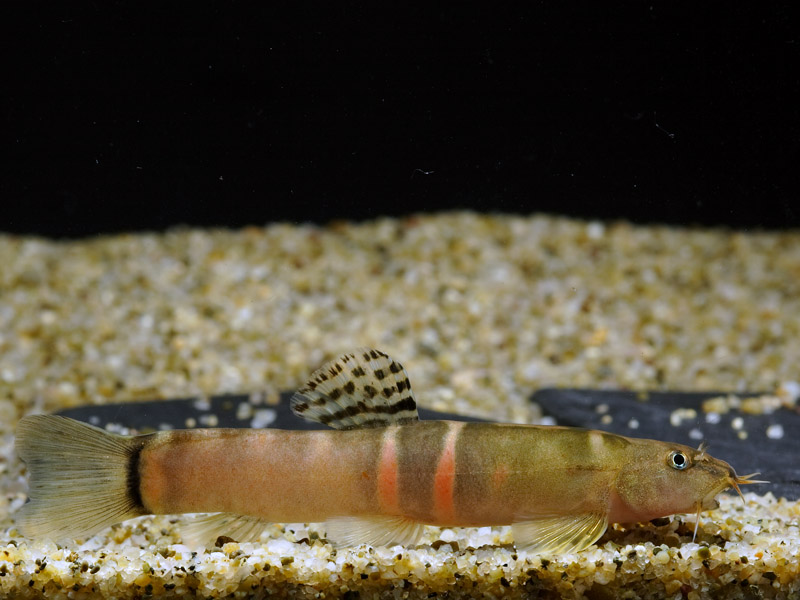
Schistura cf. balteataSumo Loach II
authority not recorded
Max length80mm SL3.1in SLTank90 × 30cm36 × 12inTemp22–26°C72–79°FpH6.5–7.5This apparently undescribed species has been available in the hobby since around 2006 and has been traded under several trade names of which others include 'tri-band sumo loach' and 'chubby loach'. The name 'Sumo II' is now in wide use to distinguish it from the real S. balteata since both have been traded as 'Sumo loach'...