Results for “river”
Type a name: scientific, common, or one a species used to go by. Or narrow the catalogue with the filters.
Filters
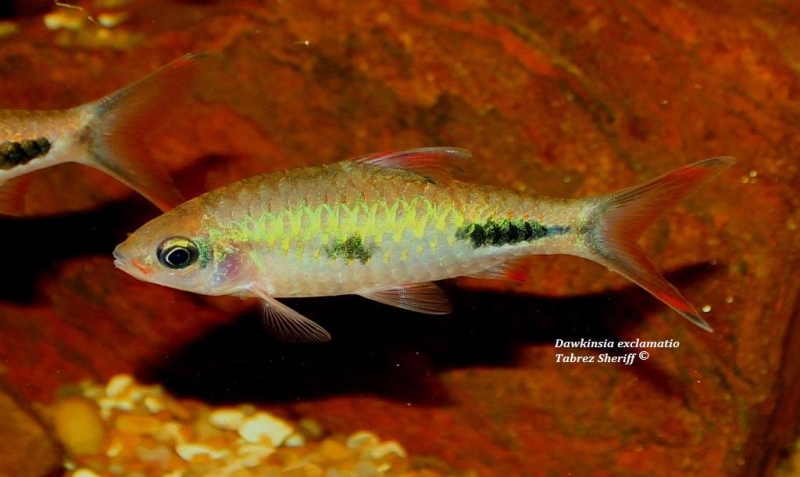
Dawkinsia exclamatio
Pethiyagoda & Kottelat, 2005
Max length100mm SL3.9in SLTank120 × 45cm48 × 18inTemp19–25°C66–77°FpH6.0–7.5There is a case, however, to suggest that D. exclamatio is not actually a distinct taxon but rather a natural hybrid between D. assimilis and a D. arulius-like fish (possibly D. rubrotinctus) which occur together at its type locality in the Kallada River at Thenmalai. The potential of hybridisation is evidenced by the somewhat intermediate colour pattern in that it possesses a (roughly) W-shaped mid-lateral blot...
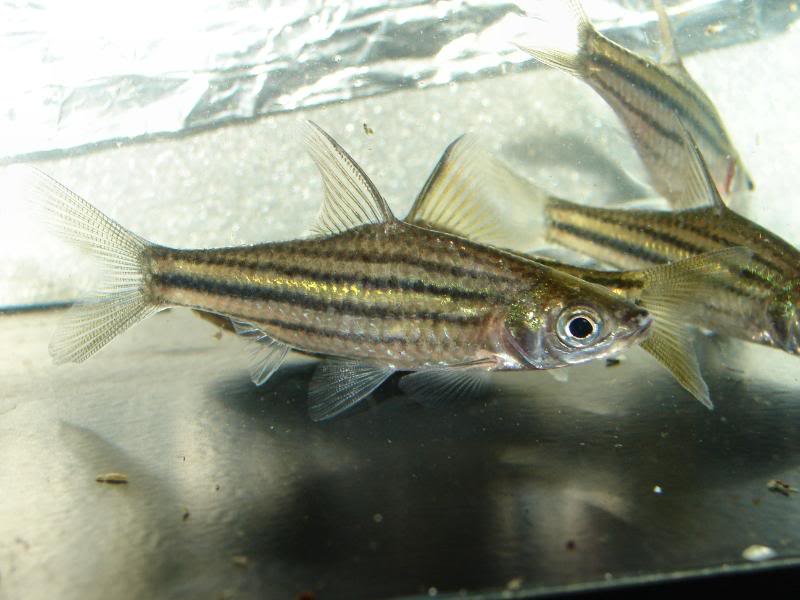
Desmopuntius gemellus
Kottelat, 1996
Max length100mm SL3.9in SLTank120 × 45cm48 × 18inTemp22–25°C72–77°FpH4.0–7.0The type series was purchased from a market in Jambi province, eastern Sumatra, Indonesia and this species is also known from neighbouring Riau province plus the island province of Bangka. On Sumatra it may be restricted to the Indragiri and Batang Hari river systems. Inhabits peat swamp forests and associated black water streams in which the water is typically stained brown with humic acids and other chemicals released by decaying organic material. The dissolved mineral content is generally negligible and the pH can be as...
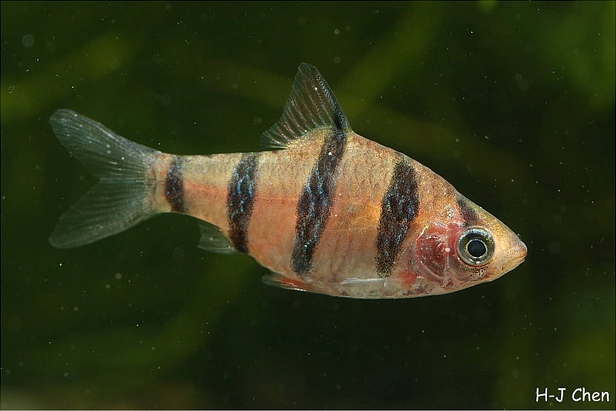
Desmopuntius hexazona'Pentazona' Barb
Weber & de Beaufort, 1912
Max length55mm SL2.2in SLTank80 × 30cm31 × 12inTemp20–26°C68–79°FpH4.0–7.0Native to parts of southern Borneo, eastern Sumatra, Singapore, and the Malay Peninsula. In Singapore it's considered highly-endangered and is now restricted to the Central Catchment nature reserve. Type locality is 'Tuluk and Gunung Sahilan, Sumatra, Indonesia' which appears to correspond to localities within the Kampar River drainage of which the former is now known as Teluk Meranti and is o...
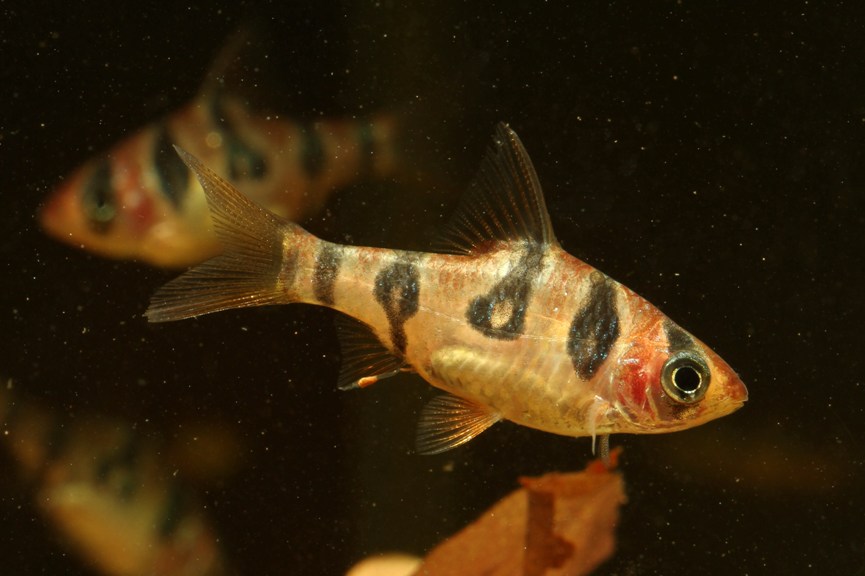
Desmopuntius rhomboocellatusSnakeskin Barb
Koumans, 1940
Max length55mm SL2.2in SLTank80 × 30cm31 × 12inTemp20–28°C68–82°FpH4.0–7.0Endemic to southern Kalimantan, the Indonesian portion of Borneo where it's been recorded from several river systems including the Kapuas, Kepayang, Barito and Kahajan. Type locality is given as 'Canal along the highway from Oelin to Bandjermasin, about 15 kilometers from Bandjermasin, Borneo.' Often referred to as the 'rhomb' or 'rhombo' barb and included in a group of closely-related, similar-looking congeners which also includes...
Devario acuticephalus
Hora, 1921
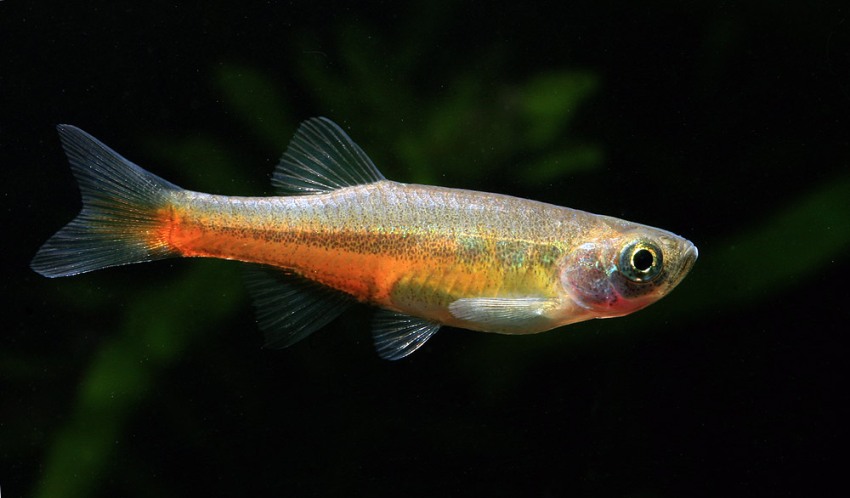
Max length40mm SL1.6in SLTank80 × 30cm31 × 12inTemp16–22°C61–72°FpH6.0–7.0Described from Manipur state, northeastern India and also known from neighbouring Nagaland state. In the original description Hora refers to it as 'widely-distributed' in the region but during an assessment conducted by the IUCN in 2010 it was recorded only from a handful of localities and restricted to an area of less than 15,000 square kilometres. Most habitats lie within the Manipur river basin, including the tributary Iril and Khuga drainages, and the Di...
Devario neilgherriensisPeninsular 'Danio'
Day, 1867
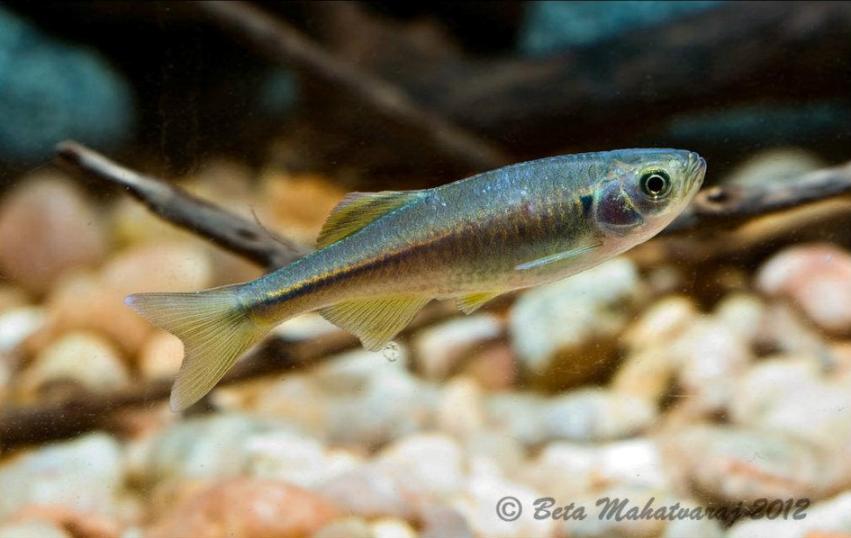
Max length100mm SL3.9in SLTank120 × 45cm48 × 18inTemp16–24°C61–75°FpH6.0–7.5Appears endemic to tributaries of the Bhavani river system in the Nilgiri Hills of Tamil Nadu state, southern India including the Pykara, Avalanche and Kaity streams. Type locality is 'Ootacamund Lake, Pykara, Avelanche and Kaity streams, Neilgherry Hills, India', with the former now often shortened to Ooty Lake.
Devario xyropsBlue Moon 'Danio'
Fang & Kullander, 2009
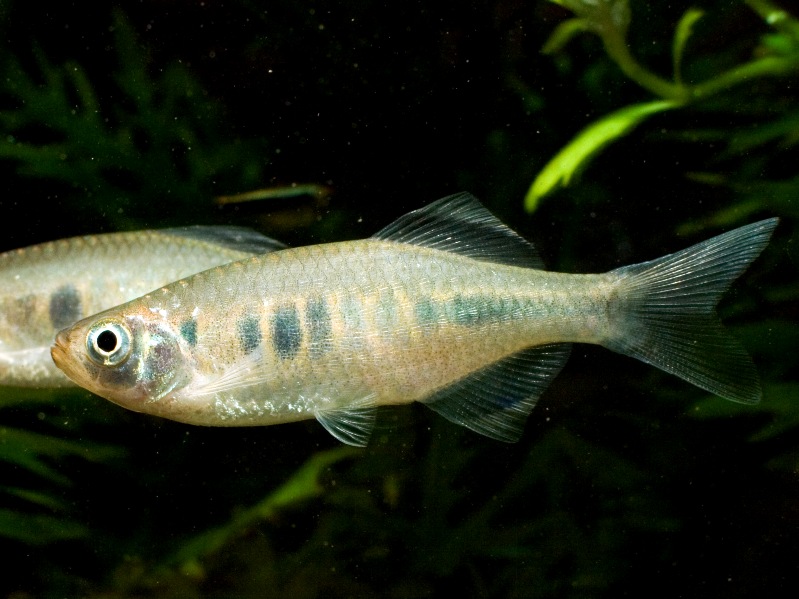
Max length80mm SL3.1in SLTank120 × 45cm48 × 18inTemp18–26°C64–79°FpH6.0–8.0Thrives in an aquarium set up to resemble a flowing stream or river with a substrate of variably-sized, water-worn rocks, sand, fine gravel and perhaps some small boulders. This can be further furnished with driftwood roots or branches, and while the majority of aquatic plants will fail to thrive in such surroundings hardy types such as Microsorum, Bolbitis or Anubias spp. can be grown attached to the décor.
Epiplatys mesogramma
Huber, 1980
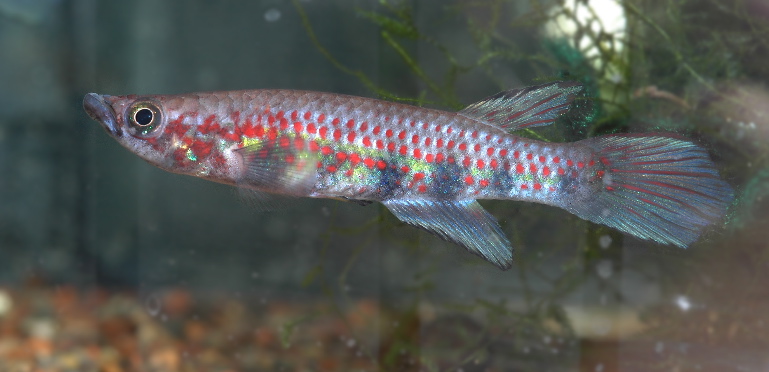
Max lengthnot recordedTanknot recordedTempnot recordedpHnot recordedEndemic to the Ubangi (also spelled Oubangui) River drainage in southwestern Central African Republic with type locality given as 'Small stream along Mbaiki-Mongoumba road, south of Bangui, 3°55'N, 18°10'E, Central African Republic'. The Ubangi is is the largest right-ba...
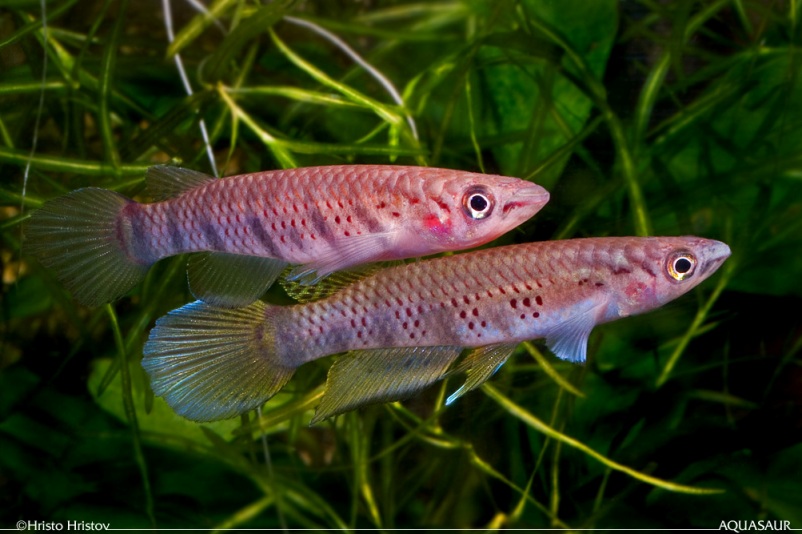
Epiplatys sexfasciatusSix-barred Panchax
Gill, 1862
Max length70mm SL2.8in SLTank80 × 30cm31 × 12inTemp20–27°C68–81°FpH5.0–7.0Distributed throughout coastal regions north and westwards from Gabon through Equatorial Guinea, Cameroon, Nigeria, Benin and Togo as far as Ghana although some consider it restricted to northwestern Gabon and Equatorial Guinea with the remaining populations representing various subspecies (see 'Notes'). Type locality is 'Gaboon River', which presumably refe...
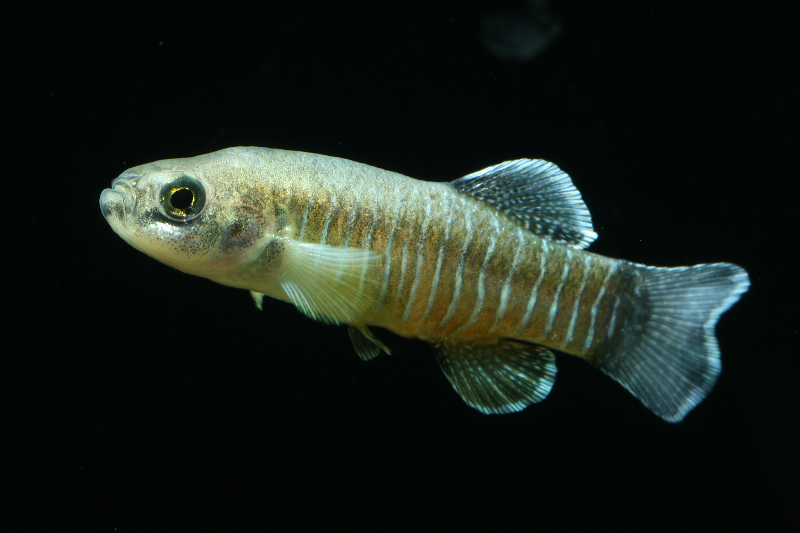
Esmaeilius arakensisArak Toothcarp
Teimori, Esmaeili, Gholami, Zarei, & Reichenbacher, 2012
Max length35mm SL1.4in SLTank120 × 30cm48 × 12inTemp8–32°C46–90°FpH7.0–8.5This species was available in the aquarium hobby for a number of years prior to publication of the official description and was generally referred to as A. sp. 'Namak' or A. sp. 'Namak River'. It can be distinguished from other members of the genus by the following combination of characters: 10–12 anal-fin rays; 28–32 lateral line scales, 10–13 caudal peduncle scales; 8–10 gill rakers; 12–19, commonly 1...
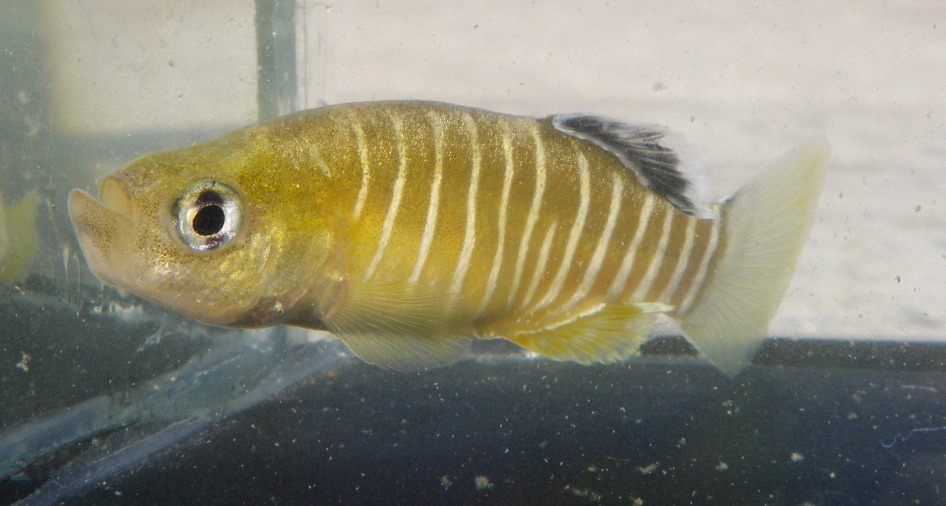
Esmaeilius vladykoviZagros Toothcarp
Coad, 1988
Max length60mm SL2.4in SLTank120 × 30cm48 × 12inTemp12–32°C54–90°FpH6.2–8.5The Iranian Plateau is home to a diverse group of Aphanius with four species already described and several awaiting description. These are among the most ancient in the genus having divereged away from a common ancestor around 20 - 24 million years ago. Among them this species is most closely related to A. sophiae from the Kor River system but can be distinguished by differences in patterning. Males of A. sophiae lack the characteristic darkcolouration seen in A. vladykovi and females possess a ...
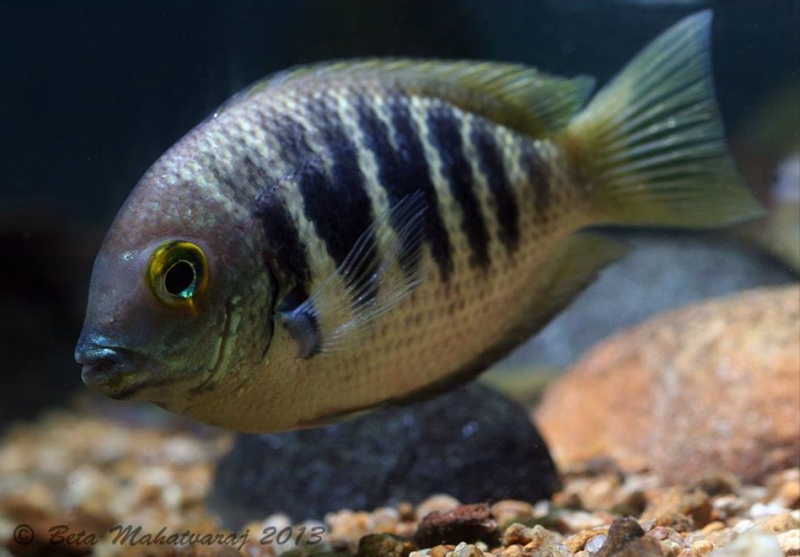
Etroplus canarensisCanara Pearlspot Cichlid
Day, 1877
Max length110mm SL4in SLTank120 × 45cm48 × 18inTemp22–32°C72–90°FpH6.0–7.5Etroplus is the only cichlid genus native to the Indian subcontinent and Sri Lanka and currently comprises three species among which E. canarensis is uniquely limited to freshwater and restricted in range. Its congeners E. maculatus and E. suratensis are both euryhaline inhabiting estuaries, coastal lagoons and the lower reaches of rivers around coastlines of western and southern India plus northern Sri Lanka.
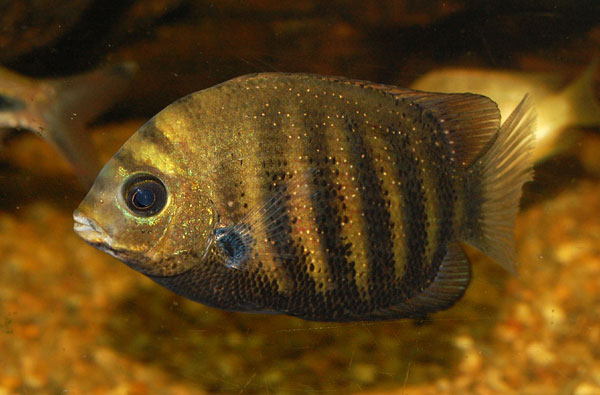
Etroplus suratensisGreen Chromide
Bloch, 1790
Max length350mm SL14in SLTanknot recordedTemp20–30°C68–86°FpH7.0–8.5This species is euryhaline and mostly inhabits brackish estuaries, coastal lagoons and the lower reaches of rivers. It also occurs in freshwater habitats, however, including a number of inland lakes in Sri Lanka although it appears to have been introduced intentionally.
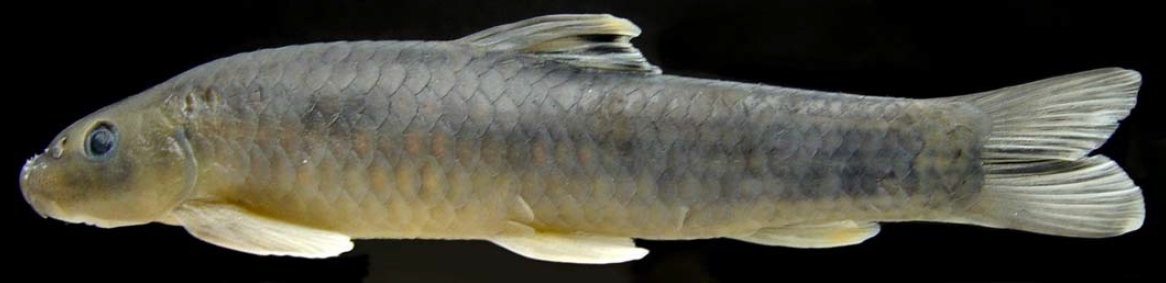
Garra arupi
Nebeshwar, Vishwanath & Das, 2009
Max length75mm SL3.0in SLTanknot recordedTempnot recordedpHnot recordedKnown from the upper Brahmaputra River basin in Arunachal Pradesh state, northern India, with records from the lower Divang Valley and Lohit District.
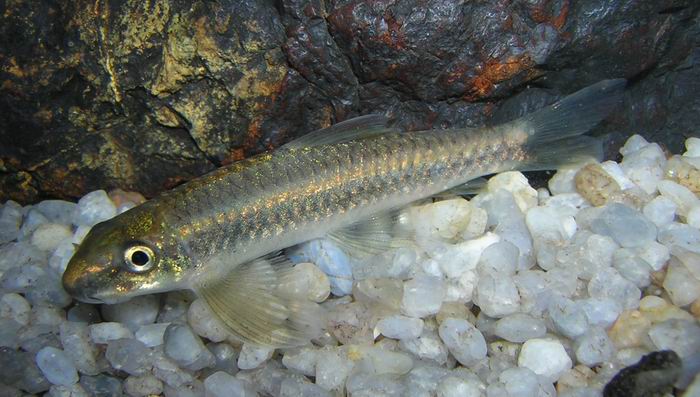
Garra borneensis
Vaillant, 1902
Max length115mm SL5in SLTanknot recordedTempnot recordedpHnot recordedSubstrates are generally composed of gravel, rocks, boulders or bedrock carpeted with a rich biofilm formed by algae and other micro-organisms. At a habitat in the Mendawai river basin in central Kalimantan, H. borneensis was collected from a foothill stream running swiftly over a rock and gravel substrate with clear water of pH 6.4.
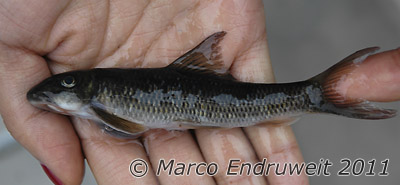
Garra imberba
Garman, 1912
Max length120mm SL5in SLTanknot recordedTempnot recordedpHnot recordedThis species can be distinguished from congeners inhabiting the Red River basin in Yunnan province, China, by the following combination of characters: no barbels; 46-52 lateral line scales; 16 circumpeduncular scales; pharyngeal teeth in 3 rows, 2.4.5-5.4.2; snout rounded, no secondary rostrum, no longitudinal...
Garra mullya
Sykes, 1839
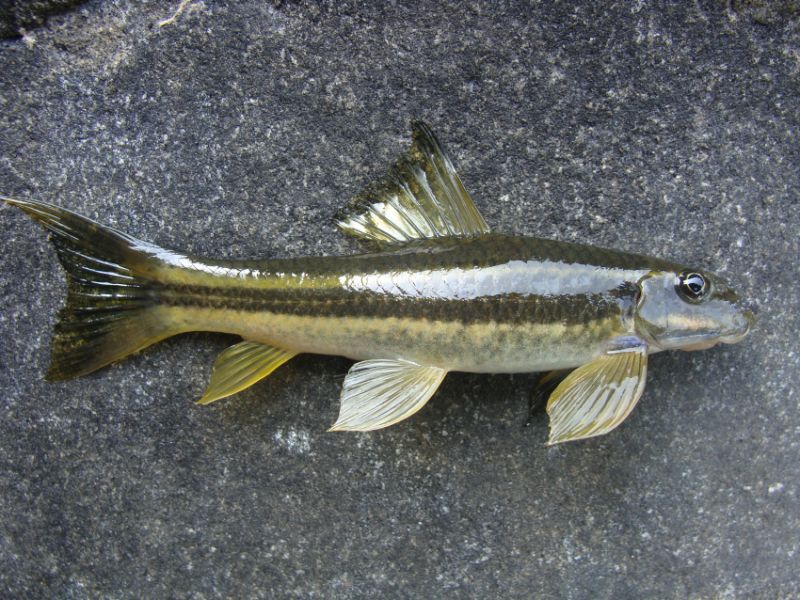
Max length170mm SL7in SLTanknot recordedTempnot recordedpHnot recordedThis species is endemic to and widespread within peninsular India, where it has been recorded from the states of Gujrat, Madhya Pradesh, Chhattisgarh, Orissa, Jharkhand, West Bengal, Maharashtra, Andhra Pradesh, Goa, Karnataka, Tamil Nadu and Kerala. It is thus found in numerous river systems of which some of the most important include the Tapti, Narmada, Mahanadi, Godavari, Krishna, and Cauvery.
Garra rotundinasus
Zhang, 2006
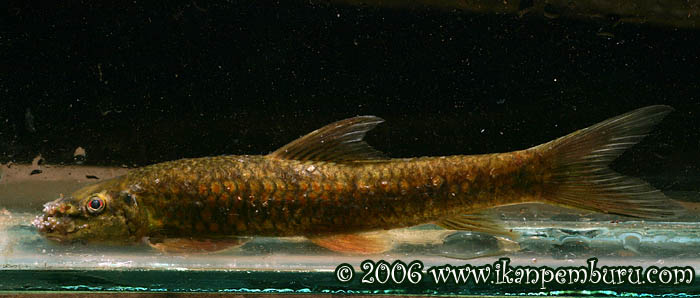
Max length185mm SL7in SLTanknot recordedTempnot recordedpHnot recordedPrior to its description, G. rotundinasus was considered to represent the congener G. gravleyi, but the latter is now accepted to occur only in the Salween and Manipur river basins. These two are separated from all other Garra species in China and Southeast Asia by possession of a weakly-devel...
Garra surendranathanii
Shaji, Arun & Easa, 1996
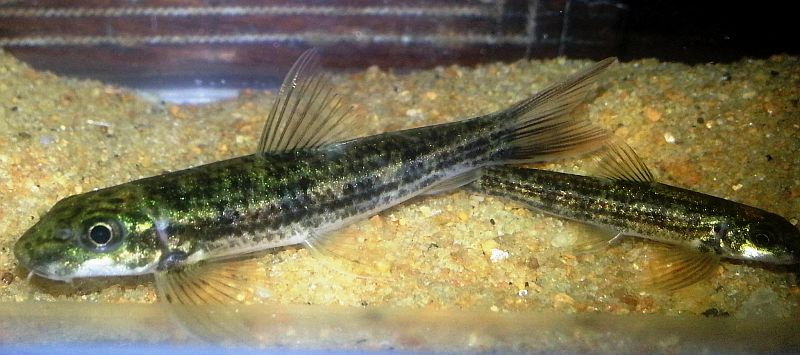
Max length150mm SL6in SLTanknot recordedTempnot recordedpHnot recordedThe type series was collected from a stream-like tributary of the Chalakkudy River at an altitude of 483 m AMSL. In March 1996 the habitat measured around 15 m across and comprised shallow (~ 20 cm deep) water flowing slowly through moist deciduous forest over a substrate of pebbles and boulders.
Gastromyzon aeroides
Tan & Sulaiman, 2006
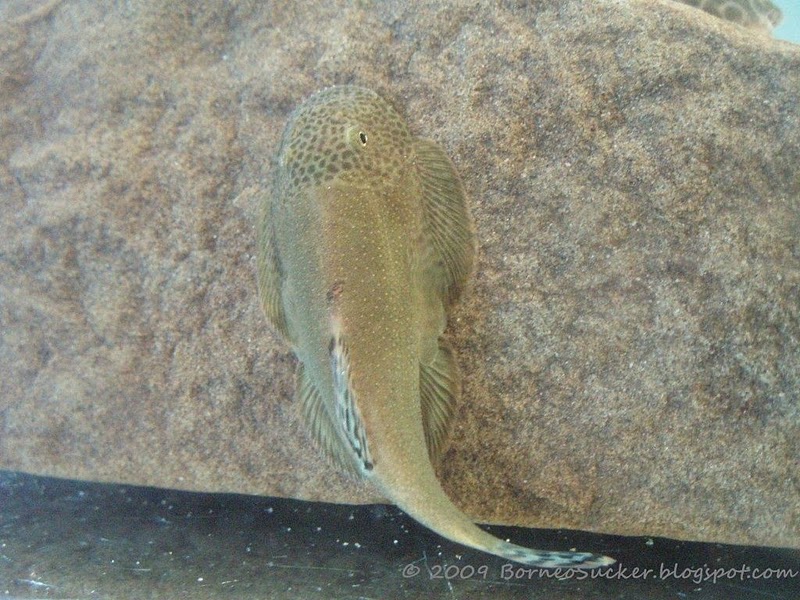
Max length46mm SL1.8in SLTank60 × 30cm24 × 12inTemp20–24°C68–75°FpH6.0–7.5Field observations have revealed that individuals almost always position themselves facing into the flow, either along the sides, behind or under rocks, their specialised morphology (see 'Notes') allowing them to feed and maintain position without being swept away. Not many fishes have been able to successfully colonise this narrow ecological niche, but syntopic species in nature include Gastromyzon extrorsus (Petagas River), G. introrsus, G. lepidogaster (Pad...