Results for “species”
Type a name: scientific, common, or one a species used to go by. Or narrow the catalogue with the filters.
Filters
Copadichromis virginalis
authority not recorded
Max length130mm SL5in SLTank150 × 45cm60 × 18inTemp25–29°C77–84°FpH7.5–8.5Together with the recently erected genus Mchenga, Copadichromis species form an exclusive group of Malawian cichlids commonly referred to as "Utaka" (prounounced "ooh-taw-kuh"). They're specialised to a pelagic lifestyle, and can be found living in huge numbers throughout much of Lake Malawi. Some tend to remain in the proximity of underwater reefs or rocky shorelines, while others occur mainly in more featureless, sandy habitats. Here they face the oncoming current, usi...
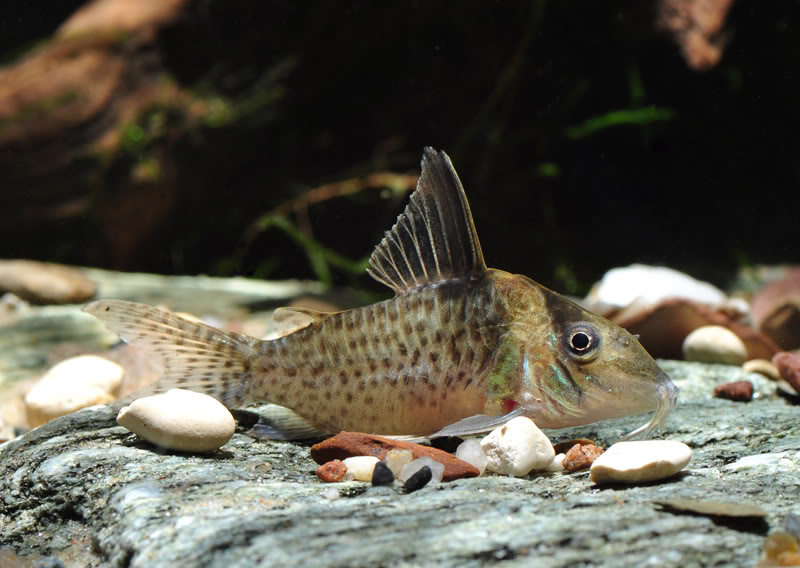
Corydoras brevirostrisSpotted Cory
Fraser-Brunner, 1947
Max length60mm SL2.4in SLTanknot recordedTemp20–26°C68–79°FpH6.0–7.5C. brevirostris was described from an aquarium specimen apparently exported from the Río Orinoco drainage in Venezuela, and its wider distribution is somewhat vague, usually being given as the Orinoco system plus unnamed coastal rivers in Suriname. This represents a somewhat disjunct pattern of distribution and if correct the species is also likely to occur in Guyana.
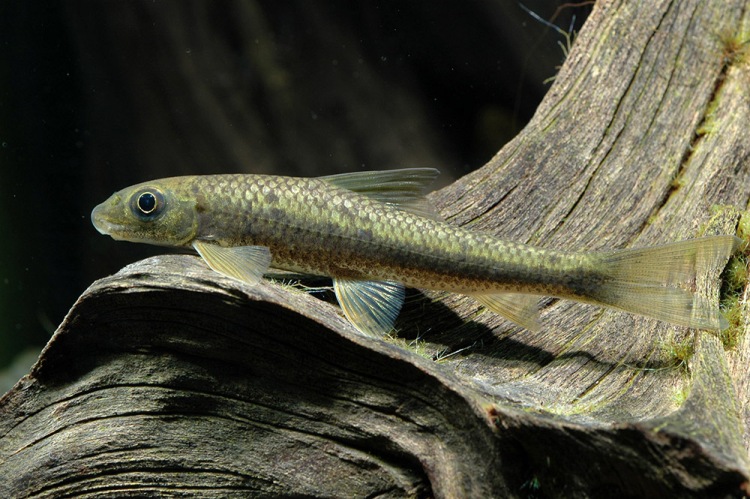
Crossocheilus latius
Hamilton, 1822
Max length150mm SL6in SLTank150 × 45cm60 × 18inTemp18–24°C64–75°FpH6.0–7.5C. latius isn't often available in the trade but makes an excellent alternative to more commonly-offered members of the genus should you be lucky enough to find some. Shipments of similar-looking Indian Garra species such as G. mullya or G. gotyla sometimes contain the odd specimen. It exhibits morphological differences when compared with other members of the genus and may be assigned to a separate taxon at some point in the future.
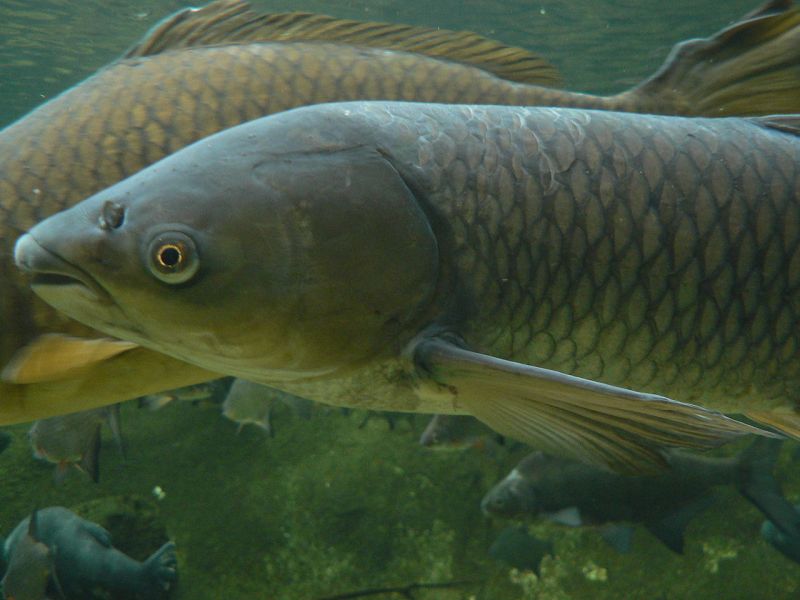
Ctenopharyngodon idellaGrass Carp
Valenciennes, 1844
Max length1200mm SL47in SLTanknot recordedTemp0–33°C32–91°FpH6.0–9.0Despite being a wholly unsuitable aquarium subject, C. idella is often traded as such, with an albino form having been developed specifically for the ornamental market. Individuals which have outgrown their aquarium or pond should never be released into natural waters, either, since this species has proven capable of causing serious environmental damage under a wide range of climatic conditions.
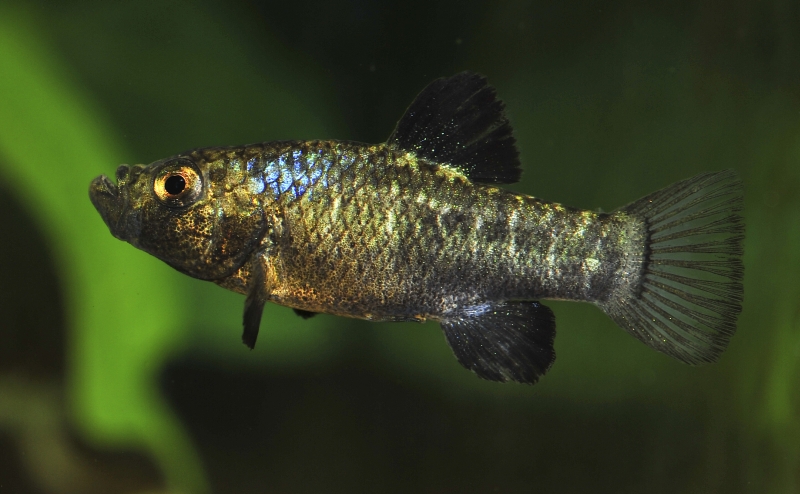
Cyprinodon desquamatorScale-eating pupfish
Martin & Wainwright, 2013
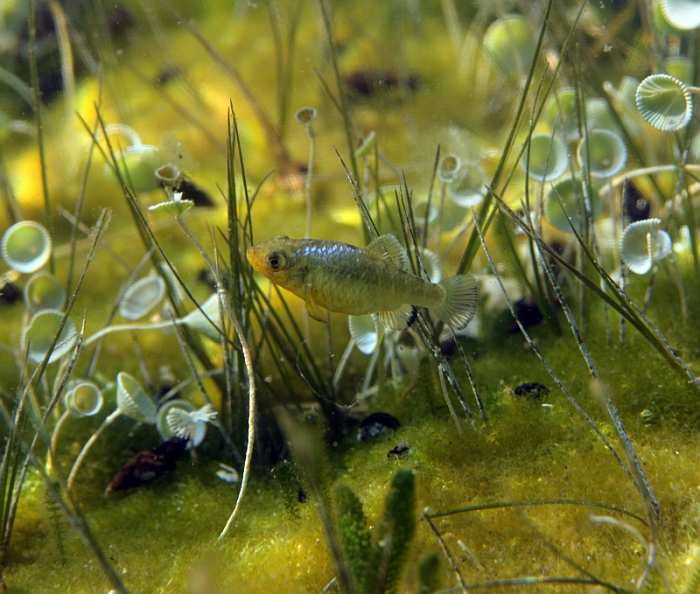
Max length31mm SL1.2in SLTanknot recordedTempnot recordedpHnot recordedThis species is a specialised lepidophage with approximately 50 % of the diet comprising the scales of other fishes. Physical adaptations to this behaviour include its elongate body and jaw mechanism permitting a fast biting action.
Cyprinodon variegatusSheepshead 'Minnow'
Lacepède, 1803
Max length50mm SL2.0in SLTank60 × 30cm24 × 12inTempnot recordedpHnot recordedTends to be most common in brackish to hypersaline environments such as coastal salt marshes, lagoons and estuaries. On San Salvador Island, Bahamas, it appears to be the parent of a species group occurring in sympatry and exploiting diverse but specific resources with some spectacular morphological adaptations.
Danionella dracula
Conway & Rüber, 2009
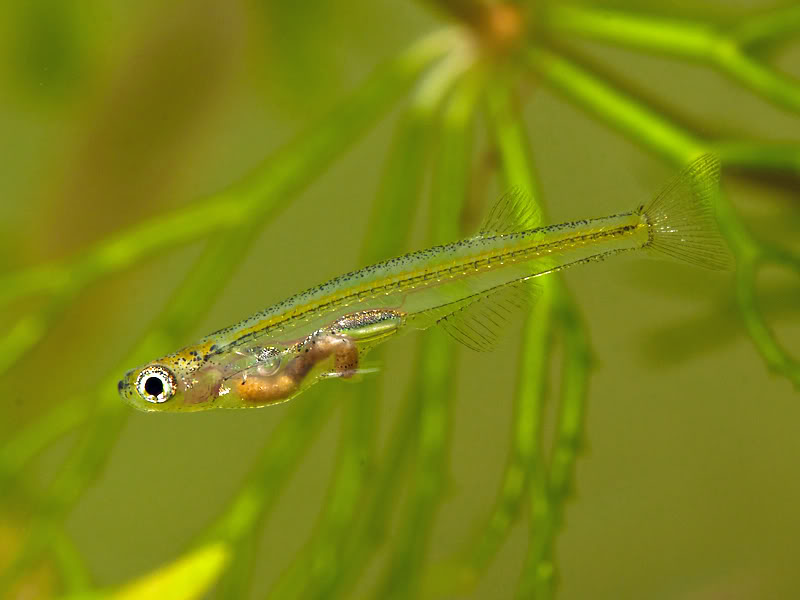
Max length17mm SL0.7in SLTank45 × 30cm18 × 12inTemp20–26°C68–79°FpH6.5–7.5This species is available in the trade on occasion and has been sold as Danionella sp. 'neon green' or 'flourescent green'. The specific name was inspired by its jaw morphology which according to current knowledge is unique among cypriniform fishes. Both upper and lower jaws contain a series of toothlike odontoid processes; these are only rudimentary in females but in males appear to form rows of teeth of which the front pair is large and fang-like. The upper fangs project th...
Dianema longibarbisPorthole Catfish
authority not recorded
Max length100mm SL3.9in SLTank90 × 38cm36 × 15inTemp24–28°C75–82°FpH5.5–7.5So named because of the row of spots running along the lateral line, the porthole cat is a good community species. Newly imported fish tend to be a little delicate and are susceptible to disease. This is at least in part because all specimens sold for the trade are wild caught. Once acclimatised, it usually proves very hardy and can be exceptionally long-lived for a fish of this size, having the potential to survive for over 10 years....
Gastromyzon aeroides
Tan & Sulaiman, 2006
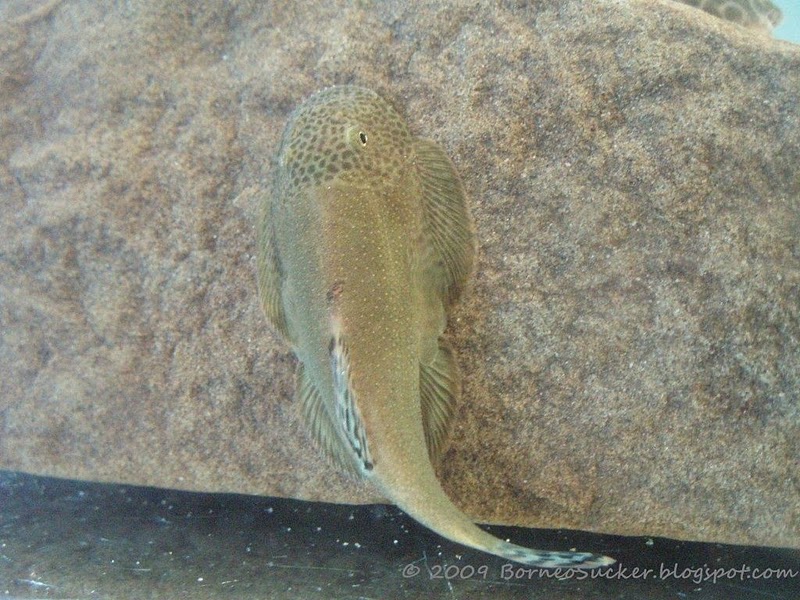
Max length46mm SL1.8in SLTank60 × 30cm24 × 12inTemp20–24°C68–75°FpH6.0–7.5Field observations have revealed that individuals almost always position themselves facing into the flow, either along the sides, behind or under rocks, their specialised morphology (see 'Notes') allowing them to feed and maintain position without being swept away. Not many fishes have been able to successfully colonise this narrow ecological niche, but syntopic species in nature include Gastromyzon extrorsus (Petagas River), G. introrsus, G. lepidogaster (Pad...
Gastromyzon farragus
Tan & Leh, 2006
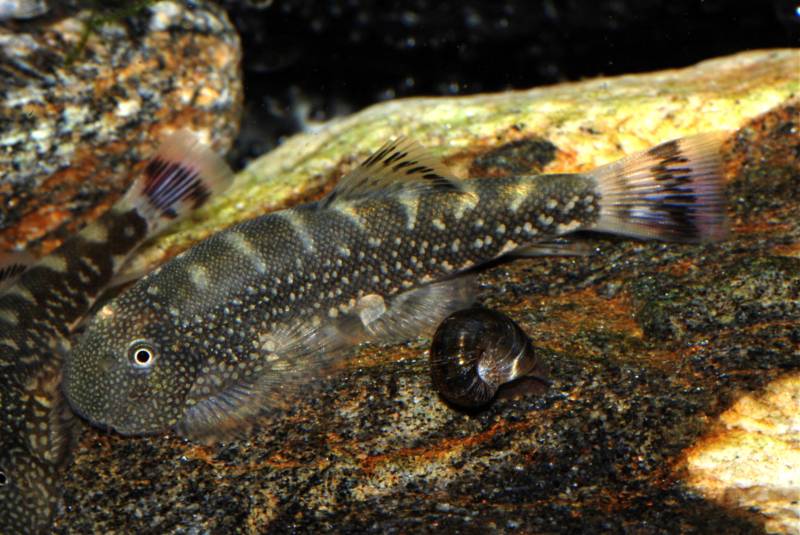
Max length40mm SL1.6in SLTank60 × 30cm24 × 12inTemp20–24°C68–75°FpH6.0–7.5In fact G. farragus and G. ocellatus represent one of 12 pairs of cryptospecies to be found in the genus, differing in subtle aspects of patterning. Cryptospecies are defined as morphologically similar, but reproductively isolated species which in fishes often inhabit adjacent river basins but in some cases occur sympatrically. The phenomenon may be a result of parallel evolution, and is not normally considered to represent an early stage of speciation.
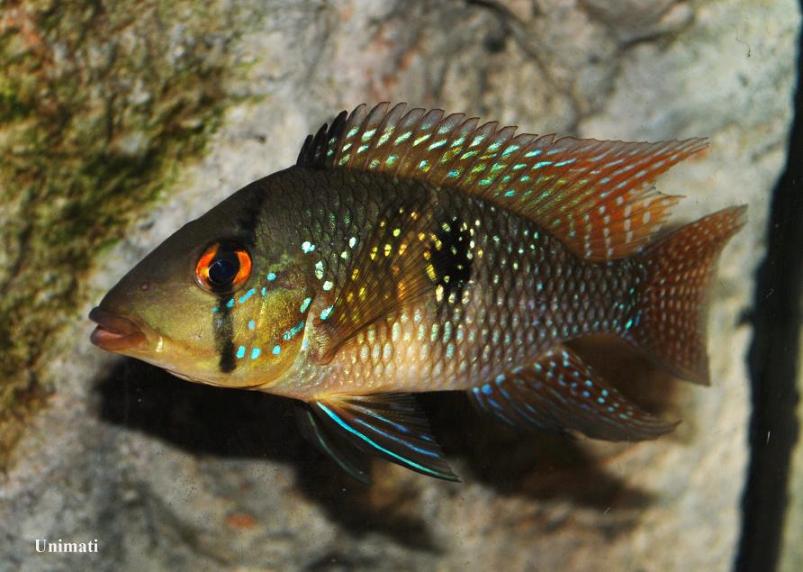
'Geophagus' brasiliensisPearl Cichlid
Quoy & Gaimard, 1824
Max length250mm SL10in SLTank150 × 45cm60 × 18inTemp18–28°C64–82°FpH6.0–8.0This species is also known as the 'pearlscale' or 'mother-of-pearl' cichlid in deference to the iridescent body scaling. It's also worth noting that fishes sold as Gymnogeophagus australis in Europe are 'G.' brasiliens is more often than not. Wild specimens exhibits significant dissimilarities in body colour and patterning depending on locality with basic colouration being dominated by varying shades of blue, green or yellow, for example. Some populations al...
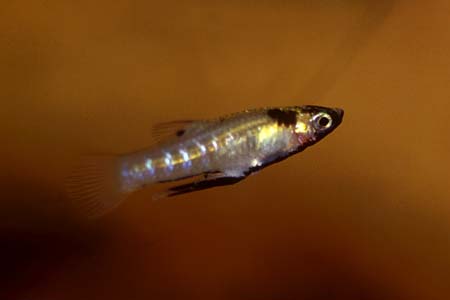
Girardinus metallicusMetallic Girardinus
authority not recorded
Max length60mm SL2.4in SLTank45 × 30cm18 × 12inTemp22–27°C72–81°FpH6.5–8.0This species was introduced into the aquarium trade in the early 20th century but disappeared soon after. It subsequently reappeared in a Berlin zoo in 1965 and has been available from specialist breeders ever since. It occasionally appears for sale in aquatic shops....
Gobioides broussonnetiiViolet Goby
authority not recorded
Max length625mm SL25in SLTank120 × 60cm48 × 24inTemp22–26°C72–79°FpH7.5–9.0This fish is also commonly sold as the dragon or Peruvian goby, or dragon fish, and its bizarre appearance has made it popular in the trade. This is unfortunate, as not only does it grow very large, but it has specialised feeding requirements and does not survive for very long in freshwater. When provided with the correct conditions, however, it makes a unique and fascinating captive subject. There is a smaller species in the genus, G. peruanus, that does survive in freshwater, being a riverine ...
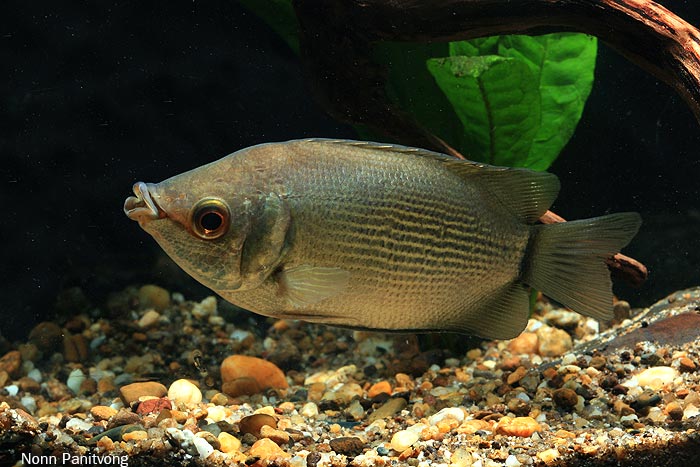
Helostoma temminkiiKissing Gourami
Cuvier, 1829
Max length250mm SL10in SLTank150 × 45cm60 × 18inTemp22–30°C72–86°FpH6.0–8.0The pinkish-white form of this species is among the most widely-traded aquarium fishes in the world but does not occur naturally and is in fact a leucistic variant bred specifically for ornamental purposes. The 'short-bodied' or 'balloon' variety also continues to be fashionable but under no circumstances do we recommend the purchase of these intentionally disfigured animals which tend to have much shorter life spans than the naturally-shaped fish. There also exists a less-po...
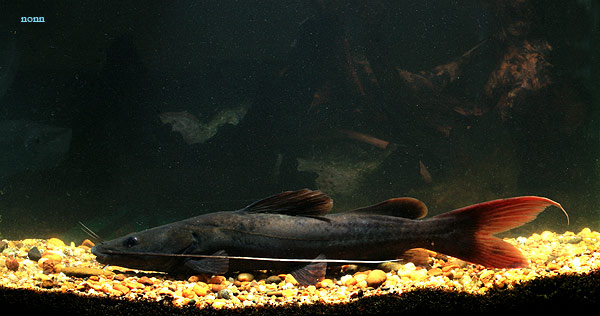
Hemibagrus wyckioidesAsian Red Tailed Catfish
Fang & Chaux, 1949
Max length1300mm SL51in SLTanknot recordedTemp19–29°C66–84°FpH6.0–8.0Juvenile specimens are sometimes available in the aquarium trade although their purchase is strongly discouraged, and this species probably shouldn't be considered a home aquarium subject at all given its eventual size plus the fact it can live for several decades. H. wyckioides can be told apart from mos...
Heros notatusSpotted Severum
authority not recorded
Max length300mm SL12in SLTank120 × 38cm48 × 15inTemp22.2–28.9°C72–84°FpH6.0–7.0A rarely seen, although attractive member of the severum family. This species is occasionally offered for sale through specialist cichild or South American dealers.
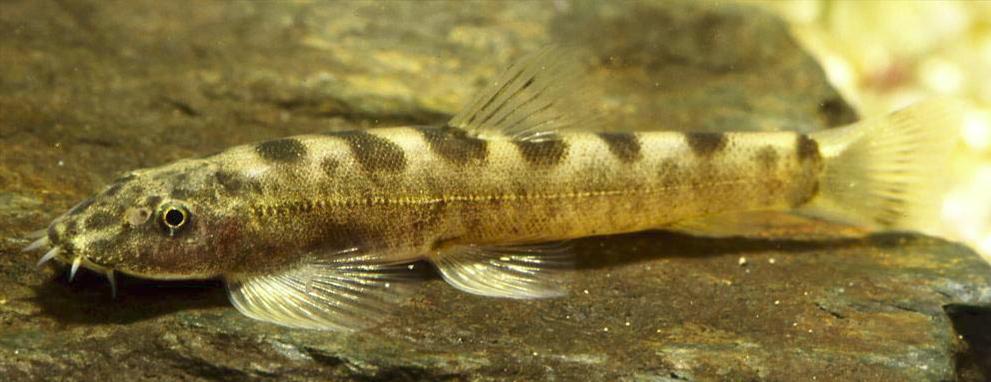
Homalopterula ripleyi
Fowler, 1940
Max length59mm SL2.3in SLTank80 × 30cm31 × 12inTemp20–25.5°C68–78°FpH6.0–7.5Fowler (1940) described this species as the unique member of his new genus Homalopterula on the basis of a single specimen, separated from related genera by the curved shape of the jaws, truncate caudal-fin and scaleless ventral surface.
Horabagrus brachysomaSun Catfish
authority not recorded
Max length450mm SL18in SLTanknot recordedTemp23–25°C73–77°FpH6.0–7.5Also known as the bullseye, solar, eclipse or golden red-tailed catfish, this species is relatively common in the trade. Unfortunately, it's a victim of some rather misplaced marketing, as it's often sold as being suitable for the general community tank found in homes worldwide. The majority of specimens seen for sale measure only 2-3", which only serves to make the situation worse. Obviously, given its adult size it's totally unsuitable for this kind of setup, but makes a fi...
Hydrocynus goliathGiant Tigerfish
authority not recorded
Max length2100mm SL83in SLTanknot recordedTemp24–28°C75–82°FpH6.5–7.5A voracious piscivore this species is perfectly designed for its lifestyle. It is very streamlined and muscular and has one of the most amazing sets of teeth of any freshwater fish. These are dagger-shaped and interlock, meaning the fish can rip chunks out of its prey. The teeth are visible even when the animal's mouth is closed, which makes for a fearsome sight. It is one of the world's most infamous game fish and specimens weighing over 100 pounds have been recorded. We cannot st...
Hydrocynus vittatusAfrican Tiger Fish
authority not recorded
Max length1050mm SL41in SLTank300 × 90cm118 × 36inTemp24–28°C75–82°FpH6.5–8.0A voracious piscivore that hunts in large shoals in the wild, this species is perfectly designed for its lifestyle. It is very streamlined and muscular and has one of the most amazing sets of teeth of any freshwater fish. These are dagger-shaped and interlock, meaning the fish can rip chunks out of its prey. The teeth are visible even when the animal's mouth is closed, which makes for a fearsome sight. It is a popular game fish in its native range, with the largest specimen caught weighi...