Results for “várzea”
Type a name: scientific, common, or one a species used to go by. Or narrow the catalogue with the filters.
Filters
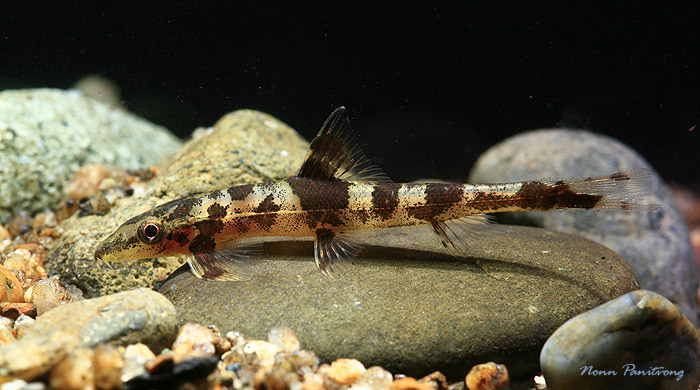
Homaloptera ogilviei
Alfred, 1967
Max length50mm SL2.0in SLTank60 × 30cm24 × 12inTemp20–25.5°C68–78°FpH6.0–7.5The reason that the paired fins are orientated vertically, as opposed to horizontally in other members of the genus, is unclear but Roberts (1989) suggest it may be an adaptation to this species' ecology, in that it displays a preference for submerged vegetation or woody structures as opposed to rocky environments. They're certainly adapted for a rea...
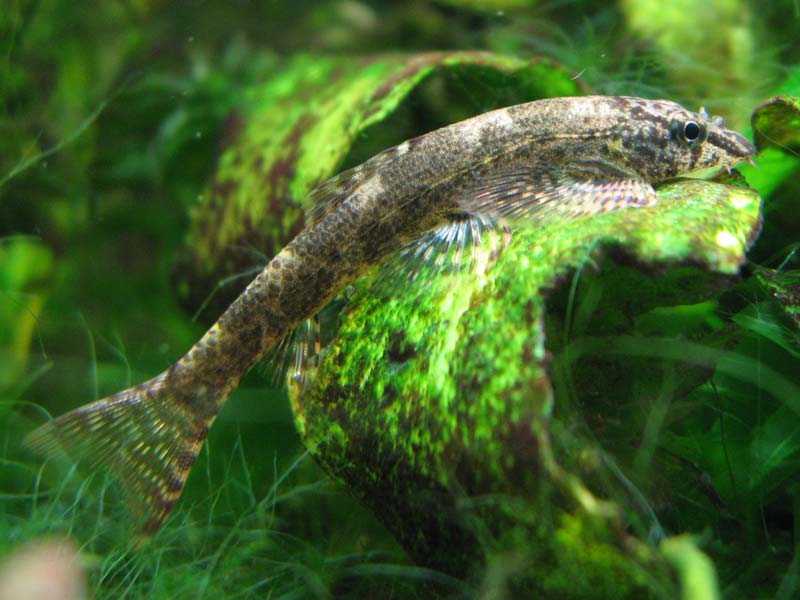
Homalopteroides smithi
Hora, 1932
Max length60mm SL2.4in SLTank60 × 30cm24 × 12inTemp20–25.5°C68–78°FpH6.0–7.5Described from close to the village of Ban Khiri Wong, Nakhon Si Thammarat Province, southern (peninsular) Thailand but since recorded throughout much of the country, including the Chao Phraya and Mekong river systems. It's also known from Peninsular Malaysia and parts of the Mekong basin in Laos, Cambodia and Vietnam. Rainboth (1996) considered it 'probably the commonest member of the genus in the Mekong' and in a 2008 study of balitorid habitats in centra...
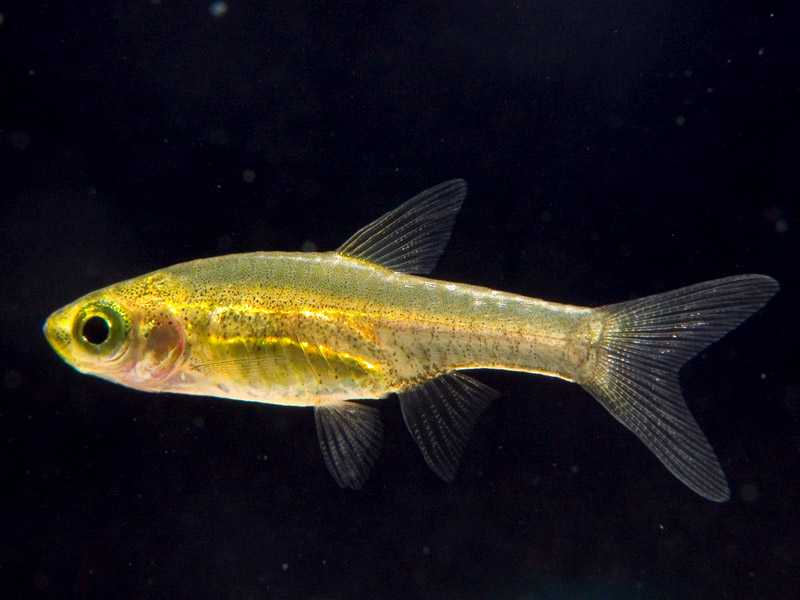
Horadandia atukorali
Deraniyagala, 1943
Max length30mm SL1.2in SLTank45 × 30cm18 × 12inTemp20–26°C68–79°FpH5.5–7.5The genus is monotypic and distinguished from other cyprinid taxa by a combination of a moderately compressed, elongated body with two rows of teeth on the lower pharyngeal (throat) bone and lacking barbles, visible lateral line and a symphyseal knob on the lower jaw (Talwar & Jhingran, 1991). Its small adult size evolved via a process known as miniaturisation characterised by sexually mature adults with a significantly reduced size of less than 20 mm SL. Among bony fishes cyprinids are one of the few groups in which this phenomenon occurs repeatedly...
Hydrocynus goliathGiant Tigerfish
authority not recorded
Max length2100mm SL83in SLTanknot recordedTemp24–28°C75–82°FpH6.5–7.5A voracious piscivore this species is perfectly designed for its lifestyle. It is very streamlined and muscular and has one of the most amazing sets of teeth of any freshwater fish. These are dagger-shaped and interlock, meaning the fish can rip chunks out of its prey. The teeth are visible even when the animal's mouth is closed, which makes for a fearsome sight. It is one of the world's most infamous game fish and specimens weighing over 100 pounds have been recorded. We cannot st...
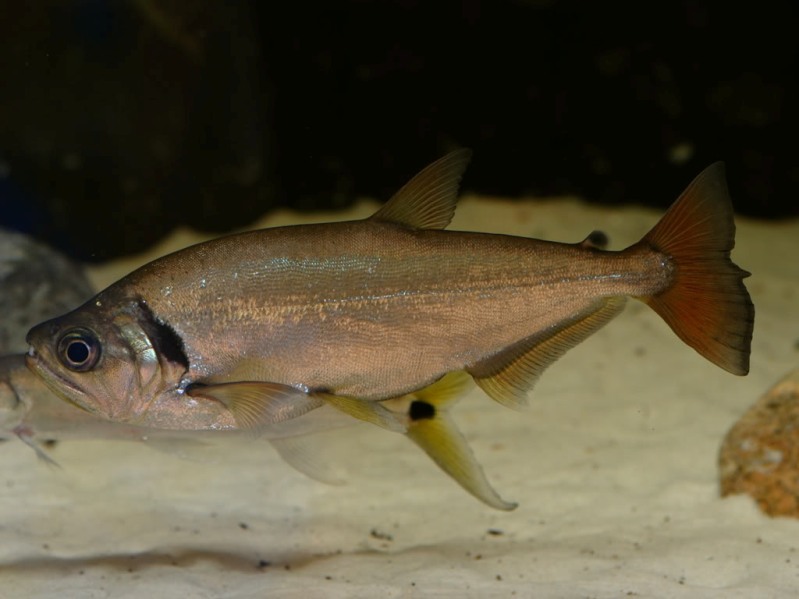
Hydrolycus tatauaia
Toledo-Piza, Menezes & Santos, 1999
Max length455mm SL18in SLTanknot recordedTemp24–28°C75–82°FpH6.0–8.0Vernacular names in Brazil include 'Cachorra' or 'Pirandirá', although these are also applied to congeners. It can be told apart from all congeners by the following combination of characters: head and body silvery with dark dorsal surface; an elongate dark blotch posterior to the opercle; dorsal, caudal and anal-fin rays reddish to orange proximally with some individual variation in intensity and tonality; adipose fin dark, with diffuse black pigmentation.
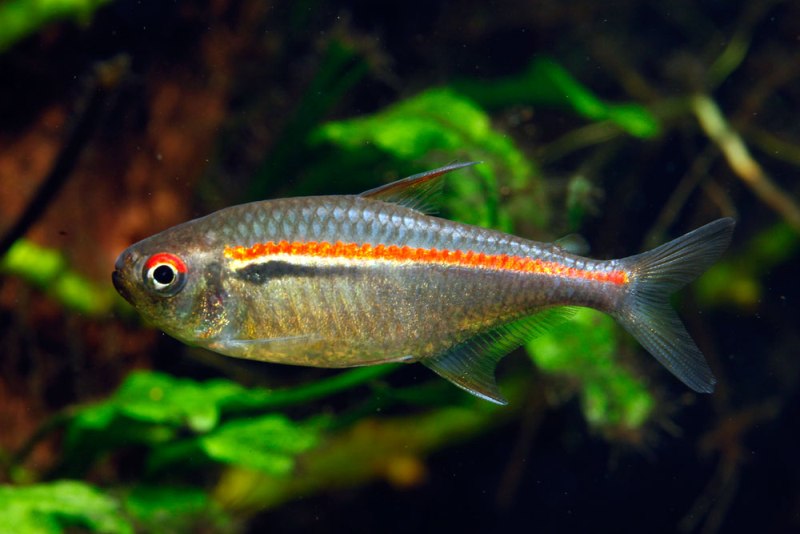
Hyphessobrycon amapaensisAmapá Tetra
Zarske & Géry, 1998
Max length30mm SL1.2in SLTank60 × 30cm24 × 12inTemp23–28°C73–82°FpH5.0–7.0Collected from small streams flowing through savanna grassland containing clear, light brown-coloured water with substrates of sand and gravel and little in the way of submerged or riparian vegetation. At the type locality pH varied between 5.8 – 6.3, GH and KH were both <1°, conductivity was 9-13 μs and temperature 24.7 – 27.2°C/76.6 – 80.1°F.
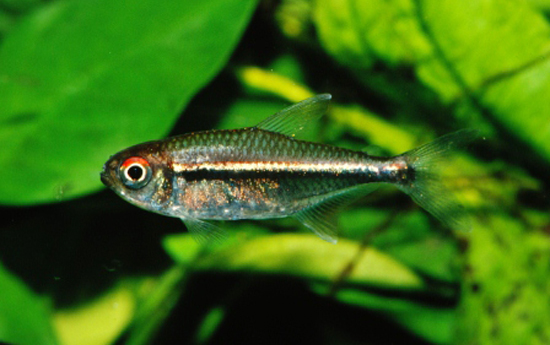
Hyphessobrycon heterorhabdusFlag Tetra
Ulrey, 1894
Max length35mm SL1.4in SLTank80 × 30cm31 × 12inTemp20–26°C68–79°FpH5.5–7.5Its name appears to have been misapplied to similar-looking fishes occurring throughout much of the middle and lower Amazon in Brazil and Colombia, plus the rio Orinoco drainage in Colombia and Venezuela, and coastal systems of the Guianas. Some of these have been described as distinct species (e.g. Hyphessobrycon amapaensis Zarske & Géry 1998; H. eschwartzae García-Alzate, Román-Valencia & Ortega 2013; H. montagi Lima, Couthino & Woziacki 2014), whereas the identity of others remains un...
Labidochromis caeruleusCaeruleus
authority not recorded
Max length100mm SL3.9in SLTank90 × 45cm36 × 18inTemp24–28°C75–82°FpH7.7–8.6This species is one of the most popular Rift Lake cichlids in the hobby, due to its striking colouration and somewhat peaceful (for a mbuna) nature. It exists in many different colour forms in nature, and the ubiquitous "electric yellow" morph, so popular in the hobby, is actually one of the rarer forms in nature, with the blue and white variety being more widespread. Wild fish are correspondingly rare in the hobby, with the vast majority of specimens offered for sale being tank-bred. ...
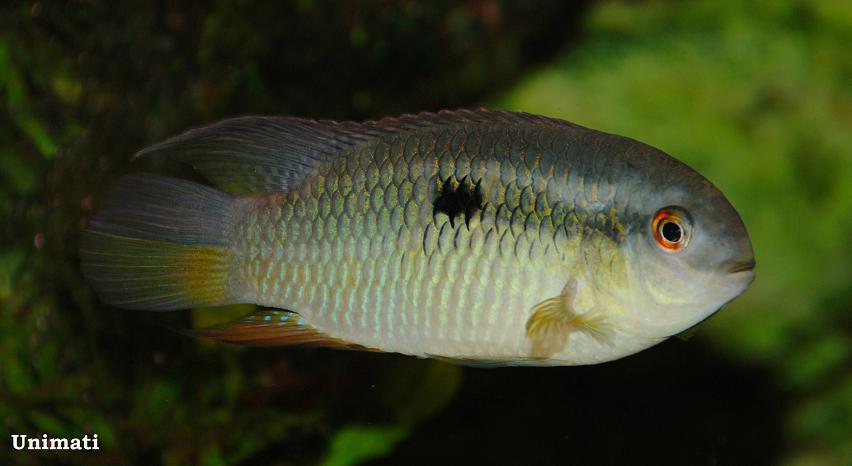
Laetacara fulvipinnis
Staeck & Schindler, 2007
Max length75mm SL3.0in SLTanknot recordedTemp20–28°C68–82°FpH4.0–7.0Has been collected from habitats containing clear, soft, acidic, tea-coloured blackwater, most typically among leaf litter or submerged vegetation in very shallow (10-50 cm depth) water along the margins of streams and other minor tributaries. At a village called El Niñal close to the mouth of the rio Pasimoni in the Casiquiare drainage pH was...
Leporacanthicus triactisThree Beacon Plec
authority not recorded
Max length245mm SL10in SLTank120 × 45cm48 × 18inTemp24–27°C75–81°FpH6.0–7.6There are a few different colour forms of this lovely suckermouth available, each of which possess varying amounts of orange patterning in the fins. Some of these are given extravagant sounding names such as "dragon fin" or "tiger fin". What's nice about this species, is that these flashes of colour don't fade with age, as with many of its relatives, making for a striking fish when fully grown. Leporacanthicus species are commonly referred to as "vampire ple...
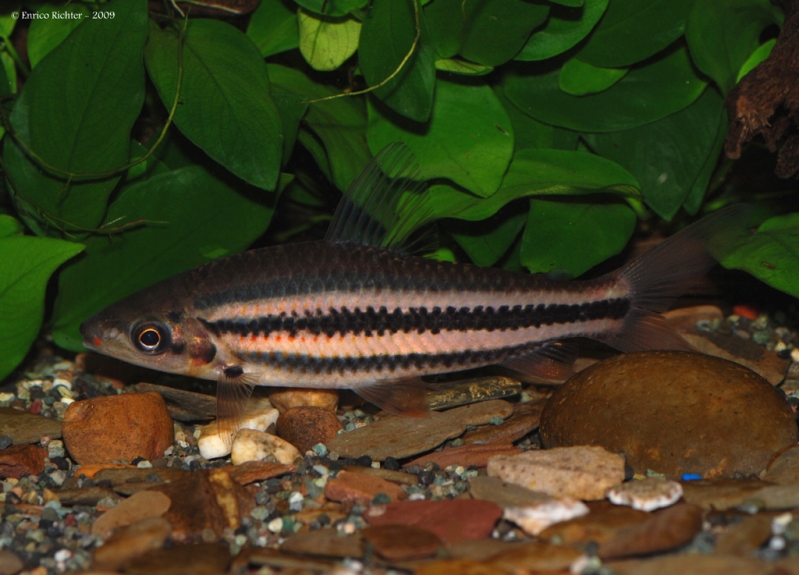
Leporinus arcusLipstick Leporinus
Eigenmann, 1912
Max length300mm SL12in SLTank210 × 60cm84 × 24inTemp20–28°C68–82°FpH6.0–7.5Type locality is 'Tukeit, Guyana', and this species is known from various river drainages of Venezuela, Guyana, Suriname and French Guiana including the Orinoco, Essequibo, and upper Courantyne (aka Corantijn) basins. Additional records exist from the upper Amazon basin in Guyana, these presumably corresponding to the Takutu river basin, itself part of the upper rio Branco.
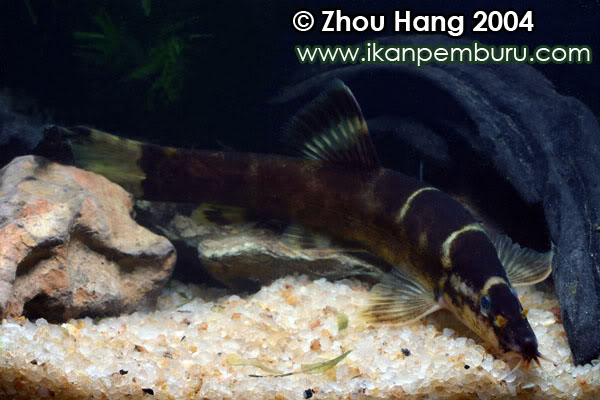
Leptobotia rubrilabris
Dabry de Thiersant, 1872
Max length150mm SL6in SLTank120 × 45cm48 × 18inTemp15.5–21°C60–70°FpH6.5–7.5Should be kept in a set-up designed to resemble a flowing stream with a substrate of variably-sized rocks, gravel and some water-worn boulders. This can be further furnished with driftwood roots and branches arranged to form some shaded spots while lengths of PVC piping or similar can be used to provide additional cover. Although most plant species will fail to thrive in such surroundings hardy genera such as Microsorum, Bolbitis or Anubias spp. can be grown attached to the décor and bright lighting will promote the growth of aufwuchs.
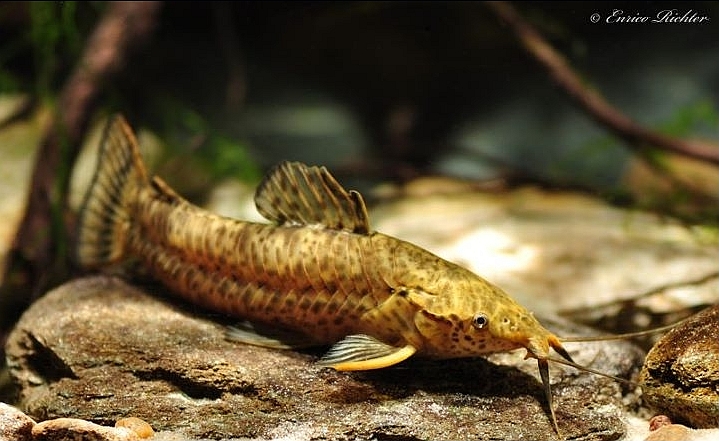
Megalechis pictaBar-tailed Hoplo
Müller & Troschel, 1849
Max length120mm SL5in SLTank120 × 45cm48 × 18inTemp18–28°C64–82°FpH5.0–7.5This species was previously referred to as M. thoracata, but that name is now applied to the species with a relatively short dorsal-fin spine which was formerly known as M. personata. M. picta can be told apart from M. thoracata by presence of a dark vertical bar in the caudal-fin, a comparatively longer dorsal-fin spine (52.0-64.0% vs. 32.0-48.0% of dorsal-fin base in specimens measur...
Melanotaenia splendida splendidaEastern Rainbowfish
authority not recorded
Max length150mm SL6in SLTank120 × 30cm48 × 12inTemp20–30°C68–86°FpH5.0–8.0There are currently 4 described subspecies of Melanotaenia splendida. The principle differences are generally in colour, pattern and fin counts, although even these vary depending on the locality of the fish. M s. splendida in particular also exhibits a wide variation in colour and patterning depending on locality within the subspecies, and the species name is often suffixed with a place name when the fish are seen for sale. The different forms and subspecies should not be mixed in the aquarium,...
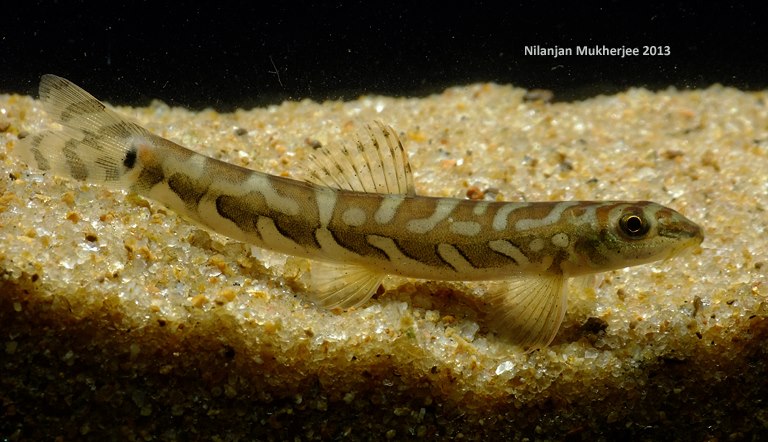
Mesonoemacheilus triangularisZodiac Loach
Day, 1865
Max length60mm SL2.4in SLTank75 × 30cm30 × 12inTemp18–25.5°C64–78°FpH6.0–7.5This species is also referred to by the alternative vernacular name 'Batik loach' and is the most-commonly traded member of the genus at present. It's easily-distinguished from congeners by body patterning which comprises a series of pale, oblique saddle-like markings edged in black and running along the dorsal surface, plus a similar set of bars originating from the otherwise plain ventral surface.
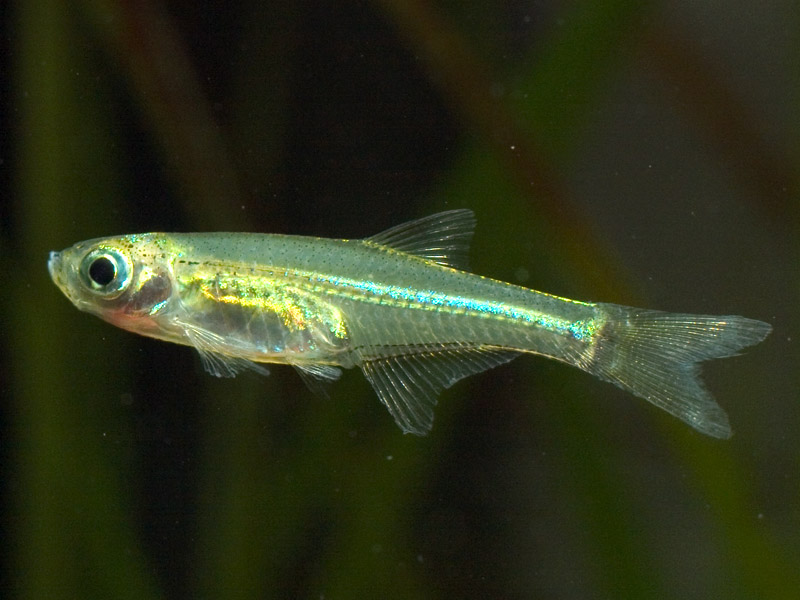
Microdevario gatesi
Herre, 1939
Max length23mm SL0.9in SLTank45 × 30cm18 × 12inTemp20–27°C68–81°FpH6.0–7.5The genus Microdevario was raised by Fang et al. (2009) after phylogenetic analyses revealed that some species formerly included in Microrasbora to be more closely allied with Devario and in need of reclassification. Microdevario is largely separated from Devario and other closely related genera such as Chela and Laubuca by virtue of internal characters but also the following: small adult size; anal and dorsal fins with concave-shaped distal margin; absence of barbels; absence of perforated scales; 9-10 branched anal-fin rays; 7 branched dorsal-fin rays; less abdominal than caudal vertebrae.
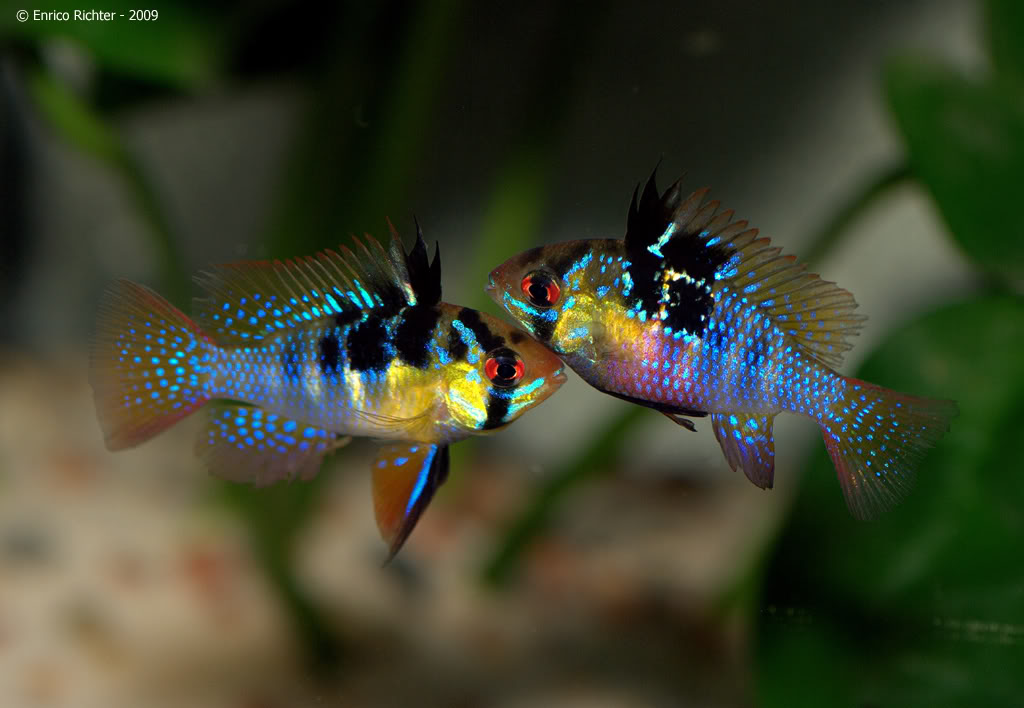
Mikrogeophagus ramireziRam
Myers & Harry, 1948
Max length40mm SL1.6in SLTank60 × 30cm24 × 12inTemp27–30°C81–86°FpH4.0–7.0M. ramirezi is also known by the names 'Ramirez' dwarf cichlid' and 'butterfly cichlid' and is among the more popular dwarf cichlids in the aquarium hobby. As a result, it is produced on a commercial basis in huge numbers and a number of ornamental strains have been developed including 'gold', 'long-finned' (both blue and gold forms; also traded as 'lyre-tail', 'veil-tail' and 'hi-fin'), 'electric/neon blue', 'super neon blue gold' 'pearl/perlmutt' and 'balloon'.
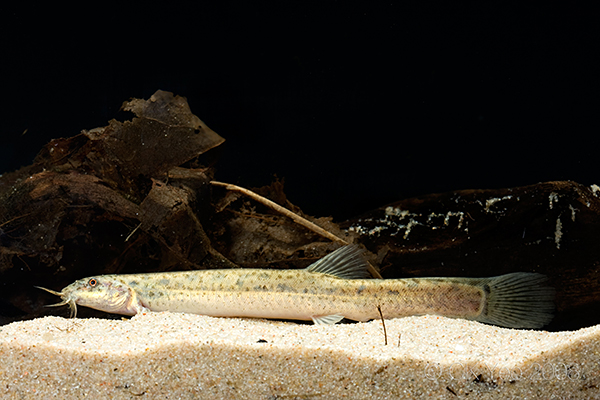
Misgurnus anguillicaudatusOriental Weather Loach
authority not recorded
Max length280mm SL11in SLTank120 × 45cm48 × 18inTempnot recordedpH6.0–8.0An exceptionally hardy and adaptable species tolerant of a wide range of physiological variables and flexible of diet, factors which have allowed it to become established as an alien species around the globe. Its high reproductive potential and low vulnerability to predation have made it a cause for concern to conservation scientists although as yet there remains no proof of it exerting a negative effect on native fishes in countries outside its natural range.
Myleus schomburgkiiBlack-barred Myleus
authority not recorded
Max length120mm SL5in SLTank120 × 38cm48 × 15inTemp23–27°C73–81°FpH6.0–7.0Similar in care and appearance to its close relative, the Redhook (myloplus rubripinnis), myleus schomburgkii is easily distinguished by the black vertical bar on the flanks. It is also a smaller adult fish. Despite this, it is sometimes offered for sale marked as a Redhook. This fish is also variously referred to as the Black-ear Pacu, Disc Pacu and Disk Tetra....
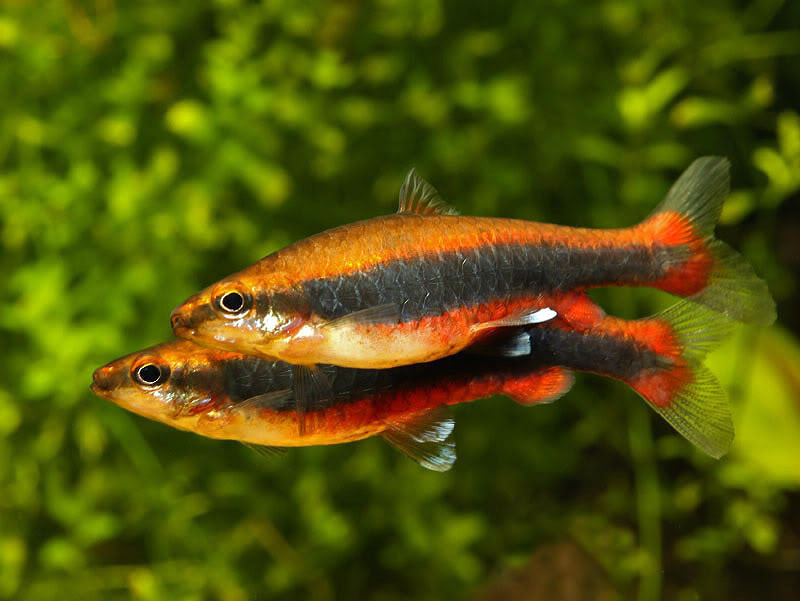
Nannostomus beckfordiGolden Pencilfish
Günther, 1872
Max length65mm SL2.6in SLTank45 × 30cm18 × 12inTemp21–27°C70–81°FpH5.0–8.0This is the type species of the genus, fairly ubiquitous in the aquarium trade, and represents an excellent choice for the newcomer to fishkeeping since it's less demanding than most congeners. It's sometimes referred to as 'Beckford's pencil fish' or 'brown pencilfish'. Don't worry if your fish look different when you switch on the aquarium lights after dark or in the morning as like most Nannostomus species it assumes a cryptic, vertically-barred colour pattern at ni...