Results for “macro-”
Type a name: scientific, common, or one a species used to go by. Or narrow the catalogue with the filters.
Filters
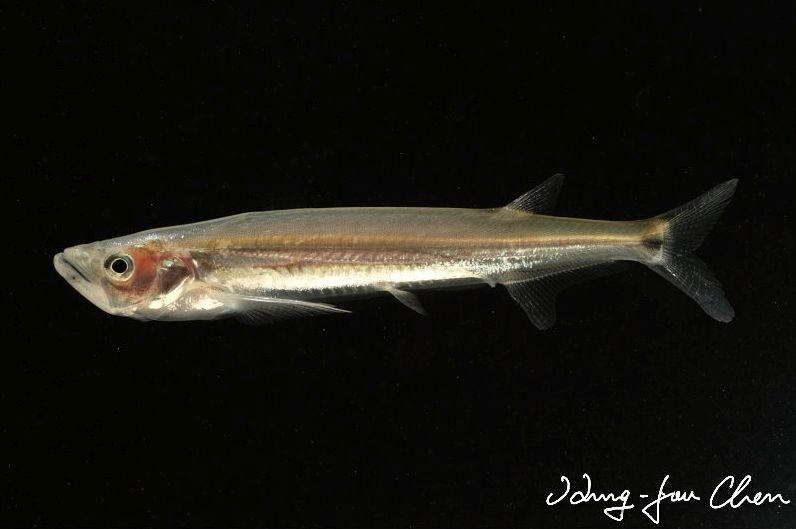
Macrochirichthys macrochirusGiant Sword Minnow
Valenciennes, 1844
Matched on Leuciscus macrochirus, a name it was formerly known by
Max length800mm SL31in SLTanknot recordedTemp20–26°C68–79°FpH6.0–8.0It is thought to have been extirpated from the Chao Phraya and Mae Klong rivers, Lake Songkhla, and the entire island of Java due to a variety of anthropogenic factors, and the Mekong populations have also been drastically reduced. In particular, it is sensitive to pollution and gillnetting, and is heavily overfished.
Tyrannochromis macrostomaBig-Mouth Hap
authority not recorded
Max length350mm SL14in SLTank180 × 45cm72 × 18inTemp24–28°C75–82°FpH7.6–8.8T. macrostoma is an ambush predator in nature, lurking behind rocks and in crevices as it stalks its prey. It is rarely seen in the hobby and is usually quite expensive. Juveniles are easily confused with the similar T. nigriventer, but are easily distinguished when adult, as nigriventer does not develop the dark belly of macrostoma. Interestingly, this species exhibits reverse countershading, as also seen in the common Upside-down catfish, Synodontis nigriventris. This means that unlike the...
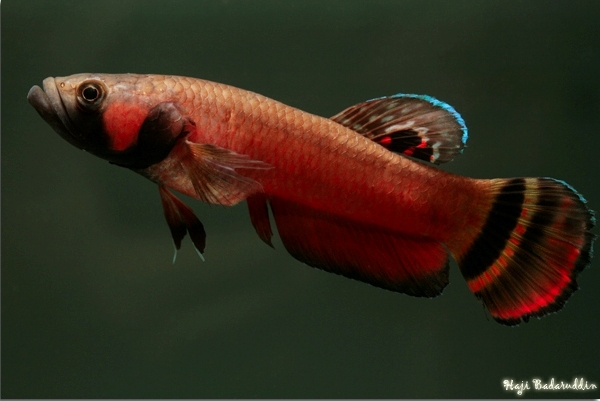
Betta macrostomaBrunei Beauty
Regan, 1910
Max length100mm SL3.9in SLTank80 × 30cm31 × 12inTemp20–25°C68–77°FpH4.0–6.0B. macrostoma is included in the Betta unimaculata complex of closely-related species within the genus, of which members share the following set of characters: body long and slender with depth at dorsal fin origin 18-25 % SL; head large and blunt with width 19-24 % SL; long maxilla and lower lip with distance from tip of lower jaw to posterior end of maxilla 27-54 % HL; caudal-fin rounded in shape, occasionally with elongated median rays; pelvic-fin short and filamentous; dorsal and anal fins relatively pointed.
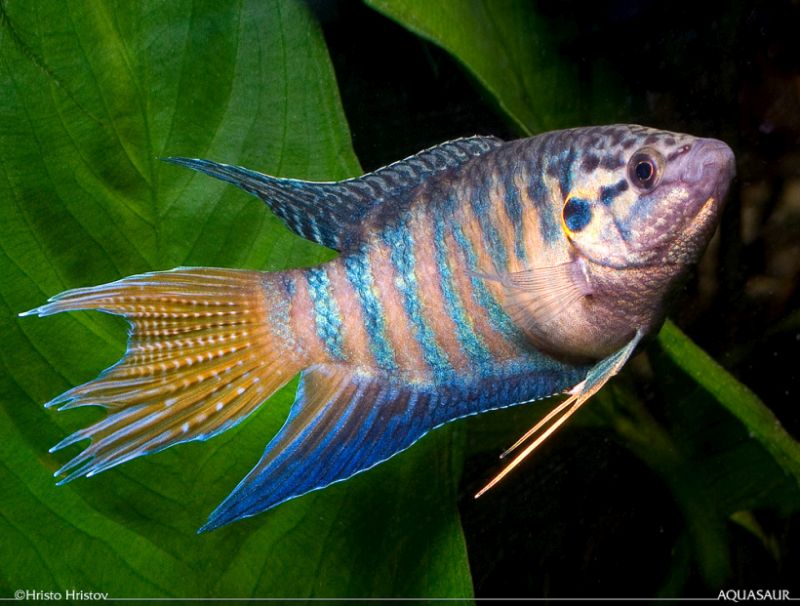
Macropodus opercularisParadise Fish
Linnaeus, 1758
Matched on Macropodus chinensis, a name it was formerly known by
Max length80mm SL3.1in SLTank80 × 30cm31 × 12inTemp10–22°C50–72°FpH6.0–8.0M. opercularis is a classic aquarium fish, having been introduced to the hobby by a French soldier named Gerault in 1869. Of the initial 100 specimens shipped, 22 survived and were successfully bred later that same year by another Frenchman, the Parisian Pierre Carbonnier. This gives the species the distinction of being one of the very first ornamental fish imported to Europe. It is also known as 'Chinese fighting fish', 'paradise gourami', and 'blue paradise fish'.
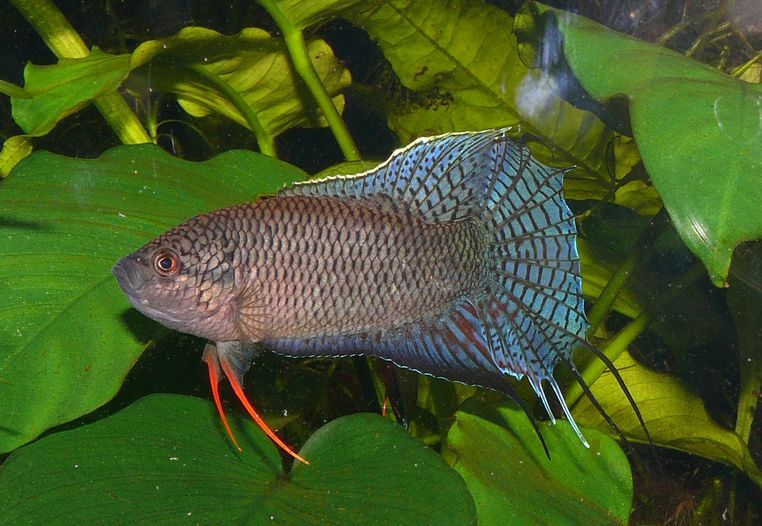
Macropodus spechtiBlack Paradise Fish
Schreitmüller, 1936
Matched on Macropodus opercularis var. spechti, a name it was formerly known by
Max length80mm SL3.1in SLTank80 × 30cm31 × 12inTemp20–30°C68–86°FpH6.0–8.0M. spechti is also sometimes referred to as M. concolor, particularly in older literature. A dispute regarding conservation of that name was resolved by the ICZN in 2006, however, since M. concolor Ahl, 1937 is a junior primary homonym of M. concolor Schreitmüller, 1936 and thus permanently invalid.
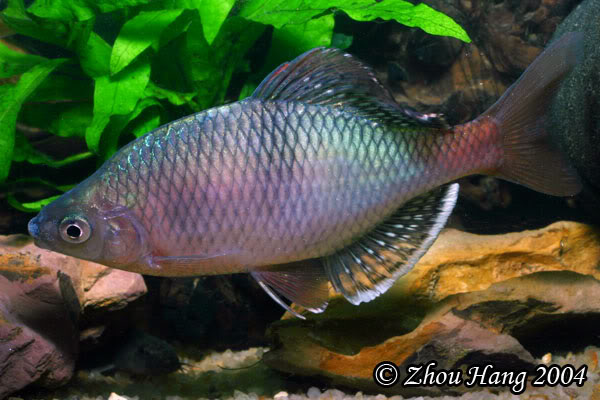
Acheilognathus macropterusGiant Chinese Bitterling
Bleeker, 1871
Matched on Acanthorhodeus macropterus, a name it was formerly known by
Max length275mm SL11in SLTank180 × 60cm72 × 24inTemp14–22°C57–72°FpH6.0–8.0A. macropterus appears in the ornamental trade on an irregular basis and should only be considered by more experienced aquarists with sufficiently large facilities. Given its wide geographical distribution there is a possibility that it represents a group of closely-related species, with genetic studies indicating the existence of several distinct clades.
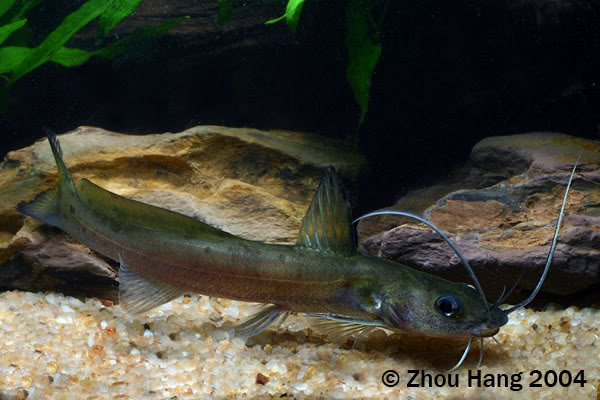
Hemibagrus macropterus
Bleeker, 1870
Matched on Mystus macropterus, a name it was formerly known by
Max length408mm SL16in SLTanknot recordedTempnot recordedpHnot recordedThis species has been recorded from the Zhujiang (Pearl River), Changjiang (Yangtze River) and Qiantang Jiang in central and southern China. Type locality is 'Chang Jiang, China', referring to the Yangtze. It's been adversely affected by dam construction and pollution across certain parts of its range and may be locally extirpated in some cases.
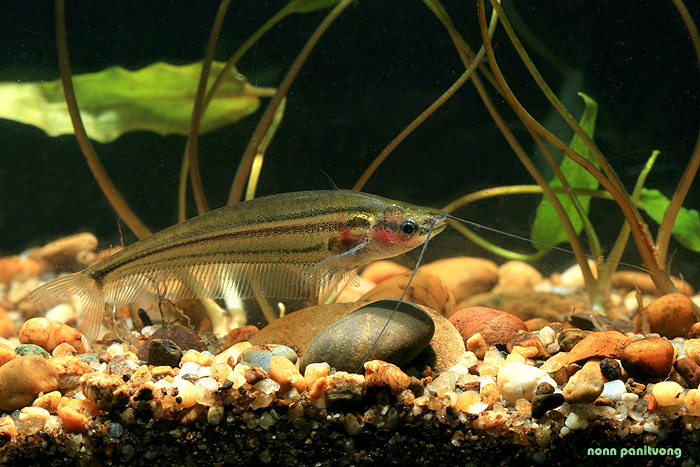
Kryptopterus macrocephalusStriped Glass Catfish
Bleeker, 1858
Matched on Kryptopterichthys macrocephalus, a name it was formerly known by
Max length100mm SL3.9in SLTank120 × 30cm48 × 12inTemp20–26°C68–79°FpH4.0–7.0Has been recorded in fast-flowing environments but most commonly associated with peat swamp forests and associated blackwater streams. Many such habitats have suffered degradation of some kind but in unaltered cases the dense canopy of branches above means very little light penetrates the surface of such environments, and riparian vegetation also tends to grow thickly.
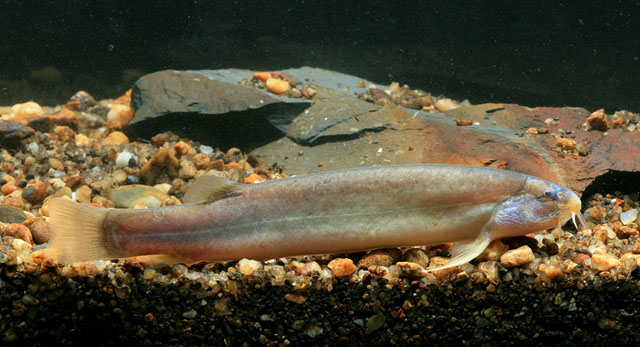
Lepidocephalus macrochir
Bleeker, 1854
Matched on Cobitis macrochir, a name it was formerly known by
Max length90mm SL3.5in SLTank75 × 30cm30 × 12inTemp22–26°C72–79°FpH5.5–7.5The distribution records for this species are somewhat confusing. It was described from the confluence of the Lamatang and Enim rivers, Palambang Province, Sumatra and has since been recorded from Thailand (Chao Phraya River), Peninsular Malaysia (Pahang River) plus the islands of Java (Solo River) and Borneo (Kapuas and Barito rivers).
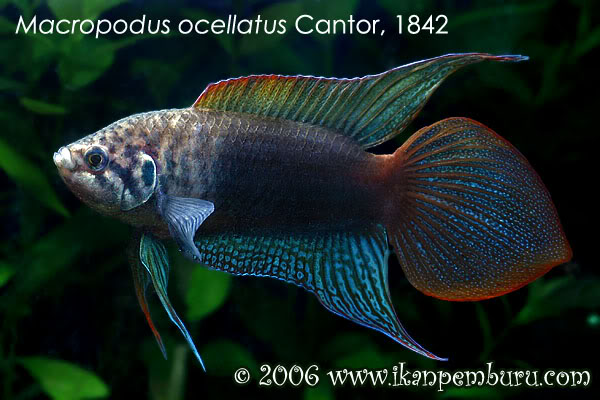
Macropodus ocellatusRoundtail Paradise Fish
Cantor, 1842
Matched on Macropodus ctenopsoides, a name it was formerly known by
Max length80mm SL3.1in SLTank80 × 30cm31 × 12inTemp10–22°C50–72°FpH6.0–7.5M. ocellatus can be distinguished from congeners by the following combination of characters: caudal-fin rounded; eye stripe not connecting spot on posterior projection of opercle with eye; dorsal-fin rays filamentous posterior to a vertical through the posterior anal-fin rays in adults; 16-19 spinous dorsal-fin rays; 6-13 rakers on ceratobranchial of first gill arch; posterior tip or margin of body scales not darker than scales.
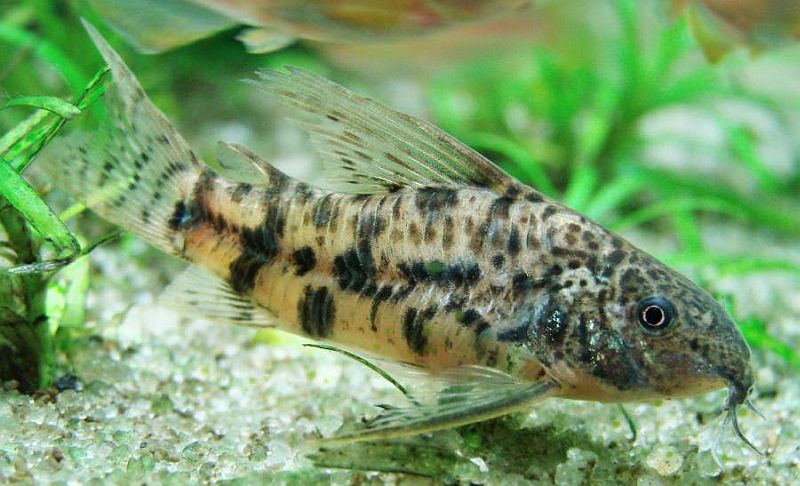
Scleromystax macropterusSailfin 'Cory'
Regan, 1913
Matched on Corydoras macropterus, a name it was formerly known by
Max length90mm SL3.5in SLTank120 × 45cm48 × 18inTemp14–20°C57–68°FpH5.0–7.0Known from minor rivers in the coastal states of São Paolo, Paraná, and Santa Catarina, southern Brazil, plus some tributaries of the rio Paraná basin in Paraguay. Type locality is 'Paranaguá, 25°32'S, 48°36'W, Paraná, Brazil'.
Callochromis macropsBig-eyed Mouthbrooder
authority not recorded
Max length135mm SL5in SLTank120 × 45cm48 × 18inTemp24–27°C75–81°FpH7.8–9.5Members of the genus Callochromis feed in a similar way to the South American "eartheaters" such as Geophagus species. They extract invertebrates and other items hidden in the substrate by taking in mouthfulls of sand and sifting it through the gills. The common term "sand sifters" is applied to these and other Tanganyikan species that inhabit a similar ecological niche, such as Enantiopus and Xenotilapia spp. Several geographical colour forms of this species exist. These ...
Chalceus macrolepidotusPink-tailed Chalceus
authority not recorded
Max length250mm SL10in SLTank120 × 45cm48 × 18inTemp23–28°C73–82°FpH6.0–7.5This species can look quite stunning when cared for properly. It can sometimes be a little delicate when initially imported, as it has very large scales which tend to fall off during transport. Once acclimatised, it usually proves fairly hardy. There are reports of aquarium specimens surviving for over fifteen years in well-maintained conditions....
Colossoma macropomumBlack Pacu
authority not recorded
Max length600mm SL24in SLTank300 × 90cm118 × 36inTemp22–28°C72–82°FpH5.5–7.5Known as the tambaqui in its native countries, this is the second largest species of scaled fish found in the Amazon basin. This alone should tell you much of what you need to know about its suitability as an aquarium inhabitant. In reality, it's debatable as to whether the species should be considered an aquarium subject at all. While pacu rarely reach their maximum size in captivity, they're still easily capable of growing to a couple of feet in length. The myth that fish will only g...
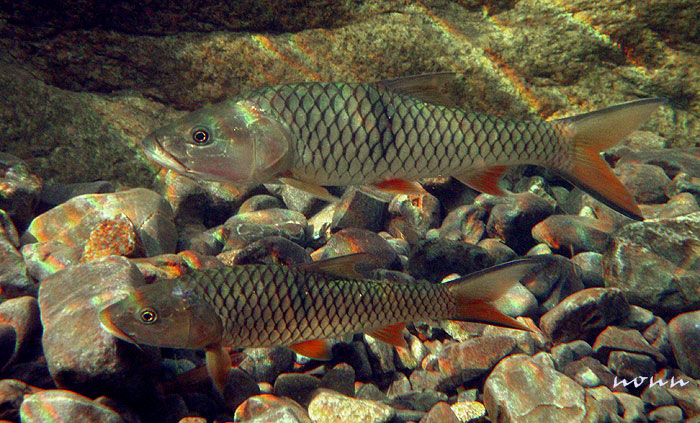
Hampala macrolepidotaHampala Barb
Kuhl & van Hasselt, 1823
Max length700mm SL28in SLTanknot recordedTemp20–26°C68–79°FpH5.5–8.0This species is also known by the vernacular 'jungle perch' or 'sidebar barb' and should not be considered an aquarium subject in all but the most extreme circumstances since it can grow to over 2 feet in length, weigh in excess of 5 kg and is a powerful, pelagic predator. It's also a popular sport fish with a reputation for striking hard.
Macrognathus zebrinusZebra Spiny Eel
authority not recorded
Max length460mm SL18in SLTank120 × 45cm48 × 18inTemp23–26°C73–79°FpH6.5–7.5One of the newer and prettier spiny eels in the hobby, M. zebrinus was previously considered a member of the closely related Mastacembelus genus. Care should be exercised when handling spiny eels, as the common name is derived from the sharp dorsal rays that can easily puncture the skin of a human....
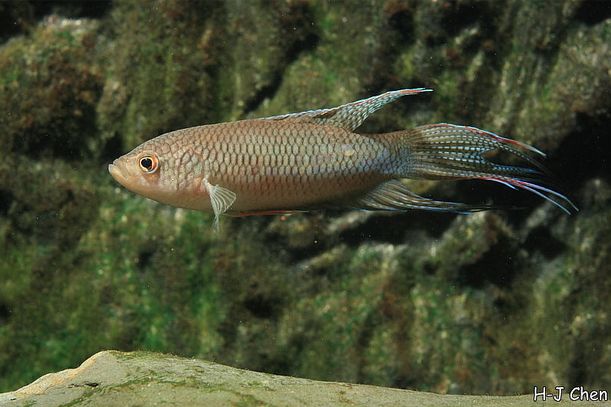
Macropodus erythropterus
Freyhof & Herder, 2002
Max length80mm SL3.1in SLTank80 × 30cm31 × 12inTemp20–30°C68–86°FpH6.0–8.0This species is frequently mistaken for the similar-looking congener M. spechti Schreitmüller 1936, which is easily-identified by the absence of reddish pigmentation in the dorsal, anal, and caudal fins. There has been some debate as to whether these two represent the same taxon, however, with Winstanley and Clements (2008) proposing that M. erythropterus be considered a synonym of M. spechti because they were unable to separate the two species by morphological characters, and specimens with red pigmentation on the unpaired fins were coll...
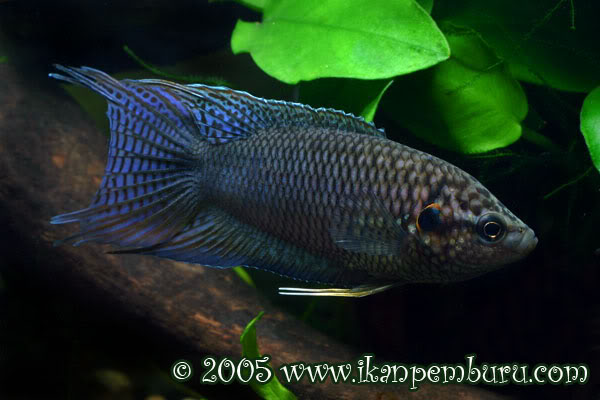
Macropodus hongkongensis
Freyhof & Herder, 2002
Max length70mm SL2.8in SLTank80 × 30cm31 × 12inTemp15–25°C59–77°FpH6.0–8.0In 1996 the species was known from five localities in Hong Kong, but at least one of these has been destroyed and it is now known only from Tai Po and Sai Kung districts. Additional populations have subsequently been discovered in Guangdong and Fujian provinces on the southern Chinese mainland. Type locality is 'China: Hong Kong: Tai Po: Sha Lo Tung'.
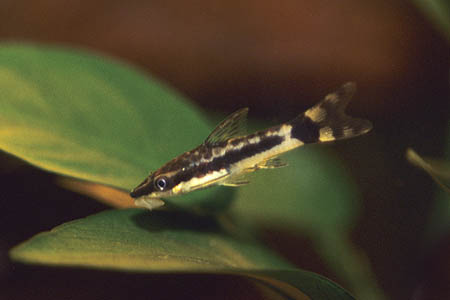
Otocinclus macrospilusOto
Eigenmann & Allen, 1942
Max length35mm SL1.4in SLTank45 × 30cm18 × 12inTemp21–26°C70–79°FpH5.5–7.5This is one of the commoner "otos" seen in the hobby, and is an ideal species for the planted aquarium. Unfortunately it can be quite delicate when first imported, and losses are not uncommon. This is usually down to lack of food, as it's a small fish and needs to feed almost constantly, so it's easily starved during transportation. As almost all otos are wild caught, they can be quite sensitive to water quality, too. Many hobbyists report fewer problems if the fish are added...
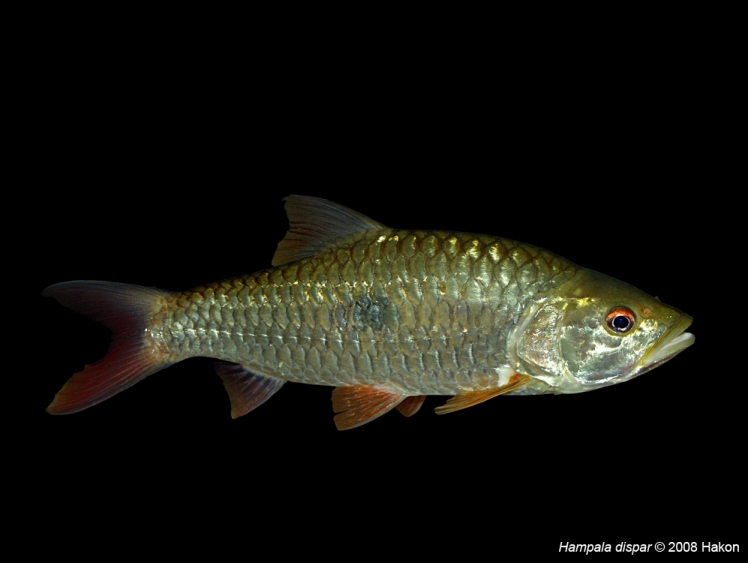
Hampala disparSpotted Hampala Barb
Smith, 1934
Max length350mm SL14in SLTank240 × 60cm96 × 24inTemp20–25°C68–77°FpH6.0–8.0The genus currently contains seven species of which H. macrolepidota and, to a lesser extent, H. dispar are the only ones seen with any regularity in the aquarium trade. As well as having the widest distribution H. macrolepidota is also the largest member of the group. All representatives can appear superficially similar at first glance, the exception being H. lopezi which is endemic to a single island in The Philippines and displays a unique lateral band-like marking on the flanks.