Results for “saddle”
Type a name: scientific, common, or one a species used to go by. Or narrow the catalogue with the filters.
Filters
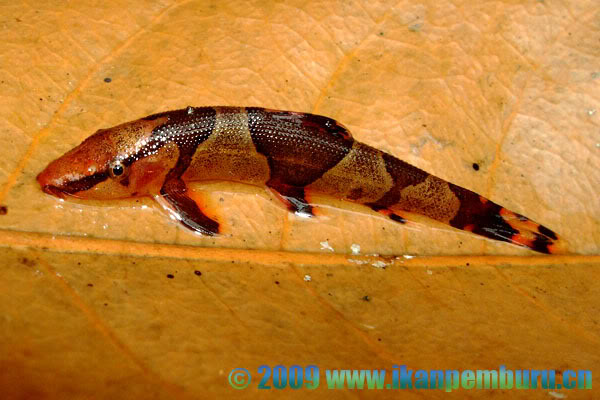
Homaloptera orthogoniataSaddle-back Loach
Vaillant, 1902
Matched on the common name Saddle-back Loach
Max length95mm SL3.7in SLTank120 × 30cm48 × 12inTemp20–25.5°C68–78°FpH6.0–7.5This species appears is rare in the aquarium hobby with the majority of images both online and in the published literature instead depicting H. confuzona or H. parclitella. All three are members of the H. ocellata 'group' within the genus which currently contains H. ocellata, H. bilineata, H. confuzona, H. orthogoniata, H. ogilviei and H. parclitella. Following Tan and Ng (2005) these share possession of...
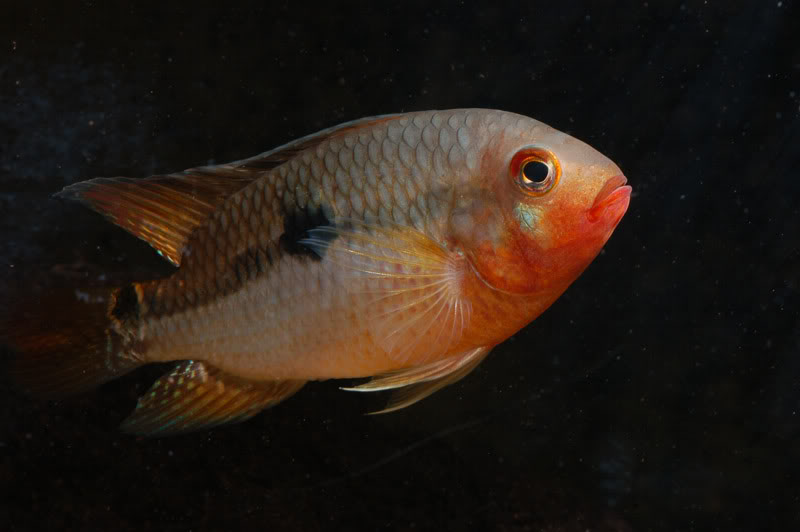
Aequidens tetramerusSaddle Cichlid
Heckel, 1840
Matched on the common name Saddle Cichlid
Max length162mm SL6in SLTanknot recordedTemp24–27°C75–81°FpH4.5–7.5This is the type species of the genus Aequidens and has the widest distribution of any member species. It exists in various colour forms depending on locality with variants from Ecuador and Peru being particularly sought after since they develop striking red (Ecuador) or orange (Peru) colouration on the lower part of the jaw, head and anterior portion of the belly whereas those from Brazil tend to have an overall grey/blue/green colouration, for example. Despite its type status it's long...
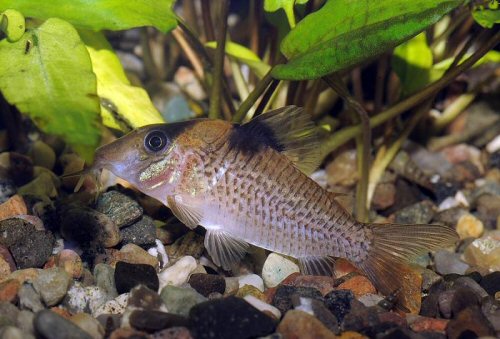
Corydoras ephippiferSaddle Cory
Nijssen, 1972
Matched on the common name Saddle Cory
Max length60mm SL2.4in SLTanknot recordedTemp20–25°C68–77°FpH6.0–7.5This species appears superficially similar to a number of congeners including C. ambiacus, C. agassizii, C. brevirostris, C. delphax, and C. melanistius. Among these C. ephippifer seems to be unique in that all fins except the dorsal are transparent and lack markings.
Polypterus endlicheri endlicheriSaddled Bichir
authority not recorded
Matched on the common name Saddled Bichir
Max length750mm SL30in SLTank210 × 120cm84 × 48inTemp22–27°C72–81°FpH6.0–8.0An incredibly hardy, nocturnal species with very poor vision, P. endlicheri endlicheri relies on its excellent sense of smell to locate food. This species, along with others of its genus, are some of the last surviving relatives of very ancient species. Fossils of earlier relatives have been found that date back to the Triassic Period, which occured during the early development of the dinosaurs more than 200 million years ago. They have several interesting adaptations. The swim bladder is div...
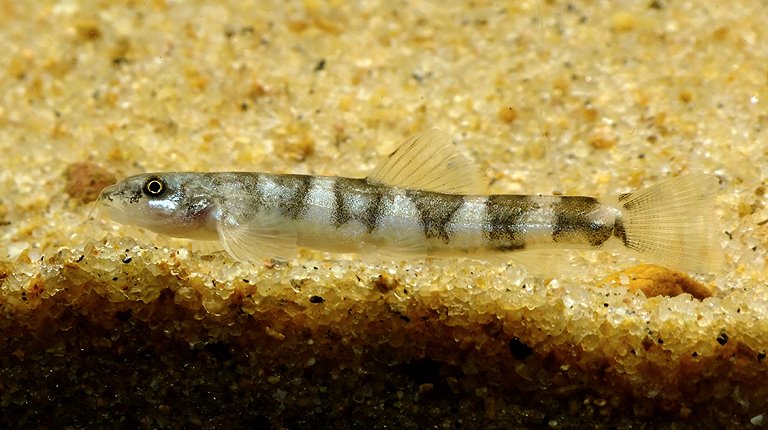
Schistura devdeviSaddleback Loach
Hora, 1935
Matched on the common name Saddleback Loach
Max lengthnot recordedTanknot recordedTemp15–22°C59–72°FpH6.5–8.0Type locality is 'Eastern Himalayas; small streams below Darjeeling and Sikkim, India', and this species is only known with certainty from upland parts of Assam, Sikkim, Arunachal Pradesh and West Bengal states in northern India. Records from Nepal apparently require confirmation while it may also occur in Bhutan.
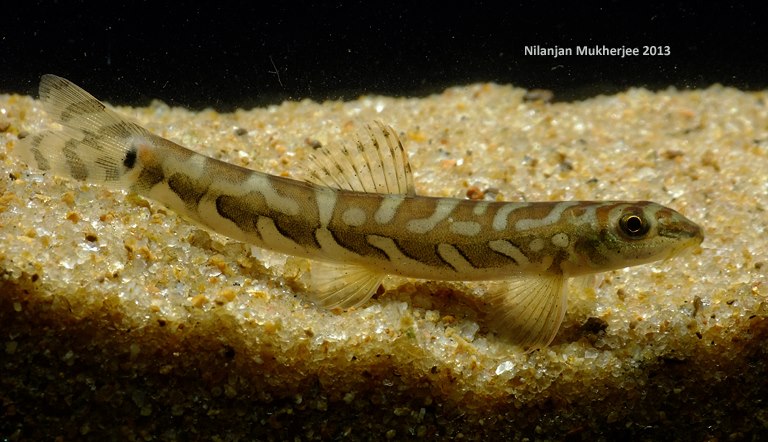
Mesonoemacheilus triangularisZodiac Loach
Day, 1865
Max length60mm SL2.4in SLTank75 × 30cm30 × 12inTemp18–25.5°C64–78°FpH6.0–7.5This species is also referred to by the alternative vernacular name 'Batik loach' and is the most-commonly traded member of the genus at present. It's easily-distinguished from congeners by body patterning which comprises a series of pale, oblique saddle-like markings edged in black and running along the dorsal surface, plus a similar set of bars originating from the otherwise plain ventral surface.
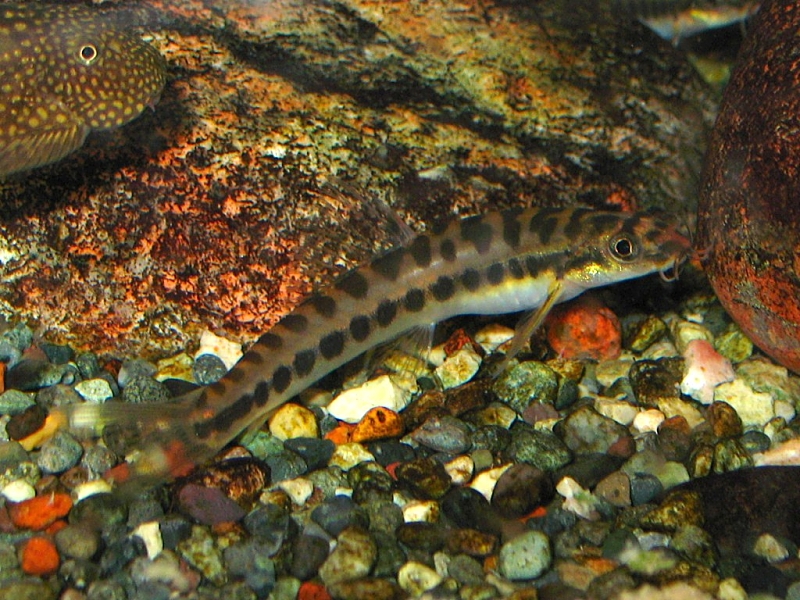
Nemacheilus masyaeArrow Loach
Smith, 1933
Max length70mm SL2.8in SLTank60 × 30cm24 × 12inTemp23–26°C73–79°FpH6.0–7.5This species was originally named Nemacheilus masyae but following ICZN rules the spelling was later corrected to N. masyai because it's named after a man. It can be distinguished from the majority of congeners by body patterning comprising 14-18 short, dark vertical bars on each flank, 12-17 saddle-like markings running along the dorsal surface, a dark spot on the caudal peduncle at the termination of the lateral line and a dark blotch in the lower half of the first few dorsal-fin rays.
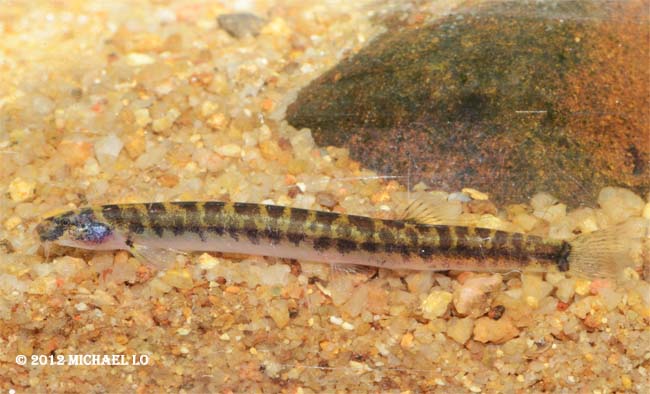
Pangio shelfordii
Popta, 1903
Max length80mm SL3.1in SLTank60 × 30cm24 × 12inTemp21–26°C70–79°FpH4.0–7.0Patterning is highly variable depending both within and between populations and the species may comprise an assemblage containing a number of taxa (Kottelat and Lim, 1993; Tan and Kottelat, 2009). For example, those from Singapore and Johor possessing intricate mottling on the dorsal surface while individuals from Terengganu have a series of saddle-like markings either alternating or connecting with the midlateral markings.
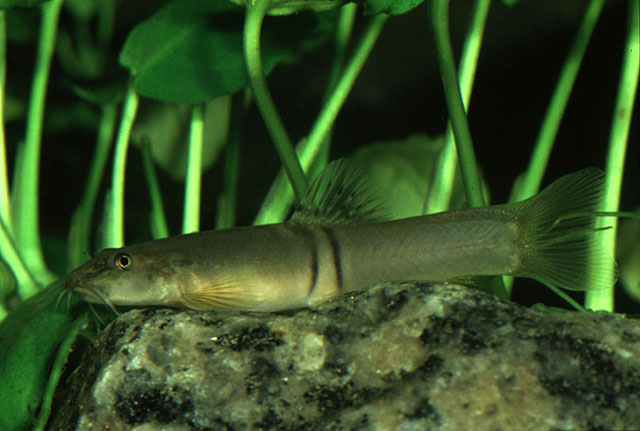
Schistura balteataSumo Loach
Rendahl, 1948
Max length80mm SL3.1in SLTank90 × 30cm36 × 12inTemp22–26°C72–79°FpH6.0–7.5This species is quite uncommon in the aquarium hobby although its name is sometimes used in reference to the similar-looking, apparently undescribed congener S. cf. balteata, and both are also traded as 'sumo loach', 'tri-banded sumo loach', and 'orange saddle-back loach'. Following Kottelat (1990) it's diagnosed by the following combination of characters: unique colour pattern consisting of two da...
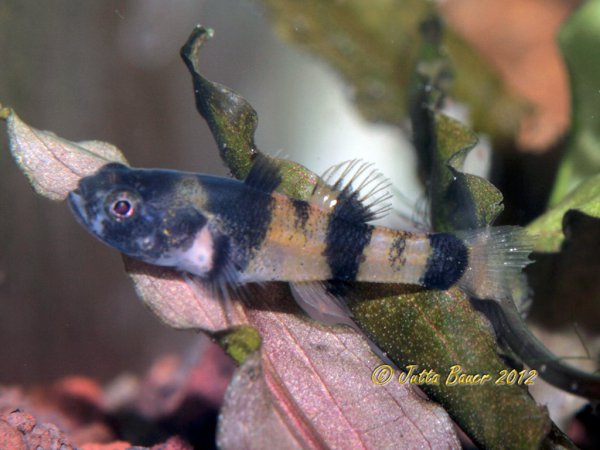
Brachygobius sabanusSabanus Bumblebee Goby
Inger, 1958
Max length27mm SL1.1in SLTank45 × 30cm18 × 12inTemp22–28°C72–82°FpH7.0–8.5B. sabanus is very similar to B. doriae and these two are easily confused. However in B. doriae most of the first-dorsal-fin and two-thirds of the pectoral-fin are black while in B. sabanus the last one or two rays of the first dorsal-fin are colourless and less than half of the pectoral-fin is black. In addition there are usually smaller dark 'saddles' betw...
Leiarius pictusSailfin Pim
authority not recorded
Max length600mm SL24in SLTank240 × 90cm96 × 36inTemp22–26°C72–79°FpH6.2–7.6Also known as the painted, saddle or marbled sailfin catfish, it's debatable as to whether this species should be considered an aquarium subject at all given its eventual size. All too often, juveniles are sold without adequate information regarding their long term care. These cats can and will attain something close to their maximum size in captivity, and will do so quite quickly. The myth that they will only grow to match the size of the tank they're kept in is just that. It's a...
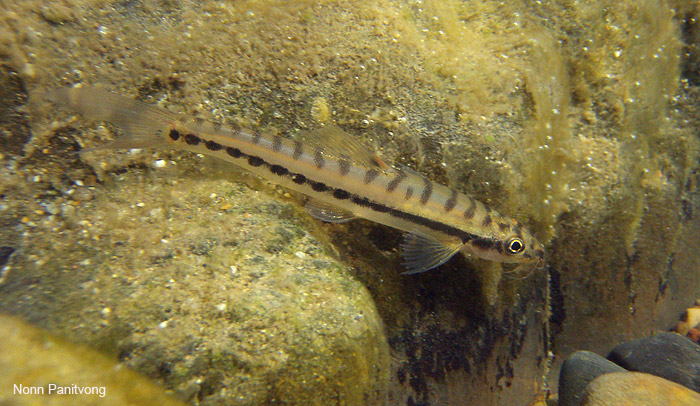
Nemacheilus pallidus
Kottelat, 1990
Max length60mm SL2.4in SLTank60 × 30cm24 × 12inTemp23–26°C73–79°FpH6.0–7.5The similar-looking N. masyai is sometimes traded as N. pallidus, but the two can be told apart by body depth (14.8-19.1 % in N. pallidus vs. 12.6-17.6 % SL in N. masyai), interorbital width (5.7-8.0 % vs. 4.9-6.8 % SL) and the fact that in N. pallidus the dark body bars and saddles are thinner than the light-coloured interspaces between (vs. wider in N. masyai).
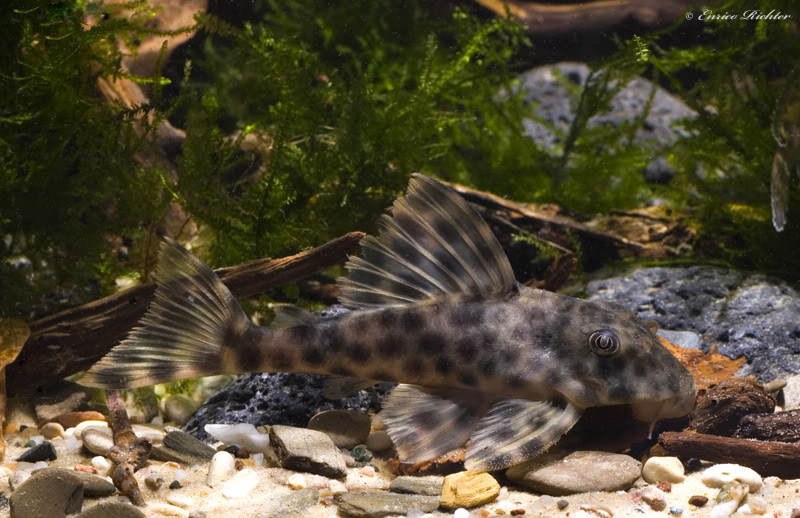
Peckoltia oligospilaL006
Günther, 1864
Max length100mm SL3.9in SLTank120 × 30cm48 × 12inTemp24–30°C75–86°FpH5.5–7.5This species can be distinguished from all congeners except P. bachi and some specimens of P. furcata by possessing only faint spots and saddles on the body. It can be told apart from P. bachi by possession of narrow (vs. wide) pelvic-fin spines, having the eyes positioned high (vs. low) on the head, and distinctly round (vs. appearing more as a mottling) spots on the body.