Country · Asia
Pakistan
Every profile recorded in Pakistan, native or introduced.
- Species
- 22
- Families
- 8
- Genera
- 15
- Found only here
- 0
- Photographed
- 22 of 22
Where it isAsia
Shares its fishes withspecies recorded in both
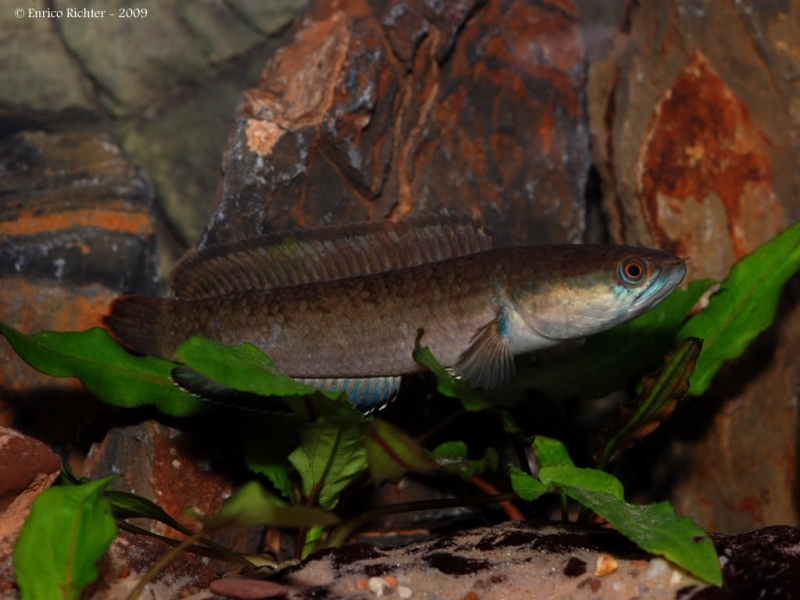
Channa gachuaDwarf Snakehead
Channidae · Hamilton, 1822
Generally considered to have an enormous natural range extending from Iran to Taiwan and Bali, with records existing from Iran, Iraq, Afghanistan, Pakistan, Nepal, India, Sri Lanka, Bangladesh, Bhutan, China, Myanmar, Thailand, Laos, Cambodia, Vietnam, Malaysia, Indonesia, and Singapore. However there exists significant evidence to suggest that C. gachua as currently understood represents a complex of similar-looking species, and a taxonomic review of the group is clearly required.
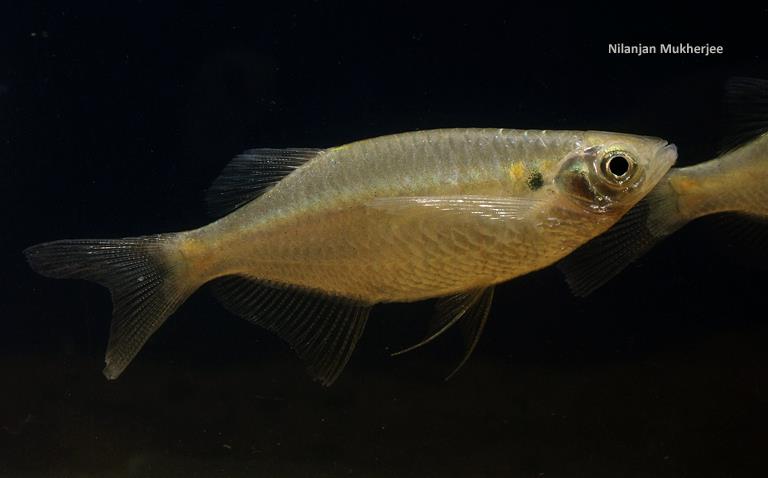
Chela cachiusNeon Hatchet Fish
Cyprinidae · Hamilton, 1822
It is currently the only valid member of the genus but it is possible that additional taxa exist, particularly in Myanmar, while a number of former species are contained within the Laubuka assemblage, to which C. cachius is closely related. Phylogenetic studies suggest the existence of a monophyletic clade consisting of the genera Devario, Chela, Laubuca, Microdevario and Microrasbora plus the genus Betadevario.
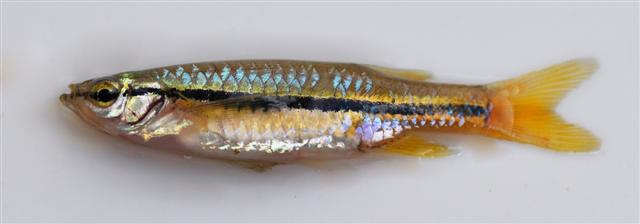
Esomus danricaFlying Barb
Cyprinidae · Hamilton, 1822
Found in various types of habitat but shows a marked preference for shallow, slow-moving and standing waters such as rice paddies and other temporally-inundated environments with dense aquatic vegetation.
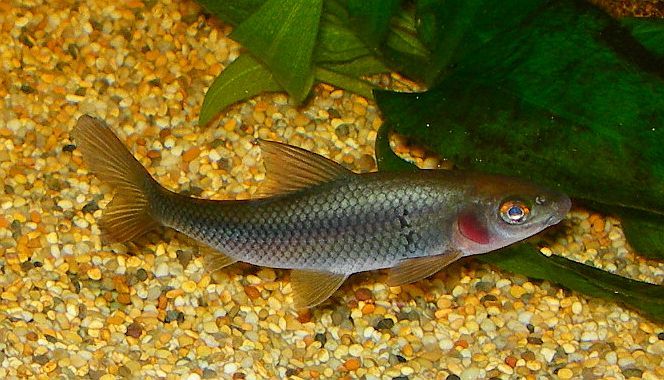
Labeo bogaViolet Shark
Cyprinidae · Hamilton, 1822
Despite its unsuitability for the majority of home aquaria, this species is available in the aquarium trade on an irregular basis, and has also been marketed as 'violet-gilled shark', 'red-gilled violet shark' and 'blushing violet shark'. It appears likely that L. boga as currently recognised represents a complex of closely-related species.
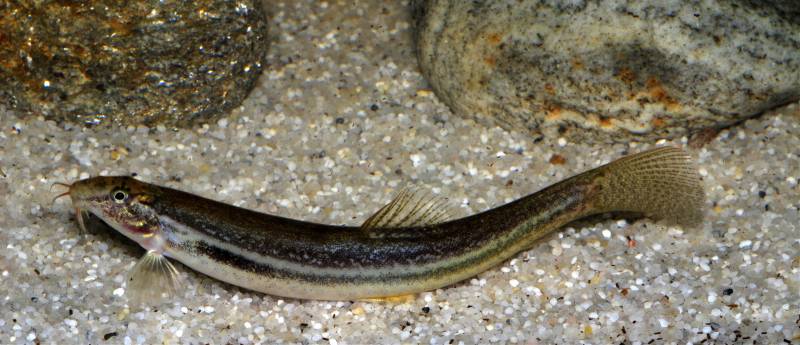
Lepidocephalichthys guntea
Cobitidae · Hamilton, 1822
This is one of the most frequently-traded members of the group and is an excellent choice for those new to keeping loaches. It's distinguishable from congeners by a combination of characters including: rounded/truncate caudal-fin; a scaleless patch on top of the head; relatively large adult size; flanks with spotted patterning in females and a solid...
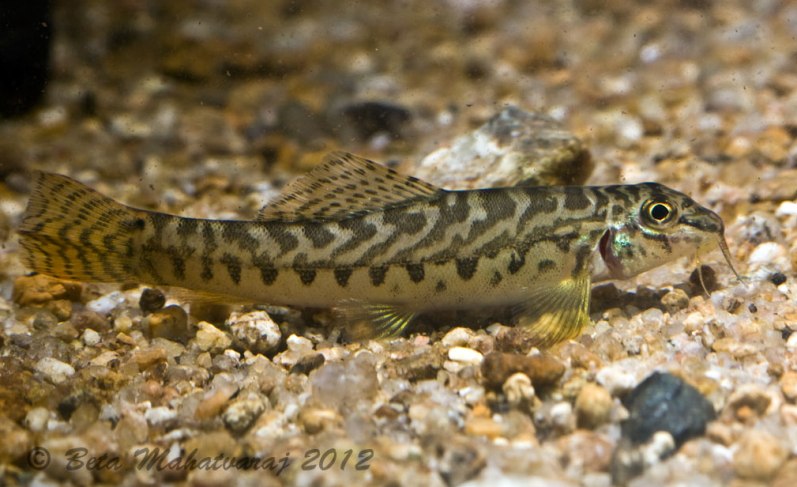
Paracanthocobitis botiaZipper Loach
Nemacheilidae · Hamilton, 1822
Traded under various names including 'mottled', 'eyepot', 'sand' and 'striped' loach. It's perhaps one of the better choices for those new to keeping nemacheilids being relatively hardy, peaceful and exhibiting some quirky behavioural traits. The characteristic ocellus, a dark marking at the top of the caudal peduncle that resembles an eye, is thought to have some function in predator distraction and is normally more intense in younger specimens.
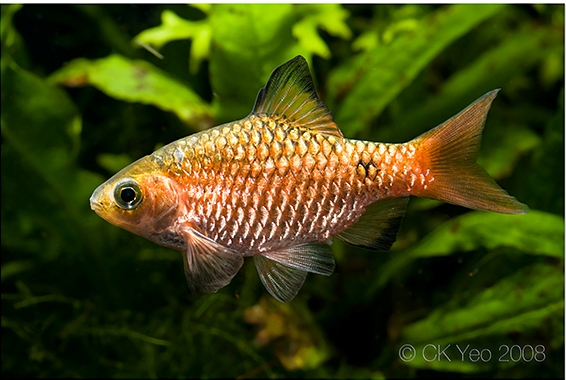
Pethia conchoniusRosy Barb
Cyprinidae · Hamilton, 1822
Generally considered one of the hardiest small cyprinids available in the aquarium hobby, P. conchonius is an excellent choice for the beginner. Selective breeding has produced various ornamental strains including long-finned, 'veil-tail', 'super red', 'neon', and 'golden' forms. It's also been hybridised with some congeners although the offspring of such experiments are apparently infertile. It was formerly included in th...
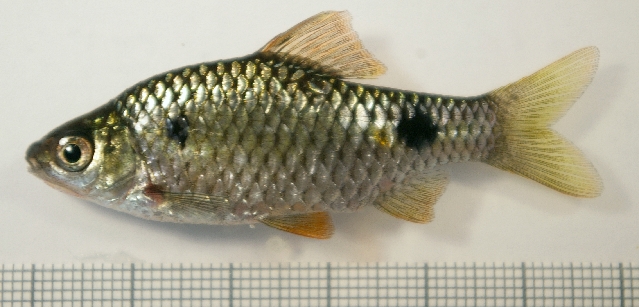
Pethia tictoTicto Barb
Cyprinidae · Hamilton, 1822
Apparently most abundant in shallow streams and minor tributaries, sometimes at relatively high altitudes, and apparently shows a preference for substrates of mud or silt. Given the extent of its range it would seem sensible to assume that it inhabits various habitat-types which also vary in water depth, flow, and turbidity depending on the time of year.
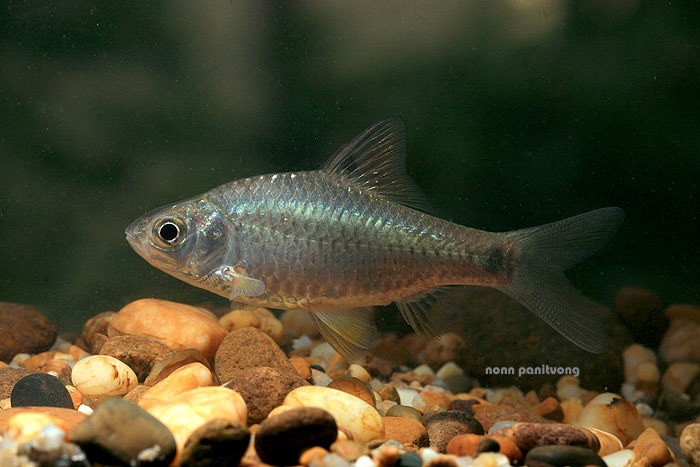
Puntius cholaSwamp Barb
Cyprinidae · Hamilton, 1822
P. chola was retained in Puntius sensu stricto, of which members are defined by the following combination of characters: adult size usually less than 120 mm SL; maxillary barbels absent or present; rostral barbels absent; 3-4 unbranched and 8 branched dorsal-fin rays; 3 unbranched and 5 branched anal-fin rays; last unbranched dorsal-fin ray weak or strong and unserrated; lateral line complete with 22-28 pored body scales...
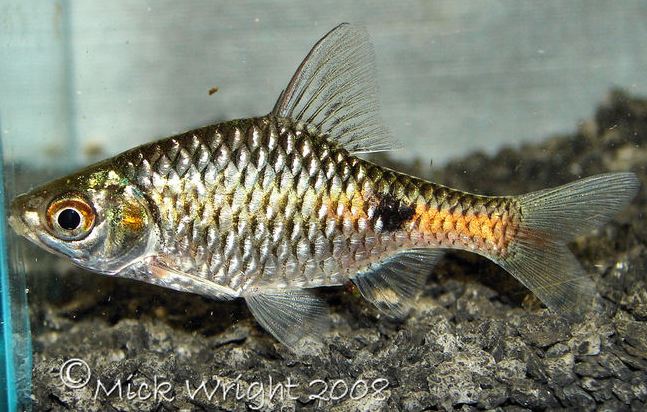
Puntius terioOnespot Barb
Cyprinidae · Hamilton, 1822
This species is uncommon in the aquarium trade which is a little surprising given its huge natural range. Different populations can vary in colour pattern to an extent though all share the defining aspects given by Hamilton, comprising a diffuse yellow-golden marking on the operculum plus a dark spot on the caudal peduncle. The latter is usually surrounded by a variably-sized golden-yellow margin, and the dorsal-fin often contains irregular dark spots and streaks, these sometimes forming a longitudinal band.
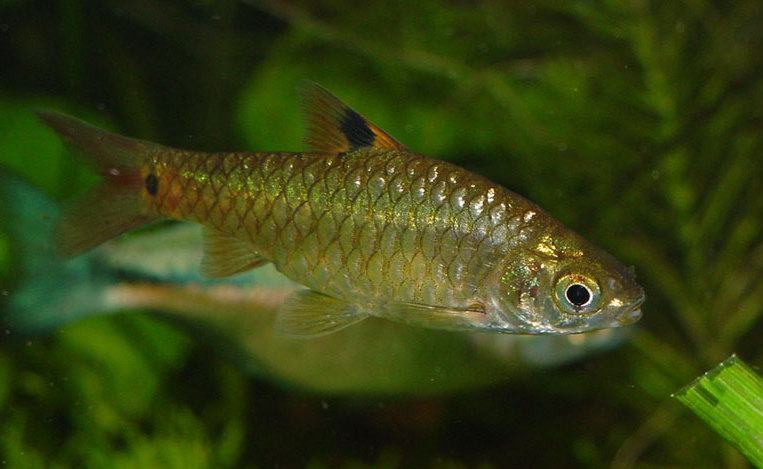
Puntius vittatusGreenstripe Barb
Cyprinidae · Day, 1865
It can be told apart from similar-looking congeners such as P. crescentus and P. muzaffarpurensis by the following combination of characters: barbels absent; lateral line incomplete with up to 5 pored scales; 20-22 lateral line scales; 8 predorsal scales; dorsal-fin with a vertically-orientated black streak and a black tip with orange markings; a dark spot at the base of the caudal peduncle.
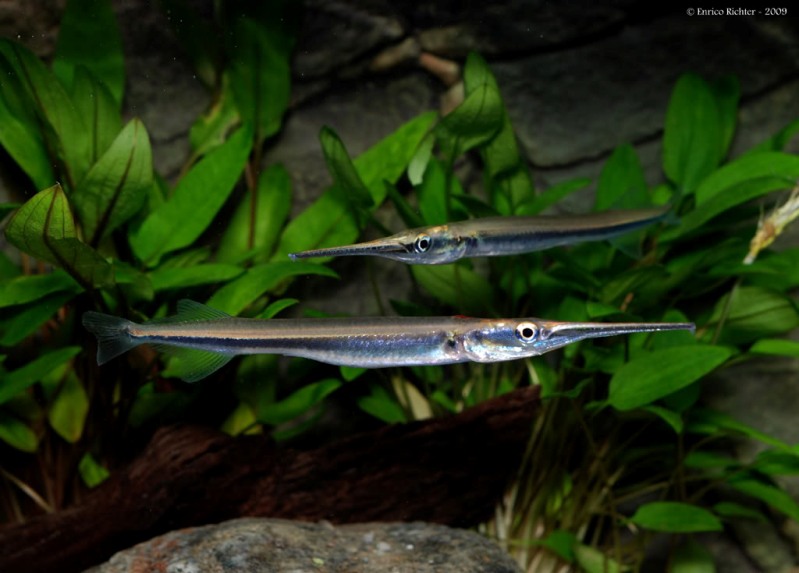
Xenentodon cancilaFreshwater Needlefish
Belonidae · Hamilton, 1822
X. cancila is often seen referred to as 'freshwater garfish', and although it does superficially resemble the true gars of the family Lepisosteidae, it's actually a member of the Belonidae, or needlefishes, the majority of which are marine or estuarine in existence. There are currently just two species in the genus although the probable existence of a third member has been noted by Roberts (1989) among oth...
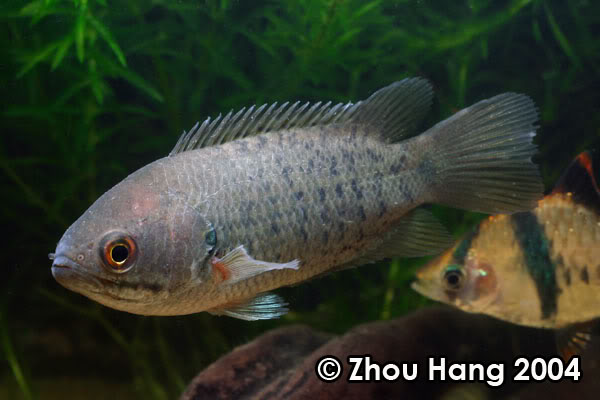
Anabas testudineusClimbing Perch
Anabantidae · Bloch, 1792
This species isn't especially popular in the aquarium trade but is undoubtedly interesting despite its lack of colour. In addition to its survival ability in the absence of water it's also capable of producing audible sounds though the purpose of these has not been fully-studied. Naturally-occurring xanthic and albino forms have also been recorded. There is considerable confusion as to the taxonomic status of the two species currently occupying this genus, with ichthyologists widely...
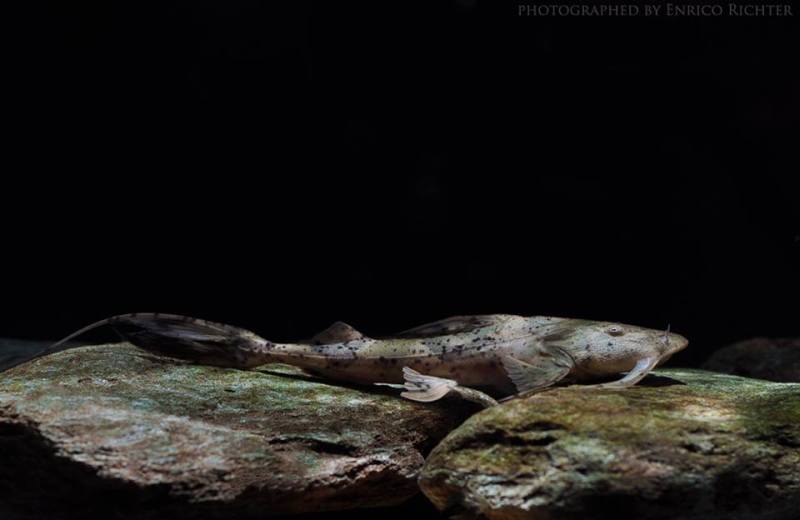
Bagarius yarrelliGoonch
Sisoridae · Sykes, 1839
This species is clearly unsuitable for the home aquarium given its eventual size and natural behaviour, and we know of only a handful of private aquarists with the facilities required to house it long-term. The grouping currently contains four species but is in urgent need of review with a number of additional taxa thought to exist and B. yarrelli possibly representing a synonym of B. bagarius.
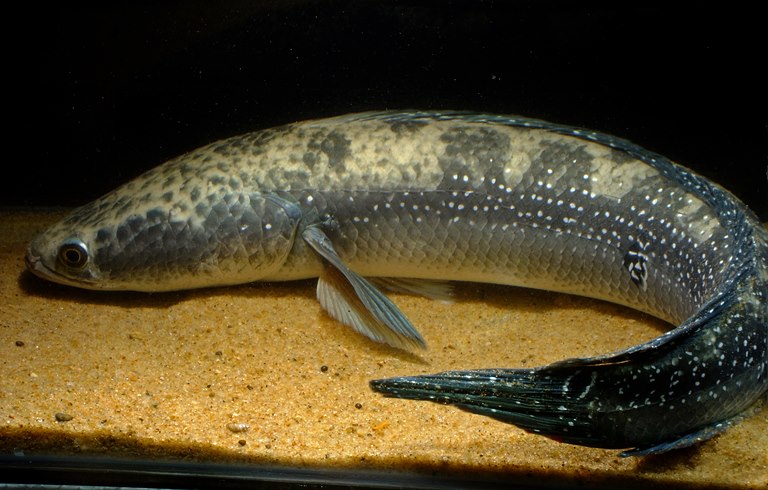
Channa maruliusBullseye Snakehead
Channidae · Hamilton, 1822
This species is also referred to as 'giant', 'great', 'cobra', or 'Indian' snakehead. Although currently-considered to be distributed throughout much of southern Asia it is widely-accepted to represent a complex of related species in need of additional research. A number of geographical variants exhibiting diffe...
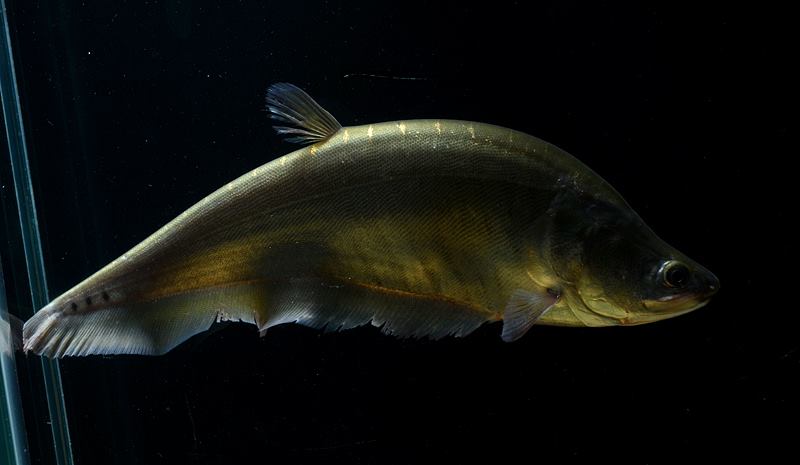
Chitala chitalaIndian Featherback
Notopteridae · Hamilton, 1822
This species' name has been widely misapplied in the aquarium trade and hobbyist literature, most often in reference to the Southeast Asian species C. ornata, but unlike its relative is in fact very rarely exported for ornamental purposes although its is fished and cultured for food in India. It can be told apart from C. ornata by possessing fe...
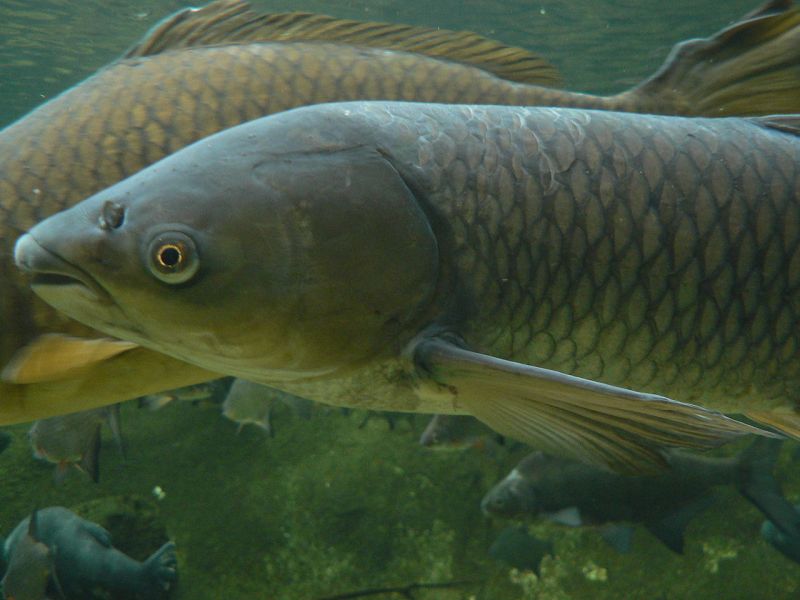
Ctenopharyngodon idellaGrass Carp
Cyprinidae · Valenciennes, 1844
Despite being a wholly unsuitable aquarium subject, C. idella is often traded as such, with an albino form having been developed specifically for the ornamental market. Individuals which have outgrown their aquarium or pond should never be released into natural waters, either, since this species has proven capable of causing serious environmental damage under a wide range of climatic conditions.
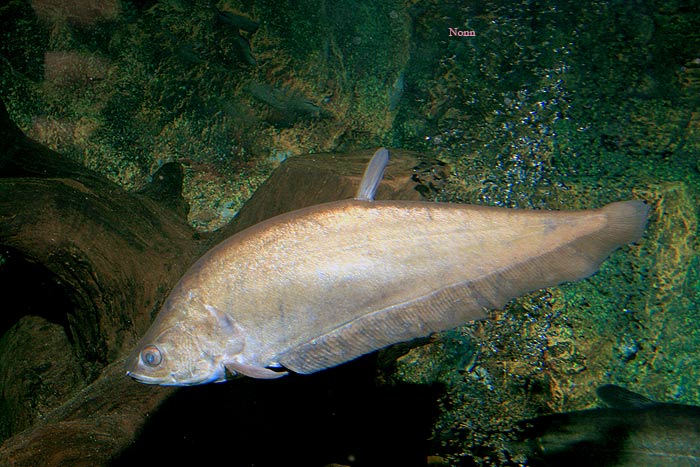
Notopterus notopterusBronze Featherback
Notopteridae · Pallas, 1769
This species is also referred to as 'Asian knifefish' or 'ghost knifefish' in the aquarium trade in the aquarium trade but arguably has no place in the ornamental hobby given its adult size and specialised requirements. It is sometimes confused with the African species Xenomystus nigri but is easily told apart by its larger adult size and presence (vs. absence) of a dorsal fin.
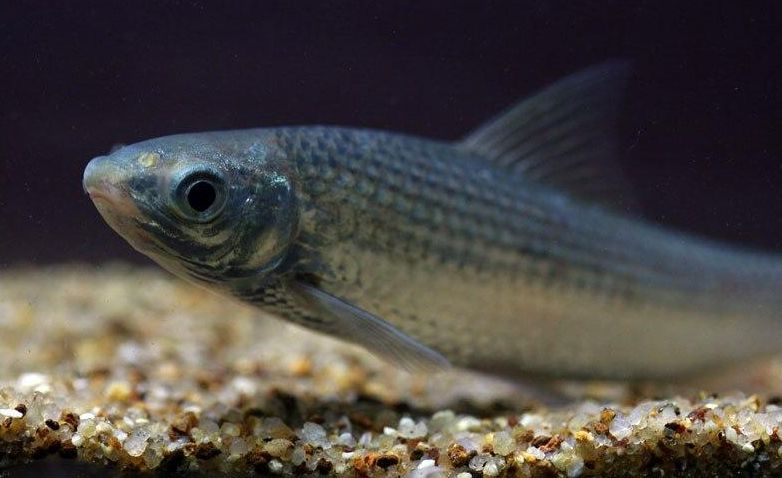
Gymnostomus ariza
Cyprinidae · Hamilton, 1807
Following Roberts (1997) G. ariza can be diagnosed by the following combination of characters: body with variably intense thin stripes dustributed mostly above the lateral line; larger individuals sometimes with a broad midlateral stripe; 32-35 lateral scales; 7-8/1/5-6 transverse scale rows; 8-9 branched dorsal-fin rays 8-9; 22-24+ 11-12=34(4), 35 (3) vertebrae; live colour pattern variable, overall dull dirty white to greyish, silvery or yellow.
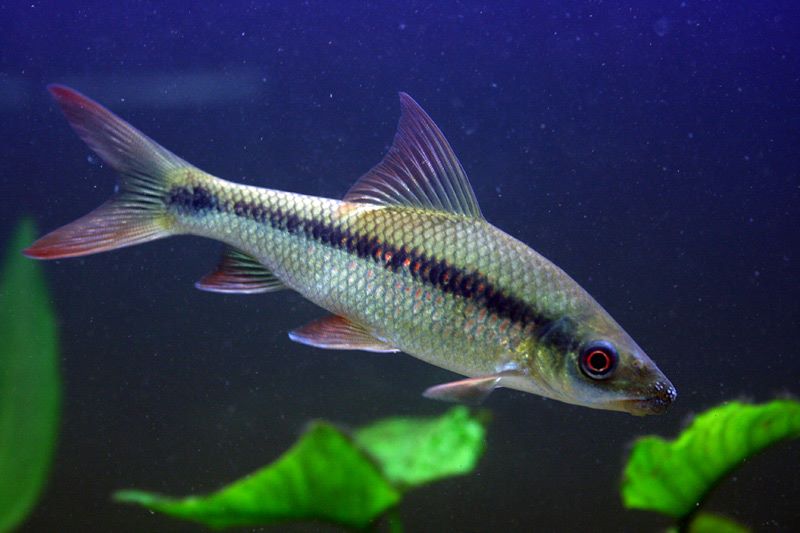
Labeo angra
Cyprinidae · Hamilton, 1822
This species can be identified by colour pattern comprising a brownish dorsal surface, yellowish flanks and abdomen, and a black to bluish lateral stripe extending from the eye to the caudal-fin base.
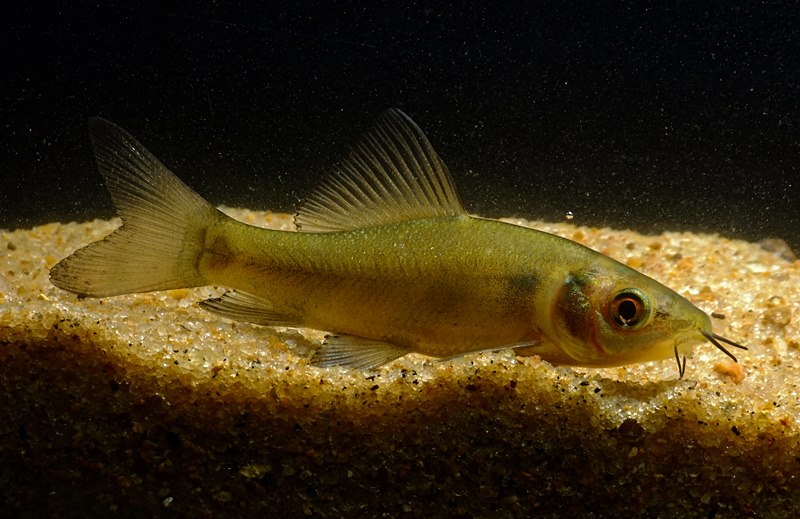
Labeo calbasuOrangefin Labeo
Cyprinidae · Hamilton, 1822
This species is extremely widespread and has been recorded from Pakistan, Nepal, most of India, Bangladesh, Myanmar and southern China. Type locality is 'Bengal and western provinces, India'.
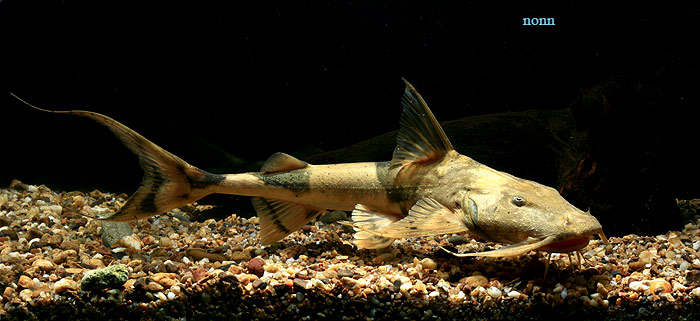
Bagarius bagarius
Sisoridae · Hamilton, 1822
There is considerable confusion surrounding the identity of B. bagarius with its name having been widely applied to a relatively small species that is said to reach only 200 mm SL and considered to be common in northern India and much of Indochina.