Search the catalogue
Type a name: scientific, common, or one a species used to go by. Or narrow the catalogue with the filters.
Filters
Nanochromis nudiceps
authority not recorded
Max length80mm SL3.1in SLTanknot recordedTemp24–27°C75–81°FpH5.0–7.0This species is rarely imported. It is easily confused with N. parilus but can be distinguished by the fact that male fish lack the barring seen in the upper part of the of parilus and have dark edges to the scales on the body. Females can be distinguished by the spotting in the lower part of the caudal, which is unpatterned in parilus. We do not recommend this species to the beginner due to its very specific water and care requirements....
Nanochromis parilus
authority not recorded
Max length80mm SL3.1in SLTanknot recordedTemp22–25°C72–77°FpH6.0–7.0N. parilus is one of the commoner Nanochromis in the hobby as it is more easily collected from its natural waters than most species. It is easily confused with the less often seen N. nudiceps but can be distinguished by the fact that male fish exhibit a barred patterning inn the upper half of the which is not present in nudiceps. Females can be distinguished by the unpatterned lower part of the caudal, which is spotted in nudiceps. There are a couple of geographical variants available. We do ...
Nanochromis transvestitus
authority not recorded
Max length70mm SL2.8in SLTanknot recordedTemp24–27°C75–81°FpH4.0–7.0One of our favourite dwarf cichlids, N. transvestitus is a truly stunning fish when in good condition. However, it is not recommended to the beginner due to its very specific water requirements. The scientific name is derived from the fact that the female is the more colourful fish, making it something of an oddity....
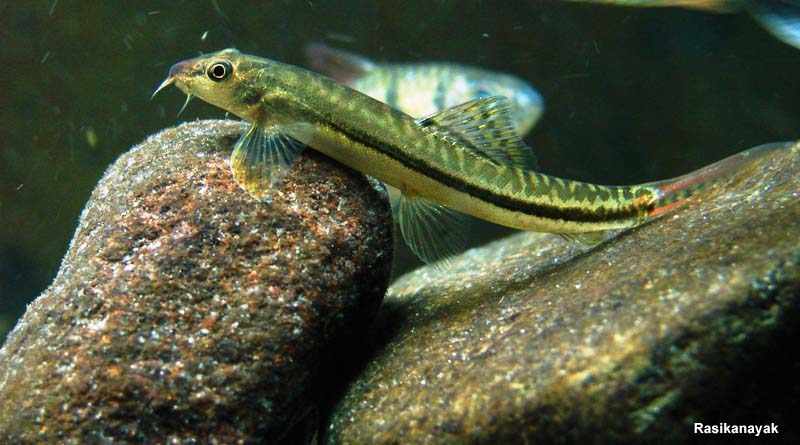
'Nemacheilus' anguilla
Annandale, 1919
Max length50mm SL2.0in SLTank60 × 30cm24 × 12inTemp20–25°C68–77°FpH6.0–7.5'N.' anguilla can be told apart from other Indian members of the genus by possessing dark flank markings which are partially or completely merged to form a lateral stripe, and an almost-complete lateral line extending to the anal-fin. Kottelat (2012) states that its generic placement requires additional study hence the genus name i...
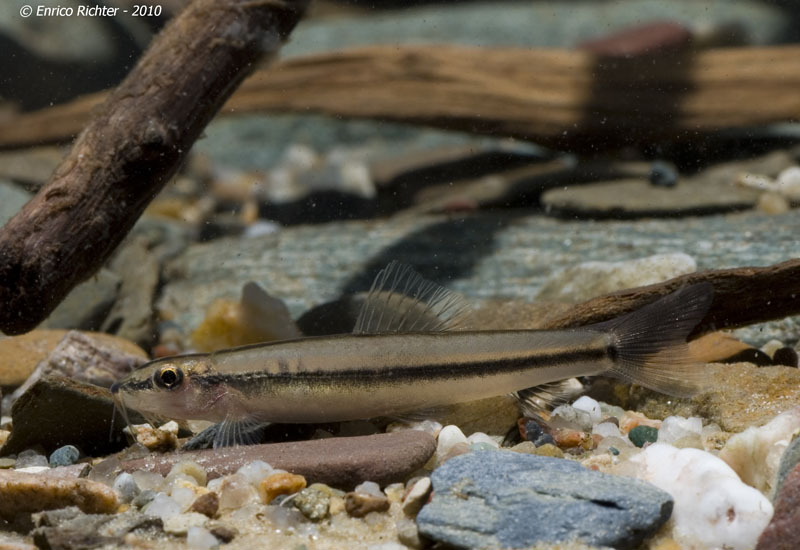
Nemacheilus binotatus
Smith, 1933
Max length45mm SL1.8in SLTank60 × 30cm24 × 12inTemp23–26°C73–79°FpH6.0–7.5N. binotatus is distinguished from similar-looking congeners such as N. longistriatus and N. ornatus by its unique body patterning consisting very simply of two dark stripes, one running along the dorsal surface and the other from the tip of the snout, through the eye and along the flank. There are usually 1-3 small, vertically-orientated spots extending above the lateral stripe between the pectoral-fin and dorsal fins. These are su...
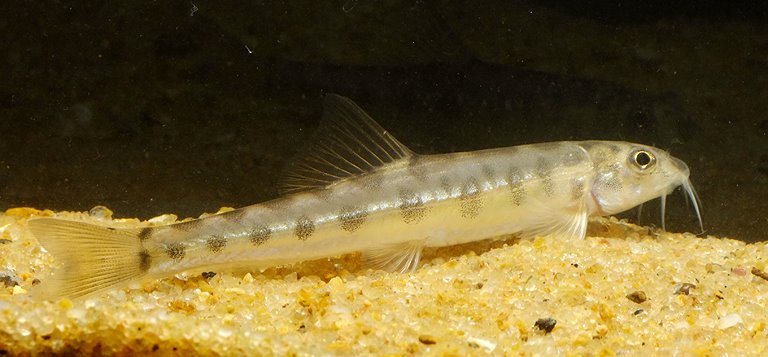
'Nemacheilus' corica
Hamilton, 1822
Max length45mm SL1.8in SLTank60 × 30cm24 × 12inTemp15–24°C59–75°FpH6.0–8.0This species has been widely regarded as a member of the genus Nemacheilus since the late 1970s with the vast majority of subsequent authors considering it as such, although in the aquarium hobby it's more commonly referred to Schistura.
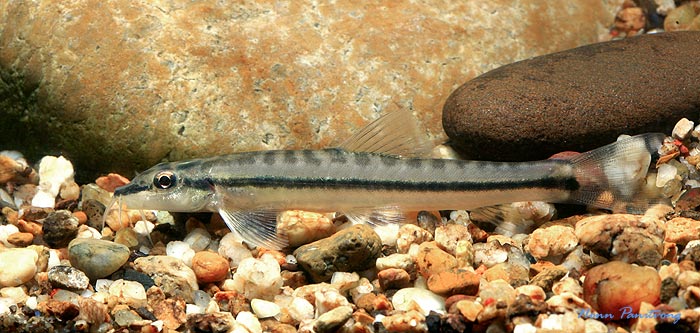
Nemacheilus longistriatusLaos Blackline Torpedo Loach
Kottelat, 1990
Max length125mm SL5in SLTank90 × 30cm36 × 12inTemp23–26°C73–79°FpH6.5–7.5Fishes which inhabit similar biotopes in nature constitute the best options, especially peaceful, open water-dwelling cyprinids since the presence of one or two schools can make a visible difference to the confidence of this naturally reclusive loach. Other possibilities include rheoph...
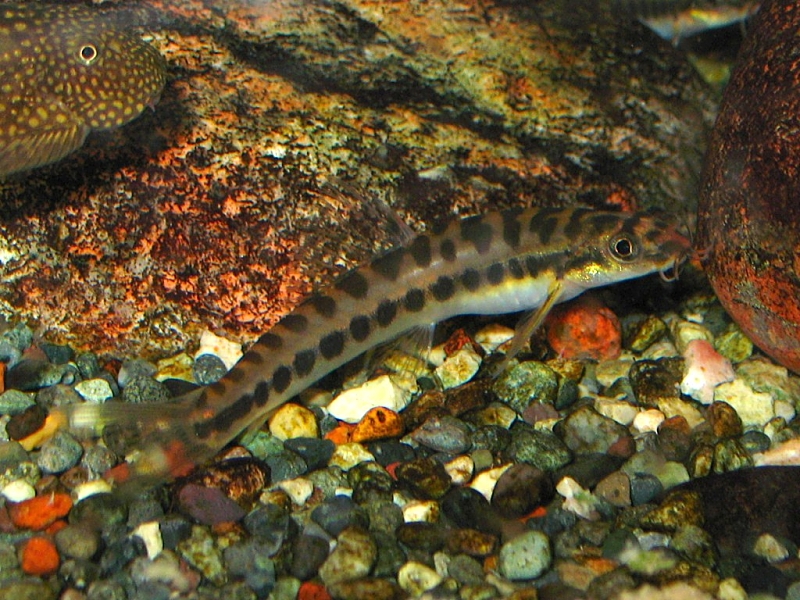
Nemacheilus masyaeArrow Loach
Smith, 1933
Max length70mm SL2.8in SLTank60 × 30cm24 × 12inTemp23–26°C73–79°FpH6.0–7.5This species was originally named Nemacheilus masyae but following ICZN rules the spelling was later corrected to N. masyai because it's named after a man. It can be distinguished from the majority of congeners by body patterning comprising 14-18 short, dark vertical bars on each flank, 12-17 saddle-like markings running along the dorsal surface, a dark spot on the caudal peduncle at the termination of the lateral line and a dark blotch in the lower half of the first few dorsal-fin rays.
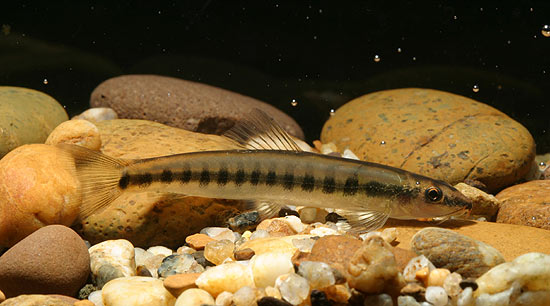
Nemacheilus ornatus
Kottelat, 1990
Max length45mm SL1.8in SLTank60 × 30cm24 × 12inTemp23–26°C73–79°FpH6.0–7.5This species is distinguished from similar-looking congeners such as N. longistriatus and N. ornatus by its unique colour pattern consisting of a black lateral body stripe with 9-16 vertically-orientated blotches extending along it both above and below, plus an irregular stripe running along the dorsal surface. The anterior lateral blotch is surrounded by lighter pigment, forming an ocellus similar to that seen in N. binotatus.
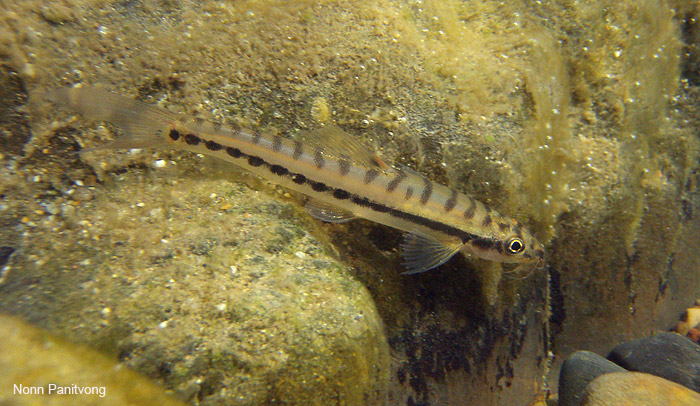
Nemacheilus pallidus
Kottelat, 1990
Max length60mm SL2.4in SLTank60 × 30cm24 × 12inTemp23–26°C73–79°FpH6.0–7.5The similar-looking N. masyai is sometimes traded as N. pallidus, but the two can be told apart by body depth (14.8-19.1 % in N. pallidus vs. 12.6-17.6 % SL in N. masyai), interorbital width (5.7-8.0 % vs. 4.9-6.8 % SL) and the fact that in N. pallidus the dark body bars and saddles are thinner than the light-coloured interspaces between (vs. wider in N. masyai).
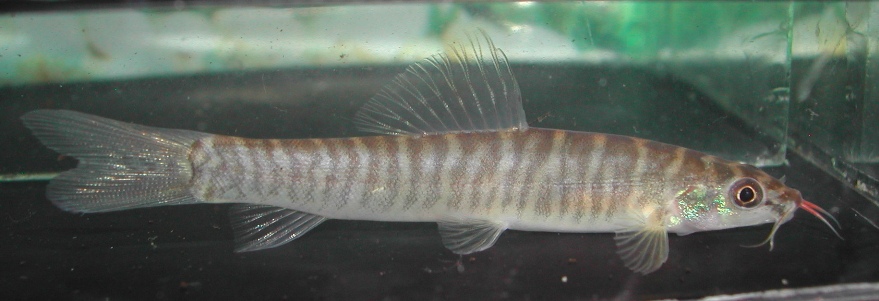
Nemacheilus platiceps
Kottelat, 1990
Max length61mm SL2.4in SLTank60 × 30cm24 × 12inTemp23–26°C73–79°FpH6.0–7.5This species is only traded occasionally. It's distinguished from congeners by a combination of characters including: 12-16 dark, irregular, vertical bars on body, usually split vertically; lips without furrows; inco...
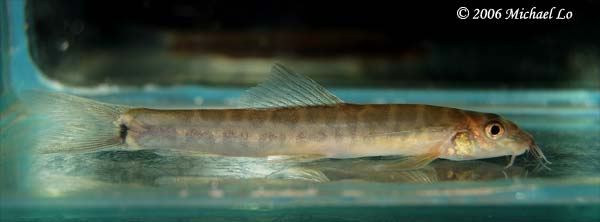
Nemacheilus saravacensis
Boulenger, 1894
Max length50mm SL2.0in SLTank60 × 30cm24 × 12inTemp23–26°C73–79°FpH4.5–7.0Images depict clear, tea-coloured forest streams with dense marginal vegetation and substrates of sand and/or small rocks and pebbles. It's also known from environments with sandy substrate and organic debris in the form of submerged roots/branches and le...
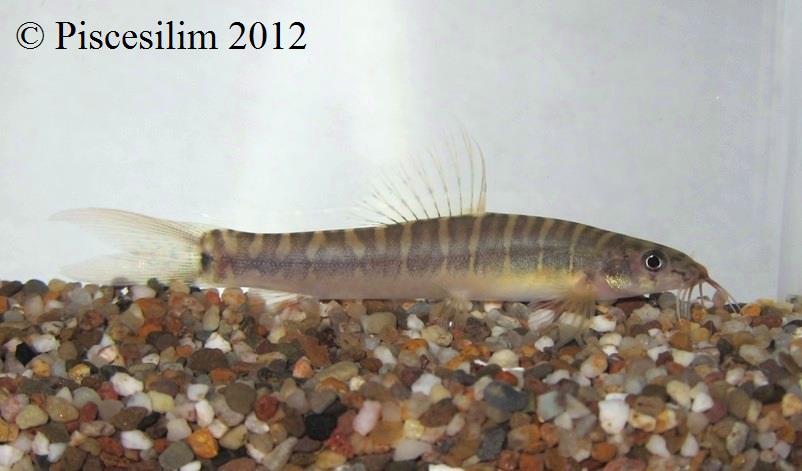
Nemacheilus selangoricus
Duncker, 1904
Max length60mm SL2.4in SLTank60 × 30cm24 × 12inTemp20–25°C68–77°FpH5.0–7.5N. selangoricus is most similar to N. spiniferus since it possesses acuminate scales above and below the lateral line on the caudal peduncle, a feature not shared with any other congener. It can however be distinguished by the following characters: presence of 8-12 very regular dark bars on flanks (vs. 10-13 irregularly-shaped bars in N. spiniferus), 3-5 times...
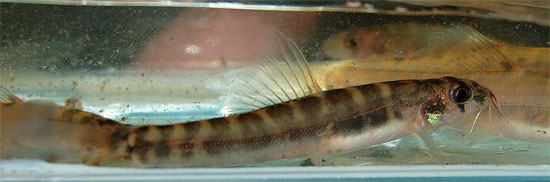
Nemacheilus spiniferus
Kottelat, 1984
Max length55mm SL2.2in SLTank60 × 30cm24 × 12inTemp23–26°C73–79°FpH5.0–7.0It's a member of the N. selangoricus group of species within the genus, an assemblage first recognised by Hadiaty and Kottelat (2009) and characterised by possession of two rows of horizontally-arran...
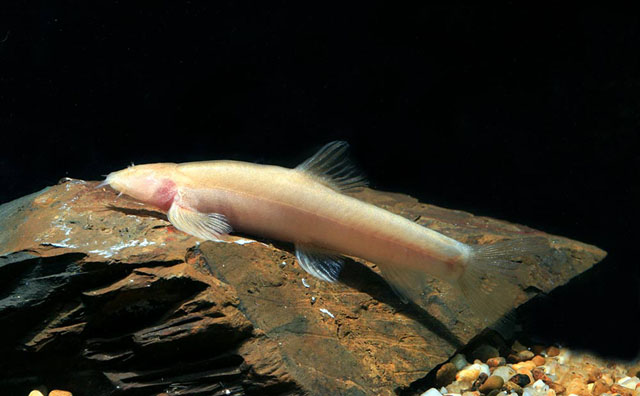
Nemacheilus troglocataractus
Kottelat & Géry, 1989
Max length68mm SL2.7in SLTanknot recordedTempnot recordedpHnot recordedKnown only from a single cave system (Tham Sai Yok Noi) near the town of Nam Tok Sai Yok Noi, Sai Yok district, Kanchanaburi Province, Thailand. The headwater stream running through the cave is part of the Khwae Noi river basin, itself a tributary of the upper Mae Klong system. 621 metres of the cave system has repor...
Nemachilichthys rueppelli
Sykes, 1839
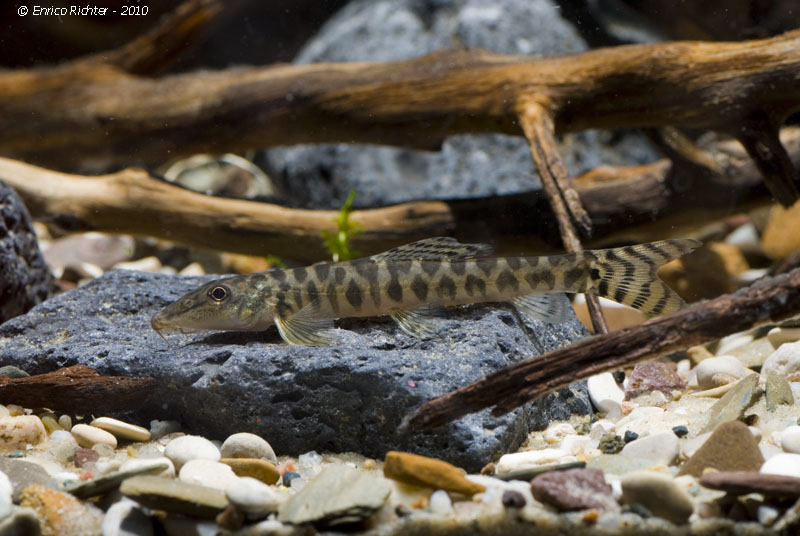
Max length85mm SL3.3in SLTank90 × 30cm36 × 12inTemp20–25°C68–77°FpH7.0–7.5This species is frequently misidentified as Nemachilichthys rueppelli (Sykes, 1839) but that species was described from close to Pune in Maharashtra state, well over 500 km north of Shimoga. Further, in his description of N. rueppeli Sykes states that the body colour is 'greenish yellow' and 'the lateral line marked with short dark bars'. Narayan Rao described the colour pattern of...
Nemadoras leporhinusMouse Catfish
authority not recorded
Max length80mm SL3.1in SLTank60 × 38cm24 × 15inTemp22–25°C72–77°FpH6.3–7.0Ther are currently five described species of Nemadoras (N. elongatus, N. hemipeltis, N. humeralis, N. leporhinus and N. trimaculatus). All are rare in the hobby, although this species is the one most commonly seen. As well as the occasional import, it sometimes shows up as bycatch among batches of similar-looking Hassar or Hemidoras species. Of these, it is most often confused with Hemidoras stenopeltis. These two can be easily told apart as N. leporhinus has a clearwith a dark patch at the base...
Nematabramis alestes
Seale & Bean, 1907
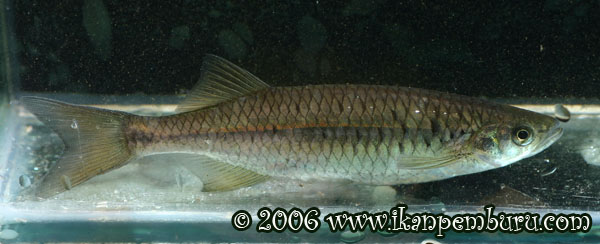
Max length105mm SL4in SLTanknot recordedTempnot recordedpHnot recordedN. alestes is the only member of the genus in which the barbels are shorter than the head, with additional diagnostic characters as follows: 8-9 branched dorsal-fin rays; 12-14 branched anal-fin rays; 22-23 predorsal scales; body with a pronounced ventral keel.
Nematabramis borneensis
Inger & Chin, 1962
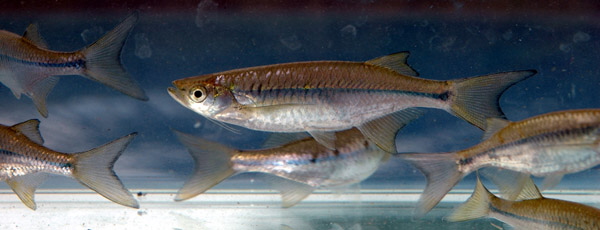
Max length105mm SL4in SLTanknot recordedTempnot recordedpHnot recordedIt looks particularly similar to N. alestes with both species possessing a colour pattern comprising a dark lateral stripe on the body, but can be distinguished immediately by possessing barbels longer than the head (vs. shorter than the head in N. alestes).
Nematabramis everetti
Boulenger, 1894
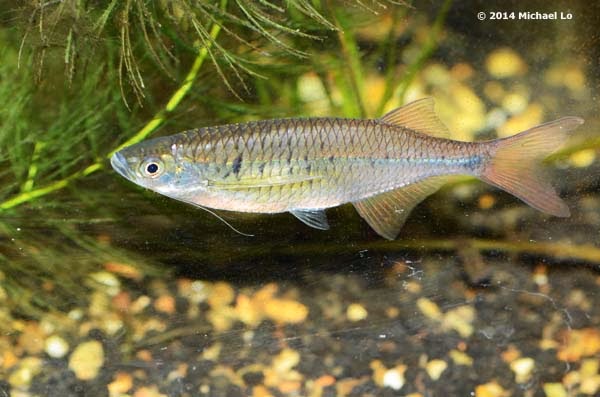
Max length105mm SL4in SLTanknot recordedTempnot recordedpHnot recordedNematabramis species are found a variety of habitat-types, from swiftly-flowing affluent streams to pools, lakes, and degraded swamps. Based on the available collection records juveniles and subadults of N. everetti display a preference for fast-moving water whereas adults are found in deeper, slower stretches of minor tributaries.