Results for “sp.”
Type a name: scientific, common, or one a species used to go by. Or narrow the catalogue with the filters.
Filters
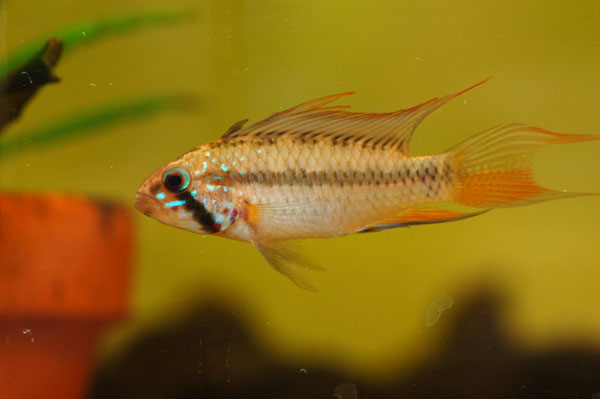
Apistogramma sp. 'breitbinden'A164
authority not recorded
Max length♂ 70 · ♀ 50mm SL♂ 2.8 · ♀ 2.0in SLTank60 × 30cm24 × 12inTemp22–29°C72–84°FpH4.0–6.5The German term 'breitbinden' translates literally as "broad-banded" and refers to the uniformly broad suborbital stripe seen in males of this 'species' which remains undescribed despite being known in the aquarium hobby for several decades. It's often imported as bycatch among shipments of wild-collected A. iniridae. Some of the populations have also been assigned th...
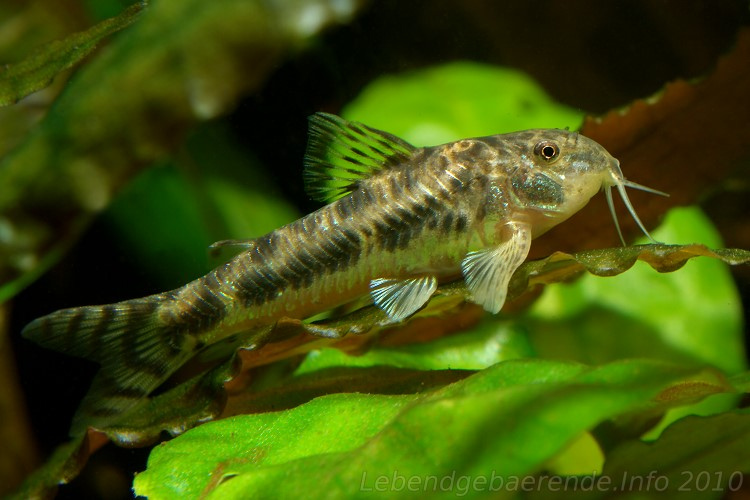
Aspidoras spilotusC125
Nijssen & Isbrücker, 1976
Max length45mm SL1.8in SLTank60 × 30cm24 × 12inTemp20–25°C68–77°FpH6.0–7.5Aspidoras spp. are foraging omnivores and will accept most sinking dried foods, as well as small live and frozen varieties such as chironomid larvae (bloodworm), Tubifex, etc. Feeding a varied diet will ensure the fish are in optimum condition.
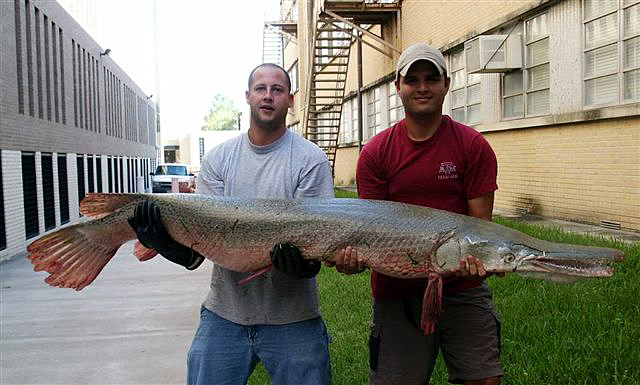
Atractosteus spatulaAlligator Gar
Lacepède, 1803
Max length3050mm SL120in SLTanknot recordedTemp11–23°C52–73°FpH6.0–8.0This is one of the largest freshwater fish species in the world, and clearly shouldn't be considered a home aquarium subject at all given its eventual size and the fact it can live for well in excess of 50 years. We include it here only because some public aquaria are able to maintain it long-term. Unfortunately, juveniles are seen for sale quite regularly in the aquari...
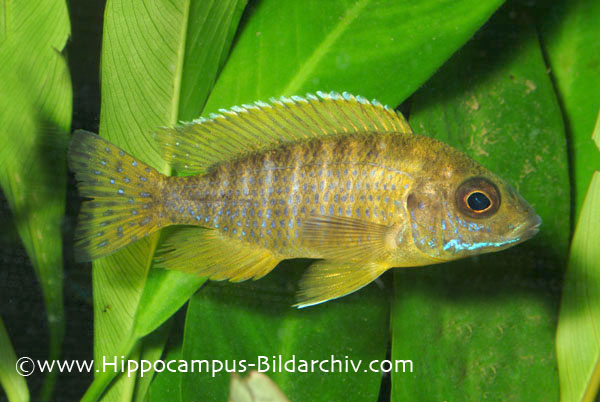
Aulonocara sp. 'stuartgranti maleri'Sunshine Peacock
authority not recorded
Max length120mm SL5in SLTank120 × 45cm48 × 18inTemp25–29°C77–84°FpH7.5–9.0It remains unclear whether this fish represents an as yet undescribed species or not but in either case the unofficial, vernacular name is confusing due to it being based on that of a described taxon. As a result it is often referred to as A. stuartgranti 'Maleri' or 'Maleri Islands', either through error or because some authors believe it to be conspecific with A. stuartgranti. The population from the Maleri Islands is traded as 'yellow regal peacock' (not to be confused with the 'new yellow regal peacock', i.e., A. baenschi) and the one from Chidunga Rocks as 'sunshine peacock' or 'orange peacock'.
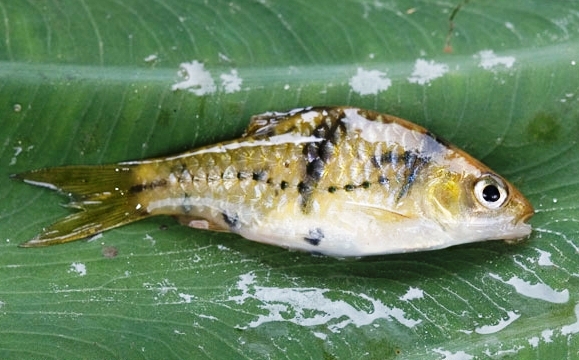
Barbodes kuchingensisFalse Spanner Barb
Herre, 1940
Matched on the common name False Spanner Barb
Max length120mm SL5in SLTank120 × 45cm48 × 18inTemp20–28°C68–82°FpH5.0–7.5This species is rarely-exported for the aquarium hobby but is available on occasion. The name 'P.' kuchingensis is frequently misapplied, however, with subadult forms of 'P.' everetti and some populations of the geographically-variable 'P.' lateristriga regularly traded as such, for example. Though closely-affiliated with and superficially very similar to...
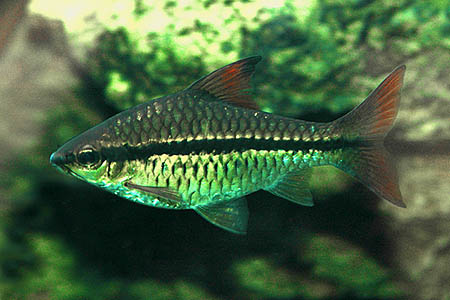
'Barbus' holotaeniaSpotscale Barb
Boulenger, 1904
Matched on the common name Spotscale Barb
Max length120mm SL5in SLTank120 × 45cm48 × 18inTemp24–30°C75–86°FpH6.0–7.0This species is native to Central West Africa where it is principally found in the great Ogooué and Congo River systems. It therefore has an extensive range and has been recorded at numerous localities right across the Democratic Republic of Congo (DRC) from the Ituri River in the far east of the country to the Luki River basin in the extreme west. The Congo River appears to represent the southernmost limit of its range as a...
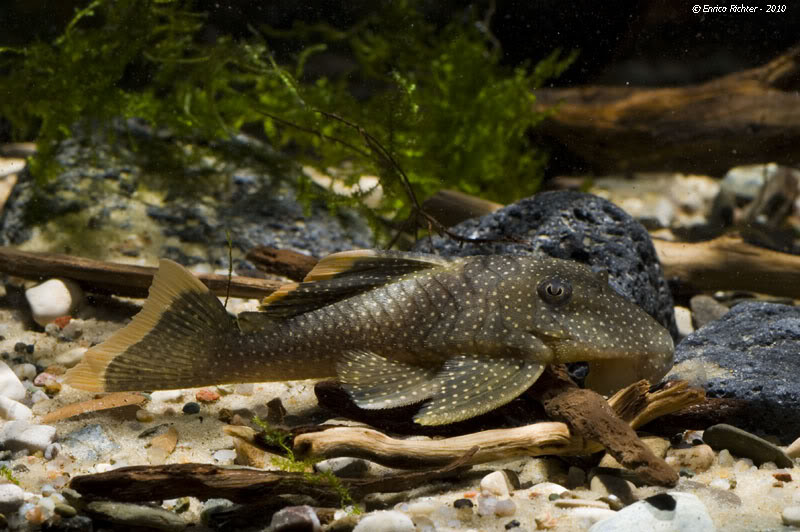
Baryancistrus sp. cf. xanthellusGold Nugget Pleco
authority not recorded
Max length180mm SL7in SLTank120 × 45cm48 × 18inTemp27–32°C81–90°FpH6.4–7.6It remains unconfirmed as to whether this fish represents a colour form of B. xanthellus or not since its DATZ code number of L081 is not referred to in the description paper whereas all other codes for 'gold nugget' plecos, i.e., L018, L085, L177 plus the 'Das Aquarium' code LDA060 are mentioned. In addition, one of the specimens in our images was apparently collected at São Félix do Xingu which is significantl...
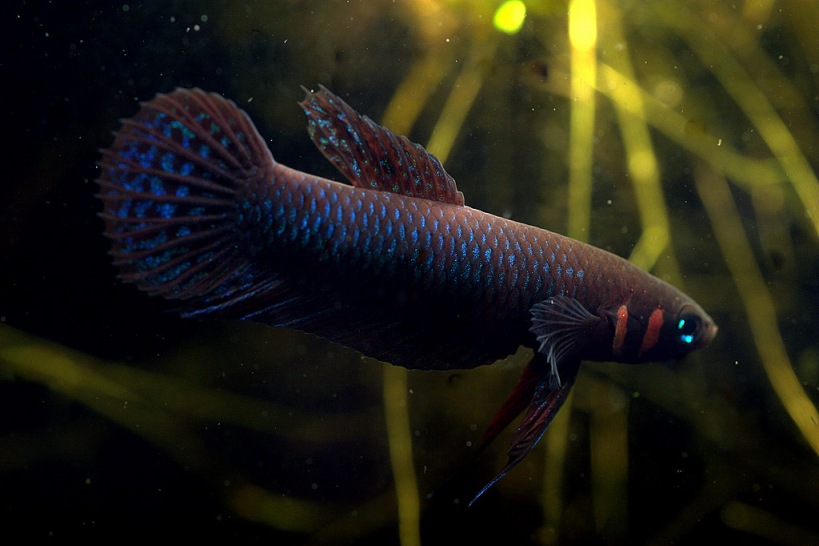
Betta hendra
Schindler & Linke, 2013
Max length45mm SL1.8in SLTank45 × 30cm18 × 12inTemp22–27°C72–81°FpH4.0–6.5This appears to be an undescribed species, and has only been available to the aquarium hobby in limited numbers to date. The rather long-winded trade name derives from the fact that it was initially marketed as two different species, i.e., B. sp. 'Sengalang' and B. sp. 'Palangka'. The spelling of the latter was later corrected but the fish may still be seen with either or both names attached. It looks very similar to fis...
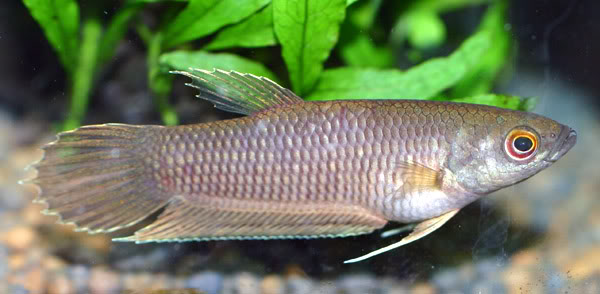
Betta spilotogena
Ng & Kottelat, 1994
Max length70mm SL2.8in SLTank80 × 30cm31 × 12inTemp22–27°C72–81°FpH4.0–6.5Inhabits freshwater swamps and associated streams, typically shaded from the sun by dense riparian vegetation. The water is normally clear or lightly stained with tannins, and the fish found in water less than a metre deep alongside related species including Betta edithae, B. miniopinna, and B. fusca. PH has been measured to range between 4.9-5.5.
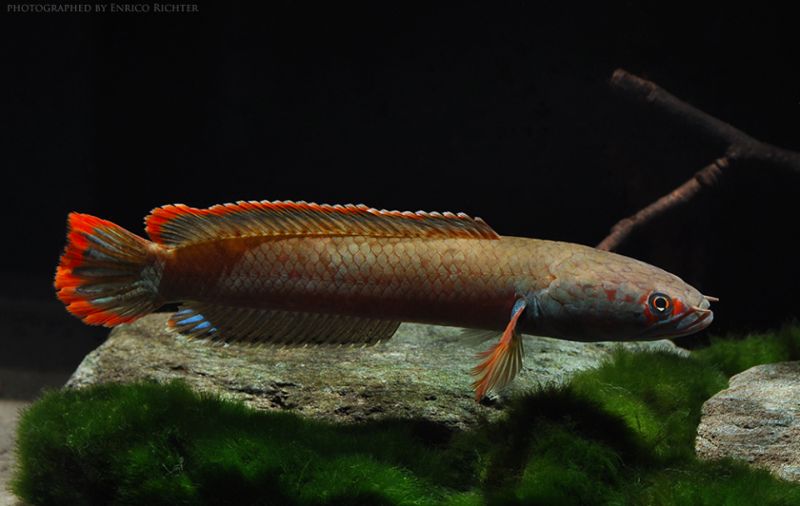
Channa sp. 'fire and ice'
authority not recorded
Max length150mm SL6in SLTank120 × 30cm48 × 12inTemp22–28°C72–82°FpH6.0–7.5This unidentified species first appeared in the aquarium trade during 2009. It's easily told apart from similar-looking congeners by the patches of vivid red pigmentation surrounding the eye and sides of the mouth plus the thick, reddish, marginal band in the caudal-fin.
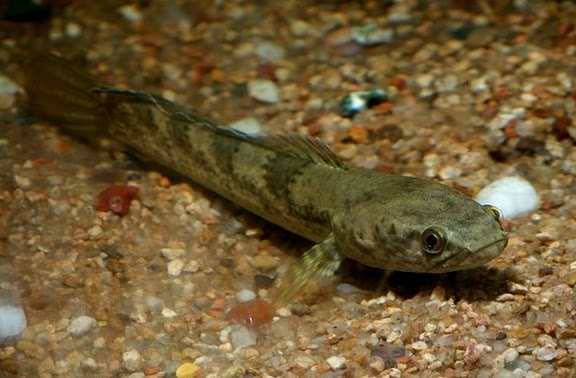
Channa sp. 'five stripe'
authority not recorded
Max lengthnot recordedTank90 × 30cm36 × 12inTemp15–28°C59–82°FpH6.0–8.0Based on its colour pattern and limited details regarding its natural habitat this species may be adapted to dwelling between and under rocks. Alipurduar lies in the moist tropical region of floodplains and foothills of the eastern Himalayas commonly referred to as the Dooars or Duars, traditionally considered the gateway to Bhutan.
Cichlasoma trimaculatumThree Spot Cichlid
authority not recorded
Matched on the common name Three Spot Cichlid
Max length400mm SL16in SLTank122 × 38cm48 × 15inTemp23–30°C73–86°FpH7.0Cichlasoma Trimaculatus is a large colourful cichlid, if a little aggressive. It is believed to be one of the fish that was used to create the hybrid Flowerhorn cichlid. We prefer it in its natural state. As with most large cichlids they can be fairly messy eaters so ensure decent filtration is provided. It is recommended to use a spraybar to disperse the water returning to the tank as trimacs will not appreciate strong flow....
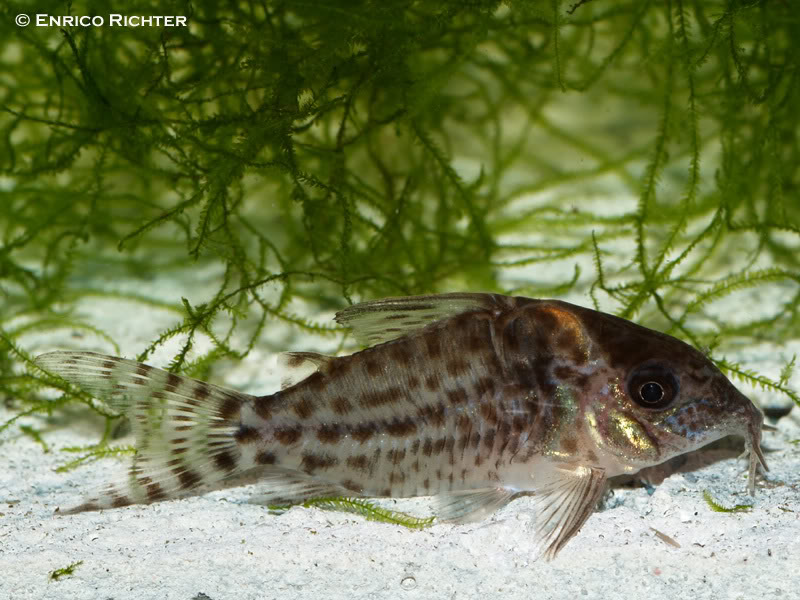
Corydoras agassiziiSpotted Cory
Steindachner, 1876
Matched on the common name Spotted Cory
Max length70mm SL2.8in SLTanknot recordedTemp22–27°C72–81°FpH6.0–8.0This species' name is commonly misapplied to a number of similar-looking fishes and it can be difficult to identify if collection locality is unknown. In addition, colour pattern is variable and it's not clear whether this occurs between, within, or both between and within populations. In the original description, Steindachner did note that the first three dorsal-fin rays are completely black while the remainder is whi...
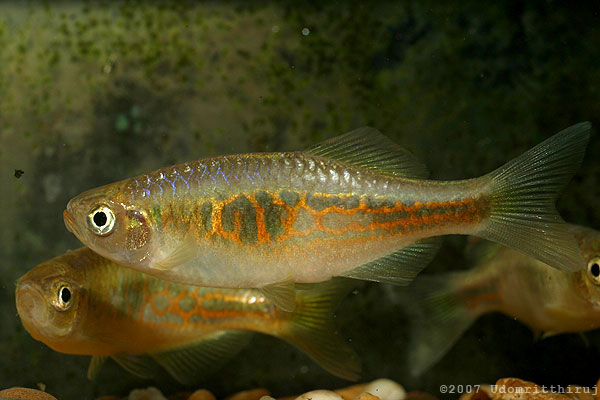
Devario sp. 'giraffe'
authority not recorded
Max length80mm SL3.1in SLTank120 × 30cm48 × 12inTemp18–26°C64–79°FpH6.0–8.0This unidentified species was first collected in 2007 but very little is known about it. The vernacular name refers to the colour pattern on the body which resembles that of a giraffe, and it's known to be collected in Myanmar although its distribution and natural habitat remain a mystery.
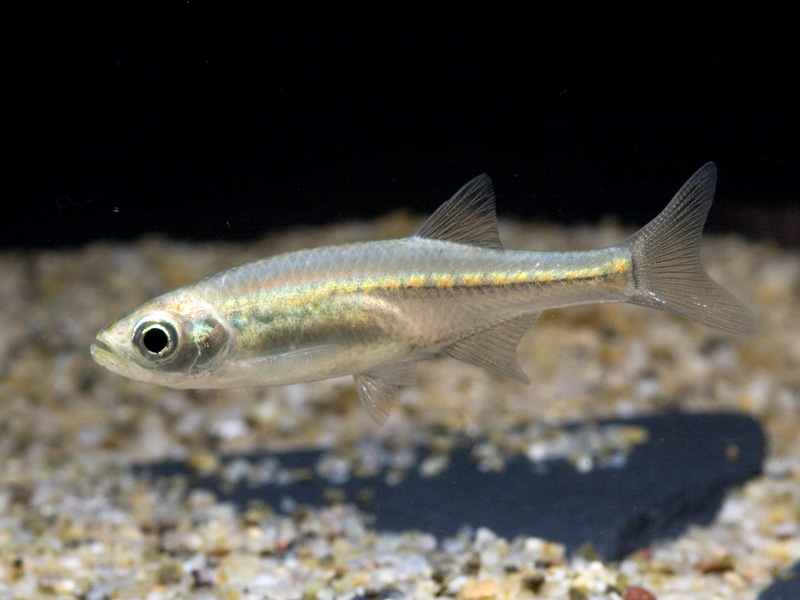
Devario sp. 'purple cypris'
authority not recorded
Max length45mm SL1.8in SLTank75 × 30cm30 × 12inTempnot recordedpHnot recordedThis unidentified species has only appeared in the aquarium trade on a handful of occasions and it has been widely misidentified as Devario jayarami (Barman, 1984). It differs from D. jayarami by possessing 9-10 lateral bars which progressively increase in size posteriorly (vs. 12-13 bars which decrease in size posteriorly), 12 anal-fin rays (vs. 15-16) and a blunter head profile with a lack of convexity behind the head (vs. head profile conical with noticeable convexity behind the head).
Ectodus descampsiiDescamp's Strange-Tooth Cichlid
authority not recorded
Max length104mm SL4in SLTank90 × 30cm36 × 12inTemp24–27°C75–81°FpH7.5–9.0A rare species in the hobby, there is also another, as yet undescribed fish sometimes imported as E. descampsii but this is thought to be a distinct species. This one is currently known as Ectodus sp. "north", as it's found further up the lake than E. decampsii. It can be distinguished by its smaller adult size and the fact that the black spot on the dorsal is found towards the front whereas in E. descampsii it's found in the middle of the fin. Confusingly, E. sp. "north...
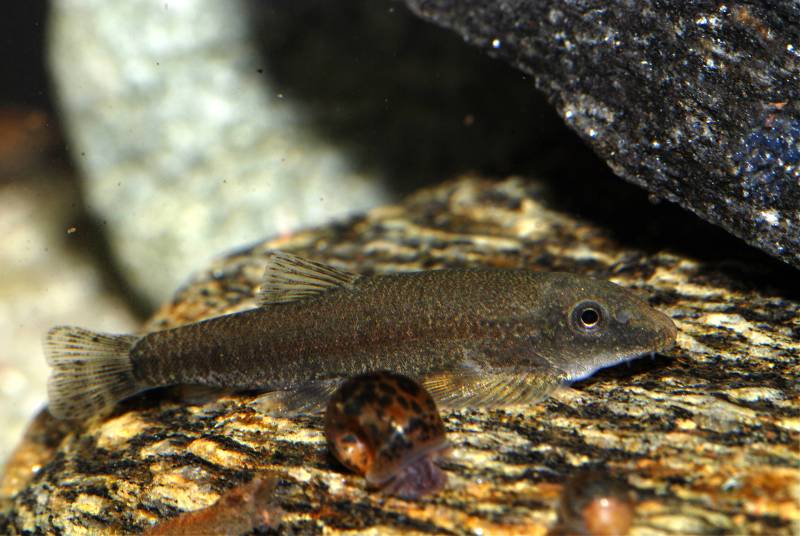
Erromyzon sp. 'ER01'
authority not recorded
Max length45mm SL1.8in SLTank60 × 30cm24 × 12inTemp18–24°C64–75°FpH6.5–8.0Erromyzon spp. are obligate dwellers of shallow, fast-flowing, highly-oxygenated headwaters/minor tributaries characterised by stretches of riffles and runs broken up by pools or cascades in some cases. Substrates are normally composed of smaller rocks, sand and gravel with jumbles of boulders, and while riparian/stream-side vegetation and patches of submerged leaf litter are common features aquatic plants aren't usually present.
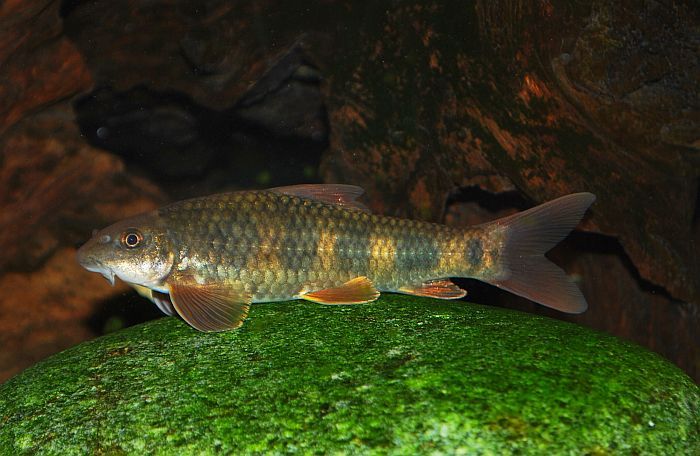
Garra spilota
Kullander & Fang, 2004
Max length69mm SL2.7in SLTank90 × 30cm36 × 12inTemp20–26°C68–79°FpH6.0–7.5The type locality is located in a hilly area mostly comprising bamboo forest. At time of collection the water was clear, colourless and flowing at a moderate pace over a substrate of rocks and gravel. It was 1-2 metres wide and maximum depth was only 0.5 metres. Due to the surrounding forest some stretches were shaded and others more open. Sympatric species included...
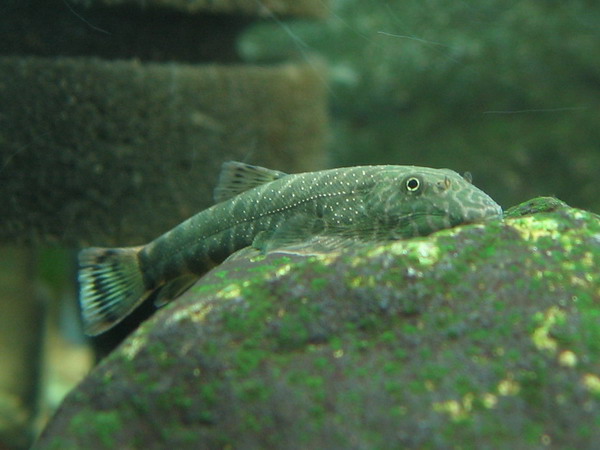
Gastromyzon sp. 'SK03'
authority not recorded
Max length50mm SL2.0in SLTank60 × 30cm24 × 12inTemp20–24°C68–75°FpH6.5–8.0Gastromyzon spp. are obligate dwellers of swift, shallow streams containing clear, oxygen-saturated water and have been recorded from sea level to 1350 m amsl throughout hill regions of Borneo. They typically inhabit riffles and runs and are often found above or below cascades and waterfalls. Substrates are generally composed of gravel, rocks, boulders or bedrock carpeted with a rich biofilm formed by algae and other micro-organisms.
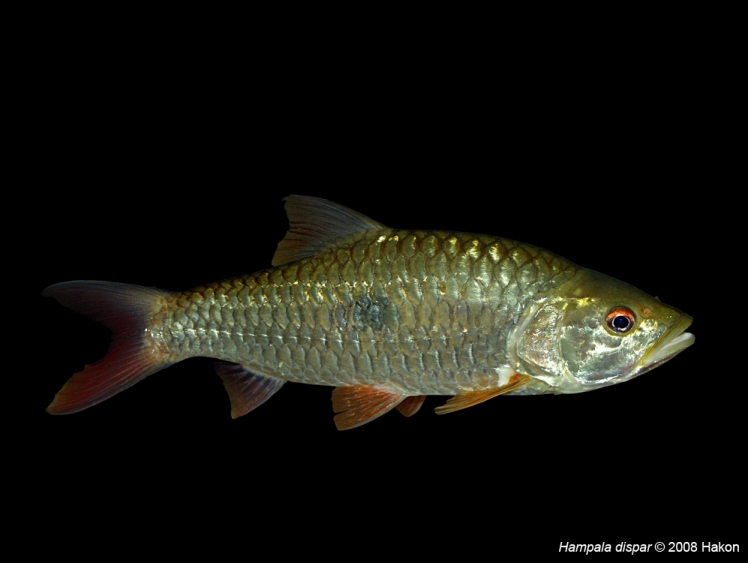
Hampala disparSpotted Hampala Barb
Smith, 1934
Matched on the common name Spotted Hampala Barb
Max length350mm SL14in SLTank240 × 60cm96 × 24inTemp20–25°C68–77°FpH6.0–8.0The genus currently contains seven species of which H. macrolepidota and, to a lesser extent, H. dispar are the only ones seen with any regularity in the aquarium trade. As well as having the widest distribution H. macrolepidota is also the largest member of the group. All representatives can appear superficially similar at first glance, the exception being H. lopezi which is endemic to a single island in The Philippines and displays a unique lateral band-like marking on the flanks.